
Peter Opie (1918–1982)
Author of I Saw Esau: The Schoolchild's Pocket Book
About the Author
Disambiguation Notice:
Peter Opie and Iona Archibald Opie were a husband-and-wife team of folklorists. See also combined and separate LT entries for them.
Image credit: Peter Opie with Iona Opie
Works by Peter Opie
Associated Works
Tagged
Common Knowledge
- Birthdate
- 1918
- Date of death
- 1982
- Gender
- male
- Occupations
- folklorist
- Relationships
- Opie, Iona (wife)
- Nationality
- UK
- Disambiguation notice
- Peter Opie and Iona Archibald Opie were a husband-and-wife team of folklorists. See also combined and separate LT entries for them.
- Associated Place (for map)
- UK
Members
Reviews

Most reference books inspire imitation. This one inspires only admiration.
The reason is simple: To create another such reference, particularly one that would improve on the Opies's work, would be almost impossible.
There are a number of factors that make this a great book. To begin with, its fullness -- 550 nursery rhymes. Also there is the organization: The rhymes are organized topically by the key concept, but with an index of first lines so that they can be found by that means also. This show more organization has the advantage that it makes it easy to find multiple rhymes on the same topic. There is also an index of "notable figures" so that a reader can track down which editors were responsible for preserving and setting down particular rhymes.
And, in addition to the rhymes, there are the notes. These include historical and background notes, source notes, and cross-references. Often these are longer than the nursery rhyme itself, and frequently include variant forms of the rhyme.
Throw in a significant number of illustrations from early printings of the rhymes, and the net result is a book that almost certainly contains just about every useful fact known about these much-loved short poems. There are a few places where one can quibble with the result. But, after more than half a century, there has been no attempt to replace, or even to supplement, this book. That should be testimony enough to its quality. show less
The reason is simple: To create another such reference, particularly one that would improve on the Opies's work, would be almost impossible.
There are a number of factors that make this a great book. To begin with, its fullness -- 550 nursery rhymes. Also there is the organization: The rhymes are organized topically by the key concept, but with an index of first lines so that they can be found by that means also. This show more organization has the advantage that it makes it easy to find multiple rhymes on the same topic. There is also an index of "notable figures" so that a reader can track down which editors were responsible for preserving and setting down particular rhymes.
And, in addition to the rhymes, there are the notes. These include historical and background notes, source notes, and cross-references. Often these are longer than the nursery rhyme itself, and frequently include variant forms of the rhyme.
Throw in a significant number of illustrations from early printings of the rhymes, and the net result is a book that almost certainly contains just about every useful fact known about these much-loved short poems. There are a few places where one can quibble with the result. But, after more than half a century, there has been no attempt to replace, or even to supplement, this book. That should be testimony enough to its quality. show less
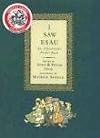
I can't decide which I love more about this book, the rebellious creative rhymes that stay with you all day or the beautifully compatible illustrations. Either way, this is also an old favorite that I delighted in revisiting. What a wonderful way to introduce older children to the fact that poetry can be "cool".
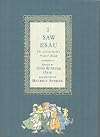
A collection of children's rhymes, first collected in England in 1946, including things like taunts and insults, riddles, skipping rhymes, and mocking verses about schoolwork. Most of them probably aren't exactly the sort of thing you'd find in Mother Goose.
The rhymes themselves are mildly interesting, sometimes vaguely amusing, and often (from the perspective of a 21st century American) entertainingly quaint-feeling in their language. There are a few brief notes on a number of them in the show more back -- something I wish I'd realized while I was reading through them -- but not enough to make this feel more like a work of scholarship than a collection of amusements.
It would all be diverting for a few minutes and then pretty quickly forgettable, I think, except that this edition, from 1992, also includes some delightfully offbeat (indeed, sometimes charmingly grotesque) illustrations by Maurice Sendak. show less
The rhymes themselves are mildly interesting, sometimes vaguely amusing, and often (from the perspective of a 21st century American) entertainingly quaint-feeling in their language. There are a few brief notes on a number of them in the show more back -- something I wish I'd realized while I was reading through them -- but not enough to make this feel more like a work of scholarship than a collection of amusements.
It would all be diverting for a few minutes and then pretty quickly forgettable, I think, except that this edition, from 1992, also includes some delightfully offbeat (indeed, sometimes charmingly grotesque) illustrations by Maurice Sendak. show less

Much that is humorous, and much that is glorious. I love that so many different illustrators contributed. And I love that only a few of the verses only touch on something I've already encountered. And I really love that the Opies have done so much to preserve rhymes, riddles, & nonsense.
THE MEADOW-BOUT FIELDS
O I have been to the meadow-bout fields,
And I have been to the gorses;
And I have been to the meadow-bout fields,
To seek my master's horses.
And I got wet, and very very wet,
And I got wet show more and weary,
And I was wet, and very very wet
When I came home to Mary!
(meadow-bout = marsh marigold)
Now that could have been interpreted playfully, if an illustrator had chosen to emphasize the splashing & trotting. But in the hands of Inga Moore, it's more wistful, almost melancholy, and just lovely.
This is a book that I would love to own, and to buy for young families. show less
THE MEADOW-BOUT FIELDS
O I have been to the meadow-bout fields,
And I have been to the gorses;
And I have been to the meadow-bout fields,
To seek my master's horses.
And I got wet, and very very wet,
And I got wet show more and weary,
And I was wet, and very very wet
When I came home to Mary!
(meadow-bout = marsh marigold)
Now that could have been interpreted playfully, if an illustrator had chosen to emphasize the splashing & trotting. But in the hands of Inga Moore, it's more wistful, almost melancholy, and just lovely.
This is a book that I would love to own, and to buy for young families. show less
Lists
B-B to Get (1)
Awards


You May Also Like
Associated Authors
Statistics
- Works
- 17
- Also by
- 2
- Members
- 4,454
- Popularity
- #5,621
- Rating
- 4.1
- Reviews
- 53
- ISBNs
- 50
- Languages
- 2