
Facundo Percio
Author of Fashion Beast
About the Author
Image credit: via Wookiepedia
Series
Works by Facundo Percio
Fashion Beast #4 — Illustrator — 3 copies
Star Wars #13 (Dark Horse) 2 copies
Fashion Beast #5 — Illustrator — 2 copies
Fashion Beast #6 — Illustrator — 2 copies
Fashion Beast #7 — Illustrator — 2 copies
Fashion Beast #8 — Illustrator — 2 copies
Associated Works
Tagged
Common Knowledge
- Gender
- male
- Nationality
- Argentina
- Places of residence
- Buenos Aires, Argentina
- Associated Place (for map)
- Buenos Aires, Argentina
Members
Reviews
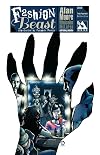
This book was thought of by [a:Malcolm McLaren|308308|Malcolm McLaren|https://d202m5krfqbpi5.cloudfront.net/authors/1270928559p2/308308.jpg], the utter svengali as far as punk rock comes to mind; the man who at least orchestrated the Sex Pistols and Bow Wow Wow, and changed a bit of music history simply by being in the background.
I don't know how much of this story he really contributed to, but in [a:Alan Moore|3961|Alan show more Moore|https://d202m5krfqbpi5.cloudfront.net/authors/1304944713p2/3961.jpg]'s introduction - yes, there is one! - Moore claims that McLaren asked a comic store proprietor which artist is considered the best thing in comics, to which the young man answered "Alan Moore, left hand of God". Moore writes that if he ever should write an autobiography, this will be its title.
Speaking of God, it's suitable to have it in mind when thinking of the fashion industry: braggadocio, better-than-thou and unspoken rules and hierarchies. It's all in this book, wonderfully illustrated by [a:Facundo Percio|2879832|Facundo Percio|https://d202m5krfqbpi5.cloudfront.net/authors/1354586250p2/2879832.jpg]. I don't think I've ever seen computer-generated colours better used prior to this book.
This is a collection of 10 issues of a magazine that was supposed to be a film to begin with. Still, it's here as a graphic novel, one tome, and it's good. Despite the very sits-in-a-tower-ishness of the book, it's not hard to think of real-life examples that make it seem painfully real, e.g. the film "The September Issue" and [a:Tim Gunn|93162|Tim Gunn|https://d202m5krfqbpi5.cloudfront.net/authors/1206730504p2/93162.jpg]'s "[b:Gunn's Golden Rules: Life's Little Lessons for Making It Work|11986969|Gunn's Golden Rules Life's Little Lessons for Making It Work|Tim Gunn|https://d202m5krfqbpi5.cloudfront.net/books/1333423442s/11986969.jpg|10334815]", where very few people run the lives of many. And in this book, that's really the case, borderline on fascism; Moore admits that this book, much like his "[b:V for Vendetta|5805|V for Vendetta|Alan Moore|https://d202m5krfqbpi5.cloudfront.net/books/1343668985s/5805.jpg|392838]", is based in an England where Margaret Thatcher rules (or possibly John Major) and hence, the Dark Ages is still the case despite what some people may feel about it.
I shan't say much about the book's contents. A person is thrown into a hyper-superficial world where one creator runs The fashion house that rules, while people on the streets literally run hungry and amok; very French revolution. Or Britain under Thatcher, if you don't mind.
Percio's drawing is impeccable, and suits this book marvellously. Moore's writing is simple yet effective, and I have no qualms with envisioning the rôle of McLaren as the hurt man behind the mask, so to speak. All in all, enthralling and a philosophically simple, yet effective, read. show less
I don't know how much of this story he really contributed to, but in [a:Alan Moore|3961|Alan show more Moore|https://d202m5krfqbpi5.cloudfront.net/authors/1304944713p2/3961.jpg]'s introduction - yes, there is one! - Moore claims that McLaren asked a comic store proprietor which artist is considered the best thing in comics, to which the young man answered "Alan Moore, left hand of God". Moore writes that if he ever should write an autobiography, this will be its title.
Speaking of God, it's suitable to have it in mind when thinking of the fashion industry: braggadocio, better-than-thou and unspoken rules and hierarchies. It's all in this book, wonderfully illustrated by [a:Facundo Percio|2879832|Facundo Percio|https://d202m5krfqbpi5.cloudfront.net/authors/1354586250p2/2879832.jpg]. I don't think I've ever seen computer-generated colours better used prior to this book.
This is a collection of 10 issues of a magazine that was supposed to be a film to begin with. Still, it's here as a graphic novel, one tome, and it's good. Despite the very sits-in-a-tower-ishness of the book, it's not hard to think of real-life examples that make it seem painfully real, e.g. the film "The September Issue" and [a:Tim Gunn|93162|Tim Gunn|https://d202m5krfqbpi5.cloudfront.net/authors/1206730504p2/93162.jpg]'s "[b:Gunn's Golden Rules: Life's Little Lessons for Making It Work|11986969|Gunn's Golden Rules Life's Little Lessons for Making It Work|Tim Gunn|https://d202m5krfqbpi5.cloudfront.net/books/1333423442s/11986969.jpg|10334815]", where very few people run the lives of many. And in this book, that's really the case, borderline on fascism; Moore admits that this book, much like his "[b:V for Vendetta|5805|V for Vendetta|Alan Moore|https://d202m5krfqbpi5.cloudfront.net/books/1343668985s/5805.jpg|392838]", is based in an England where Margaret Thatcher rules (or possibly John Major) and hence, the Dark Ages is still the case despite what some people may feel about it.
I shan't say much about the book's contents. A person is thrown into a hyper-superficial world where one creator runs The fashion house that rules, while people on the streets literally run hungry and amok; very French revolution. Or Britain under Thatcher, if you don't mind.
Percio's drawing is impeccable, and suits this book marvellously. Moore's writing is simple yet effective, and I have no qualms with envisioning the rôle of McLaren as the hurt man behind the mask, so to speak. All in all, enthralling and a philosophically simple, yet effective, read. show less
genres and genders bend, there's a steampunk look to the future, plenty of social commentary floats by, and the pathology of the maitre's psyche gets a look so close it's claustrophobic. but then, an aesthetic of beauty based on deliberate isolation from the culture is a kind of pathology in itself. Dior's Nazi Paris translates scarily well onto the mean streets of a near-future metropolis, just before nuclear winter arrives. and of course, that's an opportunity for haute couture to distract show more the masses with a revolution in... right, high style. the dystopic vision shows Alan Moore in surprisingly playful mood, and the artist joins him there, splashing colour onto his dark canvas, ebulliently replacing the drab and downright dirty by painting his climaxes in blood and violence right off his palette onto his screen. and it all works: you can still tell it started from a screenplay, because the dialogue is sparse but the artistic detail is legion, giving the artist plenty of room to create gorgeous work. but the original concept came from Malcolm McLaren and commenting on Moore's elaborate screenplay translation he did suggest that Alan, calling the detail and angle to govern every shot, might consider leaving a bit of room for the director and the cameraman. as if. but Moore, notoriously disinterested in screenwriting (and of course fashion), seems to have been freed up by the alien form and subject matter to keep it loose and have fun with the material. written in 1985, it still looks contemporary, incisive, and even prophetic. show less
This graphic novel is really one for Alan Moore completists and for those interested in the post-modern punk creativity of the world of Malcolm McLaren.
It is a Phantom of the Opera/Beauty and the Beast mash-up centred on a caricature of a fashion industry and set in the sort of dystopian world which seemed to exercise Moore in the Thatcher era.
But the novel is more interesting as an attempt by Moore to respond to a cinematic brief. It simply confirms that Moore and filmic thought simply do show more not get on. If anything, it is closer to a musical theatre adaptation!
He is famously withering about the film adaptations of his stories (which are all generally well received by film-lovers). This was an early chance to think a story along filmic lines and he clearly could not do so easily.
The work was initiated as a commission by the late cultural impresario McLaren who could think in multiple forms but needed others to put in place his vision. Moore cannot even remember the date of the commission.
The artist commissioned to complete the project for 2013 tries his best to make it filmic but it does not work because the story line is classic Alan Moore - a literary creation to be told in a succession of fixed images.
The point of film is that it blurs and moves and our mind's eye settles into passivity. The comic book, like the novel, requires that things be filled in actively and remembered with some attention.
All that happens with a graphic novel is that certain imaginative choices are removed which are permitted in the literary novel and the reader is even more constrained, leaving him or her to invent the meaning and the transitions.
Graphic novels give us more space to imagine the world in which the story is set but at the cost of guiding us with some rigour down just one path within it. The literary novel is more seductive and requires us to visualise.
Unfortunately, the ilustrations of Facundo Percio are part of the problem - there was a choice between portraying Mooresque dystopia or fashion as glamour and Percio and Moore made the wrong choice.
The dystopian aspects of the story frankly seem a little hackneyed (especially when compared to Moore's masterworks, 'V for Vendetta' and 'Watchmen', and even 'Halo Jones' and 'Skizz') and should just have been a back drop.
What should have been emphasised is fashion as glamour and so allow the work to be a bridge from the past to the later Moore fascination with the magical and how things can apparently come out of nothing to have meaning.
As it is, the illustration plays up the weakness of the story line as Moore attempts and fails to think in filmic terms. It needed glamour.
Another theme of Moore - sexual transformation - is also weakly handled. The boy who is a girl who is a boy and the girl who is a boy who is a girl is standard fare in Japanese manga and serves its transgressional purpose well.
Here, though, there is an odd diffidence. The theme should be erotic - even if sublimated erotic - and neither character contains much of the transgressional eroticism found in manga versions. Neither are 'appealing' visually.
Again, this is an early exploration of the sexual by Moore so it required (in illustrative terms) linking forward in time rather than back to the original dystopian aspects of the work which mean so much less now.
Illustrators often have problems with expressing sexual transgression when they move away from faux-realism. This novel hints at transgression (unlike later work) so those hints should have been more realistically 'glamorous'.
Perhaps not one of the great Moore works but still ahead of his then-contemporaries in the writing and an interesting cultural footnote. There is an insightful essay at the beginning from Moore. show less
It is a Phantom of the Opera/Beauty and the Beast mash-up centred on a caricature of a fashion industry and set in the sort of dystopian world which seemed to exercise Moore in the Thatcher era.
But the novel is more interesting as an attempt by Moore to respond to a cinematic brief. It simply confirms that Moore and filmic thought simply do show more not get on. If anything, it is closer to a musical theatre adaptation!
He is famously withering about the film adaptations of his stories (which are all generally well received by film-lovers). This was an early chance to think a story along filmic lines and he clearly could not do so easily.
The work was initiated as a commission by the late cultural impresario McLaren who could think in multiple forms but needed others to put in place his vision. Moore cannot even remember the date of the commission.
The artist commissioned to complete the project for 2013 tries his best to make it filmic but it does not work because the story line is classic Alan Moore - a literary creation to be told in a succession of fixed images.
The point of film is that it blurs and moves and our mind's eye settles into passivity. The comic book, like the novel, requires that things be filled in actively and remembered with some attention.
All that happens with a graphic novel is that certain imaginative choices are removed which are permitted in the literary novel and the reader is even more constrained, leaving him or her to invent the meaning and the transitions.
Graphic novels give us more space to imagine the world in which the story is set but at the cost of guiding us with some rigour down just one path within it. The literary novel is more seductive and requires us to visualise.
Unfortunately, the ilustrations of Facundo Percio are part of the problem - there was a choice between portraying Mooresque dystopia or fashion as glamour and Percio and Moore made the wrong choice.
The dystopian aspects of the story frankly seem a little hackneyed (especially when compared to Moore's masterworks, 'V for Vendetta' and 'Watchmen', and even 'Halo Jones' and 'Skizz') and should just have been a back drop.
What should have been emphasised is fashion as glamour and so allow the work to be a bridge from the past to the later Moore fascination with the magical and how things can apparently come out of nothing to have meaning.
As it is, the illustration plays up the weakness of the story line as Moore attempts and fails to think in filmic terms. It needed glamour.
Another theme of Moore - sexual transformation - is also weakly handled. The boy who is a girl who is a boy and the girl who is a boy who is a girl is standard fare in Japanese manga and serves its transgressional purpose well.
Here, though, there is an odd diffidence. The theme should be erotic - even if sublimated erotic - and neither character contains much of the transgressional eroticism found in manga versions. Neither are 'appealing' visually.
Again, this is an early exploration of the sexual by Moore so it required (in illustrative terms) linking forward in time rather than back to the original dystopian aspects of the work which mean so much less now.
Illustrators often have problems with expressing sexual transgression when they move away from faux-realism. This novel hints at transgression (unlike later work) so those hints should have been more realistically 'glamorous'.
Perhaps not one of the great Moore works but still ahead of his then-contemporaries in the writing and an interesting cultural footnote. There is an insightful essay at the beginning from Moore. show less
An unsurprisingly smart and surprisingly exciting symbol-laden parable about fashion and the meaning of aesthetics in a time of brute war. Moore can get a tad too clever at times, spraying the narrative with double meanings and verbal/visual puns, but it's a hard thing to hold against a writer, really.
You May Also Like


Associated Authors
Statistics
- Works
- 15
- Also by
- 1
- Members
- 332
- Popularity
- #71,552
- Rating
- 3.7
- Reviews
- 12
- ISBNs
- 14
- Languages
- 2