
Kit Power
Author of GodBomb!
Works by Kit Power
Associated Works
Tagged
Common Knowledge
There is no Common Knowledge data for this author yet. You can help.
Members
Reviews
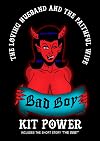
I received this book for free in exchange for an honest review. This does not affect my opinion of the book or the content of my review.
There is no horror quite like suburbia. Kit Power offers two tales of domestic darkness from two very different men from opposite sides of English society.
In the title story, we meet a man and wife who are sure to be introduced as a “charming couple” to others, but are never named. The husband loves his wife with an obsessive passion, noticing every show more nuance of her bearing and emotion. He knows how to reassure her, how to read her mood, how to love her. Keeping her reassured and happy is his joy.
“I love her with all my heart and soul and would do anything to keep that smile on her lips and protect what we’ve built together.”
When the couple decides to build an addition to their home, the husband finds himself perplexed by a change in his wife’s habits. The wonders at the cause of this change, becoming fixated on one of the workmen in their house. Dark thoughts drive him to drastically alter his own routine in order to protect their reputation, pride, and loving marriage.
In the second story, The Debt, we meet two men from the working class. Del grew up rough, but he works an honest job in a car salvage yard, has a wife and daughter, and a problem. His old classmate, Tel didn’t take the straight road; he’s a career criminal with enough reputation to be respected in low places.
“He turns and leaves… They just move around him, like some pole magnets being repulsed. I follow in his wake, swimming under the safety of the belly of the shark.”
Del is drowning in debt, an insurmountable beast that grows even as he tries his best to reduce it. He works overtime, robs Peter to pay Paul, tries to keep his life from collapsing. Despite his efforts, he finds himself on the brink of losing his home and surely his family with it. His hopes hang on getting a side job from Tel. He knows it won’t be exactly legal, or safe, but it’s the only way he’ll be able to raise the kind of money he needs.
Both stories have similar themes, looking at the lengths a man will go to in protecting his family. Neither husband is a practiced criminal, yet both go into their tasks with a mix of grim determination and stomach-twisting horror at what they must accomplish. The stories mirror each other in several places: an ill-timed phone call, a realization of just what must be done, and the thoughts of their loved ones that steady their nerves.
The Debt is told in the language of the street with bits of rhyming slang that can perplex an American reader. However, the author puts in enough context to get the gist of the conversations. I enjoyed The Debt a bit more than the Loving Husband for this reason. The Debt reads with a grimy veneer of oil and sweat and tobacco-scented moral decay. It’s easy to sympathize with Del and the decisions he is faced with.
Overall, this sampling of Kit Powers fiction is a short and entertaining read. The horror here is personal, close, and psychological. I liked it, and would recommend it to readers who are looking for an adult drama with aspects of psychological horror. show less
There is no horror quite like suburbia. Kit Power offers two tales of domestic darkness from two very different men from opposite sides of English society.
In the title story, we meet a man and wife who are sure to be introduced as a “charming couple” to others, but are never named. The husband loves his wife with an obsessive passion, noticing every show more nuance of her bearing and emotion. He knows how to reassure her, how to read her mood, how to love her. Keeping her reassured and happy is his joy.
“I love her with all my heart and soul and would do anything to keep that smile on her lips and protect what we’ve built together.”
When the couple decides to build an addition to their home, the husband finds himself perplexed by a change in his wife’s habits. The wonders at the cause of this change, becoming fixated on one of the workmen in their house. Dark thoughts drive him to drastically alter his own routine in order to protect their reputation, pride, and loving marriage.
In the second story, The Debt, we meet two men from the working class. Del grew up rough, but he works an honest job in a car salvage yard, has a wife and daughter, and a problem. His old classmate, Tel didn’t take the straight road; he’s a career criminal with enough reputation to be respected in low places.
“He turns and leaves… They just move around him, like some pole magnets being repulsed. I follow in his wake, swimming under the safety of the belly of the shark.”
Del is drowning in debt, an insurmountable beast that grows even as he tries his best to reduce it. He works overtime, robs Peter to pay Paul, tries to keep his life from collapsing. Despite his efforts, he finds himself on the brink of losing his home and surely his family with it. His hopes hang on getting a side job from Tel. He knows it won’t be exactly legal, or safe, but it’s the only way he’ll be able to raise the kind of money he needs.
Both stories have similar themes, looking at the lengths a man will go to in protecting his family. Neither husband is a practiced criminal, yet both go into their tasks with a mix of grim determination and stomach-twisting horror at what they must accomplish. The stories mirror each other in several places: an ill-timed phone call, a realization of just what must be done, and the thoughts of their loved ones that steady their nerves.
The Debt is told in the language of the street with bits of rhyming slang that can perplex an American reader. However, the author puts in enough context to get the gist of the conversations. I enjoyed The Debt a bit more than the Loving Husband for this reason. The Debt reads with a grimy veneer of oil and sweat and tobacco-scented moral decay. It’s easy to sympathize with Del and the decisions he is faced with.
Overall, this sampling of Kit Powers fiction is a short and entertaining read. The horror here is personal, close, and psychological. I liked it, and would recommend it to readers who are looking for an adult drama with aspects of psychological horror. show less
It's been a *long* time since I've read a book from cover to cover in a single sitting. Every once in a blue moon, there comes a book that makes doing so a necessity.
Which brings me to The Finite.
No spoilers, the clue is in the title. There's no square-jawed superhero muscling in to save the day, no magic bullet, no 'it was all a dream' style revelation. The minimal characters are normal, they're human, as human as you and I.
As gripping as it is heartbreakingly inevitable. Read it. Just read it.
Which brings me to The Finite.
No spoilers, the clue is in the title. There's no square-jawed superhero muscling in to save the day, no magic bullet, no 'it was all a dream' style revelation. The minimal characters are normal, they're human, as human as you and I.
As gripping as it is heartbreakingly inevitable. Read it. Just read it.
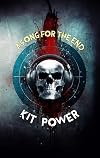
Bill Cutter is thrilled at first, with his band's new song. It's literally the best work they've ever done. Unfortunately, the song forces everyone who hears it to tell the truth. While at face value this could be an amusing development as people spill their embarrassing secrets, there are deadly and immediate consequences for trying to lie, or even trying to remain silent. Bill's band mate Jeff feels that truth at any cost is exactly what the world needs, and he plans to spread the song far show more and wide regardless of the death toll. Bill will risk his life to stop him.
Sprinkled with humor and splashed with blood, A Song for the End lies somewhere between the Twilight Zone comedic episode The Whole Truth about the haunted car that forces the shady salesman to tell the truth, and the mysterious recording played on Lords Of Salem for the devil's child to take over the earth. Even the most honest among us may have to stop and think what would happen if the option of saying nothing when you had nothing nice to say, were replaced with a grisly death for not speaking the truth.
I received an advance copy for review show less
Sprinkled with humor and splashed with blood, A Song for the End lies somewhere between the Twilight Zone comedic episode The Whole Truth about the haunted car that forces the shady salesman to tell the truth, and the mysterious recording played on Lords Of Salem for the devil's child to take over the earth. Even the most honest among us may have to stop and think what would happen if the option of saying nothing when you had nothing nice to say, were replaced with a grisly death for not speaking the truth.
I received an advance copy for review show less
A Warning About Your Future Enslavement That You Will Dismiss as a Collection of Short Fiction and Essays by Kit Power by Kit Power
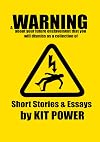
This review first appeared on scifiandscary.com. I received a copy of the book for review consideration
I wasn’t sure what to expect when I started reading ‘A Warning About Your Future Enslavement That You Will Dismiss as a Collection of Short Fiction and Essays by Kit Power’ by Kit Power, other than, given that attention grabbing title, it would likely be weird. It was, but it was also brilliantly written at times, memorable and very, very funny.
As the title suggests, it’s a show more collection of short fiction and essays, the twist being that they are tied together by a linking story. That story revolves around a technician in a dystopian future reviewing a series of “memory dumps” and trying to piece together the details of the past world. Author Kit Power has some fun with that tale, and there’s a definite plot to it, but I didn’t enjoy it as much as the stories and essays that it links.
Those pieces are, by and large, a delight. There are 21 of them and they’re enjoyably varied. My absolute favourite was an essay which explains at hilarious length why ‘RoboCop’ is the best film ever made (admittedly not a hard argument to make as it transparently is the best film ever made). The short stories are often almost plotless, often more vignettes than true stories, but they’re brilliantly effective. Power does a great job of pulling you in quickly and effectively and there’s a real gut impact to a lot of the tales, even when the events are very simple.
All the stories are good, but there were two standouts for me. ‘The Hand’ features a poker game and is almost painfully tense. ‘Wide Load’ is the story of someone passing an unusually large stool. It’s as unpleasant as it sounds, uncomfortable so at times, but also as gripping as any thriller I’ve read lately.
The book is very British, and stories like ‘Richard Madeley is a Fuctard and We’re All Going to Hell’ might not work quite so well for international audiences. (In case you don’t know him, Richard Madeley is a fuctard with a successful television career despite his tendency to say really stupid things, like the time he told actress Keira Knightley that “she’d make a good crack whore”). Despite that I wouldn’t hesitate to recommend it. It’s refreshingly different, very well written, often extremely funny and a perfect antidote to the kind of anodyne fiction that fills up the shelves of our book shops far too often these days. show less
I wasn’t sure what to expect when I started reading ‘A Warning About Your Future Enslavement That You Will Dismiss as a Collection of Short Fiction and Essays by Kit Power’ by Kit Power, other than, given that attention grabbing title, it would likely be weird. It was, but it was also brilliantly written at times, memorable and very, very funny.
As the title suggests, it’s a show more collection of short fiction and essays, the twist being that they are tied together by a linking story. That story revolves around a technician in a dystopian future reviewing a series of “memory dumps” and trying to piece together the details of the past world. Author Kit Power has some fun with that tale, and there’s a definite plot to it, but I didn’t enjoy it as much as the stories and essays that it links.
Those pieces are, by and large, a delight. There are 21 of them and they’re enjoyably varied. My absolute favourite was an essay which explains at hilarious length why ‘RoboCop’ is the best film ever made (admittedly not a hard argument to make as it transparently is the best film ever made). The short stories are often almost plotless, often more vignettes than true stories, but they’re brilliantly effective. Power does a great job of pulling you in quickly and effectively and there’s a real gut impact to a lot of the tales, even when the events are very simple.
All the stories are good, but there were two standouts for me. ‘The Hand’ features a poker game and is almost painfully tense. ‘Wide Load’ is the story of someone passing an unusually large stool. It’s as unpleasant as it sounds, uncomfortable so at times, but also as gripping as any thriller I’ve read lately.
The book is very British, and stories like ‘Richard Madeley is a Fuctard and We’re All Going to Hell’ might not work quite so well for international audiences. (In case you don’t know him, Richard Madeley is a fuctard with a successful television career despite his tendency to say really stupid things, like the time he told actress Keira Knightley that “she’d make a good crack whore”). Despite that I wouldn’t hesitate to recommend it. It’s refreshingly different, very well written, often extremely funny and a perfect antidote to the kind of anodyne fiction that fills up the shelves of our book shops far too often these days. show less
Awards

You May Also Like
Associated Authors
Statistics
- Works
- 11
- Also by
- 4
- Members
- 43
- Popularity
- #352,015
- Rating
- 4.3
- Reviews
- 11
- ISBNs
- 5