
Tom Purdom (1936–2024)
Author of Empire Star / The Tree Lord of Imeten
About the Author
Image credit: Kyle Cassidy
Works by Tom Purdom
Five against Arlane 8 copies
Asimov's Science Fiction: Vol. 46, No. 11 & 12 [November/December 2022] (2022) — Contributor — 6 copies, 1 review
Asimov's Science Fiction: Vol. 46, No. 1 & 2 [January/February 2022] (2022) — Contributor — 4 copies, 1 review
Canary Land {novelette} 4 copies
Greenplace [short fiction] 3 copies
Fossil games {novelette} 3 copies
Golva's Ascent 3 copies
Day Job 2 copies
Bank Run 2 copies
Warfriends 2 copies
Adventures in Discovery 2 copies
Sepoy Fidelities 2 copies
Sordman the Protector 1 copy
Exit Contract 1 copy
Long-Term Emergencies 1 copy
Vedremo domani 1 copy
Legacies 1 copy
Moonchild 1 copy
So Long As We Both 1 copy
Toys (SS) 1 copy
Romance for Augmented Trio 1 copy
January March 1 copy
Fatherbond 1 copy
Bogdavi's Dream 1 copy
Sheltering 1 copy
Sepoy 1 copy
Grieve For A Man 1 copy
Controlled Experiment 1 copy
Romance In Zero G 1 copy
The Holy Grail [Short Story] 1 copy
The Path of the Transgressor 1 copy
A Proper Place To Live 1 copy
Chamber Story {novelette} 1 copy
Associated Works
The Year's Best Science Fiction: Twenty-Fifth Annual Collection (2008) — Contributor — 512 copies, 3 reviews
The Year's Best Science Fiction: Twenty-Ninth Annual Collection (2012) — Contributor — 276 copies, 5 reviews
Analog Science Fiction/Science Fact: Vol. LXXX, No. 2 (October 1967) (1967) — Contributor — 24 copies
Asimov's Science Fiction: Vol. 41, No. 11 & 12 [November/December 2017] (2017) — Contributor — 22 copies, 3 reviews
Asimov's Science Fiction: Vol. 37, No. 4 & 5 [April/May 2013] (2013) — Contributor — 15 copies, 1 review
The Magazine of Fantasy and Science Fiction November 1964, Vol. 27, No. 5 (1964) — Author — 13 copies
Asimov's Science Fiction: Vol. 39, No. 4 & 5 [April/May 2015] (2015) — Contributor — 12 copies, 1 review
Asimov's Science Fiction: Vol. 38, No. 9 [September 2014] (2014) — Contributor — 10 copies, 1 review
Asimov's Science Fiction: Vol. 24, No. 10 & 11 [October/November 2000] (2000) — Contributor — 10 copies, 1 review
Asimov's Science Fiction: Vol. 42, No. 11 & 12 [November/December 2018] (2018) — Contributor — 8 copies, 1 review
Asimov's Science Fiction: Vol. 41, No. 1 & 2 [January/February 2017] (2017) — Contributor — 7 copies
Asimov's Science Fiction: Vol. 44, No. 7 & 8 [July/August 2020] (2020) — Contributor — 5 copies, 1 review
Tagged
Common Knowledge
- Legal name
- Purdom, Thomas Edward
- Birthdate
- 1936-04-19
- Date of death
- 2024-01-14
- Gender
- male
- Occupations
- writer
music critic - Organizations
- Science Fiction and Fantasy Writers of America
- Cause of death
- cancer
- Nationality
- USA
- Birthplace
- New Haven, Connecticut, USA
- Places of residence
- Philadelphia, Pennsylvania, USA
- Place of death
- Philadelphia, Pennsylvania, USA
- Associated Place (for map)
- Pennsylvania, USA
Members
Discussions
Rally or dance? in Good Show Sir! — bad science fiction and fantasy covers (April 2025)
Reviews
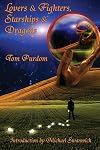
Time was, this book would have been called The Best of Tom Purdom and it would have been published by Ballantine, or perhaps Del Rey, and you might have found it in your locally-owned bookstore in the Science Fiction section, with a cover by Michael Whelan.
But times have changed. You really have to scour the Science Fiction Book Club for anything that isn't a soulless media tie-in, Ballantine Books was swallowed by Random House which was gobbled up by the same elephantine German publishing show more company, Bertelsmann AG, that ingested Doubleday ... and the renamed "Syfy" channel is showing things like Sharknado. Enough said!
Happily, thought, the only so-so news I have about the present volume is that I don't like the cover very much, nor the font used for the title on the front cover and spine. The cover art is sort of Pink Floyd album cover meets New Age. The title font would likewise look quite at home in the 'woo-woo' section of your local Giant Corporate Books. This is a minor issue, though, and I'm not comfortable criticizing art or design because I'm not any good at either thing.
The book is brought to you by a small publisher in Brooklyn, NY. It is professionally produced, and very ably edited (and copy-edited, I'm happy to report). And the contents ...
I've enjoyed Tom Purdom's stories over the past few years as they've appeared in Asimov's Science Fiction Magazine, with which I struggle to keep up. However, this volume gives me a much stronger sense of him as a writer, and a much stronger sense of his -- heretofore unrealized by me -- admirable range. Prior to reading this book I would have characterized him as an enjoyable creator of alien races, but someone you would read and like and quickly move on from, rather than as a writer you would actively seek out for another throat-grab.
This book has changed my mind. In a rare occurrence, the blurbs on the back cover of Lovers & Fighters, Starships & Dragons are true: Tom Purdom is seriously underrated. He was underrated by me, for one.
L&F,S&D includes Asimov's stories from 1992 - 2012, twenty years of fiction. The opener, "Fossil Games," is a stunning take on the old "generation starship" chestnut. I had not read it before, but it makes a great opening salvo. One that I had read before, "Bonding with Morry" was and is a favorite. And you have probably never read a dragon-oriented story quite like "Dragon Drill."
This is great stuff, and I recommend it wholeheartedly to you. Many thanks to Fantastic Books for the copy -- and to LT for the Early Reviewers program. Buy small press, people, it's one way to keep real science fiction, like this, alive.
Or you could wait for the sequel to Sharknado. show less
But times have changed. You really have to scour the Science Fiction Book Club for anything that isn't a soulless media tie-in, Ballantine Books was swallowed by Random House which was gobbled up by the same elephantine German publishing show more company, Bertelsmann AG, that ingested Doubleday ... and the renamed "Syfy" channel is showing things like Sharknado. Enough said!
Happily, thought, the only so-so news I have about the present volume is that I don't like the cover very much, nor the font used for the title on the front cover and spine. The cover art is sort of Pink Floyd album cover meets New Age. The title font would likewise look quite at home in the 'woo-woo' section of your local Giant Corporate Books. This is a minor issue, though, and I'm not comfortable criticizing art or design because I'm not any good at either thing.
The book is brought to you by a small publisher in Brooklyn, NY. It is professionally produced, and very ably edited (and copy-edited, I'm happy to report). And the contents ...
I've enjoyed Tom Purdom's stories over the past few years as they've appeared in Asimov's Science Fiction Magazine, with which I struggle to keep up. However, this volume gives me a much stronger sense of him as a writer, and a much stronger sense of his -- heretofore unrealized by me -- admirable range. Prior to reading this book I would have characterized him as an enjoyable creator of alien races, but someone you would read and like and quickly move on from, rather than as a writer you would actively seek out for another throat-grab.
This book has changed my mind. In a rare occurrence, the blurbs on the back cover of Lovers & Fighters, Starships & Dragons are true: Tom Purdom is seriously underrated. He was underrated by me, for one.
L&F,S&D includes Asimov's stories from 1992 - 2012, twenty years of fiction. The opener, "Fossil Games," is a stunning take on the old "generation starship" chestnut. I had not read it before, but it makes a great opening salvo. One that I had read before, "Bonding with Morry" was and is a favorite. And you have probably never read a dragon-oriented story quite like "Dragon Drill."
This is great stuff, and I recommend it wholeheartedly to you. Many thanks to Fantastic Books for the copy -- and to LT for the Early Reviewers program. Buy small press, people, it's one way to keep real science fiction, like this, alive.
Or you could wait for the sequel to Sharknado. show less
 This review was written for LibraryThing Early Reviewers.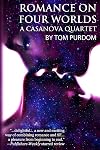
A literary sonata.
The themes: the rapturous duets of lovers, the pursuit of love, and the technological discordances that threaten both.
From the forests of a Mercury habitat to the Kuiper Belt, Joe Baske devotes his life, like his 18th idol Giacomo Casanova, to the pursuit of women. Not merely the physically beautiful, but the competent, the intelligent, the graceful for beauty has many manifestations. The thrill of Joe’s consummation may last only 45 minutes … or years, but a fleeting show more emotion of such power is still a real emotion.
His secret, he tells one of the many men who asks about it, is not the sex he offers. It is the talk, the companionship, his concentration and fascination, treating his lovers as real women with “desires and needs of their own”.
But things are getting harder for Baske. He’s a 1998 product of random genes and a time of “parental whims and biochemical accidents”. But the women he woos across the 21st century are increasingly the result of checkbox genetic selection and personality modification. Can the pursuit of love survive in a world where one can choose to dampen the call of sex? The growing gulf between the ramshackle and slow mind of Baske and the engineered brilliance of the women he pursues? The criminal opportunities of modeling and manipulating personalities? The angry psychosis of men thwarted, by superior rivals, in the ancient, powerful search for love and sex?
When humans become instruments tuned to self-chosen desires, how long can they -- and will they -- sound together in the harmony of romantic love?
Other themes besides the old ones of sex and love sound in the background. Economies where necessities are provided now have more time for struggles for status and the control of others. Not only does Baske have plenty of opportunity to play his beloved Bach, he also practices his other talent, escape and evasion, in the various tactical combat puzzles of each story when his amorous pursuits are threatened. show less
The themes: the rapturous duets of lovers, the pursuit of love, and the technological discordances that threaten both.
From the forests of a Mercury habitat to the Kuiper Belt, Joe Baske devotes his life, like his 18th idol Giacomo Casanova, to the pursuit of women. Not merely the physically beautiful, but the competent, the intelligent, the graceful for beauty has many manifestations. The thrill of Joe’s consummation may last only 45 minutes … or years, but a fleeting show more emotion of such power is still a real emotion.
His secret, he tells one of the many men who asks about it, is not the sex he offers. It is the talk, the companionship, his concentration and fascination, treating his lovers as real women with “desires and needs of their own”.
But things are getting harder for Baske. He’s a 1998 product of random genes and a time of “parental whims and biochemical accidents”. But the women he woos across the 21st century are increasingly the result of checkbox genetic selection and personality modification. Can the pursuit of love survive in a world where one can choose to dampen the call of sex? The growing gulf between the ramshackle and slow mind of Baske and the engineered brilliance of the women he pursues? The criminal opportunities of modeling and manipulating personalities? The angry psychosis of men thwarted, by superior rivals, in the ancient, powerful search for love and sex?
When humans become instruments tuned to self-chosen desires, how long can they -- and will they -- sound together in the harmony of romantic love?
Other themes besides the old ones of sex and love sound in the background. Economies where necessities are provided now have more time for struggles for status and the control of others. Not only does Baske have plenty of opportunity to play his beloved Bach, he also practices his other talent, escape and evasion, in the various tactical combat puzzles of each story when his amorous pursuits are threatened. show less
This review was written for LibraryThing Early Reviewers.
My favorite stories were:
-"Falling Off the Edge of the World" by Suzanne Palmer. Two survivors on a wrecked spacecraft are rescued decades later, but by then they are both much changed. Although on the same ship and able to communicate, the two have been physically separated the whole time. This was haunting and oddly relatable.
"Lonely Hill" by James Maxley. Bereaved widower discovers spacecraft buried behind his house.
-"The Long Revenge of Chanda Sebalko" by Tom Purdom. Does the old adage show more "If you seek revenge dig two graves" still apply after the singularity?
-"When the Signal Is The Noise" by Rajan Khanna. A first contact, weird alien-object-hanging-in-sky story. If humans can't even communicate with their sweethearts, how can they communicate with life from other planets?
"Forty-Eight Minutes at the Trainview Cafe" by M. Bennardo. When we don't have bodies anymore, how can we live in the present and savor what is really happening?
I have to say the general tone of the stories was kind of a downer, but we have to write what we know. show less
-"Falling Off the Edge of the World" by Suzanne Palmer. Two survivors on a wrecked spacecraft are rescued decades later, but by then they are both much changed. Although on the same ship and able to communicate, the two have been physically separated the whole time. This was haunting and oddly relatable.
"Lonely Hill" by James Maxley. Bereaved widower discovers spacecraft buried behind his house.
-"The Long Revenge of Chanda Sebalko" by Tom Purdom. Does the old adage show more "If you seek revenge dig two graves" still apply after the singularity?
-"When the Signal Is The Noise" by Rajan Khanna. A first contact, weird alien-object-hanging-in-sky story. If humans can't even communicate with their sweethearts, how can they communicate with life from other planets?
"Forty-Eight Minutes at the Trainview Cafe" by M. Bennardo. When we don't have bodies anymore, how can we live in the present and savor what is really happening?
I have to say the general tone of the stories was kind of a downer, but we have to write what we know. show less
It’s a terrible, truthful title.
Purdom’s stories are seldom about just one thing though. Not only do these stories have lovers and fighters, they have other characteristic Purdom concerns too: extended lifespans, dominance struggles among groups, military culture, the evolution of sentience, and music.
“Fossil Games” has a group of humans, their talents and intellect rendered obsolete by succeeding generations, retreating from the solar system in a hollowed-out asteroid. They pass show more their very long lives trying to find a purpose for existence. The fossil games of the title refers to not only the age old struggle for dominance amongst human groups, but the sought for prize: evidence that intelligence evolved on other planets besides Earth.
Politics is at the heart of “Haggle Chips” too. Its interstellar trader wants to sell eye substitutes to a local businesswoman. The leader of a religious cult doesn’t like the woman’s attempt to corner local water resources, so he takes the trader hostage. But the story’s real conflict starts when a woman is psychologically modified by the cult to bond with the trader and deter him from escaping.
“Dragon Drill” is a fantasy piece with a Prussian general dispatched by Frederick the Great to kill an honest-to-goodness dragon which has appeared. It’s the Age of Reason vs. the Age of Legend as well a meditation on the beginnings of modern military culture.
Wars small and large, past or pending or ongoing, shows up a lot in this collection. Purdom describes the tactical considerations of his conflicts in detail. The development of his wargamer eye is covered in this, the most autobiographical story here, “Sheltering” Its hero is a 91 year old man playing computer games in a shelter full of evacuees, all fleeing a war fought with “military microbiology” on the east coast of America. The therapeutic value of wargames is pondered as a small boy takes an interest in the old man’s activities.
“Canary Land” is a moving story of the immigrant experience, but here it’s an American biodesigner, unable to make the big leagues in Shanghai. He winds up on the moon as a poorly paid musician ensnared in industrial espionage.
“Research Project” concerns the meeting of two sentient races. One, against all theory, happens to be “predatory and semi-carnivorous”. That would be us. The aliens would like to give humanity an advanced propulsion system in exchange for exclusive rights to Mars. Like many stories here, it speculates on the evolutionary influences that shape intelligence, but it’s also a look at the unusual nature of many scholars and scientists and their frequent social isolation.
“A Response from EST17” is another take on alien contact. Here, though, the two warring human probes that make contact find aliens very well practiced in dealing with the situation. They must decide whether humans pose enough of a threat to get the Message, a powerful data set that fulfills all utopian dreams and is so disruptive that its past recipients all have lapsed into silence.
Purdom is never a sentimental writer. Hard choices are often the foundations of his conflict. And “Bonding with Morry” is not a sentimental story. Its elderly protagonist may decide to make his service robot more humanlike due to social pressure, but he firmly makes a point about its alleged sentience and humanity at story’s end.
The historical allusion and inspiration for “Sepoy” is right in the title. Its crippled protagonist is approached to work for the alien tucfra who conquered Earth and maybe saved humanity from self-annihilation in 2044. Fearing official retaliation and vigilante action, he doesn’t want to become a collaborator even if they promise to provide him with an expensive and very well-functioning body. But he also doesn’t want to turn in the tucfra agent attempting to recruit him.
“Legacies”, when I first read it years ago, struck me as an implausible story because it showed a military concerned, to what I thought an unlikely extent, with the psychological welfare of its soldiers’ children. Thirteen years and a couple of wars later, it seems more realistic in that regard. And it always was a strong story in its take on the personalities most attracted to the military and the families they form. Purdom draws on his experience as a “Navy brat”.
The transgression of the hero in “The Path of the Transgressor” is to have a wife genetically engineered to be supportive, agreeable, and self-sacrificing as he does animal studies on an alien world. But, when a local, possibly sentient, species suddenly poses a lethal threat, combat breaks out and its hero realizes that there are unexpected implications in having such a wife.
“The Mists of Time” is Purdom’s retort to those who cynically and simplistically view history with an eye to stripping honor from the past. The historical event is a minor skirmish in the British navy’s anti-slavery campaign. The conflict here is between the rich patron of a time traveling expedition, which involves an ancestor of the patron, and the cynical artist there to record events.
There are several other outstanding Purdom works that could have been included in this book. For now, this is a good start in recognizing a writer too long ignored. Every one of these stories, first published in Asimov’s Science Fiction from 1992 to 2012, is worth reading. show less
Purdom’s stories are seldom about just one thing though. Not only do these stories have lovers and fighters, they have other characteristic Purdom concerns too: extended lifespans, dominance struggles among groups, military culture, the evolution of sentience, and music.
“Fossil Games” has a group of humans, their talents and intellect rendered obsolete by succeeding generations, retreating from the solar system in a hollowed-out asteroid. They pass show more their very long lives trying to find a purpose for existence. The fossil games of the title refers to not only the age old struggle for dominance amongst human groups, but the sought for prize: evidence that intelligence evolved on other planets besides Earth.
Politics is at the heart of “Haggle Chips” too. Its interstellar trader wants to sell eye substitutes to a local businesswoman. The leader of a religious cult doesn’t like the woman’s attempt to corner local water resources, so he takes the trader hostage. But the story’s real conflict starts when a woman is psychologically modified by the cult to bond with the trader and deter him from escaping.
“Dragon Drill” is a fantasy piece with a Prussian general dispatched by Frederick the Great to kill an honest-to-goodness dragon which has appeared. It’s the Age of Reason vs. the Age of Legend as well a meditation on the beginnings of modern military culture.
Wars small and large, past or pending or ongoing, shows up a lot in this collection. Purdom describes the tactical considerations of his conflicts in detail. The development of his wargamer eye is covered in this, the most autobiographical story here, “Sheltering” Its hero is a 91 year old man playing computer games in a shelter full of evacuees, all fleeing a war fought with “military microbiology” on the east coast of America. The therapeutic value of wargames is pondered as a small boy takes an interest in the old man’s activities.
“Canary Land” is a moving story of the immigrant experience, but here it’s an American biodesigner, unable to make the big leagues in Shanghai. He winds up on the moon as a poorly paid musician ensnared in industrial espionage.
“Research Project” concerns the meeting of two sentient races. One, against all theory, happens to be “predatory and semi-carnivorous”. That would be us. The aliens would like to give humanity an advanced propulsion system in exchange for exclusive rights to Mars. Like many stories here, it speculates on the evolutionary influences that shape intelligence, but it’s also a look at the unusual nature of many scholars and scientists and their frequent social isolation.
“A Response from EST17” is another take on alien contact. Here, though, the two warring human probes that make contact find aliens very well practiced in dealing with the situation. They must decide whether humans pose enough of a threat to get the Message, a powerful data set that fulfills all utopian dreams and is so disruptive that its past recipients all have lapsed into silence.
Purdom is never a sentimental writer. Hard choices are often the foundations of his conflict. And “Bonding with Morry” is not a sentimental story. Its elderly protagonist may decide to make his service robot more humanlike due to social pressure, but he firmly makes a point about its alleged sentience and humanity at story’s end.
The historical allusion and inspiration for “Sepoy” is right in the title. Its crippled protagonist is approached to work for the alien tucfra who conquered Earth and maybe saved humanity from self-annihilation in 2044. Fearing official retaliation and vigilante action, he doesn’t want to become a collaborator even if they promise to provide him with an expensive and very well-functioning body. But he also doesn’t want to turn in the tucfra agent attempting to recruit him.
“Legacies”, when I first read it years ago, struck me as an implausible story because it showed a military concerned, to what I thought an unlikely extent, with the psychological welfare of its soldiers’ children. Thirteen years and a couple of wars later, it seems more realistic in that regard. And it always was a strong story in its take on the personalities most attracted to the military and the families they form. Purdom draws on his experience as a “Navy brat”.
The transgression of the hero in “The Path of the Transgressor” is to have a wife genetically engineered to be supportive, agreeable, and self-sacrificing as he does animal studies on an alien world. But, when a local, possibly sentient, species suddenly poses a lethal threat, combat breaks out and its hero realizes that there are unexpected implications in having such a wife.
“The Mists of Time” is Purdom’s retort to those who cynically and simplistically view history with an eye to stripping honor from the past. The historical event is a minor skirmish in the British navy’s anti-slavery campaign. The conflict here is between the rich patron of a time traveling expedition, which involves an ancestor of the patron, and the cynical artist there to record events.
There are several other outstanding Purdom works that could have been included in this book. For now, this is a good start in recognizing a writer too long ignored. Every one of these stories, first published in Asimov’s Science Fiction from 1992 to 2012, is worth reading. show less
This review was written for LibraryThing Early Reviewers.Lists
Awards


You May Also Like


Associated Authors
Statistics
- Works
- 59
- Also by
- 43
- Members
- 443
- Popularity
- #55,290
- Rating
- 3.6
- Reviews
- 24
- ISBNs
- 9
- Languages
- 1
- Favorited
- 1
