
O. J. Simpson (1947–2024)
Author of If I Did It: Confessions of the Killer
Works by O. J. Simpson
I Want to Tell You: My Response to Your Letters, Your Messages, Your Questions (1995) 108 copies, 1 review
O.J.: Made in America (3-DVD + 2-BD) 2 copies
Colour 1 copy
Associated Works
Firepower [1979 film] — Actor — 1 copy
Tagged
Common Knowledge
- Canonical name
- Simpson, O. J.
- Legal name
- Simpson, Orenthal James
- Other names
- Juice
- Birthdate
- 1947-07-09
- Date of death
- 2024-04-10
- Gender
- male
- Education
- University of Southern California
City College of San Francisco
Galileo High School - Occupations
- professional football player
actor - Organizations
- Buffalo Bills
San Francisco 49ers
O. J. Simpson Enterprises - Awards and honors
- Pro Football Hall of Fame (Player|1985)
College Football Hall of Fame (Player|1983)
Associated Press Male Athlete of the Year (1973)
Walter Camp Award (1967)
Walter Camp Award (1968)
United Press International College Football Player of the Year (1967) (show all 18)
United Press International College Football Player of the Year (1968)
Heisman Trophy (1968)
Maxwell Award (1968)
Pop Warner Trophy (1968)
Associated Press NFL MVP (1973)
Newspaper Enterprise Association NFL MVP (1973)
Sporting News NFL MVP (1973|AFC)
Sporting News NFL MVP (1975|AFC)
Bert Bell Award (1973)
S. Rae Hickok Professional Athlete of the Year (1973)
Associated Press NFL Offensive Player of the Year (1973)
Associated Press Male Athlete of the Year (1973) - Cause of death
- cancer
- Nationality
- USA
- Birthplace
- San Francisco, California, USA
- Places of residence
- San Francisco, California, USA
Los Angeles, California, USA
Kendall, Florida, USA
Las Vegas, Nevada, USA - Place of death
- Las Vegas, Nevada, USA
- Associated Place (for map)
- USA
Members
Discussions
The People versus OJ Simpson in Pro and Con (February 2016)
Reviews
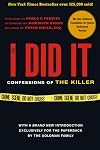
I don't even know what to say about this book.
It was never really on my radar, but when a non-reading friend of mine wanted to read it, I figured it be fun to buddy read. However, it was torture.
A lot of people say this is the confession of OJ, or a hypothetical "how to murder" novel in which he reveals gritty details that only the killer would know. Neither of these are true. If I Did It is simply OJ mocking the world and laughing at us for so hungrily snatching up his poorly written show more words.
This whole book is him creating an alternate reality where he is the "real victim." It is disgusting. And "The Night in Question" (as he so aptly names chapter 6), can be boiled down to two sentiments he writes: "this is strictly hypothetical" and "black-out rage." Add in his imaginary friend Charlie and OJ probably thought he'd be skipping all the way to the bank. Thankfully, the Goldman's intervened and prevented this from happening. That may be the only silver lining about this whole book. show less
It was never really on my radar, but when a non-reading friend of mine wanted to read it, I figured it be fun to buddy read. However, it was torture.
A lot of people say this is the confession of OJ, or a hypothetical "how to murder" novel in which he reveals gritty details that only the killer would know. Neither of these are true. If I Did It is simply OJ mocking the world and laughing at us for so hungrily snatching up his poorly written show more words.
This whole book is him creating an alternate reality where he is the "real victim." It is disgusting. And "The Night in Question" (as he so aptly names chapter 6), can be boiled down to two sentiments he writes: "this is strictly hypothetical" and "black-out rage." Add in his imaginary friend Charlie and OJ probably thought he'd be skipping all the way to the bank. Thankfully, the Goldman's intervened and prevented this from happening. That may be the only silver lining about this whole book. show less
Having already read William Dear’s alternate theory of who killed Nicole Simpson and Ron Goldman, this book popped up on the Bookbub list. The twentieth anniversary has spawned countless OJ Simpson true crime books, articles and television programs. As I mentioned before, I was not in the country when all this occurred so I am not completely burned out on the topic. And I was very curious about this book.
Absolutely no disrespect to Fred Goldman and their family but he writes a forward to show more the dictation done by OJ with his ghostwriter. I can’t even call it a forward. It is an angry, infuriated, grief saturated tirade. It is understandable. It is tragic. It may have been cathartic. But it the beginning of a he said-he said book. The viewpoints represented are both highly personal and highly biased. This is not a dispassionate review of what may or may not have occurred.
The OJ portion is just ridiculous. There is not much reading between the lines required except to acknowledge that OJ Simpson is a deeply narcissistic man who, at 35, dumped his first family to take up with an eighteen year old waitress who wasn’t even born when his career began.
He continually tries to lay the blame at Nicole Brown’s feet for everything that happened. She was violent, she was immature, she was on drugs, she was cheating on him, and she was unstable. All of these same traits can also be ascribed to OJ himself who should have known from the beginning that he had nothing in common with a teenager half his age. In truth, the thing he hammers on over and over was that they continually turned back to one another for sex. Sex of convenience mostly.
When he gets done laying the blame at her feet, the description of the crime itself, mirrors the crime. A short, violent description of an altercation that probably lasted 15-20 minutes in total. He infers someone else was there and I think William Dear’s book is a pretty good indicator that OJ was with his oldest son Jason.
For all the mud slung at Ron Goldman by opposing attorneys and OJ himself this book is clear on one thing: Ron Goldman was simply at the wrong place at the wrong time. He was dropping off some sunglasses and by OJ’s description, he simply tried to stand between OJ and Nicole and was overtaken by two more powerful men and killed.
OJ’s part of the book ends there. An epilogue essay is provided by Dominick Dunne, a writer and victim advocate who befriended the Goldman’s and understands celebrity crime. It is scathing of OJ and the process.
I really bought the book for one reason: I wanted the money I spent (a pittance at that) to go to the fund that the Goldman family established. Although OJ says this is a hypothetical account of what occurred, I think it sounds pretty close to what happened that night.
These two people kept coming in and out of each other’s lives and it was a car crash every time. In relationships like this, there seem to be a lot of casualties outside of the two people involved. That was certainly the case here. It will probably take generations to put some of it behind those families and even then, maybe never.
The book is not that good, the anger and grief is palpable and OJ does not come off well even by his own account. One star but maybe buying it for the Goldman Trust is enough incentive. show less
Absolutely no disrespect to Fred Goldman and their family but he writes a forward to show more the dictation done by OJ with his ghostwriter. I can’t even call it a forward. It is an angry, infuriated, grief saturated tirade. It is understandable. It is tragic. It may have been cathartic. But it the beginning of a he said-he said book. The viewpoints represented are both highly personal and highly biased. This is not a dispassionate review of what may or may not have occurred.
The OJ portion is just ridiculous. There is not much reading between the lines required except to acknowledge that OJ Simpson is a deeply narcissistic man who, at 35, dumped his first family to take up with an eighteen year old waitress who wasn’t even born when his career began.
He continually tries to lay the blame at Nicole Brown’s feet for everything that happened. She was violent, she was immature, she was on drugs, she was cheating on him, and she was unstable. All of these same traits can also be ascribed to OJ himself who should have known from the beginning that he had nothing in common with a teenager half his age. In truth, the thing he hammers on over and over was that they continually turned back to one another for sex. Sex of convenience mostly.
When he gets done laying the blame at her feet, the description of the crime itself, mirrors the crime. A short, violent description of an altercation that probably lasted 15-20 minutes in total. He infers someone else was there and I think William Dear’s book is a pretty good indicator that OJ was with his oldest son Jason.
For all the mud slung at Ron Goldman by opposing attorneys and OJ himself this book is clear on one thing: Ron Goldman was simply at the wrong place at the wrong time. He was dropping off some sunglasses and by OJ’s description, he simply tried to stand between OJ and Nicole and was overtaken by two more powerful men and killed.
OJ’s part of the book ends there. An epilogue essay is provided by Dominick Dunne, a writer and victim advocate who befriended the Goldman’s and understands celebrity crime. It is scathing of OJ and the process.
I really bought the book for one reason: I wanted the money I spent (a pittance at that) to go to the fund that the Goldman family established. Although OJ says this is a hypothetical account of what occurred, I think it sounds pretty close to what happened that night.
These two people kept coming in and out of each other’s lives and it was a car crash every time. In relationships like this, there seem to be a lot of casualties outside of the two people involved. That was certainly the case here. It will probably take generations to put some of it behind those families and even then, maybe never.
The book is not that good, the anger and grief is palpable and OJ does not come off well even by his own account. One star but maybe buying it for the Goldman Trust is enough incentive. show less
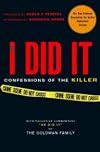
Most of this book was disgustingly obvious BS,an attempt to make Nicole Brown look like a horrible person,apparently to convince people she deserved what she got. The only chapter that rings true is the one which describes the night of the grisly murder, the chapter which The Killer still insists is purely hypothetical. I came away from this book even more convinced that he is guilty, and that he deserves to spend the rest of his life in jail.
[This review also appears on FingerFlow.com, a site for review and discussion of creative works.]
Being a preteen when the events described in this book took place, I probably went into this book with a hazier recollection of the facts than other readers. Even so, it was clear to me that O. J. is relating his skewed view of the events, with a heavy prejudice towards himself. If you knew nothing about the facts, you might actually believe the picture he paints of himself: as a very sensible, show more family-oriented, patient man; almost flawless, but willing to accept and repent for the minor infractions that he let slip (like in 1989, when he "grabbed" Nicole too forcefully and ended up being convicted of spousal abuse for it). He also doesn't miss any chances to describe Nicole as ill-tempered, obsessive, pedantic, violent... and a drug user to boot.
O. J. includes some actual transcripts from the court case and seems to have gone to some trouble elucidating a back-story to fit the facts that turn up in the transcripts. For example, he explains right before one of Nicole's 911 call transcripts that someone on the set of Naked Gun 33 1/3 told him that Nicole "parties hard" with a "rough crowd." Apparently, that got him worried about his kids and angry enough to confront her about her drug use.
Despite the absurdity and poor writing of his account, I found myself eagerly anticipating the moment of the murder (does that make me a sick person?). O. J. invents an acquaintance named Charlie who dropped by unexpectedly one evening and told O. J. some gossip about Nicole that set him off to the point of dropping everything to go scream at her. Charlie, in my opinion, was O. J's conscience; first, he tried to prevent O. J. from going to Nicole's condo in the first place, then refused to allow O. J. to take the knife in his car with him (why did O. J. have that knife in his car, hmm?). Charlie later tried to cool off O. J. in Nicole's courtyard, but for some inexplicable reason, brought the knife from the car with him. At this point, O. J. grabbed the knife, blanked out for a moment and then realized he was covered in blood with two bodies at his feet. For all his confusion, he seemed to be of sound enough mind to remove his bloody clothing and force Charlie to make his clothes and the murder weapon disappear. The most absurd part, of course, was O. J's temporary amnesia about the climatic moment; he even wonders how he could have missed witnessing the murders when he was standing right there!
In any case, I think If I Did It is a poor title because O. J. never conjectures what it would have been like if he did commit the murders. Nor is I Did It an apt title because he never does admit that he did anything but be an all-around good guy.
And for those wondering why O. J. didn't commit suicide during the Bronco car chase: hearing Dan Rather report that O. J. had a long history with the police department as a domestic abuser made him angry enough to want to stay alive so he could get the truth out there. It only took him over a decade to finally tell his side of it. show less
Being a preteen when the events described in this book took place, I probably went into this book with a hazier recollection of the facts than other readers. Even so, it was clear to me that O. J. is relating his skewed view of the events, with a heavy prejudice towards himself. If you knew nothing about the facts, you might actually believe the picture he paints of himself: as a very sensible, show more family-oriented, patient man; almost flawless, but willing to accept and repent for the minor infractions that he let slip (like in 1989, when he "grabbed" Nicole too forcefully and ended up being convicted of spousal abuse for it). He also doesn't miss any chances to describe Nicole as ill-tempered, obsessive, pedantic, violent... and a drug user to boot.
O. J. includes some actual transcripts from the court case and seems to have gone to some trouble elucidating a back-story to fit the facts that turn up in the transcripts. For example, he explains right before one of Nicole's 911 call transcripts that someone on the set of Naked Gun 33 1/3 told him that Nicole "parties hard" with a "rough crowd." Apparently, that got him worried about his kids and angry enough to confront her about her drug use.
Despite the absurdity and poor writing of his account, I found myself eagerly anticipating the moment of the murder (does that make me a sick person?). O. J. invents an acquaintance named Charlie who dropped by unexpectedly one evening and told O. J. some gossip about Nicole that set him off to the point of dropping everything to go scream at her. Charlie, in my opinion, was O. J's conscience; first, he tried to prevent O. J. from going to Nicole's condo in the first place, then refused to allow O. J. to take the knife in his car with him (why did O. J. have that knife in his car, hmm?). Charlie later tried to cool off O. J. in Nicole's courtyard, but for some inexplicable reason, brought the knife from the car with him. At this point, O. J. grabbed the knife, blanked out for a moment and then realized he was covered in blood with two bodies at his feet. For all his confusion, he seemed to be of sound enough mind to remove his bloody clothing and force Charlie to make his clothes and the murder weapon disappear. The most absurd part, of course, was O. J's temporary amnesia about the climatic moment; he even wonders how he could have missed witnessing the murders when he was standing right there!
In any case, I think If I Did It is a poor title because O. J. never conjectures what it would have been like if he did commit the murders. Nor is I Did It an apt title because he never does admit that he did anything but be an all-around good guy.
And for those wondering why O. J. didn't commit suicide during the Bronco car chase: hearing Dan Rather report that O. J. had a long history with the police department as a domestic abuser made him angry enough to want to stay alive so he could get the truth out there. It only took him over a decade to finally tell his side of it. show less
Lists
Awards

You May Also Like


Associated Authors
Statistics
- Works
- 6
- Also by
- 14
- Members
- 729
- Popularity
- #34,829
- Rating
- 3.0
- Reviews
- 26
- ISBNs
- 25
- Languages
- 2