
David Stahel
Author of Kiev 1941: Hitler's Battle for Supremacy in the East
About the Author
David Stahel is an independent researcher based in Berlin.
Works by David Stahel
Retreat from Moscow: A New History of Germany's Winter Campaign, 1941-1942 (2019) 130 copies, 4 reviews
Hitler's Panzer Generals : Guderian, Hoepner, Reinhardt and Schmidt Unguarded (2023) 30 copies, 2 reviews
Joining Hitler's Crusade: European Nations and the Invasion of the Soviet Union, 1941 (2017) 28 copies, 1 review
Associated Works
Desperta Ferro. Ediciones Especiales. Panzer Volumen 2 (1941) De África a Barbarroja (2018) — Contributor — 3 copies, 1 review
Tagged
Common Knowledge
- Birthdate
- 1975
- Gender
- male
- Education
- Monash University
Boston College
King's College, London (MA)
Humboldt University of Berlin (PhD|2007) - Occupations
- historian
- Organizations
- University of New South Wales
- Nationality
- New Zealand
- Birthplace
- Wellington, New Zealand
- Map Location
- Germany
Members
Reviews

David Stahel's latest work, 'The Battle for Moscow', is somewhat removed from his previous volumes on this topic. This is his fourth book and it becomes evident that what was clearly visible on a majority of pages in his first three texts is missing from much of this latest effort. That is, there is a significant lack of tactical and operational descriptions of battles. At least one amazon reviewer has already commented on how disappointed they were to discover this. Yet, in this supposed show more 'weakness' lies the strength of Stahel's argument(s). The Wehrmacht on June 22, 1941 was a vaunted fighting force that managed to defeat and conquer most of Europe. The ensuing invasion of the Soviet Union showcased, on the surface, the Wehrmacht's military prowess operationally and on a tactical level as numerous encirclements and victories were achieved. Stahel outlines them all quite well (mainly in regards to Army Groups Center and South) in his previous volumes. That is, the Red Army lost hundreds of thousands in the encirclements at Minsk, Smolensk, Kiev, and finally at Viazma/Briansk. Yet, the narrative that concentrates on the victorious outcomes of those encirclements misses the forest for the trees.
Thus, 'The Battle for Moscow' is a somewhat different creature than Stahel's previous works because it highlights again and again the slow progress of the German Army in the latter half of Operation Typhoon throughout November and early December of 1941. There are no major battles, encirclements, or defeats of the Red Army because German forces were incapable of launching significant operations to achieve such feats, and when a major city was taken, Rostov by Army Group South, it eventually had to be evacuated due to Red Army pressure and German inability to hold it. Stahel thus forces the reader to assume the physical and psychological state of the German Army through the numerous diaries, letters, memoirs, and battle reports that he quotes from. The exhaustion of German troops was palpable on very page as they became bogged down in the mud of early November while hoping for a sudden freeze to create conditions for an eventual lunge toward Moscow. And when that freeze did come it brought with it new obstacles that while facilitating one last push toward the Soviet capital also meant a whole new level of exhaustion, misery, disease and madness for countless soldiers.
Additionally, on more than one occasion Stahel draws the reader's attention to the genocidal nature of the war that Hitler unleashed against the Soviet Union and the complicity of the Wehrmacht in the numerous stages of the Holocaust and the deaths of millions of Soviet prisoners of war. One simply cannot discuss Operation Barbarossa or Typhoon without highlighting the numerous difficulties the Germans faced in the rear from Soviet partisans and how they treated the civilian population as the cold set in and they needed both clothing and dwellings to keep warm, which often meant stealing from the local population and displacing it to fend for themselves while appropriating their living quarters.
Finally, much of Stahel's concentration rests on the German commanders and their actions throughout November. Unlike many self-serving post-war memoirs, archival documentation from this period shows that generals like Bock, Guderian, Kluge, etc., had a choice in how they handled their troops and assignments. None were forced to go on the offensive, the majority of those decisions they took for themselves based on a variety of factors until their forces were simply beyond the means of, in some cases, even picking up their weapons. No German general was dismissed at this point (dismissals would come after the Soviet counter-offensive commenced) and yet being on the frontline, knowing the situation their soldiers were facing, they continued to ignore the exhaustion of their troops, the limits of their mobility (lack of trucks, tanks, planes, etc.) and forced their depleted formations onto the offensive again and again. What was the end goal? Moscow was never supposed to be captured, but encirclement was no longer an option as the targets were far too distant for what the Wehrmacht could hope to accomplish in November or December. Thus, Stahel emphasizes the disconnect that existed between the goals of German commanders and the reality of what their forces could accomplish, with the final result being a situation that soon found exhausted and depleted German troops retreating in the face of a well-developed and planned Soviet counter-offensive. show less
Thus, 'The Battle for Moscow' is a somewhat different creature than Stahel's previous works because it highlights again and again the slow progress of the German Army in the latter half of Operation Typhoon throughout November and early December of 1941. There are no major battles, encirclements, or defeats of the Red Army because German forces were incapable of launching significant operations to achieve such feats, and when a major city was taken, Rostov by Army Group South, it eventually had to be evacuated due to Red Army pressure and German inability to hold it. Stahel thus forces the reader to assume the physical and psychological state of the German Army through the numerous diaries, letters, memoirs, and battle reports that he quotes from. The exhaustion of German troops was palpable on very page as they became bogged down in the mud of early November while hoping for a sudden freeze to create conditions for an eventual lunge toward Moscow. And when that freeze did come it brought with it new obstacles that while facilitating one last push toward the Soviet capital also meant a whole new level of exhaustion, misery, disease and madness for countless soldiers.
Additionally, on more than one occasion Stahel draws the reader's attention to the genocidal nature of the war that Hitler unleashed against the Soviet Union and the complicity of the Wehrmacht in the numerous stages of the Holocaust and the deaths of millions of Soviet prisoners of war. One simply cannot discuss Operation Barbarossa or Typhoon without highlighting the numerous difficulties the Germans faced in the rear from Soviet partisans and how they treated the civilian population as the cold set in and they needed both clothing and dwellings to keep warm, which often meant stealing from the local population and displacing it to fend for themselves while appropriating their living quarters.
Finally, much of Stahel's concentration rests on the German commanders and their actions throughout November. Unlike many self-serving post-war memoirs, archival documentation from this period shows that generals like Bock, Guderian, Kluge, etc., had a choice in how they handled their troops and assignments. None were forced to go on the offensive, the majority of those decisions they took for themselves based on a variety of factors until their forces were simply beyond the means of, in some cases, even picking up their weapons. No German general was dismissed at this point (dismissals would come after the Soviet counter-offensive commenced) and yet being on the frontline, knowing the situation their soldiers were facing, they continued to ignore the exhaustion of their troops, the limits of their mobility (lack of trucks, tanks, planes, etc.) and forced their depleted formations onto the offensive again and again. What was the end goal? Moscow was never supposed to be captured, but encirclement was no longer an option as the targets were far too distant for what the Wehrmacht could hope to accomplish in November or December. Thus, Stahel emphasizes the disconnect that existed between the goals of German commanders and the reality of what their forces could accomplish, with the final result being a situation that soon found exhausted and depleted German troops retreating in the face of a well-developed and planned Soviet counter-offensive. show less

I've been a strong admirer of Stahel's previous studies about the German operational history of 1941 in the Soviet Union, so it was a pleasure to get the opportunity to read this book. This is particularly since an analysis based on the private correspondence of the said "panzer generals" to their wives seemed to offer new insights.
Problem: The reality, as Stahel found, is that this correspondence obfuscates as much as it makes clear, leaving Stahel with the issue of whether absence was show more merely disinterest in the questions he is concerned with, or an exercise in white-washing.
In the end, Stahel uses the letters as a jumping-off point for a commentary on the self-serving mentalities of Guderian and his peers (and for that matter their wives), starting with the fact that these letters should not have existed in the first place, had the generals actually taken the regulations of the German Army seriously.
From there, the book turns into a character study of these men, or rather, lack of character. It's a truism that any flag-grade commander who insists that they're not a politician is not being totally honest, but the degree to which these men sought publicity so as to bolster their material and professional advancement is breathtaking. It's really not news, but the facts of the matter have arrived as a slow-drip over the years. What Stahel does is give you the full fire-hose blast of how these things really got done; it's a far from edifying picture.
This carries on over into the chapters dealing with actual criminal conduct, and the evasion of operational responsibility. The former should also not be news at this point, unless you've been very careful to avoid the documentary studies. The lack of personal discipline has also been in plain sight, but the cult of military genius particularly attached to Guderian has acted as a smokescreen. Over time, it's become clearer that the military leadership in pre-1945 Germany always had a strong element of "do as I say, not as I do," and the vultures came home to roost in the failure of Operation Typhoon.
So, what do I mark this book down for? I think a little more was promised than was delivered, though Stahel might also agree with that, as he does deliver a running commentary on what one can realistically do with this personal correspondence as a historical source.
I was also a little bit disturbed that Stahel seemed to be uncritically invoking Stanley Milgram's "Obedience to Authority" at one point, in as much as Milgram within his own discipline is now mostly seen as an example of how one SHOULD NOT conduct research using human volunteers. Stahel does acknowledge in the footnotes that Milgram is regarded as a problematic figure in some circles these days, but I would have preferred that Milgram had not been invoked at all.
Still well-worth reading; by the end you can feel the fury radiating off Stahel. show less
Problem: The reality, as Stahel found, is that this correspondence obfuscates as much as it makes clear, leaving Stahel with the issue of whether absence was show more merely disinterest in the questions he is concerned with, or an exercise in white-washing.
In the end, Stahel uses the letters as a jumping-off point for a commentary on the self-serving mentalities of Guderian and his peers (and for that matter their wives), starting with the fact that these letters should not have existed in the first place, had the generals actually taken the regulations of the German Army seriously.
From there, the book turns into a character study of these men, or rather, lack of character. It's a truism that any flag-grade commander who insists that they're not a politician is not being totally honest, but the degree to which these men sought publicity so as to bolster their material and professional advancement is breathtaking. It's really not news, but the facts of the matter have arrived as a slow-drip over the years. What Stahel does is give you the full fire-hose blast of how these things really got done; it's a far from edifying picture.
This carries on over into the chapters dealing with actual criminal conduct, and the evasion of operational responsibility. The former should also not be news at this point, unless you've been very careful to avoid the documentary studies. The lack of personal discipline has also been in plain sight, but the cult of military genius particularly attached to Guderian has acted as a smokescreen. Over time, it's become clearer that the military leadership in pre-1945 Germany always had a strong element of "do as I say, not as I do," and the vultures came home to roost in the failure of Operation Typhoon.
So, what do I mark this book down for? I think a little more was promised than was delivered, though Stahel might also agree with that, as he does deliver a running commentary on what one can realistically do with this personal correspondence as a historical source.
I was also a little bit disturbed that Stahel seemed to be uncritically invoking Stanley Milgram's "Obedience to Authority" at one point, in as much as Milgram within his own discipline is now mostly seen as an example of how one SHOULD NOT conduct research using human volunteers. Stahel does acknowledge in the footnotes that Milgram is regarded as a problematic figure in some circles these days, but I would have preferred that Milgram had not been invoked at all.
Still well-worth reading; by the end you can feel the fury radiating off Stahel. show less
Joining Hitler's Crusade: European Nations and the Invasion of the Soviet Union, 1941 by David Stahel
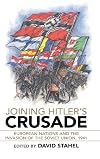
I came across this book by accident after reading European Anabasis. While Anabasis concentrated only on troops that actually participated in the war and contributed to the front, here we have a much wider overview of the way various European states joined the Germans in the attack on Soviet Union. Every essay is written by an expert on the specific country, and it presents a very detailed overview of economic, social, and political forces that put the given country into the collaborationist show more camp.
I was wondering how to write the review of this truly exquisite book, and in the end I figured out that no matter how detailed review is given, people will think it is rant and not review (as was case with some of the books on Allied intervention in Russian Civil War I read before). And I dont want to leave this impression because I think this book needs to be read because (as was case with Allied intervention in 1917) only way of understanding present is through the past. And if past is to be judged then it is obvious that Western Europe, followed by Romania, Hungary, former Czechoslovakia, Balkans (ex-YU), all those small states in the Baltic, Finland, Norway (interesting there is no mention of Sweden here, although it provided volunteers for SS and kept neutrality, very much like Spain for example) to name the few, are constantly in the loop repeating constantly same things every 100 or so years.
The only thing that changes is reason (previously anti-Tsarist fight, then anti-Bolshevism, now .... well Russians!) but target remains the same - so chillingly presented by Rosenberg in 1941, and so depressingly similar to propaganda existing today (I just cannot forget that German woman in 2022 saying how Russians are are different from rest of Europe in their life and values...... disgusting).
But while Finland could be understood to a degree (they saw this as continuation of Winter War - I wonder what they will say for 2020's when this history is written), all the others were either involved in Balkan-like vicious and bloody cycle of revenge (Baltic states - revenge on revenge from both local nationalist sides and Russian Tsarist/Soviet side, dating back to WW1, in background of which horrendous genocide of Jews took place when German collaborators took power), were just out there for land grab (Hungary, Romania) or were just brown-nosing their way keeping fingers crossed Germans will spare them (Balkans and in general all Slavic collaborators, from Ukraine to numerous small independent warlord-like areas on the Russians western border) which was a delusion if there ever was one.
Excellent book, with lots of information on the state of the Europe before and during the WW2, actual situation in the countries that smeared their national past by collaborating with the most bloody regime that ever existed, that aimed for depopulation and complete genocide of numerous peoples in Europe.
Highly recommended. show less
I was wondering how to write the review of this truly exquisite book, and in the end I figured out that no matter how detailed review is given, people will think it is rant and not review (as was case with some of the books on Allied intervention in Russian Civil War I read before). And I dont want to leave this impression because I think this book needs to be read because (as was case with Allied intervention in 1917) only way of understanding present is through the past. And if past is to be judged then it is obvious that Western Europe, followed by Romania, Hungary, former Czechoslovakia, Balkans (ex-YU), all those small states in the Baltic, Finland, Norway (interesting there is no mention of Sweden here, although it provided volunteers for SS and kept neutrality, very much like Spain for example) to name the few, are constantly in the loop repeating constantly same things every 100 or so years.
The only thing that changes is reason (previously anti-Tsarist fight, then anti-Bolshevism, now .... well Russians!) but target remains the same - so chillingly presented by Rosenberg in 1941, and so depressingly similar to propaganda existing today (I just cannot forget that German woman in 2022 saying how Russians are are different from rest of Europe in their life and values...... disgusting).
But while Finland could be understood to a degree (they saw this as continuation of Winter War - I wonder what they will say for 2020's when this history is written), all the others were either involved in Balkan-like vicious and bloody cycle of revenge (Baltic states - revenge on revenge from both local nationalist sides and Russian Tsarist/Soviet side, dating back to WW1, in background of which horrendous genocide of Jews took place when German collaborators took power), were just out there for land grab (Hungary, Romania) or were just brown-nosing their way keeping fingers crossed Germans will spare them (Balkans and in general all Slavic collaborators, from Ukraine to numerous small independent warlord-like areas on the Russians western border) which was a delusion if there ever was one.
Excellent book, with lots of information on the state of the Europe before and during the WW2, actual situation in the countries that smeared their national past by collaborating with the most bloody regime that ever existed, that aimed for depopulation and complete genocide of numerous peoples in Europe.
Highly recommended. show less
Operation Barbarossa and Germany's Defeat in the East (Cambridge Military Histories) by David Stahel
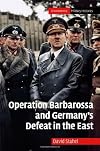
This study is an indication of how far we have come from the era of the "all hail the Wehrmacht" school of military history and the pretense of a German army that was relatively ethical (at least in regards to the Nazi regime). What Stahel does is factor in all the realities of moral connivance and professional incapacity that we now recognize in the conduct of the German military caste into a wide-ranging strategic and operational study of the first two months of the war with Russia. The show more bottom line is Stahel holds that with the battle of Smolensk the vision of Operation Barbarossa as a "shock and awe" war that would bring down the Soviet regime had reached its culmination point and that Germany was already out of good strategic options to win. Which is not to say that Joseph Stalin couldn't find new and interesting ways to lose the war. Apart from that what sticks with me is the vision of Franz Halder, chief of the German General Staff, as a man who seemed to operate in a dreamland, instead of the land of the possible; there were more centers of unreality in Hitler's Germany than the immediate presence of The Fuehrer. show less
Lists
You May Also Like


Associated Authors
Statistics
- Works
- 9
- Also by
- 1
- Members
- 639
- Popularity
- #39,444
- Rating
- 4.4
- Reviews
- 15
- ISBNs
- 63
- Languages
- 3
- Favorited
- 1