
Lauren Tarshis
Author of I Survived the Shark Attacks of 1916!
About the Author
Lauren Tarshis was born in Albuquerque, New Mexico. She is the author of Emma-Jean Lazarus Fell Out of a Tree, Emma-Jean Lazarus Fell in Love, and the I Survived series. She is also an editorial director for language arts at Scholastic, the editor of Storyworks magazine, and oversees Scope show more magazine. Her title, I Survived the Destruction of Pompeii 79 A. D. made The New York Times Best Seller List in 2014. (Bowker Author Biography) show less
Series
Works by Lauren Tarshis
I Survived the Great Molasses Flood, 1919 (I Survived Graphic Novel #11) (I Survived Graphix) 251 copies, 1 review
I Survived the Bombing of Pearl Harbor, 1941 (I Survived Graphic Novel #14) (I Survived Graphix) 3 copies
Sobreviví colección novelas graficas (5 libros) en español (Graphix) | (I Survived Spanish Graphic Novels Series Set, 5 books) (2025) 2 copies
Rebirth at the Earthquake Night (Disaster Survival Children's Fiction) (Chinese Edition) (2015) 1 copy
I Survived 5 stories 1 copy
Tagged
Common Knowledge
- Canonical name
- Tarshis, Lauren
- Birthdate
- 1963-11-23
- Gender
- female
- Occupations
- editor
children's book author - Organizations
- Scholastic
- Agent
- Gail Hochman (Hochman and Brandt)
- Nationality
- USA
- Birthplace
- Albuquerque, New Mexico, USA
- Places of residence
- New York, New York, USA
Connecticut, USA - Associated Place (for map)
- USA
Members
Reviews
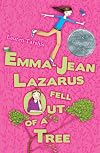
Sweet and charming book about a girl who is governed by logic, and her interactions with the messy and irrational classmates with whom she shares her life. I was able to strongly relate to the protagonist, Emma-Jean; she's never specifically labeled as anything other than "strange," but I could easily see her occupying a place on the autism continuum (and I like the way that Emma-Jean's being "strange" is framed as a positive trait). Altogether, a compelling storyline, difficult to put down show more -- as, with good intentions, Emma-Jean resorts to various forgeries. I kept waiting with apprehension for her ruses to be discovered. show less
Emma-Jean Lazarus is strange–strange as in extraordinary, remarkable, and singular. Much like her father before her, Emma-Jean finds people to be too complicated and illogical and relationships to be too messy. Yet, when she encounters a crying classmate, she makes a decision to walk through the invisible door that separates her from her fellow seventh graders.
Emma-Jean’s heroes are her deceased father Eugene and her father’s hero French mathematician Jules Henri Poincare. Emma-Jean show more embraces Poincare’s maxim that “even the most complex problems could be solved through a process of creative thinking.” She takes this advice to heart, and, with a mixture of logic and creativity (and some graphic design and forgery know-how), she solves her crying classmate’s problem–Problem: nice girl wants to go on a ski trip with her best friend, but her best friend has invited mean girl; Solution: forge a letter to mean girl so that she thinks she has been invited to perform center stage and will forfeit the ski trip she never cared about anyway.
No sooner has she “fixed” this situation than another classmate’s messy problem intertwines with her life. Again, she finds herself involved. Again, she uses logic to “fix” the problem (and at this point, she’s becoming quite skilled at forging documents). Unfortunately, at this point, her solution to the first problem is unraveling, and Emma-Jean both literally and metaphorically winds up falling out of a tree. Along with all of this other mess and complication, Emma-Jean’s also dealing with her feelings regarding her mother’s burgeoning relationship with their upstairs boarder.
Post-tree plunging episode, Emma-Jean’s mother tells her, “Things don’t always work out the way we want them to. We try, and sometimes we get hurt, and sometimes we cry. I guess you could say we even fall out of a tree, in a manner of speaking. But we get up. And the next time we don’t go up the same tree, or maybe we go up, but hold on tighter.”
Emma-Jean ponders what her mother tells her and at the same time she couples her mother’s sagacity with another of Poincare’s sayings, “It is by logic that we prove, but it is in our hearts that we discover life’s possibilities.” Logic-employing, observation-making, research-gathering, Emma-Jean Lazarus discovers that despite the world’s oft-times unfairness and people’s oft-times irrationality, new friendships and deepening relationships are worth the complications.
It is tempting to label Emma-Jean because of her peculiarities and detached reasoning (she has been compared to Mark Haddon’s logical, autistic protagonist Christopher Boone in The Curious Incident of the Dog in the Nighttime). But Emma-Jean is not labeled inside the book, so why should we take the liberty to do so? She’s just complicated–like every other middle schooler in her class.
It’s true that connecting with people does not come naturally for Emma-Jean (it did not come naturally to her father either), but she chooses to participate and to “fall out of the tree.” She’s not the first eccentric protagonist in children’s literature, but she is wholly original, uniquely wise, and completely endearing. My hope is that Tarshis brings Emma-Jean back for more involvement with life and all its messy complications in the near future.
Notable Quotes from the Book:
Hurt feelings, bruised egos, broken promises, betrayed confidences—the list of emotional injuries her fellow seventh graders inflicted on one another was dismayingly long.
Emma Jean liked her peers, “But their behavior was irrational. And as a result, their lives were messy. Emma-Jean disliked disorder of any kind, and had thus made it her habit to keep herself separate, to observe from afar”
When she was much younger, spending time with other children often left her feeling confused, as though she were visiting with creatures of a different species.
Emma-Jean had observed her peers closely over the years. Her painstaking research had given her a much clearer understanding of their complex emotional lives and surprising sensitivities. show less
Emma-Jean’s heroes are her deceased father Eugene and her father’s hero French mathematician Jules Henri Poincare. Emma-Jean show more embraces Poincare’s maxim that “even the most complex problems could be solved through a process of creative thinking.” She takes this advice to heart, and, with a mixture of logic and creativity (and some graphic design and forgery know-how), she solves her crying classmate’s problem–Problem: nice girl wants to go on a ski trip with her best friend, but her best friend has invited mean girl; Solution: forge a letter to mean girl so that she thinks she has been invited to perform center stage and will forfeit the ski trip she never cared about anyway.
No sooner has she “fixed” this situation than another classmate’s messy problem intertwines with her life. Again, she finds herself involved. Again, she uses logic to “fix” the problem (and at this point, she’s becoming quite skilled at forging documents). Unfortunately, at this point, her solution to the first problem is unraveling, and Emma-Jean both literally and metaphorically winds up falling out of a tree. Along with all of this other mess and complication, Emma-Jean’s also dealing with her feelings regarding her mother’s burgeoning relationship with their upstairs boarder.
Post-tree plunging episode, Emma-Jean’s mother tells her, “Things don’t always work out the way we want them to. We try, and sometimes we get hurt, and sometimes we cry. I guess you could say we even fall out of a tree, in a manner of speaking. But we get up. And the next time we don’t go up the same tree, or maybe we go up, but hold on tighter.”
Emma-Jean ponders what her mother tells her and at the same time she couples her mother’s sagacity with another of Poincare’s sayings, “It is by logic that we prove, but it is in our hearts that we discover life’s possibilities.” Logic-employing, observation-making, research-gathering, Emma-Jean Lazarus discovers that despite the world’s oft-times unfairness and people’s oft-times irrationality, new friendships and deepening relationships are worth the complications.
It is tempting to label Emma-Jean because of her peculiarities and detached reasoning (she has been compared to Mark Haddon’s logical, autistic protagonist Christopher Boone in The Curious Incident of the Dog in the Nighttime). But Emma-Jean is not labeled inside the book, so why should we take the liberty to do so? She’s just complicated–like every other middle schooler in her class.
It’s true that connecting with people does not come naturally for Emma-Jean (it did not come naturally to her father either), but she chooses to participate and to “fall out of the tree.” She’s not the first eccentric protagonist in children’s literature, but she is wholly original, uniquely wise, and completely endearing. My hope is that Tarshis brings Emma-Jean back for more involvement with life and all its messy complications in the near future.
Notable Quotes from the Book:
Hurt feelings, bruised egos, broken promises, betrayed confidences—the list of emotional injuries her fellow seventh graders inflicted on one another was dismayingly long.
Emma Jean liked her peers, “But their behavior was irrational. And as a result, their lives were messy. Emma-Jean disliked disorder of any kind, and had thus made it her habit to keep herself separate, to observe from afar”
When she was much younger, spending time with other children often left her feeling confused, as though she were visiting with creatures of a different species.
Emma-Jean had observed her peers closely over the years. Her painstaking research had given her a much clearer understanding of their complex emotional lives and surprising sensitivities. show less
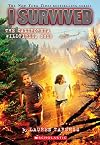
I listened to this with my kids on the way to school, and it was such a great choice! I Survived the California Wildfires, 2018 is part of the I Survived series, and it packs a lot of action, emotion, and suspense into a short read. Josh, an eleven-year-old boy, is adjusting to life in Northern California with his cousins when a deadly wildfire threatens everything around them. It’s a powerful reminder of how quickly things can change and how resilience can carry you through the worst show more situations.
What I really appreciated was how Josh’s emotional journey ran parallel to the literal fight for survival. As someone who’s dealing with a lot of personal changes and grief, his growth felt real and heartfelt. The wildfire scenes were intense but not overly graphic—perfect for younger listeners, though the story does dive into some heavy topics like fear, loss, and family dynamics.
The kids were glued to the story, especially as Josh and his cousins faced the wildfire. They were really engaged and even started talking about the importance of being prepared for emergencies. I loved how Tarshis mixed action with emotional depth, showing that even in life-threatening situations, there’s always room for hope and personal growth.
Overall, it’s a solid book in the I Survived series. It’s both educational and thrilling, making it a great read (or listen!) for kids and parents alike. Would definitely recommend for a family listening session! show less
What I really appreciated was how Josh’s emotional journey ran parallel to the literal fight for survival. As someone who’s dealing with a lot of personal changes and grief, his growth felt real and heartfelt. The wildfire scenes were intense but not overly graphic—perfect for younger listeners, though the story does dive into some heavy topics like fear, loss, and family dynamics.
The kids were glued to the story, especially as Josh and his cousins faced the wildfire. They were really engaged and even started talking about the importance of being prepared for emergencies. I loved how Tarshis mixed action with emotional depth, showing that even in life-threatening situations, there’s always room for hope and personal growth.
Overall, it’s a solid book in the I Survived series. It’s both educational and thrilling, making it a great read (or listen!) for kids and parents alike. Would definitely recommend for a family listening session! show less
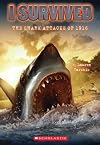
Chet is the new kid in town, living with his uncle and helping out at his diner. It's here that locals start talking about the newspaper accounts of sharks attacking people in the ocean not far from their town. But it's 1916 and no one has ever been attacked by a shark this far north before ... could it be real or not? Chet is about to find out.
So for many years now, I've been seeing these "I Survive" books fly off the shelves at libraries and have wondered what makes them so great that kids show more love them immensely. I decided to download several e-book titles to evaluate them, selecting some books with events I knew a decent amount about already, events I knew a little bit about already, and events I really didn't know anything about previously. This book fits into the second category.
I found this book riveting. The beginning does deal with some of Chet's home problems (always moving, trying to make friends, etc.) but the shark problem is introduced so early on that the reader is always aware of the danger. It probably helped for me that the locale is not far from my last job so I can envision the place (if not necessarily the time period) super easily. The story could be scary but is handled tactfully so that it is adventurous but not gratuitous.
Back matter describes which parts of the books were true and which were fictionalized. (I wish more historical fiction did this!) Some additional facts are included here as well. Black-and-white illustrations throughout are not necessary to tell the story but are a good addition for kids who are more visual or might just want a break in the text for a moment. show less
So for many years now, I've been seeing these "I Survive" books fly off the shelves at libraries and have wondered what makes them so great that kids show more love them immensely. I decided to download several e-book titles to evaluate them, selecting some books with events I knew a decent amount about already, events I knew a little bit about already, and events I really didn't know anything about previously. This book fits into the second category.
I found this book riveting. The beginning does deal with some of Chet's home problems (always moving, trying to make friends, etc.) but the shark problem is introduced so early on that the reader is always aware of the danger. It probably helped for me that the locale is not far from my last job so I can envision the place (if not necessarily the time period) super easily. The story could be scary but is handled tactfully so that it is adventurous but not gratuitous.
Back matter describes which parts of the books were true and which were fictionalized. (I wish more historical fiction did this!) Some additional facts are included here as well. Black-and-white illustrations throughout are not necessary to tell the story but are a good addition for kids who are more visual or might just want a break in the text for a moment. show less
Lists
4th Grade Books (1)
KID BOOKS (1)
Awards


You May Also Like


Associated Authors
Statistics
- Works
- 69
- Members
- 91,818
- Popularity
- #101
- Rating
- 3.9
- Reviews
- 479
- ISBNs
- 799
- Languages
- 10
- Favorited
- 4

