
Avraham Weiss
Author of Spiritual Activism: A Jewish Guide to Leadership and Repairing the World
About the Author
Avi (Avraham) Weiss is senior rabbi of the Hebrew Institute of Riverdale and national president of the Coalition for Jewish Concerns-Amcha a grassroots activist organization.
Works by Avraham Weiss
Tagged
Common Knowledge
There is no Common Knowledge data for this author yet. You can help.
Members
Reviews
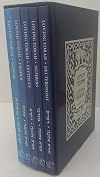
This is a five (5) volume work covering the Jewish Torah (aka The Pentateuch or the first five(5) books of the Christian Old Testament). Right off the bat you recognize that this is an ambitious effort that eventually runs well over 658 pages. Each volume is dedicated to one of the five (5) books and within each volume, the chapters basically cover a specific story within that book, which is further divided into brief commentaries on specific elements within the story. As I come from a show more different tradition than what can be extracted from these commentaries, I can’t really evaluate how faithfully that represent concepts within the Jewish tradition; however, I can say that I found them to be very thought provoking and enjoyable. Most Christian analysis of these books tend to focus on extracting understanding and support for the message presented about Jesus in their New Testament and in many cases have ignored how our cousins in faith have interpreted their own scriptures … and I think we have lost something there. Mostly, however, what I gained from these book is the idea that there are many different ways to interpret, understand and apply the ideals and concepts presented in scripture and they can all be useful for the spiritual pilgrim. show less
 This review was written for LibraryThing Early Reviewers.
In his Preface, the author states that the book's title, "Torat Ahavah," has two messages, stating that "Loving" can be a verb that indicates his passionate love of Torah, or an adjective, noting that "At its core, Torah is a book of love." Related to the second message, I would add that the word "Torah" means teaching--so that not only is love at its core, but also that it actually teaches us about love--in all of its dimensions and by extension, perhaps how to love more completely. My show more zeidi (grandfather) used to say that Torah is a guide for how to live life. Rabbi Weiss is like a tourguide for the reader--starting with a short statement to frame our reading of each portion, then a summary of the portion's highlights, and then takes us deeper into the lesson(s) being taught. Although his analyses are profound, they are easily understood. Whether a beginner to the study of Torah or someone who has studied for years, this beautiful tome is meaningful and accessible, able to raise us up to higher levels of insight. In the end, Torah is not only meant to be loved, it is also meant to be lived. With his easily understood writing style, Rabbi Weiss helps us take the beauty of Torah so we can apply it to our own lives. Yasher ko'ach. show less
This review was written for LibraryThing Early Reviewers.incredibly approachable collection of interpretations of major themes in the Torah. The interpretation is DEFINTELY on of love, and looking at ideas in Torah as positive - even when the surface interpretation would be bad. Rethinking some ideas of "punishment", and changing the perspective to that of "results of a decision" drastically changes the interpretations.
This series of book sis a wonderful, refreshing look at Torah, and is a great introduction to finding new ways to study.
This series of book sis a wonderful, refreshing look at Torah, and is a great introduction to finding new ways to study.
This review was written for LibraryThing Early Reviewers.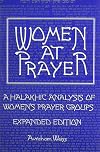
Overall, I think the author did his level best to be impartial and fair-minded and to do a complete review of the subject matter. My personal level of respect for the orthodox establishment has increased notably as a result of this book.
It seems to me that most of the arguments around Women's (what many were initially calling minyanim) prayer groups boil down to questions about the motivation -the real underlying motivation, of each woman who is participating. A bit of a double standard, show more but then we've always been accustomed to that. Weiss generously allows that "participants in women's tefillah groups are primarily motivated by increased Torah learning and not by the feminist movement." His proof is that many of these ladies reject so-called non-halachic options, presumably as in the Masorti/Conservative movement, of which I must admit that I am a part precisely because of the Masorti commitment to halachic observance. Nevertheless, Weis admits throughout his book that women who are sincere in the desire to become closer to Torah are not prohibited from praying together, when that facilitates such closeness and Torah learning more than established "public" outlets like male-dominated fora.
Moving to my specific page notes (unfortunately, I did not have data on a phone, so could not keep running updates as I prefer): P. 9 -did it not occur to the ancient rabbis that women might want to study and write books?
p. 51 "sensational feminist quests" -really? as if this were all just a lark?
p. 63 the Chafetz Chaim and R. Soloveitchik advocated teaching women Talmud
p. 71 if it all boils down to obligation, what about childless/unmarried women?
** Page 74: prayer in the plural ( my adddition: because it 1.) ties each person to the community and 2.) reminds each person of her place in the world, thus 3.) binding each one to the larger Human group/species...
p. 98: with this "clear basis in halacha," why are there ppl opposed to Nshot HaKotel?
p. 105 a womon must pray where her kavanah is MAXimized...
(and via a siddur that helps accomplish that, presumably, as with medieval variations on Birchot haShachar...)
Yet he rules all-women's Tefillah groups to be non-public tefillah. Fine, I like privacy, any way!!
Interesting that Rav Feinstein did not issue a definitive psak din.
To conclude my review, I had had in mind, before reviewing my notes, to make a comment on being glad that we are not presumed to all be stirring up trouble, and thus to be whipped as rebellious women and lesbians were to be during the days of the Beit Din, but the end notes gave me both hope and pause. Hope through his acknowledgment, but pause at his apparent underlying assumption that women in general, or at least feminists in particular, do not have a sense of honor/love for Torah.
Weiss acknowledges that women have learned more, crave more closeness to Torah and more learning, but seems to be unwilling to acknowledge that women also deserve the respect of having our own sense of honor, and commitment to principle. This, for me, is the ikar. That a woman, today, is effectively no different than a man, and that the preference for the home as a woman's domain is both unfair to women, and inefficient for the Human Race.
L'Shalom,
Shira
Let's #EndPoverty & #EndMoneyBail by improving these four parts of our good #PublicDomainInfrastructure 4: (1. #libraries, 2. #ProBono legal aid and Education, 3. #UniversalHealthCare , and 4. good #publictransport )Read, Write, Ranked Choice Voting for ALL!!!!, Walk !
#PublicDomainInfrastructure
ShiraDest
March, 12019 HE show less
It seems to me that most of the arguments around Women's (what many were initially calling minyanim) prayer groups boil down to questions about the motivation -the real underlying motivation, of each woman who is participating. A bit of a double standard, show more but then we've always been accustomed to that. Weiss generously allows that "participants in women's tefillah groups are primarily motivated by increased Torah learning and not by the feminist movement." His proof is that many of these ladies reject so-called non-halachic options, presumably as in the Masorti/Conservative movement, of which I must admit that I am a part precisely because of the Masorti commitment to halachic observance. Nevertheless, Weis admits throughout his book that women who are sincere in the desire to become closer to Torah are not prohibited from praying together, when that facilitates such closeness and Torah learning more than established "public" outlets like male-dominated fora.
Moving to my specific page notes (unfortunately, I did not have data on a phone, so could not keep running updates as I prefer): P. 9 -did it not occur to the ancient rabbis that women might want to study and write books?
p. 51 "sensational feminist quests" -really? as if this were all just a lark?
p. 63 the Chafetz Chaim and R. Soloveitchik advocated teaching women Talmud
p. 71 if it all boils down to obligation, what about childless/unmarried women?
** Page 74: prayer in the plural ( my adddition: because it 1.) ties each person to the community and 2.) reminds each person of her place in the world, thus 3.) binding each one to the larger Human group/species...
p. 98: with this "clear basis in halacha," why are there ppl opposed to Nshot HaKotel?
p. 105 a womon must pray where her kavanah is MAXimized...
(and via a siddur that helps accomplish that, presumably, as with medieval variations on Birchot haShachar...)
Yet he rules all-women's Tefillah groups to be non-public tefillah. Fine, I like privacy, any way!!
Interesting that Rav Feinstein did not issue a definitive psak din.
To conclude my review, I had had in mind, before reviewing my notes, to make a comment on being glad that we are not presumed to all be stirring up trouble, and thus to be whipped as rebellious women and lesbians were to be during the days of the Beit Din, but the end notes gave me both hope and pause. Hope through his acknowledgment, but pause at his apparent underlying assumption that women in general, or at least feminists in particular, do not have a sense of honor/love for Torah.
Weiss acknowledges that women have learned more, crave more closeness to Torah and more learning, but seems to be unwilling to acknowledge that women also deserve the respect of having our own sense of honor, and commitment to principle. This, for me, is the ikar. That a woman, today, is effectively no different than a man, and that the preference for the home as a woman's domain is both unfair to women, and inefficient for the Human Race.
L'Shalom,
Shira
Let's #EndPoverty & #EndMoneyBail by improving these four parts of our good #PublicDomainInfrastructure 4: (1. #libraries, 2. #ProBono legal aid and Education, 3. #UniversalHealthCare , and 4. good #publictransport )Read, Write, Ranked Choice Voting for ALL!!!!, Walk !
#PublicDomainInfrastructure
ShiraDest
March, 12019 HE show less
Statistics
- Works
- 9
- Members
- 102
- Popularity
- #187,250
- Rating
- 4.0
- Reviews
- 8
- ISBNs
- 13
