
Eric Wight
Author of Frankie Pickle and the Closet of Doom
About the Author
Eric Wight first worked in the North Woods as a fire tower watchman, then as a log scaler before joining the Maine Warden Service. He was a game warden for twenty-two years before retiring as a sergeant. As a warden, Wight served as an on-scene commander directing extended search efforts and show more received special training in scuba diving and alpine rescue. Previously published in Down East and Maine Fish and Wildlife magazines, Wight lives in Bethel, Maine. show less
Image credit: NY Comic-Con 2007
Copyright © 2007 Ron Hogan
Copyright © 2007 Ron Hogan
Series
Works by Eric Wight
Associated Works
Captain America by Ed Brubaker Omnibus, Vol. 1 (2007) — Cover artist, some editions — 232 copies, 4 reviews
Tagged
Common Knowledge
- Birthdate
- 1974-11-15
- Gender
- male
- Occupations
- children's book author
illustrator
animator - Nationality
- USA
- Associated Place (for map)
- USA
Members
Reviews
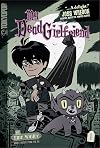
Finney Bleak has the usual set of high school problems--family who doesn't understand him, not fitting in at school, and losing the girl of his dreams. Well, they're not quite USUAL. His family is a group of ghosts who have died unusual and gruesome deaths. Finney knows he is next, and is NOT looking forward to it. His tormentors at Mephisto Prep school include the Deadbeats (led by a vampire), Aberzombies, and witches who push potions. And the girl he wants back? She's dead. But that may be show more the least of Finney's problems. Check out this manga by Eric Wight, also known as the ghost artist from the O.C. show less
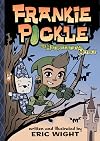
Overwhelmed by the quiz on multiplication and division, Frankie resorts to doodling on the paper instead. Not looking kindly on Frankie’s number monsters filling the page, the teacher gives him another chance to take the quiz. Getting a second chance is a relief in a way but torture in another: it means Frankie needs to study math all weekend. Family members and friends seemingly sabotage his study time but are, in fact, engaging Frankie in real-life math: figuring percents and using show more coupons at the grocery store, playing games that require multiplication and division, and dealing with fractions as he and his dad double the ingredients in the recipe they make. From a story perspective, Frankie’s emotional arc is believable; readers will relate to his worries. While sometimes a bit forced, the mathematical connections create the context for when we really do math. The format has kid appeal, as the story is told in both prose and in graphic format (when Frankie’s imagination takes him on wild adventures). show less
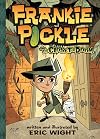
Frankie Pickle leads a life of unending adventure and excitement. He's a daring archeologist, a heroic superhero, a brilliant surgeon, and more. At least, that's what his life is like in his imagination. In real life, Frankie's mom won't stop bugging him to clean up his room. Until one day, she tells him that he never has to clean his room again ... as long as he's prepared for the consequences. Now Frankie is on Cloud Swine. He can make as big a mess in his room as he wants, and soon he's show more not bothering with clean clothes or even bathing. But when the chaos in his room spirals out of control, can even the heroic Frankie Pickle find a way to stop it?
Closet of Doom is presented in a unique fashion, as a chapter book integrated with a graphic novel, and the story switches back and forth seamlessly between the two formats. This unusual structure can serve three functions for young readers. The first is to introduce early readers to comic books. This is not as simple a task as it sounds, since storytelling through sequential art has its own conventions (for example, how emotions like surprise are shown) and these are not always intuitively obvious to new readers. Second, the graphic novel portions can serve as a “bridge” between text chapters, allowing children who have not yet mastered reading to follow part of the plot assisted by the context of visual storytelling. Finally, this same process can work in reverse, enticing a child who may be comfortable with comic books to begin to tackle the greater developmental challenge of reading chapter books.
The story of Closet of Doom may seem simplistic, but its message is far from trivial. Learning to keep one's living space clean and ordered, with “a place for everything and everything in its place”, can be especially challenging for young children. This is made harder by the fact that so few adults have learned this same lesson, and that many of us were raised by children of the Depression who never threw anything away. Learning to deal with all of your “stuff” is an essential coping skill for modern life but also one that most parents are ill-equipped to teach. And while lessons like these are very important for young people to learn, they are also the same lessons that they are the most resistant to learning when being lectured at by adults. Closet of Doom harnesses the power of storytelling to immerse children in an enjoyable tale where they can figure out this lesson for themselves.
Frankie's deal with his mom is the center of this story, but his dad features prominently in the book as well. Frankie's dad is man of many talents who can repair a car or an action figure, but who can also whip up a batch of waffles or freshly-baked cookies. It's nice to see a dad who is not a stereotype - in either direction - and being capable of taking on any role around the house is a necessity for many real-life dads in single dad or two dad households. Closet of Doom is a book that is fun and educational for kids, helpful for emerging readers, and good for dads, too. Review by Book Dads show less
Closet of Doom is presented in a unique fashion, as a chapter book integrated with a graphic novel, and the story switches back and forth seamlessly between the two formats. This unusual structure can serve three functions for young readers. The first is to introduce early readers to comic books. This is not as simple a task as it sounds, since storytelling through sequential art has its own conventions (for example, how emotions like surprise are shown) and these are not always intuitively obvious to new readers. Second, the graphic novel portions can serve as a “bridge” between text chapters, allowing children who have not yet mastered reading to follow part of the plot assisted by the context of visual storytelling. Finally, this same process can work in reverse, enticing a child who may be comfortable with comic books to begin to tackle the greater developmental challenge of reading chapter books.
The story of Closet of Doom may seem simplistic, but its message is far from trivial. Learning to keep one's living space clean and ordered, with “a place for everything and everything in its place”, can be especially challenging for young children. This is made harder by the fact that so few adults have learned this same lesson, and that many of us were raised by children of the Depression who never threw anything away. Learning to deal with all of your “stuff” is an essential coping skill for modern life but also one that most parents are ill-equipped to teach. And while lessons like these are very important for young people to learn, they are also the same lessons that they are the most resistant to learning when being lectured at by adults. Closet of Doom harnesses the power of storytelling to immerse children in an enjoyable tale where they can figure out this lesson for themselves.
Frankie's deal with his mom is the center of this story, but his dad features prominently in the book as well. Frankie's dad is man of many talents who can repair a car or an action figure, but who can also whip up a batch of waffles or freshly-baked cookies. It's nice to see a dad who is not a stereotype - in either direction - and being capable of taking on any role around the house is a necessity for many real-life dads in single dad or two dad households. Closet of Doom is a book that is fun and educational for kids, helpful for emerging readers, and good for dads, too. Review by Book Dads show less
I will admit that I rather had to push myself through this book, but I think it's one of those that will definitely appeal to children, and not so much to an adult reader, which is no bad thing for a children's book.
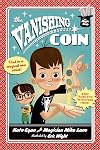
Mike has just started fourth grade and he's already in trouble. It's not that he's a bad kid, he just can't focus or sit still in school. His parents won't let him join the soccer team because they want him to concentrate on his homework, and he has to spend half his afternoons show more at Nora's house. She's not bad, for a girl, but what if someone finds out? Like Jackson, who has bullied him all through school? Plus, she's gifted and he feels stupid around her.
Then they discover a magic shop. Will Mike be able to impress some kids with his magic tricks? Best of all, is there more to magic than just the tricks the owner is teaching him?
Wight's digital black and white illustrations are crisp and attractive and are really clear in illustrating the instructions for various magic tricks that are included in the book. Reading the story, it felt a little didactic and slow-paced, and I was thinking - "it's at a beginning chapter book but it's about a fourth grader so..." until I realized that it's going to appeal exactly to kids like Mike, who won't want to read a massive book, want something they can relate to, and need a fun hook.
So, it's got all of those things. It's only 142 pages long, with nice bold text in a large font and illustrations. Not daunting at all for a reluctant reader. It's going to appeal to kids who want to read stories about kids they can relate to, since it doesn't feature kids improbably taking off on their own or a stereotyped bully. Finally, it's got hooks - the magic tricks and the hints about magic being real.
Verdict: If your library is like mine, you have a lot of kids interested in magic tricks. This will meet the desires of both the kids and their parents, who want them to read chapter books. Recommended.
ISBN: 9781250029140; Published 2014 by Feiwel & Friends; Borrowed from another library in my consortium; Added to the library's order list show less
Mike has just started fourth grade and he's already in trouble. It's not that he's a bad kid, he just can't focus or sit still in school. His parents won't let him join the soccer team because they want him to concentrate on his homework, and he has to spend half his afternoons show more at Nora's house. She's not bad, for a girl, but what if someone finds out? Like Jackson, who has bullied him all through school? Plus, she's gifted and he feels stupid around her.
Then they discover a magic shop. Will Mike be able to impress some kids with his magic tricks? Best of all, is there more to magic than just the tricks the owner is teaching him?
Wight's digital black and white illustrations are crisp and attractive and are really clear in illustrating the instructions for various magic tricks that are included in the book. Reading the story, it felt a little didactic and slow-paced, and I was thinking - "it's at a beginning chapter book but it's about a fourth grader so..." until I realized that it's going to appeal exactly to kids like Mike, who won't want to read a massive book, want something they can relate to, and need a fun hook.
So, it's got all of those things. It's only 142 pages long, with nice bold text in a large font and illustrations. Not daunting at all for a reluctant reader. It's going to appeal to kids who want to read stories about kids they can relate to, since it doesn't feature kids improbably taking off on their own or a stereotyped bully. Finally, it's got hooks - the magic tricks and the hints about magic being real.
Verdict: If your library is like mine, you have a lot of kids interested in magic tricks. This will meet the desires of both the kids and their parents, who want them to read chapter books. Recommended.
ISBN: 9781250029140; Published 2014 by Feiwel & Friends; Borrowed from another library in my consortium; Added to the library's order list show less
Lists
Awards


You May Also Like


Associated Authors
Statistics
- Works
- 9
- Also by
- 6
- Members
- 1,167
- Popularity
- #22,033
- Rating
- 3.7
- Reviews
- 50
- ISBNs
- 49
- Languages
- 3