
Mark V. Wiley
Author of Arthritis Reversed: Groundbreaking 30-Day Arthritis Relief Action Plan
About the Author
Mark V. Wiley is a writer, editor and publisher who has written for numerous martial arts and health publications. He has made numerous trips to the Philippines to research Filipino fighting arts and was certified as a master of Cabales Serrada Escrima by Grandmaster Angel Cabales in 1990. Darren show more G. Tibon is a Serrada Escrima Grandmaster and former student of Angel Cabales. An instructor of Serrada Escrima, he is a co-founder of the Angel's Disciples Escrima Association in Stockton, California, which promotes the art of Serrada Escrima and the values of Angel Cabales. show less
Image credit: Dr. Mark V. Wiley
Works by Mark V. Wiley
Tagged
Common Knowledge
- Gender
- male
Members
Reviews
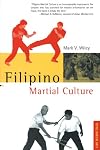
A detailed scholarly account of the Filipino martial culture including histories, interviews, and insights into the cultural significance of weapons, talismans, and martial arts. It was entertaining and insightful. I recommend this to anyone involved in Filipino martial arts.
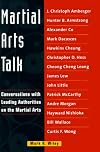
'Martial arts Talk is as informative as it is entertaining...one of the most insightful books on the contemporary history and development of the martial arts ever written. A welcome addition to any martial arts library.'-Martial Arts Illustrated
'...Gems of information on the martial arts, little-known stories, enlightening anecdotes, and a plethora of interesting and relevant information on various aspects of the martial arts.'-Martial Arts Legends
Martial arts are traditions based on legend, show more oral testimonay, and individual perspective. Storytellers, then, are essential to the tradition, offering us an unusual keyhole through which we can better understand and appreciate the martial arts. Martial Arts Talk offers fourteen such keyholes through which, in individual chapters, the reader can discover the history and development of Japanese, Okinawan, Chinese, and Filipino martial arts, Bruce Lee, the martial arts film genre, and the publishing business through which the martial arts have been documented.
Bill Wallace, Hawkins Cheung, Patrick McCarthy, Hayward Nishioka, John Little-these are just a few of the eminant martial arts authorities whose conversations with Mark Wiley are set out in this volume. In stimulating, personal, and informative discussions, the interviews reveal not only personalities, but also details of the study, practice, teaching, compeition, research, and writing of each. More than a mere collection of interviews, Martial arts Talk is an open dialogue through which ideas are explored and common mispercetions remedied.
Mark V. Wiley, one of the world's foremost martial arts researchers and writers, has traveled extensively, researching and interviewing other leading authorities on the martial arts. He has written for most of the major martial arts magazines, incuding The Journal of Asian Martial Arts, Inside Kung-Fu, and Black belt. He is the author of Filipino Martial arts: Cabales Serrada Escrima (1994), Filipino Martial Culture (1997) , and Qigong for Health and Well-Being (1999), all from Tuttle Publishing.
Contents
Introduction
Part One The martial arts of a country
The history and evolution Okinawan martial arts-Patrick McCarthy
The history of kung-fu in the Philippines-Alexander Co
The evolution of European sword arts-J. Christoph Amberger
Part Two On individual systems and styles
Chuka Shaolin: Art of the Phoenix-Eye fist-Cheong Cheng Leong
Fighting theories and principles of Wing Chun Kuen-Hawkins Cheung
The art and philosophy of Jeet Kune Do-John LIttle
Part Three Martial arts as sport
The history and evolution of Judo-Hayward Nishioka
The history of martial sports in America-Bill Wallace
Part Four Martial arts and entertainment
The martial arts film genre-Andre Morgan
A career in martial art films and television-Mark Dacascos
Martial arts stunts and action choreography
Part Five Martial arts research and publishing
Hoplology and combative culture-Hunter B. Armstrong
Martial arts book and magazine publishing-Curtis F. Wong
Part Six Martial arts and life
Toward a total quality martial art-Christopher D. Hess
Afterword
About the author show less
'...Gems of information on the martial arts, little-known stories, enlightening anecdotes, and a plethora of interesting and relevant information on various aspects of the martial arts.'-Martial Arts Legends
Martial arts are traditions based on legend, show more oral testimonay, and individual perspective. Storytellers, then, are essential to the tradition, offering us an unusual keyhole through which we can better understand and appreciate the martial arts. Martial Arts Talk offers fourteen such keyholes through which, in individual chapters, the reader can discover the history and development of Japanese, Okinawan, Chinese, and Filipino martial arts, Bruce Lee, the martial arts film genre, and the publishing business through which the martial arts have been documented.
Bill Wallace, Hawkins Cheung, Patrick McCarthy, Hayward Nishioka, John Little-these are just a few of the eminant martial arts authorities whose conversations with Mark Wiley are set out in this volume. In stimulating, personal, and informative discussions, the interviews reveal not only personalities, but also details of the study, practice, teaching, compeition, research, and writing of each. More than a mere collection of interviews, Martial arts Talk is an open dialogue through which ideas are explored and common mispercetions remedied.
Mark V. Wiley, one of the world's foremost martial arts researchers and writers, has traveled extensively, researching and interviewing other leading authorities on the martial arts. He has written for most of the major martial arts magazines, incuding The Journal of Asian Martial Arts, Inside Kung-Fu, and Black belt. He is the author of Filipino Martial arts: Cabales Serrada Escrima (1994), Filipino Martial Culture (1997) , and Qigong for Health and Well-Being (1999), all from Tuttle Publishing.
Contents
Introduction
Part One The martial arts of a country
The history and evolution Okinawan martial arts-Patrick McCarthy
The history of kung-fu in the Philippines-Alexander Co
The evolution of European sword arts-J. Christoph Amberger
Part Two On individual systems and styles
Chuka Shaolin: Art of the Phoenix-Eye fist-Cheong Cheng Leong
Fighting theories and principles of Wing Chun Kuen-Hawkins Cheung
The art and philosophy of Jeet Kune Do-John LIttle
Part Three Martial arts as sport
The history and evolution of Judo-Hayward Nishioka
The history of martial sports in America-Bill Wallace
Part Four Martial arts and entertainment
The martial arts film genre-Andre Morgan
A career in martial art films and television-Mark Dacascos
Martial arts stunts and action choreography
Part Five Martial arts research and publishing
Hoplology and combative culture-Hunter B. Armstrong
Martial arts book and magazine publishing-Curtis F. Wong
Part Six Martial arts and life
Toward a total quality martial art-Christopher D. Hess
Afterword
About the author show less
Widely practiced but little understood, the Filipino martial arts have a rich history and distinctive character that until now, has not been fully documented. Written in the context of Philippine history and culture, Filipino Martial Culture uncovers the esoteric components of the Filiino martial arts and the life-histories of the men who perpetuate them. Incuded are: the history of turbulence and ar inthe Philippines form prehsitoric times to the present daiy; the cultuere of the filipino show more martial arts, including the warrior ethos and worldview, spiritualitiy, folklore, and weaponry; biographical sketches of eighteen Filipino masters and descriptions of their respective fighting styles; and a comparative study of the ethos, ideology, and development of the Filipion martial arts in relation to the considerable martial traditions of India, China, and Japan.
In the course of his research, internationalliy renowned martial arts master and scholar Mark V. Wiley traveled the globe, interviewing top masters and recording their life histories, thoughts, and anecdotes. In addition, he collected 320 historical photographs and illustrations, including step-by-step sequences of the masters demonstrating the distinctive techniques of their particular martial styles. Certain to become a classic reference for practitioners and researchers alike, Filipino Martial Culture has set a new standard for martial arts writings.
Contents
Foreword by Michael Maliszewski, Ph.D.
Author's preface
Part one General introduction
1 Background investigation
Introduction
Review of literature
Research methods
Spelling and name designations
Part Two Historical perspective
2 The prehistoric era
An island and its people
Early inhabitants
The legend of ten Datus
The introduction of Islam
3 The Colonial period
On the shores of Mactan
A Spanish colony
The cry for fredom
4 the Twentieth cCentruy
American intervention
Philippine insurrection
World War II and after
Reemergence of a warrior's art
Part Three Community, culutre, and artifacts
5 Ethos and worldview of the Filipino warrior
introduction
Dimensions of the physical arts
Spiritual/religious ideology
Psychological framework
6 Structure, rites, and symbols
Introduction
Social structure, status, and titles
Sacred time and space
Rites of passage, liminality, and communitas
Rites of initiation and status elevation
Symbols, metaphirs, and meaning
7 Folk performance, festivity, and celebration
Introduction
Martial folk festival
Martial folk drama
Martial folk dance
8 Typology of weaons
Intorduction
Origin and classification of Filipino weaons-Slash and thrust weapons; Impact weapons; Flexible wapons; Projectile weaons; Protectants
Wapons as cultural artifacts
Part Four Contemporary masters and marital arts introduction
9 Herminio Binas (Binas dynamic arnis)
10 Angel Cabales (Cabales Serrada Escrima)
11 Carlos Escorpizo (Arnis Escorpizo)
12 Ramiro Estalilla (Rigonan-Estalilla Kabaroan)
13 Ray Galang (Hagibis)
14 Meliton Geronimo (Sikaran)
15 Leo Giron (Giron Arnis/Escrima)
16 Antoinio Ilustrisimo (Kali Ilustrisimo)
17 Carlito Lanada (Kuntaw Lima-Lima)
18 Porferio Lanada (Arnis Lanada)
19 Benjamin Luna Lema (Lightning scientific arnis)
20 Amante Marinas (Pananandata Marinas)
21 Christopher Ricketts (Sagasa)
22 Edgar Sulite (Lameco Eskrima)
23 Bobby Taboada (Balintawak Arnis Cuentada)
24 Sam Tendencia (Tendencia Arnis-Hilt)
25 Raymond Tobosa (Tobosa Kali-Escrima)
26 Florendo visitacion (Vee Arnis Jitsu)
Part Five Summary and conclusion
27 The classification and ethos of Filipino martial traditions
Introduction
Classification of Filipino martial arts
The 'ancient' system
The 'classical' system
The 'modern' system
Ethos of Filipino martial culture
Appendixes
1 Generic terms for the Filipino art of weaponry
2 Styles of Filipino fighting techniques
3 Name classifications of Filipino martial arts
4 Systems of Filipon martial arts
References cited
Glossary
Bibliography
Index show less
In the course of his research, internationalliy renowned martial arts master and scholar Mark V. Wiley traveled the globe, interviewing top masters and recording their life histories, thoughts, and anecdotes. In addition, he collected 320 historical photographs and illustrations, including step-by-step sequences of the masters demonstrating the distinctive techniques of their particular martial styles. Certain to become a classic reference for practitioners and researchers alike, Filipino Martial Culture has set a new standard for martial arts writings.
Contents
Foreword by Michael Maliszewski, Ph.D.
Author's preface
Part one General introduction
1 Background investigation
Introduction
Review of literature
Research methods
Spelling and name designations
Part Two Historical perspective
2 The prehistoric era
An island and its people
Early inhabitants
The legend of ten Datus
The introduction of Islam
3 The Colonial period
On the shores of Mactan
A Spanish colony
The cry for fredom
4 the Twentieth cCentruy
American intervention
Philippine insurrection
World War II and after
Reemergence of a warrior's art
Part Three Community, culutre, and artifacts
5 Ethos and worldview of the Filipino warrior
introduction
Dimensions of the physical arts
Spiritual/religious ideology
Psychological framework
6 Structure, rites, and symbols
Introduction
Social structure, status, and titles
Sacred time and space
Rites of passage, liminality, and communitas
Rites of initiation and status elevation
Symbols, metaphirs, and meaning
7 Folk performance, festivity, and celebration
Introduction
Martial folk festival
Martial folk drama
Martial folk dance
8 Typology of weaons
Intorduction
Origin and classification of Filipino weaons-Slash and thrust weapons; Impact weapons; Flexible wapons; Projectile weaons; Protectants
Wapons as cultural artifacts
Part Four Contemporary masters and marital arts introduction
9 Herminio Binas (Binas dynamic arnis)
10 Angel Cabales (Cabales Serrada Escrima)
11 Carlos Escorpizo (Arnis Escorpizo)
12 Ramiro Estalilla (Rigonan-Estalilla Kabaroan)
13 Ray Galang (Hagibis)
14 Meliton Geronimo (Sikaran)
15 Leo Giron (Giron Arnis/Escrima)
16 Antoinio Ilustrisimo (Kali Ilustrisimo)
17 Carlito Lanada (Kuntaw Lima-Lima)
18 Porferio Lanada (Arnis Lanada)
19 Benjamin Luna Lema (Lightning scientific arnis)
20 Amante Marinas (Pananandata Marinas)
21 Christopher Ricketts (Sagasa)
22 Edgar Sulite (Lameco Eskrima)
23 Bobby Taboada (Balintawak Arnis Cuentada)
24 Sam Tendencia (Tendencia Arnis-Hilt)
25 Raymond Tobosa (Tobosa Kali-Escrima)
26 Florendo visitacion (Vee Arnis Jitsu)
Part Five Summary and conclusion
27 The classification and ethos of Filipino martial traditions
Introduction
Classification of Filipino martial arts
The 'ancient' system
The 'classical' system
The 'modern' system
Ethos of Filipino martial culture
Appendixes
1 Generic terms for the Filipino art of weaponry
2 Styles of Filipino fighting techniques
3 Name classifications of Filipino martial arts
4 Systems of Filipon martial arts
References cited
Glossary
Bibliography
Index show less
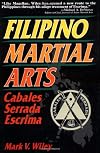
Escrima, one of the three major Filipino martial arts, is a complete syetem of self-defense, encompassing both armed and unarmed combat. The Cabales Serrada style was created by Grandmaster Angel Cabales, one of the Philippines' most famous Escrimadors (masters of escrima), survivor of countless death matches, and first man to teach escrima in the United States. Grandmaster Cabales asked Mark V. Wiley, one of this master-level students, to write the definitve work on his art.
In this detailed show more work, Mark V. Wiley describes the basic strikes, blocks, counters, and disarms of this dynamic fighting system. A highly effective, well-rounded warrior art, Serrada Escrima uses basic stick-fighting movements that are equally applicable in both unarmed and knife fighting.
Profusely illustrated, this text describes not only the techniques but also the history and philosophy of the Filipino fighting arts and their relevance in the arts today. Filipino Martial Arts: Cabales Serrada Escrima is an essential additon to any martial arts library.
Professor Mark V. Wiley was awarded his Master's degree (pangulong guro) in Cabales Serrada Escrima by Grandmaster Cabales in March 1990. He is president of the Filipino Warrior Arts Asssociation, vice-president of the Binas Arnis Association, and has written for such publications as Black Belt, Inside Kung-Fu, M.A. Training, Karate/Kung-Fu Illustrated, Filipino Warrior Arts Journal, Eskrima Review, Tambuli, and The Journal of Asian Martial Arts.
Contents
Foreword by Grandmaster Angel Cabales
Foreword by Mike Yong
Acknowledgments
Introduction
Part One: The history and philosophy of escrima
1 Preliminary background
History of escrima
2 The evolution of Serrada Escrima
Felicisimo Dizon
Angel Cabales
Development of the system
Legacy of the Grandmaster
3 Filipino cultural beliefs
The spiritual beliefs-Anting-anting; Oracion; Juramentado
Their relevance in serrada escrima
4 Psychological attributes
Awareness
Motivation
Imagery
Emotional control
5 Concepts needed for practice
Progressions in training
The path of proficiency
Escrima as an art and science
Part Two: The fundamentals of practice
6 The arsenal of serrada escrima
Anatomical weapons-Dagger hand (tagang kamay); C-hand (Ipit kamay); Fist (suntok); Forearm (bisig); Knee (tuhod); Foot (paa)
The escrima stick-Materials; Finding the proper length; Gripping the stick
The sword and dagger-The espada; The daga
7 The foundation of serrada escrima
Body positions-The natural position (tindig luwagan); The attention position (tindig paggalang); The courtesy salutation (bigay galang); The ready position (tindig serrada); The lock and block position (laban tayong)
Footwork-Zoning (pook); Triangle stepping (hakbang tatsulock); Replacement stepping (salit-salit)
The concept of distance-Distancia de fuera; Distancia larga mano; Distancia medio; Distancia corto
Striking qualities-Primero; Lobtik; Witik; Abaniko; Arko
Proper body mechanics
The alive hand (bantay kamay)-Explanation; Positions; Use in blocking
Part Three: The essentials of escrima combat
The twelve angles of attack
Theoriiy and purpose
The nucleus of a system
Analysis of the twelve angles
A. Angle one: Forehand strike to collarbone (anggulo isa: tagang san miguel)
B. Angle two: Backhand strike to collarbone (anggulo dalawa: bartikal)
C. Angle three: Forehand strike to hip (anggulo tatlo: tabas talahib)
D. Angle four: Thrust to sternum and backhand strike to hip (anggulo apat: saksak at tagang alanganin)
E. Angle five: Thrust to stomach (anggulo lima: saksak sa sikmura)
F. Angle six: Forehand thrust to shoulder (anggulo anim: saksak sa kanan)
G. Angle seven: Backhand thrust to shoulder (anggulo pito: saksak sa kaliwa)
H. Angle eight: Backhand strike to chest (anggulo walo: tagang alanganin)
I. Angle nine: Backhand strike to knee (anggulo siyam: aldabis sa ilalim)
J. Angle ten: Thrusts to chest and throat (anggulo sampu: saksak sa kanan)
K. Angle eleven: Forehand strike to knee (anggulo labing-isa: saboy)
L. Angle twelve: Matador's thrust (anggulo labindalawa: dalawang bulusok)
9 Basic stick defenses
Cokuntering the single stick
A. Angle one: Cross block (anggulo isa: sangga kruzada)
B. Angle two: Outside block (anggulodalawa: sangga sa labas)
C. Angle three: Two-step pass (anggulo tatlo: dalawang hakbang pasunod)
D. Angle four: Flip block (anggulo apat: Sangga abaniko)
E. Angle five: Cross block (anggulo lima: sangga kruzada)
F. Angle six: Outside block (anggulo anim: sangga sa labas)
G. Angle seven: Shoulder block (anggulo pito: sangga balikat)
H. Angle eight: Punch block (anggulo walo: sangga suntok)
I. Angle nine: Flip block (anggulo siyam: sangga abaniko)
J. Angle ten: Inside block (anggulo sampu: sangga sa loob)
K. Angle eleven: One-step pass (anggulo labing-isa: isang hakbang pasunod)
L. Angle twelve: Outside block (anggulo labindalawa: sangga sa lagas)
10 The unarmed defensive system
Blocking methods-Cross block (sangga kruzada); C-hand (ipit kamay); Outside block (sangga sa labas)
Joint locks-Joint lock one (trankada ng kasukasuan isa); Joint lock two (trankada ng kasukasuan dalawa); Joint lock three (trankada ng kasukasuan tatlo); Joint lock four (trankada ng kasukasuan apat)
Body locks-Body lock one (trankada ng katawan isa); Body lock two (trankada ng katawan dalawa); Body lock three (trankada ng katawan tatlo); Body lock four (trankada ng katawan apat)
11 Basic techniques of disarming
empty-hand disarms
Angle one disarm (agaw anggulo isa)
Angle two disarm (agaw anggulo dalawa)
Angle three disarm (agaw anggulo tatlo)
Angle four disarm (agaw anggulo apat)
Angle five disarm (agaw anggulo lima)
Angle six disarm (agaw anggulo anim)
Angle seven disarm (agaw anggulo pito)
Angle eight disarm (agaw anggulo walo)
Angle nine disarm (agaw anggulo siyam)
Angle ten disarm (agaw anggulo sampu)
Angle eleven disarm (agaw anggulo labing-isa)
Angle twelve disarm (agaw anggulo labindalawa)
Aferword
Lineage of Cabales Serrada Escrima
Glossary of Filipino terms show less
In this detailed show more work, Mark V. Wiley describes the basic strikes, blocks, counters, and disarms of this dynamic fighting system. A highly effective, well-rounded warrior art, Serrada Escrima uses basic stick-fighting movements that are equally applicable in both unarmed and knife fighting.
Profusely illustrated, this text describes not only the techniques but also the history and philosophy of the Filipino fighting arts and their relevance in the arts today. Filipino Martial Arts: Cabales Serrada Escrima is an essential additon to any martial arts library.
Professor Mark V. Wiley was awarded his Master's degree (pangulong guro) in Cabales Serrada Escrima by Grandmaster Cabales in March 1990. He is president of the Filipino Warrior Arts Asssociation, vice-president of the Binas Arnis Association, and has written for such publications as Black Belt, Inside Kung-Fu, M.A. Training, Karate/Kung-Fu Illustrated, Filipino Warrior Arts Journal, Eskrima Review, Tambuli, and The Journal of Asian Martial Arts.
Contents
Foreword by Grandmaster Angel Cabales
Foreword by Mike Yong
Acknowledgments
Introduction
Part One: The history and philosophy of escrima
1 Preliminary background
History of escrima
2 The evolution of Serrada Escrima
Felicisimo Dizon
Angel Cabales
Development of the system
Legacy of the Grandmaster
3 Filipino cultural beliefs
The spiritual beliefs-Anting-anting; Oracion; Juramentado
Their relevance in serrada escrima
4 Psychological attributes
Awareness
Motivation
Imagery
Emotional control
5 Concepts needed for practice
Progressions in training
The path of proficiency
Escrima as an art and science
Part Two: The fundamentals of practice
6 The arsenal of serrada escrima
Anatomical weapons-Dagger hand (tagang kamay); C-hand (Ipit kamay); Fist (suntok); Forearm (bisig); Knee (tuhod); Foot (paa)
The escrima stick-Materials; Finding the proper length; Gripping the stick
The sword and dagger-The espada; The daga
7 The foundation of serrada escrima
Body positions-The natural position (tindig luwagan); The attention position (tindig paggalang); The courtesy salutation (bigay galang); The ready position (tindig serrada); The lock and block position (laban tayong)
Footwork-Zoning (pook); Triangle stepping (hakbang tatsulock); Replacement stepping (salit-salit)
The concept of distance-Distancia de fuera; Distancia larga mano; Distancia medio; Distancia corto
Striking qualities-Primero; Lobtik; Witik; Abaniko; Arko
Proper body mechanics
The alive hand (bantay kamay)-Explanation; Positions; Use in blocking
Part Three: The essentials of escrima combat
The twelve angles of attack
Theoriiy and purpose
The nucleus of a system
Analysis of the twelve angles
A. Angle one: Forehand strike to collarbone (anggulo isa: tagang san miguel)
B. Angle two: Backhand strike to collarbone (anggulo dalawa: bartikal)
C. Angle three: Forehand strike to hip (anggulo tatlo: tabas talahib)
D. Angle four: Thrust to sternum and backhand strike to hip (anggulo apat: saksak at tagang alanganin)
E. Angle five: Thrust to stomach (anggulo lima: saksak sa sikmura)
F. Angle six: Forehand thrust to shoulder (anggulo anim: saksak sa kanan)
G. Angle seven: Backhand thrust to shoulder (anggulo pito: saksak sa kaliwa)
H. Angle eight: Backhand strike to chest (anggulo walo: tagang alanganin)
I. Angle nine: Backhand strike to knee (anggulo siyam: aldabis sa ilalim)
J. Angle ten: Thrusts to chest and throat (anggulo sampu: saksak sa kanan)
K. Angle eleven: Forehand strike to knee (anggulo labing-isa: saboy)
L. Angle twelve: Matador's thrust (anggulo labindalawa: dalawang bulusok)
9 Basic stick defenses
Cokuntering the single stick
A. Angle one: Cross block (anggulo isa: sangga kruzada)
B. Angle two: Outside block (anggulodalawa: sangga sa labas)
C. Angle three: Two-step pass (anggulo tatlo: dalawang hakbang pasunod)
D. Angle four: Flip block (anggulo apat: Sangga abaniko)
E. Angle five: Cross block (anggulo lima: sangga kruzada)
F. Angle six: Outside block (anggulo anim: sangga sa labas)
G. Angle seven: Shoulder block (anggulo pito: sangga balikat)
H. Angle eight: Punch block (anggulo walo: sangga suntok)
I. Angle nine: Flip block (anggulo siyam: sangga abaniko)
J. Angle ten: Inside block (anggulo sampu: sangga sa loob)
K. Angle eleven: One-step pass (anggulo labing-isa: isang hakbang pasunod)
L. Angle twelve: Outside block (anggulo labindalawa: sangga sa lagas)
10 The unarmed defensive system
Blocking methods-Cross block (sangga kruzada); C-hand (ipit kamay); Outside block (sangga sa labas)
Joint locks-Joint lock one (trankada ng kasukasuan isa); Joint lock two (trankada ng kasukasuan dalawa); Joint lock three (trankada ng kasukasuan tatlo); Joint lock four (trankada ng kasukasuan apat)
Body locks-Body lock one (trankada ng katawan isa); Body lock two (trankada ng katawan dalawa); Body lock three (trankada ng katawan tatlo); Body lock four (trankada ng katawan apat)
11 Basic techniques of disarming
empty-hand disarms
Angle one disarm (agaw anggulo isa)
Angle two disarm (agaw anggulo dalawa)
Angle three disarm (agaw anggulo tatlo)
Angle four disarm (agaw anggulo apat)
Angle five disarm (agaw anggulo lima)
Angle six disarm (agaw anggulo anim)
Angle seven disarm (agaw anggulo pito)
Angle eight disarm (agaw anggulo walo)
Angle nine disarm (agaw anggulo siyam)
Angle ten disarm (agaw anggulo sampu)
Angle eleven disarm (agaw anggulo labing-isa)
Angle twelve disarm (agaw anggulo labindalawa)
Aferword
Lineage of Cabales Serrada Escrima
Glossary of Filipino terms show less
You May Also Like


Statistics
- Works
- 12
- Members
- 176
- Popularity
- #121,981
- Rating
- 3.1
- Reviews
- 4
- ISBNs
- 15