
Katharine K. Wilkinson
Author of Drawdown: The Most Comprehensive Plan Ever Proposed to Reverse Global Warming
About the Author
Works by Katharine K. Wilkinson
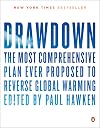
Drawdown: The Most Comprehensive Plan Ever Proposed to Reverse Global Warming (2016) — Senior Writer — 628 copies, 13 reviews
All We Can Save: Truth, Courage, and Solutions for the Climate Crisis (2020) — Editor; Narrator, some editions — 469 copies, 12 reviews
Tagged
Common Knowledge
- Gender
- female
- Education
- University of Oxford (D.Phil)
Sewanee (BA) - Nationality
- USA
- Places of residence
- Atlanta, Georgia, USA
- Associated Place (for map)
- Georgia, USA
Members
Reviews
Maybe a decade ago now, I read “Blessed Unrest.” What I took away from this book was that humanity is responding to global warming on a massive scale in a decentralized and intuitive way. People all over the world are working in concert, without the need for centralized planning, or even an awareness of each others work, due to something innate in us.
Well, it seems like Hawken’s faith in humanity has waned over the intervening years. His new book, “Drawdown,” has its foundations show more not in cultural or spiritual realms, but instead is grounded in hard science, technology, and numbers. The book proclaims that it is “the most comprehensive plan ever proposed to reverse global warming,” and I don’t doubt it. Almost a hundred researches worked years to prepare this material, and each of the hundred solutions presented in the books is backed by a thirty-page technical white paper (available on their website), and cumulatively, their models cite tens of thousands of sources and millions of data points.
So, where does all of this get us? In the “plausible” scenario (conservatively optimistic), between 2020 and 2050 we “reduce” atmospheric CO2 emission equivalents by one teraton, and spend a net amount of $30 trillion. Supposedly this will stabilize atmospheric carbon, but not move us significantly into drawdown. In other words, if things go according to plan, we’ll still be stuck somewhere above 400ppm of carbon in the atmosphere at 2050, locking in catastrophic global warming (as the upper region of the “safe” limit is 350ppm).
For all the creative, amazing, and fascinating scenarios drawn up over the course of the book, I dearly wish that more weight was given to the social, political, and cultural aspects of this conversation. Ultimately, our technological “solutions” are nested within this context, and if anything, are more important than the solutions themselves.
So what kind of solutions are we talking about? As you guessed, green energy is part of the picture. But one of the biggest sectors under investigation was our relationship with land (primarily via agriculture and forestry). Other areas include Women and Girls, Buildings and Cities, Transport, Materials, and Coming Attractions (visionary but unproven concepts).
In some ways, this is a reactionary text. Fossil fuel companies knew what climate change was back in the ‘70s and ‘80s. By the ‘90s people understood it was a serious issue, and there were lots of good ideas about what we could do about it. And then the climate change deniers came along, and the whole backlash against preserving the future of humanity. And here we are well into the second decade of the 21st century—with our climate spiraling out of the range in which human habitation can occur, and, at least in the US, a political climate that will sooner implement Universal Basic Income and pay Reparations then address climate change in a substantive way.
In other words, well-meaning NorCal progressives like Hawken are freaking out—and for good reason! I too have found myself engaging in activities explicitly addressing climate change, even though I fundamentally believe that climate change is a surface-level issue that can only be solved by addressing more fundamental systems (such as culture). I don’t think we’re wasting our time to get all analytical on these issues. But I strongly recommend (for myself as much as others), that we don’t lose our felt sense of a connection with the words of mentors and organizations like Charles Eisenstein, Martin Prechtel, Timothy Morton, J. G. Bennett, and the Dark Mountain Project (as well as the younger and more idealistic version of Hawken) that remind us that climate change can only be addressed from a living-systems perspective that goes beyond solar panels, electric vehicles, and closed-loop recycling.
Drawdown is a page-turner for prescient geeks scrambling to hedge against the Anthropocene Extinction. I recommend you go out and get yourself a copy—you’ll be referencing it for years to come. But don’t stop there! Remember to commune with the more-than-human-world in which you’re immersed, make the space to grieve for the violence of these times, and ground into holistic work that lives into the now in a balanced and deeply human way. show less
Well, it seems like Hawken’s faith in humanity has waned over the intervening years. His new book, “Drawdown,” has its foundations show more not in cultural or spiritual realms, but instead is grounded in hard science, technology, and numbers. The book proclaims that it is “the most comprehensive plan ever proposed to reverse global warming,” and I don’t doubt it. Almost a hundred researches worked years to prepare this material, and each of the hundred solutions presented in the books is backed by a thirty-page technical white paper (available on their website), and cumulatively, their models cite tens of thousands of sources and millions of data points.
So, where does all of this get us? In the “plausible” scenario (conservatively optimistic), between 2020 and 2050 we “reduce” atmospheric CO2 emission equivalents by one teraton, and spend a net amount of $30 trillion. Supposedly this will stabilize atmospheric carbon, but not move us significantly into drawdown. In other words, if things go according to plan, we’ll still be stuck somewhere above 400ppm of carbon in the atmosphere at 2050, locking in catastrophic global warming (as the upper region of the “safe” limit is 350ppm).
For all the creative, amazing, and fascinating scenarios drawn up over the course of the book, I dearly wish that more weight was given to the social, political, and cultural aspects of this conversation. Ultimately, our technological “solutions” are nested within this context, and if anything, are more important than the solutions themselves.
So what kind of solutions are we talking about? As you guessed, green energy is part of the picture. But one of the biggest sectors under investigation was our relationship with land (primarily via agriculture and forestry). Other areas include Women and Girls, Buildings and Cities, Transport, Materials, and Coming Attractions (visionary but unproven concepts).
In some ways, this is a reactionary text. Fossil fuel companies knew what climate change was back in the ‘70s and ‘80s. By the ‘90s people understood it was a serious issue, and there were lots of good ideas about what we could do about it. And then the climate change deniers came along, and the whole backlash against preserving the future of humanity. And here we are well into the second decade of the 21st century—with our climate spiraling out of the range in which human habitation can occur, and, at least in the US, a political climate that will sooner implement Universal Basic Income and pay Reparations then address climate change in a substantive way.
In other words, well-meaning NorCal progressives like Hawken are freaking out—and for good reason! I too have found myself engaging in activities explicitly addressing climate change, even though I fundamentally believe that climate change is a surface-level issue that can only be solved by addressing more fundamental systems (such as culture). I don’t think we’re wasting our time to get all analytical on these issues. But I strongly recommend (for myself as much as others), that we don’t lose our felt sense of a connection with the words of mentors and organizations like Charles Eisenstein, Martin Prechtel, Timothy Morton, J. G. Bennett, and the Dark Mountain Project (as well as the younger and more idealistic version of Hawken) that remind us that climate change can only be addressed from a living-systems perspective that goes beyond solar panels, electric vehicles, and closed-loop recycling.
Drawdown is a page-turner for prescient geeks scrambling to hedge against the Anthropocene Extinction. I recommend you go out and get yourself a copy—you’ll be referencing it for years to come. But don’t stop there! Remember to commune with the more-than-human-world in which you’re immersed, make the space to grieve for the violence of these times, and ground into holistic work that lives into the now in a balanced and deeply human way. show less
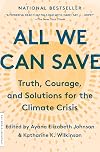
Best book I have read on solutions for climate change. Essays and poems by 60 women authors. I didn't necessarily agree with every one of the essays, but they are all thought provoking, and I did agree with the great majority of them.
Maybe the best title ever. It is what it says - the Most Comprehensive Plan Ever Proposed to Reverse Global Warming. In it are 100 environmental practices, ranked from 1 to 100 as most impactful. Most take just two pages, include ample descriptions for the noob, and give a summarized breakdown of the numbers. Tons and tons of researchers and contributors worked to make this book and thousands of references, but it's stylized and written to communicate, not overwhelm. In short, it's show more brilliant, and one of the most hopeful (and needed) projects I know of.
For me, it felt like environmental science 101. Maybe you have, but I hadn't ever heard of Methane Digesters, Grid Flexibility, Silvopasture, or Utility Scale Photovoltics. Each are important for drawing down the amount of carbon in the atmosphere.
However, most important were the practical implications of the research. You might, "What can I actually do to reduce global warming?" This book is the "most comprehensive" answer to that question. So, things like adding solar panels, (eventually) trading our gas car for something electric, etc. everyone knows. Now it feels a little more pressing. But in particular, going to a plant based diet was (I believe) #3 or #4 most impactful practices. Zen master Thich Nhat Hanh has said, making the transition to a plant-based diet may be the most effective way an individual can stop climate change. I didn't realize this... and that doesn't even include the other reasons for going vegetarian.
Two others that surprised me were educating girls globally and family planning (#6 & #7), which go together. When we educate girls, we are improving the lives of families. Children are healthier, happier and fewer in number when girls are educated. This is vital!
Drawdown is also a non-profit, who happened to produce this wonderful book. Learn more at drawdown.org.
This is so important and I'm thankful for the work they're doing. show less
For me, it felt like environmental science 101. Maybe you have, but I hadn't ever heard of Methane Digesters, Grid Flexibility, Silvopasture, or Utility Scale Photovoltics. Each are important for drawing down the amount of carbon in the atmosphere.
However, most important were the practical implications of the research. You might, "What can I actually do to reduce global warming?" This book is the "most comprehensive" answer to that question. So, things like adding solar panels, (eventually) trading our gas car for something electric, etc. everyone knows. Now it feels a little more pressing. But in particular, going to a plant based diet was (I believe) #3 or #4 most impactful practices. Zen master Thich Nhat Hanh has said, making the transition to a plant-based diet may be the most effective way an individual can stop climate change. I didn't realize this... and that doesn't even include the other reasons for going vegetarian.
Two others that surprised me were educating girls globally and family planning (#6 & #7), which go together. When we educate girls, we are improving the lives of families. Children are healthier, happier and fewer in number when girls are educated. This is vital!
Drawdown is also a non-profit, who happened to produce this wonderful book. Learn more at drawdown.org.
This is so important and I'm thankful for the work they're doing. show less
This collection of essays, most written by women of color, address the crisis of climate change and what we can do about it. Interspersed are some poems and quotes, and at the beginning of each thematic section, art. The essays showcase a wide variety of experiences and responses to climate change, and some are more optimistic than others, but all have one thing on common: a call to climate activism, getting organized, and making changes at the policy, not just the personal, level.
For doing show more what it sets out to do and doing it masterfully, the book deserves 5 stars. If the description interests you, I highly recommend it. For me, though, it was a "have-to" read for book club, and I rushed through it when I should've started it early to let myself read more slowly and absorb everything. I didn't enjoy the experience of reading it, with both the book-club deadline and the heaviness of the topic. So, my personal reading reaction is only 3 stars. show less
For doing show more what it sets out to do and doing it masterfully, the book deserves 5 stars. If the description interests you, I highly recommend it. For me, though, it was a "have-to" read for book club, and I rushed through it when I should've started it early to let myself read more slowly and absorb everything. I didn't enjoy the experience of reading it, with both the book-club deadline and the heaviness of the topic. So, my personal reading reaction is only 3 stars. show less
Lists
Awards

You May Also Like
Associated Authors
Statistics
- Works
- 4
- Members
- 1,109
- Popularity
- #23,169
- Rating
- 4.1
- Reviews
- 25
- ISBNs
- 24
- Languages
- 4