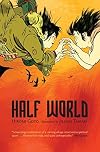
Finally! A unique and imaginative YA fiction. I love this book for many reasons. For starters, it is creepy, violent, and gory. Reader beware, the imagery will stick with you. It had a very relatable main character. She was described in various places as fat, dirty, stupid, and having low self-esteem, yet the author portrayed her as resourceful, intelligent, and at times, lovely. It wasn't that the character "got over" her flaws so much as find they didn't really matter. She was also thoughtful - for instance, she made explicit many of the associations I made as a reader, so there were very few moments where I wanted to smack her for not recognizing the obvious. And it's not anvillicious, but this book is awesomely some new sort of feminist. There was no romantic sub-plot (what a relief)! There wasn't a moment of waiting for anyone to come and save the heroine, instead the book was all about this female's agency and making choices. Does it pass the Bechdel test? Let's say that it doesn't pass the reverse test - the only two named male characters never interact.
5/5 for a fresh take on YA lit.
5/5 for a fresh take on YA lit.

Ugh, what a paint-by-numbers attempt at teen vampire romance. A cardboard version of Bella Swan is sent to a Wiccan Vampire Hogwarts, where she learns she has more magical goddess gifts than anyone but a Mary Sue has rights to. What's off-putting about this book? The flat-toned writing. The way the character becomes a dithering idiot in the presence of any attractive male. The juxtaposition of contemporary American slut-shaming ("you nasty ho bag") and a premise that sanctifies femininity, sensuality, bloodlust, and desire. The hodge-podge of mythological, native, and spiritual motifs (also the ways that "our vampires are different!) muddy the world's "flavour" so much that it's just an unsavoury pile of mis-matched references.
Paranormalcy (Kiersten White) was better. And that's saying a lot.
Paranormalcy (Kiersten White) was better. And that's saying a lot.
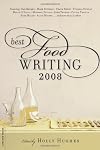
Caution: Best Food Writing 2008 may whet your appetite! The essays range from the intense: descriptions of life in the kitchens of some of the finest and most influential restaurants in America, to the heartwarming: a tale of red beans and rice that make you homesick for New Orleans, whether or not you've ever been there. Some are educational, covering topics like cloned meat and how to make the perfect braise, while others take on the political: the ban on foie gras sale in Chicago, and still others are ethical: dealing with the consequences of vegetarianism or eating only food produced locally. There is an aspect of voyeurism: Jess Thomson eats at Alinea so you don't have to; and Scott Gold embraces the Ecuadorian delicacy of roasted guinea pig.
The authors of the essays, all professional food writers, whisk you away with considerable skill to their own corner of the gastronomic universe. Holly Hughes did an admirable job in collecting and arranging this multi-course feast - I feel compelled to seek out her previous collections BFW 2000-2007.
Altogether, this book offers a multitude of perspectives that will not only make you crave the scrumptious edibles described therein, but will make you think differently about the food we eat - and how it connects us all.
The authors of the essays, all professional food writers, whisk you away with considerable skill to their own corner of the gastronomic universe. Holly Hughes did an admirable job in collecting and arranging this multi-course feast - I feel compelled to seek out her previous collections BFW 2000-2007.
Altogether, this book offers a multitude of perspectives that will not only make you crave the scrumptious edibles described therein, but will make you think differently about the food we eat - and how it connects us all.
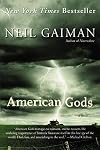
Gaiman is the master of taking figures at the bottom of our collective consciousness - the mythical elements we know of but have mostly forgotten, and spinning them into vivid, unique, and hauntingly real characters. This story follows an ex-con called Shadow, conditioned by three years behind bars, as he tries to survive in a world suddenly full of magic, immigrant gods, and his dead wife. The stakes are high as the gods take sides in an epic face-off for the minds and hearts of America.
Neil Gaiman's words flow like music, and the images he sings of will haunt you for a good long while.
Neil Gaiman's words flow like music, and the images he sings of will haunt you for a good long while.