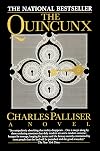
The Quincunx is the first book I've read this year that I haven't been able to finish, although paradoxically I would still recommend it. Palliser's quasi-Victorian potboiler is meticuously researched and technically brilliant, but I found myself unable to warm to it, and its humourless, priggish hero. I managed 931 of the 1200-odd pages, but when I realised I'd worked out the villain about a hundred pages previously - and he was my favourite character - I gave up.
Nevertheless, this is absorbing and well worth a read - I may well attempt to complete it in the future.
Nevertheless, this is absorbing and well worth a read - I may well attempt to complete it in the future.
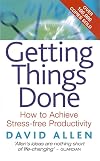
All I will say is this. I read this book and for the third week in a row I'm actually able to see the floor in my bedroom. It's quite disconcerting, after three decades of hopeless disorganisation. DA, I think you may be my hero.
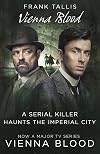
I picked up Mortal Mischief, the first volume of the Liebermann Papers, in a secondhand bookshop in March on a whim, and so far it’s been the happiest accident of my reading year. To the experienced reader of murder mysteries, Tallis’ plots, while involving (and rather grisly at times), may not stump completely. But these stories set in turn of the century Vienna are elevated for two other reasons. Firstly the characters: inevitably for a psychiatrist, Tallis creates villains with complex motivations whose actions are understandable, if not forgiveable. His heroes are sympathetic, and even after two books, are becoming like old friends. Max Liebermann, whose adherence to Freud’s new-minted theories of dream interpretation and psychoanalysis give him Holmes-like intuition – which he often fails to apply to his own personal life. His friend Oskar Reinhold, inspector with the security office, he of the rich baritone voice, waxed moustache and hopeless sweet tooth. Amelia Lydgate, the reserved English bluestocking who serves as a prototype forensic pathologist for the pair (and who seems blithely unaware that Liebermann is falling in love with her).
Secondly, there is the evocation of Vienna in 1902, both as a physical location and as a place in time. Tallis brings to life a city at the heart of an empire that unbeknownst to itself is crumbling. Anti-Semetic and Pan-Germanist political movements are on the rise, and in reaction Zionism is being preached in the Jewish show more community. Mahler and Klimt are scandalising the establishment, Modernist design is taking its first steps, and Freud is just starting to get his teeth into human sexuality. Throughout Vienna Blood objects familiar to the modern reader are revelations to the characters. Liebermann is gobsmacked at the sight of his first electric torch; Miss Lydgate devours a brand new ‘scientific romance’ from England – HG Wells’ The Time Machine. Not all of these discoveries are pleasant: our heroes puzzle for some time over a strange symbol found at a murder scene which to us is depressingly recognisable – a swastika.
Tallis plans seven books in this series (the third, Fatal Lies, was published this year), finishing in 1914, and I can’t wait to see how these characters cope with the huge political, cultural and scientific changes coming their way. So long as I’ve got a plate of nibbles to hand – all those descriptions of Viennese pastries give you the serious munchies… show less
Secondly, there is the evocation of Vienna in 1902, both as a physical location and as a place in time. Tallis brings to life a city at the heart of an empire that unbeknownst to itself is crumbling. Anti-Semetic and Pan-Germanist political movements are on the rise, and in reaction Zionism is being preached in the Jewish show more community. Mahler and Klimt are scandalising the establishment, Modernist design is taking its first steps, and Freud is just starting to get his teeth into human sexuality. Throughout Vienna Blood objects familiar to the modern reader are revelations to the characters. Liebermann is gobsmacked at the sight of his first electric torch; Miss Lydgate devours a brand new ‘scientific romance’ from England – HG Wells’ The Time Machine. Not all of these discoveries are pleasant: our heroes puzzle for some time over a strange symbol found at a murder scene which to us is depressingly recognisable – a swastika.
Tallis plans seven books in this series (the third, Fatal Lies, was published this year), finishing in 1914, and I can’t wait to see how these characters cope with the huge political, cultural and scientific changes coming their way. So long as I’ve got a plate of nibbles to hand – all those descriptions of Viennese pastries give you the serious munchies… show less
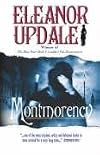
Eleanor Updale's ripping yarn about a hideously scarred ex-convict who turns himself into Montmorency, dashing gentleman about town, via London's brand new sewer system, rattles along at such breakneck speed you almost forget to draw breath. There are some terrific settings for Montmorency's adventures - my favourites being the Mauramanian Embassy and Bargles, the ultimate gentleman's club. Updale's Victorian London is full of intriguing moral grey areas - the Foriegn Office is subtly re-phrasing the Balkan Question behind closed doors, generally good-hearted characters can still look down on their social inferiors, and Montmorency's rise is at the expense of at least one person's fall. But equally, there are tarts with hearts, nameless good samaritans and men of science dedicated to improving public life. It's touching to see Montmorency grow a conscience as the story unfolds (not to mention a love of opera and a desire to use his gifts for altruistic reasons) - I can't wait to see what he gets up to in the next three books available.
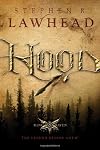
A little slow, but a very absorbing re-telling of the Robin Hood legend, re-locating everybody's favourite wealth-redistributor from 12th century Sherwood Forest to 11th century Wales, where Robin becomes Bran, heir to a small Welsh kingdom which has been usurped by the conquering Normans. Hood definitely reads like the first in a series - by the end of the book only a handful of the key characters - Robin, Little John, Marian, Guy of Gisbourne, Friar Tuck - are in play. But Lawhead uses this long set up to ground the legend in a viscerally real political reality, with a network of delicate alliances between various Welsh and Norman factions. I also love his more mystical side of the story , which comes here in the shape of Angharad the wily hudolion, or sorceress.
All the same, I wasn't pawing at the ground ready for King Raven Book Two...Then I made the mistake of looking it up on LibraryThing and discovering it's devoted to my beloved Will Scarlett, so that's another series bulking out my To Be Read pile, damn you, Lawhead...
All the same, I wasn't pawing at the ground ready for King Raven Book Two...Then I made the mistake of looking it up on LibraryThing and discovering it's devoted to my beloved Will Scarlett, so that's another series bulking out my To Be Read pile, damn you, Lawhead...
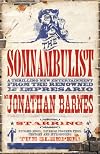
Hugely imaginative - if not always entirely coherent - Victorian fantasy. This is a first novel, so I can forgive Jonathan Barnes throwing everything but the kitchen sink in here. I can also forgive him dropping tantalising hints about Edward Moon's earlier cases (after all, Conan Doyle never did decide if the world was prepared enough for the Giant Rat of Sumatra). On the other hand, fantasy must stay true to its own internal logic, and The Somnambulist never explicitly sets down what its internal logic is, allowing for two blatant (albeit hugely entertaining) dei ex machina towards the end. Also, the influence of Alan Moore, in his League of Extraordinary Gentlemen/From Hell mode, is all over this.
But hey, if you're going to be influenced, be influenced by the best; and the breadth of creativity and wit on display here is enough to ensure I shall be watching Mr Barnes' progress with interest.
But hey, if you're going to be influenced, be influenced by the best; and the breadth of creativity and wit on display here is enough to ensure I shall be watching Mr Barnes' progress with interest.
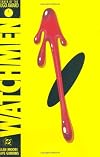
Re-read after I finally got my own copy as a birthday present. What can I say? Everything you heard is true, the hype is justified, read it now.
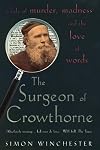
What the two men whose friendship it documents would have called 'a slim volume', and no less entertaining for that. The editor of the first Oxford English Dictionary, and its most prolific (and notorious) contributor are interesting enough in their own right, but Winchester uses their story as a frame on which to hang discourses on the American Civil War, the history of lexicography and even mental health treatment. Packed with colourful supporting characters such as Churchill, Alexander Graham Bell's father and the man who was the inspiration for Wind in the Willows' Water Rat, this book could tempt the most recalcitrant logophobe to take up the OED for something other than checking spelling (or looking up rude words).
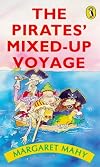
Most people writing a pirate story for children would be happy to come up with a pirate ship name as awesomely cool as The Sinful Sausage, but Margaret Mahy's just getting started. The Sinful Sausage, it transpires, was until very recently Ye Olde Pyratte Tea Shoppe - she's still got tables and sunshades bolted to her deck - and that's even before we get to her crew...
I first read this charming story when I was at school, and finding a copy of the same edition for 40p in a secondhand bookshop on my 31st birthday, I had to get it. It's just as delightful as I remembered - a 160-page romp full of pirates, orphans, witches, dragons, inventors, detectives and balloons. Oh, and pudding. Lots and lots of pudding.
I first read this charming story when I was at school, and finding a copy of the same edition for 40p in a secondhand bookshop on my 31st birthday, I had to get it. It's just as delightful as I remembered - a 160-page romp full of pirates, orphans, witches, dragons, inventors, detectives and balloons. Oh, and pudding. Lots and lots of pudding.

Powerful novel set in the run-up to, and during the Biafran Civil War. Chimamanda Ngozi Adichie reminded me of Pat Barker with her cast of sympathetic but flawed characters forever changed by the horrors of war. This book really brought home to me how shamefully ignorant I am of Africa's post-colonial history - which considering I am from one of the colonial nations is doubly remiss of me. I shall be looking up her previous book, Purple Hibiscus, and am anxious to see what she gives us next.
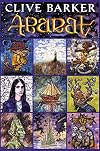
This is the first Clive Barker I've read (I'm just too much of a wimp to be a proper horror reader), and the available Abarat sequels have gone straight onto my want list. Yes, the conclusion of book one is blatant cliffhanger-for-sequel, but when the world explored is as lavish as this one, who cares? You're happy to get more.
Candy is an appealing heroine, sensible and resourceful, while still naive and full of wonder and prone to mistakes. Barker describes her allies and enemies with equal sympathy - while we know our villains must be stopped, we know they have their own cares and frustrations.
Barker's lavish paintings are an added bonus, aiding our visualisation of this fantastic world while still leaving some things to the imagination. Glyphs, for example - flying machines made of pure magic - are as yet tantalisingly unillustrated...
Candy is an appealing heroine, sensible and resourceful, while still naive and full of wonder and prone to mistakes. Barker describes her allies and enemies with equal sympathy - while we know our villains must be stopped, we know they have their own cares and frustrations.
Barker's lavish paintings are an added bonus, aiding our visualisation of this fantastic world while still leaving some things to the imagination. Glyphs, for example - flying machines made of pure magic - are as yet tantalisingly unillustrated...
I read this in one sitting: partly because it's just under 200 pages long, and partly because of the rollercoaster pace of the narrative - slow, slow climb and then ZOOM! For the first few pages I was worried I wouldn't get into the story, due to Daisy's snarky, stream-of-consciousness delivery and the idyllic perfection of her cousins (speaking as someone who was a non-working class child growing up in the English countryside, the percentage of us who are preternaturally mature, homeschooled, sensitive emo telepaths is surprisingly low).
But soon Daisy's narration begins to flow, and you realise that this isn't she isn't just annoyingly precocious, but also fragile and lonely. Once the war storyline gets going, it's inspiring to see Daisy draw on reserves she doesn't even know she has.
And the war storyline is truly devastating. It reminded me of Children of Men, or any of the post-nuclear TV dramas from my childhood. Little gestures of humanity from strangers are heartbreakingly welcome, but fate is ruthlessly impartial. As Daisy puts it:
'If you haven't been in a war and are wondering how long it takes to get used to losing everything you think you need or love, I can tell you the answer is no time at all.'
Meg Rosoff resists the temptation to sugar-coat her ending by giving these characters the future they deserve. Instead we get something that reminds me of my favourite quote from Lilo & Stitch:
'This is my family. I found it all by myself. It's little, and broken, but show more still good. Yeah, still good.' show less
But soon Daisy's narration begins to flow, and you realise that this isn't she isn't just annoyingly precocious, but also fragile and lonely. Once the war storyline gets going, it's inspiring to see Daisy draw on reserves she doesn't even know she has.
And the war storyline is truly devastating. It reminded me of Children of Men, or any of the post-nuclear TV dramas from my childhood. Little gestures of humanity from strangers are heartbreakingly welcome, but fate is ruthlessly impartial. As Daisy puts it:
'If you haven't been in a war and are wondering how long it takes to get used to losing everything you think you need or love, I can tell you the answer is no time at all.'
Meg Rosoff resists the temptation to sugar-coat her ending by giving these characters the future they deserve. Instead we get something that reminds me of my favourite quote from Lilo & Stitch:
'This is my family. I found it all by myself. It's little, and broken, but show more still good. Yeah, still good.' show less
A sensual and engaging coming of age story. I especially liked the traditional folktales interspersed with the narrative (including two 'in the style of' ones written by Anita Amirrezvani herself. Reading this novel has really piqued my interest in historical Iran, so I was grateful that my edition had a list of recommended further reading from the author!
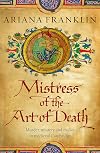
My copy of Mistress of the Art of Death tells me that David Starkey considered it the best researched historical novel of the year, and even if I didn't hold his opinion in such high regard I'd agree. Twelfth century Cambridge comes alive in this whodunnit. The tension between Henry II and the Church following the martyrdom of Thomas Beckett is palpable, as is the sense of evil permeating the child killings which Adelia Aguilar must investigate. Adelia is a worthy heroine, intelligent, compassionate and personable, but flawed and exasperating enough to be real - you cheer for her successes and feel for her in her failures. And joy of joys, there's a second book in the series to look forward to.
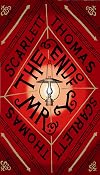
I really, really enjoyed this - perhaps not as much as I would have done when I was 17, but I'll stick my neck out and say it'll definitely make my top 10 this year, and probably my top 5. The plot rattles along at breakneck pace; Ariel, while I occasionally wanted to slap her around the head in exasperation, is an engaging heroine; and the ideas it discusses make your brain hurt in the most satisfying way. I'm about to sit down and make a list of all the books mentioned in the text I now want to read: Derrida, Baudrillard, Zollner, Samuel Butler, quantum theory...
The edition I read contains an Aknowledgements section in which Scarlett Thomas gives her opinion on what the end of the book means. I'm inclined to disagree with her on this - I think the key to it all is in fact the very first sentence...
The edition I read contains an Aknowledgements section in which Scarlett Thomas gives her opinion on what the end of the book means. I'm inclined to disagree with her on this - I think the key to it all is in fact the very first sentence...
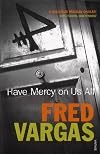
I feel like I didn't enjoy this one as much as I did. Possibly because I came to it straight from Atonement, which is the best thing I've read this year so far, and partly because of some perceived clunkiness of the translation, it felt like harder going. But nevertheless this is an engrossing mystery with an engaging cast of characters; I particularly liked the residents of the Place Edgar-Quinet. I'd still definitely check out more from this series.
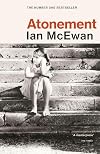
I read this after seeing the film, and did wonder if that would lessen my enjoyment of the book since I already knew its central conceit. I needn't have worried: there's still the pure pleasure of McEwan's prose, particularly in the opening section set in that long hot English summer. But reading the book knowing what's going to happen threw up even more fascinating questions about the process of writing, of atonement, of whether one can ever really know anyone else. And just as an aside, reading the book has given me even more respect for Christopher Hampton's concise and faithful screenplay adaptation. Highly recommended
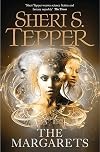
It seems daft to say it about a novel of just over 500 pages, but I would have preferred to have a bit more of The Margarets. Sheri S Tepper creates a fascinating universe with many different planets, races, religions and alliances, but owing to the epic scope of the story we only get tantalising glimpses of each, little snapshots of each of the Margarets' lives. Nevertheless, I found this to be an enjoyable and involving read. Tepper's brand of feminism is not exactly the same as my own, but she still gives me plenty of food for thought.
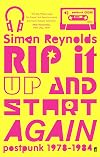
Detailed, informative and entertaining account of post-punk and pop music in 1978-84. I've been devoting a lot of headspace to this period after getting a great New Wave compilation for Christmas, and watching series 1 of Ashes to Ashes, and this was the perfect accompaniment. Simon Reynolds' love of the music shines through his writing. This is essential reading for any lover of the genre, and a great introduction for the newbie.
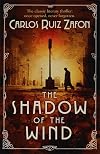
Sheer bliss. It took me longer to read Shadow of the Wind than I expected, because I kept having to go back and re-read paragraphs to savour the way Zafon can conjure up the soul of a city, a building, a person, who we may not even meet again - without ever making it seem like an indulgent diversion.
Reading like Alexander Dumas, Wilkie Collins and Charles Dickens decided to pool their resources and write the ultimate ripping yarn, this novel contains within its pages lost novels with tantalising titles, a faceless fiend, a sadistic police inspector feared throughout the city, a cursed mansion, a whole flock of femmes fatales, and the best friend a man could have. Oh, and a really cool pen. To say any more would spoil you - just get hold of a copy and gorge on it. A sumptuous feast.
Reading like Alexander Dumas, Wilkie Collins and Charles Dickens decided to pool their resources and write the ultimate ripping yarn, this novel contains within its pages lost novels with tantalising titles, a faceless fiend, a sadistic police inspector feared throughout the city, a cursed mansion, a whole flock of femmes fatales, and the best friend a man could have. Oh, and a really cool pen. To say any more would spoil you - just get hold of a copy and gorge on it. A sumptuous feast.