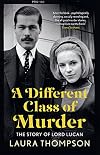
Got this in a Kindle special deal and it wasn't worth more than 99p. I enjoyed Laura Thompson's work on Agatha Christie very much, and my negative review here isn't a reflection on the way she pulls together all the tangled accounts and theories of this murder. it is more that these people, their shallow world, and their general unpleasantness across the board make it a read that leaves the reader sullied and longing to wash their hands. Who killed the nanny? I felt sorry for the nanny but in the end, it wasn't worth ploughing on unless you crave exploring a fading world of class prejudice and callousness fifty years gone.
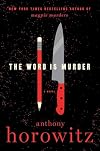
I see that Horowitz was trying a Watson-Sherlock schtick, but the 'Sherlock' figure lacks all the charm and intelligence of the original. I also found the use of real people like Steven Spielberg and Peter Jackson in scenes rather jarring and not very credible. I wonder what they thought. In fact, all the passages referring to Horowitz's real career as a television and children's writer started to feel like intrusive padding in what was a pretty boring murder mystery. A lot of jealous ex-RADA graduates scratching over their careers are hardly the stuff that sets the heart racing. I mean, it's not like someone murdered Richard Burton.

Sadly, this book has aged badly. There are so many expressions and references that are no longer used, it's like entering a time capsule without a translator on board. Trying to get past the midway point, but too many livelier books beckon. For the record, I enjoyed Tiger in the Smoke and The Fashion in Shrouds more.

Listed as one of "111 Best Works of Metafiction" here:
http://ronaldbrichardson.com/metafiction/list-of-metafictional-works/
This is the best review that describes the book, as I see it, by Shirley Curran in BOOK MY PLACE, GenevaLunch
Chuckling out loud after only a few paragraphs, I had no doubt at all about why Dinah Lee Küng’s A Visit from Voltaire was on the list of potential Orange Prize winners in 2004. Her early chapters plunge us into a world that is so familiar; the world of the immigrant into the closed society of a small Swiss village. St Cergue is evoked with its railway snaking up through the village, its families who have lived there since the days of Voltaire and its traditional Vaudois ways of shutting out foreigners and all they stand for.
With the narrator, we struggle with the carpenter’s bills which consume all the family’s savings, the Swiss requirements that preclude the placing of an ‘island’ in the kitchen, the wildcats that nest in the roof insulation and the vagaries of the Swiss school system.
Poor, honest Alexander’s academic future is almost curtailed when he is the only child who doesn’t run away after the group of school children have accidentally set a stationary train in motion.
Into this wonderfully familiar world steps an uninvited guest who accompanies the narrator through most of the remainder of her first year in St Cergue. Husband, Peter, is busy with his Red Cross work but Voltaire compensates for his absence. Consuming show more litres of coffee and mastering the fax machine, the Internet and the telephone, Voltaire, a lively ghost, continues the literary and humanitarian work that occupied his lifetime two centuries earlier. We witness his hilarious response to the parent-teacher meeting and relive, with him, his rich libertine lifestyle.
The narrator’s own real involvement with modern political causes is interspersed with Voltaire’s narrative so that we touch on the unjustified imprisonment of Xu Wenli, the Chinese democracy activist and the human rights struggle for Dr Shaikh in Pakistan.
V is a whimsical and endearing companion who is an invaluable help to the narrator in her struggle to come to terms with her state as an emotional and cultural castaway in an alien environment. He teaches her how to live life to the fullest. However, he is a demanding and expensive guest who ages as the narrative develops. He has to go. His initial departure leaves too many questions unresolved, but a delightful finale awaits the reader.
This novel is astonishingly rich in so many ways. The local area of the Geneva basin is evoked with St Cergue coming alive for us even to the 50 bends of the road up from the Geneva basin, and life in the UN and in the foreign community of Hong Kong. The author’s encyclopaedic knowledge of Voltaire’s life and works makes him a convincing figure in the 21st century as well as ‘La Lumière’ – the light of his own century... a good tip for Christmas reading. show less
http://ronaldbrichardson.com/metafiction/list-of-metafictional-works/
This is the best review that describes the book, as I see it, by Shirley Curran in BOOK MY PLACE, GenevaLunch
Chuckling out loud after only a few paragraphs, I had no doubt at all about why Dinah Lee Küng’s A Visit from Voltaire was on the list of potential Orange Prize winners in 2004. Her early chapters plunge us into a world that is so familiar; the world of the immigrant into the closed society of a small Swiss village. St Cergue is evoked with its railway snaking up through the village, its families who have lived there since the days of Voltaire and its traditional Vaudois ways of shutting out foreigners and all they stand for.
With the narrator, we struggle with the carpenter’s bills which consume all the family’s savings, the Swiss requirements that preclude the placing of an ‘island’ in the kitchen, the wildcats that nest in the roof insulation and the vagaries of the Swiss school system.
Poor, honest Alexander’s academic future is almost curtailed when he is the only child who doesn’t run away after the group of school children have accidentally set a stationary train in motion.
Into this wonderfully familiar world steps an uninvited guest who accompanies the narrator through most of the remainder of her first year in St Cergue. Husband, Peter, is busy with his Red Cross work but Voltaire compensates for his absence. Consuming show more litres of coffee and mastering the fax machine, the Internet and the telephone, Voltaire, a lively ghost, continues the literary and humanitarian work that occupied his lifetime two centuries earlier. We witness his hilarious response to the parent-teacher meeting and relive, with him, his rich libertine lifestyle.
The narrator’s own real involvement with modern political causes is interspersed with Voltaire’s narrative so that we touch on the unjustified imprisonment of Xu Wenli, the Chinese democracy activist and the human rights struggle for Dr Shaikh in Pakistan.
V is a whimsical and endearing companion who is an invaluable help to the narrator in her struggle to come to terms with her state as an emotional and cultural castaway in an alien environment. He teaches her how to live life to the fullest. However, he is a demanding and expensive guest who ages as the narrative develops. He has to go. His initial departure leaves too many questions unresolved, but a delightful finale awaits the reader.
This novel is astonishingly rich in so many ways. The local area of the Geneva basin is evoked with St Cergue coming alive for us even to the 50 bends of the road up from the Geneva basin, and life in the UN and in the foreign community of Hong Kong. The author’s encyclopaedic knowledge of Voltaire’s life and works makes him a convincing figure in the 21st century as well as ‘La Lumière’ – the light of his own century... a good tip for Christmas reading. show less