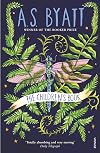
Before I started reading, I had read some mixed reviews of The Children’s Book, with suggestions that it did not have enough plot to merit its length, and had too many characters for the reader to follow and relate to. Another criticism was that Byatt had got bogged down in historical details, the volume of which detracted from her characters and storyline. However, I have loved the other novels by A.S. Byatt which I have read, with The Virgin in the Garden and Still Life ranking as highly as Possession, so was interested to see what I made of it.
I think I did benefit from reading it over the Christmas break and being able to devote myself fully to it. It was one of the books I took to my parents to read for Christmas, so I was able to read without being distracted and get really into the book before I came back to London. I am sure that if I’d started reading it any other time and was reading it in short bursts on the tube and train then I would have found it a lot harder to get into and think I would have struggled to enjoy it as much.
As it was, I found myself completely drawn in by Byatt’s writing and concept, and found it very lyrical and flowing to read. I can see why the amount of historical detail Byatt puts in might have been a negative to some readers – there are points where it does go on for pages, with no plot or mention of the characters. I myself quite liked this; one of my pet hates is historical novels which read as though the author has done no show more in-depth research and has based their writing entirely on television documentaries. Byatt’s historical inclusions really planted her novel in the period, giving a real idea of the political and social feelings and movements at the time. I think this might be the historian in me but I felt it enhanced the plot and the characters’ development.
I think the highlight of the book was A.S. Byatt’s beautiful writing; her depiction of the pottery produced by Benedict Fludd and Philip Warren was so detailed, that I could imagine holding every single piece. I also loved her descriptions of both the puppet shows, with the magic of them drawing me in as they did the characters themselves, and the countryside, particularly the Dungeness headland. I felt that the characters were just as well drawn by the author. Although there were a large number of them, none of them felt under-developed, and I cared about (almost!) all of them. I particularly loved how she gave her female characters such interesting storylines, ranging from training to be a doctor, studying at Cambridge, being a suffragette and having a role in the War effort. As much of my history studies focused on women’s history, I found myself especially drawn to these plot lines. Additionally, whilst the children were obviously the central focus of the novel, Byatt didn’t neglect to flesh out her adult characters; I became particularly attached to Prosper Cain and Olive Wellwood.
The final thing I want to mention is the ending – for me, it felt just right. I liked that Byatt didn’t shy away from making her characters suffer or die in the War. The fact that people do die in the novel, and within the same family in the case of the Wellwoods, reflects the reality of the impact of the war on small communities, such as this group of close families. I also felt that the last scene had the perfect balance of grief and hope for the future. Despite all the hardships the ‘survivors’ had gone through, and the fact that their lives had been changed forever, physically, mentally and socially, there was still a feeling of strength and hope, especially with the next generation waiting in the wings.
There you go – for me, the positives of Byatt’s novel definitely outweighed the negatives, and I think it was one of my best reads of 2009. show less
I think I did benefit from reading it over the Christmas break and being able to devote myself fully to it. It was one of the books I took to my parents to read for Christmas, so I was able to read without being distracted and get really into the book before I came back to London. I am sure that if I’d started reading it any other time and was reading it in short bursts on the tube and train then I would have found it a lot harder to get into and think I would have struggled to enjoy it as much.
As it was, I found myself completely drawn in by Byatt’s writing and concept, and found it very lyrical and flowing to read. I can see why the amount of historical detail Byatt puts in might have been a negative to some readers – there are points where it does go on for pages, with no plot or mention of the characters. I myself quite liked this; one of my pet hates is historical novels which read as though the author has done no show more in-depth research and has based their writing entirely on television documentaries. Byatt’s historical inclusions really planted her novel in the period, giving a real idea of the political and social feelings and movements at the time. I think this might be the historian in me but I felt it enhanced the plot and the characters’ development.
I think the highlight of the book was A.S. Byatt’s beautiful writing; her depiction of the pottery produced by Benedict Fludd and Philip Warren was so detailed, that I could imagine holding every single piece. I also loved her descriptions of both the puppet shows, with the magic of them drawing me in as they did the characters themselves, and the countryside, particularly the Dungeness headland. I felt that the characters were just as well drawn by the author. Although there were a large number of them, none of them felt under-developed, and I cared about (almost!) all of them. I particularly loved how she gave her female characters such interesting storylines, ranging from training to be a doctor, studying at Cambridge, being a suffragette and having a role in the War effort. As much of my history studies focused on women’s history, I found myself especially drawn to these plot lines. Additionally, whilst the children were obviously the central focus of the novel, Byatt didn’t neglect to flesh out her adult characters; I became particularly attached to Prosper Cain and Olive Wellwood.
The final thing I want to mention is the ending – for me, it felt just right. I liked that Byatt didn’t shy away from making her characters suffer or die in the War. The fact that people do die in the novel, and within the same family in the case of the Wellwoods, reflects the reality of the impact of the war on small communities, such as this group of close families. I also felt that the last scene had the perfect balance of grief and hope for the future. Despite all the hardships the ‘survivors’ had gone through, and the fact that their lives had been changed forever, physically, mentally and socially, there was still a feeling of strength and hope, especially with the next generation waiting in the wings.
There you go – for me, the positives of Byatt’s novel definitely outweighed the negatives, and I think it was one of my best reads of 2009. show less

I did really enjoy The Moonstone, but, I have to admit, not as much as I expected to or as much have I enjoyed some of Wilkie Collin’s other, more ‘sensational’ novels. With The Moonstone being more of a detective novel, I found that my attention was not always as hooked as it has been with, for example, The Woman in White, Armadale or No Name. I particularly felt this about a third of the way through, when Miss Clack was narrating – I felt that the pace slowed down slightly and the plot began to drag at this point, especially after the excitement of the theft of the Moonstone.
I really liked the first section of the book, with Gabriel Betteredge, the old servant in the Verinder household, narrating. This section was full of suspense and intrigue, right from the first page. I particularly loved the character of Sergeant Cuff, whose contrast to the inhabitants of the house he entered was perfectly described. I also thought that Wilkie Collins ‘setting of the scene’ for the Diamond theft, and the immediate aftermath of it, was brilliantly written. The reader was encouraged to take note of the ‘clues’ themselves and form their own opinion of events.
Although I felt that the book flagged slightly in the middle the ending did live up to expectations. Collins increased the tension and mystery with the narrative of Franklin Blake and discovery of Rosanna’s letter and hidden chest. From there until the end, the plot moved very quickly, with many twists and turns show more to reach the conclusion. I think that the character of Erza Jennings was especially interesting; the opium dosed medical assistant whose past is itself a mystery and who has been wrongly accused of a nameless crime, who finds redemption in his final weeks in helping Franklin.
One of the most interesting aspects of Collins’ novel is his use of multiple narrations, which he also used in The Woman in White. The novel is therefore presented as a full report of events, with the most suitable person narrating each section. This is an effective technique - the reader is given what appears to be the closest possible narration of the truth, as it happened. However, the reader also questions the partiality of the narrators - how much can each one be relied on? This is most clear in each narrators' presentation of Rachel, as each one views her and presents her differently - I felt never got a particularly clear idea of who she was, although she is arguably the character around which all the others revolve - we always saw her through someone else's eyes, and were biased by their beliefs and desires.
I agree The Moonstone is, in many ways, a wonderful novel, with Collins opening the genre of the detective story and fully utilising the benefits of writing it as a magazine serial. It's not my favourite novel by Wilkie Collins, but it was certainly worth reading, with excellent plot and characters. show less
I really liked the first section of the book, with Gabriel Betteredge, the old servant in the Verinder household, narrating. This section was full of suspense and intrigue, right from the first page. I particularly loved the character of Sergeant Cuff, whose contrast to the inhabitants of the house he entered was perfectly described. I also thought that Wilkie Collins ‘setting of the scene’ for the Diamond theft, and the immediate aftermath of it, was brilliantly written. The reader was encouraged to take note of the ‘clues’ themselves and form their own opinion of events.
Although I felt that the book flagged slightly in the middle the ending did live up to expectations. Collins increased the tension and mystery with the narrative of Franklin Blake and discovery of Rosanna’s letter and hidden chest. From there until the end, the plot moved very quickly, with many twists and turns show more to reach the conclusion. I think that the character of Erza Jennings was especially interesting; the opium dosed medical assistant whose past is itself a mystery and who has been wrongly accused of a nameless crime, who finds redemption in his final weeks in helping Franklin.
One of the most interesting aspects of Collins’ novel is his use of multiple narrations, which he also used in The Woman in White. The novel is therefore presented as a full report of events, with the most suitable person narrating each section. This is an effective technique - the reader is given what appears to be the closest possible narration of the truth, as it happened. However, the reader also questions the partiality of the narrators - how much can each one be relied on? This is most clear in each narrators' presentation of Rachel, as each one views her and presents her differently - I felt never got a particularly clear idea of who she was, although she is arguably the character around which all the others revolve - we always saw her through someone else's eyes, and were biased by their beliefs and desires.
I agree The Moonstone is, in many ways, a wonderful novel, with Collins opening the genre of the detective story and fully utilising the benefits of writing it as a magazine serial. It's not my favourite novel by Wilkie Collins, but it was certainly worth reading, with excellent plot and characters. show less

The Misses Mallett took me what seemed like forever to read I think this has meant that I didn't enjoy it as much as I could have done. It was a lovely read, with Young's descriptions of the countryside and the changes of the seasons really beautifully written. I did feel that at times there was a slight overkill on these descriptions, but this was only a minor complaint.
I really loved all of Young's characters, who were all perfectly drawn. I really felt for both Rose and Henrietta, the two central characters, as they developed through the story, whilst the elder Misses Mallett were eccentric and enjoyable, without being absurd caricatures with no depth. Whilst Rose was the character I felt most connected with, with her early youthful dreams, her calm and controlled facade and her later acceptance of her lot in life, I loved the development of the relationship between Charles and Henrietta, in which one could sense the excitement and fears of young love.
What was interesting in Young's novel was how far clothes were used to represent the characters - each of the central characters' distinctive personalities were intrinsically linked with their clothing; for example, Rose and her dark elegant outfits, Henrietta and the clothes that reflect her father's portrait and Christabel and her invalid's garments of pink and blue. Young includes considerable descriptions of these outfits, demonstrating the importance of their role in her characterisation.
I did enjoy the novel very show more much; it wasn't just a light fluffy novel, but it had depth in it, delving into the hurt of unfulfilled dreams and the realities of what life can offer. I did struggle a bit in the middle, as I was taking so long to get through it, but overall, it was one I would recommend, and am looking forward to reading some more of Young's novels. show less
I really loved all of Young's characters, who were all perfectly drawn. I really felt for both Rose and Henrietta, the two central characters, as they developed through the story, whilst the elder Misses Mallett were eccentric and enjoyable, without being absurd caricatures with no depth. Whilst Rose was the character I felt most connected with, with her early youthful dreams, her calm and controlled facade and her later acceptance of her lot in life, I loved the development of the relationship between Charles and Henrietta, in which one could sense the excitement and fears of young love.
What was interesting in Young's novel was how far clothes were used to represent the characters - each of the central characters' distinctive personalities were intrinsically linked with their clothing; for example, Rose and her dark elegant outfits, Henrietta and the clothes that reflect her father's portrait and Christabel and her invalid's garments of pink and blue. Young includes considerable descriptions of these outfits, demonstrating the importance of their role in her characterisation.
I did enjoy the novel very show more much; it wasn't just a light fluffy novel, but it had depth in it, delving into the hurt of unfulfilled dreams and the realities of what life can offer. I did struggle a bit in the middle, as I was taking so long to get through it, but overall, it was one I would recommend, and am looking forward to reading some more of Young's novels. show less
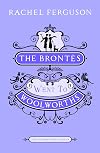
It is always wonderful when a book lives up to your expectations, especially when your expectations are somewhat high. I was pretty sure that I was going to really enjoy The Brontes Went to Woolworths, by Rachel Ferguson, particularly as I had read some glowing reviews of it on various blogs. And, I am happy to say, I enjoyed it very much!
I had a good feeling about the novel from the first page, with the comment on the necessity of books – which is now my quote of the month! The story of the three Carne sisters, Katrine, Deirdre and Shiel, and their mother, was an absolute delight. It was a story of light and laughter and the total joy of living in a world where anything is possible, where Charlotte and Emily Bronte can drop in at any time and one’s life is enhanced by total escapism.
Despite this, it wasn't in anyway a meaningless novel, with no depth or thought - there was a perfect balance between the eccentricity of the characters and the sense of danger of the outside world encroaching and bringing their carefully constructed house of tricks tumbling down.
It did take me a while to work out who was a ‘real’ acquaintance of the Carnes and who wasn’t, which I thought added to the enjoyment of it all. As a reader, I also identified with both of the governesses - coming into the Carne household as outsider and unsure how to react to what they experience, with one entirely rejecting the Carne's 'acquaintances' and the other trying to fit in, but going completely show more awry. I also loved the Toddingtons; both are such loveable characters, endeavouring to fit into the Carne's stories and fantasies, and loving the new lease of life it brings them - in many ways the antithesis of both of the unfortunate governesses.
Ultimately therefore, this was a story of a family refusing to let go of youthful innocence - with Sheil experiencing a magical and enthralling childhood, which simultaneously benefits the whole family and sustains them. show less
I had a good feeling about the novel from the first page, with the comment on the necessity of books – which is now my quote of the month! The story of the three Carne sisters, Katrine, Deirdre and Shiel, and their mother, was an absolute delight. It was a story of light and laughter and the total joy of living in a world where anything is possible, where Charlotte and Emily Bronte can drop in at any time and one’s life is enhanced by total escapism.
Despite this, it wasn't in anyway a meaningless novel, with no depth or thought - there was a perfect balance between the eccentricity of the characters and the sense of danger of the outside world encroaching and bringing their carefully constructed house of tricks tumbling down.
It did take me a while to work out who was a ‘real’ acquaintance of the Carnes and who wasn’t, which I thought added to the enjoyment of it all. As a reader, I also identified with both of the governesses - coming into the Carne household as outsider and unsure how to react to what they experience, with one entirely rejecting the Carne's 'acquaintances' and the other trying to fit in, but going completely show more awry. I also loved the Toddingtons; both are such loveable characters, endeavouring to fit into the Carne's stories and fantasies, and loving the new lease of life it brings them - in many ways the antithesis of both of the unfortunate governesses.
Ultimately therefore, this was a story of a family refusing to let go of youthful innocence - with Sheil experiencing a magical and enthralling childhood, which simultaneously benefits the whole family and sustains them. show less
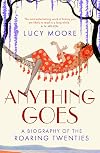
I’d been really looking to reading Anything Goes by Lucy Moore; it is a period of history which especially interests me at the moment, particularly after reading Singled Out by Virginia Nicholson and reading a number of novels written in the inter-war period. The book is about the America during the twenties, which I know much less about than the British experience. Moore focuses on a number of different areas and people whose influence contributed to the distinctive ‘Roaring Twenties’, dedicating a chapter to each.
At the beginning I found this jumping around from one area to the next quite disjointed and disorientating, making the book feel broken up and a little difficult to get into. The first chapter focuses on Al Capone and his gangster career, also examining the issue of prohibition and bootleg alcohol. From this, Moore moves onto the jazz movement, looking at some of the principle black jazz artists of the period, alongside black writers and poets, and talking about the Harlem area of New York, where jazz particularly developed.
Other chapters looked at women’s position in society, particularly that appearance of the flapper, the development of aviation andLindbergh’s record breaking flight across the Atlantic, the Klu Klux Klan’s emergence, the politics of the period, examining the role of President Harding, the creation of the New Yorker magazine and the Dayton trial of John Scopes, which was essentially a battle between the ideas of religion and show more evolution. Moore also covers the film industry of twenties America, the American fear of foreigners and radicals, the burgeoning business industry, including car manufacture and the role of advertising, the Americans who ‘exiled’ themselves to Europe following the war and the casting of sportsmen as American heroes, focusing on Jack Dempsey, the boxer. Finally, Moore finishes by examining the financial position of America, with the unlimited stock trading leading to the crash occurring in 1929.
Throughout her book, Moore highlights the conflict between traditional American values and modernism after the war that was characteristic of this period. The clashes between the old, pious ideals of American and the developing new world of freedom and high and fast living is a theme which runs throughout all of Moore's chapters. However, I did feel that she often didn't go into enough depth for me, nor really explored how her many examples demonstrated a wider argument.
I was disappointed not to have more on the experience of women in twenties America; whilst Moore’s chapter on the flapper focused on those women, like Zelda Fitzgerald, who were pushing the boundaries of acceptability and revelling in new found freedoms, there was little on women throughout the rest of the book. They are mainly referred to as the mistresses or wives of the men Moore was profiling, like Florence Harding, the wife of President Harding, Caresse Crosby, the wife of Harry Crosby and Marion Davies, mistress of Randolph Hearst. The only other place where women are discussed is in Moore’s section of Hollywood and film stars; some women were able to work as producers, such as Mary Pickford, who had her own film corporation. I did feel like this was a bit of a missed opportunity, and was surprised that Moore had gone with having the token ‘women chapter’, rather than integrating them more fully into her picture of Twenties America as a whole. I also felt that Moore had gone down this route with Black Americans; the only chapter in which they really featured was the chapter on jazz and black writers, rather than incorporating their experience into the rest of the book.
When I read a non-fiction book I always end up adding numerous books to my book list from the bibliography, and I have done here - oops! I enjoyed Anything Goes, and it gave me a great insight into that period of American history and the various different personalities that coloured the Roaring Twenties and has encouraged me to read more on the areas I found particularly interesting. However, I was a little disappointed by some aspects of it, especially the lack of integration of the Black American and women's experience into the book as a whole and at some points the lack of deeper investigation. show less
At the beginning I found this jumping around from one area to the next quite disjointed and disorientating, making the book feel broken up and a little difficult to get into. The first chapter focuses on Al Capone and his gangster career, also examining the issue of prohibition and bootleg alcohol. From this, Moore moves onto the jazz movement, looking at some of the principle black jazz artists of the period, alongside black writers and poets, and talking about the Harlem area of New York, where jazz particularly developed.
Other chapters looked at women’s position in society, particularly that appearance of the flapper, the development of aviation andLindbergh’s record breaking flight across the Atlantic, the Klu Klux Klan’s emergence, the politics of the period, examining the role of President Harding, the creation of the New Yorker magazine and the Dayton trial of John Scopes, which was essentially a battle between the ideas of religion and show more evolution. Moore also covers the film industry of twenties America, the American fear of foreigners and radicals, the burgeoning business industry, including car manufacture and the role of advertising, the Americans who ‘exiled’ themselves to Europe following the war and the casting of sportsmen as American heroes, focusing on Jack Dempsey, the boxer. Finally, Moore finishes by examining the financial position of America, with the unlimited stock trading leading to the crash occurring in 1929.
Throughout her book, Moore highlights the conflict between traditional American values and modernism after the war that was characteristic of this period. The clashes between the old, pious ideals of American and the developing new world of freedom and high and fast living is a theme which runs throughout all of Moore's chapters. However, I did feel that she often didn't go into enough depth for me, nor really explored how her many examples demonstrated a wider argument.
I was disappointed not to have more on the experience of women in twenties America; whilst Moore’s chapter on the flapper focused on those women, like Zelda Fitzgerald, who were pushing the boundaries of acceptability and revelling in new found freedoms, there was little on women throughout the rest of the book. They are mainly referred to as the mistresses or wives of the men Moore was profiling, like Florence Harding, the wife of President Harding, Caresse Crosby, the wife of Harry Crosby and Marion Davies, mistress of Randolph Hearst. The only other place where women are discussed is in Moore’s section of Hollywood and film stars; some women were able to work as producers, such as Mary Pickford, who had her own film corporation. I did feel like this was a bit of a missed opportunity, and was surprised that Moore had gone with having the token ‘women chapter’, rather than integrating them more fully into her picture of Twenties America as a whole. I also felt that Moore had gone down this route with Black Americans; the only chapter in which they really featured was the chapter on jazz and black writers, rather than incorporating their experience into the rest of the book.
When I read a non-fiction book I always end up adding numerous books to my book list from the bibliography, and I have done here - oops! I enjoyed Anything Goes, and it gave me a great insight into that period of American history and the various different personalities that coloured the Roaring Twenties and has encouraged me to read more on the areas I found particularly interesting. However, I was a little disappointed by some aspects of it, especially the lack of integration of the Black American and women's experience into the book as a whole and at some points the lack of deeper investigation. show less