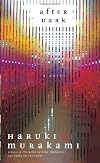
There are so many things that come to my mind while and after reading a book by Haruki Murakami that I never know how to start a review. This book managed to describe perfectly how I feel about the nighttime, these dark, magical hours between sunset and sunrise, during which half the world is asleep but the rest is awake, wandering the streets, working, loving, or just being, waiting patiently for time to pass by. No need to say that I devoured this book; there's a lot of dialog and it's easy to read and understand. There's this surreal atmosphere throughout the book, calm and dreamlike, and it kind of scared me at times - I was waiting for something creepy to happen, I kept getting bad vibes somehow - and I found the part in which Mari's sister cannot go out of the big, empty room very suffocating.All in all, it still seems to me like an unfinished novel, like there was more to the story but Murakami just gave it a rushed ending. I would have liked to know more about the characters and their stories; he always manages to create interesting characters, people I'd like to know in real life and whose personal experiences I'd like to learn about. And I'd say sometimes he goes too far with the surreality of the scenes, which frustrates me when I can't quite figure out the meaning. But the prettiness in the words managed to captivate me once again. Not recommended as the first Murakami book you should read, though; I don't think it's one of his best novels.
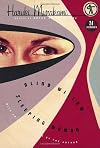
I have never been a fan of short story collections. I'm one of those who prefer thick books with permanent characters who develop throughout the story and, to be truthful, I don't really know why. There are a lot of good short story volumes out there, but I have always chosen long novels instead. So I have to say that even being a die-hard Murakami fan, I was a little reluctant to read Blind Willow, Sleeping Woman. I bought the book in Oxford during the summer of 2007 and had let it collect dust in my shelf, choosing to read The Wind-Up Bird Chronicle instead (which I'm not going to talk about now because it deserves another whole new entry).So, after packing my things and getting ready to fly to Germany, I spotted the book in the midst of my Murakami collection and grabbed it at the last minute. Murakami will serve as a moral support if things get bad up there in the north of Europe, I thought. He's one of my favorite authors, after all; I feel instantaneously good when I have a book of his between my hands.I've been in Germany for two months now, but I only started reading this book a week ago, in the train back from the airport after saying goodbye to a dear friend who had come to visit me. I was feeling a little blue, and I knew Murakami would cheer me up (or, at least, keep my mind off reality for a while). And indeed, it did. I was so absorbed reading the Birthday Girl story that I missed the stop and had to wait for an hour to catch another train back to my city. show more From the beginning, I could spot a lot of the classic Murakami themes: jazz-loving, solitary characters who spend their time reading or going through LP collections, characters who meet strangers who change their lives one way or another, people who suddenly stop recognizing themselves in their own bodies at some point of the story, mysterious and clever cats who seem to have a human-like mind, people disappearing somewhere along the way, and many infidelities and sexual encounters with partners who end up leaving without a trace.The general impression I usually get from his books is a full sensation of nostalgia, loss and loneliness, especially from the coming of age stories with lost teenagers or the adults in their thirties with identity crisis and marriage problems. And despite the unreality of some of the stories, I still find that I can identify with those characters to some degree, because they go through similar experiences or think over issues that I too find myself pondering.I would have liked to write a small comment on every story, but some of them were quite plot-less, and some just didn't move or touch me enough. I've got my favorites, though. 'Man-eating cats' evoked a beautiful scenery, and it reminded me a lot of 'Sputnik Sweetheart', what with the Greek landscape and the disappearance. I also liked 'Nausea 1979', 'Tony Takitani', 'Where I'm Likely to Find It' and 'Chance Traveler' (so beautiful and heart-breaking) among others. 'The ice man' and 'Crabs' were disturbing, and I didn't get 'A poor aunt story' and what Murakami meant by it. I'm sure I'm forgetting a lot of things I wanted to comment while I was reading the book, but going through every story thoroughly would take a lot of time that I don't have (college work unfortunately gets in the way).Now, I can't wait to get my scholarship money to head off to the nearest bookstore and buy another book by Haruki Murakami. I may not be able to wait until I get home for Christmas. show less

I wasn't sure about this book at the beginning. But first impressions are not always correct, right? I thought I would not relate at all to the characters and their story, and thought it was a boring storyline. But as I started to read about their pasts and their families (especially Edward's, which is to me the most interesting), I started to really enjoy it. I read the whole book in one sitting at a coffee shop (it's not that long), and felt I couldn't stop because I wanted to know more, find out how the girl would fight her insecurities and her dislike for male members -if she would at all-, and how the whole wedding night thing would end. Pretty tragic, I must say. It kind of reminded me of Sylvia Plath's The Bell Jar, partly because of the lack of dialog. It still was a good read, very psychological in a way.

This book is beautifully written. I love the author's style, it made me want to keep reading the book forever, and not many authors can achieve that. This book made me feel light and happy when the main character described the village, the people in it and the chocolate she made. It reminded me of my own village and all the good memories it holds. It made me feel sad as well, and it made me cry. I didn't find much of a closure, however, but I loved it from the beginning until the end.
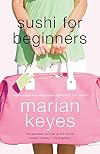
The first ten pages are a little bit boring, but it gets better and more interesting. I found the characters cute and realistic, and I could relate to the whole magazine office thing, since I'm working at a newspaper and I know about the pressure. It's a long novel but it didn't seem long to me. A light, enjoyable read for a Sunday afternoon.
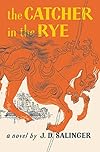
I started this book and I hated it since the beginning. But I kept reading because I read 100 pages really quickly and I am very stubborn when it comes to finishing books. So even though I hated the way the character spoke and the plain language and vocabulary, I kept reading. I still don't think it's the best book I have ever read, and it kind of feels like a waste of time, but the ending made up for the whole thing a little bit. The interaction with the character's sister was sweet and beautiful, and had it been more explored throughout the book, I think it would have definitely been more interesting.
Her writing style fascinates me to no end. I don't think I have ever felt so many things while reading a book (except for Murakami's), so I don't know if I'm giving the rating because the books are good or because they create in me strong and indescribable feelings. The only thing I know for sure is that I am addicted and I can't stop reading her books. Addicted, I tell you. It's as if I'd known Amélie my whole life.