I originally agreed to read this book for three reasons: (1) It was described as literary fiction, and I am a litfic writer; (2) I sniff out good litfic like a crazed booksnob bloodhound; and (3) one of the characters is nicknamed "Bean," which is also my daughter's nickname (although I'm not so happy about that particular coincidence now).
I went into the book with elevated expectations, given what I already knew about it and the person who had recommended it to me. I started reading with the knowledge that I was very likely going to be amused, entertained, and impressed. I had very high hopes for The Angry Woman Suite.
Even with all that, the book absolutely blew me away.
I will not be recounting the plot in this review. I do this with good reason--anything I could say would likely give something away that you're better off reading in Fullbright's exceptional prose. Believe me, although this might be frustrating now (I'm taunting you, aren't I? The book is great, I crow. I won't tell you anything about it, though--neener-neener-neener!), you'll thank me later. Fullbright treats her story, and her characters, with such a masterful touch that just about anything I could say about them would give something away that shouldn't be given away until its precise moment in the story.
Fullbright is a master story-teller. She carefully places easter eggs throughout the story, giving you just enough information to make you keep reading, and slipping innuendo and mystery in a manner show more that both delights and enrages. The tale is told from the perspective of three characters--Elyse, Francis, and Aidan-and the insight they each bring to the story both clarifies and obscures (I know! Maddening!) the driving forces and the truth of the story.
Perhaps best of all (to my litero-masochistic tastes) is that the end is murky and ambiguous--what exactly is the truth? Fullbright knows, but she's not telling. Who do you trust? Who do you believe? You'll find your allegiances shifting constantly as you read, identifying (oftentimes grudgingly) with flaws and actions that you can't believe you condone, much less understand.
Every single one of her characters is fully fleshed out. They're legitimately human. They jump, unbidden, from the page. The plot, even in its sometimes unbelievable, seemingly larger-than-life occurrences, drips with realism--you find yourself thinking, You know, I bet this has happened somewhere. However unlikely, I bet it has. Tragic heroes, heartwrenching situations, bittersweet moments, thwarted and misguided love--it's all there. All of it, in the gruesome, human, too-real world that Fullbright poignantly draws with her wordsmith's quill.
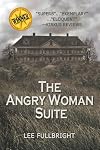
My only complaint? I wish the cover were different. I know what it represents, and I understand its significance, but I don't think it does the book justice. Had I seen it on a bookstore shelf, I wouldn't have picked it up, simply based on the cover (old adages about being a judgy booksnob be damned). I think the story deserves a more Jonathan Safran Foer treatment in its cover--more cryptic, starker, of a higher contrast. Much like the tale itself.
Despite my single reservation, though, I would heartily recommend The Angry Woman Suite to anyone, litfic aficionado or not, who wants to be wrapped up so tightly in a story that they forget to stop reading. You might even forget to eat. And sleep. It's THAT good.
Disclaimer: I was given a free copy of this book in exchange for an honest review. show less
I went into the book with elevated expectations, given what I already knew about it and the person who had recommended it to me. I started reading with the knowledge that I was very likely going to be amused, entertained, and impressed. I had very high hopes for The Angry Woman Suite.
Even with all that, the book absolutely blew me away.
I will not be recounting the plot in this review. I do this with good reason--anything I could say would likely give something away that you're better off reading in Fullbright's exceptional prose. Believe me, although this might be frustrating now (I'm taunting you, aren't I? The book is great, I crow. I won't tell you anything about it, though--neener-neener-neener!), you'll thank me later. Fullbright treats her story, and her characters, with such a masterful touch that just about anything I could say about them would give something away that shouldn't be given away until its precise moment in the story.
Fullbright is a master story-teller. She carefully places easter eggs throughout the story, giving you just enough information to make you keep reading, and slipping innuendo and mystery in a manner show more that both delights and enrages. The tale is told from the perspective of three characters--Elyse, Francis, and Aidan-and the insight they each bring to the story both clarifies and obscures (I know! Maddening!) the driving forces and the truth of the story.
Perhaps best of all (to my litero-masochistic tastes) is that the end is murky and ambiguous--what exactly is the truth? Fullbright knows, but she's not telling. Who do you trust? Who do you believe? You'll find your allegiances shifting constantly as you read, identifying (oftentimes grudgingly) with flaws and actions that you can't believe you condone, much less understand.
Every single one of her characters is fully fleshed out. They're legitimately human. They jump, unbidden, from the page. The plot, even in its sometimes unbelievable, seemingly larger-than-life occurrences, drips with realism--you find yourself thinking, You know, I bet this has happened somewhere. However unlikely, I bet it has. Tragic heroes, heartwrenching situations, bittersweet moments, thwarted and misguided love--it's all there. All of it, in the gruesome, human, too-real world that Fullbright poignantly draws with her wordsmith's quill.
My only complaint? I wish the cover were different. I know what it represents, and I understand its significance, but I don't think it does the book justice. Had I seen it on a bookstore shelf, I wouldn't have picked it up, simply based on the cover (old adages about being a judgy booksnob be damned). I think the story deserves a more Jonathan Safran Foer treatment in its cover--more cryptic, starker, of a higher contrast. Much like the tale itself.
Despite my single reservation, though, I would heartily recommend The Angry Woman Suite to anyone, litfic aficionado or not, who wants to be wrapped up so tightly in a story that they forget to stop reading. You might even forget to eat. And sleep. It's THAT good.
Disclaimer: I was given a free copy of this book in exchange for an honest review. show less
My favorite books around the time I was 8 or 9 years old (and probably on through my awkward teenybopper years) were the books in the Encyclopedia Brown and Choose Your Own Adventure series. I have particularly fond memories of the Encyclopedia Brown mysteries, which I was invariably unable to solve, but which still entertained me to no end.
True to my younger self, I had a blast reading about the latest young girl sleuth to burst onto the scene: Tommy Davey’s very own Cora Flash.
Let’s begin by stating the obvious: How can you not love someone with the last name Flash? It’s both reminiscent of old-school kid sleuth stories, and makes me think of comic strip hero Flash Gordon. This is clearly a win-win. It also meshes incredibly well with Cora’s spunky personality and, as any kid sleuth worth his or her salt will own up to, insatiable curiosity.
The Diamond of Madagascar lives up to Cora’s quick wit. The story is fast-paced (took me perhaps a total of two hours to read through the book, if that), and is crafted to keep the young kids it’s aimed towards entertained. The action takes place entirely in the same location (a train bound for the mountains) which, on the surface, might seem like a stale idea but, like Russell Crowe’s seafaring epic Master and Commander has proven, is actually a fantastic way to contain a story if done correctly. And Davey certainly did it correctly.
I loved the characters: the serious inspector, the dog-toting old woman, the show more lovestruck honeymooners, the angsty college student (and there are more, if you can believe it). The story itself is, as I’ve said of other children’s books I’ve enjoyed, simple but not simplistic. The fact that there’s a mystery tied in keeps things interesting and keeps the reader trying to guess the outcome. It also has some humorous moments dealing with (very mild) potty humor, which made me giggle.
In the interest of not giving the plot away, I won’t say much about it except to say that it was endearing and well done (although if my daughter ever keeps me in the dark about her being in some diamond heist while she’s on a train without me, like Cora does with her mother, she’s in for some serious grounding when she gets home). I loved that all the characters were given very definite traits in such a short span, and that the story never felt like it was missing anything.
As a mom to a very rambunctious and opinionated toddler, I’m always looking for books that will engage her now, and books that will entertain her in the years to come. Cora is definitely making her way onto my kid’s bookshelf. I look forward to reading the next books in the Cora series (and it looks like I won’t have long to wait; Cora Flash and the Mystery of the Haunted Hotel is already available). I’m excited!
Oh, and the best part about Cora Flash and the Diamond of Madagascar? I was finally able to solve the mystery. BEFORE the end of the book. Encyclopedia Brown would be proud.
Disclaimer: I was given a free copy of this book in exchange for an honest review. show less
True to my younger self, I had a blast reading about the latest young girl sleuth to burst onto the scene: Tommy Davey’s very own Cora Flash.
Let’s begin by stating the obvious: How can you not love someone with the last name Flash? It’s both reminiscent of old-school kid sleuth stories, and makes me think of comic strip hero Flash Gordon. This is clearly a win-win. It also meshes incredibly well with Cora’s spunky personality and, as any kid sleuth worth his or her salt will own up to, insatiable curiosity.
The Diamond of Madagascar lives up to Cora’s quick wit. The story is fast-paced (took me perhaps a total of two hours to read through the book, if that), and is crafted to keep the young kids it’s aimed towards entertained. The action takes place entirely in the same location (a train bound for the mountains) which, on the surface, might seem like a stale idea but, like Russell Crowe’s seafaring epic Master and Commander has proven, is actually a fantastic way to contain a story if done correctly. And Davey certainly did it correctly.
I loved the characters: the serious inspector, the dog-toting old woman, the show more lovestruck honeymooners, the angsty college student (and there are more, if you can believe it). The story itself is, as I’ve said of other children’s books I’ve enjoyed, simple but not simplistic. The fact that there’s a mystery tied in keeps things interesting and keeps the reader trying to guess the outcome. It also has some humorous moments dealing with (very mild) potty humor, which made me giggle.
In the interest of not giving the plot away, I won’t say much about it except to say that it was endearing and well done (although if my daughter ever keeps me in the dark about her being in some diamond heist while she’s on a train without me, like Cora does with her mother, she’s in for some serious grounding when she gets home). I loved that all the characters were given very definite traits in such a short span, and that the story never felt like it was missing anything.
As a mom to a very rambunctious and opinionated toddler, I’m always looking for books that will engage her now, and books that will entertain her in the years to come. Cora is definitely making her way onto my kid’s bookshelf. I look forward to reading the next books in the Cora series (and it looks like I won’t have long to wait; Cora Flash and the Mystery of the Haunted Hotel is already available). I’m excited!
Oh, and the best part about Cora Flash and the Diamond of Madagascar? I was finally able to solve the mystery. BEFORE the end of the book. Encyclopedia Brown would be proud.
Disclaimer: I was given a free copy of this book in exchange for an honest review. show less

I deeply enjoy a good psychological mystery/thriller. There’s something fantastically satisfying about being so into a story line that you don’t notice the time passing–all you’re focused on is turning the page, getting to the next tidbit, trying to figure out the mystery, fearing for the protagonist.
In a lot of ways, Life in Death delivered just that. In a lot of other ways, however, it did not.
I’ll start by discussing what I loved about the book. I absolutely loved the pace. It was quick–in fact, it was one of the quickest reads I’ve had this year. The action sprinted forward, and Drake’s prose was a fabulous propellant. She was pithy and concise, drawing exact pictures and giving you just what you need to mentally place yourself within the story. I could easily see the characters in my mind’s eye, and I could also see their surroundings and actions. Dialogue was also key (and this is something Drake admits is one of her strong suits–I would definitely agree), and Drake’s mastery in this regard is apparent.
I liked the turns the story took, and the unexpected (very unexpected) twist at the end. It was easy to tell that this story had been carefully thought out and outlined, and that each character had a backstory that fed into his or her behavior.
On the surface, there was nothing that could detract from the story. There were a few minor editing mistakes, but they were negligible overall.
The problem, really, comes when the story is analyzed as a show more whole.
Life in Death, although very solid at its core, peters out in the details, seems disjointed at times, and leaves many questions unanswered (most poignantly in the epilogue, which seems to come out of nowhere and completely changed the feelings I had towards the primary protagonist). Perhaps it is due to the novella-length of the story, or perhaps it is due to the author’s self-admitted shortcoming of “writing short” (“I can describe something in a paragraph that may have been better described in a page”). Likely it is a combination of both–and the epilogue set-up might be due to the fact that this appears to be the first in a series, so we had to be left hanging off a cliff somehow.
Each of Life in Death‘s substantial characters had a “humanizing” moment in the story (which I won’t go into due to potential spoilers), where you got to see a little of their own private life or their internal motivations–the problem was, these humanizing moments seemed to come out of nowhere. I know what the author was trying to accomplish with these brief glimpses–I just don’t think she properly prepared me for her epiphanies. I could see, through these glimpses, that she fleshed out the backstories of each of her characters in great detail. Unfortunately, they simply didn’t translate into the story effectively. I almost wish she had left them out altogether; I think the story would have been less piece-y were they to have been eliminated. With them, I’m left wondering, “Why was that there? Did I miss something?” Without them (save for a select few that gave the story itself some background), I think Life in Death would have been stronger.
I’m still not sure where the title fits into the story, nor where the cover has its provenance within the plot. In retrospect, they seem to be odd choices–something that makes perfect sense to the author but seems a little without anchor to one who is relying solely on the story within the printed page.
Overall, I did like Drake’s writing style and consider her tale to be a good one. However, I think that the story is suffering from its brevity–were Life in Death to be expanded (after all, it is only an estimated 88 pages long–it could easily be doubled in length without much of a problem), it would become much stronger, much more solid. I look forward to her future efforts, though; if Life in Death is any indication, Harlow Drake has the potential to become a very strong mystery/thriller author. show less
In a lot of ways, Life in Death delivered just that. In a lot of other ways, however, it did not.
I’ll start by discussing what I loved about the book. I absolutely loved the pace. It was quick–in fact, it was one of the quickest reads I’ve had this year. The action sprinted forward, and Drake’s prose was a fabulous propellant. She was pithy and concise, drawing exact pictures and giving you just what you need to mentally place yourself within the story. I could easily see the characters in my mind’s eye, and I could also see their surroundings and actions. Dialogue was also key (and this is something Drake admits is one of her strong suits–I would definitely agree), and Drake’s mastery in this regard is apparent.
I liked the turns the story took, and the unexpected (very unexpected) twist at the end. It was easy to tell that this story had been carefully thought out and outlined, and that each character had a backstory that fed into his or her behavior.
On the surface, there was nothing that could detract from the story. There were a few minor editing mistakes, but they were negligible overall.
The problem, really, comes when the story is analyzed as a show more whole.
Life in Death, although very solid at its core, peters out in the details, seems disjointed at times, and leaves many questions unanswered (most poignantly in the epilogue, which seems to come out of nowhere and completely changed the feelings I had towards the primary protagonist). Perhaps it is due to the novella-length of the story, or perhaps it is due to the author’s self-admitted shortcoming of “writing short” (“I can describe something in a paragraph that may have been better described in a page”). Likely it is a combination of both–and the epilogue set-up might be due to the fact that this appears to be the first in a series, so we had to be left hanging off a cliff somehow.
Each of Life in Death‘s substantial characters had a “humanizing” moment in the story (which I won’t go into due to potential spoilers), where you got to see a little of their own private life or their internal motivations–the problem was, these humanizing moments seemed to come out of nowhere. I know what the author was trying to accomplish with these brief glimpses–I just don’t think she properly prepared me for her epiphanies. I could see, through these glimpses, that she fleshed out the backstories of each of her characters in great detail. Unfortunately, they simply didn’t translate into the story effectively. I almost wish she had left them out altogether; I think the story would have been less piece-y were they to have been eliminated. With them, I’m left wondering, “Why was that there? Did I miss something?” Without them (save for a select few that gave the story itself some background), I think Life in Death would have been stronger.
I’m still not sure where the title fits into the story, nor where the cover has its provenance within the plot. In retrospect, they seem to be odd choices–something that makes perfect sense to the author but seems a little without anchor to one who is relying solely on the story within the printed page.
Overall, I did like Drake’s writing style and consider her tale to be a good one. However, I think that the story is suffering from its brevity–were Life in Death to be expanded (after all, it is only an estimated 88 pages long–it could easily be doubled in length without much of a problem), it would become much stronger, much more solid. I look forward to her future efforts, though; if Life in Death is any indication, Harlow Drake has the potential to become a very strong mystery/thriller author. show less
I typically am a little hesitant to read stories in this genre, because fantasy authors often forget that not everyone is a superfan. Many a time have I picked up a fantasy book that sounded interesting only to put it down after a few chapters because I was completely unable to follow the complex politics, keep up with the unusual names, or understand why some characters act in certain ways. This is nothing against fantasy authors--after all, that thriving genre doesn't need to make concessions for newbies if it doesn't want to--but it has prevented me from really getting my feet wet with books bearing the fantasy denomination.
Thankfully, THE BETWEEN was nothing like this. I, a fantasy neophyte, was able to become immersed in the story almost immediately, and follow it quickly. In fact, I found it nearly impossible to put down.
I don't read enough fantasy to know if the "changeling" story angle is a common one--I would, however, imagine that it is. In the back-and-forth between humans and faeries, it would make sense that a human baby would make its way into faerie lands, and viceversa, likely both with unusual/unfortunate/unexpected results. Such is the case in THE BETWEEN, where Lydia Hawthorne finds out, much to her discomfiture and chagrin, that she is not human, not a senior in high school, and not going to college next year-but, rather, a "trueborn" Fae (meaning she was born from two Fae--faerie--parents), and one with a great deal of untapped magical power.
Lydia is show more a complex, strongly-drawn character. Her reaction to the situation she finds herself in is not only completely understandable, but also utterly relatable. She is angry, frustrated, sad, confused-and also incredibly powerful, which makes for a fantastic fictional combination. I love reading strong female leads, and Lydia did not disappoint. Her strength in the face of intimidating situations was bracing, yet also delightfully juxtaposed to her despondency and desperation at being torn from her adopted human family. LJ Cohen does a fantastic job of describing Lydia's feelings and taking us on a tour of Lydia's thoughts without ever dragging the story down.
Clive Barrow, Lydia's unwitting sidekick in her tour of Faerie, is also a greatly developed character. Fae in nature, yet mortal in so many ways, Clive presents us with both sides of the coin in a way that Lydia, with her unwillingness to accept her Fae heritage, cannot initially do. Clive is the character which grows and changes the most throughout the book, acting in ways that surprise even him. I enjoyed the fact that it was a secondary character that developed the most (which is actually saying a lot, given the metamorphosis Lydia goes through).
The Fae nemeses in THE BETWEEN, Oberon and Titania, are magnificent. Cohen's descriptions allow you to nearly feel the glow of King Oberon's robes blinding you, and the wispy cold of Queen Titania's magical fog creeping about your ankles. I love that Cohen tapped into a Shakespeare classic, A Midsummer Night's Dream, as inspiration for these Fae rulers (and it doesn't hurt that I am an unabashed Shakespeare-o-phile).
Cohen does a lot of things well in THE BETWEEN, but perhaps the thing she does the best is describe the way magic feels. I'd never really given this any thought, being thoroughly non-magical myself, but Cohen's engaging, detailed descriptions allowed me to feel the the flow of magic both Fae and human as I read the story.
The relationships she crafts between the characters were excellent. The lines between the Bright and Shadow courts were clearly drawn, and their members easily categorized. I found myself fully engaged in the tale, rooting for my favorites, sometimes reading with bated breath and-once-with a lump in my throat.
As anyone who follows my reviews will know, I enjoy my action to be a little drawn out, the climaxes lengthy, the denouements detailed enough to allow for the story to ebb and flow without sudden starts and stop. The Between did all of these. I never found myself putting on the mental brakes and wondering when we'd reached the end of the story. Even though the action moved at a quick clip, it never simply sped ahead of the reader. It was paced well and expertly.
All in all, an excellent read, regardless of your level of comfort or familiarity with faerie literature or stories. Even if all you've ever done is watched Peter Pan, you'll be able to jump right into THE BETWEEN and become a part of Cohen's faerie land within a few pages, completely enjoying yourself in the process. I hope Cohen decides to do a follow-up to the story; I would read it in a human second.
Disclaimer: I received a free copy of this book in exchange for an honest review. show less
Thankfully, THE BETWEEN was nothing like this. I, a fantasy neophyte, was able to become immersed in the story almost immediately, and follow it quickly. In fact, I found it nearly impossible to put down.
I don't read enough fantasy to know if the "changeling" story angle is a common one--I would, however, imagine that it is. In the back-and-forth between humans and faeries, it would make sense that a human baby would make its way into faerie lands, and viceversa, likely both with unusual/unfortunate/unexpected results. Such is the case in THE BETWEEN, where Lydia Hawthorne finds out, much to her discomfiture and chagrin, that she is not human, not a senior in high school, and not going to college next year-but, rather, a "trueborn" Fae (meaning she was born from two Fae--faerie--parents), and one with a great deal of untapped magical power.
Lydia is show more a complex, strongly-drawn character. Her reaction to the situation she finds herself in is not only completely understandable, but also utterly relatable. She is angry, frustrated, sad, confused-and also incredibly powerful, which makes for a fantastic fictional combination. I love reading strong female leads, and Lydia did not disappoint. Her strength in the face of intimidating situations was bracing, yet also delightfully juxtaposed to her despondency and desperation at being torn from her adopted human family. LJ Cohen does a fantastic job of describing Lydia's feelings and taking us on a tour of Lydia's thoughts without ever dragging the story down.
Clive Barrow, Lydia's unwitting sidekick in her tour of Faerie, is also a greatly developed character. Fae in nature, yet mortal in so many ways, Clive presents us with both sides of the coin in a way that Lydia, with her unwillingness to accept her Fae heritage, cannot initially do. Clive is the character which grows and changes the most throughout the book, acting in ways that surprise even him. I enjoyed the fact that it was a secondary character that developed the most (which is actually saying a lot, given the metamorphosis Lydia goes through).
The Fae nemeses in THE BETWEEN, Oberon and Titania, are magnificent. Cohen's descriptions allow you to nearly feel the glow of King Oberon's robes blinding you, and the wispy cold of Queen Titania's magical fog creeping about your ankles. I love that Cohen tapped into a Shakespeare classic, A Midsummer Night's Dream, as inspiration for these Fae rulers (and it doesn't hurt that I am an unabashed Shakespeare-o-phile).
Cohen does a lot of things well in THE BETWEEN, but perhaps the thing she does the best is describe the way magic feels. I'd never really given this any thought, being thoroughly non-magical myself, but Cohen's engaging, detailed descriptions allowed me to feel the the flow of magic both Fae and human as I read the story.
The relationships she crafts between the characters were excellent. The lines between the Bright and Shadow courts were clearly drawn, and their members easily categorized. I found myself fully engaged in the tale, rooting for my favorites, sometimes reading with bated breath and-once-with a lump in my throat.
As anyone who follows my reviews will know, I enjoy my action to be a little drawn out, the climaxes lengthy, the denouements detailed enough to allow for the story to ebb and flow without sudden starts and stop. The Between did all of these. I never found myself putting on the mental brakes and wondering when we'd reached the end of the story. Even though the action moved at a quick clip, it never simply sped ahead of the reader. It was paced well and expertly.
All in all, an excellent read, regardless of your level of comfort or familiarity with faerie literature or stories. Even if all you've ever done is watched Peter Pan, you'll be able to jump right into THE BETWEEN and become a part of Cohen's faerie land within a few pages, completely enjoying yourself in the process. I hope Cohen decides to do a follow-up to the story; I would read it in a human second.
Disclaimer: I received a free copy of this book in exchange for an honest review. show less
This book is not in a genre I would usually read but, overall, I enjoyed it (once I was able to get past the story's obvious need of a thorough, professional edit). The story moved quickly and was mostly linear and clear, the characters were well-defined and had strong personalities, and it was obvious that the author cared about both them and their story. Her talent is particularly noticeable in the intimacy scenes, which she crafts with skill and passion. A MILLION WISHES was a quick read that I completed in a few days.
My primary issue with this book is the number of spelling, punctuation, and grammar errors that plagued it throughout. Curiously, the author lists an editor in the credits (and also in the notes for the book)--I can only imagine that this "editor" does not do this for a living, given the "draft" feel of the final, published product. Obvious errors, such as using "too" instead of "to," could be found constantly in the text. Comma splices and misuses of semi-colons were rampant. It was incredibly distracting. My rating for the book would have been four stars had it been error-free (or, at least, had the amount of errors not been so abundant). The fact that the author at least attempted to have the text proofed by someone made me give it three stars instead of two (a rating the amount of errors in the book, in my opinion, warranted).
This is mostly just personal preference, but I found the use of pet names in the story extremely overdone. There were at show more least two or three on every page of the book ("Romeo" and "babydoll" are the two frontrunners), and it was VERY distracting; it almost took over the dialogue. I also found it a little disconcerting that the main character's older brother called her "babydoll"--a name which her significant other also uses. It stuck out as more than a little odd.
Final opinion: The story would benefit greatly from a thorough, extensive line edit--were the author to invest in a professional editor, this would be a good story that I would recommend to lovers of the romance genre. As it stands now, though, it's more of a plodding read struggling under its own errors. show less
My primary issue with this book is the number of spelling, punctuation, and grammar errors that plagued it throughout. Curiously, the author lists an editor in the credits (and also in the notes for the book)--I can only imagine that this "editor" does not do this for a living, given the "draft" feel of the final, published product. Obvious errors, such as using "too" instead of "to," could be found constantly in the text. Comma splices and misuses of semi-colons were rampant. It was incredibly distracting. My rating for the book would have been four stars had it been error-free (or, at least, had the amount of errors not been so abundant). The fact that the author at least attempted to have the text proofed by someone made me give it three stars instead of two (a rating the amount of errors in the book, in my opinion, warranted).
This is mostly just personal preference, but I found the use of pet names in the story extremely overdone. There were at show more least two or three on every page of the book ("Romeo" and "babydoll" are the two frontrunners), and it was VERY distracting; it almost took over the dialogue. I also found it a little disconcerting that the main character's older brother called her "babydoll"--a name which her significant other also uses. It stuck out as more than a little odd.
Final opinion: The story would benefit greatly from a thorough, extensive line edit--were the author to invest in a professional editor, this would be a good story that I would recommend to lovers of the romance genre. As it stands now, though, it's more of a plodding read struggling under its own errors. show less
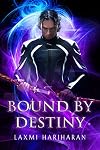
I should probably begin with a disclosure: Epic fantasy is not my favorite genre. It’s not my least favorite genre but, given a choice, I would probably pick something closer to snooty literary fiction or a little magical realism (Are you there, Gabriel García Marquez? It’s me, Anne). However, I was intrigued by the description of this book, particularly the “Indian mythology” and “futuristic Bombay” bits, so I decided to give it a shot.
The Destiny of Shaitan is an interesting book. It has the good ol’ “save the world” theme; however, it has a few other thematic undercurrents crisscrossing it that make it more than your standard YA fantasy epic. It’s a coming-of-age, learning-from-your-mistakes, growing-up-quick-fast-and-in-a-hurry, united-we-stand-divided-we-fall story more than anything else, and that’s what makes it a very strong read.
I enjoyed the character development in the story. I particularly liked the way two of the three main characters, Yudi and Tiina, grew together–literally–as the story progressed. I felt that the development of the third primary protagonist, Rai, was a little stunted in comparison to the other two, but still added something of a Robin to their Batman. Rai’s slight blend into the background was probably due to the [TINY SPOILER ALERT] romantic struggles of the other two, but he did enhance their love story, so he had that going for him.
What I appreciated most of all in the story was the injection of Indian show more mythology. I’ve been a sucker for these kinds of tales since grade school, and it was nice to see Shiva et al making an appearance again, as well as some other mythological creatures that I wasn’t familiar with as part of Indian lore. I learned something, and that’s always appreciated. I did feel that the novel tries to sell itself a little too much on the “futuristic Bombay” angle–there wasn’t that much that took place in Bombay, and certainly not enough to merit a mention in the summary.
Something interesting happened while I was reading the book, which I feel is worth mentioning. Initially, I was aggravated by the main characters’ reactions to things: they were so melodramatic, almost staged. Every emotion was heightened, every action was life-or-death. They seemed to go from ecstatic to devastated in the blink of an eye. Love-hate-love-hate-tears-laughter-love. My mind was spinning. I started to compose this review in my head, blasting the author’s immature portrayal of her characters–and then I realized something: These characters are in their mid-teens. They’re sixteen, seventeen years old. I’m most decidedly not sixteen or seventeen. Not even close. However, when I was sixteen years old, I distinctly remember acting melodramatic. Everything had a flourish. Everything was oh-so-awful or oh-so-amazing. Hormones are raging. You fly from one emotion to another so fast you get whiplash. It was with this knowledge that I realized: Rather than condemnation, the author should be praised for an incredibly accurate portrayal of teenage interaction. Tiina, Yudi, and Rai act exactly their age. That might not be terribly believable to adults, but it will be extremely relatable to teens (who are, after all, the target market for Destiny).
My only real complaint (and this is one I have often, which leads me to believe that I’m just that kind of reader) is that the denouement was too short. The resolution to the story was too fast. I like things to draw out a little; I like my battles lengthy, my psychological realizations extended (and heartrending, if possible). To me, it ended too fast, and then we were in the wrap-up too quickly. It didn’t give my mind time to adjust.
As a side note: There is definitely some raunchy content in the story. Not steamy enough to make me give it an “R” rating, but it’s definitely PG-13. It was a nice addition for the grown-ups, though.
Final conclusion: I enjoyed it. Hariharan has a pleasant, lyrical way to her prose, and her descriptions are highly detailed, which I appreciate. Not my genre, but I would read the second (and, likely, third) book in the series. And that about says it all. show less
The Destiny of Shaitan is an interesting book. It has the good ol’ “save the world” theme; however, it has a few other thematic undercurrents crisscrossing it that make it more than your standard YA fantasy epic. It’s a coming-of-age, learning-from-your-mistakes, growing-up-quick-fast-and-in-a-hurry, united-we-stand-divided-we-fall story more than anything else, and that’s what makes it a very strong read.
I enjoyed the character development in the story. I particularly liked the way two of the three main characters, Yudi and Tiina, grew together–literally–as the story progressed. I felt that the development of the third primary protagonist, Rai, was a little stunted in comparison to the other two, but still added something of a Robin to their Batman. Rai’s slight blend into the background was probably due to the [TINY SPOILER ALERT] romantic struggles of the other two, but he did enhance their love story, so he had that going for him.
What I appreciated most of all in the story was the injection of Indian show more mythology. I’ve been a sucker for these kinds of tales since grade school, and it was nice to see Shiva et al making an appearance again, as well as some other mythological creatures that I wasn’t familiar with as part of Indian lore. I learned something, and that’s always appreciated. I did feel that the novel tries to sell itself a little too much on the “futuristic Bombay” angle–there wasn’t that much that took place in Bombay, and certainly not enough to merit a mention in the summary.
Something interesting happened while I was reading the book, which I feel is worth mentioning. Initially, I was aggravated by the main characters’ reactions to things: they were so melodramatic, almost staged. Every emotion was heightened, every action was life-or-death. They seemed to go from ecstatic to devastated in the blink of an eye. Love-hate-love-hate-tears-laughter-love. My mind was spinning. I started to compose this review in my head, blasting the author’s immature portrayal of her characters–and then I realized something: These characters are in their mid-teens. They’re sixteen, seventeen years old. I’m most decidedly not sixteen or seventeen. Not even close. However, when I was sixteen years old, I distinctly remember acting melodramatic. Everything had a flourish. Everything was oh-so-awful or oh-so-amazing. Hormones are raging. You fly from one emotion to another so fast you get whiplash. It was with this knowledge that I realized: Rather than condemnation, the author should be praised for an incredibly accurate portrayal of teenage interaction. Tiina, Yudi, and Rai act exactly their age. That might not be terribly believable to adults, but it will be extremely relatable to teens (who are, after all, the target market for Destiny).
My only real complaint (and this is one I have often, which leads me to believe that I’m just that kind of reader) is that the denouement was too short. The resolution to the story was too fast. I like things to draw out a little; I like my battles lengthy, my psychological realizations extended (and heartrending, if possible). To me, it ended too fast, and then we were in the wrap-up too quickly. It didn’t give my mind time to adjust.
As a side note: There is definitely some raunchy content in the story. Not steamy enough to make me give it an “R” rating, but it’s definitely PG-13. It was a nice addition for the grown-ups, though.
Final conclusion: I enjoyed it. Hariharan has a pleasant, lyrical way to her prose, and her descriptions are highly detailed, which I appreciate. Not my genre, but I would read the second (and, likely, third) book in the series. And that about says it all. show less
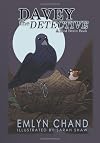
Davey the Detective is a book that I think would be exceptional for families with two kids of more, when one of them is always blaming the other(s) for having done something bad. As anyone who has grown up in a full house knows, jumping to conclusions never solves anything, and accusing people without first making sure they're the guilty party always ends up with someone in tears (or grounded). Davey is all about making the wrong assumptions about others and learning from your mistakes-but it doesn't stop there. It also teaches kids the value of fixing your wrongs, apologizing for the errors you make, and making new friends. Genuine remorse, making friends, and helping others are some of the hardest interpersonal skills kids learn; Davey opens the door for discussion and explanation, allowing you to illustrate important life concepts with a story they're bound to love.
Like the first in the Bird Brain Series (Honey the Hero), Davey the Detective is a smart book. The storyline is simple (it has to be, to keep things interesting and quick for young kids), but not simplistic. It has excellent higher-level vocabulary (quaint, gazed, zipped, shapely, fluttered, mysteriously, frantic, flitted, nestled-the list goes on and on). As a parent who is forever obsessed with expanding my kid's vocabulary (which, at fourteen months, consists mostly of "doggie," "kitty," "up," and "hi"-but we're getting there) and exposing her to new words, this is essential. I loved that I, an adult, was show more able to read Davey without feeling cheated out of thinking. I kept imagining reading this story with my kids when they're older, and pausing to explain what the new words meant, and how they could use them.
The illustrations are bright, colorful, crisp, and clear. They're a perfect complement to the story, letting parents sugarcoat the life skills medicine the books are handing out. The animals are given very realistic expressions of emotions--that is incredibly hard to do convincingly. It adds immeasurably to the story. Kudos to illustrator Sarah Shaw.
My kiddo is too young to really talk, so discussion of the valuable lessons within the books was out of the question. However, she loved the illustrations. She insisted on "petting" the birds and other animals (in a way that reminded me a little of Elmyra Duff, but whatever-we've got time to work on finesse), and squealed in delight whenever a new page was turned. In my mommy-to-an-energetic-and-willful-toddler world, that amounts to rousing applause and a solid A+.
Side note: I loved the insertion of the Sherlock Holmes references. Not only are they appealing to adults (and anything that keeps things interesting for adults as they read a kids' book is a plus), it is also a great avenue for introducing more advanced literature to young kids who are interested in it. You may not start them off on Conan Doyle right away, but a little Encyclopedia Brown never hurt anyone! show less
Like the first in the Bird Brain Series (Honey the Hero), Davey the Detective is a smart book. The storyline is simple (it has to be, to keep things interesting and quick for young kids), but not simplistic. It has excellent higher-level vocabulary (quaint, gazed, zipped, shapely, fluttered, mysteriously, frantic, flitted, nestled-the list goes on and on). As a parent who is forever obsessed with expanding my kid's vocabulary (which, at fourteen months, consists mostly of "doggie," "kitty," "up," and "hi"-but we're getting there) and exposing her to new words, this is essential. I loved that I, an adult, was show more able to read Davey without feeling cheated out of thinking. I kept imagining reading this story with my kids when they're older, and pausing to explain what the new words meant, and how they could use them.
The illustrations are bright, colorful, crisp, and clear. They're a perfect complement to the story, letting parents sugarcoat the life skills medicine the books are handing out. The animals are given very realistic expressions of emotions--that is incredibly hard to do convincingly. It adds immeasurably to the story. Kudos to illustrator Sarah Shaw.
My kiddo is too young to really talk, so discussion of the valuable lessons within the books was out of the question. However, she loved the illustrations. She insisted on "petting" the birds and other animals (in a way that reminded me a little of Elmyra Duff, but whatever-we've got time to work on finesse), and squealed in delight whenever a new page was turned. In my mommy-to-an-energetic-and-willful-toddler world, that amounts to rousing applause and a solid A+.
Side note: I loved the insertion of the Sherlock Holmes references. Not only are they appealing to adults (and anything that keeps things interesting for adults as they read a kids' book is a plus), it is also a great avenue for introducing more advanced literature to young kids who are interested in it. You may not start them off on Conan Doyle right away, but a little Encyclopedia Brown never hurt anyone! show less
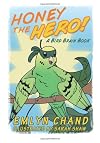
I loved the storyline in Honey the Hero. Having been an overachieving kid-and starting to see some of the same tendencies in my own child-I saw the incredible value in a tale of wanting to do something so badly, being unsuccessful at it, and yet abiding by the old "try, try again" adage. Honey teaches kids about perseverance, about rising from failure, and about never letting things get in the way of your passion. As if that wasn't enough, it also teaches them the value in helping others! It is literally filled with teaching moments (not just for kids, either!).
I love that Honey the Hero is a smart book. Although the storyline is simple (it has to be, to keep things interesting and quick for young kids), it's not simplistic. The story has excellent higher-level vocabulary (quaint, gazed, zipped, shapely, fluttered, mysteriously, frantic, flitted, nestled-the list goes on and on). As a parent who is forever obsessed with expanding my kid's vocabulary (which, right now, consists mostly of "doggie," "kitty," "up," and "hi"-but we're getting there) and exposing her to new words, this is essential. I loved that I, an adult, was able to read Honey without feeling cheated out of thinking. I kept imagining reading this story with my kids when they're older, and pausing to explain what the new words meant, and how they could use them.
Any parent worth his or her salt knows one thing for sure-if the pictures aren't pretty, the kids aren't sticking around. Thankfully, that's not a show more problem with Chand's Bird Brain Books. The illustrations are bright, colorful, crisp, and clear. They're a perfect complement to the story, letting parents sugarcoat the life skills medicine the books are handing out. Kudos to illustrator Sarah Shaw.
My kiddo is too young to really talk, so discussion of the valuable lessons within the books was out of the question. However, she loved the illustrations. She insisted on "petting" the birds and other animals (in a way that reminded me a little of Elmyra Duff, but whatever--we've got time to work on finesse), and squealed in delight whenever a new page was turned. In my mommy-to-an-energetic-and-willful-toddler world, that amounts to rousing applause and a solid A+. show less
I love that Honey the Hero is a smart book. Although the storyline is simple (it has to be, to keep things interesting and quick for young kids), it's not simplistic. The story has excellent higher-level vocabulary (quaint, gazed, zipped, shapely, fluttered, mysteriously, frantic, flitted, nestled-the list goes on and on). As a parent who is forever obsessed with expanding my kid's vocabulary (which, right now, consists mostly of "doggie," "kitty," "up," and "hi"-but we're getting there) and exposing her to new words, this is essential. I loved that I, an adult, was able to read Honey without feeling cheated out of thinking. I kept imagining reading this story with my kids when they're older, and pausing to explain what the new words meant, and how they could use them.
Any parent worth his or her salt knows one thing for sure-if the pictures aren't pretty, the kids aren't sticking around. Thankfully, that's not a show more problem with Chand's Bird Brain Books. The illustrations are bright, colorful, crisp, and clear. They're a perfect complement to the story, letting parents sugarcoat the life skills medicine the books are handing out. Kudos to illustrator Sarah Shaw.
My kiddo is too young to really talk, so discussion of the valuable lessons within the books was out of the question. However, she loved the illustrations. She insisted on "petting" the birds and other animals (in a way that reminded me a little of Elmyra Duff, but whatever--we've got time to work on finesse), and squealed in delight whenever a new page was turned. In my mommy-to-an-energetic-and-willful-toddler world, that amounts to rousing applause and a solid A+. show less
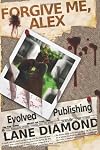
“I mean, shit, any knucklehead can be a writer, right?” muses one of the characters in Lane Diamond’s nail-biter of a story, Forgive Me, Alex. And, yes, any knucklehead can. But it takes a very special kind of knucklehead to put together a story the way Diamond has. Forgive Me, Alex did something that a book has not done since Kristy and the Snobs (The Baby-sitters Club #11), where Kristy’s family dog Louie had to be put to sleep: It made me cry. Damn you, Lane Diamond. Damn you to hell.
Forgive Me, Alex is classified as a psychological suspense thriller, and suspense should really be bolded and italicized. There is a certain level of mastery a writer must possess in order to effectively build this kind of breathless expectation in a reader, and Diamond does just that, not only by switching us back and forth between 1978 (when the events that set everything in motion took place) and 1995 (the subsequent aftermath after the serial killer is released), but also by switching up narrative perspectives between our hero and antagonist. Although I was originally afraid all this moving about might harm the linearity of the tale, my fears were unfounded: The story developed and evolved brilliantly, and kept me turning the pages wanting more. More. More.
Diamond does in Forgive Me, Alex what I wish more contemporary authors would do: He brings me right into the story, forcing me to identify with the characters. I didn’t have a choice–I would feel Tony Hooper’s wrath show more and need for revenge, I would wallow in Mitchell Norton’s desperate inability to ward off his demons. I would cheer for Diana Gregorio’s unbelievable ballsiness in the face of seemingly unbeatable odds. I would weep, shedding actual tears, for Alex Hooper’s childhood.
Forgive Me, Alex scared the living bejeesus out of me. I live in a small, sleepy town á la Algonquin, Illinois. It’s a big deal if someone gets a new riding lawnmower. Could a Mitchell Norton be just around the corner (sorry, neighbors)? I have a daughter. She’s trusting, wonderful, sweet–a little Alex Hooper. I projected onto this story in a way that astonished even me (mostly because I’m a jaded author type who reads with one eyebrow raised at all times). But even those living in sprawling metropolises without any children will identify with this story, because the way Tony Hooper reacts to the events of his life (and–poor Tony–he gets more than his fair share of awfulness) is incredibly relatable. Who, when faced with the destruction of life as he knows it, wouldn’t long to mete out the justice he had so cruelly been denied? We all would. We might not have the cojones to go through with it, but we can certainly cheer Tony’s decision to become the world’s vigilante.
Probably the best part of Forgive Me, Alex is that you think you know how it will all go–you think you know how everything will end. But you don’t. All the signs point to one thing, and it’s most decidedly another. It’s half Red Dragon and half Flowers for Algernon–and any mix like that is bound to throw you a curveball or twelve. Even the last two chapters (which I could have done without, simply because I felt they took away from what was otherwise a very, very strong ending) kept right on making you do a double-take at the page.
A word of warning: When the author placed the disclaimer that this tale is not for children at the front of the book, he’s not kidding. There are certain parts that are incredibly disturbing, and certain acts are described that are meant only for mature audiences. Know that when Diamond says he will take you on a trek into the mind of a serial killer, he means it–warts and all. Forgive Me, Alex presents the truth of its story in excruciating detail, and it may present images that take a while to fade from your mind’s eye.
As for my "absolute must" requirements in any book: I had no problem following the story. Although it jumped back and forth in time, the linearity within each time period was flawless, and the action was so well-developed that I had no problem keeping everything in mind and building upon it as I read. The editing was great, and the formatting was nearly perfect. Forgive Me, Alex was a fantastic read, both in scope and execution.
Kudos, Lane Diamond. My teary, frightened self salutes you. Job well done. show less
Forgive Me, Alex is classified as a psychological suspense thriller, and suspense should really be bolded and italicized. There is a certain level of mastery a writer must possess in order to effectively build this kind of breathless expectation in a reader, and Diamond does just that, not only by switching us back and forth between 1978 (when the events that set everything in motion took place) and 1995 (the subsequent aftermath after the serial killer is released), but also by switching up narrative perspectives between our hero and antagonist. Although I was originally afraid all this moving about might harm the linearity of the tale, my fears were unfounded: The story developed and evolved brilliantly, and kept me turning the pages wanting more. More. More.
Diamond does in Forgive Me, Alex what I wish more contemporary authors would do: He brings me right into the story, forcing me to identify with the characters. I didn’t have a choice–I would feel Tony Hooper’s wrath show more and need for revenge, I would wallow in Mitchell Norton’s desperate inability to ward off his demons. I would cheer for Diana Gregorio’s unbelievable ballsiness in the face of seemingly unbeatable odds. I would weep, shedding actual tears, for Alex Hooper’s childhood.
Forgive Me, Alex scared the living bejeesus out of me. I live in a small, sleepy town á la Algonquin, Illinois. It’s a big deal if someone gets a new riding lawnmower. Could a Mitchell Norton be just around the corner (sorry, neighbors)? I have a daughter. She’s trusting, wonderful, sweet–a little Alex Hooper. I projected onto this story in a way that astonished even me (mostly because I’m a jaded author type who reads with one eyebrow raised at all times). But even those living in sprawling metropolises without any children will identify with this story, because the way Tony Hooper reacts to the events of his life (and–poor Tony–he gets more than his fair share of awfulness) is incredibly relatable. Who, when faced with the destruction of life as he knows it, wouldn’t long to mete out the justice he had so cruelly been denied? We all would. We might not have the cojones to go through with it, but we can certainly cheer Tony’s decision to become the world’s vigilante.
Probably the best part of Forgive Me, Alex is that you think you know how it will all go–you think you know how everything will end. But you don’t. All the signs point to one thing, and it’s most decidedly another. It’s half Red Dragon and half Flowers for Algernon–and any mix like that is bound to throw you a curveball or twelve. Even the last two chapters (which I could have done without, simply because I felt they took away from what was otherwise a very, very strong ending) kept right on making you do a double-take at the page.
A word of warning: When the author placed the disclaimer that this tale is not for children at the front of the book, he’s not kidding. There are certain parts that are incredibly disturbing, and certain acts are described that are meant only for mature audiences. Know that when Diamond says he will take you on a trek into the mind of a serial killer, he means it–warts and all. Forgive Me, Alex presents the truth of its story in excruciating detail, and it may present images that take a while to fade from your mind’s eye.
As for my "absolute must" requirements in any book: I had no problem following the story. Although it jumped back and forth in time, the linearity within each time period was flawless, and the action was so well-developed that I had no problem keeping everything in mind and building upon it as I read. The editing was great, and the formatting was nearly perfect. Forgive Me, Alex was a fantastic read, both in scope and execution.
Kudos, Lane Diamond. My teary, frightened self salutes you. Job well done. show less
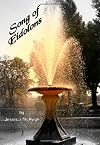
I should get it out of the way right from the start: I love Jessica McHugh’s writing style. I love it for a variety of reasons, not the least of which is that she doesn’t talk down to her readers. She doesn’t dumb down her vocabulary and she isn’t afraid to make you think. McHugh’s writing is exceptional on its own; when you read it with a dictionary and an encyclopedia on hand, you actually learn. And, even more amazingly, you enjoy it.
Song of Eidolons is an exceptional novel. It weaves together folklore, fairy tales, myths, fantasy, and paranormal elements into one seamless journey in prose. It jumps back and forth in time, and you’re with the story every step of the way. McHugh has a way of whirling you around what could be a chaotic and confusing story while never letting you fall or get lost in the tale.
The characters in Song of Eidolons are thoroughly developed, and McHugh creates voices for them so strong and individual that dialogue tags are almost unnecessary to know who is speaking. We care intensely for her protagonists–agonize with them, cheer for them, want to see them fall, root them on to the win. Delaney, the primary character, goes through a magnificent transformation and realization, and we’re right there with her, shocked at her discoveries, frustrated at her inabilities, frightened at her past and her future. She grows, becomes stronger, finds her voice as the story goes on–and we’re enthralled, cheering her on every step of the show more way. Secondary characters are just as thoroughly developed, giving Eidolons almost a soap opera-like feel, not in scope but in impact–you know these people, you’ve been watching them for years, you wait expectantly for their next move, and then cheer (or boo, as the case may be) when they take action.
The villain is deliciously villainous, the heroes and heroines delightfully heroic. Everyone else falls into place like an exquisite game of Tetris that you always–always–win.
McHugh wields her pen exceptionally well when it comes to descriptions, painting a crystal-clear picture of locations, feelings, wardrobes, and thoughts. We can picture exactly where we are at every moment in the story, yet the narrative, like a well-made soufflé, never feels heavy. The descriptions add to the tale, rather than detract from the action. We go from Delaney’s grandfather’s house to the Scottish moors to the English countryside to Rome–and with every change of venue, we feel the cozy smell of built-in bookshelves, the frigid Scot wind, the overcast scent of Briton fields, the uneven cobbles of Italian streets. We feel–not merely read–the characters’ betrayals, excitements, frustrations, disbelief.
When the action is taking place, it moves at breakneck speed–yet still manages to build suspense and tension, and deliver a thoroughly satisfying denouement.
Putting Eidolons down is not an option except to sleep; you will want to reunite with your old friends as soon as chance allows.
It takes a special kind of author to draw readers in so intensely that they emerge from the tale exhausted and drained, yet almost unbearably pleased. That’s exactly what McHugh has done with Song of Eidolons. It is a job exceptionally well done. show less
Song of Eidolons is an exceptional novel. It weaves together folklore, fairy tales, myths, fantasy, and paranormal elements into one seamless journey in prose. It jumps back and forth in time, and you’re with the story every step of the way. McHugh has a way of whirling you around what could be a chaotic and confusing story while never letting you fall or get lost in the tale.
The characters in Song of Eidolons are thoroughly developed, and McHugh creates voices for them so strong and individual that dialogue tags are almost unnecessary to know who is speaking. We care intensely for her protagonists–agonize with them, cheer for them, want to see them fall, root them on to the win. Delaney, the primary character, goes through a magnificent transformation and realization, and we’re right there with her, shocked at her discoveries, frustrated at her inabilities, frightened at her past and her future. She grows, becomes stronger, finds her voice as the story goes on–and we’re enthralled, cheering her on every step of the show more way. Secondary characters are just as thoroughly developed, giving Eidolons almost a soap opera-like feel, not in scope but in impact–you know these people, you’ve been watching them for years, you wait expectantly for their next move, and then cheer (or boo, as the case may be) when they take action.
The villain is deliciously villainous, the heroes and heroines delightfully heroic. Everyone else falls into place like an exquisite game of Tetris that you always–always–win.
McHugh wields her pen exceptionally well when it comes to descriptions, painting a crystal-clear picture of locations, feelings, wardrobes, and thoughts. We can picture exactly where we are at every moment in the story, yet the narrative, like a well-made soufflé, never feels heavy. The descriptions add to the tale, rather than detract from the action. We go from Delaney’s grandfather’s house to the Scottish moors to the English countryside to Rome–and with every change of venue, we feel the cozy smell of built-in bookshelves, the frigid Scot wind, the overcast scent of Briton fields, the uneven cobbles of Italian streets. We feel–not merely read–the characters’ betrayals, excitements, frustrations, disbelief.
When the action is taking place, it moves at breakneck speed–yet still manages to build suspense and tension, and deliver a thoroughly satisfying denouement.
Putting Eidolons down is not an option except to sleep; you will want to reunite with your old friends as soon as chance allows.
It takes a special kind of author to draw readers in so intensely that they emerge from the tale exhausted and drained, yet almost unbearably pleased. That’s exactly what McHugh has done with Song of Eidolons. It is a job exceptionally well done. show less
When it comes to young adult books, I've almost given up on finding anything current that doesn't involve a werewolf, a vampire, or some sort of zombie. When I read the description for MOA, I was a little skeptical--there was nary a mention of a vampire, zombie, or werewolf in sight. Could it really be true? There was mention of witchcraft, but also spiritual gifts. I was intrigued.
Overall, MOA is a book with a very interesting take on the common YA concept of saving the world (or, in this case, Hawaii). In this tale, the superpowers aren't physical or destructive; rather, they are metaphysical and focus largely on healing, cleansing, and growing your spiritual well-being.
The characters are interesting and, for the most part, three-dimensional. Hillary, our heroine, is presented as the quintessential unpopular teen, member of a group of high school nerdy misfits with a series of unfortunate run-ins with the popular girls and guys. She has a unique perspective on life, and that gets her into teenage hot water more than she'd like. She also, however, has a very mature take on situations, and approaches things from a calm, zen-like state, which is refreshing; there are no histrionics with Hillary. The other two members of Hillary's family that we get to know throughout the book--her sister, Molly, and Molly's daughter, Heidi--were nicely developed. Molly radiated her perspective as the exasperated--yet willing to learn--older sister quite well, and Heidi was adorable: A show more brave, collected little girl who was open to spiritual journeys and possessed that remarkable childhood ability to accept that which appears to them without question. She was easily my favorite character in the book. Moa, our titular character and primary narrator, was also interesting. I won't divulge too much about her lest I give away any important plot details (obviously, the book is about her, to a degree), but I will say that her character's ultimate transformation, while predictable, fit in well with the story.
It was easy to see that the author places quite a bit of importance on spirituality, healing, chakras, and sources of inner light and peace. MOA is heavily imbued with these elements, and discussion of meditation, essential oils, rituals, cleansing, energy, incantations, and incense abound. It was an interesting take for a young adult story; however, more pragmatic readers will probably get a little tired of all the OMing and chakra talk after a while.
I had a few problems with the story, which I feel detracted from the overall tale: narrative perspective, plot development and presentation, and editing.
The book seems to hop around between first person omniscient (Moa), and third person omniscient/limited--which would be fine were the parameters of narration clearly defined and the reader able to tell which perspective from which we were being told the story. However, it often wasn't clearly defined, and this led to confusion. I ended up just always assuming that we were seeing things from Moa's omniscient perspective, but there was always a nagging little voice in my head that was asking, "But are you really? Are you really? What if you're missing something by assuming that?" It would have been better, in my opinion, had the author chosen to match up narration switches with new chapters. The linearity of the tale may have been preserved. As it ended up, I found myself having to go back and re-read passages to make sure I was getting the right impression out of them.
One thing that MOA fails to do, much to my chagrin, is build suspense. This isn't because the premise of the book is faulty--on the other hand, it is tried-and-true and has a fresh new spin--but rather because the book seems to skim over build-ups and just hop right on over passages that I think would have built up tension and suspense. Much of time I found myself at the resolution of a problem without quite knowing how I got there. A lot of this, I believe, is due to the back-and-forth in narrative perspectives. It is clear to me that the author had a very definite plot line in mind--and a solid one at that--but it just wasn't presented very well or very clearly. The antagonist--without a concrete explanation--switches a number of times in the story, and it made it hard to determine whether the primary issue the characters were tackling had been resolved. I found myself almost at the end of the book, wondering, "Wait, did I miss something? Did things get resolved? It sounds like they did, but...well, I'm not sure." And that's never a good thing. Your readers should always know where the story stands. By the actual end of the book I was sure, but only because I was at the end, and it was made crystal clear.
My final problem--and, in my mind, my biggest one--with MOA was the editing. There were simply too many errors in grammar and punctuation. It didn't allow me to read at the pace I wanted, and it stalled plot and character development. It was probably a large reason for why I felt the plot lacked suspense and build-up, and why it was confusing at times to determine exactly what was going on.
MOA was a interesting story. I wanted to love it--I really did. I think that an expansion of the story with greater detail (after all, the whole book is only 144 pages--it could handle being expanded) to really draw the reader into the plot, and a very thorough professional edit would turn this into a very enjoyable, unique tale. show less
Overall, MOA is a book with a very interesting take on the common YA concept of saving the world (or, in this case, Hawaii). In this tale, the superpowers aren't physical or destructive; rather, they are metaphysical and focus largely on healing, cleansing, and growing your spiritual well-being.
The characters are interesting and, for the most part, three-dimensional. Hillary, our heroine, is presented as the quintessential unpopular teen, member of a group of high school nerdy misfits with a series of unfortunate run-ins with the popular girls and guys. She has a unique perspective on life, and that gets her into teenage hot water more than she'd like. She also, however, has a very mature take on situations, and approaches things from a calm, zen-like state, which is refreshing; there are no histrionics with Hillary. The other two members of Hillary's family that we get to know throughout the book--her sister, Molly, and Molly's daughter, Heidi--were nicely developed. Molly radiated her perspective as the exasperated--yet willing to learn--older sister quite well, and Heidi was adorable: A show more brave, collected little girl who was open to spiritual journeys and possessed that remarkable childhood ability to accept that which appears to them without question. She was easily my favorite character in the book. Moa, our titular character and primary narrator, was also interesting. I won't divulge too much about her lest I give away any important plot details (obviously, the book is about her, to a degree), but I will say that her character's ultimate transformation, while predictable, fit in well with the story.
It was easy to see that the author places quite a bit of importance on spirituality, healing, chakras, and sources of inner light and peace. MOA is heavily imbued with these elements, and discussion of meditation, essential oils, rituals, cleansing, energy, incantations, and incense abound. It was an interesting take for a young adult story; however, more pragmatic readers will probably get a little tired of all the OMing and chakra talk after a while.
I had a few problems with the story, which I feel detracted from the overall tale: narrative perspective, plot development and presentation, and editing.
The book seems to hop around between first person omniscient (Moa), and third person omniscient/limited--which would be fine were the parameters of narration clearly defined and the reader able to tell which perspective from which we were being told the story. However, it often wasn't clearly defined, and this led to confusion. I ended up just always assuming that we were seeing things from Moa's omniscient perspective, but there was always a nagging little voice in my head that was asking, "But are you really? Are you really? What if you're missing something by assuming that?" It would have been better, in my opinion, had the author chosen to match up narration switches with new chapters. The linearity of the tale may have been preserved. As it ended up, I found myself having to go back and re-read passages to make sure I was getting the right impression out of them.
One thing that MOA fails to do, much to my chagrin, is build suspense. This isn't because the premise of the book is faulty--on the other hand, it is tried-and-true and has a fresh new spin--but rather because the book seems to skim over build-ups and just hop right on over passages that I think would have built up tension and suspense. Much of time I found myself at the resolution of a problem without quite knowing how I got there. A lot of this, I believe, is due to the back-and-forth in narrative perspectives. It is clear to me that the author had a very definite plot line in mind--and a solid one at that--but it just wasn't presented very well or very clearly. The antagonist--without a concrete explanation--switches a number of times in the story, and it made it hard to determine whether the primary issue the characters were tackling had been resolved. I found myself almost at the end of the book, wondering, "Wait, did I miss something? Did things get resolved? It sounds like they did, but...well, I'm not sure." And that's never a good thing. Your readers should always know where the story stands. By the actual end of the book I was sure, but only because I was at the end, and it was made crystal clear.
My final problem--and, in my mind, my biggest one--with MOA was the editing. There were simply too many errors in grammar and punctuation. It didn't allow me to read at the pace I wanted, and it stalled plot and character development. It was probably a large reason for why I felt the plot lacked suspense and build-up, and why it was confusing at times to determine exactly what was going on.
MOA was a interesting story. I wanted to love it--I really did. I think that an expansion of the story with greater detail (after all, the whole book is only 144 pages--it could handle being expanded) to really draw the reader into the plot, and a very thorough professional edit would turn this into a very enjoyable, unique tale. show less
When I was looking for a way to describe Zombie Candy, two words kept coming to mind: Bizarre. Brilliant. And, in fact, that's the perfect way to describe this multi-genre rollercoaster of a tale: Bizarrely brilliant. Fred Brooke has pulled off the impossible--made a lukewarm zombie reader an avid cheerleader for the undead. HOORAY FOR GORE! With a name like Zombie Candy, you know that semi-rotting innards and the stumbling undead will play a role in the story-and they do. Yet, they don't. And then they do again. And then they don't. But they do-and then they do it so deliciously that you can't help but wish you were one of them (well, just a little bit).
I suppose I should explain.
Zombie Candy starts out innocently enough: Larry Roach and Candace Roach are a married couple in trouble. She's gained 50 pounds since college and hates it; he's been cheating on her, and gets caught red-handed (or rather, if one was to use to correct term based on the color of the bra she finds in his suitcase, black-handed). When Candace discovers this betrayal, she is devastated, disbelieving, and self-flagellating. It has to be her. It's her fault. She's fat, she won't watch zombie movies with him, she cooks gourmet meals that he doesn't think are good enough (after all, he's forever spicing them up with cilantro, so she must be doing something wrong)--SHE did this to them. However, after she enlists her college best friend Annie Ogden, an ex-sodier-turned-private-investigator, to determine show more just how far Larry's infidelity goes, she gets much, much more insight into her husband than she ever bargained for-and the unsettling discovery propels her through the five stages of grief and then sets her squarely back on Anger. And keeps her there. Hell hath no fury, as the old adage goes, like a woman scorned.
What makes Zombie Candy an exceptional read--because, guys and gals, that's what it is--is not so much the premise itself, but rather the completely bizarre twists and turns that Brooke employs as he spins his yarn. The closest comparison I can come up with is Daniel Day-Lewis' cinematic tour de force There Will Be Blood. When I first watched the movie, I had no idea I was watching a dark comedy; it wasn't until the ending scene, after I found myself giggling maniacally at (spoiler alert) Daniel Plainview's bowling alley demolition of Eli Sunday's head ("I'm finished!") that I realized it was funny. Oh, it was so very funny. Daniel Plainview and Candace Roach--what an odd, odd pairing--are indelibly linked in my mind:
They both have their obsessions; in Plainview's case it is his oil pipeline, in Candace's case it is her organization of complex events.
They both have their great love story.
They both have their nemeses.
They both are consumed by revenge.
They both go through a tremendous personal transformation via extreme hardship, sadness, and rage.
Perhaps one of the greatest feats Brooke accomplishes in Zombie Candy is to shove us fully into Candace's shoes, into her experience as the spurned wife. He forces us into the utter confusion that Candace's life becomes after she discovers her husband's antics. We lurch right along with her through the first half of the book, confused, disoriented, unable to focus, without all the necessary information. He then angers us with the knowledge of what has happened. And then, at the exact middle of the book, right as Candace's realized she's just about had damned enough of it, the story snaps into incredible focus, and we are sped along with Candace's exceptional organizational abilities into the startling, explosively bloody, and utterly satisfying finale.
There is nothing that is too much, or too little in Zombie Candy; it is just like the smallest of Goldilock's three bears--everything is juuuuuust right. The build-up is perfect. The climax is just long enough. The denouement is unexpected, yet satisfying. Brooke keeps us guessing the whole time, and then leaves you with your mouth hanging open at the end: Did I just read that?!
Why, yes. Yes, you did. And now you want to go and read it again. And again. show less
I suppose I should explain.
Zombie Candy starts out innocently enough: Larry Roach and Candace Roach are a married couple in trouble. She's gained 50 pounds since college and hates it; he's been cheating on her, and gets caught red-handed (or rather, if one was to use to correct term based on the color of the bra she finds in his suitcase, black-handed). When Candace discovers this betrayal, she is devastated, disbelieving, and self-flagellating. It has to be her. It's her fault. She's fat, she won't watch zombie movies with him, she cooks gourmet meals that he doesn't think are good enough (after all, he's forever spicing them up with cilantro, so she must be doing something wrong)--SHE did this to them. However, after she enlists her college best friend Annie Ogden, an ex-sodier-turned-private-investigator, to determine show more just how far Larry's infidelity goes, she gets much, much more insight into her husband than she ever bargained for-and the unsettling discovery propels her through the five stages of grief and then sets her squarely back on Anger. And keeps her there. Hell hath no fury, as the old adage goes, like a woman scorned.
What makes Zombie Candy an exceptional read--because, guys and gals, that's what it is--is not so much the premise itself, but rather the completely bizarre twists and turns that Brooke employs as he spins his yarn. The closest comparison I can come up with is Daniel Day-Lewis' cinematic tour de force There Will Be Blood. When I first watched the movie, I had no idea I was watching a dark comedy; it wasn't until the ending scene, after I found myself giggling maniacally at (spoiler alert) Daniel Plainview's bowling alley demolition of Eli Sunday's head ("I'm finished!") that I realized it was funny. Oh, it was so very funny. Daniel Plainview and Candace Roach--what an odd, odd pairing--are indelibly linked in my mind:
They both have their obsessions; in Plainview's case it is his oil pipeline, in Candace's case it is her organization of complex events.
They both have their great love story.
They both have their nemeses.
They both are consumed by revenge.
They both go through a tremendous personal transformation via extreme hardship, sadness, and rage.
Perhaps one of the greatest feats Brooke accomplishes in Zombie Candy is to shove us fully into Candace's shoes, into her experience as the spurned wife. He forces us into the utter confusion that Candace's life becomes after she discovers her husband's antics. We lurch right along with her through the first half of the book, confused, disoriented, unable to focus, without all the necessary information. He then angers us with the knowledge of what has happened. And then, at the exact middle of the book, right as Candace's realized she's just about had damned enough of it, the story snaps into incredible focus, and we are sped along with Candace's exceptional organizational abilities into the startling, explosively bloody, and utterly satisfying finale.
There is nothing that is too much, or too little in Zombie Candy; it is just like the smallest of Goldilock's three bears--everything is juuuuuust right. The build-up is perfect. The climax is just long enough. The denouement is unexpected, yet satisfying. Brooke keeps us guessing the whole time, and then leaves you with your mouth hanging open at the end: Did I just read that?!
Why, yes. Yes, you did. And now you want to go and read it again. And again. show less

Nick and Mina, the hero and heroine of The Pen & the Sword, are the quintessential odd couple–he’s a smart jock, she’s a quirky art freak–that is, until they realize that there’s a lot more to each other and their relationship than just the standard high school labels.
Nick is a Stanton, part of a family who has been charged since time immemorial with documenting the supernatural world and all the vampires, leprechauns, invincible nonagenarians, and werepigs–yep, werepigs–that come along with it. As a paranormal scribe, he is assigned a Protector–and, as luck would have it, his protector is none other than his science lab partner, Guillermina “Mina” Medellin. When they are paired up to work on a project tracking the 1986 passage of Halley’s Comet, they get a lot more than they bargained for: Nick is given a pen that he uses to write about the things that no one else sees, spy on others in his town, and find clues etched in stone, while Mina gets a sword and supernatural speed, strength and healing powers. Together, they are the dynamic duo of their small Connecticut town.
When kids in their high school start getting attacked and killed, they start suspecting that there’s a lot more to the story than simply the rabid bears the news are speculating. As they try to solve the mystery surrounding the deaths, they realize they’re the unwilling target of something much bigger, much more evil, and much more ancient than they ever bargained for.
Let me start show more by saying that this was a fun story to read. The Pen & the Sword is interesting, fast-paced, and contains just enough teenage hormones to make it interesting. However, although I felt that the story as a whole was successful, I did have a few qualms.
I wish the secondary characters–Nick’s mother and grandmother, Mina’s father, and Gertrude (Mina’s superpower “trainer”)–had been developed more thoroughly. There were flashes of brilliance in the character department (Nick’s mother’s dependence on Nick for getting the right word for her crossword puzzles, for example), but they were few and far between. I understand that the stars of the show are Nick and Mina, but I feel that the story as a whole might have benefited from having had a more comprehensive treatment of their families and close friends.
Perhaps this comes from being a girl, but I found the interaction between Nick and the members of his baseball team to be extremely rough and, one more than one occasion, slightly offensive. There was quite a bit of cup smacking, and a few derogatory terms bandied about that made me uncomfortable. Again, though, I have a feeling that this is likely due to my own female-ness; there is precious little cup hitting and smack talk in my world, even when I did play high school sports.
The story, in my estimation, took entirely too long to get the climax–and then, when it did, it was over and done much too quickly. I wish there had been less of a buildup and more of a climactic battle and denouement. I understand that, given that this is the first in a series, the author had to spend time giving us background and setting the stage for the future iterations of his story–that’s not a problem. I do wish more time had been spent on the climax and the final realizations and set-up for future stories; I felt like I had invested enough time in getting there that I deserved a bit more than what was given.
However, despite what I considered to be the story’s shortcomings, I thoroughly enjoyed this book. The Pen & the Sword is fast-paced, entertaining, and has little snippets of totally tubular 80s lore interspersed throughout (which, as a child of the 80s, I was most excited about). The idea that, in this case, the girl was the powerful one while the boy was more of a bystander appealed to my inner feminist (even if it did cause much consternation to Nick). I also really enjoyed the fact that this book takes place in a much more innocent time–and the author fully exploits that. Supervision is at a minimum, and parental trust is at a maximum. This lends itself well to the shenanigans that Nick and Mina get themselves into. The character development of the main characters is excellent, and their budding love story plays well into the protector-protégé dynamic.
I am excited to see what the second book of the series (slated to come out later this year) has in store. I am hoping for vampire battles, perhaps some zombies thrown in, and a werepig or two (perhaps even a werepenguin). The Pen & the Sword is a great effort by a first-time YA writer; I look forward to more from Jonathon Wolfer. show less
Nick is a Stanton, part of a family who has been charged since time immemorial with documenting the supernatural world and all the vampires, leprechauns, invincible nonagenarians, and werepigs–yep, werepigs–that come along with it. As a paranormal scribe, he is assigned a Protector–and, as luck would have it, his protector is none other than his science lab partner, Guillermina “Mina” Medellin. When they are paired up to work on a project tracking the 1986 passage of Halley’s Comet, they get a lot more than they bargained for: Nick is given a pen that he uses to write about the things that no one else sees, spy on others in his town, and find clues etched in stone, while Mina gets a sword and supernatural speed, strength and healing powers. Together, they are the dynamic duo of their small Connecticut town.
When kids in their high school start getting attacked and killed, they start suspecting that there’s a lot more to the story than simply the rabid bears the news are speculating. As they try to solve the mystery surrounding the deaths, they realize they’re the unwilling target of something much bigger, much more evil, and much more ancient than they ever bargained for.
Let me start show more by saying that this was a fun story to read. The Pen & the Sword is interesting, fast-paced, and contains just enough teenage hormones to make it interesting. However, although I felt that the story as a whole was successful, I did have a few qualms.
I wish the secondary characters–Nick’s mother and grandmother, Mina’s father, and Gertrude (Mina’s superpower “trainer”)–had been developed more thoroughly. There were flashes of brilliance in the character department (Nick’s mother’s dependence on Nick for getting the right word for her crossword puzzles, for example), but they were few and far between. I understand that the stars of the show are Nick and Mina, but I feel that the story as a whole might have benefited from having had a more comprehensive treatment of their families and close friends.
Perhaps this comes from being a girl, but I found the interaction between Nick and the members of his baseball team to be extremely rough and, one more than one occasion, slightly offensive. There was quite a bit of cup smacking, and a few derogatory terms bandied about that made me uncomfortable. Again, though, I have a feeling that this is likely due to my own female-ness; there is precious little cup hitting and smack talk in my world, even when I did play high school sports.
The story, in my estimation, took entirely too long to get the climax–and then, when it did, it was over and done much too quickly. I wish there had been less of a buildup and more of a climactic battle and denouement. I understand that, given that this is the first in a series, the author had to spend time giving us background and setting the stage for the future iterations of his story–that’s not a problem. I do wish more time had been spent on the climax and the final realizations and set-up for future stories; I felt like I had invested enough time in getting there that I deserved a bit more than what was given.
However, despite what I considered to be the story’s shortcomings, I thoroughly enjoyed this book. The Pen & the Sword is fast-paced, entertaining, and has little snippets of totally tubular 80s lore interspersed throughout (which, as a child of the 80s, I was most excited about). The idea that, in this case, the girl was the powerful one while the boy was more of a bystander appealed to my inner feminist (even if it did cause much consternation to Nick). I also really enjoyed the fact that this book takes place in a much more innocent time–and the author fully exploits that. Supervision is at a minimum, and parental trust is at a maximum. This lends itself well to the shenanigans that Nick and Mina get themselves into. The character development of the main characters is excellent, and their budding love story plays well into the protector-protégé dynamic.
I am excited to see what the second book of the series (slated to come out later this year) has in store. I am hoping for vampire battles, perhaps some zombies thrown in, and a werepig or two (perhaps even a werepenguin). The Pen & the Sword is a great effort by a first-time YA writer; I look forward to more from Jonathon Wolfer. show less