
A Night on Moon Hill
by Tanya Parker Mills
Published by Walnut Springs Press
This book was given to me by the author, with a request that I write an honest and unbiased review.
Dr. Daphne Lessing is a college writing teacher with undiagnosed Asperger's Syndrome and obsessive-compulsive disorder. When she was fifteen, she gave birth to a baby she gave up for adoption because her father was insisting on prosecuting her eighteen-year-old boyfriend for statutory rape unless she gave up the child. Refusing to disclose the father's name, she agrees to adoption. Now she has in one of her graduate seminars Joshua, a brilliant young man--whom she goes home to find dead in her swimming pool. Now things move fast.Joshua has left behind, apparently as a suicide note, a poem connecting the waters of a mother's womb with other waters. He has also left a legacy to Daphne--the knowledge that he is her son; a request that she take custody of his ward Eric, his ten-year-old half-brother, fathered by the father of her son; two million dollars she neither wants nor needs; and all his journals from age eight to the day of his death.
Daphne has never been around young children, and like all Asperger's patients, she is very poor in interpersonal relationships. She emphatically does not want custody of Eric, who has Asperger's and is very difficult. She does not want to cope with the police, the court system, Detective Patrick Clayton (who has a peculiarly strong interest in both her and Eric), show more Eric's present foster mother, the woman from Family and Children's Services, and everybody else whom fate has thrust upon her, including the book tour her agent and publisher seem to be compelling her to take.
Well . . . not quite fate. Joshua, faced with dying of ALS (Lou Gehrig's Disease) after watching his birth father die of it, has chosen to commit suicide in his birth mother's swimming pool so that she WILL be forced into taking custody of Eric.
Her department chair puts her on sabbatical starting immediately, in the middle of the semester and running through the end of the summer, to get her emotions under control. She winds up taking Eric for the weekend . . the summer . . . discovering by researching Eric's problems that she has the same problems to a lesser degree . . .applying for permanent custody of him . . . when his still-living birth mother, now married to a particularly disagreeable businessman, suddenly decides she wants to reclaim him. By now Daphne is certain that Eric's mother and stepfather will not be able to cope with Eric's quirks, which include a strong interest in angels and fishing and an extreme reluctance to eat anything but bologna sandwiches made according to Joshua's recipe. Joshua's father, Steve, also ate nothing but bologna sandwiches, even back when he and Daphne between them conceived Joshua in their one sex encounter.
Now devastated by the loss of the fascinating child she originally didn't want, Daphne has to force herself to work cooperatively with other people to get Eric back. But Eric's stepfather, who has no interest other than negative treatment in Eric, has very great interest in Eric's two-million-dollar trust fund.
By the time the denouement is reached, everybody in the book has changed in some way.
I was particularly drawn into this novel for personal reasons: I am a former college writing teacher and I have Asperger's, which was not diagnosed until I was in my fifties. Of course I recognized Daphne's symptoms immediately, within the first few pages of the book, and as Asperger's continued to loom larger and larger in the story, I was compelled to sit up until five AM to finish reading. But I am convinced that any person of compassion will be as drawn into the story as I was. It is a literary triumph which deserves awards it probably will not get; it is also an unusual story of love and loss. I recommend it to anyone who is interested in issues of childhood disabilities that carry over into adulthood, and in overbearing parents and stepparents. I also recommend it for anyone who loves a child and/or literature.
This is one of the most moving books I have ever read.
Anne Wingate
Author of Scene of the Crime and other works of fiction and nonfiction show less
by Tanya Parker Mills
Published by Walnut Springs Press
This book was given to me by the author, with a request that I write an honest and unbiased review.
Dr. Daphne Lessing is a college writing teacher with undiagnosed Asperger's Syndrome and obsessive-compulsive disorder. When she was fifteen, she gave birth to a baby she gave up for adoption because her father was insisting on prosecuting her eighteen-year-old boyfriend for statutory rape unless she gave up the child. Refusing to disclose the father's name, she agrees to adoption. Now she has in one of her graduate seminars Joshua, a brilliant young man--whom she goes home to find dead in her swimming pool. Now things move fast.Joshua has left behind, apparently as a suicide note, a poem connecting the waters of a mother's womb with other waters. He has also left a legacy to Daphne--the knowledge that he is her son; a request that she take custody of his ward Eric, his ten-year-old half-brother, fathered by the father of her son; two million dollars she neither wants nor needs; and all his journals from age eight to the day of his death.
Daphne has never been around young children, and like all Asperger's patients, she is very poor in interpersonal relationships. She emphatically does not want custody of Eric, who has Asperger's and is very difficult. She does not want to cope with the police, the court system, Detective Patrick Clayton (who has a peculiarly strong interest in both her and Eric), show more Eric's present foster mother, the woman from Family and Children's Services, and everybody else whom fate has thrust upon her, including the book tour her agent and publisher seem to be compelling her to take.
Well . . . not quite fate. Joshua, faced with dying of ALS (Lou Gehrig's Disease) after watching his birth father die of it, has chosen to commit suicide in his birth mother's swimming pool so that she WILL be forced into taking custody of Eric.
Her department chair puts her on sabbatical starting immediately, in the middle of the semester and running through the end of the summer, to get her emotions under control. She winds up taking Eric for the weekend . . the summer . . . discovering by researching Eric's problems that she has the same problems to a lesser degree . . .applying for permanent custody of him . . . when his still-living birth mother, now married to a particularly disagreeable businessman, suddenly decides she wants to reclaim him. By now Daphne is certain that Eric's mother and stepfather will not be able to cope with Eric's quirks, which include a strong interest in angels and fishing and an extreme reluctance to eat anything but bologna sandwiches made according to Joshua's recipe. Joshua's father, Steve, also ate nothing but bologna sandwiches, even back when he and Daphne between them conceived Joshua in their one sex encounter.
Now devastated by the loss of the fascinating child she originally didn't want, Daphne has to force herself to work cooperatively with other people to get Eric back. But Eric's stepfather, who has no interest other than negative treatment in Eric, has very great interest in Eric's two-million-dollar trust fund.
By the time the denouement is reached, everybody in the book has changed in some way.
I was particularly drawn into this novel for personal reasons: I am a former college writing teacher and I have Asperger's, which was not diagnosed until I was in my fifties. Of course I recognized Daphne's symptoms immediately, within the first few pages of the book, and as Asperger's continued to loom larger and larger in the story, I was compelled to sit up until five AM to finish reading. But I am convinced that any person of compassion will be as drawn into the story as I was. It is a literary triumph which deserves awards it probably will not get; it is also an unusual story of love and loss. I recommend it to anyone who is interested in issues of childhood disabilities that carry over into adulthood, and in overbearing parents and stepparents. I also recommend it for anyone who loves a child and/or literature.
This is one of the most moving books I have ever read.
Anne Wingate
Author of Scene of the Crime and other works of fiction and nonfiction show less

Good Story Spoiled By Careless Proofreading
Black Jaguar, Green Jade
By Sylvia Andrews
Published by Sylvan Arts Press ISBN 9781463755546r
This book was supplied to me by the publisher after my request via Review the Book in return for the promise of a fair and honest review.
Black Jaguar, Green Jade is that heartbreaking thing, a book that is almost good. It has extremely good factors in it: strong and believable characters including, in several cases such as the heroine Maya MacLeod, psi abilities of great power and versatility; a believable plot with all too believable subplots that avoid clichés that often disfigure such stories; and incredibly realistic atmosphere, complete with photographs and drawings scattered all through the book. Most of the dialog and narrative is believable. Things that might be difficult to understand are footnoted, neatly and succinctly.
Set against all that is a careless final proofreading which left incorrect punctuation and at times maddeningly incorrect words in place. And those things yank the reader out of the story and back into reality. They murder the atmosphere and they do away with the willing suspension of disbelief that is essential to make fiction work.
I got stuck in the middle of the review, because I was so disappointed and so depressed for the writer’s sake, because she had worked so hard and done such good work, only to allow it to be ruined by minor errors that could and should have been corrected.
I have taught writing in show more four universities in two states. I rejoice when I see someone turn into a writer. I remember one student in a correspondence school for which I also taught. When she began the first course she took from me, I thought, “How sad, she has such good ideas and she’s never going to be able to write the book.” But she persevered. She took a grammar course; she took an advanced fiction writing course; and by the time she finished the last course she took from me, I was thinking she had a possible National Book Award on her hands. I felt I could have hung the moon, I was so happy for her.
It breaks my heart to see someone start out with all the advantages that student didn’t have, and then lose it over petty things that anybody could fix. That’s what happened to Black Jaguar, Green Jade.
I enjoyed all the good things about the book. But I would love to see the author yank the book back and fix the bad things. Then she would have a real winner.
Anne Wingate, author of Scene of the Crime as well as many other works of fiction and nonfiction show less
Black Jaguar, Green Jade
By Sylvia Andrews
Published by Sylvan Arts Press ISBN 9781463755546r
This book was supplied to me by the publisher after my request via Review the Book in return for the promise of a fair and honest review.
Black Jaguar, Green Jade is that heartbreaking thing, a book that is almost good. It has extremely good factors in it: strong and believable characters including, in several cases such as the heroine Maya MacLeod, psi abilities of great power and versatility; a believable plot with all too believable subplots that avoid clichés that often disfigure such stories; and incredibly realistic atmosphere, complete with photographs and drawings scattered all through the book. Most of the dialog and narrative is believable. Things that might be difficult to understand are footnoted, neatly and succinctly.
Set against all that is a careless final proofreading which left incorrect punctuation and at times maddeningly incorrect words in place. And those things yank the reader out of the story and back into reality. They murder the atmosphere and they do away with the willing suspension of disbelief that is essential to make fiction work.
I got stuck in the middle of the review, because I was so disappointed and so depressed for the writer’s sake, because she had worked so hard and done such good work, only to allow it to be ruined by minor errors that could and should have been corrected.
I have taught writing in show more four universities in two states. I rejoice when I see someone turn into a writer. I remember one student in a correspondence school for which I also taught. When she began the first course she took from me, I thought, “How sad, she has such good ideas and she’s never going to be able to write the book.” But she persevered. She took a grammar course; she took an advanced fiction writing course; and by the time she finished the last course she took from me, I was thinking she had a possible National Book Award on her hands. I felt I could have hung the moon, I was so happy for her.
It breaks my heart to see someone start out with all the advantages that student didn’t have, and then lose it over petty things that anybody could fix. That’s what happened to Black Jaguar, Green Jade.
I enjoyed all the good things about the book. But I would love to see the author yank the book back and fix the bad things. Then she would have a real winner.
Anne Wingate, author of Scene of the Crime as well as many other works of fiction and nonfiction show less
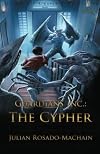
Guardians Inc: The Cypher
By Julian Rosado-Machain
Published by TrueBA Interactive ISBN9781450748582
This book was supplied to me by the publisher on condition that I present a true and honest review for it.
Guardians Inc.: The Cypher - A Book Review
When I came to the end of Guardians Inc.: The Cypher, I felt exactly the same way I felt when I came to the end of the first part of The Gulag Archipelago. I felt a bit stunned, almost poleaxed. Where's the rest of it? I had been turning pages as fast as I could read, trying to get to the end of the story, and suddenly (to mix my metaphors badly) I twisted my ankle because the staircase stopped when I was still going down it. In both cases, I was immediately informed. The rest of Gulag hadn't been translated yet. This story continues in Guardians Inc.: Thundersword.
Gee, thanks. When can I get my hands on it?
That is not to say that The Cypher is of the same literary quality as Gulag. It isn't. It's a YA fantasy, of the kind that has today's world interacting with magic. It isn't quite heroic fantasy; it isn't quite urban fantasy. It is something different from either, but it partakes of both. The similarity to Gulag lies in the fact that it grabs the reader on page 1 and doesn't let go.
It is initially set in Carlsbad, California, which was a small town when I lived nearby fifty years ago. I gather from the book that it is now quite a city. Thomas Byrne, 15, lives there with his grandfather Morgan Byrne, since his parents, and the show more cruise ship they were on, totally vanished some six months earlier. His parents' insurance won't pay off because there is no proof his parents are dead, so his grandfather, at 72, is trying to find a job so that Thomas can go to college.
Thomas is an intelligent though not overly studious youth. He is a red belt in tae kwon do, only one step below black belt, and when three juniors ganged up on him, the juniors wound up in the principal's office somewhat the worse for wear, while Thomas wound up in the office of the assistant principal, who actually runs the school and who telephones his grandfather. As the book opens Thomas is sitting in the outer office waiting miserably to find out what his punishment is going to be, when he hears his grandfather and the assistant principal, Miss Khanna, better known among the students as Killjoy, laughing behind the closed door.
For appearance's sake, and to keep Thomas from getting in more trouble with more students, he is suspended for a week, but is privately told that the suspension won't go on his school record. The three bullies, who will not be allowed to play in the championship football game that weekend, are in considerably more trouble.
Before the end of the first day of his suspension, both Thomas and Morgan are employed by an international corporation which is not what it seems. No matter where you want to go, you can go out one of doors of the building and get there. Wherever you are, if you want to enter the building, you go two and a half blocks to your left and there it is. Morgan is hired to oversee a financial department of the corporation; Thomas is hired as an assistant librarian. Every book that has been written, even if it exists nowhere else in the world, in the last 1700 years is in the library, which he doesn't have access to from his work station. But that's all right, because the books are automatically delivered to his desk when someone asks for them. When the library is quiet, he is allowed to do his homework using the books and computer assigned to him, but other than that, he may make no personal use of any of the books, even those by his favorite authors and believed to be lost, and he may make no personal use of the computer.
Within the next month, Thomas's grandfather is abducted, his house is burned, and Thomas goes to ground in the corporation headquarters, with a robot (actually more like an android) butler looking after him. He is to be homeschooled, and he acquires an extensive bodyguard including an elf princess who looks seventeen but is about 3000 years old and who guards him with magic.
He soon learns that there are far more magical creatures than he ever suspected, and all of them want him. Why? Because he, and his grandfather, are human Cyphers. They can read any language ever written and translate it into English, though this does not extend to understanding the spoken language.
Every five hundred years, a supernatural being comes to earth and writes the history of the next 500 years. That allows the defenders of order to protect the world from the orders of chaos. But twice the book was not found--only a Cypher can find it--and each time, bad things ensued. Now it is late. The last version's last prediction was for 1905. The result has been a series of wars, natural disasters, famines, and other problems the defenders of order could have predicted. By abducting Morgan, the forces of chaos have acquired their own Cypher to look for, and translate, the book, and they have managed to convince Morgan that they are the right side. But having their own Cypher does not mean they will necessarily reach the book first, because Thomas is a Cypher belonging to the forces of order. They want to kill him.
To go farther would be to risk creating a spoiler. So I will say only this: If you want to read a strong page-turner, it doesn't matter whether you are in the intended YA audience. I am 69. And I hope I live long enough to finish reading the trilogy this appears to be the beginning of.
Anne Wingate
Author of Scene of the Crime and other works of fiction and nonfiction show less
By Julian Rosado-Machain
Published by TrueBA Interactive ISBN9781450748582
This book was supplied to me by the publisher on condition that I present a true and honest review for it.
Guardians Inc.: The Cypher - A Book Review
When I came to the end of Guardians Inc.: The Cypher, I felt exactly the same way I felt when I came to the end of the first part of The Gulag Archipelago. I felt a bit stunned, almost poleaxed. Where's the rest of it? I had been turning pages as fast as I could read, trying to get to the end of the story, and suddenly (to mix my metaphors badly) I twisted my ankle because the staircase stopped when I was still going down it. In both cases, I was immediately informed. The rest of Gulag hadn't been translated yet. This story continues in Guardians Inc.: Thundersword.
Gee, thanks. When can I get my hands on it?
That is not to say that The Cypher is of the same literary quality as Gulag. It isn't. It's a YA fantasy, of the kind that has today's world interacting with magic. It isn't quite heroic fantasy; it isn't quite urban fantasy. It is something different from either, but it partakes of both. The similarity to Gulag lies in the fact that it grabs the reader on page 1 and doesn't let go.
It is initially set in Carlsbad, California, which was a small town when I lived nearby fifty years ago. I gather from the book that it is now quite a city. Thomas Byrne, 15, lives there with his grandfather Morgan Byrne, since his parents, and the show more cruise ship they were on, totally vanished some six months earlier. His parents' insurance won't pay off because there is no proof his parents are dead, so his grandfather, at 72, is trying to find a job so that Thomas can go to college.
Thomas is an intelligent though not overly studious youth. He is a red belt in tae kwon do, only one step below black belt, and when three juniors ganged up on him, the juniors wound up in the principal's office somewhat the worse for wear, while Thomas wound up in the office of the assistant principal, who actually runs the school and who telephones his grandfather. As the book opens Thomas is sitting in the outer office waiting miserably to find out what his punishment is going to be, when he hears his grandfather and the assistant principal, Miss Khanna, better known among the students as Killjoy, laughing behind the closed door.
For appearance's sake, and to keep Thomas from getting in more trouble with more students, he is suspended for a week, but is privately told that the suspension won't go on his school record. The three bullies, who will not be allowed to play in the championship football game that weekend, are in considerably more trouble.
Before the end of the first day of his suspension, both Thomas and Morgan are employed by an international corporation which is not what it seems. No matter where you want to go, you can go out one of doors of the building and get there. Wherever you are, if you want to enter the building, you go two and a half blocks to your left and there it is. Morgan is hired to oversee a financial department of the corporation; Thomas is hired as an assistant librarian. Every book that has been written, even if it exists nowhere else in the world, in the last 1700 years is in the library, which he doesn't have access to from his work station. But that's all right, because the books are automatically delivered to his desk when someone asks for them. When the library is quiet, he is allowed to do his homework using the books and computer assigned to him, but other than that, he may make no personal use of any of the books, even those by his favorite authors and believed to be lost, and he may make no personal use of the computer.
Within the next month, Thomas's grandfather is abducted, his house is burned, and Thomas goes to ground in the corporation headquarters, with a robot (actually more like an android) butler looking after him. He is to be homeschooled, and he acquires an extensive bodyguard including an elf princess who looks seventeen but is about 3000 years old and who guards him with magic.
He soon learns that there are far more magical creatures than he ever suspected, and all of them want him. Why? Because he, and his grandfather, are human Cyphers. They can read any language ever written and translate it into English, though this does not extend to understanding the spoken language.
Every five hundred years, a supernatural being comes to earth and writes the history of the next 500 years. That allows the defenders of order to protect the world from the orders of chaos. But twice the book was not found--only a Cypher can find it--and each time, bad things ensued. Now it is late. The last version's last prediction was for 1905. The result has been a series of wars, natural disasters, famines, and other problems the defenders of order could have predicted. By abducting Morgan, the forces of chaos have acquired their own Cypher to look for, and translate, the book, and they have managed to convince Morgan that they are the right side. But having their own Cypher does not mean they will necessarily reach the book first, because Thomas is a Cypher belonging to the forces of order. They want to kill him.
To go farther would be to risk creating a spoiler. So I will say only this: If you want to read a strong page-turner, it doesn't matter whether you are in the intended YA audience. I am 69. And I hope I live long enough to finish reading the trilogy this appears to be the beginning of.
Anne Wingate
Author of Scene of the Crime and other works of fiction and nonfiction show less
Dancing with Autism: Choosing Joy Over Fear
By Kristi Lyn Stewart
Published by Acacia Publishing
ISBN 9781935089193
This book was supplied to me by the publisher on condition that I publish an honest review.
When I read the title, my gut reaction was, in the vernacular, "There ain't no way." I am autistic. My father, his mother, my mother's grand-uncle, my mother's sister's son, and my son all are autistic. There are degrees of autism; I have been able to live a fairly full life, including getting a Ph.D. and publishing numerous books, whereas my uncle Henry had to be institutionalized--the only one in the family who has been that bad off. But all of us have been afflicted with the autistic curse of poor interpersonal relationships and with various other problems that grew up around the autism, including major depression, obsessive-compulsive disorder, and other things such as, in at least one case, schizophrenia. My husband's grandson has Smith-Maginnis Syndrome, which is a totally different problem, but it has many of the same loads of baggage as autism. I saw no reason at all to view autism with joy.
But I was sufficiently curious to ask to review the book.
I cannot honestly say that Stewart convinced me that I should be glad there is so much autism in the family, but that wasn't her goal. Her goal was to educate people about autism at least to the extent that they would not despair if a diagnosis of autism was made. There are some good points about autism.
A person with show more autism is often more able to concentrate for long periods of time on something most people would find boring. I am convinced that I was a better fingerprint examiner than I would have been if I had not had autism. Many autistic people have been gifted musicians, inventors, and other professions that require intense ability to concentrate.
With the exception of the very most seriously afflicted victims, most people with autism do improve slowly. The type of autism that used to be called Asperger's tends to partly go away in late childhood and return in late middle age, so the most productive part of most people's life is free from most of the complications, except that interpersonal relationships are always iffy.
It is legitimate to be pleased when your child makes a step forward, just as anybody else is, even if your child's step forward is much later than other children's. If your son is potty-trained at the age of ten, let your friends know about it, and let them see that you are delighted and excited about it. Then they know to rejoice with you.
If you are aware that your child is likely to have problems with interpersonal relationships, you can work to train him or her to know what to say and do in various situations. It may be training, as you would train a dog, rather than teaching, but what difference does that make if it works?
You may be very embarrassed when your child acts in a way suitable for a child ten years younger, but try not to feel that people are judging you and thinking that you are a bad parent. The days when "bad parenting" was considered the cause of autism are long gone, and if you meet someone who still thinks that, feel free to educate him or her, preferably without antagonism and if possible, with a smile. Make it clear that you do love your child, difficult though the child may be at times, and don't be intimidated.
When your child rocks back and forth, bites his arm, bangs his head, and flaps his hands and sometimes his feet, it's hard not to be embarrassed. I started flapping out of sheer stress at the head table at my stepson's wedding breakfast, but bless their hearts, no one in the family acted embarrassed, and I managed to sit on my hands when I realized what I was doing. When someone in my stepson's mother's family said something I couldn't hear, my stepson's mother's answer was short and to the point, and her point was that it was something I couldn't help, and was to be ignored. She is a rare individual.
But the author of this book would like to see more people able to deal with autism that way. There is no known cure. Some things have helped some people, but there is nothing that helps every person. There are no pills to take; behavioral therapy is often prohibitively expensive and not covered by medical insurance. More education could solve some of these problems. There probably never will be a pill that will stop autistic thoughts and behavior, but insurance companies should treat autism as they would any other genetic disorder, because the evidence is strong that that is exactly what it is. Parents should be able to get help for their children under normal insurance plans, before such problems as depression grow up around the autism, as very often happens when the child realizes that he or she is "different."
The child is never going to be completely normal. It just won't happen, not if the diagnosis of autism is correct. But he is likely to get better. Most children with the Asperger's branch of autism are able to marry, have families, and have careers; I did. Lower-functioning children are usually able to live in group homes and support themselves with Social Security and minor jobs that they can do.
There will be ups and downs; some days the child may appear better, and other days the child may appear worse. It is likely that neither is going to be the case permanently. Autistic children have ups and downs just as other children do, and autistic adult shave ups and downs just as other adults do. But the overall movement, if there is one, is likely to be in the upward direction.
If you question this, remind yourself of one thing: this review was written by a 69-year-old woman with autism and a Ph.D.
Anne Wingate
Author of Scene of the Crime and other works of fiction and nonfiction show less
By Kristi Lyn Stewart
Published by Acacia Publishing
ISBN 9781935089193
This book was supplied to me by the publisher on condition that I publish an honest review.
When I read the title, my gut reaction was, in the vernacular, "There ain't no way." I am autistic. My father, his mother, my mother's grand-uncle, my mother's sister's son, and my son all are autistic. There are degrees of autism; I have been able to live a fairly full life, including getting a Ph.D. and publishing numerous books, whereas my uncle Henry had to be institutionalized--the only one in the family who has been that bad off. But all of us have been afflicted with the autistic curse of poor interpersonal relationships and with various other problems that grew up around the autism, including major depression, obsessive-compulsive disorder, and other things such as, in at least one case, schizophrenia. My husband's grandson has Smith-Maginnis Syndrome, which is a totally different problem, but it has many of the same loads of baggage as autism. I saw no reason at all to view autism with joy.
But I was sufficiently curious to ask to review the book.
I cannot honestly say that Stewart convinced me that I should be glad there is so much autism in the family, but that wasn't her goal. Her goal was to educate people about autism at least to the extent that they would not despair if a diagnosis of autism was made. There are some good points about autism.
A person with show more autism is often more able to concentrate for long periods of time on something most people would find boring. I am convinced that I was a better fingerprint examiner than I would have been if I had not had autism. Many autistic people have been gifted musicians, inventors, and other professions that require intense ability to concentrate.
With the exception of the very most seriously afflicted victims, most people with autism do improve slowly. The type of autism that used to be called Asperger's tends to partly go away in late childhood and return in late middle age, so the most productive part of most people's life is free from most of the complications, except that interpersonal relationships are always iffy.
It is legitimate to be pleased when your child makes a step forward, just as anybody else is, even if your child's step forward is much later than other children's. If your son is potty-trained at the age of ten, let your friends know about it, and let them see that you are delighted and excited about it. Then they know to rejoice with you.
If you are aware that your child is likely to have problems with interpersonal relationships, you can work to train him or her to know what to say and do in various situations. It may be training, as you would train a dog, rather than teaching, but what difference does that make if it works?
You may be very embarrassed when your child acts in a way suitable for a child ten years younger, but try not to feel that people are judging you and thinking that you are a bad parent. The days when "bad parenting" was considered the cause of autism are long gone, and if you meet someone who still thinks that, feel free to educate him or her, preferably without antagonism and if possible, with a smile. Make it clear that you do love your child, difficult though the child may be at times, and don't be intimidated.
When your child rocks back and forth, bites his arm, bangs his head, and flaps his hands and sometimes his feet, it's hard not to be embarrassed. I started flapping out of sheer stress at the head table at my stepson's wedding breakfast, but bless their hearts, no one in the family acted embarrassed, and I managed to sit on my hands when I realized what I was doing. When someone in my stepson's mother's family said something I couldn't hear, my stepson's mother's answer was short and to the point, and her point was that it was something I couldn't help, and was to be ignored. She is a rare individual.
But the author of this book would like to see more people able to deal with autism that way. There is no known cure. Some things have helped some people, but there is nothing that helps every person. There are no pills to take; behavioral therapy is often prohibitively expensive and not covered by medical insurance. More education could solve some of these problems. There probably never will be a pill that will stop autistic thoughts and behavior, but insurance companies should treat autism as they would any other genetic disorder, because the evidence is strong that that is exactly what it is. Parents should be able to get help for their children under normal insurance plans, before such problems as depression grow up around the autism, as very often happens when the child realizes that he or she is "different."
The child is never going to be completely normal. It just won't happen, not if the diagnosis of autism is correct. But he is likely to get better. Most children with the Asperger's branch of autism are able to marry, have families, and have careers; I did. Lower-functioning children are usually able to live in group homes and support themselves with Social Security and minor jobs that they can do.
There will be ups and downs; some days the child may appear better, and other days the child may appear worse. It is likely that neither is going to be the case permanently. Autistic children have ups and downs just as other children do, and autistic adult shave ups and downs just as other adults do. But the overall movement, if there is one, is likely to be in the upward direction.
If you question this, remind yourself of one thing: this review was written by a 69-year-old woman with autism and a Ph.D.
Anne Wingate
Author of Scene of the Crime and other works of fiction and nonfiction show less
What’s the Least I Can Believe and Still Be a Christian?
By Martin Thielen
Published by Westminster John Knox Press ISBN 9780664236830
This book was supplied to me by the publisher via NetGalley in return for the promise of a fair and honest review if I chose to review the book.
What’s the Least I Can Believe and Still Be a Christian?
A Book Review
This title offended me. I believe that a Christian should learn all he can learn about Christ and then believe it if it is true. This title sounds to me like weaseling.
So I was very relieved to get into the book and find out it wasn’t that way at all. The source for the title is a long-ago discussion between him and a self-described atheist. The atheist and the pastor continued to be friends, and finally the atheist, having gone through various phases of belief and non-belief, asked for a formal meeting with the pastor. This was the question he asked, and this is the answer the pastor gave him.
First, it lists ten things a Christian need not and in most cases, should not believe. These include exclusivity to the extent that even fellow Christians who follow a different denomination, are undoubtedly damned. They also include the belief that God causes accidents, natural disasters, and illnesses; fretting over occasional (or even perennial) doubt (“I believe; help thou my unbelief); women as slaves of men; the belief that God doesn’t care about social justice; the belief that God will send sinners ( category which includes show more most of the person’s relations and acquaintances) to burn in hell forever, even if they are people who never heard of Christ or who otherwise had no chance of learning to believe in him; the idea of The Rapture; the belief that everything in the Bible should be taken literally; the belief that God hates sinners, especially if they are homosexuals; and the belief that it is okay for Christians to be judgmental and aggressive over their disbelief. Christians should believe in Jesus’ identity (if you don’t know that Jesus is a part of the Godhead how can you worship him?); Jesus’ identity with God; Jesus’ priorities if they don’t include us and our pet beliefs; and Jesus’ grace.
I found that although there were things in the book that I didn’t belief; for example, in insisting that all Christians must believe in the Trinity—three in one, one in three—and that people who don’t believe in what the writer believes is a worse sinner than the ones the author condemns. He hasn’t the slightest idea that he is doing it; he is consciously welcoming all comers to the Church but then subliminally saying, ‘That doesn’t include you and your belief system.”
Christians must believe in Jesus’ resurrection and in his later resurrecting all of humankind. Christians must believe that the church in general is still relevant; that Jesus was wise but not as much the God he was before the World and the God he is now; that the Holy Spirit was sent to call us; and in general most of the same things I believe. He also believes that Christians must believe in the dogma of the Trinity, although he admits that it isn’t present in scripture, and that it was later extrapolated, and the arguments he uses in its favor support the Mormon view of the Godhead more than they do the Catholic and Protestant Trinity.
Finally, he states that Christians must believe in the Holy Spirit and in Jesus’ Vision: God’s dream for the world. He gets a little vague in this chapter, but it works all the same.
This, in my eyes, makes this well-written, short and readable, book well worth reading, especially for someone who has recently become, or is considering becoming, a Christian.
Anne Wingate
Author of Scene of the Crime and other works of fiction and nonfiction.
http://gardenwindow.me/2012/08/27/whats-the-leas…-a-book-review/
My blog, and it went active August 27, 2012.
http://www.amazon.com/review/R1277I8MA91MTZ
Went active August 27k, 2012.
http://www.barnesandnoble.com/w/whats-the-least-i-can-believe-and-still-be-a-chr...
Went live August 27, 2012
http://www.goodreads.com/book/show/10200625-what-s-the-least-i-can-believe-and-s...
Went Live August 27, 2012 show less
By Martin Thielen
Published by Westminster John Knox Press ISBN 9780664236830
This book was supplied to me by the publisher via NetGalley in return for the promise of a fair and honest review if I chose to review the book.
What’s the Least I Can Believe and Still Be a Christian?
A Book Review
This title offended me. I believe that a Christian should learn all he can learn about Christ and then believe it if it is true. This title sounds to me like weaseling.
So I was very relieved to get into the book and find out it wasn’t that way at all. The source for the title is a long-ago discussion between him and a self-described atheist. The atheist and the pastor continued to be friends, and finally the atheist, having gone through various phases of belief and non-belief, asked for a formal meeting with the pastor. This was the question he asked, and this is the answer the pastor gave him.
First, it lists ten things a Christian need not and in most cases, should not believe. These include exclusivity to the extent that even fellow Christians who follow a different denomination, are undoubtedly damned. They also include the belief that God causes accidents, natural disasters, and illnesses; fretting over occasional (or even perennial) doubt (“I believe; help thou my unbelief); women as slaves of men; the belief that God doesn’t care about social justice; the belief that God will send sinners ( category which includes show more most of the person’s relations and acquaintances) to burn in hell forever, even if they are people who never heard of Christ or who otherwise had no chance of learning to believe in him; the idea of The Rapture; the belief that everything in the Bible should be taken literally; the belief that God hates sinners, especially if they are homosexuals; and the belief that it is okay for Christians to be judgmental and aggressive over their disbelief. Christians should believe in Jesus’ identity (if you don’t know that Jesus is a part of the Godhead how can you worship him?); Jesus’ identity with God; Jesus’ priorities if they don’t include us and our pet beliefs; and Jesus’ grace.
I found that although there were things in the book that I didn’t belief; for example, in insisting that all Christians must believe in the Trinity—three in one, one in three—and that people who don’t believe in what the writer believes is a worse sinner than the ones the author condemns. He hasn’t the slightest idea that he is doing it; he is consciously welcoming all comers to the Church but then subliminally saying, ‘That doesn’t include you and your belief system.”
Christians must believe in Jesus’ resurrection and in his later resurrecting all of humankind. Christians must believe that the church in general is still relevant; that Jesus was wise but not as much the God he was before the World and the God he is now; that the Holy Spirit was sent to call us; and in general most of the same things I believe. He also believes that Christians must believe in the dogma of the Trinity, although he admits that it isn’t present in scripture, and that it was later extrapolated, and the arguments he uses in its favor support the Mormon view of the Godhead more than they do the Catholic and Protestant Trinity.
Finally, he states that Christians must believe in the Holy Spirit and in Jesus’ Vision: God’s dream for the world. He gets a little vague in this chapter, but it works all the same.
This, in my eyes, makes this well-written, short and readable, book well worth reading, especially for someone who has recently become, or is considering becoming, a Christian.
Anne Wingate
Author of Scene of the Crime and other works of fiction and nonfiction.
http://gardenwindow.me/2012/08/27/whats-the-leas…-a-book-review/
My blog, and it went active August 27, 2012.
http://www.amazon.com/review/R1277I8MA91MTZ
Went active August 27k, 2012.
http://www.barnesandnoble.com/w/whats-the-least-i-can-believe-and-still-be-a-chr...
Went live August 27, 2012
http://www.goodreads.com/book/show/10200625-what-s-the-least-i-can-believe-and-s...
Went Live August 27, 2012 show less

Strategies: A Chronic Fatigue Syndrome and Fibromyalgia Journey
By Tami Brady
Published by Baker & Taylor, Ingram Book Group ISBN 1932690484
Given to me by publisher through arrangement with ReviewtheBook
Tami Brady was a winner: She was one of the few graduate archaeologists able to work in the field of archaeology rather than drive a taxi or flip burgers. She succeeded in everything she tried to do. She supervised digs; she wrote; she journaled. She was married with two children.
Tami Brady was a loser. She was a perfectionist; her best wasn't good enough, and less than her best she simply wouldn’t do. She was in constant pain and exhaustion from chronic fatigue syndrome and fibromyalgia. One day both legs gave out and she was stuck in a hole for a while. She forgot things in the “fibrofog” of lost memory.
Finally she managed to put the two sides of herself together and figure out to what extent her winning abilities caused, or at least triggered, her losing qualities. She was able to determine what she could do to get rid of the perfectionism and to ease the suffering of her ailments.
Not content with solving her own problems, she put together this book, which first details her wins and losses so that the readers may join her in figuring out the causes/triggers of their ailments, and see which of her solutions can help them. She goes on to create a chart of what to do if such-and-such a problem or such-and-such a disease trigger occurs, and then continues to create a show more workbook whereby the reader can determine his or her own triggers and figure out what helps them to heal as quickly as possible.
As a long-time sufferer of these two ailments--I am presently writing with a severe backache, and can't take any more meds until four hours from now--I can assure you that I will be trying out her suggestions. I already know that some of them work, and I expect that others also will help me. I recommend this book to anyone fighting chronic fatigue syndrome or fibromyalgia, and particularly to those unfortunates who are combating both at once.
And having said that, I am going to follow Tami's advice and make myself horizontal for a while.
PS—I feel much better now, thank you. show less
By Tami Brady
Published by Baker & Taylor, Ingram Book Group ISBN 1932690484
Given to me by publisher through arrangement with ReviewtheBook
Tami Brady was a winner: She was one of the few graduate archaeologists able to work in the field of archaeology rather than drive a taxi or flip burgers. She succeeded in everything she tried to do. She supervised digs; she wrote; she journaled. She was married with two children.
Tami Brady was a loser. She was a perfectionist; her best wasn't good enough, and less than her best she simply wouldn’t do. She was in constant pain and exhaustion from chronic fatigue syndrome and fibromyalgia. One day both legs gave out and she was stuck in a hole for a while. She forgot things in the “fibrofog” of lost memory.
Finally she managed to put the two sides of herself together and figure out to what extent her winning abilities caused, or at least triggered, her losing qualities. She was able to determine what she could do to get rid of the perfectionism and to ease the suffering of her ailments.
Not content with solving her own problems, she put together this book, which first details her wins and losses so that the readers may join her in figuring out the causes/triggers of their ailments, and see which of her solutions can help them. She goes on to create a chart of what to do if such-and-such a problem or such-and-such a disease trigger occurs, and then continues to create a show more workbook whereby the reader can determine his or her own triggers and figure out what helps them to heal as quickly as possible.
As a long-time sufferer of these two ailments--I am presently writing with a severe backache, and can't take any more meds until four hours from now--I can assure you that I will be trying out her suggestions. I already know that some of them work, and I expect that others also will help me. I recommend this book to anyone fighting chronic fatigue syndrome or fibromyalgia, and particularly to those unfortunates who are combating both at once.
And having said that, I am going to follow Tami's advice and make myself horizontal for a while.
PS—I feel much better now, thank you. show less
A Field Guide to Earthlings: An Autistic/Asperger View of Neurotypical Behavior
By Ian Ford
Published by Ian Ford Software Corporation ISBN9780615426198
Given to me by publisher through arrangement with ReviewtheBook
I am almost 69 years old, and I was not diagnosed as autistic until I was in my fifties. That diagnosis was the most liberating experience of my life; within two weeks I could no longer even remember things I had been kicking myself for since I was as young as four. Despite the neurotypical mental picture of an autistic child wearing a football helmet and screaming, I have a PhD in English, am a world class fingerprint examiner, have published 23 books through major publishers, and have written, edited, and published many more as ebooks. I am a self-starter and I can define my work and do it.
But my interpersonal relationships are and always have been disastrous. My husband and I often find ourselves quarreling because each of us thinks he or she was perfectly clear and the other is willfully misunderstanding.
Ford explains why.
There are shared experiences and assumptions in the neurotypical world that the autistic person, no matter where he or she is on the autism spectrum, cannot understand. Often the “autie”—Ford’s phrase for a person with autism—is unable to express things in a way that neurotypical (normal) person can understand.
Ford identifies several differences between the autistic brain and the neurotypical brain. Some of these are (1) An show more infant’s brain has no screening mechanism. It accepts all input at the same time. In self-defense, the neurotypical brain develops screening techniques that allow only selected outside stimuli to get through. The autistic brain typically does not develop the screening mechanisms; instead, it learns to cope with a stream of competing input that would drive a neurotypical person mad.
(2) The adult neurotypical brain’s perception is limited to what it already “knows.” It develops a blind spot so that things that do not fit into its perceived universe are literally not seen or heard. The autistic brain readily takes in new stimuli and new thoughts.
(3) The neurotypical brain constantly converses in thoughts that underlie the words and are “understood” by the people conversing. The autistic brain does not understand the underlying conversation and tries to take part in what appears to be the topic under discussion. This is seen as taking part in the underlying conversation, and the autie is understood to mean things s/he does not and cannot mean.
(4) The neurotypical person constantly strives for dominance. The autie does not comprehend dominance nor does s/he comprehend what is going on.
(5) Sexual discussion is often carried on in code. The autie does not understand the code and is often perceived as making, or accepting, sexual advances which s/he does not comprehend. This may lead to what the neurotypical person believes is consentual sex and the autie perceives as forced sex.
(6) The neurotypical person belongs to one or more formal or informal groups, the values of which it internalizes. The autie is incapable of internalizing the values of anyone but himself/herself.
Although it appears that a neurotypical person and an autie are having a normal conversation, in fact communication is failing because there are levels in the autie’s discourse that the neurotypical cannot comprehend and vice versa. Quoting from p. 199: “If you have ever heard a political speech that seemed completely free of content, you are familiar with extremely associative people. Extreme associatives live in a socially constructed world and can use words for hours at a time, talk about words . . . and never ‘say anything’(from our [i.e., the auties’] point of view). They can talk about alliances, desert and other relational emotions, but might not say anything that counts as information to an autistic listener.” To a lesser extent, the same thing happens in what neurotypical people consider a normal conversation.
When people ask how autistic a person is, answering is difficult. “We all take what we are and develop different compensations to interface with the world. It is the compensating strengths that others use to judge “how autistic are you,” not the fundamental traits. . . . [D]on’t trust what someone looks like as a measure of their autism . . . Our thoughts appear … less encumbered by emotions, and we intuitively know that language is an invention. We cannot lie as easily” (pp. 200-201). We also cannot spot lies as easily. show less
By Ian Ford
Published by Ian Ford Software Corporation ISBN9780615426198
Given to me by publisher through arrangement with ReviewtheBook
I am almost 69 years old, and I was not diagnosed as autistic until I was in my fifties. That diagnosis was the most liberating experience of my life; within two weeks I could no longer even remember things I had been kicking myself for since I was as young as four. Despite the neurotypical mental picture of an autistic child wearing a football helmet and screaming, I have a PhD in English, am a world class fingerprint examiner, have published 23 books through major publishers, and have written, edited, and published many more as ebooks. I am a self-starter and I can define my work and do it.
But my interpersonal relationships are and always have been disastrous. My husband and I often find ourselves quarreling because each of us thinks he or she was perfectly clear and the other is willfully misunderstanding.
Ford explains why.
There are shared experiences and assumptions in the neurotypical world that the autistic person, no matter where he or she is on the autism spectrum, cannot understand. Often the “autie”—Ford’s phrase for a person with autism—is unable to express things in a way that neurotypical (normal) person can understand.
Ford identifies several differences between the autistic brain and the neurotypical brain. Some of these are (1) An show more infant’s brain has no screening mechanism. It accepts all input at the same time. In self-defense, the neurotypical brain develops screening techniques that allow only selected outside stimuli to get through. The autistic brain typically does not develop the screening mechanisms; instead, it learns to cope with a stream of competing input that would drive a neurotypical person mad.
(2) The adult neurotypical brain’s perception is limited to what it already “knows.” It develops a blind spot so that things that do not fit into its perceived universe are literally not seen or heard. The autistic brain readily takes in new stimuli and new thoughts.
(3) The neurotypical brain constantly converses in thoughts that underlie the words and are “understood” by the people conversing. The autistic brain does not understand the underlying conversation and tries to take part in what appears to be the topic under discussion. This is seen as taking part in the underlying conversation, and the autie is understood to mean things s/he does not and cannot mean.
(4) The neurotypical person constantly strives for dominance. The autie does not comprehend dominance nor does s/he comprehend what is going on.
(5) Sexual discussion is often carried on in code. The autie does not understand the code and is often perceived as making, or accepting, sexual advances which s/he does not comprehend. This may lead to what the neurotypical person believes is consentual sex and the autie perceives as forced sex.
(6) The neurotypical person belongs to one or more formal or informal groups, the values of which it internalizes. The autie is incapable of internalizing the values of anyone but himself/herself.
Although it appears that a neurotypical person and an autie are having a normal conversation, in fact communication is failing because there are levels in the autie’s discourse that the neurotypical cannot comprehend and vice versa. Quoting from p. 199: “If you have ever heard a political speech that seemed completely free of content, you are familiar with extremely associative people. Extreme associatives live in a socially constructed world and can use words for hours at a time, talk about words . . . and never ‘say anything’(from our [i.e., the auties’] point of view). They can talk about alliances, desert and other relational emotions, but might not say anything that counts as information to an autistic listener.” To a lesser extent, the same thing happens in what neurotypical people consider a normal conversation.
When people ask how autistic a person is, answering is difficult. “We all take what we are and develop different compensations to interface with the world. It is the compensating strengths that others use to judge “how autistic are you,” not the fundamental traits. . . . [D]on’t trust what someone looks like as a measure of their autism . . . Our thoughts appear … less encumbered by emotions, and we intuitively know that language is an invention. We cannot lie as easily” (pp. 200-201). We also cannot spot lies as easily. show less