
orever Odd
I want to blame this tragedy on someone else. I’d like to say that someone required me to read this piece, that it was an onus placed upon me by some authority figure that I’m helpless to resist. But that is not the case. I can blame no one but myself. My father says I’m overly critical, and he’s probably right. I have a feeling that, no matter how hard I try, this won’t be a pleasant annotation.
More at http://annotationnation.wordpress.com/2009/07/11/forever-odd-brother-odd/
I want to blame this tragedy on someone else. I’d like to say that someone required me to read this piece, that it was an onus placed upon me by some authority figure that I’m helpless to resist. But that is not the case. I can blame no one but myself. My father says I’m overly critical, and he’s probably right. I have a feeling that, no matter how hard I try, this won’t be a pleasant annotation.
More at http://annotationnation.wordpress.com/2009/07/11/forever-odd-brother-odd/
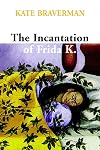
There is much to say about Kate Braverman. She’s 57 years old and a SF writer who is a self-proclaimed outlaw. She is currently working on a book of poetry in San Francisco. She’s a relevant literary experimentalist who is hell-bent on women having total access to the page, according to an article by San Francisco’s Unscripted. She’s non-canonical a la Kathy Acker. She’s post-modern, post-punk and a product of the 60’s beat poets. She loves Leonard Cohen and William Burroughs. But let’s get down to the nitty gritty. There’s a jarring way Braverman inhabits the female body and this is important to feminist writing today.
More at http://annotationnation.wordpress.com/2009/07/09/the-incantation-of-frida-k/
More at http://annotationnation.wordpress.com/2009/07/09/the-incantation-of-frida-k/
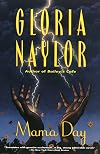
Throughout the novel I was enthralled by the settings and intrigued by the powerful female characters. At the end, however, I was not sure exactly what happened. Was the life of one human being sacrificed so that a family legacy could continue? Was it voodoo or cultural necessity?
More at http://annotationnation.wordpress.com/2009/07/07/mama_da/
More at http://annotationnation.wordpress.com/2009/07/07/mama_da/
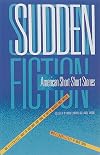
I wanted to read a collection of flash fiction (though, as I learned, there is a subtle distinction between “sudden fiction” and “flash fiction”—this difference is in length. “Flash” refers to even shorter stories—1 to 2 pages—and “sudden” allows up to about five pages) for a variety of reasons. The first of these was to find good examples of stories to share with my Creative Writing class. Their brevity appealed to me because we could easily cover on in one class setting (though, ideally, a truly good piece could be analyzed for days on end). Secondly, there’s something to be said about our current ADD culture. While I can sit and read a novel (in my spare minutes between work, school, and odd jobs around the house), many of today’s youth, the generation of the 15 second commercial (I know, I know, they’re normally 30 seconds to a minute, but watch them—you’ll see a lot more 15 second commercials these days) lose interest after a page or two. So this style of writing, in my mind, would be immediately compelling. It would get to the heart of a story in as few beats as possible, and then ratchet up our pulses—0 to 600 bps (beats per second) in two pages or less.
More at http://annotationnation.wordpress.com/2009/07/01/sudden-fiction/
More at http://annotationnation.wordpress.com/2009/07/01/sudden-fiction/
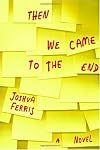
Then We Came To The End, titled from DeLillo’s Americana, begins in first person plural, a technique that holds up for about a hundred pages and is intermittently successful after that. Fortunately, the author punctuates the narrative with other points of view. First person plural is an effective choice to convey office life at a large advertising firm in Chicago, “How we hated our coffee mugs! our mouse pads, our desk clocks, our daily calendars, the contents of our desk drawers. Even the photos of our loved ones taped to our computer monitors for uplift and support turned into cloying reminders of time served. But when we got a new office, a bigger office, and we brought everything with us into the new office, how we loved everything all over again, and though hard about where to place things, and looked with satisfaction at the end of the day at how well our old things looked in this new, improved, important space.”
More at http://annotationnation.wordpress.com/2009/06/17/then-we-came-to-the-end/
More at http://annotationnation.wordpress.com/2009/06/17/then-we-came-to-the-end/
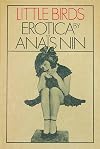
Little Birds is a collection of thirteen short stories of what has come to be known as erotic literature. Nin herself writes of this collection as her becoming “the Madame of an unusual house of literary prostitution.” Not because the work itself did not have the literary quality of her other work (for which I note some 40 + books) but that she had gotten to a point and place in her life where she needed money with a certain amount of desperation, so that, in her words, “my real writing was put aside when I set out in search of the erotic.” This was not an easy road to take, especially in the times written and she talks somewhat about this as “…at first difficult. The sexual life is usually enveloped in many layers, for all of us — poets, writers, artists. It is a veiled woman, half-dreamed.” So considering the great difficulty and challenge that a woman had to engage in to write these stories and sell them for making a living, I found them quite remarkable.
More at http://annotationnation.wordpress.com/2009/06/11/little-birds/
More at http://annotationnation.wordpress.com/2009/06/11/little-birds/
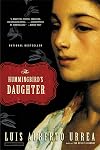
This journey begins with the conquest, coffee, and Dia de los Muertos as Cayetana waits to give birth. Throughout the novel this same tension exists between the political, the natural, and the spiritual. Urrea tells a detailed family story infused with cultural history. I learned a great deal about the geography and people of various regions. I was also traumatized by the mother who abandons her child; however, that immediately gave the novel its universality. This is a phenomenon that plagues my own community across race and class. Unfortunately, it is also too often unacknowledged. While it may not have been Urrea’s intentions, he inspires social consciousness.
More at http://annotationnation.wordpress.com/2009/06/09/the-hummingbirds-daughter/
More at http://annotationnation.wordpress.com/2009/06/09/the-hummingbirds-daughter/
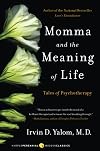
Irvin Yalom’s Momma and the Meaning of Life consists of six tales of psychotherapy, four nonfiction and two fiction. Yalom, renowned relationship-based, here-and-now psychiatrist, tackles his personal mother issues in “Momma and the Meaning of Life.” In “Travels with Paula,” Yalom writes about his relationship with a breast-cancer patient that revolutionized the therapy of death in California. “Southern Comfort” offers the reader a look into group therapy in a psychiatric ward. “Seven Advanced Lessons in the Therapy of Grief” details Yalom’s seven-year therapy with a female surgeon who lost her 45-year-old husband, both parents and her godson in a two-year span. The last two stories, “Double Exposure” and “The Hungarian Cat Curse” revisit the fictional psychiatrist Dr. Ernest Lash who readers met in Yalom’s novel, Lying on the Couch.
More at http://annotationnation.wordpress.com/2009/06/08/momma-and-the-meaning-of-life-t...
More at http://annotationnation.wordpress.com/2009/06/08/momma-and-the-meaning-of-life-t...
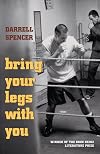
Bring Your Legs With You is a collection of linked stories about a boxer who retired undefeated and still quite young, who is being tempted back to the ring, not for money or glory (he is actually well situated financially and is somewhat haunted by the damage he inflicted upon his opponents), but out of loyalty to his old manager and out of a desire for his father to see him fight in person for the first time. Many of the stories were originally published as stand alone short stories in various journals, but the collection as a whole won the Drue Heinz award. Reading this collection at the same time as reading Junot Diaz’s Drown has prompted me to consider the question of what exactly is a collection of linked stories and what makes it different from a novel.
More at http://annotationnation.wordpress.com/2009/06/04/bring-your-legs-with-you/
More at http://annotationnation.wordpress.com/2009/06/04/bring-your-legs-with-you/
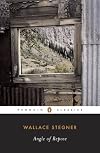
Very eloquently written study of early California frontier life, particularly focused on an artist and the mining industry as seen through the exploration and foraging of the grandson. Stegner does a number of things that hold you deeply engaged through this lengthy depiction. Structurally, the book is two books entertwined. The first is the story of the young couple Susan and Oliver who make their way west during the early days of mining, and their eventual life together, the ups, downs, disappointments and accomplishments. Susan is an artist and Oliver an engineer. Susan is genteel and Oliver is enraptured by her gentility. This juxtaposition of the lives of Lyman Ward’s grandparents and his own life, which has been excruciatingly limited, and the veracity of the times play against each other to create tension.
More at http://annotationnation.wordpress.com/2009/06/03/angle-of-repose/
More at http://annotationnation.wordpress.com/2009/06/03/angle-of-repose/

The best thing about Zadie Smith’s first novel is the gusto with which she relates it. That enthusiasm was the most important element gleaned for my own development as a writer because it is key to involving the reader in the narrative. The influences of E.M. Forster and Salman Rushdie are loud and clear, which is not a criticism since Smith has her own voice apart from them.
More at http://annotationnation.wordpress.com/2009/06/02/white-teeth/
More at http://annotationnation.wordpress.com/2009/06/02/white-teeth/
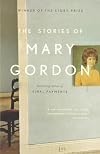
This collection is ripe with emotionally heavy themes; faith, family, the female struggle with self-image, the intricate relationships between damaged people, shame, the past, the list could go on. Her use of lyric prose and her ability to accentuate the most ravaging aspects of everyday life—to take the mundane and make it raw and so revealing of emotional truth—is so evident that it should not be the focus of my attention.
More at http://annotationnation.wordpress.com/2009/06/01/the-stories-of-mary-gordon/
More at http://annotationnation.wordpress.com/2009/06/01/the-stories-of-mary-gordon/
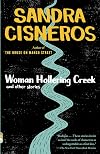
The women of Cisneros’s stories are flawed creatures; that is what makes them so real. Unlike traditional heroines, they don’t always win. The narrator and her comadres are women that readers from varying cultural backgrounds can relate to. Cisneros expands the virgin-whore dichotomy to illustrate other types of women. Some of her characters praise men, others blame men, but they all assert their woman-ness proudly.
More at http://annotationnation.wordpress.com/2009/05/28/woman-hollering-creek/
More at http://annotationnation.wordpress.com/2009/05/28/woman-hollering-creek/
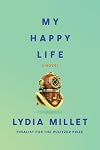
When students of writing read Lydia Millet, it is an exercise in humility. Millet earns her much-deserved reputation again with this deceptively slim novel and its haunting, autistic prose. In My Happy Life, our narrator, whose name is never spoken or mentioned, has been “forgotten” in an insane asylum which has been scheduled for demolition. Alone, with just running water and a small box of artifacts from her life, she proceeds to write her life story on the walls of the room that will surely become her coffin. She calls her life a happy one. The irony of this is so deep and rich, one can barely begin to touch on it in a two-page annotation.
More at http://annotationnation.wordpress.com/2009/05/28/my-happy-life-a-novel/
More at http://annotationnation.wordpress.com/2009/05/28/my-happy-life-a-novel/
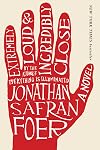
EXTREMELY LOUD AND INCREDIBLY CLOSE kinda blew my mind about four years ago, when I read it for the first time.....
This second reading held echoes of everything I had read since the first: heavy echoes of Vonnegut, Faulkner, Sterne, and of Foer himself. It did not strike with the same original resonance it had given me on its first read. Sigh. This is the price of studying writing, losing that wonder and becoming jaded.
More at http://annotationnation.wordpress.com/2009/05/27/extremely-loud-and-incredibly-c...
This second reading held echoes of everything I had read since the first: heavy echoes of Vonnegut, Faulkner, Sterne, and of Foer himself. It did not strike with the same original resonance it had given me on its first read. Sigh. This is the price of studying writing, losing that wonder and becoming jaded.
More at http://annotationnation.wordpress.com/2009/05/27/extremely-loud-and-incredibly-c...
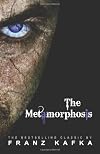
Kafka’s remarkable tale of a young man who awakens after unsettling dreams to find himself changed into a monstrous vermin invites interpretation on every level. Before reading Nabokov’s lecture on the novella, I suspected that the theme was religious, based on Gregor Samsa’s humanity and selflessness to the end; his lonely death of starvation after his sister’s declaration that he, the beetle, must go; and the resurrection of his family after his death. Thus I read Nabokov’s interpretation with great interest. He says that Kafka was not interested in religion at all but in literature.
More at http://annotationnation.wordpress.com/2009/05/26/the-metamorphosis/
More at http://annotationnation.wordpress.com/2009/05/26/the-metamorphosis/
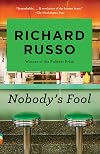
It was disconcerting to read a novel that came very close to describing someone I grew up with, but Richard Russo does just that in Nobody’s Fool. The title refers to the main character, Sully, Donald Sullivan, a perennially down and out construction worker. Having walked out on his family, he lives in the small town of Bath in New York, upstairs in Miss Beryl’s house. He works off the books for Carl, a contractor, while flirting with Carl’s wife. “Sully – people still remarked – was nobody’s fool, a phrase that Sully no doubt appreciated without ever sensing its literal application – that at sixty, he was divorced from his own wife, carrying on halfheartedly with another man’s, estranged from his son, devoid of self-knowledge, badly crippled and virtually unemployable – all of which he stubbornly confused with independence.” Russo paints a vivid picture of small town life and juggles a number of characters. At 549 pages, a case could be made for editing down some of the tangential stories, but they are all vivid and well written.
More at http://annotationnation.wordpress.com/2009/05/26/nobodys-fool/
More at http://annotationnation.wordpress.com/2009/05/26/nobodys-fool/
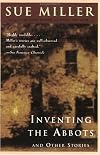
As a reader, I am drawn to stories that dissect the complicated codes of conduct that rule the middle class. The domestic dramas that so many of us live out in our daily lives, but that a skilled writer can shed new light and perspective on with a well crafted story. In this collection there are no cliffhangers, no mysteries to be solved, just subtle observations of ordinary people presented with unflinching clarity.
More at http://annotationnation.wordpress.com/2009/05/16/inventing-the-abbotts-and-other...
More at http://annotationnation.wordpress.com/2009/05/16/inventing-the-abbotts-and-other...
First, issue your disclaimer. Mine is that I’m not a big fan of short stories. Denis Johnson changed my mind with this, now one of my all-time favorite books, and showed how to braid narrative and use the lyric register (poetic language). Jesus’ Son is a mosaic of short stories that could be also considered an episodic novel (ha!). Titled from Lou Reed’s song, Heroin, these linked stories chronicle the progress of the addiction and tentative recovery of its narrator. One of the first locations mentioned in the first story is Bethany, Missouri. Bethany was best known as the place where Jesus raised Lazarus from the dead. Here, the man from Bethany is not just killed, but “killed forever” in a head-on collision, containing the dark humor with a subtle biblical reference that suffuses most of the stories. The stories contain a through line to the redemption of the narrator in eleven chapters, one short of the twelve steps of recovery, as well as the biblical significance of the twelve apostles, twelve tribes of Israel, twelve Stations of the Cross, and so on, indicating that the final chapter of this man’s life is yet unwritten.
More at http://annotationnation.wordpress.com/2009/04/30/jesus-son/
More at http://annotationnation.wordpress.com/2009/04/30/jesus-son/
At first, I thought it was the lack of punctuation. I had read Saramago before, I’m not sure what the book was, I know I found it difficult to get through and it didn’t stick with me later. But reading page after page with no paragraph breaks and no dialogue punctuation is wearing. About three chapters in I realized that was not the exhausting part, the exhausting part was the novel’s complete lack of characters. I had nothing to latch onto, nowhere to grab hold. An interesting premise opened our story: people suddenly stop dying. First there is joy, then problems arrive. Those due to die just…stay.
Annotated at http://annotationnation.wordpress.com/2009/05/05/death-with-interruptions/
Annotated at http://annotationnation.wordpress.com/2009/05/05/death-with-interruptions/
Wow. What to say about this one. First, and most uselessly, I enjoyed it quite a bit. But like I’ve said and I’m sure many before have said: tell me a story, make me want to turn the page. And in spite of all the meta-goings on in the novel, there was always that story and the building of suspense (in that curious way that you can build suspense by telling the reader what is going to happen) as Trout and Hoover made their way towards their unforeseen (by them, anyway) rendezvous.
Annotated at http://annotationnation.wordpress.com/2009/05/11/breakfast-of-champions-2/
Annotated at http://annotationnation.wordpress.com/2009/05/11/breakfast-of-champions-2/
Krauss’s energetic and imaginative novel touches the heart with its universal themes of love, grief, loneliness, the desire to make others happy, and the invisible connections among people. The lives of Holocaust survivor and author Leo Gursky, who has lost everything, and teenage brother and sister Alma and Bird Singer, who lost their father to cancer years earlier, are the main characters in an unusual story revolving around Leo’s supposedly lost manuscript, The History of Love.
More at http://annotationnation.wordpress.com/2009/05/12/history-of-love/
More at http://annotationnation.wordpress.com/2009/05/12/history-of-love/
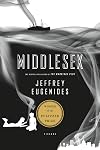
The most surprising thing about Middlesex is not the titillating subject matter, but the reportorial voice, that, despite strained Homeric outbursts, is often flat. The narration is too often a series of platitudes strung together in an entertaining narrative lacking depth or insight. The author stays on the surface of his subject, offering only conventional, even stereotypical, observations about sex and gender.
More at http://annotationnation.wordpress.com/2009/05/12/middlesex/
More at http://annotationnation.wordpress.com/2009/05/12/middlesex/
In The Broken Estate: Essays on Literature and Belief, James Wood’s writes that for a piece of fiction to be successful, it must allow itself to be brought to completion by the reader. For me, a story should allow the reader to live within its characters and even after the story is completed, the reader will give life to those characters by imagining how the story could be continued. Like Woods, I believe that a story should give us a “true lie” by creating narrative consciousnesses so artful that the reader believes in its reality. And if we believe in the reality of the characters and of the story, it will be impossible to put the story down and abandon the pages. The story will continue with the reader.
More at http://annotationnation.wordpress.com/2009/05/12/a-relative-stranger-stories/
More at http://annotationnation.wordpress.com/2009/05/12/a-relative-stranger-stories/
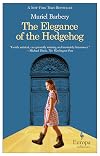
This is an engaging book that didn’t really pan out for me and I am still petulant and childishly cross with the ending..
But to go back, before…Barbery lends a lovely voice to Renée, the concierge. She is a bit crabby, perhaps from playing the role too long. Her habits are amusing and her take on the people who live in her building wry and cinematic. Renée admits a penchant for film and the descriptions in this book are so reminiscent of Delicatessen I venture to think the writer has had some filmic influence as well.
More at http://annotationnation.wordpress.com/2009/05/12/the-elegance-of-the-hedgehog/
But to go back, before…Barbery lends a lovely voice to Renée, the concierge. She is a bit crabby, perhaps from playing the role too long. Her habits are amusing and her take on the people who live in her building wry and cinematic. Renée admits a penchant for film and the descriptions in this book are so reminiscent of Delicatessen I venture to think the writer has had some filmic influence as well.
More at http://annotationnation.wordpress.com/2009/05/12/the-elegance-of-the-hedgehog/
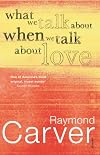
Ever since encountering “Popular Mechanics” during my first Antioch residency, I looked forward to reading more of Carver’s short stories. Although much has been said about the role Carver’s editor, Gordon Lish, played in the minimalism his stories are known for, reading them left no doubt in my mind about Carver’s mastery of the format.
The stories in this collection deal with damaged love in every form; in other words, strong emotion. The stories progress clearly, directly, yet they surprise. The endings reveal an unexpected theme. After reading the first few stories and seeing the pattern, I began to look forward to the endings to see how Carver would resolve each situation. His titles are a clue, carefully chosen as a signpost to the emotion of the story.
More at http://annotationnation.wordpress.com/2009/05/14/what-we-talk-about-when-we-talk...
The stories in this collection deal with damaged love in every form; in other words, strong emotion. The stories progress clearly, directly, yet they surprise. The endings reveal an unexpected theme. After reading the first few stories and seeing the pattern, I began to look forward to the endings to see how Carver would resolve each situation. His titles are a clue, carefully chosen as a signpost to the emotion of the story.
More at http://annotationnation.wordpress.com/2009/05/14/what-we-talk-about-when-we-talk...
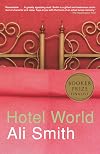
Wooo-hooo! from the opening lines of this book, the ghost voice of Sara is mesmerizing. There is a very good balance in this chapter of withheld information and revealed information, so that while we are unsure of where we are, we’re pretty certain of the rules and each new piece of revealed information is so fun to uncover. Smith gives such a beautifully free-floating flying sensation (again from the first line, as the fall of her death was fun going down) so that we feel like a ghost trying to get a grasp.
More at http://annotationnation.wordpress.com/2009/04/28/hotel-world/
More at http://annotationnation.wordpress.com/2009/04/28/hotel-world/
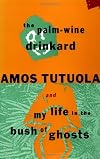
The Palm-Wine Drinkard is a novella of connected stories based on Yoruba folktales written by Amos Tutuola, a Christian Yoruba. It is not surprising that the reader can ‘hear’ the stories while reading them as the Nigerian Tutuola came out of a strong oral tradition and was first generation literate. We follow the Palm-Wine Drinkard, eldest son of the “richest man in town” who “had no other work than to drink palm-wine.” The novella resonated with me for several personal reasons: my great-grandmother was from West Africa and an uncle, Sir Philip Sherlock, wrote several books of Anansi folktales for a Caribbean audience. Anansi stories, centering on a trickster spider, originated with the Asante tribe of West Africa, primarily in Nigeria’s neighbor, Ghana. The Yoruba folktales that Tutuola uses are similar.
More at http://annotationnation.wordpress.com/2009/04/28/the-palm-wine-drinkard/
More at http://annotationnation.wordpress.com/2009/04/28/the-palm-wine-drinkard/
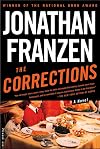
Just as women writers in Los Angeles should not read Janet Fitch until they have found their own voice, Franzen makes the case for staving off the long shadows of Pynchon and possibly Gaddis, the author apparently hat-tipped in the title. The Corrections is nihilistic satire filled with repugnant characters related by a totalitarian narrator who leaves no breathing room for his readers to form their own opinions. Other writers have handled repellent characters and still engaged me in the text so there is something else going on here and that is most likely the mean-spiritedness that infuses the text. Though the author has a good eye for detail, it does not seem that he has done basic research. For example, the manifestations of Parkinson’s are unconvincing. For four years, I helped care for a Parkinson’s patient until we could finally get her into a convalescent hospital; there was nothing familiar in the description of Alfred Lambert.
More at http://annotationnation.wordpress.com/2009/04/28/the-corrections/
More at http://annotationnation.wordpress.com/2009/04/28/the-corrections/
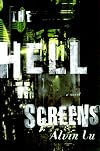
Hell Screens was such a great read. Alvin Lu’s first person character has such a mellow immediacy and his curiosity is so passive that it gives our journey an elusive air, which serves the story well. The manner in which he moves from one scene to another is abrupt and odd and in this nether world between ghost world and reality, it serves to disorient the reader, first to the point where you question everything, then to the point where you, like the main character, sit back and let it wash over you. When our hero starts to understand that his journey is out of his control is when we do the same, making it all the more interesting to follow.
More at http://annotationnation.wordpress.com/2009/04/27/hell-screens/
More at http://annotationnation.wordpress.com/2009/04/27/hell-screens/