
Many who find Chomsky's books on current events too depressing may be pleasantly surprised by his latest offering.
Chomsky leaves no stone unturned in his 2010 book Hopes and Prospects. The "hopes" part of the title, as he not only indicates with the chronology of sections in the book, but also in recent lectures, refers to recent accomplishments made in the struggle for indigenous rights in South America. One example of this, as Chomsky points out, is the truly democratic elections that were held in Bolivia which named Evo Morales as the country's first indigenous president. With lazer-like precision Chomsky illuminates recent histories in Latin America that has sadly been already forgotten by some, or worse yet, never known. An example of this comes from his chapter "1989 and Beyond" in which Chomsky states:
"The fall of the Berlin wall was rightly celebrated in November of 2009, but there was virtually no mention of what had happened one week later in El Salvador, on November 16, 1989: the brutal assassination of six prominent Latin American intellectuals, Jesuit priests, along with their housekeeper Julia Elba and her daughter Celina, by the elite Atlacatl battalion, armed and trained by Washington. The battalion had just returned from a several-month refresher course at the JFK Special Warfare School at Fort Bragg, and a few days before the murders underwent a further training exercise run by U.S. Special Forces flown to El Salvador."
Meticulously footnoted, this book show more offers scholars and casual readers a challenging and authoritative account of current affairs in the context of history. show less
Chomsky leaves no stone unturned in his 2010 book Hopes and Prospects. The "hopes" part of the title, as he not only indicates with the chronology of sections in the book, but also in recent lectures, refers to recent accomplishments made in the struggle for indigenous rights in South America. One example of this, as Chomsky points out, is the truly democratic elections that were held in Bolivia which named Evo Morales as the country's first indigenous president. With lazer-like precision Chomsky illuminates recent histories in Latin America that has sadly been already forgotten by some, or worse yet, never known. An example of this comes from his chapter "1989 and Beyond" in which Chomsky states:
"The fall of the Berlin wall was rightly celebrated in November of 2009, but there was virtually no mention of what had happened one week later in El Salvador, on November 16, 1989: the brutal assassination of six prominent Latin American intellectuals, Jesuit priests, along with their housekeeper Julia Elba and her daughter Celina, by the elite Atlacatl battalion, armed and trained by Washington. The battalion had just returned from a several-month refresher course at the JFK Special Warfare School at Fort Bragg, and a few days before the murders underwent a further training exercise run by U.S. Special Forces flown to El Salvador."
Meticulously footnoted, this book show more offers scholars and casual readers a challenging and authoritative account of current affairs in the context of history. show less
This book was released in the Spring of 2010, followed shortly after by Chomsky's Hopes and Prospects. The book highlights the various achievements made by indigenous populations and individuals who are engaged in purposeful collaborative efforts to create just change in their societies and communities. The themes of "interculturalidad" and "communalidad" are explored by the various authors in their descriptions of the spirit of the current resistance to forces that attempt to eradicate native culture, land and peoples, such as the multinational corporations backed by oftentimes brutal governments. Another theme focused on in the book is education, specifically by Fernando Soberanes, Gustavo Esteva, Ruth Moya Torres. Recent instances in which indigenous people are reclaiming rights to control their land (and as a result their destinies) are highlighted as signals of hope in today's world. But mountains upon mountains of challenges remain in enhancing indigenous people's path toward a stable, decolinized existence.

Who, or I suppose better yet, what exactly is Bartleby. The story's main character may represent some characteristic of society that Melville was disenchanted with. Readers interested in paradoxes or absurdity rendered in the humanities may regard the 20 or so pages of Meliville's story with special interest. The humble scrivener's job is akin to the copy and paste function on a modern computer. That along with the details of his past job helps to paint a picture of this sorrowful character who's clandestine life style support his mantra, "I'd prefer not to." Concepts of Christian charity are touched upon through the narrative musings of Bartleby's employer. At least two interesting film adaptations exist of this story, one of which features Crispen Glover (Back to the Future, Willard) as Bartleby.
Pathologies of Power, written before "tè tranble" (the trembling of the earth) provides both global health experts and lay readers alike with gripping first hand accounts of this remarkable doctor's work in Haiti, Africa and the United States. Farmer, an eloquent Harvard Medical School professor, describes his work providing medical care in some of the most neglected and abused populations on earth. Pathologies opens up a broad landscape to navigate regarding possibilities for global health workers and allied professionals. Those interested in alleviating the pain by those who are effected by disease, lack of nutrition, and horrific political and economic circumstances will find Farmers book a useful tool in identifying problems they will encounter in their work.

Li's book meticulously reviews the history of the opium industry (both clandestine and legal) in China's Sichuan province.The reader does not necessarily need to be well versed in the history of China to grasp the main concepts that Li presents here, particularly regarding the societal and cultural effects that opium had in the region. The book considers the government's role in overseeing and controlling the production, trade and distribution of opium, and describes the varying effects on the population of Sichuan and other provinces in China, turning some into regional overlords while casting others into the depths of poverty and addiction. Facts concerning the legal and trade situations surrounding opium in the late nineteenth to mid-twentieth century, provide readers with a detailed description of an opportunistic and oftentimes dangerous atmosphere. Poppies and Politics can be used to identify current situations and problems surrounding both legal and illegal drug trade in today's world (eg. coca and tobacco). The book is incredibly well researched and carefully footnoted by Li who traveled to his native China to carry out much of his investigation into the topic. Academic libraries aiming to provide accurate, well documented information on China should provide this book.
Internet Technologies and Information Services (Library and Information Science Text Series) by Joseph B. Miller
This is book is dense with information, key terms and technical definitions. This was a required textbook in LIS 488 Technology for Information Professionals at Simmons College GSLIS in the fall semester of 2009. The glossary of terms is well put together, despite the fact that oftentimes I found myself struggling to find terms that were left out. The introduction provides a general overview of the development of the internet as we know it today, whereas the conclusion suggests trends in web 2.0 and the "semantic web."

This is a small paperbck collection of letters written by the wild west legend Calamity Jane to her daughter Jannie. Calamity Jane led a life of hard drinking and hard traveling. She describes her life to her daughter in loving terms. She lives away from her daughter and never gets to help raise her and possibly sees her letters as a way of compensating for that. A photo of Jane appears in the book of her and her horse Satan. Calamity Jane was tough but also had a huge heart.
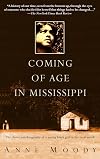
This is one of the best books I have ever read. Anne Moody, as she describes herself and her life in this autobiography, is one of the greatest American heroes of modern times. Importantly she describes the white aggression and violence that she encountered in the segregated south as common and endemic to african americans at the time, recognizing countless unamed freedom fighters. She fought racism in her life trying to increase african american voter turn outs at the polls. She took part in the famous lunch counter sit ins. Encountering fear and loss of the deepest magnitude Moody was forced to wonder whether the struggle for rights was worth the added pain she was forced to endure for her heroic efforts.
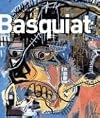
The paintings of Basquiat are not to be taken lightly. This book challenges it's viewers and readers to come face to face with perhaps some of the most important paintings of the second half of the twetieth century, and certaintly of the 1990's. Labeled by some as the most famous African American painter ever, Basquiat was a young man living in New York who sucessfully expressed the confusion, elation and horror of life as he knew it. The "neo-expressionist" died young as a result of a drug overdose after starting a prolific career that tragically ended after only a decade.