
There are some good pointers in this book, but they are hidden inside a lame story. At about half way through I found myself skipping the fluff and sorting out what I thought was useful.
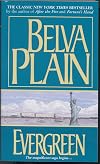
I read this book because it is my 98 yr. old grandmothers favorite book. When I finished I understood why. I liked the book, and for the most part it has a steady pace. There is the love and loss you expect from a saga, mixed with historical fiction having the backdrop of New York. I might have given it an extra half of a star for the reason I read it, but I'm glad I did.

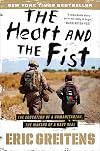
Fast read with interesting perspective. Heavy on Seal training. Not just kill the bad guy more about communication and building relationships.

I picked up this book because I have a distant almost non-connection connection to Burnett. Imagine you’re an English Lit major and you discover your professor, who will be reading and grading a number of your papers, is a published author. Cringe worthy enough for a person who always wants the A right? Well, now imagine one of your co-students is a published author too, and said student will be critiquing your work on a weekly basis. Enter Burnett. We took a couple under grad classes together and she was helpful, thought-provoking, and amusing. I will admit though, I never paid so much attention to grammar and punctuation in my life.
Burnett’s first outing is a solid, fast read, and as thought-provoking and amusing as I would expect it to be. Burnett introduces readers to a cast of Characters with a capital “C.” Davey is the main character (I can’t help but imagine Lena Dunham in her role) who takes us with her on a journey as a single, straight, forty-something working in a Cleveland LGBT center. Davey’s family and circle of friends are entertaining and as happily dysfunctional as any other family or group of friends one might imagine.
The cool bits:
Non-Traditional Relationships – Burnett shows readers that relationships don’t always have to be status quo to be good and healthy. For instance, Davey and her mother Leah share more of a friendship than your average mother/daughter connection. For all of the turmoil the two go through I’m willing to bet they show more would have it no other way. Then there’s Danny – oh, but wait. You will have to read the book to discover Danny’s connection to Davey and how that all plays out.
Contemporary Social Issues – Burnett hits readers square in the jaw with issues such as bullying and LGBT suicide. Burnett also shows there are a number of people working in the community to help educate and eradicate the negatives associated with being LGBT and/or bullied.
Vegetarianism, Vegans and the like – In my opinion Burnett is heavy-handed with the fibrous filler that is vegetarianism, but that doesn’t mean I didn’t learn anything from what I read. I never realized a vegetarian meal might include a vegetable stir fry and a salad. What can I say, I’m meat-eater. show less
Burnett’s first outing is a solid, fast read, and as thought-provoking and amusing as I would expect it to be. Burnett introduces readers to a cast of Characters with a capital “C.” Davey is the main character (I can’t help but imagine Lena Dunham in her role) who takes us with her on a journey as a single, straight, forty-something working in a Cleveland LGBT center. Davey’s family and circle of friends are entertaining and as happily dysfunctional as any other family or group of friends one might imagine.
The cool bits:
Non-Traditional Relationships – Burnett shows readers that relationships don’t always have to be status quo to be good and healthy. For instance, Davey and her mother Leah share more of a friendship than your average mother/daughter connection. For all of the turmoil the two go through I’m willing to bet they show more would have it no other way. Then there’s Danny – oh, but wait. You will have to read the book to discover Danny’s connection to Davey and how that all plays out.
Contemporary Social Issues – Burnett hits readers square in the jaw with issues such as bullying and LGBT suicide. Burnett also shows there are a number of people working in the community to help educate and eradicate the negatives associated with being LGBT and/or bullied.
Vegetarianism, Vegans and the like – In my opinion Burnett is heavy-handed with the fibrous filler that is vegetarianism, but that doesn’t mean I didn’t learn anything from what I read. I never realized a vegetarian meal might include a vegetable stir fry and a salad. What can I say, I’m meat-eater. show less
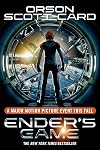
Loved it! What took me so long to read this book. Should have read it years ago.
What took me so long to read this book?! Ender is a third, and I am a third. Ender is in the military, and I was in the military. Ender is a genius, and uh…oh well, two out of three aren’t bad! This is the first sci-fi book I’ve ever read. If you’re not into sci-fi (like me up until this point) try to look past the genre and more closely at the other themes. Most people can relate to topics such as politics, war, intellectual growth, family dynamics, and moral dilemmas, and there is plenty of all of this to go around.
The cool bits:
Altered Reality – Card is crafty in this respect. What Ender and readers believe to be a simulation in preparation for the big battle is really the full on Big Battle. It is a risky move that in the end pays off for Earth…but at what expense?
The Man/Child – I think Card is a master and causing the adult reader to examine the expectations we may place on children. An undercurrent to my thinking throughout this book was that we need to remember to let kids be kids. Their homework is important, but they still need to run and play – and I don’t mean at soccer practice.
Friendship - Through Ender and his circumstances Card reminds all of us of the importance of our friends. We may have certain friends for a short amount of time, and others for a lifetime. There are reasons why our friends are in our lives when they are, and it’s worth the occasional show more examination. show less
What took me so long to read this book?! Ender is a third, and I am a third. Ender is in the military, and I was in the military. Ender is a genius, and uh…oh well, two out of three aren’t bad! This is the first sci-fi book I’ve ever read. If you’re not into sci-fi (like me up until this point) try to look past the genre and more closely at the other themes. Most people can relate to topics such as politics, war, intellectual growth, family dynamics, and moral dilemmas, and there is plenty of all of this to go around.
The cool bits:
Altered Reality – Card is crafty in this respect. What Ender and readers believe to be a simulation in preparation for the big battle is really the full on Big Battle. It is a risky move that in the end pays off for Earth…but at what expense?
The Man/Child – I think Card is a master and causing the adult reader to examine the expectations we may place on children. An undercurrent to my thinking throughout this book was that we need to remember to let kids be kids. Their homework is important, but they still need to run and play – and I don’t mean at soccer practice.
Friendship - Through Ender and his circumstances Card reminds all of us of the importance of our friends. We may have certain friends for a short amount of time, and others for a lifetime. There are reasons why our friends are in our lives when they are, and it’s worth the occasional show more examination. show less
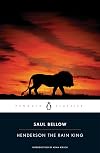
I thought this book was good, but not great. I guess I had expectations for more going in. Bellow wrote some beautiful passages though and this is what kept me going. I'll share my favorite here:
"Oh, you can't get away from rhythm, Romilayu...You just can't get away from it. The left hand shakes with the right hand, the inhale follows the exhale, the systole talks back to the diastole, the hands play patty-cake, and the feet dance with each other. And the seasons. And the stars, and all of that. And the tides, and all that junk. You've got to live at peace with it, because it's going to worry you, you'll lose. You can't win against it. It keeps on and on and on" (319).
"Oh, you can't get away from rhythm, Romilayu...You just can't get away from it. The left hand shakes with the right hand, the inhale follows the exhale, the systole talks back to the diastole, the hands play patty-cake, and the feet dance with each other. And the seasons. And the stars, and all of that. And the tides, and all that junk. You've got to live at peace with it, because it's going to worry you, you'll lose. You can't win against it. It keeps on and on and on" (319).
Started: 20 June 2013
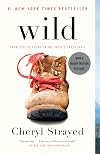
I purchased Wild by Cheryl Strayed at Books-A-Million and got a sweet discount on it. I have been wanting to read this book ever since it came across my Nook sometime last year – I purchased the paperback. I have a desire to hike the entire Appalachian Trail. I don’t know if I’ll ever work this into my life, but I sure do like to read about the adventures of others. Especially when they decide to throw on a pack and go for a long walk in the woods. Here I’ll follow Strayed as she hikes a large section of the Pacific Crest Trail from Southern California to somewhere near the Oregon / Washington State line. This is a true story.
…
I’m done Part One – “The Ten Thousand Things.” This is an easy book to read. Strayed puts you right there next to her with her writing style. It’s as if you’re sitting with Strayed, maybe across a fire pit with a beer, as she tells you about the time she decided to go for a long hike all alone on an unfamiliar trail. I like Strayed already, I mean how can you not like a person who takes Faulkner and Adrienne Rich along for the ride?! I’m not sure if they will make it very far, but Strayed gets big points for the effort right from the start. When you read this section you will discover why Strayed decides to go on this hike. I suspect we know only a few of the reasons at this point though, much more is bound to come to the surface as we walk. When Strayed describes her pack and all of her gear I just want show more to take her by the shoulders and shake her a little (like I would a friend) for not packing everything a few weeks in advance. You have to test this kind of thing, it’s a rule. Strayed is careless about this gigantic detail and something is bound to happen here. Things will be left behind. Two other items of note: The hiking boot on the front cover of the book reminds me of the boots my sister had in the 80′s, I used to swipe them from her all the time. They were cool. Item #2 – the author’s name, Strayed. Hiking alone for 1,000 plus miles in the woods, Straaayyyed….get it? Ok, on to Part Two – “Tracks.”
…
Oh no, the heroin. I didn’t know about the heroin. I rarely read book reviews before I decide what I’m going to read so I was unaware. What a nasty little surprise.
…
Mmmkay, I knew I was on to something. I’m not going to tell you what it is because it will ruin this part of the book for you if you’re like me and don’t read reviews prior to picking up a book (oh, but you’re reading one now – I’m still not gonna tell you!). Just know things become a little bit clearer on page 96. Strayed struggles on the trail, has self-doubt, physical and emotional wounds – all the things you would expect from someone taking on a massive hike with no experience and little forethought. Strayed meets some fellow hikers, that’s a good thing, and all together (meaning Strayed and we readers) learn that it has been an unusually snowy year in the High Sierra – and that folks, is a bad thing. There aren’t many miles left between where Strayed is currently camping and the snow packed mountain tops. Many hikers have quit at this point knowing that several hundred miles of trail ahead of them is covered in deep snow. Others hitch a ride to the north side of the snow mass and finish their hike, vowing to return at another time to hike the portion of trail they will miss. I wonder what Strayed will do? She doesn’t know how to use her ice ax and I’m doubtful she is prepared for cold weather in general. It’s good there are a few other hikers entering this stage of the trail with her. We’ll see what happens in Part Three – “Range of Light” up next.
…
“Range of Light” in a nutshell ~ There is snow, lots of snow, wine, menstruation, Bob Marley, Hawaiian screwdrivers, and some really nice people along the way. After reading this section I thought this might be the point when any sensible person would pack it in and head back home. Strayed has no home though, other than where she is at the time and she seems comfortable with this fact.
I lost concentration and “some” interest during Part Four – “Wild” but I don’t think it was for any other reason than some personal things going on in my life. After all, this is the part of the book that Strayed chooses to name her memoir after right. I particularly liked the chapter about Lou and her motley crew. When Spider shares his “motherfucking scientist in France” story Strayed makes a personal connection. At the same time I think just about every one of us (at some point in our lives anyway) has felt the same way. All I know is it must really suck to be the ape! It is also during this portion of the book when Strayed faces her most desperate and life threatening situation on the trail. Once again, her inexperience and almost lazy approach to hiking the PCT puts her in a totally avoidable circumstance. Strayed is lucky, she is very lucky. This part of the book ends with Strayed a mere two days walk from the California / Oregon border.
The final section of the book, Part Five – “Box of Rain” brings Strayed to her final stopping point, The Bridge of the Gods. If you’re a fan of the Dead you know by the title of this section there is a little more to it than that. Strayed doesn’t move far from what most “my life sucks and I want to tell the world how I got over it” memoirs. There are revelations and realizations – and a seven item list of what really pisses Strayed off about her mother, and her mother’s way too early death. Strayed also explains how she disposes of her mother’s ashes, releasing them back into the earth…and then, ya know, swallowing a couple chunks as well for good measure. Wow! I simultaneously think that is the coolest and sickest thing I’ve ever read regarding the disbursement of a persons remains. What it tells us though, if we haven’t caught on to it already, is just how messed up Strayed was at this point in her life and how deep the hurt runs over the passing of her mother.
Something notable to remember as you read this book (and I think you should), Strayed didn’t take notes as she hiked the PCT. This memoir is written from recall some years after Strayed got off the trail. It makes me curious about what might have been left out. Strayed has some annoying personality traits that she could have left out of the book. I think the annoying traits and the choice to write them in speak volumes. I’ll be reading The Dream of a Common Language by Adrienne Rich at some point in my future…but not next.
Finished: 13 July 2013 show less
I purchased Wild by Cheryl Strayed at Books-A-Million and got a sweet discount on it. I have been wanting to read this book ever since it came across my Nook sometime last year – I purchased the paperback. I have a desire to hike the entire Appalachian Trail. I don’t know if I’ll ever work this into my life, but I sure do like to read about the adventures of others. Especially when they decide to throw on a pack and go for a long walk in the woods. Here I’ll follow Strayed as she hikes a large section of the Pacific Crest Trail from Southern California to somewhere near the Oregon / Washington State line. This is a true story.
…
I’m done Part One – “The Ten Thousand Things.” This is an easy book to read. Strayed puts you right there next to her with her writing style. It’s as if you’re sitting with Strayed, maybe across a fire pit with a beer, as she tells you about the time she decided to go for a long hike all alone on an unfamiliar trail. I like Strayed already, I mean how can you not like a person who takes Faulkner and Adrienne Rich along for the ride?! I’m not sure if they will make it very far, but Strayed gets big points for the effort right from the start. When you read this section you will discover why Strayed decides to go on this hike. I suspect we know only a few of the reasons at this point though, much more is bound to come to the surface as we walk. When Strayed describes her pack and all of her gear I just want show more to take her by the shoulders and shake her a little (like I would a friend) for not packing everything a few weeks in advance. You have to test this kind of thing, it’s a rule. Strayed is careless about this gigantic detail and something is bound to happen here. Things will be left behind. Two other items of note: The hiking boot on the front cover of the book reminds me of the boots my sister had in the 80′s, I used to swipe them from her all the time. They were cool. Item #2 – the author’s name, Strayed. Hiking alone for 1,000 plus miles in the woods, Straaayyyed….get it? Ok, on to Part Two – “Tracks.”
…
Oh no, the heroin. I didn’t know about the heroin. I rarely read book reviews before I decide what I’m going to read so I was unaware. What a nasty little surprise.
…
Mmmkay, I knew I was on to something. I’m not going to tell you what it is because it will ruin this part of the book for you if you’re like me and don’t read reviews prior to picking up a book (oh, but you’re reading one now – I’m still not gonna tell you!). Just know things become a little bit clearer on page 96. Strayed struggles on the trail, has self-doubt, physical and emotional wounds – all the things you would expect from someone taking on a massive hike with no experience and little forethought. Strayed meets some fellow hikers, that’s a good thing, and all together (meaning Strayed and we readers) learn that it has been an unusually snowy year in the High Sierra – and that folks, is a bad thing. There aren’t many miles left between where Strayed is currently camping and the snow packed mountain tops. Many hikers have quit at this point knowing that several hundred miles of trail ahead of them is covered in deep snow. Others hitch a ride to the north side of the snow mass and finish their hike, vowing to return at another time to hike the portion of trail they will miss. I wonder what Strayed will do? She doesn’t know how to use her ice ax and I’m doubtful she is prepared for cold weather in general. It’s good there are a few other hikers entering this stage of the trail with her. We’ll see what happens in Part Three – “Range of Light” up next.
…
“Range of Light” in a nutshell ~ There is snow, lots of snow, wine, menstruation, Bob Marley, Hawaiian screwdrivers, and some really nice people along the way. After reading this section I thought this might be the point when any sensible person would pack it in and head back home. Strayed has no home though, other than where she is at the time and she seems comfortable with this fact.
I lost concentration and “some” interest during Part Four – “Wild” but I don’t think it was for any other reason than some personal things going on in my life. After all, this is the part of the book that Strayed chooses to name her memoir after right. I particularly liked the chapter about Lou and her motley crew. When Spider shares his “motherfucking scientist in France” story Strayed makes a personal connection. At the same time I think just about every one of us (at some point in our lives anyway) has felt the same way. All I know is it must really suck to be the ape! It is also during this portion of the book when Strayed faces her most desperate and life threatening situation on the trail. Once again, her inexperience and almost lazy approach to hiking the PCT puts her in a totally avoidable circumstance. Strayed is lucky, she is very lucky. This part of the book ends with Strayed a mere two days walk from the California / Oregon border.
The final section of the book, Part Five – “Box of Rain” brings Strayed to her final stopping point, The Bridge of the Gods. If you’re a fan of the Dead you know by the title of this section there is a little more to it than that. Strayed doesn’t move far from what most “my life sucks and I want to tell the world how I got over it” memoirs. There are revelations and realizations – and a seven item list of what really pisses Strayed off about her mother, and her mother’s way too early death. Strayed also explains how she disposes of her mother’s ashes, releasing them back into the earth…and then, ya know, swallowing a couple chunks as well for good measure. Wow! I simultaneously think that is the coolest and sickest thing I’ve ever read regarding the disbursement of a persons remains. What it tells us though, if we haven’t caught on to it already, is just how messed up Strayed was at this point in her life and how deep the hurt runs over the passing of her mother.
Something notable to remember as you read this book (and I think you should), Strayed didn’t take notes as she hiked the PCT. This memoir is written from recall some years after Strayed got off the trail. It makes me curious about what might have been left out. Strayed has some annoying personality traits that she could have left out of the book. I think the annoying traits and the choice to write them in speak volumes. I’ll be reading The Dream of a Common Language by Adrienne Rich at some point in my future…but not next.
Finished: 13 July 2013 show less
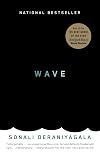
Title: Wave
Author: Sonali Deraniyagala
Genre: Non-Fiction, Memoir
Publisher: Alfred A. Knopf
Date: 2013
Pages: 228
Modern Library: N/A
Started: 14 November 2013
A friend came over for dinner and brought me this book to read. I’ve been holding on to it for a couple of months and thought it was about time I crack the cover. I’m going into this one somewhat blind. I know this is a first person account of the tsunami that struck Sri Lanka the day after Christmas 2004. I know Deraniyagala lost family members in the tidal wave that hit her hotel. I imagine this book addresses her loss and recovery, if one can ever get over such a thing. We’ll see.
I just finished the first chapter and understandably this book is painful to read. Deraniyagala has lost her husband, two young sons, and probably her parents to the storm. I only say “probably” about her parents because their deaths have not yet been confirmed by the recovery of their bodies. You know they are dead, but you don’t want to believe it, just as Deraniyagala refuses to believe it until there is factual evidence. Without knowing, they can still live in her mind. There is a constant pulse in the background of this chapter, it is Deraniyagala’s mantra, “I have to kill myself” (43). I get the feeling this is born from survivor’s guilt more than a desire to join her family members. Luckily, Deraniyagala has a strong support system of friends and family that never leave her side.
Reading this book takes on additional show more meaning this week. I am sure I am reading the stories of thousands of families in the Philippines. This gives me greater insight and understanding of their plight. They are not just faces on the nightly news.
A note on Deraniyagala’s style. She is straight forward with her prose. There is no fluff, only Deraniyagala telling readers her personal thoughts, even the nasty ones, as she moves through this tragedy.
As the book continues Deraniyagala takes readers to her parents home where she torments the new owners, to the ICA bar in London where Steve would take her on dates, then to the New York apartment filled with Steve’s belongings and special memories. When she is at her home in London Deraniyagala sorts through the children’s clothes and toys and relates stories and thoughts attached to each item. There is no relief, not even for a second, something you would expect in a situation like this.
Towards the end of the book I notice the tone lightens. I don’t get a sense of acceptance, so it’s not in that way. To me it seems more like Deraniyagala is beat down to the point where she is too tired to grieve, but it’s not that her grief has lessened. I think she is finally able to have a good memory and allow it to make her smile. As the book closes, Deraniyagala remembers her three boys (husband included in the sum) laughing and rolling around together on the lawn. I get the sense she feels some relief.
Read this book if it crosses your path. It’s short enough that it won’t bring you down for long. It might also provide some perspective on the massive storms you hear about on the news. If you’re lucky you will never have to live through one.
Finished: 24 November 2013 show less
Author: Sonali Deraniyagala
Genre: Non-Fiction, Memoir
Publisher: Alfred A. Knopf
Date: 2013
Pages: 228
Modern Library: N/A
Started: 14 November 2013
A friend came over for dinner and brought me this book to read. I’ve been holding on to it for a couple of months and thought it was about time I crack the cover. I’m going into this one somewhat blind. I know this is a first person account of the tsunami that struck Sri Lanka the day after Christmas 2004. I know Deraniyagala lost family members in the tidal wave that hit her hotel. I imagine this book addresses her loss and recovery, if one can ever get over such a thing. We’ll see.
I just finished the first chapter and understandably this book is painful to read. Deraniyagala has lost her husband, two young sons, and probably her parents to the storm. I only say “probably” about her parents because their deaths have not yet been confirmed by the recovery of their bodies. You know they are dead, but you don’t want to believe it, just as Deraniyagala refuses to believe it until there is factual evidence. Without knowing, they can still live in her mind. There is a constant pulse in the background of this chapter, it is Deraniyagala’s mantra, “I have to kill myself” (43). I get the feeling this is born from survivor’s guilt more than a desire to join her family members. Luckily, Deraniyagala has a strong support system of friends and family that never leave her side.
Reading this book takes on additional show more meaning this week. I am sure I am reading the stories of thousands of families in the Philippines. This gives me greater insight and understanding of their plight. They are not just faces on the nightly news.
A note on Deraniyagala’s style. She is straight forward with her prose. There is no fluff, only Deraniyagala telling readers her personal thoughts, even the nasty ones, as she moves through this tragedy.
As the book continues Deraniyagala takes readers to her parents home where she torments the new owners, to the ICA bar in London where Steve would take her on dates, then to the New York apartment filled with Steve’s belongings and special memories. When she is at her home in London Deraniyagala sorts through the children’s clothes and toys and relates stories and thoughts attached to each item. There is no relief, not even for a second, something you would expect in a situation like this.
Towards the end of the book I notice the tone lightens. I don’t get a sense of acceptance, so it’s not in that way. To me it seems more like Deraniyagala is beat down to the point where she is too tired to grieve, but it’s not that her grief has lessened. I think she is finally able to have a good memory and allow it to make her smile. As the book closes, Deraniyagala remembers her three boys (husband included in the sum) laughing and rolling around together on the lawn. I get the sense she feels some relief.
Read this book if it crosses your path. It’s short enough that it won’t bring you down for long. It might also provide some perspective on the massive storms you hear about on the news. If you’re lucky you will never have to live through one.
Finished: 24 November 2013 show less
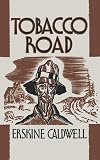
Title: Tobacco Road
Author: Erskine Caldwell
Genre: American Fiction
Publisher: New York, Charles Scribner’s Sons
Date: 1932
Pages: 241
Modern Library: The Board’s List #91
Started: 21 August 2013
I have had this book tucked away on a shelf with its pristine cover for several years now. I used to belong to The First Edition Library and would purchase a book or two a month until they went out of business. At least I think they went out of business. My copy is a facsimile of the first edition. I never did amass the personal library of my dreams but this book is a keeper. When I’m done with it, I will return it to its place on my shelf to rest until I need it again.
Here are a few interesting points about this book and the author:
~ When it came out in 1932 it sold for $2.50.
~ When Caldwell sent his typed final version of the book to Max Perkins at Scribners it was accepted for print within ten days and required no editing. Imagine that – every T crossed on the first go ’round, that’s pretty amazing.
~ Tobacco Road was Caldwell’s first and most renowned novel.
Okay, I’m headed to Georgia to hang out with the Lester family for a while. I’ll check back in later.
You might have noticed that I didn’t chime in part way through this book like I usually do. There was no need because the story line never changes. The Lester family, along with Lov and Sister Bessie are so poverty-stricken that survival is their only thought, well – that and sex. Jeeter Lester is a white show more share-cropper, and the head of the Lester family that lives along the tobacco road. The story revolves around the happenings at the Lester household and the occasional trip away from the property. The repetitiveness of Caldwell’s writing style reiterates the truth of the Lester’s starvation and desperation over and over again on each of the 241 pages of this book. Caldwell makes you want to keep reading, if for nothing else to see what catastrophe Jeeter’s laziness and lack of common sense will bring upon the family next.
If you need to pound out a classic I do suggest you grab Tobacco Road. It’s sad, it’s short, there is a small amount of humor, and in its own odd way it will keep you interested to the last page. This novel will also give you a good feel for southern literature and what it was like for poor white America during the depression.
Oh, and there are turnips and a couple of cases of vehicular homicide that are sure to please. (In a grotesque sort of way.) Enjoy!
Finished: 31 August 2013 show less
Author: Erskine Caldwell
Genre: American Fiction
Publisher: New York, Charles Scribner’s Sons
Date: 1932
Pages: 241
Modern Library: The Board’s List #91
Started: 21 August 2013
I have had this book tucked away on a shelf with its pristine cover for several years now. I used to belong to The First Edition Library and would purchase a book or two a month until they went out of business. At least I think they went out of business. My copy is a facsimile of the first edition. I never did amass the personal library of my dreams but this book is a keeper. When I’m done with it, I will return it to its place on my shelf to rest until I need it again.
Here are a few interesting points about this book and the author:
~ When it came out in 1932 it sold for $2.50.
~ When Caldwell sent his typed final version of the book to Max Perkins at Scribners it was accepted for print within ten days and required no editing. Imagine that – every T crossed on the first go ’round, that’s pretty amazing.
~ Tobacco Road was Caldwell’s first and most renowned novel.
Okay, I’m headed to Georgia to hang out with the Lester family for a while. I’ll check back in later.
You might have noticed that I didn’t chime in part way through this book like I usually do. There was no need because the story line never changes. The Lester family, along with Lov and Sister Bessie are so poverty-stricken that survival is their only thought, well – that and sex. Jeeter Lester is a white show more share-cropper, and the head of the Lester family that lives along the tobacco road. The story revolves around the happenings at the Lester household and the occasional trip away from the property. The repetitiveness of Caldwell’s writing style reiterates the truth of the Lester’s starvation and desperation over and over again on each of the 241 pages of this book. Caldwell makes you want to keep reading, if for nothing else to see what catastrophe Jeeter’s laziness and lack of common sense will bring upon the family next.
If you need to pound out a classic I do suggest you grab Tobacco Road. It’s sad, it’s short, there is a small amount of humor, and in its own odd way it will keep you interested to the last page. This novel will also give you a good feel for southern literature and what it was like for poor white America during the depression.
Oh, and there are turnips and a couple of cases of vehicular homicide that are sure to please. (In a grotesque sort of way.) Enjoy!
Finished: 31 August 2013 show less
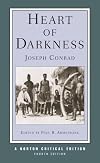
Joseph Conrad’s Heart of Darkness takes readers on a journey up the Congo River and into the middle of a postcolonial wrangle. One of the things at odds in this book is the European thought process of what is considered civilized versus what is uncivilized. The colonizers, also known as the cultured and proper Europeans, exist is a world where the African people and culture that they have colonized is understood only in negative terms. The light and dark imagery, and white versus black race illustrations that Conrad presents depict a clear division of power and control. The white colonizers hold all the power while the black “creatures” (Conrad 17) are beaten and starved into submission by their handlers.
Some readers might believe, because of the nature of repetition in literature, that the differences between East and West are as plain as Conrad describes, the savage in contrast to the cultivated. Others might look back on history and see the dampening of the African culture as necessary for civilized advancements instead of dishonorable and inhuman. Still others might agree with the treatment of the marginalized in this book as necessary for the greater good. A close read of Heart of Darkness might also expose another meaning to Marlow’s account of that trip up river. Perhaps Conrad wants the reader to question the validity of imperialism. Noorbakhsh Hooti and Masoud Mousaabad posit this and suggest that Conrad’s use of irony “leaves something unveiled…for show more the reader which does not necessarily go with the positive side of imperialism, but tries to help the reader to unveil the reality of imperialistic practices” (63). An example can be found in Chapter 1 as Marlow waits in the Station. “Strings of dusty niggers with splay feet arrived and departed; a stream of manufactured goods, rubbishy cottons, beads, and brass-wire set into the depths of darkness, and in return came a precious trickle of ivory” (Conrad 18), indicating that the primary concern, the primary goal, is to obtain more ivory even when the trade is for human beings here described as something below mankind. Here Conrad unveils the domination of a people in the name of colonization.
Conrad also uses the environment of the Congo to present a dark image of Africa that reflects back upon the actions of the colonizers. From Marlow’s first encounter with the Station that he describes as a “scene of inhabited devastation” (15) to the dark wilderness he experiences as he travels up river, never is there a period of calm or order that might be associated with European civilization. The environment Conrad describes is in exact disagreement with a civilized society. “It manifests as an unrestrained savagery which by its very nature threatens as a massive presence that will block the imposition of civilized order” (Brown). The darkness seems to deepen and the environment appears to envelope anyone or anything that attempts to change it. Because Marlow tells this story as he sits on the Thames River readers can surmise the similarities between the Congo and the Thames, and on a greater level Europe and Africa.
So what is one to think of Conrad after reading Heart of Darkness? Is he a racist and pro-imperialism or does he tell his story through Marlow in an attempt to expose the injustices of this system of dominance. Michael Lackey points out that if it can be “shown that Marlow is a racist, then we can conclude that Conrad is a racist” (1), because the two speak as one throughout the novel. Marlow is never at ease though with the events that unfold on his journey, perhaps callous and indifferent but never really okay with his surroundings. Marlow’s restlessness and dwindling enthusiasm show that he is as trapped and disempowered as the oppressed African’s of the Congo. show less
Some readers might believe, because of the nature of repetition in literature, that the differences between East and West are as plain as Conrad describes, the savage in contrast to the cultivated. Others might look back on history and see the dampening of the African culture as necessary for civilized advancements instead of dishonorable and inhuman. Still others might agree with the treatment of the marginalized in this book as necessary for the greater good. A close read of Heart of Darkness might also expose another meaning to Marlow’s account of that trip up river. Perhaps Conrad wants the reader to question the validity of imperialism. Noorbakhsh Hooti and Masoud Mousaabad posit this and suggest that Conrad’s use of irony “leaves something unveiled…for show more the reader which does not necessarily go with the positive side of imperialism, but tries to help the reader to unveil the reality of imperialistic practices” (63). An example can be found in Chapter 1 as Marlow waits in the Station. “Strings of dusty niggers with splay feet arrived and departed; a stream of manufactured goods, rubbishy cottons, beads, and brass-wire set into the depths of darkness, and in return came a precious trickle of ivory” (Conrad 18), indicating that the primary concern, the primary goal, is to obtain more ivory even when the trade is for human beings here described as something below mankind. Here Conrad unveils the domination of a people in the name of colonization.
Conrad also uses the environment of the Congo to present a dark image of Africa that reflects back upon the actions of the colonizers. From Marlow’s first encounter with the Station that he describes as a “scene of inhabited devastation” (15) to the dark wilderness he experiences as he travels up river, never is there a period of calm or order that might be associated with European civilization. The environment Conrad describes is in exact disagreement with a civilized society. “It manifests as an unrestrained savagery which by its very nature threatens as a massive presence that will block the imposition of civilized order” (Brown). The darkness seems to deepen and the environment appears to envelope anyone or anything that attempts to change it. Because Marlow tells this story as he sits on the Thames River readers can surmise the similarities between the Congo and the Thames, and on a greater level Europe and Africa.
So what is one to think of Conrad after reading Heart of Darkness? Is he a racist and pro-imperialism or does he tell his story through Marlow in an attempt to expose the injustices of this system of dominance. Michael Lackey points out that if it can be “shown that Marlow is a racist, then we can conclude that Conrad is a racist” (1), because the two speak as one throughout the novel. Marlow is never at ease though with the events that unfold on his journey, perhaps callous and indifferent but never really okay with his surroundings. Marlow’s restlessness and dwindling enthusiasm show that he is as trapped and disempowered as the oppressed African’s of the Congo. show less
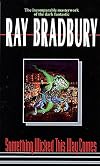
Title: Something Wicked This Way Comes
Author: Ray Bradbury
Genre: Fiction
Publisher: Avon Books
Date: 1962
Pages: 293
Modern Library: The Reader’s List #65
Started: 23 September 2013
Two boys, small town, a traveling carnival, and odd old people. All of that makes for a great story, but throw a backwards running merry-go-round into the mix and you have something wicked!
I really liked this book. I might be bias though, Bradbury wrote Dandelion Wine, one of my favorite books of all time. First of all, I love, love, love, Bradbury’s style of writing. Take this sentence for example: “They ran in urine smell of shadow, they ran in clean ice smell of moon.” (263) You can’t tell me you haven’t found yourself in both situations, on a shadowy path or dark alley – running full stride in the night around the property of your youth. Had you ever put the urine or the ice smell to it? Unless of course you were walking directly through a puddle of piss or skating over a patch of ice I have my doubts. This is what makes Bradbury so good, and this book is full of sentences like the one above, sentences that accost your senses.
The two boys in this story are Will and Jim. They are best friends and next door neighbors. Other interesting characters are Mr. Dark, a.k.a. The Illustrated Man, Will’s father Charles, Mr. Cooger, and the Dust Witch. Some of the major themes in the story involve accepting who you are and your station in life, evil and what evil can and cannot do depending show more on one’s mind-set, and community and common cause.
I like the following passage on the topic of common cause:
“You start with little common causes. Why love the boy in a March field with his kite braving the sky? Because our fingers burn with the hot string singeing our hands. Why love some girl viewed from a train, bent to a country well? The tongue remembers iron water cool on some long lost noon. Why weep at strangers dead by the road? They resemble friends unseen in forty years. Why laugh when clowns are hit by pies? We taste custard, we taste life. Why love the woman who is your wife? Her nose breathes in the air of a world that I know; therefore I love that nose. Her ears hear music I might sing half the night through; therefore I love her ears. Her eyes delight in seasons of the land; and so I love those eyes. Her tongue knows quince, peach, chokeberry, mint and lime; I love to hear it speaking. Because her flesh knows heat, cold, affliction, I know fire, snow, and pain. Shared and once again shared experience. Billions of prickling textures. Cut one sense away, cut part of life away. Cut two senses; life halves itself on the instant. We love what we know, we love what we are. Common cause, common cause, common cause of mouth, eye, ear, tongue, hand, nose, flesh, heart, and soul.” (198)
Hot damn! That passage needs to be recited at my wedding or my funeral. That right there is some real shit, thrown down smack dab in the center of a story about a freaking carnival that is the curiosity of sweaty boys and dissatisfied adults. This is why you need to read Bradbury. Well, this and the Shakespeare reference, and the magic, and the mirror maze, and the sense of belief in something more.
Go get this one if you haven’t already. It will be worth your while. show less
Author: Ray Bradbury
Genre: Fiction
Publisher: Avon Books
Date: 1962
Pages: 293
Modern Library: The Reader’s List #65
Started: 23 September 2013
Two boys, small town, a traveling carnival, and odd old people. All of that makes for a great story, but throw a backwards running merry-go-round into the mix and you have something wicked!
I really liked this book. I might be bias though, Bradbury wrote Dandelion Wine, one of my favorite books of all time. First of all, I love, love, love, Bradbury’s style of writing. Take this sentence for example: “They ran in urine smell of shadow, they ran in clean ice smell of moon.” (263) You can’t tell me you haven’t found yourself in both situations, on a shadowy path or dark alley – running full stride in the night around the property of your youth. Had you ever put the urine or the ice smell to it? Unless of course you were walking directly through a puddle of piss or skating over a patch of ice I have my doubts. This is what makes Bradbury so good, and this book is full of sentences like the one above, sentences that accost your senses.
The two boys in this story are Will and Jim. They are best friends and next door neighbors. Other interesting characters are Mr. Dark, a.k.a. The Illustrated Man, Will’s father Charles, Mr. Cooger, and the Dust Witch. Some of the major themes in the story involve accepting who you are and your station in life, evil and what evil can and cannot do depending show more on one’s mind-set, and community and common cause.
I like the following passage on the topic of common cause:
“You start with little common causes. Why love the boy in a March field with his kite braving the sky? Because our fingers burn with the hot string singeing our hands. Why love some girl viewed from a train, bent to a country well? The tongue remembers iron water cool on some long lost noon. Why weep at strangers dead by the road? They resemble friends unseen in forty years. Why laugh when clowns are hit by pies? We taste custard, we taste life. Why love the woman who is your wife? Her nose breathes in the air of a world that I know; therefore I love that nose. Her ears hear music I might sing half the night through; therefore I love her ears. Her eyes delight in seasons of the land; and so I love those eyes. Her tongue knows quince, peach, chokeberry, mint and lime; I love to hear it speaking. Because her flesh knows heat, cold, affliction, I know fire, snow, and pain. Shared and once again shared experience. Billions of prickling textures. Cut one sense away, cut part of life away. Cut two senses; life halves itself on the instant. We love what we know, we love what we are. Common cause, common cause, common cause of mouth, eye, ear, tongue, hand, nose, flesh, heart, and soul.” (198)
Hot damn! That passage needs to be recited at my wedding or my funeral. That right there is some real shit, thrown down smack dab in the center of a story about a freaking carnival that is the curiosity of sweaty boys and dissatisfied adults. This is why you need to read Bradbury. Well, this and the Shakespeare reference, and the magic, and the mirror maze, and the sense of belief in something more.
Go get this one if you haven’t already. It will be worth your while. show less
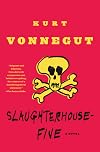
Title: Slaughterhouse – Five
Author: Kurt Vonnegut
Genre: Fiction, Philosophy, War
Publisher: Dell Publishing
Date: 1969
Pages: 215
Modern Library: The Reader’s List #23 & The Board’s List #18
Started: 31 August 2013
Finished: 12 September 2013
I really liked this book. I like Vonnegut’s style. Quirky, fresh for its years, humorous, sad, and real. I was sucked in to Billy Pilgrim’s life, all of it, even the flights off to Tralfamadore. We see Dresden through the eyes of Vonnegut as Billy Pilgrim. If you are unfamiliar, during WWII Dresden was bombed by the United States and the British Royal Air Force. The city was bombed into oblivion and Vonnegut was there to witness the attack. This book is a recollection of that attack and a marker for what it is to suffer through war, soldier or citizen.
A few notable passages:
At the British POW camp – “Only the candles and the soap were of German origin. They had a ghostly, opalescent similarity. The British had no way of knowing it, but the candles and the soap were made from the fat of rendered Jews and Gypsies and fairies and communists, and other enemies of the State.” (96)
Billy on morphine – “How nice – to feel nothing, and still get full credit for being alive.” (105)
On the teachings of Charles Darwin – “Those who die are meant to die, the corpses are improvements.” (210)
I think I would have liked to read a follow-up novel by Vonnegut on the same topic but from the perspective of Barbara, Billy’s show more daughter. Oh, what lessons she might learn. So it goes.
If you haven’t already, read this one. show less
Author: Kurt Vonnegut
Genre: Fiction, Philosophy, War
Publisher: Dell Publishing
Date: 1969
Pages: 215
Modern Library: The Reader’s List #23 & The Board’s List #18
Started: 31 August 2013
Finished: 12 September 2013
I really liked this book. I like Vonnegut’s style. Quirky, fresh for its years, humorous, sad, and real. I was sucked in to Billy Pilgrim’s life, all of it, even the flights off to Tralfamadore. We see Dresden through the eyes of Vonnegut as Billy Pilgrim. If you are unfamiliar, during WWII Dresden was bombed by the United States and the British Royal Air Force. The city was bombed into oblivion and Vonnegut was there to witness the attack. This book is a recollection of that attack and a marker for what it is to suffer through war, soldier or citizen.
A few notable passages:
At the British POW camp – “Only the candles and the soap were of German origin. They had a ghostly, opalescent similarity. The British had no way of knowing it, but the candles and the soap were made from the fat of rendered Jews and Gypsies and fairies and communists, and other enemies of the State.” (96)
Billy on morphine – “How nice – to feel nothing, and still get full credit for being alive.” (105)
On the teachings of Charles Darwin – “Those who die are meant to die, the corpses are improvements.” (210)
I think I would have liked to read a follow-up novel by Vonnegut on the same topic but from the perspective of Barbara, Billy’s show more daughter. Oh, what lessons she might learn. So it goes.
If you haven’t already, read this one. show less
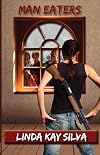
Started: 29 July 2013
Man Eaters by Linda Kay Silva
Pages: 377
Publisher: Sapphire Books
ISBN 978-0-9828608-9-2
I purchased Man Eaters through Books-A-Million, my new favorite on-line bookstore. I have been wanting to read this book for quite some time, but held out until now for this reason. The author, Linda Kay Silva, was one of my college professors. I took African Literature and Modern Epic Fantasy with her and thought it best that I wait until my classes were over before I read her work. I’m not sure why, but I guess I thought it might conflict with my studies – and that teacher student relationship is supposed to be sanitary right? Besides that, there was little time for pleasure reading while taking classes. I’m excited to crack open the cover and get started. Initially I thought this book was about zombies because Silva is into all things zombie. Instead this story is about a man-made plaque and how three women, Dallas, Roper, and Butcher (cool names) defend their territory and hopefully survive the advances of the undead. This leaves me with the question – What then is a zombie?
One hundred pages in and I’m wondering if Quentin Tarantino is listening. There is a love affair with a Harley Davidson and fountains of blood spurting all over the deck of the Bay Bridge that deserve a Pulp Fiction-esc soundtrack as a backdrop. First, the Harley. It’s an Ultra Glide with an “airbrushed tank, a low-slung saddle, and loud Reinhart pipes.” Silva’s description show more of Dallas’ Harley makes me want to wrap my legs around it and give it a Big. Wet. Kiss. Who knew it was legal to split lanes in California on a motorcycle? Remember kids, the California Highway Patrol reminds riders to Be Reasonable, be Responsible, be Respectful, and be aware of all Roadway and traffic conditions when committing to this action on the highways and byways.
Now on to what QT does best (besides soundtracks) – blood. Dallas and Roper are standing high above the deck of the Bay Bridge with a kid they’ve nicknamed Einstein watching as hundreds, maybe thousands of undead humans chomp, bite, and rip at the flesh of the living. Blood flows, pipes, fountains, spurts, and spews in all directions until the bridge is bathed in red. This is fun stuff people. Every time a living person is bitten by the undead, the living then becomes the undead…get it? And so on, and so on. To make their escape Dallas, Roper, and Einstein jump on the Harley and head for the hills. Readers quickly learn that the military is in full on shut this thing down mode when our characters observe troops shooting both the living and the undead square in the forehead. A shot to the head is the only way to eliminate the undead Man Eaters and the military is taking no chances. The citizens of the U.S. believe the Iranians have infected our population with a bioweapon, all media outlets are now in complete control of the government, and ten major U.S. cities are in total meltdown. What to do, what to do?
Two items of note:
1. Our two main characters have entered into a verbal contract to kill each other if they take a bite to the jugular and become a man eater. This is similar to the pact that many service members make if they are obviously wounded by a chemical or biological weapon. The benefit of a quick death is two-fold. The wounded soldier is quickly put out of their misery, and the government doesn’t get the chance to turn the soldier into a guinea pig. I have pinky sweared on this more than once in my lifetime.
2. Silva gives a nod to Arthurian folklore and a book she knows frontwards, backwards, sideways, and upside down when she names Roper’s horses after the characters in Mists of Avalon. This made me smile.
So, as we move forward ~ martial law is in place, the beloved Harley is ditched for four horses, and I think Uma Thurman should play Roper. Oh, and I hope a man eater has Cue-Ball’s eyes as a snack before I’m done with the next one hundred pages.
During the middle one-hundred pages we get a good feel for the main characters and a few others that end up with the group as they search for safety. Transportation now includes a Hummer along with the four horses. Most notably there are a couple of passages that help me understand what these flesh-eating creatures are. “We call them man eaters, because they don’t seem interested in any other flesh but human” (Silva 111), and then “zombies aren’t real, so any preconceived notions you may have about them…well…is just pure conjecture” (117). This clears the whole thing up for me – I get it now, zombies are fake and man eaters are real!
As the story moves forward the military is preparing to bomb several major cities killing “everything with skin but leaving the farmland and water free of contamination” (193). I’m thinking this is totally survivable if the group locates the proper type of cover before the bombs start to fall. There is a sub-plot love story developing, and a cute kid named Peanut who brings everything into focus.
Sadly, Cue-Ball still has his eyes and his life. I can’t help but hope Silva has something special in store for him in the coming pages.
…….
Oh, holy b’jesus The Gay keeps the man eaters away! I love it.
…….
In the final section of the book our group of survivors receives intelligence from a military hostage turned friendly that allows them to better plan for their future. Essentially, the world has quarantined the United States, and anyone who tries to leave her borders is killed without warning. The military is still preparing to bomb major cities, and our group has abandoned their horses and hummer for a better equipped Fuchs. To save you the trouble I have included a picture of a Fuchs so you can say out loud or in your head “Oh, that’s what that thing is called!”
fuchs2-lead
As the story ends our heroes have escaped California and found safety (for the time being) in the Louisiana bayou. I’m happy to report that Cue-Ball gets what’s coming to him on page 324.
This book is an easy summertime read. The story moves along quickly, there is plenty of death and destruction, and a few gun battles worthy of the big screen. In short, it is entertaining and nothing to be taken too seriously.
After reading this book I am left with three questions:
1. Can anyone keep their hands out of Einstein’s hair?
2. Where did our band of survivors get all their ammo?
3. How do the man eaters handle the clothes of their victims? Surely, buttons and zippers are too complicated for their rotted brains.
Go out and grab this one if you have a little extra time on your hands and you have a thing for the undead.
Finished: 20 August 2013 show less
Man Eaters by Linda Kay Silva
Pages: 377
Publisher: Sapphire Books
ISBN 978-0-9828608-9-2
I purchased Man Eaters through Books-A-Million, my new favorite on-line bookstore. I have been wanting to read this book for quite some time, but held out until now for this reason. The author, Linda Kay Silva, was one of my college professors. I took African Literature and Modern Epic Fantasy with her and thought it best that I wait until my classes were over before I read her work. I’m not sure why, but I guess I thought it might conflict with my studies – and that teacher student relationship is supposed to be sanitary right? Besides that, there was little time for pleasure reading while taking classes. I’m excited to crack open the cover and get started. Initially I thought this book was about zombies because Silva is into all things zombie. Instead this story is about a man-made plaque and how three women, Dallas, Roper, and Butcher (cool names) defend their territory and hopefully survive the advances of the undead. This leaves me with the question – What then is a zombie?
One hundred pages in and I’m wondering if Quentin Tarantino is listening. There is a love affair with a Harley Davidson and fountains of blood spurting all over the deck of the Bay Bridge that deserve a Pulp Fiction-esc soundtrack as a backdrop. First, the Harley. It’s an Ultra Glide with an “airbrushed tank, a low-slung saddle, and loud Reinhart pipes.” Silva’s description show more of Dallas’ Harley makes me want to wrap my legs around it and give it a Big. Wet. Kiss. Who knew it was legal to split lanes in California on a motorcycle? Remember kids, the California Highway Patrol reminds riders to Be Reasonable, be Responsible, be Respectful, and be aware of all Roadway and traffic conditions when committing to this action on the highways and byways.
Now on to what QT does best (besides soundtracks) – blood. Dallas and Roper are standing high above the deck of the Bay Bridge with a kid they’ve nicknamed Einstein watching as hundreds, maybe thousands of undead humans chomp, bite, and rip at the flesh of the living. Blood flows, pipes, fountains, spurts, and spews in all directions until the bridge is bathed in red. This is fun stuff people. Every time a living person is bitten by the undead, the living then becomes the undead…get it? And so on, and so on. To make their escape Dallas, Roper, and Einstein jump on the Harley and head for the hills. Readers quickly learn that the military is in full on shut this thing down mode when our characters observe troops shooting both the living and the undead square in the forehead. A shot to the head is the only way to eliminate the undead Man Eaters and the military is taking no chances. The citizens of the U.S. believe the Iranians have infected our population with a bioweapon, all media outlets are now in complete control of the government, and ten major U.S. cities are in total meltdown. What to do, what to do?
Two items of note:
1. Our two main characters have entered into a verbal contract to kill each other if they take a bite to the jugular and become a man eater. This is similar to the pact that many service members make if they are obviously wounded by a chemical or biological weapon. The benefit of a quick death is two-fold. The wounded soldier is quickly put out of their misery, and the government doesn’t get the chance to turn the soldier into a guinea pig. I have pinky sweared on this more than once in my lifetime.
2. Silva gives a nod to Arthurian folklore and a book she knows frontwards, backwards, sideways, and upside down when she names Roper’s horses after the characters in Mists of Avalon. This made me smile.
So, as we move forward ~ martial law is in place, the beloved Harley is ditched for four horses, and I think Uma Thurman should play Roper. Oh, and I hope a man eater has Cue-Ball’s eyes as a snack before I’m done with the next one hundred pages.
During the middle one-hundred pages we get a good feel for the main characters and a few others that end up with the group as they search for safety. Transportation now includes a Hummer along with the four horses. Most notably there are a couple of passages that help me understand what these flesh-eating creatures are. “We call them man eaters, because they don’t seem interested in any other flesh but human” (Silva 111), and then “zombies aren’t real, so any preconceived notions you may have about them…well…is just pure conjecture” (117). This clears the whole thing up for me – I get it now, zombies are fake and man eaters are real!
As the story moves forward the military is preparing to bomb several major cities killing “everything with skin but leaving the farmland and water free of contamination” (193). I’m thinking this is totally survivable if the group locates the proper type of cover before the bombs start to fall. There is a sub-plot love story developing, and a cute kid named Peanut who brings everything into focus.
Sadly, Cue-Ball still has his eyes and his life. I can’t help but hope Silva has something special in store for him in the coming pages.
…….
Oh, holy b’jesus The Gay keeps the man eaters away! I love it.
…….
In the final section of the book our group of survivors receives intelligence from a military hostage turned friendly that allows them to better plan for their future. Essentially, the world has quarantined the United States, and anyone who tries to leave her borders is killed without warning. The military is still preparing to bomb major cities, and our group has abandoned their horses and hummer for a better equipped Fuchs. To save you the trouble I have included a picture of a Fuchs so you can say out loud or in your head “Oh, that’s what that thing is called!”
fuchs2-lead
As the story ends our heroes have escaped California and found safety (for the time being) in the Louisiana bayou. I’m happy to report that Cue-Ball gets what’s coming to him on page 324.
This book is an easy summertime read. The story moves along quickly, there is plenty of death and destruction, and a few gun battles worthy of the big screen. In short, it is entertaining and nothing to be taken too seriously.
After reading this book I am left with three questions:
1. Can anyone keep their hands out of Einstein’s hair?
2. Where did our band of survivors get all their ammo?
3. How do the man eaters handle the clothes of their victims? Surely, buttons and zippers are too complicated for their rotted brains.
Go out and grab this one if you have a little extra time on your hands and you have a thing for the undead.
Finished: 20 August 2013 show less

Title: Illuminating the Path to Enlightenment
Author: Tenzin Gyatso His Holiness The Fourteenth Dalai Lama of Tibet
Genre: Buddhism
Publisher: Thubten Dhargye Ling
Date: 2002
Pages: 209
Modern Library: N/A
Started: 6 November 2013
This book was a gift from my cousin Mike. I happen to think that free books are one of the coolest things on earth. Add subject matter that deals with Buddhism and things get even cooler. What I hope to do with this review is simply share some of the Dalai Lama’s views with you, and in the process educate any person who might be interested in the Buddha’s teachings. I am not an expert on the Dharma. I am learning too and will be until my end times.
The specific subject matter for this book is His Holiness the Dalai Lama’s (HHDL) lam-rim teachings from a time period in 1997 and 2000. You might be asking yourself – What the heck is lam-rim? If you are, lam-rim is a presentation of Shakyamuni Buddha’s teachings in a form suitable for the step-by-step training of a disciple. You are correct if you’re thinking parts of this book are in the form of instruction. Other sections are from speeches given by HHDL, there is detailed information on certain ceremonies, and HHDL answers questions from audience members so readers get a taste of his personal viewpoints on different subjects.
Notable points, some you may find surprising, others not so much:
- “There are no miracles. I myself doubt those who claim to have the power to heal” (HHDL, v).
- “An show more individual can manage to lead a meaningful life without religious faith, but you can’t be a happy person without the spirituality of basic human values” (vi).
- “The immediate benefit of practicing compassion is actually experienced by the practitioner” (x).
- “Although I’m the one explaining the texts…don’t simply believe what I say without question, but use it as a basis for personal reflection and, in that way, develop your understanding of the Dharma” (2). In other words, think for yourself.
- The qualifications of a suitable Dharma teacher include a disciplined and calm mind, knowledge exceeding the student, energy, eloquence, and enthusiasm, a realization of emptiness, deep compassion for the student, and resilience.
- The qualities of the student should include an objective and open mind, intelligence to judge between right and wrong, and enthusiasm.
- “The moment we stop breathing, when we breathe out and don’t breathe in, the next life is right there in front of us” (71).
- Lamp for the Path: Verse 5 – “Those who, through their personal suffering, / Truly want to end completely / All the suffering of others / Are persons of supreme capacity” (103).
- Emptiness is important, finding it is difficult.
- Impermanence is fact.
- Trying to meditate on emptiness? It might be helpful to remember that the existence of “self” (when you get right down to it) can only be understood in terms of its dependent nature.
- Enlightenment might take 3 or 30 eons, but definitely not 3 years.
- Nirvana is true peace.
I would not recommend this book for the first time reader of all things Buddhist. One should have at least a basic understanding of certain concepts and practices in order to grasp the teachings. I believe it is assumed that readers have this basis of knowledge by the way the book is written.
So much to learn, so little time.
Yours in the Buddha, Dharma, and Sangha.
Finished: 13 November 2013 show less
Author: Tenzin Gyatso His Holiness The Fourteenth Dalai Lama of Tibet
Genre: Buddhism
Publisher: Thubten Dhargye Ling
Date: 2002
Pages: 209
Modern Library: N/A
Started: 6 November 2013
This book was a gift from my cousin Mike. I happen to think that free books are one of the coolest things on earth. Add subject matter that deals with Buddhism and things get even cooler. What I hope to do with this review is simply share some of the Dalai Lama’s views with you, and in the process educate any person who might be interested in the Buddha’s teachings. I am not an expert on the Dharma. I am learning too and will be until my end times.
The specific subject matter for this book is His Holiness the Dalai Lama’s (HHDL) lam-rim teachings from a time period in 1997 and 2000. You might be asking yourself – What the heck is lam-rim? If you are, lam-rim is a presentation of Shakyamuni Buddha’s teachings in a form suitable for the step-by-step training of a disciple. You are correct if you’re thinking parts of this book are in the form of instruction. Other sections are from speeches given by HHDL, there is detailed information on certain ceremonies, and HHDL answers questions from audience members so readers get a taste of his personal viewpoints on different subjects.
Notable points, some you may find surprising, others not so much:
- “There are no miracles. I myself doubt those who claim to have the power to heal” (HHDL, v).
- “An show more individual can manage to lead a meaningful life without religious faith, but you can’t be a happy person without the spirituality of basic human values” (vi).
- “The immediate benefit of practicing compassion is actually experienced by the practitioner” (x).
- “Although I’m the one explaining the texts…don’t simply believe what I say without question, but use it as a basis for personal reflection and, in that way, develop your understanding of the Dharma” (2). In other words, think for yourself.
- The qualifications of a suitable Dharma teacher include a disciplined and calm mind, knowledge exceeding the student, energy, eloquence, and enthusiasm, a realization of emptiness, deep compassion for the student, and resilience.
- The qualities of the student should include an objective and open mind, intelligence to judge between right and wrong, and enthusiasm.
- “The moment we stop breathing, when we breathe out and don’t breathe in, the next life is right there in front of us” (71).
- Lamp for the Path: Verse 5 – “Those who, through their personal suffering, / Truly want to end completely / All the suffering of others / Are persons of supreme capacity” (103).
- Emptiness is important, finding it is difficult.
- Impermanence is fact.
- Trying to meditate on emptiness? It might be helpful to remember that the existence of “self” (when you get right down to it) can only be understood in terms of its dependent nature.
- Enlightenment might take 3 or 30 eons, but definitely not 3 years.
- Nirvana is true peace.
I would not recommend this book for the first time reader of all things Buddhist. One should have at least a basic understanding of certain concepts and practices in order to grasp the teachings. I believe it is assumed that readers have this basis of knowledge by the way the book is written.
So much to learn, so little time.
Yours in the Buddha, Dharma, and Sangha.
Finished: 13 November 2013 show less
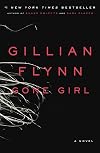
The book is 419 pages long and I am currently at the 233 mark. Published by Crown Publishing in 2012, this is Flynn’s third novel. I have not read the other two, Dark Places or Sharp Objects, but I probably will if they are anything like this one. Hmmm, on second thought, no I won’t. Stay tuned to find out why.
Flynn has created two royally messed up characters in this book. Nick and Amy Dunne are that couple you think you know but really – I mean really, you don’t. With each short chapter you learn more about The Dunne’s, either through Amy’s diary entries or the police investigation swirling around Nick. You see, Amy is missing, Nick is vague, and there is a large sloppy blood stain on the kitchen floor that needs explaining.
Right about now I’m not sure who I hate more. Amy for her messed up manipulative ways or Nick for being that guy who screws around on his wife and drags her down into a pit of despair. I would, however, like to have a beer with Margo, she is Nick’s sister.
There are a few other characters in the book. Dead parents, living parents, and a couple of cops – I like Boney because I think I’ve met her before in my previous police life. None of these characters matter much to the story of Nick and Amy, they act as connective tissue to move things forward but really the meat and potatoes is with The Dunnes. There’s a lawyer too. I can see the oil dripping off him. I think I might have met him before too.
…
Ok, so it took about 20 more show more pages until I decided that I hate Amy way more than I hate Nick. Who the hell spits in the fridge food of another?! A crazy bitch, that’s who. I do like how this story is unraveling. I had to pause like I’ve done so many times while reading a Stephen King novel and ask myself how the author comes up with this wicked stuff. At this point each chapter is pulling me to read the next, if only to find out what sick and twisted thing Amy and Nick might do to each other.
…
Ever feel like you’re being set up for something but you can’t quite put your finger on what it is? That’s how I feel right now! I’m getting ready to start the last section of the book “Boy Gets Girl Back or Vice Versa” and three or more scenarios are clicking off in my head about how this might go. Good job here Gillian Flynn, you’ve got me wanting to know more and almost (I said almost) feeling weird about how I would prefer this thing to end. But we’ll see about that!
A couple random thoughts about character development – for some reason I picture Nick looking like Brad Wollack from Chelsea Lately. No offense Brad, but I think Nick is supposed to be more stud like maybe, square chin, perhaps more commanding…you are what I come up with though as I’m reading and perhaps that is because Nick is turning out to be a real tool. I also think Boney and Gilpin could have more substance, be a little less predictable. They do nothing more than jump through the hoops of the investigation and that is show less
Flynn has created two royally messed up characters in this book. Nick and Amy Dunne are that couple you think you know but really – I mean really, you don’t. With each short chapter you learn more about The Dunne’s, either through Amy’s diary entries or the police investigation swirling around Nick. You see, Amy is missing, Nick is vague, and there is a large sloppy blood stain on the kitchen floor that needs explaining.
Right about now I’m not sure who I hate more. Amy for her messed up manipulative ways or Nick for being that guy who screws around on his wife and drags her down into a pit of despair. I would, however, like to have a beer with Margo, she is Nick’s sister.
There are a few other characters in the book. Dead parents, living parents, and a couple of cops – I like Boney because I think I’ve met her before in my previous police life. None of these characters matter much to the story of Nick and Amy, they act as connective tissue to move things forward but really the meat and potatoes is with The Dunnes. There’s a lawyer too. I can see the oil dripping off him. I think I might have met him before too.
…
Ok, so it took about 20 more show more pages until I decided that I hate Amy way more than I hate Nick. Who the hell spits in the fridge food of another?! A crazy bitch, that’s who. I do like how this story is unraveling. I had to pause like I’ve done so many times while reading a Stephen King novel and ask myself how the author comes up with this wicked stuff. At this point each chapter is pulling me to read the next, if only to find out what sick and twisted thing Amy and Nick might do to each other.
…
Ever feel like you’re being set up for something but you can’t quite put your finger on what it is? That’s how I feel right now! I’m getting ready to start the last section of the book “Boy Gets Girl Back or Vice Versa” and three or more scenarios are clicking off in my head about how this might go. Good job here Gillian Flynn, you’ve got me wanting to know more and almost (I said almost) feeling weird about how I would prefer this thing to end. But we’ll see about that!
A couple random thoughts about character development – for some reason I picture Nick looking like Brad Wollack from Chelsea Lately. No offense Brad, but I think Nick is supposed to be more stud like maybe, square chin, perhaps more commanding…you are what I come up with though as I’m reading and perhaps that is because Nick is turning out to be a real tool. I also think Boney and Gilpin could have more substance, be a little less predictable. They do nothing more than jump through the hoops of the investigation and that is show less
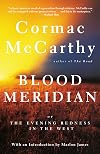
Title: Blood Meridian
Author: Cormac McCarthy
Genre: Fiction, Western, Historical Novel
Publisher: Vintage Books
Date: 1985
Pages: 351
Modern Library: The Reader’s List #54
Started: 12 September 2013
I purchased the paperback vintage edition from Books-A-Million. If you are unaware, this story is based on historical events that took place around the Texas-Mexico border in the 1850′s (so says the back cover). I’ve been wanting to read a western and I get the feeling this won’t be typical in any sort of way.
By Chapter IV I’m finally settling back in to McCarthy’s style again. Long sentences – breathless cadence. I love the imagery in this book. The prairie, the sky, the architecture, and people are touchable. The Kid, unnamed for the entirety of the book and the primary character in the story, has just finished his interview with Captain White and has joined the army. This army works for Mexican officials and their primary purpose is to kill Indians. I suspect The Kid has joined the army for food, clothing, and a horse more than anything else. He seems to have just happened into the Army setting by way of chance.
***
I swear I just read a passage that was 10 lines long with no punctuation except the period at the end of the sentence. Oh, right – That’s McCarthy.
***
I am halfway through the book and man is it brutal. The Kid is no longer with the Army because they were all slaughtered. He is now riding with the Glanton gang and still hunting Indians that they don’t show more call Indians. I’m not going to kid you, this is a tough read. McCarthy’s style requires my undivided attention, and the subject matter is heavy – but don’t get me wrong, this doesn’t make it a bad read. If you’ve read McCarthy then you know what I mean.
What about The Judge? Is he wicked or what! As I learn his ways I keep comparing him to Colonel Kurtz from Apocalypse Now, maybe with a little bit of Mr. Kurtz from Conrad’s Heart of Darkness mixed in for good measure. The two Kurtz’s might be too tame though, The Judge is pure evil with a hefty helping of strange. He is described as 7 feet tall, pale, entirely hairless, and usually naked. At one point in the story he carries a parasol made from rotted hide and rib bones. What is even more creepy about The Judge is his ability to move seamlessly between at an outward appearance of “caring” to actively leading and participating in killing innocent human beings. But that’s what psychopaths do, right? The Judge is prone to rants, I call them rants, he might view the surrounding circumstances as teachable situations. To give you a feel for his thought processes here is a line that made me stop and think more than once, even after finishing the book. To set it up, the men are sitting around a camp fire discussing whether a man can know all there is to know about the world. Toadvine thinks it’s impossible to know everything and The Judge believes each person makes their own fate and if one simply makes the decision to “know a thing” then that is the beginning of one’s all-knowing power. Then The Judge follows this up with “The freedom of birds is an insult to me. I’d have them all in zoos” (208). Ummmm, wtf?
Here’s an interesting tidbit that comes up every now and then throughout the book. One of the main staples in the Indian diet is pinole. Pinole is also something other characters in the book end up eating because they are usually around Indians – ya know, killing them and stealing from them. But I digress. Pinole is roasted corn that is finely ground then mixed with spices, honey, and water to form a paste. You can eat the paste or bake it to make a small cake like item. Pinole is a high energy food used by some runners (I’m a runner!) and other endurance athletes as a healthy and natural alternative to energy bars. Give it a try!
Pick this book up if you desire an intense read. McCarthy is an expert when it comes to descriptive writing.
Don’t say I didn’t warn you!
Finished: 23 September 2013 show less
Author: Cormac McCarthy
Genre: Fiction, Western, Historical Novel
Publisher: Vintage Books
Date: 1985
Pages: 351
Modern Library: The Reader’s List #54
Started: 12 September 2013
I purchased the paperback vintage edition from Books-A-Million. If you are unaware, this story is based on historical events that took place around the Texas-Mexico border in the 1850′s (so says the back cover). I’ve been wanting to read a western and I get the feeling this won’t be typical in any sort of way.
By Chapter IV I’m finally settling back in to McCarthy’s style again. Long sentences – breathless cadence. I love the imagery in this book. The prairie, the sky, the architecture, and people are touchable. The Kid, unnamed for the entirety of the book and the primary character in the story, has just finished his interview with Captain White and has joined the army. This army works for Mexican officials and their primary purpose is to kill Indians. I suspect The Kid has joined the army for food, clothing, and a horse more than anything else. He seems to have just happened into the Army setting by way of chance.
***
I swear I just read a passage that was 10 lines long with no punctuation except the period at the end of the sentence. Oh, right – That’s McCarthy.
***
I am halfway through the book and man is it brutal. The Kid is no longer with the Army because they were all slaughtered. He is now riding with the Glanton gang and still hunting Indians that they don’t show more call Indians. I’m not going to kid you, this is a tough read. McCarthy’s style requires my undivided attention, and the subject matter is heavy – but don’t get me wrong, this doesn’t make it a bad read. If you’ve read McCarthy then you know what I mean.
What about The Judge? Is he wicked or what! As I learn his ways I keep comparing him to Colonel Kurtz from Apocalypse Now, maybe with a little bit of Mr. Kurtz from Conrad’s Heart of Darkness mixed in for good measure. The two Kurtz’s might be too tame though, The Judge is pure evil with a hefty helping of strange. He is described as 7 feet tall, pale, entirely hairless, and usually naked. At one point in the story he carries a parasol made from rotted hide and rib bones. What is even more creepy about The Judge is his ability to move seamlessly between at an outward appearance of “caring” to actively leading and participating in killing innocent human beings. But that’s what psychopaths do, right? The Judge is prone to rants, I call them rants, he might view the surrounding circumstances as teachable situations. To give you a feel for his thought processes here is a line that made me stop and think more than once, even after finishing the book. To set it up, the men are sitting around a camp fire discussing whether a man can know all there is to know about the world. Toadvine thinks it’s impossible to know everything and The Judge believes each person makes their own fate and if one simply makes the decision to “know a thing” then that is the beginning of one’s all-knowing power. Then The Judge follows this up with “The freedom of birds is an insult to me. I’d have them all in zoos” (208). Ummmm, wtf?
Here’s an interesting tidbit that comes up every now and then throughout the book. One of the main staples in the Indian diet is pinole. Pinole is also something other characters in the book end up eating because they are usually around Indians – ya know, killing them and stealing from them. But I digress. Pinole is roasted corn that is finely ground then mixed with spices, honey, and water to form a paste. You can eat the paste or bake it to make a small cake like item. Pinole is a high energy food used by some runners (I’m a runner!) and other endurance athletes as a healthy and natural alternative to energy bars. Give it a try!
Pick this book up if you desire an intense read. McCarthy is an expert when it comes to descriptive writing.
Don’t say I didn’t warn you!
Finished: 23 September 2013 show less

Title: Anthem
Author: Ayn Rand
Genre: Dystopia, Science Fiction, Psychology, Fiction
Publisher: Penguin Group
Date: 1938
Pages: 105
Modern Library: The Reader’s List #7
Started: 15 January 2014
What I know right now:
This book was not published in America until 1946.
Independent thought is a crime.
What I found out by reading the book:
Anthem is a quick read and the first of Rand’s for me. I liked the book, the message, and the parallels it draws with so many things in the world today. The central theme of the book is egoism. In brief, every person has the right to pursue happiness without being obligated to another. The story follows Equality 7-2521 (there are no Johns or Janes in this book) as he discovers his own identity in a world where there is no “I.” Equality 7-2521 lives in a collective society where social rule dictates his career, how long he will eat his lunch, and what time he goes to bed at night. There is no love, only breeding, there is no exploration, only social oppression.
It takes a little while to get the hang of reading a first-person narrative in the plural form, so you’ll have to wrap your brain around the “we” instead of the “I.” I highly recommend this book if for nothing else as a quick reexamination of the importance of individuality and a reminder of what makes you happy. There’s also a “who moved my cheese” sort of moment about 3/4′s of the way through the book that made me chuckle. Oh, and there’s a love story tucked away in show more there too.
Here are a few notable passages:
“And those times passed away, when men saw the Great Truth which is this: that all men are one and that there is no will save the will of all men together” (20).
“The Council of Scholars has said that we all know the things which exist and therefore the things which are not known by all do not exist” (52).
“My happiness is not the means to any end. It is the end. It is its own goal. It is its own purpose” (95).
Finished: 18 January 2014 show less
Author: Ayn Rand
Genre: Dystopia, Science Fiction, Psychology, Fiction
Publisher: Penguin Group
Date: 1938
Pages: 105
Modern Library: The Reader’s List #7
Started: 15 January 2014
What I know right now:
This book was not published in America until 1946.
Independent thought is a crime.
What I found out by reading the book:
Anthem is a quick read and the first of Rand’s for me. I liked the book, the message, and the parallels it draws with so many things in the world today. The central theme of the book is egoism. In brief, every person has the right to pursue happiness without being obligated to another. The story follows Equality 7-2521 (there are no Johns or Janes in this book) as he discovers his own identity in a world where there is no “I.” Equality 7-2521 lives in a collective society where social rule dictates his career, how long he will eat his lunch, and what time he goes to bed at night. There is no love, only breeding, there is no exploration, only social oppression.
It takes a little while to get the hang of reading a first-person narrative in the plural form, so you’ll have to wrap your brain around the “we” instead of the “I.” I highly recommend this book if for nothing else as a quick reexamination of the importance of individuality and a reminder of what makes you happy. There’s also a “who moved my cheese” sort of moment about 3/4′s of the way through the book that made me chuckle. Oh, and there’s a love story tucked away in show more there too.
Here are a few notable passages:
“And those times passed away, when men saw the Great Truth which is this: that all men are one and that there is no will save the will of all men together” (20).
“The Council of Scholars has said that we all know the things which exist and therefore the things which are not known by all do not exist” (52).
“My happiness is not the means to any end. It is the end. It is its own goal. It is its own purpose” (95).
Finished: 18 January 2014 show less
Title: A Passage to India
Author: E.M. Forster
Genre: Fiction
Publisher: Harcourt, Inc.
Date: 1924
Pages: 362
Modern Library: The Board’s List #25
Started: 14 October 2013
I was roaming the isles of my local Books-A-Million store and found this gem staring up at me from the bottom shelf. I purchased the paperback 75th Anniversary Edition. The book is divided into three sections. The first section is titled Mosque, the second is Caves, and the third is Temple.
I do not like this book, and in keeping with my philosophy of “life is too short to waste time reading a book I’m not into,” I bailed. For sixteen days I have tried to like this book. I’ve tried to look past the boring dialogue, and the fact that it’s hot in India (I think we all know that), and the stereotyping that is plainly stereotypical. I’ve tried, but I can’t. This book will go back on the shelf and there it will stay until someone asks to borrow it – and then I might even hope they never give it back to me.
I read the first section, and yes, it took half of a month of my life to do that! Here’s the basic breakdown ~ two British women called Adela and Mrs. Moore (Colonizers) travel to Chandrapore, India to get a taste the real India. There they try to mingle with the Colonizies (it’s painful) and soon meet Dr. Aziz and proceed to wreck his life. I just wanted to reach into this book and slap these women and the assholes they hangout with.
To be fair, I’m sure this book was relevant and impactful show more during its time. For me right now, I can’t bring myself to continue reading a story that I can’t connect with. The plot is thin, the story is tiring, and I so wish this “little gem” hadn’t made eye contact with me from the bottom shelf in that book store.
It’s here if you want to borrow it!
Finished: Never show less
Author: E.M. Forster
Genre: Fiction
Publisher: Harcourt, Inc.
Date: 1924
Pages: 362
Modern Library: The Board’s List #25
Started: 14 October 2013
I was roaming the isles of my local Books-A-Million store and found this gem staring up at me from the bottom shelf. I purchased the paperback 75th Anniversary Edition. The book is divided into three sections. The first section is titled Mosque, the second is Caves, and the third is Temple.
I do not like this book, and in keeping with my philosophy of “life is too short to waste time reading a book I’m not into,” I bailed. For sixteen days I have tried to like this book. I’ve tried to look past the boring dialogue, and the fact that it’s hot in India (I think we all know that), and the stereotyping that is plainly stereotypical. I’ve tried, but I can’t. This book will go back on the shelf and there it will stay until someone asks to borrow it – and then I might even hope they never give it back to me.
I read the first section, and yes, it took half of a month of my life to do that! Here’s the basic breakdown ~ two British women called Adela and Mrs. Moore (Colonizers) travel to Chandrapore, India to get a taste the real India. There they try to mingle with the Colonizies (it’s painful) and soon meet Dr. Aziz and proceed to wreck his life. I just wanted to reach into this book and slap these women and the assholes they hangout with.
To be fair, I’m sure this book was relevant and impactful show more during its time. For me right now, I can’t bring myself to continue reading a story that I can’t connect with. The plot is thin, the story is tiring, and I so wish this “little gem” hadn’t made eye contact with me from the bottom shelf in that book store.
It’s here if you want to borrow it!
Finished: Never show less