
To my mind, this is the first, of what I imagine will come to be many, history of America’s war in Afghanistan. Malkasian covers the war from its pre-9/11 origins to Biden’s final withdraw decision. This history is part military history, part political history, and what I found most interesting, part social history.
The latter element particularly is benefitted by Malkasian’s background as a State Department political officer and then civilian advisor to defense officials in Afghanistan. The peppering of personal conversations with key Afghan officials and common people give vivid color to a conflict that has been experienced by the great majority of Americans from great distance.
In my edition there were seemingly some proofreading misses, but the writing over all is crisp. There are substantive notes and sources, as well as a robust recommended reading list. All things you would expect from this sort of book out of an academic press.
Over all, I think this is an excellent opening salvo for the inevitable crowning of a “definitive history” of America’s longest war.
The latter element particularly is benefitted by Malkasian’s background as a State Department political officer and then civilian advisor to defense officials in Afghanistan. The peppering of personal conversations with key Afghan officials and common people give vivid color to a conflict that has been experienced by the great majority of Americans from great distance.
In my edition there were seemingly some proofreading misses, but the writing over all is crisp. There are substantive notes and sources, as well as a robust recommended reading list. All things you would expect from this sort of book out of an academic press.
Over all, I think this is an excellent opening salvo for the inevitable crowning of a “definitive history” of America’s longest war.
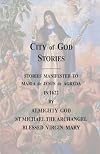
I am very thankful for this abridged version of Mary of Jesus of Ágreda‘s classic work. I have been aware of her work for sometime, but full volume sets of this work go for over $100 dollars and nicer imprints even more.
Having access to an abridged version of this behemoth of a work has been great, and I look forward to one day tackling the full work.
Having access to an abridged version of this behemoth of a work has been great, and I look forward to one day tackling the full work.
 This review was written for LibraryThing Early Reviewers.
This book is at its best when it is personal. Silverstein’s narratives of personal experience and familial stakes are engaging and new. Sadly, much of the book consists of tired polemics about woke college kids and younger Jewish Americans.
These sections read more like blog posts or reports from a think tank, than anything new, interesting, or personal.
What I really engaged with when reading this book was Silverstein’s personal narrative of his experience as a Rabbi in an often irreligious world. Stories of people living faith filled lives bringing hope and change abound.
Israel’s Wars of Self Defense is best when personal and religious, but Silverstein often weaves these stories in the margin of rudimentary and surface level political analysis, which I think most engaged reads will find not engaging.
These sections read more like blog posts or reports from a think tank, than anything new, interesting, or personal.
What I really engaged with when reading this book was Silverstein’s personal narrative of his experience as a Rabbi in an often irreligious world. Stories of people living faith filled lives bringing hope and change abound.
Israel’s Wars of Self Defense is best when personal and religious, but Silverstein often weaves these stories in the margin of rudimentary and surface level political analysis, which I think most engaged reads will find not engaging.
This review was written for LibraryThing Early Reviewers.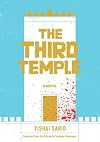
The Third Temple’s god is no God at all. The blasphemous depiction of God in this book made it extremely unpleasant to read at time. The narrator and protagonist Prince Jonathan is a grotesque man whose views of God, women, and disabled people (as he is himself) are beyond pitiable.
The latter views are particularly troubling, as they seemed forced onto the character by the author. Stories that take on a disabled character as a protagonist or narrator that then use the character’s injuries as a constant punching bag are insulting.
Sarid’s premise of a restoration of the Davidic Kingdom and building of the Third Temple, as a dystopic tale is interesting. His execution of that story leaves a bad taste.
The latter views are particularly troubling, as they seemed forced onto the character by the author. Stories that take on a disabled character as a protagonist or narrator that then use the character’s injuries as a constant punching bag are insulting.
Sarid’s premise of a restoration of the Davidic Kingdom and building of the Third Temple, as a dystopic tale is interesting. His execution of that story leaves a bad taste.
This review was written for LibraryThing Early Reviewers.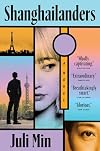
Shanghailanders provide a thought provoking narrative exploring the tension in a modern day elite family in Shanghai. It explores how personal trauma and the cultural differences of Eko and Leo goes on to shape their children. Overall, the book reads as though a translation from an original Chinese text. Some of the description and dialogue is clunky in English and would have sounded much better if written in Chinese. Reverse ordering of events is used commonly in Chinese writing and by utilizing this technique, Shanghailanders draws itself closer to Chinese novels within the same genre. This effect might be intentional but it seems quite jarring to me.
This review was written for LibraryThing Early Reviewers.
Reading this felt like trimming my fingernails with a pencil sharpener. Between the author or translator, I don’t know whose fault that is.

Docile records the journey of Hyeseung Song to reclaim her self identity from the expectations and beliefs of those around her, whether it be her parents or her friends. It also serves as a realistic depiction of the struggles of not only Asian Americans but Asians worldwide who grew up in a culture that excuses toxic behaviors from parents.
Hyeseung grows up in an environment where love is not freely given out. The book centers around Hyeseung trying to embrace her imperfections and true feelings by slowly and painfully, teaching herself how to love and accept herself unconditionally in spite of her early family and communal experiences. Hyeseung plunges into sadness in times of habitual self-sabotage, which makes every small step towards self discovery and love more precious and joyous.
Instead of shying away from stories that paint Hyeseung in a bad light, Docile focuses on these moments where she fails to empathize with herself in her darkest moments, leading to actions that can be read as selfishness, by an outside observer. The authenticity of Docile grips the reader by laying bare the often paradoxical landscape of Hyeseung’s mind. Her psyche is plagued with corrupted beliefs perpetuated by ongoing trauma, but at the same time is a place of nourishment for creative ideas and drive. It also forces the reader to strip away “black and white” thinking and engage in creating a cohesive picture of Hyeseung through contradictory identities of race, role, and purpose show more in life.
I also love the nuisance of the other themes explored in the book. Topics such as sexism, misogyny, family strife, and rivalry, generational trauma etc. are conveyed in simple scenes or even simple sentences in the narrative voice scattered throughout the book. These themes, owing to the elegant simplicity they are conveyed add to, instead of bogging down or obscuring the central idea of Docile. Yet, they are still very effective at drawing the reader’s attention. I can feel Hyeseung’s anger and despair at these injustices everytime they are brought up.
Docile makes you reflect on your own journey of self-actualization and to acknowledge both the hurt and potential for healing that exists inside your head. This book is painful to read at times as many can draw parallels from their own life to of Hyeseung’s childhood memories. It forces one to consider the implications of past traumas on your current life and gives hope for a future where these hurts are overcome. show less
Hyeseung grows up in an environment where love is not freely given out. The book centers around Hyeseung trying to embrace her imperfections and true feelings by slowly and painfully, teaching herself how to love and accept herself unconditionally in spite of her early family and communal experiences. Hyeseung plunges into sadness in times of habitual self-sabotage, which makes every small step towards self discovery and love more precious and joyous.
Instead of shying away from stories that paint Hyeseung in a bad light, Docile focuses on these moments where she fails to empathize with herself in her darkest moments, leading to actions that can be read as selfishness, by an outside observer. The authenticity of Docile grips the reader by laying bare the often paradoxical landscape of Hyeseung’s mind. Her psyche is plagued with corrupted beliefs perpetuated by ongoing trauma, but at the same time is a place of nourishment for creative ideas and drive. It also forces the reader to strip away “black and white” thinking and engage in creating a cohesive picture of Hyeseung through contradictory identities of race, role, and purpose show more in life.
I also love the nuisance of the other themes explored in the book. Topics such as sexism, misogyny, family strife, and rivalry, generational trauma etc. are conveyed in simple scenes or even simple sentences in the narrative voice scattered throughout the book. These themes, owing to the elegant simplicity they are conveyed add to, instead of bogging down or obscuring the central idea of Docile. Yet, they are still very effective at drawing the reader’s attention. I can feel Hyeseung’s anger and despair at these injustices everytime they are brought up.
Docile makes you reflect on your own journey of self-actualization and to acknowledge both the hurt and potential for healing that exists inside your head. This book is painful to read at times as many can draw parallels from their own life to of Hyeseung’s childhood memories. It forces one to consider the implications of past traumas on your current life and gives hope for a future where these hurts are overcome. show less
This review was written for LibraryThing Early Reviewers.
Senators Sanders' treatment of the ills of what he calls "uber-capitalism" are often quiet shallow. I think any working class person through the experience own there own lives can plainly see what Sanders has devoted a book to. We see it at the grocery store, the gas station, in our hopes for our children, and our worries for our parents and grandparents.
Frankly, I could only get through about half the book, before I gave up on reading about things that I lived and know as my own experience. I truly don't know who this book is for. Is it meant for the worker to read as a sort of look back over the last four years? This is how I took it, and that makes this a rather boring and redundant tome. Another purpose I see, is this book is for the petit-bouergoise, the liberal bicoastal elite. Who certainly contributed to the collective suffering of the last four years, but with their jobs moving online and their subsisting on DoorDash, rather than the existential threats suffered by other workers, namely death by disease and lack of care.
Where the treatments of Sanders' policy claims felt painful and far from novel, his more biographical description of the past four years, when he discusses his own actions, were extremely engrossing. I would have much preferred if the entire book was such, rather than a little crumb of biographical stories interspersed between facts and figures and politically correct damnations of the one percent of the one percent.
Frankly, I could only get through about half the book, before I gave up on reading about things that I lived and know as my own experience. I truly don't know who this book is for. Is it meant for the worker to read as a sort of look back over the last four years? This is how I took it, and that makes this a rather boring and redundant tome. Another purpose I see, is this book is for the petit-bouergoise, the liberal bicoastal elite. Who certainly contributed to the collective suffering of the last four years, but with their jobs moving online and their subsisting on DoorDash, rather than the existential threats suffered by other workers, namely death by disease and lack of care.
Where the treatments of Sanders' policy claims felt painful and far from novel, his more biographical description of the past four years, when he discusses his own actions, were extremely engrossing. I would have much preferred if the entire book was such, rather than a little crumb of biographical stories interspersed between facts and figures and politically correct damnations of the one percent of the one percent.