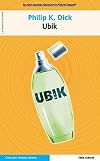
To begin this review, I want to say that I'll be including a number of spoilers. It's a nearly 50-year-old book, and you should have read it by now (or before reading such a review). You have your warning.
To start, I will list off the negatives, because I love Philip K. Dick. A friend once shared an anecdote that Dick was always so desperate for money that he never wrote second drafts. Everything he got published was a first draft. I don't know how true that is, but it certainly reads like that. As Stephen King is the author who writes interesting stories with bad conclusions, Dick is the author who writes fantastic stories with awful everything. It's the ideas that count.
Okay, now to the positives. The contents of the book is intriguing. The premise is that there's a way to temporarily preserve consciousnesses after death. So the metaphysical is already the topic of the day. The characters openly introduce the Tibetan Book of the Dead and talk about a red light, rebirth and all that jazz. I don't know too much about buddhism other than the basics, but I'm not sure Dick knows that much, either. I believe that it was a very common phenomenon of that period (the late 1960s) to feign knowledge of the alternate philosophies, especially eastern or the like. This is somewhat mirrored in Joe Chip, the protagonist, and his disdain for modern technology and its greed.
I believe it's supposed to be played for laughs: the door that won't open on its own, the space-plane that requires show more payment after landing, Chip's rant about how homeostatic machines are keeping the man down, his troubles with money, all that stuff. But then there's the more intriguing aspects of time regression once they revert into what may or not be half-life (as its termed in the book, the post-death experience of being on ice). Chip still has his money problems, but he seems to get along much better in certain aspects when the world reverts to 1939. I believe that it's a bit of Dick complaining about his problems in real life.
Let's move on to the meat of the story and the part that the author wants forefront: the cosmological confrontation of Eastern, Western and Middle theology. I say middle because there's a strong hint of Zoroastrianism and Gnosticism in his approach. The whole deal with psychics/precogs/anti-whatever/Pat and her weird talent doesn't seem to last very long. After the first act is complete, all of those shenanigans are dropped except for a brief mention near the end, but it doesn't warrant much attention in my opinion. Psychic/supernatural phenomena seems to be mortal or mundane reflections of godliness or perhaps the over-bearing 1960s philosophy how technology would unite wordiness with God (or god), much like the proliferation and machine-dispensed drugs. See also the Lathe of Heaven for how much old Science Fiction writers liked drugs being common. We're still holding out for that to happen.
So we have Chip, Glen Runciter, Ella Runciter, Pat Connor and Jory as the four forces in the book. Chip is normal, so he's there to represent humanity, the author and you, the reader. It's pretty simple, and it's kinda obvious with him being the protagonist.
Glen Runciter is the lamb of God. He goes up to the moon with 11 disciples and is blown up by a bomb, seemingly a Judas. I didn't really pay too much attention to the various side characters because they were only briefly characterized at all. They do feature more sexual diversity than the actual apostles, however, so that's nice. Then he shows up obliquely for the vast majority of the story, as hints or 'manifestations.' In what felt like the most obvious part of the allegory, Glen is dead three days before he shows up again.
At the end he comes again and helps, but he doesn't have all the answers. Chip even corrects him on some things and informs him (and us) of developments, so we can see that this isn't the traditional Christian morality tale.
Ella Runciter is the father of the trio. She only shows up at the beginning (maybe at the conception) and towards the end with a solution to the antagonist, Ubik. According to wikipedia and Dick's ex-wife, Ubik is the old testament God. That makes sense in some ways because Ella is human, dead and moving onto a new reincarnation (no longer in the realm of Christianity, or so it seems). And it does make sense that Ubik acts in mysterious ways, often hung out as the solution, and Chip only achieves his connection with it towards the end.
However, going against that is that Ella reveals towards the end that it was invented by her and other residents of half-life. To me, it sounds a lot like heaven or enlightenment, an instrument of Buddha/God.
Then let's get on to Pat and Jory. Now, because I'm much more aware of Christian and Jewish dogma, my knowledge fails me. These two characters are the antagonists, and they both seem to somewhat occupy the space of the devil. Pat is a temptress (a big fault of Dick is always having a woman of the same characteristics being a part of or the enemy), and she (not very subtly) has a tattoo of "caveat emptor." I believe she is the aspect of the devil that buys souls and such, being financially endowed and all-powerful in her somewhat mysterious way.
However, the real antagonist of the book turns out to be Jory. He's a much more corporeal and understandable evil. He is stuck in half-life with everyone (beside Glen, kinda, more on that later), but he kills others to prolong his life. Ella says that, even if Jory himself were to be killed, there are a million like him. So that gives the idea that he's a human who has become all-consuming. So humans are the real evil, I guess? Or he could be the evil god of Zoroastrianism. I have no idea. His motives are definitely way more relatable than Pat, who seems to be a mystery the whole time.
As far as characters and their meaning, I have no idea going on with them. I think Dick didn't really know what was going on either. I remember a quote somewhere from some author about how if they had all the answers, they wouldn't be writing books. I like that because I don't have any idea in my own books either.
So, as an addendum, I want to talk briefly about the levels of existence. There is the real world and half-life. I believe the real world to be heaven or the afterlife and the half-life to be the real world. It's where the action of the book predominantly happens, for starters. Glen exists on the outside, too, has limited ways of interacting with half-life, and there is one other important character there, the owner of the moratorium. He seems to be like a Charon or something. Or maybe it's another Zoroastrianism thing.
The big twist comes in the last chapter, about a page long. Glen, on the outside, starts to receive the same hallucinations that Chip had as an indication of him being in half-life. I don't know, and I'm not going to worry about it too much. Off the top of my head, I could cite a few things: a reversal indicating that the real world actually is that, an indication that no one (not even Jesus) is immune to the pressures of the world, the coming of the end of the world, that the layman is salvation, etc. Whatever!
As with many of Dick's works, don't go in expecting to find answers because no single explanation will give you the answers you want. But it'll get you thinking, and that's why I read them. show less
To start, I will list off the negatives, because I love Philip K. Dick. A friend once shared an anecdote that Dick was always so desperate for money that he never wrote second drafts. Everything he got published was a first draft. I don't know how true that is, but it certainly reads like that. As Stephen King is the author who writes interesting stories with bad conclusions, Dick is the author who writes fantastic stories with awful everything. It's the ideas that count.
Okay, now to the positives. The contents of the book is intriguing. The premise is that there's a way to temporarily preserve consciousnesses after death. So the metaphysical is already the topic of the day. The characters openly introduce the Tibetan Book of the Dead and talk about a red light, rebirth and all that jazz. I don't know too much about buddhism other than the basics, but I'm not sure Dick knows that much, either. I believe that it was a very common phenomenon of that period (the late 1960s) to feign knowledge of the alternate philosophies, especially eastern or the like. This is somewhat mirrored in Joe Chip, the protagonist, and his disdain for modern technology and its greed.
I believe it's supposed to be played for laughs: the door that won't open on its own, the space-plane that requires show more payment after landing, Chip's rant about how homeostatic machines are keeping the man down, his troubles with money, all that stuff. But then there's the more intriguing aspects of time regression once they revert into what may or not be half-life (as its termed in the book, the post-death experience of being on ice). Chip still has his money problems, but he seems to get along much better in certain aspects when the world reverts to 1939. I believe that it's a bit of Dick complaining about his problems in real life.
Let's move on to the meat of the story and the part that the author wants forefront: the cosmological confrontation of Eastern, Western and Middle theology. I say middle because there's a strong hint of Zoroastrianism and Gnosticism in his approach. The whole deal with psychics/precogs/anti-whatever/Pat and her weird talent doesn't seem to last very long. After the first act is complete, all of those shenanigans are dropped except for a brief mention near the end, but it doesn't warrant much attention in my opinion. Psychic/supernatural phenomena seems to be mortal or mundane reflections of godliness or perhaps the over-bearing 1960s philosophy how technology would unite wordiness with God (or god), much like the proliferation and machine-dispensed drugs. See also the Lathe of Heaven for how much old Science Fiction writers liked drugs being common. We're still holding out for that to happen.
So we have Chip, Glen Runciter, Ella Runciter, Pat Connor and Jory as the four forces in the book. Chip is normal, so he's there to represent humanity, the author and you, the reader. It's pretty simple, and it's kinda obvious with him being the protagonist.
Glen Runciter is the lamb of God. He goes up to the moon with 11 disciples and is blown up by a bomb, seemingly a Judas. I didn't really pay too much attention to the various side characters because they were only briefly characterized at all. They do feature more sexual diversity than the actual apostles, however, so that's nice. Then he shows up obliquely for the vast majority of the story, as hints or 'manifestations.' In what felt like the most obvious part of the allegory, Glen is dead three days before he shows up again.
At the end he comes again and helps, but he doesn't have all the answers. Chip even corrects him on some things and informs him (and us) of developments, so we can see that this isn't the traditional Christian morality tale.
Ella Runciter is the father of the trio. She only shows up at the beginning (maybe at the conception) and towards the end with a solution to the antagonist, Ubik. According to wikipedia and Dick's ex-wife, Ubik is the old testament God. That makes sense in some ways because Ella is human, dead and moving onto a new reincarnation (no longer in the realm of Christianity, or so it seems). And it does make sense that Ubik acts in mysterious ways, often hung out as the solution, and Chip only achieves his connection with it towards the end.
However, going against that is that Ella reveals towards the end that it was invented by her and other residents of half-life. To me, it sounds a lot like heaven or enlightenment, an instrument of Buddha/God.
Then let's get on to Pat and Jory. Now, because I'm much more aware of Christian and Jewish dogma, my knowledge fails me. These two characters are the antagonists, and they both seem to somewhat occupy the space of the devil. Pat is a temptress (a big fault of Dick is always having a woman of the same characteristics being a part of or the enemy), and she (not very subtly) has a tattoo of "caveat emptor." I believe she is the aspect of the devil that buys souls and such, being financially endowed and all-powerful in her somewhat mysterious way.
However, the real antagonist of the book turns out to be Jory. He's a much more corporeal and understandable evil. He is stuck in half-life with everyone (beside Glen, kinda, more on that later), but he kills others to prolong his life. Ella says that, even if Jory himself were to be killed, there are a million like him. So that gives the idea that he's a human who has become all-consuming. So humans are the real evil, I guess? Or he could be the evil god of Zoroastrianism. I have no idea. His motives are definitely way more relatable than Pat, who seems to be a mystery the whole time.
As far as characters and their meaning, I have no idea going on with them. I think Dick didn't really know what was going on either. I remember a quote somewhere from some author about how if they had all the answers, they wouldn't be writing books. I like that because I don't have any idea in my own books either.
So, as an addendum, I want to talk briefly about the levels of existence. There is the real world and half-life. I believe the real world to be heaven or the afterlife and the half-life to be the real world. It's where the action of the book predominantly happens, for starters. Glen exists on the outside, too, has limited ways of interacting with half-life, and there is one other important character there, the owner of the moratorium. He seems to be like a Charon or something. Or maybe it's another Zoroastrianism thing.
The big twist comes in the last chapter, about a page long. Glen, on the outside, starts to receive the same hallucinations that Chip had as an indication of him being in half-life. I don't know, and I'm not going to worry about it too much. Off the top of my head, I could cite a few things: a reversal indicating that the real world actually is that, an indication that no one (not even Jesus) is immune to the pressures of the world, the coming of the end of the world, that the layman is salvation, etc. Whatever!
As with many of Dick's works, don't go in expecting to find answers because no single explanation will give you the answers you want. But it'll get you thinking, and that's why I read them. show less
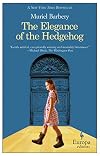
The Elegance of the Hedgehog is about what you would expect if I told you it was a fictional book written by a French philosopher. You can practically smell the stereotypes of the baguette and cigarette wafting in between sentences on the pointlessness of life. I once had a friend who translated Rousseau's J'étais né presque mourant as "I was born half dead," and she used it to summarize the rest of French culture.
The first few chapters (or half of the book, really) have two independent voices, the two protagonists, Renée Michel and Paloma Josse, an older woman (Renée) who acts as the concierge at the apartment building for a bunch of upper-class, hoighty-toighty Parisians, including the daughter (Paloma) of one. You won't know this, either of their names, or figure out much of the details of their life until the author lets you piece it together.
Most of the narration is concerned with philosophy, a lot of references to European (especially Russian) and Japanese books/films but little of the story. That accomplishes two things: first, the diatribe of the author; second, giving flavor to the characters. Renée really reminds me of my mom at times because she often disagrees intellectually with others and can be a bit pretentious inside when she's inside of her own mind. Paloma reminds me of myself and a lot of my peers at high school, thinking that we were superior and had more perceptive minds than most everyone we knew.
Very little of the book is given in show more consideration of the other characters. It's not exactly trenchant criticism to say that the protagonists of the book are the centerpiece of the novel. However, they do spend a lot of time criticizing the people they see as vacuous rich kids with their shallow, materialistic lives. There's a part where Renée surreptitiously opens up a letter containing and reads the Master's Thesis of Paloma's sister, and she goes on to critique it as the typical product of universities: possessing little critical thought and more career-seeking (or name-building) than original or carefully crafted. Believe me, I have run into a lot of papers and works that seem equally squalid, but in her personal voice, the author may have dealt with the subject only superficially.
In contrast to what may seem a negative review, I really like the ending. I think it's uplifting and happy, and while that would be a negative for a lot of American books (a sappy ending to a difficult conflict), it works here because it is happy in the context of a persistent blight that seems to sap the two intellectuals' happiness. It illuminates a transformation in the character of Paloma, and it left me with food for thought (so much so that I'm using a pun and a cliché). show less
The first few chapters (or half of the book, really) have two independent voices, the two protagonists, Renée Michel and Paloma Josse, an older woman (Renée) who acts as the concierge at the apartment building for a bunch of upper-class, hoighty-toighty Parisians, including the daughter (Paloma) of one. You won't know this, either of their names, or figure out much of the details of their life until the author lets you piece it together.
Most of the narration is concerned with philosophy, a lot of references to European (especially Russian) and Japanese books/films but little of the story. That accomplishes two things: first, the diatribe of the author; second, giving flavor to the characters. Renée really reminds me of my mom at times because she often disagrees intellectually with others and can be a bit pretentious inside when she's inside of her own mind. Paloma reminds me of myself and a lot of my peers at high school, thinking that we were superior and had more perceptive minds than most everyone we knew.
Very little of the book is given in show more consideration of the other characters. It's not exactly trenchant criticism to say that the protagonists of the book are the centerpiece of the novel. However, they do spend a lot of time criticizing the people they see as vacuous rich kids with their shallow, materialistic lives. There's a part where Renée surreptitiously opens up a letter containing and reads the Master's Thesis of Paloma's sister, and she goes on to critique it as the typical product of universities: possessing little critical thought and more career-seeking (or name-building) than original or carefully crafted. Believe me, I have run into a lot of papers and works that seem equally squalid, but in her personal voice, the author may have dealt with the subject only superficially.
In contrast to what may seem a negative review, I really like the ending. I think it's uplifting and happy, and while that would be a negative for a lot of American books (a sappy ending to a difficult conflict), it works here because it is happy in the context of a persistent blight that seems to sap the two intellectuals' happiness. It illuminates a transformation in the character of Paloma, and it left me with food for thought (so much so that I'm using a pun and a cliché). show less
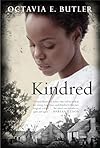
When someone first suggested to me to read Kindred, she described it as a type of Science Fiction. I think, now after I’ve read it, that she wasn’t wrong, but she wasn’t right. It contains some elements of the genre, but it is so much more. Kindred is the story of an African American woman drawn through time repeatedly to her ancestor, a slave owner in Maryland who relishes to unleash the sins of his father on others. The fantastic elements of the story mostly serve as a way to frame the Historical Fiction side of the story.
I’m sure that many more educated and more interesting responses and essays on the book can be found, but I’ll try to contribute my two cents. As the historian Marc Bloc once said, “Misunderstanding of the present is the inevitable consequence of ignorance of the past. But a man may wear himself out just as fruitlessly in seeking to understand the past, if he is totally ignorant of the present...This faculty of understanding the living is, in very truth, the master quality of the historian.” It is a quote that came to me while I was reading Butler’s masterpiece. Edana, the protagonist, examines the history of her family and participates in the twists and turns of early 19th-century slaveholding Maryland. Her first trip back in time paints the picture of the whole future narrative of the book. She saves a drowning baby who turns out to be ancestor, and the reaction of the parents is hysteria, almost histrionics, from the mom and and show more anger from the dad. The portrait of the life of the African American slave is complete here.
The portrayal of the life in the antebellum South really strikes home when I read one of my favorite quotations from the book, “He could do anything he wanted to to me, and I had no enforceable rights. None at all.” The protagonist has saved the life of Rufus Weylin numerous times by this point, but she still feels trapped. It’s the danger of such a society — just as oppressive and fearful of ideas and the truth as Nazi Germany — that everyone, no matter who, becomes compliant to such a system and try to find a niche by abandoning ideals and embracing the pragmatism of saving themself.
Kindred struck me and had an impact that couldn’t be ignored. It’s a masterfully crafted book that involves the reader in the heart-wrenching tale of family and history. show less
I’m sure that many more educated and more interesting responses and essays on the book can be found, but I’ll try to contribute my two cents. As the historian Marc Bloc once said, “Misunderstanding of the present is the inevitable consequence of ignorance of the past. But a man may wear himself out just as fruitlessly in seeking to understand the past, if he is totally ignorant of the present...This faculty of understanding the living is, in very truth, the master quality of the historian.” It is a quote that came to me while I was reading Butler’s masterpiece. Edana, the protagonist, examines the history of her family and participates in the twists and turns of early 19th-century slaveholding Maryland. Her first trip back in time paints the picture of the whole future narrative of the book. She saves a drowning baby who turns out to be ancestor, and the reaction of the parents is hysteria, almost histrionics, from the mom and and show more anger from the dad. The portrait of the life of the African American slave is complete here.
The portrayal of the life in the antebellum South really strikes home when I read one of my favorite quotations from the book, “He could do anything he wanted to to me, and I had no enforceable rights. None at all.” The protagonist has saved the life of Rufus Weylin numerous times by this point, but she still feels trapped. It’s the danger of such a society — just as oppressive and fearful of ideas and the truth as Nazi Germany — that everyone, no matter who, becomes compliant to such a system and try to find a niche by abandoning ideals and embracing the pragmatism of saving themself.
Kindred struck me and had an impact that couldn’t be ignored. It’s a masterfully crafted book that involves the reader in the heart-wrenching tale of family and history. show less
The author manages to unite two different stories - the conflict between the rising generation of feminism in the 60s and a fight with her traditional somewhat war-hero boss against a play about a pack of wild dogs and human compassion in the Serengeti in a memorable and unique book.
While I haven't been a fan of modern Stephen King, this collection of short stories managed to convince me that maybe I should give his latest works another shot.
The Sandman series was quite interesting, but I think I was poisoned by too much glowing, positive reviews. I thought it was interesting and good but not worthy of the praise it's received.
My favorite collection fo the series. Interesting premise and very trippy. The rest of the series didn't deliver, however.
This was a fantastic and merry ride through some Colorado history. The author flawlessly mixed details from history with humor to write a fantastically entertaining story about the ability of the normal men and women of Boulder and thereabouts to stand up for themselves and do the right thing.
I think I'm not the target audience, but it was an interesting premise. I enjoyed the God-part of the book and the murder mystery part, but I'm not sure they were compatible. I don't think the ending delivered, but the first two acts are great.
Fragments is a fantastically interesting short story that fascinates you from the first word until the last. I have long been a fan of the short story medium becauseit’s a quick way to get to know the author as they are forced to examine a subject and tell a story, and Fisette doesn’t disappoint.
The story is presented in two different voices, highlighted through two different fonts, two different eyes into the world. I greatly appreciated the difference, going so far as supertextual details such as line spacing because they seem like two different stories, and they are, but they aren’t. Without revealing too much, one is the story of a semi-ethereal woman in some sort of trauma or conflict, and one is the story of another woman undergoing a vague mental difficulty, reminiscent of depression or PTSD. The former evokes a sense of tension and fear, evocative in me of a horror story that gets the blood pumping. The latter says few words but the right ones. The protagonist is haunted by herself in a psychological mode.
The strength of a story that’s this short but covers so much with few words is that we learn far more than we would in a longer story. Both stories come together in the end in a way that satisfies the reader and, like any good story, makes the reader ask more questions than it answers, especially the most important one: when can I read more?
The story is presented in two different voices, highlighted through two different fonts, two different eyes into the world. I greatly appreciated the difference, going so far as supertextual details such as line spacing because they seem like two different stories, and they are, but they aren’t. Without revealing too much, one is the story of a semi-ethereal woman in some sort of trauma or conflict, and one is the story of another woman undergoing a vague mental difficulty, reminiscent of depression or PTSD. The former evokes a sense of tension and fear, evocative in me of a horror story that gets the blood pumping. The latter says few words but the right ones. The protagonist is haunted by herself in a psychological mode.
The strength of a story that’s this short but covers so much with few words is that we learn far more than we would in a longer story. Both stories come together in the end in a way that satisfies the reader and, like any good story, makes the reader ask more questions than it answers, especially the most important one: when can I read more?

Review for Delicate Ministrations
A book of short stories can take on many forms, and Delicate Ministrations takes along us for a ride that sometimes are a few, independent stories and some that feel like independent chapters of a larger story. I often had the feeling that the stories were reminding me of some sort of cross between Vonnegut and a literary version of what Cobain’s songs, an idea I may have cribbed from the conclusion of the first story.
The author writes excellent prose that is captivating and gets the reader’s attention. My favorite line of all of the stories comes from the last story, and I really want to quote it: “Death chiseled a harsh beauty, a minimalist taxonomy…” The stories are interesting and innovative and littered with details of their own. Forrest doesn’t spare us the world-building.
Each of the stories get you involved in their microcosms and makes you want to know about that, and that conclusion leads me to talk about my only real criticism: I wanted to read more of two particular stories, the Unlighted Sentinel and Reboot. I didn’t like when a story told me from the beginning to the middle and cuts off right before the ending. Some of the stories left off like this, and I didn’t think it was a problem. Somewhat redeeming is that some of the other stories obliquely continue the story in a non-obvious way.
In my conclusion, definitely read Delicate Ministrations. I enjoyed it greatly. Its tone, ranging from a faux show more children’s story in Where No Fox Should Follow, a Young Adult-style story in The Unlighted Sentinel and the rest Cyber Punk and more general Science Fiction, made me smile and laugh at what seemed to me like a Gen-X sarcastic take on the optomistic and pessimistic high-minded Sci-Fi of the 50’s to 80’s. I recommend this book to answer some questions and ask some of your own.
Now that the heart of my review is done, you can follow along and read what I thought of each of the individual stories with light spoilers, caveat emptor:
Come Gomorrah:
We follow Agent Robert Cooley as he and his partner perform eugenics to maintain the practice of controlling human overpopulation. Early on, the story felt like it fell in the trap of optomist pseudoscientific H , the likes of which reminded me of Dan Brown’s Inferno, but it came back in the end to make fun of the concept, notably by explaining the only way it would work: wide-spread obligatory changes of sexuality to make everyone homosexual to reduce the amount of ‘breeders.’
Chasing Forever:
Forrest follows our two protagonists, Adem and Varig as they outrun the burning sun. Without explicitly saying so, we can identify a post-apocalyptic world where humans are struggling to survive, and a casual mishap means life or death. It’s fascinating, and the ending where one of our protagonists finds the opposite populace, those that flee the nighttime, does a great job of showing how easily people fall into little traps of convincing themselves they are the righteous and are the only ones who know the truth. I especially liked the introductory poems/scripture which gives us an immediate idea of what we are reading.
The Unlighted Sentinel:
I must admit that this was probably my least favorite story of the collection, though that’s probably because it was faithful to its genere more than anything. The story is a YA-style story of two children, secretely friends of opposite factions fighting on a long-abandoned space station, are forced to marry for a political pact. They end up betraying both sides to force peace and progress on others. The author does a good job of highlighting both other-ness and similarity between the factions, making everyone seem reasonable. I found the ending a little troubling because the two protagonists seem to employ the tactic of getting WMDs and threatening to kill everyone else unless they compley, effectively making them the enlightened dictators. Then they go off to screw around, which, I guess, is kinda accurate of how people in power act.
The Treachery of Cats:
This is a short and sweet story of an assassination mucked up by a cat. It’s arguably the least Sci-Fi of any of the stories, but it really hits a great mark by proceeding so quickly that you can imagine a whole story of what comes before and after in just a few pages because the literary short-hand of Forrest lets us imagine everything we need to. Those mischevious cats!
Reboot:
The other of the two stories I had mentioned as ending too soon above, this story is probably my favorite of the collection. A woman-cum-cyborg awakens and doesn’t know who she is or what’s going on. She wanders with a metallic man for awhile before coming home and finding out what’s going on. The story gives many pastoral scenes and gets the reader to relax in what is an obviously dangerous post-apocalyptic world.
Sum of Errors:
A family is held hostage by a malevolent Artificial Intelligence during a centuries-long transfer between planets. This short story, is, uh, well, short. It packs a surprising amount of horror and tension in what is a fairly compact space — both literary and in the story. The protagonists all have a sense of impotence against what is a greater force that can basically will them in and out of existence, and they have to appease it as far as they can. It ends on a sad but wholly appropriate note.
Where No Fox Should Follow:
If I were to name another favorite story, this one would be it. The story is a Fantasy story with touches of children’s narratives stuck in. One thing that really stuck with me is Forrest’s use of alliteration and repeated-and-simplified verbiage. However, the story is clearly not for children and describes graphic scenes of mutilation so don’t let your little ones read it. The story is fascinating and humorous as it follows five anthropromorphic foxes and their badger guide as they go to hunt on the sacred and protected human hunting grounds. It turns out to be a much harder voyage than they thought, and Forrest plays the childish descriptions fantastically against the growing realism and action of the latter half of the story.
Betty Jam:
In what is the most cyberpunk story of them all, the author examines transhumanism for the second time. In a world where sensations and experiences have become shared, some people hunt for the most twisted and depraved of them all. A washed up ex-SWAT officer becomes a vigilante and hunts what he views as the worst of these purveyors. While Come Gomorrah seemed to be a repudiation H ideas, Betty Jam shows a second response: what really is the problem are humans, not technology which is actually capable of wonderful things. It is an idea I can get behind wholeheartedly.
The Amateur Spacefarer’s Ultimate Survival Guide:
Okay, I should stop picking favorites, but this story made me laugh uproariously. The reader is given a dialog reminiscent of us trying to talk to tech support. The narrator’s voice is an intelligent book helping out a group of space travelers who have to repair their spaceship before they all die. The book is uncaring and listens while people are dying giving out such useful advice as buying a companion book to deal with survivor’s guilt or that the austronauts may have difficulty repopulating a planet if that was their goal because most of the women have died. Oh wait, they can check out the chapter on asexual reproduction if it might help them. Don’t skip this one!
Dandelions in the Kentucky Blue:
The penultimate story is probably the most depressing and realistic take on human-alien first contact. Saucers, impervious to all intereference, appear and disappear from Earth’s atmosphere with no warning at all. As a vague allegory to the protagonist’s damaged relationship with his father and family, he ponders the non-chalance of the aliens. I enjoyed the weighty ponderance of human thoughts as a counterposition to the flying saucers and what seems comparable to the whole genre of Science Fiction.
Liminal:
To start my description of the story, I want to put it and the others in a timeline. I think the first story of this series is Chasing Forever, when an AI has destroyed the atmosphere around the planet, next Reboot where the ending hints at a human-cyborg restores empathy to otherwise purely destructive machinery, after that is Liminal where humans and the AI have struck up a truce where the Warren, a collective consciousness that humans may willingly join, respects human laws and The Unlighted Sentinel is an offshoot far-removed from Earth of the story.
Liminal is the story that interfaces most sympathetically with the transhumanist ideology. Explicitly, human and robot live in peace with strict boundaries in some places and co-existence in others. The story follows Marya, a centuries-old human who has made herself mostly cybernetic except with a strong hold on maintaining her free will. Sometimes she visits her home, now made a rare exception to the few zones where humans are allowed to live. There humans futilely reject all of benefits of merging with technology because, as one character states it, they hope that God will come back and smite the AI. They’re afraid because they’re no longer in charge. In what is probably the most understandable point of the story, humans reveal how scared they are of not mattering at all to the world. show less
A book of short stories can take on many forms, and Delicate Ministrations takes along us for a ride that sometimes are a few, independent stories and some that feel like independent chapters of a larger story. I often had the feeling that the stories were reminding me of some sort of cross between Vonnegut and a literary version of what Cobain’s songs, an idea I may have cribbed from the conclusion of the first story.
The author writes excellent prose that is captivating and gets the reader’s attention. My favorite line of all of the stories comes from the last story, and I really want to quote it: “Death chiseled a harsh beauty, a minimalist taxonomy…” The stories are interesting and innovative and littered with details of their own. Forrest doesn’t spare us the world-building.
Each of the stories get you involved in their microcosms and makes you want to know about that, and that conclusion leads me to talk about my only real criticism: I wanted to read more of two particular stories, the Unlighted Sentinel and Reboot. I didn’t like when a story told me from the beginning to the middle and cuts off right before the ending. Some of the stories left off like this, and I didn’t think it was a problem. Somewhat redeeming is that some of the other stories obliquely continue the story in a non-obvious way.
In my conclusion, definitely read Delicate Ministrations. I enjoyed it greatly. Its tone, ranging from a faux show more children’s story in Where No Fox Should Follow, a Young Adult-style story in The Unlighted Sentinel and the rest Cyber Punk and more general Science Fiction, made me smile and laugh at what seemed to me like a Gen-X sarcastic take on the optomistic and pessimistic high-minded Sci-Fi of the 50’s to 80’s. I recommend this book to answer some questions and ask some of your own.
Now that the heart of my review is done, you can follow along and read what I thought of each of the individual stories with light spoilers, caveat emptor:
Come Gomorrah:
We follow Agent Robert Cooley as he and his partner perform eugenics to maintain the practice of controlling human overpopulation. Early on, the story felt like it fell in the trap of optomist pseudoscientific H , the likes of which reminded me of Dan Brown’s Inferno, but it came back in the end to make fun of the concept, notably by explaining the only way it would work: wide-spread obligatory changes of sexuality to make everyone homosexual to reduce the amount of ‘breeders.’
Chasing Forever:
Forrest follows our two protagonists, Adem and Varig as they outrun the burning sun. Without explicitly saying so, we can identify a post-apocalyptic world where humans are struggling to survive, and a casual mishap means life or death. It’s fascinating, and the ending where one of our protagonists finds the opposite populace, those that flee the nighttime, does a great job of showing how easily people fall into little traps of convincing themselves they are the righteous and are the only ones who know the truth. I especially liked the introductory poems/scripture which gives us an immediate idea of what we are reading.
The Unlighted Sentinel:
I must admit that this was probably my least favorite story of the collection, though that’s probably because it was faithful to its genere more than anything. The story is a YA-style story of two children, secretely friends of opposite factions fighting on a long-abandoned space station, are forced to marry for a political pact. They end up betraying both sides to force peace and progress on others. The author does a good job of highlighting both other-ness and similarity between the factions, making everyone seem reasonable. I found the ending a little troubling because the two protagonists seem to employ the tactic of getting WMDs and threatening to kill everyone else unless they compley, effectively making them the enlightened dictators. Then they go off to screw around, which, I guess, is kinda accurate of how people in power act.
The Treachery of Cats:
This is a short and sweet story of an assassination mucked up by a cat. It’s arguably the least Sci-Fi of any of the stories, but it really hits a great mark by proceeding so quickly that you can imagine a whole story of what comes before and after in just a few pages because the literary short-hand of Forrest lets us imagine everything we need to. Those mischevious cats!
Reboot:
The other of the two stories I had mentioned as ending too soon above, this story is probably my favorite of the collection. A woman-cum-cyborg awakens and doesn’t know who she is or what’s going on. She wanders with a metallic man for awhile before coming home and finding out what’s going on. The story gives many pastoral scenes and gets the reader to relax in what is an obviously dangerous post-apocalyptic world.
Sum of Errors:
A family is held hostage by a malevolent Artificial Intelligence during a centuries-long transfer between planets. This short story, is, uh, well, short. It packs a surprising amount of horror and tension in what is a fairly compact space — both literary and in the story. The protagonists all have a sense of impotence against what is a greater force that can basically will them in and out of existence, and they have to appease it as far as they can. It ends on a sad but wholly appropriate note.
Where No Fox Should Follow:
If I were to name another favorite story, this one would be it. The story is a Fantasy story with touches of children’s narratives stuck in. One thing that really stuck with me is Forrest’s use of alliteration and repeated-and-simplified verbiage. However, the story is clearly not for children and describes graphic scenes of mutilation so don’t let your little ones read it. The story is fascinating and humorous as it follows five anthropromorphic foxes and their badger guide as they go to hunt on the sacred and protected human hunting grounds. It turns out to be a much harder voyage than they thought, and Forrest plays the childish descriptions fantastically against the growing realism and action of the latter half of the story.
Betty Jam:
In what is the most cyberpunk story of them all, the author examines transhumanism for the second time. In a world where sensations and experiences have become shared, some people hunt for the most twisted and depraved of them all. A washed up ex-SWAT officer becomes a vigilante and hunts what he views as the worst of these purveyors. While Come Gomorrah seemed to be a repudiation H ideas, Betty Jam shows a second response: what really is the problem are humans, not technology which is actually capable of wonderful things. It is an idea I can get behind wholeheartedly.
The Amateur Spacefarer’s Ultimate Survival Guide:
Okay, I should stop picking favorites, but this story made me laugh uproariously. The reader is given a dialog reminiscent of us trying to talk to tech support. The narrator’s voice is an intelligent book helping out a group of space travelers who have to repair their spaceship before they all die. The book is uncaring and listens while people are dying giving out such useful advice as buying a companion book to deal with survivor’s guilt or that the austronauts may have difficulty repopulating a planet if that was their goal because most of the women have died. Oh wait, they can check out the chapter on asexual reproduction if it might help them. Don’t skip this one!
Dandelions in the Kentucky Blue:
The penultimate story is probably the most depressing and realistic take on human-alien first contact. Saucers, impervious to all intereference, appear and disappear from Earth’s atmosphere with no warning at all. As a vague allegory to the protagonist’s damaged relationship with his father and family, he ponders the non-chalance of the aliens. I enjoyed the weighty ponderance of human thoughts as a counterposition to the flying saucers and what seems comparable to the whole genre of Science Fiction.
Liminal:
To start my description of the story, I want to put it and the others in a timeline. I think the first story of this series is Chasing Forever, when an AI has destroyed the atmosphere around the planet, next Reboot where the ending hints at a human-cyborg restores empathy to otherwise purely destructive machinery, after that is Liminal where humans and the AI have struck up a truce where the Warren, a collective consciousness that humans may willingly join, respects human laws and The Unlighted Sentinel is an offshoot far-removed from Earth of the story.
Liminal is the story that interfaces most sympathetically with the transhumanist ideology. Explicitly, human and robot live in peace with strict boundaries in some places and co-existence in others. The story follows Marya, a centuries-old human who has made herself mostly cybernetic except with a strong hold on maintaining her free will. Sometimes she visits her home, now made a rare exception to the few zones where humans are allowed to live. There humans futilely reject all of benefits of merging with technology because, as one character states it, they hope that God will come back and smite the AI. They’re afraid because they’re no longer in charge. In what is probably the most understandable point of the story, humans reveal how scared they are of not mattering at all to the world. show less
I have been spending the last two weeks of my life swamped in work, but I had Fire and Ice as a break from the stress. It was always a relief to pick it up and let myself get lost in the the story. It tells the story of Allie, a high schooler recovering from a tragedy she can’t quite figure out. The story follows her recovery and a series of daring events that gets the reader involved after the first few pages until the last.
On the surface, the book appears to be somewhat standard fair young-adult novel, however it pushes the envelope in a few ways. Fire and Ice combines Sci-fi and Fantasy with intriguing elements that hint at a larger universe we’re given hints of. There are elements of their combination, that technology is involved with magic, is a consideration that adds an extra punch to the story.
My favorite element is the confusion of the protagonist during the first two acts of the story. It reminded me of human trafficking and kidnapping. Allie becomes confused as she wrestles her returning recollections with her feelings and the counter-intuitive insistences of new friends.
The book wraps up in a way that is satisfying and manages to check a number of boxes to the reader. The strengths of the book come from the basics of the writing. The characters are all relatable and interesting, the settings and descriptions crisp and the inner monolog of the protagonist convincing.
I recommend this book if you are interested in Urban Sci-Fi, Fantasy and YA in an adventure show more that’s inviting and intriguing. show less
On the surface, the book appears to be somewhat standard fair young-adult novel, however it pushes the envelope in a few ways. Fire and Ice combines Sci-fi and Fantasy with intriguing elements that hint at a larger universe we’re given hints of. There are elements of their combination, that technology is involved with magic, is a consideration that adds an extra punch to the story.
My favorite element is the confusion of the protagonist during the first two acts of the story. It reminded me of human trafficking and kidnapping. Allie becomes confused as she wrestles her returning recollections with her feelings and the counter-intuitive insistences of new friends.
The book wraps up in a way that is satisfying and manages to check a number of boxes to the reader. The strengths of the book come from the basics of the writing. The characters are all relatable and interesting, the settings and descriptions crisp and the inner monolog of the protagonist convincing.
I recommend this book if you are interested in Urban Sci-Fi, Fantasy and YA in an adventure show more that’s inviting and intriguing. show less
When I began reading this novella (I have no idea what the classifications for these sorts of words are, but it was definitely longer than a short story and shorter than a book), I was expecting something like a collection or anthology. Instead, what I got were several small but possibly independent chapters that build up to a powerful conclusion.
What I liked about Pieces Like Pottery is that it conveys an understandable emotion. From the mom's and dad's attempts to understand their son's writings (but kinda not), I felt like this was something I could understand easily from both sides of the aisle. In addition, the story doesn't linger too much on details, and I believe that to be one of its strong suits. It more describes the aftermath of the situation and lets the reader piece together what they can.
What I didn't like is that early on there were a few paragraphs that felt like they repeated words a lot. I couldn't tell if it was intentional or not, but it felt a little awkward.
Overall, I enjoyed Pieces Like Pottery, and I hope anyone who reads it has a good time with it as well.
What I liked about Pieces Like Pottery is that it conveys an understandable emotion. From the mom's and dad's attempts to understand their son's writings (but kinda not), I felt like this was something I could understand easily from both sides of the aisle. In addition, the story doesn't linger too much on details, and I believe that to be one of its strong suits. It more describes the aftermath of the situation and lets the reader piece together what they can.
What I didn't like is that early on there were a few paragraphs that felt like they repeated words a lot. I couldn't tell if it was intentional or not, but it felt a little awkward.
Overall, I enjoyed Pieces Like Pottery, and I hope anyone who reads it has a good time with it as well.
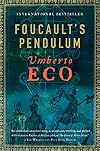
I read Foucault's Pendulum because it seems with every day that conspiracy theories enter our lives ever more. I thought that well, a book by that big famous author might give me some insights and be an interesting read.
The story is a little bit of this and a little bit of that. My biggest complaint is probably the beginning, where the narration begins inside the mind of a seemingly crazy man who goes inside a museum of science in Paris. Then the story backtracks and explains how it got to that point. It's my least favorite part because when it gets explained later, the narrator isn't nearly as combative or singleminded as he seemed then. It matches several later portions that are in a 'frenzy', so I would presume it was written later or after the actual beginning of the story. It's a trope (at least these days) and one that I'm not a big fan of.
The story contains a simple narrative that wouldn't seem to use up the length of the book, but Eco goes into fantastic detail about things that are related to conspiracy theories. Near the chronological beginning of the story, the protagonist, Casaubon, meets one of the other two fellow editors, Belpo (the other being Diotallevi, a nod towards the theology in the Italian phrase, Dio ti allevi, may God lift you up), the three of whom will be the good guys. Well, kinda. They're decidedly not on the side of the crazies... kinda (again). Casaubon is studying the Templars, and Belpo talks about how there are idiots, narcissists and the show more unhinged, and the last of them are the only ones who talk about the Templars. That serves as the background as Casaubon meet a mysterious lieutenant who gives them a hint about what the Templar have really been up to before disappearing until near the end of the book.
Eventually, the three editors make up the Plan, a synthesis of all the conspiracy theories they've heard and the lieutenant's ideas. It ends up badly, with all three of them ending up betrayed and dead (or presumably, since the book ends before Casaubon dies).
I'm greatly simplifying the story, but the events of the story are very short (about 1/4 or less of the book), and the rest is hypothesizing and information, more like the research you'd turn up if you decided to figure out all the occult/wackiness of theories about who really is behind 9/11 or the JFK assassination and concluded that it was actually a conspiracy between different hierarchies of aliens in a galactic bureaucracy.
For that reason, most of the book shouldn't be judged along the criteria of narrative, character or otherwise. If you went in expecting such, then you've found the wrong book. It should be judged on the qualities of metaphysics and more importantly theology. It acts on two levels. One is the ravings of the Diabolicals, the name the protagonist and his friends give the people obsessed with the occult so much so that they will do anything to learn more, but at the same moment it examines a more gnostic or talmudic appreciation of the truth as an entity separate of individual facts. It ends up pretty interesting and with a simple and clear conclusion: the Diabolicals (whether they want to know when the Templars will achieve world domination or what's the truth behind Cosmo Pizza) seek the unknown, not knowledge, and the second they learn something it no longer is valuable to them.
Another interesting comment is that a lot of them are based in or associated with antisemitic ideas. They rely on simplistic truths, ignoring words and bending their meaning in order to, as Belbo writes in a private document on his computer, absolve them of their inabilities. If the conspiracy theories are true, if the Plan is true, then they can't be at fault for any of their failings. It is because of someone conspiring against them, not because of factors beyond their control.
When we do get to the more traditional narrational aspects of the book, the story isn't too developed or long, so for that part, it's probably not too great. The characters, however, are all very interesting and dynamic. Even if that's all I read the book for, I would've been happy about it. However, caveat emptor, it's what I call a European narrative. It has a little missing off the beginning and end of the story, so if you want those, then you might be disappointed. I wasn't.
I enjoyed the book and hope you do too. show less
The story is a little bit of this and a little bit of that. My biggest complaint is probably the beginning, where the narration begins inside the mind of a seemingly crazy man who goes inside a museum of science in Paris. Then the story backtracks and explains how it got to that point. It's my least favorite part because when it gets explained later, the narrator isn't nearly as combative or singleminded as he seemed then. It matches several later portions that are in a 'frenzy', so I would presume it was written later or after the actual beginning of the story. It's a trope (at least these days) and one that I'm not a big fan of.
The story contains a simple narrative that wouldn't seem to use up the length of the book, but Eco goes into fantastic detail about things that are related to conspiracy theories. Near the chronological beginning of the story, the protagonist, Casaubon, meets one of the other two fellow editors, Belpo (the other being Diotallevi, a nod towards the theology in the Italian phrase, Dio ti allevi, may God lift you up), the three of whom will be the good guys. Well, kinda. They're decidedly not on the side of the crazies... kinda (again). Casaubon is studying the Templars, and Belpo talks about how there are idiots, narcissists and the show more unhinged, and the last of them are the only ones who talk about the Templars. That serves as the background as Casaubon meet a mysterious lieutenant who gives them a hint about what the Templar have really been up to before disappearing until near the end of the book.
Eventually, the three editors make up the Plan, a synthesis of all the conspiracy theories they've heard and the lieutenant's ideas. It ends up badly, with all three of them ending up betrayed and dead (or presumably, since the book ends before Casaubon dies).
I'm greatly simplifying the story, but the events of the story are very short (about 1/4 or less of the book), and the rest is hypothesizing and information, more like the research you'd turn up if you decided to figure out all the occult/wackiness of theories about who really is behind 9/11 or the JFK assassination and concluded that it was actually a conspiracy between different hierarchies of aliens in a galactic bureaucracy.
For that reason, most of the book shouldn't be judged along the criteria of narrative, character or otherwise. If you went in expecting such, then you've found the wrong book. It should be judged on the qualities of metaphysics and more importantly theology. It acts on two levels. One is the ravings of the Diabolicals, the name the protagonist and his friends give the people obsessed with the occult so much so that they will do anything to learn more, but at the same moment it examines a more gnostic or talmudic appreciation of the truth as an entity separate of individual facts. It ends up pretty interesting and with a simple and clear conclusion: the Diabolicals (whether they want to know when the Templars will achieve world domination or what's the truth behind Cosmo Pizza) seek the unknown, not knowledge, and the second they learn something it no longer is valuable to them.
Another interesting comment is that a lot of them are based in or associated with antisemitic ideas. They rely on simplistic truths, ignoring words and bending their meaning in order to, as Belbo writes in a private document on his computer, absolve them of their inabilities. If the conspiracy theories are true, if the Plan is true, then they can't be at fault for any of their failings. It is because of someone conspiring against them, not because of factors beyond their control.
When we do get to the more traditional narrational aspects of the book, the story isn't too developed or long, so for that part, it's probably not too great. The characters, however, are all very interesting and dynamic. Even if that's all I read the book for, I would've been happy about it. However, caveat emptor, it's what I call a European narrative. It has a little missing off the beginning and end of the story, so if you want those, then you might be disappointed. I wasn't.
I enjoyed the book and hope you do too. show less
How to Crush Social Media in Only 2 Minutes a Day: Twitter, Facebook, Instagram, Kred, Goodreads, LinkedIn by Ndeye Labadens
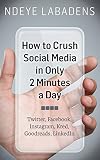
I am a indie author who really has started publishing books, and I thought I had a good idea of what to do and handle social media. However, after reading How to Crush Social Media in Only 2 Minutes a Day, I realized that there was a lot more to do to get a handle on the situation and begin to gather an audience going forward. It was a very worthwhile use of my time.