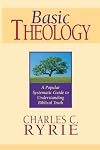
Charles Ryrie's book Basic Theology: A Popular Systematic Guide to Understanding Biblical Truth is well written and easy to understand. Although the book is over 600 pages, there are 94 chapters, with each chapter being short and fairly easy to understand. I agree with most of his theology, which is from the perspective of an Evangelical Protestant. One of my measures of how good I consider a book is how many highlights I made (as counted by Logos Bible software). In this case, 196 (although a few were areas I disagree with).
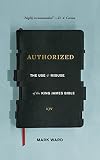
Mark Ward's book Authorized: The Use and Misuse of the King James Bible is about the usefulness—no, need—for Christians to have multiple translations of the Bible. No translation of the Bible can perfectly communicate what the authors intended, but using different translations can bring us closer to the message.
Ward starts the book by explaining how valuable the King James Version has been to the development of the English language. He mentions how the KJV is deeply rooted in our culture, sometimes in ways we don't even realize (and some things we think are from the Bible but aren't). Throughout the book he keeps coming back to the theme of how much we would lose if everyone stopped using the KJV.
However, the Authorized shows that languages change, and the English that was used 400 years ago no longer clearly communicates the Bible to modern English readers. For example, some words are no longer used in normal conversation, so people reading them would know they have to look them up (if they care to know what they're reading). More concerning are words for which the meanings have changed. Sometimes the modern meaning sort of makes sense in the context, so we don't even realize there may be a different meaning. If we misunderstand the words, we misunderstand the message.
The thesis of the book is that using multiple translations of the Bible help us understand it. Different translations have their strengths and weaknesses because there are legitimate differences of show more opinion on how some passages should be understood and translated. The choices the King James Version translators made in the early 1600's may have been excellent choices for the citizens of England at that time, but some of them are confusing for modern English readers. We need to use versions of the Bible that speak to us. show less
Ward starts the book by explaining how valuable the King James Version has been to the development of the English language. He mentions how the KJV is deeply rooted in our culture, sometimes in ways we don't even realize (and some things we think are from the Bible but aren't). Throughout the book he keeps coming back to the theme of how much we would lose if everyone stopped using the KJV.
However, the Authorized shows that languages change, and the English that was used 400 years ago no longer clearly communicates the Bible to modern English readers. For example, some words are no longer used in normal conversation, so people reading them would know they have to look them up (if they care to know what they're reading). More concerning are words for which the meanings have changed. Sometimes the modern meaning sort of makes sense in the context, so we don't even realize there may be a different meaning. If we misunderstand the words, we misunderstand the message.
The thesis of the book is that using multiple translations of the Bible help us understand it. Different translations have their strengths and weaknesses because there are legitimate differences of show more opinion on how some passages should be understood and translated. The choices the King James Version translators made in the early 1600's may have been excellent choices for the citizens of England at that time, but some of them are confusing for modern English readers. We need to use versions of the Bible that speak to us. show less
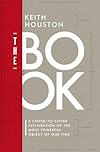
The Book: A Cover-to-Cover Exploration of the Most Powerful Object of Our Time was well written and enjoyable. It focused on how cultures started writing and the tools and materials used to write.
I was a bit disappointed in it. Based on the cover, I had expected it would discuss the technical aspects of books and how they are used. For example, when did books start using titles, page numbers, footnotes, tables of contents, etc.? I also wanted a glossary describing the parts of a book (cover, binding, hinge, fore-edge, endpapers half title, etc.). My expectation was this would be a reference book, not just prose.
I was a bit disappointed in it. Based on the cover, I had expected it would discuss the technical aspects of books and how they are used. For example, when did books start using titles, page numbers, footnotes, tables of contents, etc.? I also wanted a glossary describing the parts of a book (cover, binding, hinge, fore-edge, endpapers half title, etc.). My expectation was this would be a reference book, not just prose.
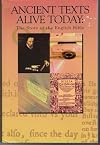
I was pleasantly surprised by the book Ancient Texts Alive Today: The Story of the English Bible by John Stevens Kerr. I've read other books on the history of English Bible translations, but this one went into some details I wasn't aware of. One of my criteria for rating a book is based on how many notes I took. Much of the information that I felt was noteworthy I'd already seen in other books, so this was more double-checking my existing notes, but it was all worth reading. I felt the book was informative and accurate.
Ancient Texts Alive Today would be a good choice for someone who has a casual interest in learning about the history of English Bible translations. The author does a good job of selecting information that's relevant and interesting, without getting bogged down in minutia. The book presents enough of the political and religious attitudes of the time period to put the Bible translations in context.
Oddly, the author's name isn't on the cover, but it is on the title page. It's published by American Bible Society, and two other books I have published by ABS don't that the author's name on the cover.
Ancient Texts Alive Today would be a good choice for someone who has a casual interest in learning about the history of English Bible translations. The author does a good job of selecting information that's relevant and interesting, without getting bogged down in minutia. The book presents enough of the political and religious attitudes of the time period to put the Bible translations in context.
Oddly, the author's name isn't on the cover, but it is on the title page. It's published by American Bible Society, and two other books I have published by ABS don't that the author's name on the cover.
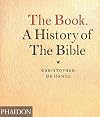
The Book: A History of the Bible, by Christopher de Hamel, was well written, informative and worthy of a 5-star review. I've read about a dozen books on the history of the Bible (my focus is on early English Bibles), and this book filled in details I hadn't read elsewhere. The Book contains many photographs of manuscripts, and the writing style was easy to follow and engaging. I tend to judge books based on how many notes I take, and I took enough that it was worth my time.
I had expected much of the information to overlap with other books I've read, so I was pleasantly surprised to find there was a lot of information that was new to me. I particularly enjoyed reading about different manuscripts and seeing pictures of these amazing works of art. I was reminded of the book "The Bible Illuminated: How Art Brought the Bible to an Illiterate World" by Karen York, but this book goes into more detail about the history of Bible transmission and translations, not just focusing on Illuminated manuscripts.
I felt the writing style was easier for me to follow than David Daniell's "The Bible in English: It's History and Influence" (which I can also recommend). The style reminded me of two books by Donald Brake: "A Visual History of the English Bible: The Tumultuous Tale of the World's Best-selling Book" and "A Visual History of the King James Bible: Dramatic Story of the World's Best-Known Translation" (both recommended). The Book is a nice middle ground for someone who wants to go show more more in depth than the two books by Brake, but isn't ready to commit the time to read Daniell's book.
I have just a few quibbles. 1) Because The Book has a large quantity of pictures, the whole book is printed on semi-gloss paper, and light reflecting off the pages caused eyestrain. I was often only able to read 10-15 pages before taking a break. 2) The bibliography is in prose format with comments, rather than a simple list of resources. I often scan through bibliographies looking for other books I might be interested in, but I skipped it this time. 3) The book is a paperback with dust jacket (I believe it's a first edition, but I'm not sure). It's rather hefty at about 350 pages of semi-gloss paper. I was a bit afraid I'd rip the cover while reading it; fortunately I didn't. This book really deserves to be a hardcover. show less
I had expected much of the information to overlap with other books I've read, so I was pleasantly surprised to find there was a lot of information that was new to me. I particularly enjoyed reading about different manuscripts and seeing pictures of these amazing works of art. I was reminded of the book "The Bible Illuminated: How Art Brought the Bible to an Illiterate World" by Karen York, but this book goes into more detail about the history of Bible transmission and translations, not just focusing on Illuminated manuscripts.
I felt the writing style was easier for me to follow than David Daniell's "The Bible in English: It's History and Influence" (which I can also recommend). The style reminded me of two books by Donald Brake: "A Visual History of the English Bible: The Tumultuous Tale of the World's Best-selling Book" and "A Visual History of the King James Bible: Dramatic Story of the World's Best-Known Translation" (both recommended). The Book is a nice middle ground for someone who wants to go show more more in depth than the two books by Brake, but isn't ready to commit the time to read Daniell's book.
I have just a few quibbles. 1) Because The Book has a large quantity of pictures, the whole book is printed on semi-gloss paper, and light reflecting off the pages caused eyestrain. I was often only able to read 10-15 pages before taking a break. 2) The bibliography is in prose format with comments, rather than a simple list of resources. I often scan through bibliographies looking for other books I might be interested in, but I skipped it this time. 3) The book is a paperback with dust jacket (I believe it's a first edition, but I'm not sure). It's rather hefty at about 350 pages of semi-gloss paper. I was a bit afraid I'd rip the cover while reading it; fortunately I didn't. This book really deserves to be a hardcover. show less

"The Forbidden Book: The History of the English Bible" by Dr. Craig Lampe is actually a companion to a documentary available on DVD. There wasn't anything special about the information in the book or the writing style. There were a few times I read something that I believe contradicts information I'd read elsewhere, but I didn't take the time to confirm there's an actual contradiction. There were also times he drew conclusions that aren't warranted by the facts. He had some harsh comments about the Roman Catholic Church. There are much better books on this topic available (Donald Brake: "A Visual History of the English Bible: The Tumultuous Tale of the World's Best-selling Book" and "A Visual History of the King James Bible: Dramatic Story of the World's Best-Known Translation")
The book (when purchased new) comes with three old Bibles leaves. From the page https://greatsite.com/featured-items-and-events/forbidden-book.html#book "The real treasure of this package is the set of three ancient Bible Leaves. You get a page from an original King James Bible printed before 1650, a page from a Geneva Bible printed before 1644, and a page from the Collins Bible – The Bible of Colonial America – printed in 1791… all with certificates of authenticity." If you want these leaves, it's worth purchasing the book (be aware that buying a used copy might not include the leaves).
The book (when purchased new) comes with three old Bibles leaves. From the page https://greatsite.com/featured-items-and-events/forbidden-book.html#book "The real treasure of this package is the set of three ancient Bible Leaves. You get a page from an original King James Bible printed before 1650, a page from a Geneva Bible printed before 1644, and a page from the Collins Bible – The Bible of Colonial America – printed in 1791… all with certificates of authenticity." If you want these leaves, it's worth purchasing the book (be aware that buying a used copy might not include the leaves).
In the Beginning: The Story of the King James Bible and How it Changed a Nation, a Language, and a Culture by Alister McGrath
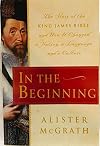
I just finished reading Alister McGrath's book "In the Beginning: The Story of the King James Bible and How it Changed a Nation, a Language, and a Culture". Even though I've read over a dozen books on the topic of English Bible translations, I was suitably impressed with the information in the book. I'd expected the book to be a review of information I was already aware of, but McGrath added pieces to the puzzle I was unaware of. McGrath went into some political and religious areas to explain what happened to the KJV after pupublicationand part of the book was the influence the King James Version had on the American colonies.
I was a bit disappointed the book didn't discuss into the successors of the KJV, such as the RV, ASV, RSV, NKJV, etc.
All-in-all, this is a 5-star book. This would be a good choice for a layperson who wants to learn about the history of English Bible translations.
I was a bit disappointed the book didn't discuss into the successors of the KJV, such as the RV, ASV, RSV, NKJV, etc.
All-in-all, this is a 5-star book. This would be a good choice for a layperson who wants to learn about the history of English Bible translations.

This is an unfair review of the book "The English Bible and the 17th-century Revolution" by Christopher Hill. I only read about 10% of the book, containing the first chapter and part of the second chapter. I'm presuming the rest of the book will be the same.
The writing was pretty dry and I struggled to keep my attention focused on the book. Some days I couldn't even read a page before putting it down. More important, though, was the author's assumption the reader is well-educated in 17th-century British history. There were names of many people I'd never heard of, so I didn't know their religious or political views and how they're interrelated. I quickly got lost and confused trying to read the book.
This book is clearly intended for people who have extensive knowledge of 17th-century Britain and its religious and political views. For that select group of people (perhaps graduate students in history and professional historians), I could see this books contains a treasure trove of information, and it would probably be rated 4-5 stars. For a person without that historical knowledge, this book will be confusing and tedious.
The writing was pretty dry and I struggled to keep my attention focused on the book. Some days I couldn't even read a page before putting it down. More important, though, was the author's assumption the reader is well-educated in 17th-century British history. There were names of many people I'd never heard of, so I didn't know their religious or political views and how they're interrelated. I quickly got lost and confused trying to read the book.
This book is clearly intended for people who have extensive knowledge of 17th-century Britain and its religious and political views. For that select group of people (perhaps graduate students in history and professional historians), I could see this books contains a treasure trove of information, and it would probably be rated 4-5 stars. For a person without that historical knowledge, this book will be confusing and tedious.
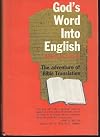
God's Word Into English: The Adventure of Bible Translation, by Dewey Beegle, was more than I had expected. I've been researching early English Bible translations and had assumed this book would be about the history of the versions and translators. God's Word Into English focuses on the philosophies of Bible translations rather than the history. Some chapter titles are: Language Changes; Artistic Style and the Truth; New Meanings for Biblical Words; One Word Corresponds to Many. There are many examples showing how difficult passages are translated in different versions.
The book was published in 1960, so it doesn't have the versions I typically use. The basic information is still relevant, although the examples are dated (based on archaic and New manuscript discoveries).
The book was published in 1960, so it doesn't have the versions I typically use. The basic information is still relevant, although the examples are dated (based on archaic and New manuscript discoveries).
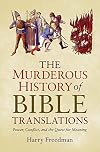
I was disappointed with the book "The Murderous History of Bible Translations: Power, Conflict, and the Quest for Meaning" by Harry Freedman. From the title, I had expected the book to be about Bible translators who were martyred for their efforts. William Tyndale was mentioned, but little was mentioned about other martyrs. I feel the book breezed over some major events, and went off on side tangents for some inconsequential items.
The best I can say about it is that the book was factually true, but I don't know who the target audience should be. For novices, I'd recommend two books by Donald Brake: "A Visual History of the English Bible: The Tumultuous Tale of the World's Best-selling Book" and "A Visual History of the King James Bible: Dramatic Story of the World's Best-Known Translation". For someone who is knowledgeable about the history of English Bible translations, there's little new, useful material in this book. Reading it wasn't a waste of my time, but I wouldn't recommended it.
The best I can say about it is that the book was factually true, but I don't know who the target audience should be. For novices, I'd recommend two books by Donald Brake: "A Visual History of the English Bible: The Tumultuous Tale of the World's Best-selling Book" and "A Visual History of the King James Bible: Dramatic Story of the World's Best-Known Translation". For someone who is knowledgeable about the history of English Bible translations, there's little new, useful material in this book. Reading it wasn't a waste of my time, but I wouldn't recommended it.
The King James Only Controversy: Can You Trust Modern Translations?, by James R. White, is well written and easy to follow. White clearly disagrees with the traditional KJV-Only position, but he is also quick to emphasize that those who believe the position are still his brothers and sisters in Christ. White tries to minimize his bias, and does a reasonably good job of it. He gives credit where credit is due, and points out inconsistencies, regardless of which side of the debate the argument is promoting.
The first part of the book (the largest part) doesn't need much technical knowledge to understand. The second part of the Book uses some Hebrew and Greek words while discussing Textual Criticism. Have some knowledge in one or more of these areas would be beneficial.
The first part of the book (the largest part) doesn't need much technical knowledge to understand. The second part of the Book uses some Hebrew and Greek words while discussing Textual Criticism. Have some knowledge in one or more of these areas would be beneficial.
The Text of the New Testament: An Introduction to the Critical Editions and to the Theory and Practice of Modern Textual Criticism by Kurt Aland

I'm not a scholar, but a blogger researching textual criticism. This book is written for people who are either experienced in TC, or are willing to dedicate a significant amount of time to learn about it. This book would not be a good choice for someone who just wants an introduction to TC. Knowing Greek would help in a number of places, but I was able to get quite a bit out of the book without knowing Greek.
FROM SPOKEN WORDS TO SACRED TEXTS: Introduction-Intermediate New Testament Textual Studies by Edward D. Andrews
When I became aware of "From Spoken Words to Sacred Texts: Introduction-Intermediate to New Testament Textual Studies" by Edward D. Andrews, I thought the book would be appropriate for my beginner level of knowledge of New Testament Textual Criticism (NTTC). This review is based of the Amazon Kindle edition.
NTTC uses a lot of cryptic (to the uninitiated) symbols and abbreviations, and I was pleased to find the book has a list of abbreviations at the front of the book. I bookmarked the section for quick access. There's also a good glossary at the end of the book.
The early chapters are about the materials required to write a manuscript, and the methods used to write them. The next few chapters discuss literacy levels, and whether the early Christians would have been able to read a Bible. Andrews shows how the writings by the New Testament authors were considered scripture, equal with the Old Testament scriptures.
The majority of the book is about New Testament Textual Criticism, and it does a good job of describing the purpose and importance of NTTC in a way that is reasonably easy for a lay person to understand. NTTC is a technical field, so technical terms are used, but not in a way that was overwhelming to me.
I found the last chapter interesting, as it discusses over 20 English versions of the Bible. The descriptions contain a brief history and purpose of the translation, the primary sources used for the translation and the translation type equivalence.
This isn't the show more first book on New Testament Textual Criticism that I've read, but it was definitely worth my while. This was the second book I've read by Edward D. Andrews, but I suspect it won't be the last one, as I find his writing style easy for a novice to understand.
Disclaimer: The author, Edward D. Andrews, offered me a review copy of the e-book, but for technical reasons I was unable to get it on my tablet. I decided to purchase the book directly from Amazon. show less
NTTC uses a lot of cryptic (to the uninitiated) symbols and abbreviations, and I was pleased to find the book has a list of abbreviations at the front of the book. I bookmarked the section for quick access. There's also a good glossary at the end of the book.
The early chapters are about the materials required to write a manuscript, and the methods used to write them. The next few chapters discuss literacy levels, and whether the early Christians would have been able to read a Bible. Andrews shows how the writings by the New Testament authors were considered scripture, equal with the Old Testament scriptures.
The majority of the book is about New Testament Textual Criticism, and it does a good job of describing the purpose and importance of NTTC in a way that is reasonably easy for a lay person to understand. NTTC is a technical field, so technical terms are used, but not in a way that was overwhelming to me.
I found the last chapter interesting, as it discusses over 20 English versions of the Bible. The descriptions contain a brief history and purpose of the translation, the primary sources used for the translation and the translation type equivalence.
This isn't the show more first book on New Testament Textual Criticism that I've read, but it was definitely worth my while. This was the second book I've read by Edward D. Andrews, but I suspect it won't be the last one, as I find his writing style easy for a novice to understand.
Disclaimer: The author, Edward D. Andrews, offered me a review copy of the e-book, but for technical reasons I was unable to get it on my tablet. I decided to purchase the book directly from Amazon. show less
I wasn't too impressed with the book. I was looking for some details on different English versions of the Bible, but there wasn't as much as I'd hoped. The book was published in 1991, so I knew there wouldn't be up-to-date information, but even information before publication was light.
Chapter 8: A Comparative Study of Modern Translations was the most interesting, as it compares John 1:1-18 in several English versions, and describes the strengths and weaknesses the translators chose.
The book FROM SPOKEN WORDS TO SACRED TEXTS: Introduction-Intermediate New Testament Textual Studies by Edward D. Andrews had more useful information.
Chapter 8: A Comparative Study of Modern Translations was the most interesting, as it compares John 1:1-18 in several English versions, and describes the strengths and weaknesses the translators chose.
The book FROM SPOKEN WORDS TO SACRED TEXTS: Introduction-Intermediate New Testament Textual Studies by Edward D. Andrews had more useful information.

I am not a King James Version Only (KJVO) advocate, but I do want to learn about the subject so I can understand and respond to the arguments better. I started reading the book with a couple of expectations: 1) The book would not likely change my opinion; 2) I would learn the arguments for the KJVO position. Unfortunately, even after finishing the book, I feel I didn't learn good arguments for the KJVO position. McElroy presented several straw-man arguments that are easy to demolish; both KJVO and non-KJV sides could agree on some of them.
The premise of the book is that Jesus would only use one version of the Bible, but I believe the premise is wrong. In Luke 4:17, Jesus is in a synagogue reading from the book of Isaiah, to Jews, probably reading in Hebrew. In other parts of the New Testament, Jesus speaks to non-Jews, most likely in Greek, probably using the Septuagint (a translation of the Hebrew scriptures done about 250 B.C.). Scholars believe most of the Old Testament quotes in the New Testament are from the Septuagint. On page 22, McElroy shows the Hebrew and Greek texts are different in Ecclesiastes 8:10, clearly implying one of them is wrong (and presumably shouldn't be used). I think Jesus's use of two Bibles (albeit in different languages), disproves the thesis of the book.
The first chapter points out eight verses that contain contradictions between different English Versions of the Bible, but nowhere in the book does McElroy present the KJV wording, nor does he show more defend the KJV translations for these verses.
There were a number of times when McElroy criticized scholars who argue against the KJVO position. He asks who has given them the authority to reject the KJV, but a similar question could be asked of McElroy: who gave McElroy the authority to reject other versions?
Most of the book gave criticisms against the use of other versions, but there was little discussion about why those same arguments don't apply to the KJV. McElroy spent very little time defending the use of the KJV, and his main argument is that it's been in use for 400 years, therefore it must be accurate.
I felt the most informative chapter in the book is chapter 15: Inspiration of Scripture--What it is and what it isn't.
On a minor note, the formatting of the book seemed amateurish. Almost every page had points in bold, centered text. It did emphasize the point, but it seemed unprofessional, and I think actually detracted from the arguments that were being presented. I greatly appreciated the book using footnotes instead of endnotes.
I really dislike giving bad reviews, and normally I'd prefer to not give any review than a bad one, but I just saw to many problems with this book to let it pass. show less
The premise of the book is that Jesus would only use one version of the Bible, but I believe the premise is wrong. In Luke 4:17, Jesus is in a synagogue reading from the book of Isaiah, to Jews, probably reading in Hebrew. In other parts of the New Testament, Jesus speaks to non-Jews, most likely in Greek, probably using the Septuagint (a translation of the Hebrew scriptures done about 250 B.C.). Scholars believe most of the Old Testament quotes in the New Testament are from the Septuagint. On page 22, McElroy shows the Hebrew and Greek texts are different in Ecclesiastes 8:10, clearly implying one of them is wrong (and presumably shouldn't be used). I think Jesus's use of two Bibles (albeit in different languages), disproves the thesis of the book.
The first chapter points out eight verses that contain contradictions between different English Versions of the Bible, but nowhere in the book does McElroy present the KJV wording, nor does he show more defend the KJV translations for these verses.
There were a number of times when McElroy criticized scholars who argue against the KJVO position. He asks who has given them the authority to reject the KJV, but a similar question could be asked of McElroy: who gave McElroy the authority to reject other versions?
Most of the book gave criticisms against the use of other versions, but there was little discussion about why those same arguments don't apply to the KJV. McElroy spent very little time defending the use of the KJV, and his main argument is that it's been in use for 400 years, therefore it must be accurate.
I felt the most informative chapter in the book is chapter 15: Inspiration of Scripture--What it is and what it isn't.
On a minor note, the formatting of the book seemed amateurish. Almost every page had points in bold, centered text. It did emphasize the point, but it seemed unprofessional, and I think actually detracted from the arguments that were being presented. I greatly appreciated the book using footnotes instead of endnotes.
I really dislike giving bad reviews, and normally I'd prefer to not give any review than a bad one, but I just saw to many problems with this book to let it pass. show less
God's Secretaries by Adam Nicholson is focused on the translators of the King James Bible, and the political climate they worked in, rather than on the translation itself. The presents a behind-the-scenes view of Jacobean England and the events that led to King James's approval of a new version of the English Bible.
I've read a few books on the early English versions of the Bible, but the perspective presented in God's Secretaries is one I hadn't read before. The book was quite informative, although at times it got tedious. For someone who already knows a bit about the history of English Bible translations, this could be a good book to fill in some of the gaps. I would not recommend this book to someone who is looking for a general overview of English Bible Translations.
I've read a few books on the early English versions of the Bible, but the perspective presented in God's Secretaries is one I hadn't read before. The book was quite informative, although at times it got tedious. For someone who already knows a bit about the history of English Bible translations, this could be a good book to fill in some of the gaps. I would not recommend this book to someone who is looking for a general overview of English Bible Translations.
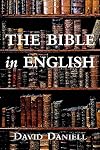
The Bible in English: It's History and Influence by David Daniell is a massive, and comprehensive, book on the history of English Bible translations. At 900 pages, it needs a serious commitment of time to read it from cover-to-cover. The chapters are arranged chronologically, and it has a good index, so it is fairly easy to find specific topics for research.
There were some sections of the book I felt were unnecessary tangents, but most of those tangents were interesting. There were also a number of places that had akward grammar and I had to read them a few times to understand what was being communicated. My biggest complaint about the book was the inclusion of endnotes in the book, rather than footnotes at the bottom of each page. If the author has any intent of the reader actually reading the notes, the reader should not have to flip to the end of the book to read them. These are minor complaints for a book that has a wealth of information.
I've read several books on the history of English Bible translations, but this one went into quite a bit of detail I wasn't aware of, which is what I expected from the size. The book is well written and clearly an enormous amount of research went into it. I'd like to give the book 5 stars for the information it contains, but I often felt exhausted after reading it for a while, so I'm giving it 4 stars.
The Bible in English is an academic book meant for serous researchers. People who are casually interested in the history of English show more Bible translations would be better served by books like A Visual History of the English Bible: The Tumultuous Tale of the World's Best-selling Book by Donald Brake and A Visual History of the King James Bible: Dramatic Story of the World's Best-Known Translation by Donald Brake and Shelly Beach. show less
There were some sections of the book I felt were unnecessary tangents, but most of those tangents were interesting. There were also a number of places that had akward grammar and I had to read them a few times to understand what was being communicated. My biggest complaint about the book was the inclusion of endnotes in the book, rather than footnotes at the bottom of each page. If the author has any intent of the reader actually reading the notes, the reader should not have to flip to the end of the book to read them. These are minor complaints for a book that has a wealth of information.
I've read several books on the history of English Bible translations, but this one went into quite a bit of detail I wasn't aware of, which is what I expected from the size. The book is well written and clearly an enormous amount of research went into it. I'd like to give the book 5 stars for the information it contains, but I often felt exhausted after reading it for a while, so I'm giving it 4 stars.
The Bible in English is an academic book meant for serous researchers. People who are casually interested in the history of English show more Bible translations would be better served by books like A Visual History of the English Bible: The Tumultuous Tale of the World's Best-selling Book by Donald Brake and A Visual History of the King James Bible: Dramatic Story of the World's Best-Known Translation by Donald Brake and Shelly Beach. show less