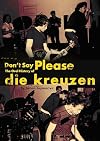
In the interest of transparency, I should note that I picked up this book expecting to like it a lot, and I did. I discovered Die Kreuzen through the review of October File in Spin that the book mentions. I eventually tracked down a copy, if memory serves, at a record store in a town north of me called The Turntable. Putting needle to vinyl did not disappoint, and I acquired the Gone Away EP and Century Days very shortly after their releases. I also have deep family roots in Milwaukee, was born there myself, and finished a BA at Marquette.
Don’t Say Please: The Oral History of Die Kreuzen, tells the story of the band, as recounted by a wide cast of characters who interacted with them during their run, compiled by Milwaukee music journalist Sahan Jayasuriya. It’s called an oral history, but the recollections are mapped along the band’s timeline, as opposed to being a set of single-person perspectives a la Studs Terkel. This includes the band members themselves. I was pleasantly surprised to discover that Die Kreuzen enjoyed a wider fanbase than I would have thought. One of the people interviewed in the book is Marilyn Mee, who dj’ed and was involved in programming at a mainstream rock station at the time, Lazer 103. I don’t recall ever hearing Die Kreuzen on Lazer, but I enjoyed hearing Ms. Mee give them their props. The interviewees make a solid case for putting the band in the company of Big Star and The Velvet Underground in the category of ‘Bands you may show more not be familiar with, but some of your favorite musicians probably are’. The last paragraph of the main body of the book reinforces this. Nathan Larson says; “I’ve carried my copy of October File with me since I bought it in 1987. It’s stayed with me through every single move ...”, which strongly echoes The Replacements’ shout-out to Alex Chilton in the song of the same name; “I never travel far without a little Big Star”. The observation about Dan Kubinski keeping lyrics close to the chest is something I can vouch for firsthand, as I pestered him after several shows about this.
Like many folks in this book, I evangelized Die Kreuzen any time the opportunity to do so presented itself, and figured out great swaths of their catalog by ear on guitar and bass. I met several people in the dorm I lived in my first semester at Marquette because they heard me playing along to songs like ‘Man in the Trees’ on my guitar.
One of the things I didn’t expect from this book was a deepened appreciation of my hometown. I moved back to Milwaukee in the late summer of 1989, after graduating from a junior college, to finish my degree. The Norman building, which is discussed a fair bit in the book, burned down in January of 1991. I had ridden past it often on some of the Wisconsin Avenue buses, but I didn’t know too much about the place. The description in the book of the Norman as Milwaukee’s answer to New York’s Chelsea Hotel piqued my curiosity to a huge degree. One of my favorite authors, James T. Farrell, was a longtime resident of the Chelsea, as were enough other people I admire, like Patti Smith.
On the down side, one of the interviewees borrows the bad habit many Beatles biographers have of slagging on Ringo Starr, in discussing Erik Tunison’s drumming. If you play drums, or dabble at all on a drum set, you probably have a fair amount of respect for both drummers.
I’m too close to the subject matter to be completely objective, and it may ring unfoundedly hagiographic to some readers, but this book resonates strongly with my experience of both Die Kreuzen and Milwaukee.I tip my hat to Sahan on a solid job. show less
Don’t Say Please: The Oral History of Die Kreuzen, tells the story of the band, as recounted by a wide cast of characters who interacted with them during their run, compiled by Milwaukee music journalist Sahan Jayasuriya. It’s called an oral history, but the recollections are mapped along the band’s timeline, as opposed to being a set of single-person perspectives a la Studs Terkel. This includes the band members themselves. I was pleasantly surprised to discover that Die Kreuzen enjoyed a wider fanbase than I would have thought. One of the people interviewed in the book is Marilyn Mee, who dj’ed and was involved in programming at a mainstream rock station at the time, Lazer 103. I don’t recall ever hearing Die Kreuzen on Lazer, but I enjoyed hearing Ms. Mee give them their props. The interviewees make a solid case for putting the band in the company of Big Star and The Velvet Underground in the category of ‘Bands you may show more not be familiar with, but some of your favorite musicians probably are’. The last paragraph of the main body of the book reinforces this. Nathan Larson says; “I’ve carried my copy of October File with me since I bought it in 1987. It’s stayed with me through every single move ...”, which strongly echoes The Replacements’ shout-out to Alex Chilton in the song of the same name; “I never travel far without a little Big Star”. The observation about Dan Kubinski keeping lyrics close to the chest is something I can vouch for firsthand, as I pestered him after several shows about this.
Like many folks in this book, I evangelized Die Kreuzen any time the opportunity to do so presented itself, and figured out great swaths of their catalog by ear on guitar and bass. I met several people in the dorm I lived in my first semester at Marquette because they heard me playing along to songs like ‘Man in the Trees’ on my guitar.
One of the things I didn’t expect from this book was a deepened appreciation of my hometown. I moved back to Milwaukee in the late summer of 1989, after graduating from a junior college, to finish my degree. The Norman building, which is discussed a fair bit in the book, burned down in January of 1991. I had ridden past it often on some of the Wisconsin Avenue buses, but I didn’t know too much about the place. The description in the book of the Norman as Milwaukee’s answer to New York’s Chelsea Hotel piqued my curiosity to a huge degree. One of my favorite authors, James T. Farrell, was a longtime resident of the Chelsea, as were enough other people I admire, like Patti Smith.
On the down side, one of the interviewees borrows the bad habit many Beatles biographers have of slagging on Ringo Starr, in discussing Erik Tunison’s drumming. If you play drums, or dabble at all on a drum set, you probably have a fair amount of respect for both drummers.
I’m too close to the subject matter to be completely objective, and it may ring unfoundedly hagiographic to some readers, but this book resonates strongly with my experience of both Die Kreuzen and Milwaukee.I tip my hat to Sahan on a solid job. show less
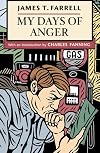
This is the last book in the timeline of Danny O'Neill's story, although The Face of Time was written after it. This novel cycle, along with the companion Studs Lonigan trilogy, made me think about the idea that it's amazing as many of us survive being young as do. If I ever go back and do my masters in English, I may do the thesis on the bildungsroman as survival narrative, using the Washington Park novels, along with John Powers' Mount Greenwood trilogy and Henry Roth's Call it Sleep, as source material.