
Publisher description
Hailed by Bill Bryson and the New York Times Book Review as a
rising star among travel writers, Tayler penetrates one of the most isolated, forbidding regions on earth -- the Sahel. This lower expanse of the Sahara marks the southern limit of Islam"s reach on the continent. It boasts such mythologized places as Mopti and Timbuktu, as well as Africa"s poorest countries, Chad and Niger. In parts of the Sahel, hardline Sharia law rules and slaves are still traded. Racked by lethal harmattan winds, chronic civil wars, and grim Islamic fundamentalism, it is not the ideal place for a traveler with a U.S. passport. Tayler finds genuine danger in many guises, from drunken soldiers to a thieving teenage mob. But he also encounters patience and generosity of the sort only Africans can achieve.
Traveling overland by the same rickety means as the natives themselves -- tottering, overfull buses, bush taxis with holes in their floors, disgruntled camels -- he uses his fluency in French and Arabic (the region"s lingua francas) to illuminate its roiling, enigmatic cultures and connect with its inhabitants as no other Western writer could.
Hailed by Bill Bryson and the New York Times Book Review as a
rising star among travel writers, Tayler penetrates one of the most isolated, forbidding regions on earth -- the Sahel. This lower expanse of the Sahara marks the southern limit of Islam"s reach on the continent. It boasts such mythologized places as Mopti and Timbuktu, as well as Africa"s poorest countries, Chad and Niger. In parts of the Sahel, hardline Sharia law rules and slaves are still traded. Racked by lethal harmattan winds, chronic civil wars, and grim Islamic fundamentalism, it is not the ideal place for a traveler with a U.S. passport. Tayler finds genuine danger in many guises, from drunken soldiers to a thieving teenage mob. But he also encounters patience and generosity of the sort only Africans can achieve.
Traveling overland by the same rickety means as the natives themselves -- tottering, overfull buses, bush taxis with holes in their floors, disgruntled camels -- he uses his fluency in French and Arabic (the region"s lingua francas) to illuminate its roiling, enigmatic cultures and connect with its inhabitants as no other Western writer could.
Publisher description
One spirit, Ten cocktails, and Four Centuries of American History
And a Bottle of Rum tells the raucously entertaining story of America as seen through the bottom of a drinking glass. With a chapter for each of ten cocktails—from the grog sailors drank on the high seas in the 1700s to the mojitos of modern club hoppers—Wayne Curtis reveals that the homely spirit once distilled from the industrial waste of the exploding sugar trade has managed to infiltrate every stratum of New World society.
Curtis takes us from the taverns of the American colonies, where rum delivered both a cheap wallop and cash for the Revolution, to the plundering pirate ships off the coast of Central America, to the watering holes of pre-Castro Cuba, and to the kitsch-laden tiki bars of 1950s America. Here are sugar barons and their armies conquering the Caribbean, Paul Revere stopping for a nip during his famous ride, Prohibitionists marching against “demon rum,” Hemingway fattening his liver with Havana daiquiris, and today’s bartenders reviving old favorites like Planter’s Punch. In an age of microbrewed beer and single-malt whiskeys, rum—once the swill of the common man—has found its way into the tasting rooms of the most discriminating drinkers.
Awash with local color and wry humor, And a Bottle of Rum is an affectionate toast to this most American of liquors, a chameleon spirit that has been constantly reinvented over the centuries by tavern keepers, show more bootleggers, lounge lizards, and marketing gurus. Complete with cocktail recipes for would-be epicurean time-travelers, this is history at its most intoxicating. show less
One spirit, Ten cocktails, and Four Centuries of American History
And a Bottle of Rum tells the raucously entertaining story of America as seen through the bottom of a drinking glass. With a chapter for each of ten cocktails—from the grog sailors drank on the high seas in the 1700s to the mojitos of modern club hoppers—Wayne Curtis reveals that the homely spirit once distilled from the industrial waste of the exploding sugar trade has managed to infiltrate every stratum of New World society.
Curtis takes us from the taverns of the American colonies, where rum delivered both a cheap wallop and cash for the Revolution, to the plundering pirate ships off the coast of Central America, to the watering holes of pre-Castro Cuba, and to the kitsch-laden tiki bars of 1950s America. Here are sugar barons and their armies conquering the Caribbean, Paul Revere stopping for a nip during his famous ride, Prohibitionists marching against “demon rum,” Hemingway fattening his liver with Havana daiquiris, and today’s bartenders reviving old favorites like Planter’s Punch. In an age of microbrewed beer and single-malt whiskeys, rum—once the swill of the common man—has found its way into the tasting rooms of the most discriminating drinkers.
Awash with local color and wry humor, And a Bottle of Rum is an affectionate toast to this most American of liquors, a chameleon spirit that has been constantly reinvented over the centuries by tavern keepers, show more bootleggers, lounge lizards, and marketing gurus. Complete with cocktail recipes for would-be epicurean time-travelers, this is history at its most intoxicating. show less
Publisher description
This gripping portrait of the rapidly evolving socioeconomic life of Ladakh - the Western Himalayan land known as "Little Tibet" - offers crucial lessons in sustainable development as its people attempt to balance growth and technology with cultural values. This account moves from the author's first visit in idyllic, nonindustrial Ladakh in 1974 to the present, showing the profound changes as the region was opened to foreign tourists, Western artifacts and technologies, and pressures for economic growth. These changes brought generational conflict, unemployment, inflation, environmental damage, and threats to the traditional way of life.
Appalled at the negative changes, the author helped establish the Ladakh Project (later renamed the International Society for Ecology and Culture) to seek sustainable solutions to preserve cultural values and environmental health, while facilitating the Ladakhis' hunger for modernization. This model undertaking effectively combines educational programs for all social levels with the design, demonstration, and promotion of appropriate technologies such as solar heating and small-scale hydro power.
This examination of how modernization changes the way people live and think challenges us to redefine our concepts of "development" and "progress." More than anything else, Ancient Futures: Learning from Ladakh stresses the need for the global community to find ways to carry traditional wisdom into the future.
This gripping portrait of the rapidly evolving socioeconomic life of Ladakh - the Western Himalayan land known as "Little Tibet" - offers crucial lessons in sustainable development as its people attempt to balance growth and technology with cultural values. This account moves from the author's first visit in idyllic, nonindustrial Ladakh in 1974 to the present, showing the profound changes as the region was opened to foreign tourists, Western artifacts and technologies, and pressures for economic growth. These changes brought generational conflict, unemployment, inflation, environmental damage, and threats to the traditional way of life.
Appalled at the negative changes, the author helped establish the Ladakh Project (later renamed the International Society for Ecology and Culture) to seek sustainable solutions to preserve cultural values and environmental health, while facilitating the Ladakhis' hunger for modernization. This model undertaking effectively combines educational programs for all social levels with the design, demonstration, and promotion of appropriate technologies such as solar heating and small-scale hydro power.
This examination of how modernization changes the way people live and think challenges us to redefine our concepts of "development" and "progress." More than anything else, Ancient Futures: Learning from Ladakh stresses the need for the global community to find ways to carry traditional wisdom into the future.
"Each of Thesiger's mountain journeys has a unique quality, which inspired many of the finest photographs Thesiger had ever taken. These images of startling beauty, combined with Thesiger's vivid prose- based on his original unpublished diaries- documented brilliantly the hardships, dangers and rewards of thirty years of mountain travel."
American Shaolin: Flying Kicks, Buddhist Monks, and the Legend of Iron Crotch: An Odyssey in the New China by Matthew Polly
"The story of the two years Matthew spent in China living, studying and performing with the Shaolin monks."
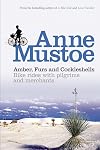
"A myriad of wonderful characters people the pages of Anne Mustoe's latest book, as she pedals along three very diffferent, but equally evocative, roads - the Amber Route from the Baltic to the Adriatic, the Santa Fe Trail from the Missouri River to New Mexico and the Pilgrims' Way of Saint James from Le Puy to Santiago de Compostela."
Amazon Extreme: Three Ordinary Guys, One Rubber Raft and the Most Dangerous River on Earth by Colin Angus

"The hair-raising true story of the first team to raft the entire length of the Amazon."
Publisher description:
A surprising mystery--and love story--set in rural Sicily
Like many memorable works of fiction, The Almond Picker hinges on a question, in this case: who is Maria Rosalia Inzerillo, known as Mennulara, the almond picker? Born into a desperately poor Sicilian farming family, Mennulara went into service when she was only a girl, as a maid for a well-to-do local family by dint of hard work and intelligence, she became the indispensable administrator of the family's affairs and was said to be rich. Still, she was a mere servant, and now (as the story begins) she is dead.
Who was she, really? Simonetta Agnello Hornby's wonderfully entertaining novel about this mysterious woman -- a bestseller in Italy when it was published in 2002 -- has all the suspense of a witty thriller, the emotions of a powerful love story, and the evocative atmosphere of a historical novel. Set in Sicily in the 1960s, a violent, complicated society in the midst of tumultuous change, where young and old, rich and poor, men and women are set against each other, The Almond Picker is the story of a woman who negotiated for her freedom as no one else dared.
Unusual instructions in Mennulara's will perplex the family she worked for and send the children on a kind of treasure hunt, for each of them wants to secure her fabled riches. She is no longer physically present, but her mysterious importance to them and to the village comes into focus in a series of dramatic encounters and spiky show more exchanges among the neighbors. Everyone has a very different idea about Mennulara's amazing life. Was she a humble servant who ruled her master, or perhaps a pawn for the Mafia? Was she a seducer and opportunist, a sly blackmailer waiting for a payoff, or the opposite? During the thirty days following her death, the surprising truth is revealed. show less
A surprising mystery--and love story--set in rural Sicily
Like many memorable works of fiction, The Almond Picker hinges on a question, in this case: who is Maria Rosalia Inzerillo, known as Mennulara, the almond picker? Born into a desperately poor Sicilian farming family, Mennulara went into service when she was only a girl, as a maid for a well-to-do local family by dint of hard work and intelligence, she became the indispensable administrator of the family's affairs and was said to be rich. Still, she was a mere servant, and now (as the story begins) she is dead.
Who was she, really? Simonetta Agnello Hornby's wonderfully entertaining novel about this mysterious woman -- a bestseller in Italy when it was published in 2002 -- has all the suspense of a witty thriller, the emotions of a powerful love story, and the evocative atmosphere of a historical novel. Set in Sicily in the 1960s, a violent, complicated society in the midst of tumultuous change, where young and old, rich and poor, men and women are set against each other, The Almond Picker is the story of a woman who negotiated for her freedom as no one else dared.
Unusual instructions in Mennulara's will perplex the family she worked for and send the children on a kind of treasure hunt, for each of them wants to secure her fabled riches. She is no longer physically present, but her mysterious importance to them and to the village comes into focus in a series of dramatic encounters and spiky show more exchanges among the neighbors. Everyone has a very different idea about Mennulara's amazing life. Was she a humble servant who ruled her master, or perhaps a pawn for the Mafia? Was she a seducer and opportunist, a sly blackmailer waiting for a payoff, or the opposite? During the thirty days following her death, the surprising truth is revealed. show less
All The Good Pilgrims: Tales Of The Camino De Santiago by Robert Ward (Canadian Edition) by Robert Ward
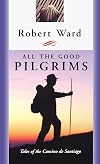
"In All the Good Pilgrims, Ward returns to Spain to walk the Camino for the fifth time. He thinks he knows what he’s getting into but, as his many Camino journeys have taught him, the Camino never runs out of surprises. Each day brings new lessons, friendships, questions, memories, gifts and challenges, reminding Ward that it isn’t the pilgrim who walks the Camino – it’s the Camino that walks the pilgrim."
Publisher description:
In the bestselling tradition of Running with Scissors and Don't Let's Go to the Dogs Tonight - a hilarious, affecting memoir of the author's upbringing in an ashram in India.
In 1980, when she was seven, the author's parents, 60s-holdover hippies, leave California for an ashram in a cobra-ridden, drought stricken spot in India. Rachel is the only foreign child in a hundred-mile radius.
The ashram is devoted to Meher Baba, best known as the guru to Pete Townsend and thus for having inspired some songs by the Who, for having kept a lifelong vow of silence, and for having coined the slogan, "Don't worry, be happy."
Cavorting through these pages are some wonderfully eccentric characters - including a holy madman permanently doubled over from years of stooping to collect invisible objects; a senile librarian who nightly sings scales outside Rachel's window, only with grunts instead of notes; and a middle-aged male virgin who begs Rachel to critique his epic spiritual poems. Somehow, Rachel manages to keep her wits and humor about her when everyone else seems to have lost touch with reality. Astutely observed and laugh-out-loud funny, this astonishing debut memoir marks the arrival of a major new literary talent.
In the bestselling tradition of Running with Scissors and Don't Let's Go to the Dogs Tonight - a hilarious, affecting memoir of the author's upbringing in an ashram in India.
In 1980, when she was seven, the author's parents, 60s-holdover hippies, leave California for an ashram in a cobra-ridden, drought stricken spot in India. Rachel is the only foreign child in a hundred-mile radius.
The ashram is devoted to Meher Baba, best known as the guru to Pete Townsend and thus for having inspired some songs by the Who, for having kept a lifelong vow of silence, and for having coined the slogan, "Don't worry, be happy."
Cavorting through these pages are some wonderfully eccentric characters - including a holy madman permanently doubled over from years of stooping to collect invisible objects; a senile librarian who nightly sings scales outside Rachel's window, only with grunts instead of notes; and a middle-aged male virgin who begs Rachel to critique his epic spiritual poems. Somehow, Rachel manages to keep her wits and humor about her when everyone else seems to have lost touch with reality. Astutely observed and laugh-out-loud funny, this astonishing debut memoir marks the arrival of a major new literary talent.

"William Black travels the length and breadth of Italy to get to the roots of Italian food. His dedication to his task knows alarmingly few bounds and he eats whatever gets in his way: cheese infested with maggots; pasta with donkey sauce; risotto made with seagull broth."
Publisher description:
Ryszard Kapuscinski's last book, The Soccer War -a revelation of the contemporary experience of war -- prompted John le Carre to call the author "the conjurer extraordinary of modern reportage." Now, in Imperium, Kapuscinski gives us a work of equal emotional force and evocative power: a personal, brilliantly detailed exploration of the almost unfathomably complex Soviet empire in our time.
He begins with his own childhood memories of the postwar Soviet occupation of Pinsk, in what was then Poland's eastern frontier ("something dreadful and incomprehensible...in this world that I enter at seven years of age"), and takes us up to 1967, when, as a journalist just starting out, he traveled across a snow-covered and desolate Siberia, and through the Soviet Union's seven southern and Central Asian republics, territories whose individual histories, cultures, and religions he found thriving even within the "stiff, rigorous corset of Soviet power."
Between 1989 and 1991, Kapuscinski made a series of extended journeys through the disintegrating Soviet empire, and his account of these forms the heart of the book. Bypassing official institutions and itineraries, he traversed the Soviet territory alone, from the border of Poland to the site of the most infamous gulags in far-eastern Siberia (where "nature pals it up with the executioner"), from above the Arctic Circle to the edge of Afghanistan, visiting dozens of cities and towns and outposts, traveling more than show more 40,000 miles, venturing into the individual lives of men, women, and children in order to Understand the collapsing but still various larger life of the empire.
Bringing the book to a close is a collection of notes which, Kapuscinski writes, "arose in the margins of my journeys" -- reflections on the state of the ex-USSR and on his experience of having watched its fate unfold "on the screen of a television set...as well as on the screen of the country's ordinary, daily reality, which surrounded me during my travels." It is this "schizophrenic perception in two different dimensions" that enabled Kapuscinski to discover and illuminate the most telling features of a society in dire turmoil.
Imperium is a remarkable work from one of the most original and sharply perceptive interpreters of our world -- galvanizing narrative deeply informed by Kapuscinski's limitless curiosity and his passion for truth, and suffused with his vivid sense of the overwhelming importance of history as it is lived, and of our constantly shifting places within it. show less
Ryszard Kapuscinski's last book, The Soccer War -a revelation of the contemporary experience of war -- prompted John le Carre to call the author "the conjurer extraordinary of modern reportage." Now, in Imperium, Kapuscinski gives us a work of equal emotional force and evocative power: a personal, brilliantly detailed exploration of the almost unfathomably complex Soviet empire in our time.
He begins with his own childhood memories of the postwar Soviet occupation of Pinsk, in what was then Poland's eastern frontier ("something dreadful and incomprehensible...in this world that I enter at seven years of age"), and takes us up to 1967, when, as a journalist just starting out, he traveled across a snow-covered and desolate Siberia, and through the Soviet Union's seven southern and Central Asian republics, territories whose individual histories, cultures, and religions he found thriving even within the "stiff, rigorous corset of Soviet power."
Between 1989 and 1991, Kapuscinski made a series of extended journeys through the disintegrating Soviet empire, and his account of these forms the heart of the book. Bypassing official institutions and itineraries, he traversed the Soviet territory alone, from the border of Poland to the site of the most infamous gulags in far-eastern Siberia (where "nature pals it up with the executioner"), from above the Arctic Circle to the edge of Afghanistan, visiting dozens of cities and towns and outposts, traveling more than show more 40,000 miles, venturing into the individual lives of men, women, and children in order to Understand the collapsing but still various larger life of the empire.
Bringing the book to a close is a collection of notes which, Kapuscinski writes, "arose in the margins of my journeys" -- reflections on the state of the ex-USSR and on his experience of having watched its fate unfold "on the screen of a television set...as well as on the screen of the country's ordinary, daily reality, which surrounded me during my travels." It is this "schizophrenic perception in two different dimensions" that enabled Kapuscinski to discover and illuminate the most telling features of a society in dire turmoil.
Imperium is a remarkable work from one of the most original and sharply perceptive interpreters of our world -- galvanizing narrative deeply informed by Kapuscinski's limitless curiosity and his passion for truth, and suffused with his vivid sense of the overwhelming importance of history as it is lived, and of our constantly shifting places within it. show less
Publisher description:
Another Day of Life is Kapuscinski's dramatic account of the three months he spent in Angola at the beginning of its decades' long civil war. The capital, Luanda, is occupied only by those not fortunate enough to flee. When even the dogs abandoned by the Europeans leave, Kapuscinski decides to go to the front, where the wrong greeting could cost your life and where young soldiers-from Cuba, Russia, South Africa, Portugal-are fighting a war with global repercussions. With harrowing detail, Kapuscinski shows us the peculiar brutality of a country divided by its newfound freedom.
Another Day of Life is Kapuscinski's dramatic account of the three months he spent in Angola at the beginning of its decades' long civil war. The capital, Luanda, is occupied only by those not fortunate enough to flee. When even the dogs abandoned by the Europeans leave, Kapuscinski decides to go to the front, where the wrong greeting could cost your life and where young soldiers-from Cuba, Russia, South Africa, Portugal-are fighting a war with global repercussions. With harrowing detail, Kapuscinski shows us the peculiar brutality of a country divided by its newfound freedom.
"Courageous, compassionate, erudite and beautifully written, laced with a thread of William Dalrymple's characteristic black humour. Essential reading for anyone who wants to come to terms with India."
"Kpomassie was a teenager in Togo when he discovered a book about Greenland - and knew that he must go there. Working his way north over nearly a decade, Kpomassie finally arrived in the country of his dreams. This brilliantly observed and superbly entertaining record of his adventures among the Inuit is a testament both to the wonderful strangeness of the human species and to the surprising sympathies that bind us all."
Publisher description:
In Africa Unchained, George Ayittey takes a controversial look at Africa's future and makes a number of daring suggestions. Looking at how Africa can modernize, build, and improve their indigenous institutions which have been castigated by African leaders as "backward and primitive," Ayittey argues that Africa should build and expand upon these traditions of free markets and free trade. Asking why the poorest Africans haven't been able to prosper in the 21st century, Ayittey makes the answer obvious: their economic freedom was snatched from them. War and conflict replaced peace and the infrastructure crumbled. In a book that will be pondered over and argued about as much as his previous volumes, Ayittey looks at the possibiliteis for indigenous structures to revive a troubled continent.
In Africa Unchained, George Ayittey takes a controversial look at Africa's future and makes a number of daring suggestions. Looking at how Africa can modernize, build, and improve their indigenous institutions which have been castigated by African leaders as "backward and primitive," Ayittey argues that Africa should build and expand upon these traditions of free markets and free trade. Asking why the poorest Africans haven't been able to prosper in the 21st century, Ayittey makes the answer obvious: their economic freedom was snatched from them. War and conflict replaced peace and the infrastructure crumbled. In a book that will be pondered over and argued about as much as his previous volumes, Ayittey looks at the possibiliteis for indigenous structures to revive a troubled continent.
"Intrugued by an exquisite and mysterious amulet on an antique dress from Kohistan, "land of mountains" in Pakistan, Sheila Paine began an epic quest that took her from the peaks of the Himalaya to the shores of Greece. In this, the first part of her journey, she set off alone and undaunted for the rugged Hindu Kush, her only possessions a tiny rucksack and a litre of vodka. Over the course of several months she folowed endless clues - the patterns on a woman's dress, pendants hanging outside village houses to ward off djinns, scraps of embroidery in a bazaar - that took her to some of the most remote and inhospitable places in the world. She travelled to Makran in Pakistan, an area closed completely to foreigners, and to Iran, where she was constantly watched by government minders. She was smuggled into Afghanistan by a band of mujahedin, and then forged on into Iraq and Turkish Kurdistan from Iran, before one final piece of evidence led her to the small town of Razgard in eastern Bulgaria and news of the amulet she so tirelessly sought. For the conclusion, read The Golden Horde."
Adventures of a Continental Drifter: An Around-the-World Excursion into Weirdness, Danger, Lust, and the Perils of Stree by Elliott Hester
Publisher description:
In October 2002, Elliott Hester sold his car, abandoned his apartment, and took off alone on a trip around the world, during which he drifted to over fifty destinations. Elliott’s tales about his travels range from the bizarre to the hilarious to the flat-out shocking. Travel with him as he:
· Chases off transvestites in the South Pacific
· Gets drunk on Estonian moonshine at the maker’s eightieth birthday party
· Impersonates Samuel L. Jackson at the 38th International Film Festival in the Czech Republic
· Ponders the Finnish tradition of sprinting from steamy sauna to plunge into the frigid Baltic Sea—naked!
· And much more.
Only an around-the-world excursion could produce such outlandish, hair-raising, hysterical adventures. And only Elliott Hester could make such vivid observations and write such vibrant insights about life---and people---on the road.
In October 2002, Elliott Hester sold his car, abandoned his apartment, and took off alone on a trip around the world, during which he drifted to over fifty destinations. Elliott’s tales about his travels range from the bizarre to the hilarious to the flat-out shocking. Travel with him as he:
· Chases off transvestites in the South Pacific
· Gets drunk on Estonian moonshine at the maker’s eightieth birthday party
· Impersonates Samuel L. Jackson at the 38th International Film Festival in the Czech Republic
· Ponders the Finnish tradition of sprinting from steamy sauna to plunge into the frigid Baltic Sea—naked!
· And much more.
Only an around-the-world excursion could produce such outlandish, hair-raising, hysterical adventures. And only Elliott Hester could make such vivid observations and write such vibrant insights about life---and people---on the road.
"Intrepid traveller Isabella Bird is determined to visit Estes Park, a beautiful area inhabited by only a few hardened hunters. As winter approaches most leave to avoid ice storms and snow. But not Isabella. She hitches up her skirts and sets off to explore."
Publisher description:
After years of working behind a desk, Holly Morris had finally had enough. So she quit her job and set out to prove that adventure is not just a vacation style but a philosophy of living and to find like-minded, risk-taking women around the globe. With modest backing, a small television crew, her spirited producer-mother, Jeannie, and a whole lot of chutzpah, Morris tracked down artists, activists, and politicos–women of action who are changing the rules and sometimes the world around them.
In these pages, Morris brings to life the remarkable people and places she’s encountered on the road while filming her PBS series Adventure Divas and other programs. We meet Assata Shakur, a former Black Panther and social activist and now a fugitive living in exile in Cuba; Kiran Bedi, New Delhi’s chief of police, who revolutionized India’s infamously brutal Tijar Jail with her humanitarian ethic; New Zealand pop star Hinewehi Mohi, a Maori who reinvigorates her native culture for a new generation; and Mokarrameh Ghanbari, a septuagenarian painter and rice farmer who lives in the tiny village of Darikandeh on the Caspian plains of Iran, where her creative talents run counter to the government’s strict stance on art.
Along the way, Morris herself becomes a certified Adventure Diva, as she hunts for wild boar with Penan tribesmen in the jungles of Borneo, climbs the Matterhorn short-roped to a salty fourth-generation Swiss guide, and memorably becomes the show more first woman ever to enter the traditional camel race of the Saharan oasis town of Timia.
Intelligent, phenomenally funny, and chock-full of rich and telling details of place, Adventure Divas is a pro-woman chronicle for the twenty-first century. In a pilgrimage fueled by curiosity, ideology, and full-on estrogen power, Holly Morris has paved the way for all of us to discover our own diva within and set out on our own adventures. show less
After years of working behind a desk, Holly Morris had finally had enough. So she quit her job and set out to prove that adventure is not just a vacation style but a philosophy of living and to find like-minded, risk-taking women around the globe. With modest backing, a small television crew, her spirited producer-mother, Jeannie, and a whole lot of chutzpah, Morris tracked down artists, activists, and politicos–women of action who are changing the rules and sometimes the world around them.
In these pages, Morris brings to life the remarkable people and places she’s encountered on the road while filming her PBS series Adventure Divas and other programs. We meet Assata Shakur, a former Black Panther and social activist and now a fugitive living in exile in Cuba; Kiran Bedi, New Delhi’s chief of police, who revolutionized India’s infamously brutal Tijar Jail with her humanitarian ethic; New Zealand pop star Hinewehi Mohi, a Maori who reinvigorates her native culture for a new generation; and Mokarrameh Ghanbari, a septuagenarian painter and rice farmer who lives in the tiny village of Darikandeh on the Caspian plains of Iran, where her creative talents run counter to the government’s strict stance on art.
Along the way, Morris herself becomes a certified Adventure Diva, as she hunts for wild boar with Penan tribesmen in the jungles of Borneo, climbs the Matterhorn short-roped to a salty fourth-generation Swiss guide, and memorably becomes the show more first woman ever to enter the traditional camel race of the Saharan oasis town of Timia.
Intelligent, phenomenally funny, and chock-full of rich and telling details of place, Adventure Divas is a pro-woman chronicle for the twenty-first century. In a pilgrimage fueled by curiosity, ideology, and full-on estrogen power, Holly Morris has paved the way for all of us to discover our own diva within and set out on our own adventures. show less
“Absurdistan is not just a hilarious novel, but a record of a particular peak in the history of human folly. No one is more capable of dealing with the transition from the hell of socialism to the hell of capitalism in Eastern Europe than Shteyngart, the great-great grandson of one Nikolai Gogol and the funniest foreigner alive.”-–Aleksandar Hemon

Publisher description:
A. A. Gill is one of the most feared writers in London, noted--according to the New York Times--for his "rapier wit." Some even consider the mere assignment of a subject to Gill a hostile act. But when the notice "AA GILL IS AWAY" runs in the Sunday Times of London, the city can rest peacefully in the knowledge that the writer is off traveling.
"My editor asked me what I wanted from journalism and I said the first thing that came into my head--I'd like to interview places. To treat a place as if it were a person, to go and listen to it, ask it questions, observe it the way you would interview a politician or a pop star," Gill writes.
Upon his return, readers are treated to an account of his vacations to places like famine-stricken Sudan, the pornography studios of California's San Fernando Valley, the dying Aral Sea or the seedy parts of Kaliningrad.
The result is one of the most fascinating, stylish and irreverent collections of travel writing.
A. A. Gill is one of the most feared writers in London, noted--according to the New York Times--for his "rapier wit." Some even consider the mere assignment of a subject to Gill a hostile act. But when the notice "AA GILL IS AWAY" runs in the Sunday Times of London, the city can rest peacefully in the knowledge that the writer is off traveling.
"My editor asked me what I wanted from journalism and I said the first thing that came into my head--I'd like to interview places. To treat a place as if it were a person, to go and listen to it, ask it questions, observe it the way you would interview a politician or a pop star," Gill writes.
Upon his return, readers are treated to an account of his vacations to places like famine-stricken Sudan, the pornography studios of California's San Fernando Valley, the dying Aral Sea or the seedy parts of Kaliningrad.
The result is one of the most fascinating, stylish and irreverent collections of travel writing.
"One clear morning in May, Nick Thorpe left his Edinburgh flat, ducked off the commuter route and hitched a ride aboard a little white canal boat, heading west towards the sea. It was the first mutinous step in a delightful boat odyssey that would take him 2500 miles through Scotland's canals, lochs and coastal waters, from the industrial Clyde to the scattered islands of Viking Shetland. Part travelogue, part memoir, Adrift in Caledonia is an affectionate portrait of a sea-fringed nation - and of the drifter's quest to belong."