Prepper's Medical Manual: The Ultimate Readiness Guide for Medical Emergencies in Disaster Situations by James C. Jones
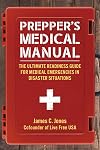
One of the things I like best about this manual is that injuries are explained in more detail than other first aid books. The author explains what is happening inside the body and why the recommended first aid is necessary. I like knowing WHY I'm doing a task. I understand the invisible mechanisms of the body and how injury effects the patient much more now. I also appreciate the authors advise regarding what NOT to do because you can make things worse.
The included military drawings and the colour photographs are very clear and offer a good visual aid to the text.
This manual does cover some alternatives to traditional first aid supplies if you don't have them with you.
There are suggestions for the First Aider in a SHTF situation in which no one more qualified is coming. The reader has to understand though that there are many life threatening situations in which only hospital diagnostic equipment and a surgeon can save a life. There's only so much you can do without professional medical assistance.
There are some now outdated suggestions (no fault of the author) such as acquiring inexpensive veterinary antibiotics now to stock up for unexpected situations later in a SHTF scenario. These are no longer available without a prescription in the USA or Canada. Perhaps if you're overseas you can still acquire them. There are however some companies that will now provide human prescriptions such as antibiotics via a qualified Dr on the internet for this purpose. JASE case is one show more that I know of. There are others.
The book itself has a strong binding and the pages are an excellent quality paper stock, thicker and glossier than the usual book pages. I'm very impressed with the quality of the printing and binding. show less
The included military drawings and the colour photographs are very clear and offer a good visual aid to the text.
This manual does cover some alternatives to traditional first aid supplies if you don't have them with you.
There are suggestions for the First Aider in a SHTF situation in which no one more qualified is coming. The reader has to understand though that there are many life threatening situations in which only hospital diagnostic equipment and a surgeon can save a life. There's only so much you can do without professional medical assistance.
There are some now outdated suggestions (no fault of the author) such as acquiring inexpensive veterinary antibiotics now to stock up for unexpected situations later in a SHTF scenario. These are no longer available without a prescription in the USA or Canada. Perhaps if you're overseas you can still acquire them. There are however some companies that will now provide human prescriptions such as antibiotics via a qualified Dr on the internet for this purpose. JASE case is one show more that I know of. There are others.
The book itself has a strong binding and the pages are an excellent quality paper stock, thicker and glossier than the usual book pages. I'm very impressed with the quality of the printing and binding. show less

I received a copy of the Vegan Snack Cookbook from the author. This book is packed with snack recipes that anyone could easily prepare. The list of ingredients makes accommodating substitutions of ingredients to suit diverse dietary needs, allergies or personal tastes easy. The recipes are all in full colour in beautifully photographed plates and the instructions are clear and easy to make using common ingredients found in most kitchens. For those who are looking for a beginner vegan snack cookbook, as well as those who are experienced vegans, this is the book to purchase. For those non vegans who are wondering where to start in preparing a vegan pantry, or what cooking utensils/cookware are best for a vegan kitchen, this book provides a comprehensive section on stocking the pantry. Lots of useful nutritional information and it even includes a section on maximizing your mental health during stressful times. An added bonus is a link at the back of the book to download a free copy of Vegan Cooking for Singles which is packed with many more recipes which include the snack recipes as well as lots of delicious full meal preparations.
Highly recommended.
Highly recommended.
 This review was written for LibraryThing Early Reviewers.
A Friendly Low-Budget Vegan Cookbook: Quick and Easy Meals for Singles (Quick and Easy Vegan Recipe Books) by Jordan Riley
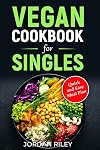
I received a copy of the Vegan Snack Cookbook from the author and was pleasantly surprised to find a link at the end of the book for a longer cookbook entitled Vegan Cookbook for Singles. Vegan Cookbook for Singles includes the shorter Vegan Snack Cookbook and is packed with recipes that anyone could easily prepare. The list of ingredients makes accommodating substitutions of ingredients to suit diverse dietary needs, allergies or personal tastes easy. The recipes are all in full colour in beautifully photographed plates and the instructions are clear and easy to make using common ingredients found in most kitchens. For those who are looking for a beginner vegan cookbook, as well as those who are experienced vegans, this is the book to purchase. For those non vegans who are wondering where to start in preparing a vegan pantry, or what utensils/cookware to have on hand, this book provides a comprehensive section on stocking the pantry. There is lots of nutritional information and even a section on maximizing your mental health in stressful times.
Highly recommended.
Highly recommended.

I can see why this book was banned in Russia. Gorky wrote this during the Russian revolution and being a revolutionary himself he was ideal to write of the events from the common people's point of view.
I wonder what Tolstoy had to say about this book. It was definitely a refreshing change from reading Tolstoy.
Recommended
I wonder what Tolstoy had to say about this book. It was definitely a refreshing change from reading Tolstoy.
Recommended
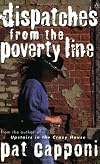
This book was well written and I enjoyed reading it but there are some points of view expressed that I can't agree with. I do think the author is correct in saying that there are too many people trying to save the poor and that if the money spent on all of these useless resources were spent on creating jobs for the poor it would alleviate some of the problem. I do think, however, that her point of view is a little narrow minded in that she is basing her reasoning on her own personal situation rather than the very diverse situations that exist. A job is not going to help a person who is physically or mentally disabled to the point of being unemployable. For these people the only real help is more financial assistance. There are so many factors that lead to poverty that, to really make headway, all of these factors would have to be addressed and currently none of them are. Bandaid solutions are not solutions. Childcare, medical care, housing, nutritious food, transportation, and all other necessary factors of life have to be provided before work is even a possibility.
I enjoyed reading the stories of all the people that she interviewed. I wasn't at all surprised by the hopelessness of some of them. I guess this shows that I have lived with some of these problems myself and have learned all the little tricks to stay alive.
While the book focused on the cuts the Ontario Provincial government made a few years back it is applicable to anywhere that has suffered the same fate. show more Here in British Columbia there were more cuts than occured in Ontario and many of the same consequences.
Finally, I don't think poverty will ever be eradicated because the capitalist system depends on poverty to function. Poverty is the foundation of capitalism. Who would work at all the low wage dirty jobs if there were no poverty? There has to be a constant pool of unemployed to feed into the low wage system. show less
I enjoyed reading the stories of all the people that she interviewed. I wasn't at all surprised by the hopelessness of some of them. I guess this shows that I have lived with some of these problems myself and have learned all the little tricks to stay alive.
While the book focused on the cuts the Ontario Provincial government made a few years back it is applicable to anywhere that has suffered the same fate. show more Here in British Columbia there were more cuts than occured in Ontario and many of the same consequences.
Finally, I don't think poverty will ever be eradicated because the capitalist system depends on poverty to function. Poverty is the foundation of capitalism. Who would work at all the low wage dirty jobs if there were no poverty? There has to be a constant pool of unemployed to feed into the low wage system. show less
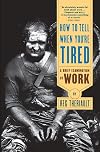
As a person of the working class I really enjoyed reading this book. I thought the plight of workers was well documented and there was enough sarcastic humour to lighten the topic.
The author is basically saying that workers were supposed to share in the benefits of the industrial and technological revolutions but, as we all know, have not. In the constant struggle of management to increase production they have dehumanised the workplace and alienated the workers. This has inevitably reduced production as workers have not been working at their maximum potential.
The logical way to increase production would be to dispense with management and let the people who are doing the work organise and manage their own workload. This in turn would bring a psychological benefit to the workers and obstacles would soon be ironed out by the workers themselves. When people work as a co-operative group to the same end they work smoothly and efficiently with enthusiasm. I have seen this myself.
I learned a lot about particular jobs reading this book that I knew very little about and found it interesting. I particularly enjoyed reading the history of these jobs and how they have evolved to the present day, or disappeared altogether.
The author is basically saying that workers were supposed to share in the benefits of the industrial and technological revolutions but, as we all know, have not. In the constant struggle of management to increase production they have dehumanised the workplace and alienated the workers. This has inevitably reduced production as workers have not been working at their maximum potential.
The logical way to increase production would be to dispense with management and let the people who are doing the work organise and manage their own workload. This in turn would bring a psychological benefit to the workers and obstacles would soon be ironed out by the workers themselves. When people work as a co-operative group to the same end they work smoothly and efficiently with enthusiasm. I have seen this myself.
I learned a lot about particular jobs reading this book that I knew very little about and found it interesting. I particularly enjoyed reading the history of these jobs and how they have evolved to the present day, or disappeared altogether.

Published in 1961. I read this in 1972 as a teenager and it had quite a profound effect on me. To read it again in 2007 I can say that there have been significant changes in the area of racism since my first reading but there is still a long way to go.
I lived in rural southern Alabama and Georgia for a couple of years (1998/99) and I was disgusted at how little has changed since this book was written. There are laws of equality regarding restrooms and eating establishments but there are still many segregated housing areas, seperate work places and plenty of discrimination in almost all areas of life. The KKK is still alive and well and their propoganda material is well distributed. There are still plenty of opportunities available to white citizens that are closed to African Americans. They are also closed to sympathizers or those that have dared cross the colour line in their personal involvements.
'Black Like Me' was an outstanding attempt to show the absurdity of racism. I admire John Griffin for crossing the line and risking his own and his loved one's comfort and life in doing so.
I lived in rural southern Alabama and Georgia for a couple of years (1998/99) and I was disgusted at how little has changed since this book was written. There are laws of equality regarding restrooms and eating establishments but there are still many segregated housing areas, seperate work places and plenty of discrimination in almost all areas of life. The KKK is still alive and well and their propoganda material is well distributed. There are still plenty of opportunities available to white citizens that are closed to African Americans. They are also closed to sympathizers or those that have dared cross the colour line in their personal involvements.
'Black Like Me' was an outstanding attempt to show the absurdity of racism. I admire John Griffin for crossing the line and risking his own and his loved one's comfort and life in doing so.

An enjoyable short read. You can't beat Steinbeck for descriptive passages though this isn't as beautiful as his longer works such as The Grapes of Wrath.
For all of us that dream of how riches may improve our lives, think again ;)
For all of us that dream of how riches may improve our lives, think again ;)

Eyewitness accounts of the horrific effects of the atomic bomb on Hiroshima documented less than a year after the attack. Amongst the expected experiences of the survivors is intertwined the most surprising resiliancy to death, pain, suffering, and loss of every kind. The Japanese distaste for self pity is most commendable and their resignation and strength to endure all for the love of their country inspiring.
This book can be read in one sitting.
This book can be read in one sitting.

SPOILERS!!
This utopian/dystopian novel is a must read.
I found it riveting and couldn't put it down and unlike some of the other reviewers I enjoyed the writing style (a journal) and found it brilliant.
It was also interesting that the Benefactor compared the OneState system of punishment, control, and ultimate goal to that of Christianity's rules of order, punishment and Heaven. I am pretty sure Zamyatin was an atheist as am I so I enjoyed this aspect of the novel. I laughed out loud when he said that angels would have to have their immaginations removed in order to be subservient to God LOL
The scene in which a withered old lady lies on the bed with a smile on her face to give herself to D-503 cracked me up LOL
There was a lot to think about in this novel.
This utopian/dystopian novel is a must read.
I found it riveting and couldn't put it down and unlike some of the other reviewers I enjoyed the writing style (a journal) and found it brilliant.
It was also interesting that the Benefactor compared the OneState system of punishment, control, and ultimate goal to that of Christianity's rules of order, punishment and Heaven. I am pretty sure Zamyatin was an atheist as am I so I enjoyed this aspect of the novel. I laughed out loud when he said that angels would have to have their immaginations removed in order to be subservient to God LOL
The scene in which a withered old lady lies on the bed with a smile on her face to give herself to D-503 cracked me up LOL
There was a lot to think about in this novel.
I am fanatically interested in anything Russian and love fine art fiction so this book should have been at the top of my list of favorites but it didn't make it. I think the basis of the story is brilliant but I couldn't get past the poor writing. I found several passages confusing as to whom it was speaking of and in what time frame and found Dean's phrasing of sentences odd. I read about 40 pages and then skimmed to the war passages, read those and closed the book.
I am disappointed because it had the potential to be great. I hope the author improves her writing skills in the future because she has great stories to tell but lacks the skill to portray them as they deserve to be portrayed.
I am disappointed because it had the potential to be great. I hope the author improves her writing skills in the future because she has great stories to tell but lacks the skill to portray them as they deserve to be portrayed.
Excellent first novel. The writing was interesting in that the shorter sentences were reflective of the way the characters would have spoken. I enjoyed this style.
The story, from beginning to end, held my interest throughout. The pearl divers and the historical information about leprosy in this area fascinated me. This alone would have made for an interesting book but in addition the author wove an woman's entire life span and the advance of modern conveniences and technology, including the drawbacks of these, issues of loneliness and isolation, strength, and much more into the story.
All of the characters were interesting and made me care what happened to them.
As qualities that a person looks for in a novel there wasn't much lacking in this one. I recommend it and have already loaned my copy to a friend and insisted that she read it :)
The story, from beginning to end, held my interest throughout. The pearl divers and the historical information about leprosy in this area fascinated me. This alone would have made for an interesting book but in addition the author wove an woman's entire life span and the advance of modern conveniences and technology, including the drawbacks of these, issues of loneliness and isolation, strength, and much more into the story.
All of the characters were interesting and made me care what happened to them.
As qualities that a person looks for in a novel there wasn't much lacking in this one. I recommend it and have already loaned my copy to a friend and insisted that she read it :)
Unlike most atheists I was raised in a family of atheists, taught the theory of evolution, and never indoctrinated in any religion. My family experience was probably the complete opposite to what most readers have experienced. I remember meeting some religious people on the street when I was about 15 and accepting their gift of a Bible. I took it home out of curiosity and hid it in my room because if my family saw it who knew what torment I might have to endure? I read a few pages of it and sincerely, from a purely untouched unindoctrinated mind, couldn't fathom how anyone could take this book as anything but pure fantasy of the worst kind. I left the book laying on my bed accidentally one day and my family saw it. I was practically laughed out of the house and the mocking went on for a long time after that. It was VERY embarrassing! LOL
I think that Richard Dawkins does an exceptional job at explaining the worldview of an atheist. I doubt this book will influence many to give up their faith in God but even if it just helps them understand a non-believers mind then it has accomplished something worthwhile.
I personally found the last chapter the most interesting as I wasn't familiar with the very narrow band of perceived reality that the human mind is programmed with through evolution. Very interesting reading and this last section has made me appreciate even more than before that through our successive evolution we can only become better equipped to gain more understanding.
I think that Richard Dawkins does an exceptional job at explaining the worldview of an atheist. I doubt this book will influence many to give up their faith in God but even if it just helps them understand a non-believers mind then it has accomplished something worthwhile.
I personally found the last chapter the most interesting as I wasn't familiar with the very narrow band of perceived reality that the human mind is programmed with through evolution. Very interesting reading and this last section has made me appreciate even more than before that through our successive evolution we can only become better equipped to gain more understanding.
I was impressed with this book as I am a science idiot and this book really explained human genetics in a clear and concise way without using dry scientific journal lingo.
Anyone wanting to trace their history through DNA should read this book. The depth and the limitations of the science are clearly explained. There are helpful charts throughout for those who need a visual for clearer understanding.
The last part of the book focuses on seven women that those of European origin have decended from. Life stories of these women have been created from the known scientific information that exists about each of their geographic areas and times they lived.
Anyone wanting to trace their history through DNA should read this book. The depth and the limitations of the science are clearly explained. There are helpful charts throughout for those who need a visual for clearer understanding.
The last part of the book focuses on seven women that those of European origin have decended from. Life stories of these women have been created from the known scientific information that exists about each of their geographic areas and times they lived.
I read this book because everyone else read it LOL
It was ok, nothing to write home to mamma about but there was some interesting background info, some of which I know to be true from my own research and some of it sketchy or fictional. I think it has merit in that it may encourage more people to THINK about and question what they take for granted. Not much original here but if it brings alternative philosophies to the masses then all the more power to it.
My boyfriend also read it and he hated the ending but I didn't have a problem with that as I can't see how else it could have ended. He thought it was cheesy LOL
Now to see the movie........
It was ok, nothing to write home to mamma about but there was some interesting background info, some of which I know to be true from my own research and some of it sketchy or fictional. I think it has merit in that it may encourage more people to THINK about and question what they take for granted. Not much original here but if it brings alternative philosophies to the masses then all the more power to it.
My boyfriend also read it and he hated the ending but I didn't have a problem with that as I can't see how else it could have ended. He thought it was cheesy LOL
Now to see the movie........

I loved this book. I don't think there is a person alive that can read it and not think they see themselves in the character at some point. It took me ages to read as I had to ponder over everything. Hesse was a master at making you think and this novel was no exception.

I would like to give this book a good review because I think it's a well researched thoughtful work though I disagree with some of it. The whole premise lies in the proposition that by working a reduced hour workweek we will therefor reduce production of non-essential goods and services which will in turn lessen the impact on the environment and additionally give us personal quality time to invest in other valuable family and community building pastimes.
I don't think the argument is completely convincing. I do believe that the workweek will HAVE to be reduced because free trade agreements are fascilitating the transfer of work from Canada to third world countries in combination with increased technology that also reduces the number of workers needed. Foreign investors are also reeping the profits of business in Canada and funnelling the profits to their home countries. This profit is not being reinvested in Canada. Taxes that should be paid to the Canadian government are being evaded by clever strategies. This reduces the amount that can be spent on essential and social services. Corporations are polluting the environment and using Chapter 11 to plead profit loss when they are asked to conform to environmental regulations. This reduces our power in enforcing environmental standards.
I don't however believe that simply reducing the workweek is a solution in itself. The author believes that by reducing the innessential goods and services in our personal lives, giving up show more cars, restaurants, televisions and the latest gimmicks etc that we can afford to work less and live on a reduced income. This may well be true if your in a middle to upper income bracket. There is a lot of disposable income that can adjusted. However in the low income bracket there is little to no disposable income to play with. Let's use a hypothetical example. A single parent with 2 children working for minumum wage. This parent must pay child care expenses, rent, food, utilities, school fees as well as other educational expenses, bus passes, and clothing. To have a rounded childhood fees for participation in sports and cultural events must also be considered. Working at a minimum wage job there is not enough money to accommodate all of these expenses so food and clothing is often the first to be cut out of the budget because there is nothing else to cut. We already have a huge child poverty problem in this country. Reducing the workweek and hence reducing wages at this level of income is impossible without losing housing or starving.
I will use myself as another example. I live on a fixed income. I do not own a car, I have walked everywhere for approximately 18 years. If I had to travel a significant distance I used public transport. I have recently had a severe decline in my health (arthritic knees, compressed spinal discs, severely injured ankle) and now I MUST use public transit. I have had an old television from the 60s in my closet all these years that I use with rabbit ears when there is a major disaster that I must find out about. I have used it three times in the last several years. I have NO IDEA what people see in television. I prepare our meals from scratch, I have always made it a policy to refuse to buy boxed or canned goods with the exception of canned fish. We eat fruits, vegetables, rice, potatoes, bread, and chicken. Sometimes I am lucky to purchase salmon in the summer from First Nations friends. Practically everything in my house was purchased or found used goods. I buy 99.9% of my clothes at thrift stores. I have eaten on two occassion in restaurants, on Commercial Drive which is my neighbourhood, in the last 20 years. I live in co-op housing, I buy at the co-op bookstore (if I can't find the book at the library, second hand, or by trading), I shop at the food co-op for a lot of items. If I must shop elsewhere for food I make sure I shop Canadian in local stores. I refuse to buy fruits that are grown outside of BC if I can buy local fruits for my family because I want to support local farmers. The only exception I make to this is fruit which cannot be purchased here. I personally am allergic to all fruit except bananas so I do buy those or else I wouldn't ever have a fruit. I take all the recyclable drink containers to the bottle depot or leave them out in the lane for other people to take. There is really nothing that I can reduce as I am living at the bare minimum now. My income is just over that of minimum wage and I have 2 other people to take care of. Sometimes when there is an extra need such as school fees or prescription drugs we must reduce our food intake to compensate for this extra expense. If there were a reduction in my monthly living allowance I would be onto the street without anywhere to live. There is virtually NOTHING to adjust.
Also I think it is unrealistic to expect everyone to give up cars. Many people live in rural areas where there is virtually no public transporation. There are also disabled and elderly people that cannot use public transport. For those who could use public transport there would have to be a major improvement in this service to entice people to use it. I rarely get a seat on a bus and have to stand with my bad knees and ankle on practically every trip. People are always packed into buses like sardines. We need many many more buses and we need them on more streets.
I think the immediate solution is improved bus service, bike and handicapped scooter lanes on every
street, subsidies to those who will purchase smart cars, and car sharing groups. We should make it so economically attractive to purchase smart cars that it will be a great incentive to buy them. Car sharing groups can purchase smart cars with extra goverment subsidies (because they are a sharing group) and people can pay per use with a set number of days maximun allowable per month.
We must discourage big box stores from entering the city and bringing more unwanted traffic and we must encourage small local business. We must stop the proposed new bridge into Vancouver from being built.
I also don't really believe that the author's premise of working less hours will create jobs for more people. First of all I doubt that business will reduce their output but instead produce at the same rate and hire more people to fill the same number of hours. Working reduced hours will also create an atmosphere of part time work that will reduce benefits and break unions. Low income workers would have to work two 6 hour jobs instead of one 8 hour job further increasing unemployment. If businesses were somehow convinced to produce less and by working less hours consumers were purchasing less then there would be further considerable job losses. I also don't believe that the actual statistics of unemployment are accurate. There are many factors that are not considered when those statistics are created. In actual fact there are many many more unemployed than the stats present. This scenario of working less I believe would create mass unemployment in low income circles. I do think it will eventually happen, but not by choice and I think a lot of people are going to suffer and possibly die as a result of it. I believe crime rates will skyrocket and suicides will increase.
The only possibility I see in reducing the workweek is to also raise minimum wage to compensate and at the same time freeze rents and prices. There is no other way this can work in this income bracket. Historically every time minimum wage is increased the price of everything increases to compensate and there is no actual gain for the workers.
Overall, I think this is a book that everyone should read but at the same time I don't think it is the complete solution. We need to produce and use green technology, increase minumum wage, provide an affordable education, increase public assistance, provide subsidy to those who use green technology, limit or freeze the population of our cities, provide better public transport, accommodate bikeriding and walking, provide effective counselling and addiction services, build more co-operative housing, back out of the NAFTA free trade agreement, and many many more things. It is so overwhelming and must be considered as a complete package. show less
I don't think the argument is completely convincing. I do believe that the workweek will HAVE to be reduced because free trade agreements are fascilitating the transfer of work from Canada to third world countries in combination with increased technology that also reduces the number of workers needed. Foreign investors are also reeping the profits of business in Canada and funnelling the profits to their home countries. This profit is not being reinvested in Canada. Taxes that should be paid to the Canadian government are being evaded by clever strategies. This reduces the amount that can be spent on essential and social services. Corporations are polluting the environment and using Chapter 11 to plead profit loss when they are asked to conform to environmental regulations. This reduces our power in enforcing environmental standards.
I don't however believe that simply reducing the workweek is a solution in itself. The author believes that by reducing the innessential goods and services in our personal lives, giving up show more cars, restaurants, televisions and the latest gimmicks etc that we can afford to work less and live on a reduced income. This may well be true if your in a middle to upper income bracket. There is a lot of disposable income that can adjusted. However in the low income bracket there is little to no disposable income to play with. Let's use a hypothetical example. A single parent with 2 children working for minumum wage. This parent must pay child care expenses, rent, food, utilities, school fees as well as other educational expenses, bus passes, and clothing. To have a rounded childhood fees for participation in sports and cultural events must also be considered. Working at a minimum wage job there is not enough money to accommodate all of these expenses so food and clothing is often the first to be cut out of the budget because there is nothing else to cut. We already have a huge child poverty problem in this country. Reducing the workweek and hence reducing wages at this level of income is impossible without losing housing or starving.
I will use myself as another example. I live on a fixed income. I do not own a car, I have walked everywhere for approximately 18 years. If I had to travel a significant distance I used public transport. I have recently had a severe decline in my health (arthritic knees, compressed spinal discs, severely injured ankle) and now I MUST use public transit. I have had an old television from the 60s in my closet all these years that I use with rabbit ears when there is a major disaster that I must find out about. I have used it three times in the last several years. I have NO IDEA what people see in television. I prepare our meals from scratch, I have always made it a policy to refuse to buy boxed or canned goods with the exception of canned fish. We eat fruits, vegetables, rice, potatoes, bread, and chicken. Sometimes I am lucky to purchase salmon in the summer from First Nations friends. Practically everything in my house was purchased or found used goods. I buy 99.9% of my clothes at thrift stores. I have eaten on two occassion in restaurants, on Commercial Drive which is my neighbourhood, in the last 20 years. I live in co-op housing, I buy at the co-op bookstore (if I can't find the book at the library, second hand, or by trading), I shop at the food co-op for a lot of items. If I must shop elsewhere for food I make sure I shop Canadian in local stores. I refuse to buy fruits that are grown outside of BC if I can buy local fruits for my family because I want to support local farmers. The only exception I make to this is fruit which cannot be purchased here. I personally am allergic to all fruit except bananas so I do buy those or else I wouldn't ever have a fruit. I take all the recyclable drink containers to the bottle depot or leave them out in the lane for other people to take. There is really nothing that I can reduce as I am living at the bare minimum now. My income is just over that of minimum wage and I have 2 other people to take care of. Sometimes when there is an extra need such as school fees or prescription drugs we must reduce our food intake to compensate for this extra expense. If there were a reduction in my monthly living allowance I would be onto the street without anywhere to live. There is virtually NOTHING to adjust.
Also I think it is unrealistic to expect everyone to give up cars. Many people live in rural areas where there is virtually no public transporation. There are also disabled and elderly people that cannot use public transport. For those who could use public transport there would have to be a major improvement in this service to entice people to use it. I rarely get a seat on a bus and have to stand with my bad knees and ankle on practically every trip. People are always packed into buses like sardines. We need many many more buses and we need them on more streets.
I think the immediate solution is improved bus service, bike and handicapped scooter lanes on every
street, subsidies to those who will purchase smart cars, and car sharing groups. We should make it so economically attractive to purchase smart cars that it will be a great incentive to buy them. Car sharing groups can purchase smart cars with extra goverment subsidies (because they are a sharing group) and people can pay per use with a set number of days maximun allowable per month.
We must discourage big box stores from entering the city and bringing more unwanted traffic and we must encourage small local business. We must stop the proposed new bridge into Vancouver from being built.
I also don't really believe that the author's premise of working less hours will create jobs for more people. First of all I doubt that business will reduce their output but instead produce at the same rate and hire more people to fill the same number of hours. Working reduced hours will also create an atmosphere of part time work that will reduce benefits and break unions. Low income workers would have to work two 6 hour jobs instead of one 8 hour job further increasing unemployment. If businesses were somehow convinced to produce less and by working less hours consumers were purchasing less then there would be further considerable job losses. I also don't believe that the actual statistics of unemployment are accurate. There are many factors that are not considered when those statistics are created. In actual fact there are many many more unemployed than the stats present. This scenario of working less I believe would create mass unemployment in low income circles. I do think it will eventually happen, but not by choice and I think a lot of people are going to suffer and possibly die as a result of it. I believe crime rates will skyrocket and suicides will increase.
The only possibility I see in reducing the workweek is to also raise minimum wage to compensate and at the same time freeze rents and prices. There is no other way this can work in this income bracket. Historically every time minimum wage is increased the price of everything increases to compensate and there is no actual gain for the workers.
Overall, I think this is a book that everyone should read but at the same time I don't think it is the complete solution. We need to produce and use green technology, increase minumum wage, provide an affordable education, increase public assistance, provide subsidy to those who use green technology, limit or freeze the population of our cities, provide better public transport, accommodate bikeriding and walking, provide effective counselling and addiction services, build more co-operative housing, back out of the NAFTA free trade agreement, and many many more things. It is so overwhelming and must be considered as a complete package. show less
************MAJOR SPOILERS*************
I just finished this book. It was very amusing to read a dystopia set in Vancouver and rural BC. The author seems to be just as paranoid about corporate takeover as I am LOL
I found the writing wanting but the story itself was interesting enough to keep me reading.
The whole trio of Matt, Lia and Star seemed unrealistic to me and pointless because it never amounted to anything in the story, it was anti-climactic.
I didn't think the sex scenes had to be spelled out in quite that detail as I prefer something to be left to the imagination. It's also just laughable that Matt would have become so attached to a girl who whipped through his life so fast.
I don't know what all the visions of light and colours meant that Matt was seeing nor how meeting Star could have had such a profound impact on his life. Nor how the supposed premonitions he thought he was having fit into the story. They amounted to nothing by the end of the story.
Ama seemed realistic enough except when she suddenly became a weak person and didn't know what to do. A strong women does not fold that easily, I didn't buy it at all.
The whole corporate takeover and devastation was interesting because there really was nothing in the story that couldn't actually happen. Everything mentioned are things that we see coming now. I know the author is a fan of Maude Barlow and the Council of Canadians because the entire scenario was based on exactly the things that the Council are now show more fighting. I had to laugh out loud when in the last few pages the author mentions the future and the Barlow laws! LOL This would be Maude Barlow obviously, I had to chuckle.
While I think that a lot of this was possible and even likely if we don't stop corporations now some of it was unrealistic such as the drastic climate change. There is a slow climate change but the corporations would take over long before we would see any climate change to this degree. I had to laugh when the author blamed the corporate takeover of the world on International Free Trade agreements. This IS realistic! LOL
The fight to save the commune was ridiculous because if a scenario like this ever did occur the corporations would just quietly use chemical warfare on everyone and then move in. I also think it was unrealistic that the people in the other community left their community to come and fight with the commune in the forest over the winter, If it really happened like that the corporations would have seized the former when it was left unprotected.
Overall it was fun to read as some of it has very real possiblities in our future. show less
I just finished this book. It was very amusing to read a dystopia set in Vancouver and rural BC. The author seems to be just as paranoid about corporate takeover as I am LOL
I found the writing wanting but the story itself was interesting enough to keep me reading.
The whole trio of Matt, Lia and Star seemed unrealistic to me and pointless because it never amounted to anything in the story, it was anti-climactic.
I didn't think the sex scenes had to be spelled out in quite that detail as I prefer something to be left to the imagination. It's also just laughable that Matt would have become so attached to a girl who whipped through his life so fast.
I don't know what all the visions of light and colours meant that Matt was seeing nor how meeting Star could have had such a profound impact on his life. Nor how the supposed premonitions he thought he was having fit into the story. They amounted to nothing by the end of the story.
Ama seemed realistic enough except when she suddenly became a weak person and didn't know what to do. A strong women does not fold that easily, I didn't buy it at all.
The whole corporate takeover and devastation was interesting because there really was nothing in the story that couldn't actually happen. Everything mentioned are things that we see coming now. I know the author is a fan of Maude Barlow and the Council of Canadians because the entire scenario was based on exactly the things that the Council are now show more fighting. I had to laugh out loud when in the last few pages the author mentions the future and the Barlow laws! LOL This would be Maude Barlow obviously, I had to chuckle.
While I think that a lot of this was possible and even likely if we don't stop corporations now some of it was unrealistic such as the drastic climate change. There is a slow climate change but the corporations would take over long before we would see any climate change to this degree. I had to laugh when the author blamed the corporate takeover of the world on International Free Trade agreements. This IS realistic! LOL
The fight to save the commune was ridiculous because if a scenario like this ever did occur the corporations would just quietly use chemical warfare on everyone and then move in. I also think it was unrealistic that the people in the other community left their community to come and fight with the commune in the forest over the winter, If it really happened like that the corporations would have seized the former when it was left unprotected.
Overall it was fun to read as some of it has very real possiblities in our future. show less
Of all of Emile Zola's books this one is the most cheerful. Wonderful story. Fabulous writing. Excellent subject. Interesting characters. Beautiful descriptives. I will remember the decadent images in this novel for a long time to come and there is a sales/marketing/consumer education in here that applies even today.
Highly recommended.
Highly recommended.
I had to read this book because a lot of other Russian literature refers to Tolstoy's works, especially this one. It was interesting but challenging to get through.
It is definately an elitists view of Russia. I would now like to read the same thing from the peasants point of view! :)
The characters were entirely frustrating and I wasn't really fond of any of them. The women were all portrayed as a bunch of airheads. Natasha, who is supposed to be Tolstoy's depiction of the ideal woman, is the most annoying, trivial, brainless person I have ever read of. Marya is supposed to be Tolstoy's ideal of the good spiritual woman. I didn't see her as spiritual at all but she was religious. Everyone in the book fell in love at the drop of a pin. It seems you can be madly in love by just looking at a complete stranger LOL
The most impressive thing about this book by far was the battles, Tolstoy's view of how the war between Russia and France unfolded and concluded, and the philosophy. I also learned a lot about the 'lack' of art and strategy of the old sword and cannon combat style of warfare. LOL It's these qualities that make it Russia's greatest novel.
Glad it's finished! :)
It is definately an elitists view of Russia. I would now like to read the same thing from the peasants point of view! :)
The characters were entirely frustrating and I wasn't really fond of any of them. The women were all portrayed as a bunch of airheads. Natasha, who is supposed to be Tolstoy's depiction of the ideal woman, is the most annoying, trivial, brainless person I have ever read of. Marya is supposed to be Tolstoy's ideal of the good spiritual woman. I didn't see her as spiritual at all but she was religious. Everyone in the book fell in love at the drop of a pin. It seems you can be madly in love by just looking at a complete stranger LOL
The most impressive thing about this book by far was the battles, Tolstoy's view of how the war between Russia and France unfolded and concluded, and the philosophy. I also learned a lot about the 'lack' of art and strategy of the old sword and cannon combat style of warfare. LOL It's these qualities that make it Russia's greatest novel.
Glad it's finished! :)
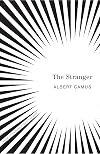
I'm not really sure of the point of this novel.
The short sentences didn't appeal to me nor did the character appeal to me.
I felt that he was an airhead and went through life being so unobservant that he was careless. His indifference to the abuse of women was appalling. In fact his indifference to life was appalling. He was unobservant in even the simplest areas such as when he thought he had no bread but later saw that he did, and this in a very sparse room where another person couldn't avoid noticing the bread. He said he felt no remorse until his sentence was passed but even then he was contradicting himself. He said he didn't plan on killing anyone but he went straight back to the spot he had just left which was where the fighting was. He shot a man and then shot him some more. He seemed to do it with without any emotion like he was sleepwalking. Actually he seemed to be sleepwalking through his whole life.
The only part of the novel that made sence to me were his thoughts about death and that living is primarily meaningless. I happen to agree with him.
This is the second novel that I have read by Camus and I can't say that I liked either of them.
If there is an accomplishment here it's the success of the writer to portray his character so well through the short sparse sentences. It's as if he wrote this book as an excersize simply to use this kind of writing style.
The short sentences didn't appeal to me nor did the character appeal to me.
I felt that he was an airhead and went through life being so unobservant that he was careless. His indifference to the abuse of women was appalling. In fact his indifference to life was appalling. He was unobservant in even the simplest areas such as when he thought he had no bread but later saw that he did, and this in a very sparse room where another person couldn't avoid noticing the bread. He said he felt no remorse until his sentence was passed but even then he was contradicting himself. He said he didn't plan on killing anyone but he went straight back to the spot he had just left which was where the fighting was. He shot a man and then shot him some more. He seemed to do it with without any emotion like he was sleepwalking. Actually he seemed to be sleepwalking through his whole life.
The only part of the novel that made sence to me were his thoughts about death and that living is primarily meaningless. I happen to agree with him.
This is the second novel that I have read by Camus and I can't say that I liked either of them.
If there is an accomplishment here it's the success of the writer to portray his character so well through the short sparse sentences. It's as if he wrote this book as an excersize simply to use this kind of writing style.
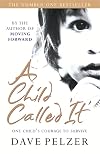
A story of horiffic child abuse. I didn't know such as this evil was possible by a mother to her child. An amazing story of the will of a child to survive.
I recommend not eating while reading this or you will probably vomit. I was gagging and had a hard time in several places.
I don't know what happened to the mother as a result of this but I hope she was sent for psychiatric evaluation at the very least.
Although the father was not a direct participant he was just as guilty for standing by witnessing this abuse and doing nothing about it.
I hope the brothers had to undergo counselling for living in this home as well.
I recommend not eating while reading this or you will probably vomit. I was gagging and had a hard time in several places.
I don't know what happened to the mother as a result of this but I hope she was sent for psychiatric evaluation at the very least.
Although the father was not a direct participant he was just as guilty for standing by witnessing this abuse and doing nothing about it.
I hope the brothers had to undergo counselling for living in this home as well.
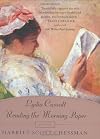
I found this novel to be more about dying than art.
The narration by Lydia was touching, heartbreaking, and revealed her inner thoughts and soul as she suffered through her illness. There were many warm and touching moments between the two sisters. There was the increasing acceptance of the ultimate end of her sister's life as Mary immortalized her sister in her paintings.
Not a novel to choose if your looking for insight into this artist's life generally but focused primarily on her relationship with her sister.
It left me with a feeling of sadness.
The narration by Lydia was touching, heartbreaking, and revealed her inner thoughts and soul as she suffered through her illness. There were many warm and touching moments between the two sisters. There was the increasing acceptance of the ultimate end of her sister's life as Mary immortalized her sister in her paintings.
Not a novel to choose if your looking for insight into this artist's life generally but focused primarily on her relationship with her sister.
It left me with a feeling of sadness.
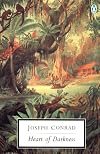
I gave up on this book a little over a third through and skimmed the rest quickly. I really HATED this book. The language was racist and the scenes of slaves in chains were sickening and I couldn't read any more of it. The author seemed to be making some kind of appeal to humanity but on the other hand was using language like savages and worse. I found it hypocritical. It's a good work to document a period in history but you can also read a work of non-fiction to the same end. It reminded me of the early Hollywood version of African 'savages' in loin cloths running through the jungle oblivious to a 'civilized' culture. Please. It was written around 1900 when this type of ignorance of Africa was rampant in the world. It had a tone of the kind of sensationalism which would have appealed to the people at the time. I don't recommend it at all. Skip it and buy something non-fiction.
This book will be memorable. It was written like a fable and not exactly convincing but the story itself was just a backdrop to elaborate on poverty, evil, compassion, judgment, morality etc. and also to make the point that one should not take the law to the extreme of the letter while ignoring curcumstances.
I found the descriptive parts interesting and the revolution was utterly fascinating. There were great speeches that I will long remember.
The ending was very sappy but it hooked me and I cried my eyes out for the last third of the book LOL
Everything else aside it's worth reading just for the commentary and the speeches alone.
I found the descriptive parts interesting and the revolution was utterly fascinating. There were great speeches that I will long remember.
The ending was very sappy but it hooked me and I cried my eyes out for the last third of the book LOL
Everything else aside it's worth reading just for the commentary and the speeches alone.
A terribly tragic and horrible story of the increasing degradation and poverty of a working class family. Accounts of terrible physical and mental abuse.
The son Etienne in this family is the main character of Zola's Germinal, the son Claude is the main character of Zola's The Masterpiece, and the daughter Nana is the main character in Zola's Nana.
Zola is a master of depicting the realities of poverty and he hasn't failed to do this in this novel. His descriptions of alcohol toxicity and death are outstanding. The most difficult sections to read were depicting the horrific abuse by a father of his young innocent daughter.
An excellent novel. Not recommended for those who don't like uncomfortable topics, death, poverty, or abuse scenes.
The son Etienne in this family is the main character of Zola's Germinal, the son Claude is the main character of Zola's The Masterpiece, and the daughter Nana is the main character in Zola's Nana.
Zola is a master of depicting the realities of poverty and he hasn't failed to do this in this novel. His descriptions of alcohol toxicity and death are outstanding. The most difficult sections to read were depicting the horrific abuse by a father of his young innocent daughter.
An excellent novel. Not recommended for those who don't like uncomfortable topics, death, poverty, or abuse scenes.
As a lover of Russian and French literature, this modern Russian writer, writing in French, has proven to me that this superiority in literature is not dead.
This novel, just over 200 pages, was packed with a whole world. With poetic prose, love, life, yearning, death, illusion, fantasy and imagination leapt from the pages and entered the third dimension. I felt myself living inside the scenes as they unfolded around me. I could smell the scents, hear the sounds, feel the intangible. I laughed, cried, smiled, and held my breath. Everything about this novel was fantastic, sensual, and extremely touching.
Andrei Makine has made a new fan in me and I will seek out and read everything that he writes. I am recommending this book to friends with confidence.
An outstanding book, highly recommended.
This novel, just over 200 pages, was packed with a whole world. With poetic prose, love, life, yearning, death, illusion, fantasy and imagination leapt from the pages and entered the third dimension. I felt myself living inside the scenes as they unfolded around me. I could smell the scents, hear the sounds, feel the intangible. I laughed, cried, smiled, and held my breath. Everything about this novel was fantastic, sensual, and extremely touching.
Andrei Makine has made a new fan in me and I will seek out and read everything that he writes. I am recommending this book to friends with confidence.
An outstanding book, highly recommended.

This is not a book that I would hand to a junky as inspiration to kick heroin.
It was interesting to read in that the street language was so outdated that it was funny and his comprehension of the medical knowledge of addiction archaic.
What I did not like was that he showed no remorse or regrets of a life of drug abuse or of all the suffering that goes with that abuse. He almost seemed to be bragging about it at times. Even at the end of the book he hadn't given up drugs, he just chose to seek out different drugs. It seemed like a journal of his drug abuse without any feeling or self analysis. A simple play by play of daily drug taking and sexual encounters. Whatever the reason that kept him wanting to be in a state of intoxication wasn't resolved and the reader is left with no understanding of his psychological feelings whatever.
His wife seemed to be a real mystery in this story, barely mentioned. She appeared at one point to utter a few lines and I wondered where she had come from and how she had gotten hooked up with him. It would have been a much more interesting book had she been included as part of his life.
In the early part of the book he said "it takes at least 3 months shooting twice a day to get any habit at all", later he says "...would have to take 2 shots a day for 2 months to get any habit at all", later still he writes "It takes at least a month of daily use to get a needle habit, two months for a smoking habit, four months for an eating habit". Lets face show more it, he's didn't know and it's different for everyone anyway.
I found the telling of his sexual encounters just as devoid of emotion as the rest of the book and it was interesting that he never even mentioned any sexual interest between himself and his wife but only with young men. Even then it was simply an emotionless journal entry of who and where and seemed to be simply to satisfy a physical need rather than to satisfy any emotional or psychological need.
Overall it wasn't really a very good book because of the above stated reasons. show less
It was interesting to read in that the street language was so outdated that it was funny and his comprehension of the medical knowledge of addiction archaic.
What I did not like was that he showed no remorse or regrets of a life of drug abuse or of all the suffering that goes with that abuse. He almost seemed to be bragging about it at times. Even at the end of the book he hadn't given up drugs, he just chose to seek out different drugs. It seemed like a journal of his drug abuse without any feeling or self analysis. A simple play by play of daily drug taking and sexual encounters. Whatever the reason that kept him wanting to be in a state of intoxication wasn't resolved and the reader is left with no understanding of his psychological feelings whatever.
His wife seemed to be a real mystery in this story, barely mentioned. She appeared at one point to utter a few lines and I wondered where she had come from and how she had gotten hooked up with him. It would have been a much more interesting book had she been included as part of his life.
In the early part of the book he said "it takes at least 3 months shooting twice a day to get any habit at all", later he says "...would have to take 2 shots a day for 2 months to get any habit at all", later still he writes "It takes at least a month of daily use to get a needle habit, two months for a smoking habit, four months for an eating habit". Lets face show more it, he's didn't know and it's different for everyone anyway.
I found the telling of his sexual encounters just as devoid of emotion as the rest of the book and it was interesting that he never even mentioned any sexual interest between himself and his wife but only with young men. Even then it was simply an emotionless journal entry of who and where and seemed to be simply to satisfy a physical need rather than to satisfy any emotional or psychological need.
Overall it wasn't really a very good book because of the above stated reasons. show less
Much better than Orwell's 1984.
I found this book to be thought provoking if not original, and better yet, humourous.
As a socialist I found myself thinking about the ideal cultural state and how that would be best achieved considering some of the very good points outlined in this book. Certainly there were good and bad points throughout.
I burst out laughing at various scenes and Huxley's clever word play. The funniest scene was the Orgy Porgy ritual and the recitation of a twisted and almost unrecognizable Georgie Porgie children's rhyme. For the love of Ford, it was hilarious!
Huxley's use of Shakespeare was also clever and added humour and interest.
Well, I must go and my drink my caffeine solution. Long live Ford! ;p
I found this book to be thought provoking if not original, and better yet, humourous.
As a socialist I found myself thinking about the ideal cultural state and how that would be best achieved considering some of the very good points outlined in this book. Certainly there were good and bad points throughout.
I burst out laughing at various scenes and Huxley's clever word play. The funniest scene was the Orgy Porgy ritual and the recitation of a twisted and almost unrecognizable Georgie Porgie children's rhyme. For the love of Ford, it was hilarious!
Huxley's use of Shakespeare was also clever and added humour and interest.
Well, I must go and my drink my caffeine solution. Long live Ford! ;p

This was an excellent biography of Cezanne. It read like a novel and in structure paralelled Zola's 'The Masterpiece'. This book however, is the truth, unlike Zola's vivid imagination and misdirected opinions.
For some of the highlights of this book see my review of The Masterpiece by Zola.
I believe this book is out of print but is worth ordering through a vintage dealer. I highly recommend it.
For some of the highlights of this book see my review of The Masterpiece by Zola.
I believe this book is out of print but is worth ordering through a vintage dealer. I highly recommend it.