The Problem is YOU: How to Get Out of Your Own Way and Conquer Self-Defeating Behavior by John Burke

Let’s just face it, the truth hurts sometimes. Sometimes we fail and like to blame it on others, when we truly know it is our own fault. This book helps us overcome our self-defeating behavior. Have you ever felt that no matter what you did, nothing ever happens the way it was supposed to? How about every time you try to make a bad situation better, only to make it worse? Maybe you are not, but are you like me, where you try to make sure that everyone is happy? You do everything you can to make sure you please them because you don’t like to say no. This is also self-defeating behavior. There are so many obstacles this book will help you overcome. If you are fighting with self-defeating behavior, I encourage you to please pick this book up and give it a try. You will find something in this book to help you. You deserve a happier, healthier life and relationship.
This review was written for LibraryThing Member Giveaways.

Dead End in Norvelt was written by Jack Gantos in 2011 and is the 2012 Newbery Medal winner. This book is a historical fiction novel for grades fifth and up. Although this book is considered historical fiction, it does not try to preach about history. It is given more in a story format. The main character, Jack Gantos, is constantly getting nose bleeds when he is nervous or scared, and getting grounded. The first time he gets grounded is because he shoots his father’s Japanese riffle. He then gets grounded because he runs over his mother’s corn, because he father made him. The only time Jack is allowed to leave his room is to go to Miss Volker’s home. Miss Volker was asked by Eleanor Roosevelt to keep the health records for the original Norvelt citizens. She can no longer type because of her arthritis, and has Jack type for her. Eventually Jack starts driving for Miss Volker and has no license. Mr. Spizz is another interesting character in the book. He over sees that everyone keeps their yard in order, he is a volunteer fire fighter, and works as a police officer. He is madly in love with Miss Volker, but Miss Volker refuses to date him until the last citizen has moved or died. The citizens start dyeing off quickly and Jack’s mother thinks she might get accused of poisoning them off, because she makes dinner plates for them. The only friend Jack has in the story, besides Miss Volker, is Bunny Huffer. Bunny’s dad is the coroner, and she likes to sneak Jack in to show more see the dead people. In the end, they figure out how all the people were dying and Jack gets ungrounded.
The only thing I didn’t understand about this book is why they brought Hells Angels into the story. They started off causing fires, which Jack snuck out to help Bunny watch for, but then there was nothing more to them. They didn’t say why they stopped the fires, if they stopped the fires, or what happened to them. I feel it was a waste of time for the story.
Overall the story was slow to start but picked up pace as it went along. The chapters did not have titles, but were numbered. The only illustration for this book was the cover. I like how they put a plane on the cover. Jack’s dad bought a plane and had Jack cut down the corn just to build a runway for it. I believe the title fit well for this story, because Norvelt was a dead end for Jack. He was stuck in his room for the whole sumer. show less
The only thing I didn’t understand about this book is why they brought Hells Angels into the story. They started off causing fires, which Jack snuck out to help Bunny watch for, but then there was nothing more to them. They didn’t say why they stopped the fires, if they stopped the fires, or what happened to them. I feel it was a waste of time for the story.
Overall the story was slow to start but picked up pace as it went along. The chapters did not have titles, but were numbered. The only illustration for this book was the cover. I like how they put a plane on the cover. Jack’s dad bought a plane and had Jack cut down the corn just to build a runway for it. I believe the title fit well for this story, because Norvelt was a dead end for Jack. He was stuck in his room for the whole sumer. show less
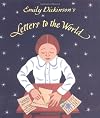
Emily Dickinson’s Letters to the World was written and illustrated by Jeanette Winter in 2002. This is a picture book for older readers. The story starts as though Emily’s sister is the author; for example, “My sister Emily was buried today.” It goes on to tell you how she found Emily’s poems and what she wore. Once she finds the poem, the author finishes the story with twenty-one poems written by Emily. This book is very colorful and not one inch is left without a color. It is also very busy, so you are more interested in the illustrations than in the words. The illustrations match the words beautifully. For example, “A spider sewed at night…” had an illustration of a spider making a web in a windowsill. The sky was dark and there were stars in the background. Emily Dickinson is a wonderful poet, and I am very thankful that this book was written for her, for many of her works went unpublished. I took one star off because I was disappointed that I did not know where the new poem started. After I read the sleeve of the book, it stated that there were twenty-one poems. I went back through and counted the pages, and realized each page was a different poem.

Junie B. Jones and the Stupid Smelly Bus was written by Barbara Park and illustrated by Denise Brunkus in 1992. This book was amazing. Now I know why my daughter loves this series so much. Junie B. is getting ready to start kindergarten and she doesn’t like the bus. Someone in school even told her that chocolate milk gets poured in your hair. Well, Junie B. did not want milk in her hair, so she hid in the supply closet while everyone else left the school. This book is told in first person point-of-view. It is even told in the language of a five year old. There are a lot of times that the author uses a word that is not in the dictionary or uses the wrong tense, because that is what kindergarteners do. For example, “It’s funner than running inside your house.” There are she spells out words so you can understand how the child is saying it, “IT’S A ‘MERGENCY!” The illustrations of this book are also outstanding. There are one to two illustrations per chapter. I believe the illustrator did a great job making the illustrations fit the words of the text. Each chapter also had a title that fit well with what was going on in that chapter. My favorite illustration was the cover of the book. Junie B. is holding her nose in front of the school bus. I think this is the perfect picture for the cover of the book, because Junie B. hates the stupid smelly bus and doesn’t get on to go home after school.
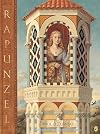
Rapunzel was retold and illustrated by Paul O. Zelinsky. It is about a woman who became pregnant and sat looking out her window at an herb called rapunzel. This herb was located in the sorceress’ garden. One day the wife couldn’t go on living without the rapunzel and told her husband that she was going to die without it. The husband got caught taking the herb. The sorceress told the husband that he must give up his child if he is going to take the herb. The husband makes the deal with the sorceress. Once Rapunzel was born, she lived with the sorceress. When Rapunzel turned 12, she got locked in a tower. Will she every make it out of the tower? You must read this story and find out what happens to Rapunzel. This story is so amazing. I always remembered, Rapunzel, Rapunzel, let down your hair; but I couldn’t ever remember how the story ended or why she was in the tower. I just had to read this book again to find out why. The illustrations in this book are beautiful. You can see the rage in the sorceress’ face when the husband is trying to take the rapunzel. You can see Rapunzel’s facial expressions change as the story goes on. She is so happy at the age of 12. When you see her for the first time in the tower, she looks so unhappy. She almost looks like she wants to say, “Why am I in here? Why can’t I leave?” You must read this book. I can’t believe I ever forgot it. My children have already asked me to read it again and again.

Madeline was written and illustrated by Ludwig Bemelmans in 1939. Although this book was written over 70 years ago, it is still a great classic. Madeline was the smallest of the twelve girls she lived with. She was not afraid of anything, not even tigers. Then one night her stomach hurt and she cried and cried. The doctor soon realized it was her appendix. She woke up like a trooper two hours later. When the girls arrived, she quickly showed off her scar. By the end of the night, all the girls were crying and wanted their appendix out too. This is such a good little story. I would even consider it an easy read. The illustrations take up a little more than ¾ of the page and only have a few words on each page. Most of the illustrations are black, yellow, and white. There are a few colored illustrations throughout the book, and they look pretty neat. Madeline is facing the lion’s den and all the girls are circled around Miss Clavel, scared. The lion is roaring and you can tell that Madeline is not even scared. The illustrations were done in a sketch type drawing, but facial expressions are clear to see.
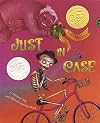
This book was written and illustrated by Yuyi Morales in 2008. It is a story about Señor Calavera finding a present for Grandma Beetle’s birthday. He had such a blast at last year’s birthday party, that he wouldn’t miss it for anything this year. On his way to the party Zelmiro the Ghost reminded him that he forgot the present. As Señor Calavera goes looking for the present, he goes through the alphabet with Spanish names for his presents. He then tells you what the English name is. For example his first present is, “Un Acordeón. An Accordion for her to dance to.” As he is finding these presents, he questions himself if it is what Grandma Beetle would want. He goes onto name everything in the alphabet but the Z. I was questioning why he didn’t pick up a Z present. Then he wrecked and all his presents were ruined. Now he has to go to Granma Beetle’s party without a present, or does he? This book is really interesting and education, while being fun to read. My children loved this book and I hope yours does too.
The illustrations in this book are outstanding. They take up the full page and the words are written in the solid color part of the page. Each present of the alphabet also has an illustration to go along with it. My favorite illustration was the page where he fell, flew through the air, and lost all of his presents. There is a foreshadowing picture on this page; I hope you can find it. I didn’t realize it when I first read the story. As I went back show more through the pictures, I realized it was there, and thought, “Oh, that is awesome.” The colors are perfect for the story. There are bright colors, pale colors, dark colors, and more. I also think the author did a great job capturing the feelings across the characters faces. I really hope you have time to read this book. show less
The illustrations in this book are outstanding. They take up the full page and the words are written in the solid color part of the page. Each present of the alphabet also has an illustration to go along with it. My favorite illustration was the page where he fell, flew through the air, and lost all of his presents. There is a foreshadowing picture on this page; I hope you can find it. I didn’t realize it when I first read the story. As I went back show more through the pictures, I realized it was there, and thought, “Oh, that is awesome.” The colors are perfect for the story. There are bright colors, pale colors, dark colors, and more. I also think the author did a great job capturing the feelings across the characters faces. I really hope you have time to read this book. show less
Clutter Be Gone! De-clutter and Simplify Your Home (And Keep It That Way) Starting Today! by Kimberly Wilson

Are you someone who looks at your house and just sighs? Maybe you’re someone that runs around the house looking for car keys or your child’s shoes. You might even have that pile on your table just for “junk” mail that refuses to stop coming in the mail. You know that you need to reorganize your home, but you just don’t know where to start or how you will make the time. This book is amazing. This book has taught me how to conquer my home room by room when I didn’t think I had the time to spare. It will teach you where to begin, even if you only have 15 minutes at a time. It breaks each room in your home down for you. It is not a demanding book either, saying you must throw everything away. Kimberly even said, “I’ll trust you to determine what qualifies as living room trash.” You have a keep pile along with the “not keep” pile broke into four sections. If you’re anything like me, you have started cleaning your home and somehow everything in your “get rid of” pile ended back throughout your house. This book is written in first person point-of-view and she has been there. She doesn’t just give advice for rooms within your home, but also your garage and computer. You will be happy with this book, I know I am. I know I have enough stress in my life and since de-cluttering, I feel so much better happier in my home. I am no longer stressing about whether or not I should be watching a movie with my children or cleaning my home. The skills I have show more learned in this book have helped me to keep everything in its place. Of course not always, but that’s what the 15-30 minutes on Saturdays are for. I go through my house with a quick overview and make sure that I haven’t misplaced something while I was in a hurry. show less
This review was written for LibraryThing Member Giveaways.

This book is considered as an easy-to-read book. It was written by Dr. Seuss in 1965. This is a rhyming book and Dr. Seuss labels it as a beginner book. This book is about a fox in socks and his friend Knox. Fox starts off by rhyming and then Knox tells fox that he just can’t do it because, “My tongue isn’t quick or slick.” Then they go on and play a rhyming game about sewing, and Knox is quickly tired of the game. The story goes on with fox trying to rhyme and Knox getting upset because he cannot rhyme. In the end Knox gets so frustrated that he pushes fox into the bottle with the beetles and makes up his own rhyme.
The illustrations in this book are amazing. In the beginning you can see that fox is happy to come across Knox and that Knox is happy. As you go throughout the story you can see the facial expressions clearly. Knox gets surprised a lot because fox is constantly putting him in weird situations and his eyes are wide and his mouth is opened, as if he was saying, “What just happened.” Toward the end of the story you can see Knox’s confusion. His face is droopy, his hands are mostly together, and there are squiggly lines above his head. At the end of the story Knox gets completely frustrated and it is drawn clearly in his face. Fox’s surprise is also all over his face as Knox shoves him into the bottle with the beetles.
The illustrations in this book are amazing. In the beginning you can see that fox is happy to come across Knox and that Knox is happy. As you go throughout the story you can see the facial expressions clearly. Knox gets surprised a lot because fox is constantly putting him in weird situations and his eyes are wide and his mouth is opened, as if he was saying, “What just happened.” Toward the end of the story you can see Knox’s confusion. His face is droopy, his hands are mostly together, and there are squiggly lines above his head. At the end of the story Knox gets completely frustrated and it is drawn clearly in his face. Fox’s surprise is also all over his face as Knox shoves him into the bottle with the beetles.
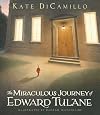
The Miraculous Journey of Edward Tulane was written by Kate DiCamillo and illustrated by Bagram Ibatoulline. This is a story about Edward, a rabbit made of china. He is loved by a little girl, Abilene, who took care of him, clothed him, and talked to him. He is unexpectedly lost during a trip with Abilene. After 297 days he was found again and renamed. Edward gets lost five times, along with receiving four new names. During his journey he learned how to love, and realizes that he was once loved himself. After losing his last family, he gave up on love. While he was waiting for a new family, he sat beside another china doll. She was trying to tell him not to give up on love and said, “Open your heart, someone will come for you.” All Edward had to say to her was, “Don’t talk to me about love.” You must read this story to see if Edward finds his passion for love again. Will another family come to love him again? This story ends at a great stopping point, but leaves you wanting for more.
The jacket of the book is beautiful and is a moment of Edwards dream. I believe the door on the cover represents Edward’s journey. He is constantly lost and entering new doors. There are no chapter titles, but they are numbered. Each chapter page has an illustration that represents a part of the chapter. Besides the cover, each illustration was drawn in black and white. I believe each illustration inside the chapters, ten of them; perfectly describe a moment in the chapter. I show more thought the pattern of the illustrations was a great idea. For the first eight chapters they was one picture in every even numbered chapter, they there was no illustrations for the next four chapters. The second eight chapters had one illustration in every odd chapter. Then there were no illustrations for four chapters. Then for the last four chapters, the illustrations were only found on the even numbers. I really hope you find this book to your enjoyment.
Example of illustration; illustrations found in chapter 2,4,6,8; none in 9-12, illustrations found in chapter 13,15,17,19; none in 20-23; illustrations found in 24 and 26 (there are 27 chapters). show less
The jacket of the book is beautiful and is a moment of Edwards dream. I believe the door on the cover represents Edward’s journey. He is constantly lost and entering new doors. There are no chapter titles, but they are numbered. Each chapter page has an illustration that represents a part of the chapter. Besides the cover, each illustration was drawn in black and white. I believe each illustration inside the chapters, ten of them; perfectly describe a moment in the chapter. I show more thought the pattern of the illustrations was a great idea. For the first eight chapters they was one picture in every even numbered chapter, they there was no illustrations for the next four chapters. The second eight chapters had one illustration in every odd chapter. Then there were no illustrations for four chapters. Then for the last four chapters, the illustrations were only found on the even numbers. I really hope you find this book to your enjoyment.
Example of illustration; illustrations found in chapter 2,4,6,8; none in 9-12, illustrations found in chapter 13,15,17,19; none in 20-23; illustrations found in 24 and 26 (there are 27 chapters). show less

Although this book is short, it tells such a wonderful story. Have you ever felt like you would never find love? Have you felt like you stood strong on a certain belief, but found yourself struggling to stay on the right path? Allison has been there too. Everyone in the community wanted to know how her sister was; she couldn’t understand why no one wanted to know how she was. Her family has already been through turmoil with her sister leaving the Amish way to marry an outsider, but she is determined not to back down from her religion. Out of nowhere, her heart starts to flutter and she has to make a decision. This story left me wanting to read more. I look forward to reading the Amish Romance Boxed set. I would love to know more about this family. This story was so captivating I could not put it down. I found myself reading it during a lecture for class, and had to put it away. Please find the link below to purchase this book.
http://www.amazon.com/gp/product/B009N9EMBM/ref=cm_cr_mts_prod_img
http://www.amazon.com/gp/product/B009N9EMBM/ref=cm_cr_mts_prod_img
This review was written for LibraryThing Member Giveaways.
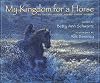
My Kingdom for a Horse is an anthology of poems about horses. It was edited by Betty Ann Schwartz and illustrated by Alix Berenzy in 2001. There are a little over twenty different author's poems in this book. The jacket of this book is beautifully made. It shows a girl with long hair riding on a horse through water. This book offers a Table of Contents with a list of the poems and what pages they are on. Each poem is about a page long, but some have pictures that take up half of two pages with the poem written below it. Some pictures offer color while others offer black and white. Each poem has a Title is bigger font then what the poem is typed in, and an author name. The pictures of this book go beautifully with the text of the poem. This would be a great book to have in your second and third grade classroom library for children to read.
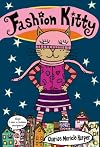
Fashion Kitty was written and illustrated by Charise Mericle Harper in 2005. This book is a children’s graphic novel. It is about cat named Kiki Kittie. The story is written in third person and first person by Kiki Kittie. She is a normal cat until her birthday. Kiki starts the story off explaining why her family is unusual. The text is written in a child-like writing, which helps keep the book a little more interesting. I believe it keeps it more interesting because it makes you think it is actually Kiki writing the story. On Kiki’s birthday she gets hit on the head by a shelf and become Fashion Kitty. Her job is to go and help other cats that are having a fashion faux pas. This book is written in a comic style and is very descriptive. The first thing I did not like about this book was the missing Table of Contents. The author did not break this book into chapters. I was hoping because it was listed as a children’s graphic novel that it would have been written with chapters. The jacket of the book is a wonderful setting for the plot of the story. It shows Kiki in her disguise as a giant above a city. There is even a little comical circle on the bottom that says, “I need fashion help!? The Jacket does offer different colors and a glittery background around the title. The pictures are in drawing form in pink, grey, and black colors. They are the only colors used within the story of the book, except for the cutouts. There are eight glossy pages that children can cut show more and create different outfits for Mary Jane Tabby. On Fashion Kitty’s first adventure she helps a girl named Mary Jane Tabby. Once she helps Mary get her wardrobe together, the author puts inserts the cutouts so the children can help create their own outfits. The second thing I did not like about this book was when Kiki went into Priscilla’s house and drew circles around the eyes of the cats in the fashion magazines. In the morning Pricilla drew circles around her eyes and went to school and got made fun of. I did not believe this was a very good example for my child. The third thing I did not like about this book was when Kiki lied to her parents. Her parents asked her where she went and she said, “I don’t remember where I went.” Kiki then writes in the book, “Kiki wasn’t sure why she felt she should keep her adventure as Fashion Kitty a secret.” So clearly she knew where she went. Overall I did like the story because it kept my attention and was written in a comical form. There are many books to this series. I believe this would be a good book to have in a third grade classroom library. I probably would not read it aloud because it is mostly for girls. show less
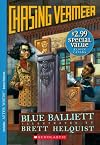
Chasing Vermeer was written by Blue Balliett and illustrated by Brett Helquist in 2004. This is a mystery novel for children ages 8 and up. I believe this would make a great book in a classroom when learning about art. I did take away one star because I was a little bored reading it. This story is written in third person. It is about Calder and Petra working together to help solve a case about a missing Vermeer picture. Petra has visions that allow her to help with the case and Calder uses pentominoes throughout the story to help him solve the case. For example when Calder pulled out a U pentominoe, he started thinking. “It’s U for under. ….Maybe it’s also U for University School!” The author keeps you interested in the book through the character’s thoughts about the case. For example Calder and Petra are in Gracie Hall when they see Petra’s dad with a rectangular package. They believe this package may be the missing picture. They go throughout the story giving ideas about who the thief could be, and it keeps your mind wondering. You will be surprised in the end who has stolen the Vermeer picture and whether or not Calder and Petra where able to locate it. I believe the author wrote this book to teach children about Vermeer’s paintings, but made it a suspense story so they would keep reading.
I read this book with my children’s literature class. The author has a Contents page at the beginning of the book with the introductions and chapters being listed. show more After the contents page there is a map of the city, so you can follow along in the book and know where the characters are. I believe the map is very helpful, because it allows the readers to stay connected with the characters. The author gives you an introduction about pentominoes. I believe this introduction is helpful because it allows the readers to know what pentominoes are. The chapters are wonderfully laid out. Each chapter has a title that matches perfectly with what’s about to happen within that chapter. It also begins with XXX, before the first word of the chapter. The author goes back and forth with Calder and Petra’s characters. Anytime she changes characters or settings, she puts XXX before the beginning of the paragraph. I believe this is a helpful tool in helping children stay connected with whoever is carrying out the story and where they are in the story.
The illustrator, Brett Helquist, did an outstanding job. The jacket of this book is a wonderful picture of the story. Petra’s pose makes you think she heard something and had to turn her head to see what it was. Calder is holding a flashlight, as if he was looking for something. Each chapter has one full page picture. The first picture is an image of the three people receiving a letter that is later talked about in the story. The second picture perfectly portrays, “Picking up a yellow leaf, she held it in front of her face.” I believe the picture should have been on the previous page, so the children could see it as they read the line. The third picture, “Petra took off on her own,” was also a great image of Petra walking by a painting and Calder watching her. Each chapter follows this suit. Every picture lines up with what is being said in the story. The illustrations are done in black and white drawings, and some of them have hidden frogs and pentominoes. show less
I read this book with my children’s literature class. The author has a Contents page at the beginning of the book with the introductions and chapters being listed. show more After the contents page there is a map of the city, so you can follow along in the book and know where the characters are. I believe the map is very helpful, because it allows the readers to stay connected with the characters. The author gives you an introduction about pentominoes. I believe this introduction is helpful because it allows the readers to know what pentominoes are. The chapters are wonderfully laid out. Each chapter has a title that matches perfectly with what’s about to happen within that chapter. It also begins with XXX, before the first word of the chapter. The author goes back and forth with Calder and Petra’s characters. Anytime she changes characters or settings, she puts XXX before the beginning of the paragraph. I believe this is a helpful tool in helping children stay connected with whoever is carrying out the story and where they are in the story.
The illustrator, Brett Helquist, did an outstanding job. The jacket of this book is a wonderful picture of the story. Petra’s pose makes you think she heard something and had to turn her head to see what it was. Calder is holding a flashlight, as if he was looking for something. Each chapter has one full page picture. The first picture is an image of the three people receiving a letter that is later talked about in the story. The second picture perfectly portrays, “Picking up a yellow leaf, she held it in front of her face.” I believe the picture should have been on the previous page, so the children could see it as they read the line. The third picture, “Petra took off on her own,” was also a great image of Petra walking by a painting and Calder watching her. Each chapter follows this suit. Every picture lines up with what is being said in the story. The illustrations are done in black and white drawings, and some of them have hidden frogs and pentominoes. show less