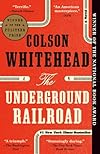
The Alternate History and Magic Realism elements of the story were put to amazing work here. At first I thought the actual, concrete reality of the Railroad was the only piece of fantasy, but as the trail leads Cora across state lines we're introduced to possibilities of what the "laboratories of democracy" might have done had their principles of "States Rights" been given free reign. From a quietly insidious, Kafkaesque bureaucracy to what was essentially an all-too-plausible-seeming Final Solution, we're shown the different forms man's inhumanity to man can take. The meaning of it, I think, is that as you read you realize (if you have any appreciation for the scope and scale of history) that no fictional atrocity he could throw in has the potential to outweigh the gravity of what the actual institution was. What he's condensed here cannot possibly match what transpired across millions of lives over hundreds of years. As the story kicks you in the stomach, as your heart bleeds for figments of the author's imagination, you wonder how you manage to not walk around with that feeling all the time since so much more than this ACTUALLY HAPPENED to real people: real kidnapping, real murder, real rape, real torture.
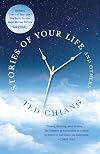
It's like, What if Calvino or Borges wrote pieces that were plot-driven without losing too much of either their appealing brevity or their conceptual underpinning? Having the author's "Story Notes" at the end--where he gives a paragraph explanation of where the idea for each piece came from--was nice. Also contains one of my favorite descriptions of what it feels like to be a parent: it's like giving birth "to an animated voodoo doll of myself".
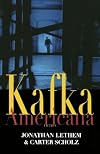
I read this right after finishing a complete collection of Kafka's shorter works, and I kind of think that's what these guys had done right before they wrote these pieces. They're riddled with references to Kafka's work. References to the novels were pretty obvious and inevitable, but there was a good bit of "Josephine the Singer", "In the Penal Colony", "The Burrow", "The Judgement" and "The Vulture". Those are just the ones I caught. What they actually do with these references is not necessarily all that satisfying. I found "Receding Horizons" (the long-ish piece co-written by both) and "K for Fake" (by Lethem alone) to be the most worthwhile. I enjoyed the idea of having Kafka (who invented so much of what we think of as uniquely 20th Century angst) survive to experience a bit more of that Century.
It wasn't mind-blowing but it was also only 100 pages. It's not like I'm underwhelmed after enduring a dense, discursive tome. They knew how much material they could get out of the subject-matter and the concept.
It wasn't mind-blowing but it was also only 100 pages. It's not like I'm underwhelmed after enduring a dense, discursive tome. They knew how much material they could get out of the subject-matter and the concept.
Pocket Atlas of Remote Islands: Fifty Islands I Have Not Visited and Never Will by Judith Schalansky
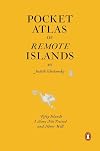
I picked up this book, first, for the title. I love looking around Google Earth, finding tiny specks in the ocean and zooming in on them to see if there are any signs of human habitation. Once it was in my hands I realized what a nicely designed book it really was; the blue pages pop against the orange cover very nicely. On closer inspection I found out the author actually created maps and designed the font herself. The text was at first a little disappointing. I connected to the introductory section where Schalansky talks about her fascination for maps, but the individual blurbs about each island weren't what I was expecting. It's not a reference book. The blurbs are not mini-Wikipedia pages about the islands. Instead you get a little vignette, an anecdote the author has discovered and (by her own admission) perhaps embellished slightly. Ultimately (and this re-framing helped me enjoy it better), I ended associating this book with Calvino's Invisible Cities . The little snapshots are not all great. They might seem pointless, but if you just accept them as atmosphere you'll enjoy this as a unique, beautiful, odd little book.
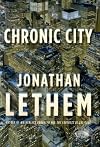
I think I am not a rare breed of reader. In many ways I think I read to assuage the disappointment of not having what takes to write. I read as an act of erasure, as though by eliminating all the books I like that have already been written I could stumble upon the outline of the one that's missing because I ought to have written it. In Lethem's Chronic City I felt like I he'd done what I once contemplated as a way to go about writing a novel: make a list of more or less random details you want to talk about (a tiger loose in NYC, a stranded space station, virtual worlds, non-profits providing furnished apartments for dogs, war-free editions of the newspaper, chocolate-scented smog) and then filling in a plot around them. I'm less interested in talking about how well accomplished that task than in mentioning a piece of reader's serendipity that occurred around my reading this book, mostly because I can't find part of it confirmed anywhere. I like to have multiple books going at once, both for the variety and because you end up accidentally encountering cool parallels. In the summers I like to set myself the task of reading 1 short story a day. While reading Chronic City I therefore happened to be also alternating between Kafka and Poe tales (which themselves pair very nicely). The first alignment with the novel was blatant. I had just read Kafka's Investigations of a Dog when Lethem's character Perkus Tooth began quoting from the story! Improbable enough, but the next one show more was crazier, if murkier. It has to do with the book's Bloomberg-stand-in Jules Arnheim. Poe has a short piece entitled the Domain of Arnheim about a wealthy man who expends his wealth on landscape gardening to create elaborate artificial landscapes. That parallel (for those who have read Chronic City already) can't be a coincidence, right? I googled the heck out of the terms Poe, Lethem, Arnheim, Chronic City and Domain but got nothing. In a scathing review of the book I even read a comment that Lethem's character's "names sound like riddles, which at first makes you think and, later, when you realize none of this is going anywhere, roll your eyes." This one name at least does seem to mean something, the key just happened to be hidden in one of a 209-year-old author's most obscure short stories. Weird. Also, I met Lethem once before I'd ever heard of him. Turns out he lived in my dorm room at my college before he dropped out, and he came to relive old times. I remember standing there awkwardly because I could tell I was supposed to know who he was. show less
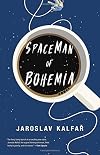
I had a hard time beginning this book. There was a clumsiness to the premise that didn't sit well. We're told that a comet from another galaxy has passed through our solar system. The first question is how we're meant to think they know it came from another galaxy, but that's really sort of minor. The narrator goes on to explain how a cloud of dust left behind between the orbits of Earth and Venus turned the night sky purple. First of all, unless the cloud is ring shaped and goes all around the sun, the Earth would have moved past the cloud at about 1,000 miles an hour, but in the book the sky is permanently purple for months if not years. Still, minor. The big problem is a big problem because it's just so simple. Anyone from anywhere with a grade school knowledge of the solar system should have been able to avoid this mistake: why would the NIGHT sky change color? Night is when the hemisphere is directed away from the sun and therefore away from Venus and anything in between. The daytime sky could have been changed. I could have been fine with that, but it's not. It's purple at night.
There were a few more things like this. At one point a character is described as adept at moving around even through the "vacuum" within the space craft when obviously he meant to refer to the lack of gravity, if it was a vacuum the protagonist saying it would be dead. Later he describes seeing "sand and rock" on the surface of Venus even though it's famously shrouded in an incredibly thick show more atmosphere of opaque clouds. There were others, very minor, like referring to bits of hair from shaving as "follicles" when really that's the name for the space from which hair emerges. Eventually I learned to get past it, but it was very distracting at first.
Ultimately, I realized the book was to be read as historical fiction than science fiction. Once I realized that the space stuff was only a framing device for telling a story about how history affects our lives I was better able to forgive and actually enjoy the quirkiness of the aliens and the secret agent astronauts. The emotional content of the protagonist's relationships is actually pretty well done. When you add to the novel's actual merits the mitigating circumstances that the author is writing in his second language and is less than 30 years old it gets harder and harder to find fault, especially without any debut novel of my own to back it up.
Hard Science Fiction this is not, but that's okay in the end. show less
There were a few more things like this. At one point a character is described as adept at moving around even through the "vacuum" within the space craft when obviously he meant to refer to the lack of gravity, if it was a vacuum the protagonist saying it would be dead. Later he describes seeing "sand and rock" on the surface of Venus even though it's famously shrouded in an incredibly thick show more atmosphere of opaque clouds. There were others, very minor, like referring to bits of hair from shaving as "follicles" when really that's the name for the space from which hair emerges. Eventually I learned to get past it, but it was very distracting at first.
Ultimately, I realized the book was to be read as historical fiction than science fiction. Once I realized that the space stuff was only a framing device for telling a story about how history affects our lives I was better able to forgive and actually enjoy the quirkiness of the aliens and the secret agent astronauts. The emotional content of the protagonist's relationships is actually pretty well done. When you add to the novel's actual merits the mitigating circumstances that the author is writing in his second language and is less than 30 years old it gets harder and harder to find fault, especially without any debut novel of my own to back it up.
Hard Science Fiction this is not, but that's okay in the end. show less

A read these volumes after the first 2 volumes of William Manchester's biography of Churchill (which, by the way, picks up pretty neatly where Churchill himself leaves off) partly based on Manchester's recommendation of Churchill as a prose stylist. Churchill was not independently wealthy and had to support himself on the strength of his pen. His insights in history are not exactly groundbreaking; he wasn't a historian presenting new scholarship. Rather, the value here came for me precisely from Churchill's non-historian perspective. It's fascinating to read about William of Orange or Wellington through the lens of a man who faced his own national existential crisis. It's hard not to read into his conclusions about historical figures and events, and indeed that's where most of the fun resides. For instance, his take on Roman subjugation of the Britons feels like it's colored by Churchill's impression that Britain's Imperial possessions (India and Ireland especially) were better off under the canopy of British rule.
As an American reader it was especially interesting to see Churchill's take on the US Civil War. First, I was shocked at the depth he went to. I'd have to double check, but I feel like it was given more pages than any other conflict including the Napoleonic Wars. We see day-by-day accounts of troop movements on and around all the major battles. Still more surprising were the strong opinions Churchill put forward about practically every political and military show more leader on both sides. A few of these opinions flew in the face of anything I'd ever heard before (he thought Stanton a snake, Grant a "negation of generalship", and pitied McClellan ALMOST half as much as McClellan pitied himself). His views on reconstruction were a bit unpalatable. Clearly it's a blot on US history and grossly mismanaged, but Churchill's sympathy seems to go excessively to the mistreated Southern whites who were dealt with too harshly (possibly a reflection of Churchill's belief that Germany's resurgence might have been avoided by less recriminating terms after WWI?) rather than to the multitude of freed slaves who were left to shift for themselves. If anything he seems to suggest that the blacks of the South were enfranchised too abruptly. Again, this feels very much like the opinion of a man whose character was still the product of Victorian world-views, drawing a clear line between people fit to govern and those suited only to be governed. To 21st Century sensibilities this paternalistic outlook comes off both naive and insulting.
My biggest disappointment was a bit of a sense that the title was a misnomer. I was excited by his choice to avoid calling it a history of "the English", foretokening an unprejudiced look at all the parts of the world that speak the language. At the very minimum I expected to hear more about the Irish and the Scottish, but they are always exclusively viewed from the perspective of English ambitions. The US is given large sections, but these are clearly subplots to the main story. Australia, Canada, New Zealand and South Africa each get half a chapter. India is discussed quite a bit, more than Ireland I think which is odd considering how much later India becomes relevant to the English story. Nigeria, Kenya, Belize, Singapore, Trinidad, Guyana, Jamaica--none of these was more than mentioned.
The overarching theme that runs across all 4 volumes is that the English Speaking Peoples share a common heritage rooted in the English legal traditions that value individual liberties and rights of self-government. It's an interesting premise. His last line is also interesting in as much as it seems to suggest a vision of a future date at which all English-speaking peoples are united in an enormous supranational entity committed to these ideals. In the post-war period, facing down authoritarian Russia, this was perhaps not an unthinkable notion. show less
As an American reader it was especially interesting to see Churchill's take on the US Civil War. First, I was shocked at the depth he went to. I'd have to double check, but I feel like it was given more pages than any other conflict including the Napoleonic Wars. We see day-by-day accounts of troop movements on and around all the major battles. Still more surprising were the strong opinions Churchill put forward about practically every political and military show more leader on both sides. A few of these opinions flew in the face of anything I'd ever heard before (he thought Stanton a snake, Grant a "negation of generalship", and pitied McClellan ALMOST half as much as McClellan pitied himself). His views on reconstruction were a bit unpalatable. Clearly it's a blot on US history and grossly mismanaged, but Churchill's sympathy seems to go excessively to the mistreated Southern whites who were dealt with too harshly (possibly a reflection of Churchill's belief that Germany's resurgence might have been avoided by less recriminating terms after WWI?) rather than to the multitude of freed slaves who were left to shift for themselves. If anything he seems to suggest that the blacks of the South were enfranchised too abruptly. Again, this feels very much like the opinion of a man whose character was still the product of Victorian world-views, drawing a clear line between people fit to govern and those suited only to be governed. To 21st Century sensibilities this paternalistic outlook comes off both naive and insulting.
My biggest disappointment was a bit of a sense that the title was a misnomer. I was excited by his choice to avoid calling it a history of "the English", foretokening an unprejudiced look at all the parts of the world that speak the language. At the very minimum I expected to hear more about the Irish and the Scottish, but they are always exclusively viewed from the perspective of English ambitions. The US is given large sections, but these are clearly subplots to the main story. Australia, Canada, New Zealand and South Africa each get half a chapter. India is discussed quite a bit, more than Ireland I think which is odd considering how much later India becomes relevant to the English story. Nigeria, Kenya, Belize, Singapore, Trinidad, Guyana, Jamaica--none of these was more than mentioned.
The overarching theme that runs across all 4 volumes is that the English Speaking Peoples share a common heritage rooted in the English legal traditions that value individual liberties and rights of self-government. It's an interesting premise. His last line is also interesting in as much as it seems to suggest a vision of a future date at which all English-speaking peoples are united in an enormous supranational entity committed to these ideals. In the post-war period, facing down authoritarian Russia, this was perhaps not an unthinkable notion. show less
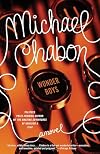
So you know that bit of Chekhovian wisdom about the gun? It occurred to me over and over again throughout the reading of this book. Every element Chabon inserted into this story goes off sooner or later in one way or another, including the boa constrictor. I can’t say that the progression of the plot is predictable, but I want to say something almost like that and in the most positive way; a page and a half before every new tragedy in the inexorably unraveling life of Grady Tripp you can begin to see something coming, you can watch how Chabon’s facsimile of fate and chance conspire to bring about one travesty after another. It’s a virtuoso performance of plot-craft. But, as I’ve discovered over and over in Chabon’s writing, the real gem isn’t the plot (though it’s impeccable), it isn’t the prose (though it’s beautiful), it isn’t concept (though it’s interesting), it’s his characters. Now, I’m not normally a reader who loves literature for the characters most of all, and I tend to read with disbelief only partially suspended, but Chabon’s characters become real to me. I audibly gasp, I laugh out loud, my jaw literally drops; I read portions of this book pacing in my kitchen with my wife occasionally asking if everything was okay, and me wanting to answer “how could it be, with all that stuff in Grady’s trunk?!” It doesn’t even matter that Grady kind of sucks, that he’s a terrible person; I still feel for the guy, still root for him. show more
This book is highly recommended to that kind of reader whose reading is a symptom of a half-smothered, stillborn, frustrated ambition to write. I know you’re out there. show less
This book is highly recommended to that kind of reader whose reading is a symptom of a half-smothered, stillborn, frustrated ambition to write. I know you’re out there. show less

Easily ranking as one of my most fortuitous finds at a library book sale, this book is a treasure to fans of either Borges or Bioy Casares (though frankly a fan of one probably is--or would be--a fan of the other, right?). Originally written under the Argentine innovators' shared pseudonym H. Bustos Domecq, the book purports to be a series of essays by the writer about avant-garde artists in a variety of media. What I found really satisfying about this book was how it mercilessly mocks what would be called postmodern art while simultaneously being a terrific example of the same. In most cases you only gradually come to understand the absurdity of the art and artist described, for instance the author's dear friend who claimed the negative space intervening between buildings as his own sculptures and charged the public admission fees to view them, or the poet who rejected the use of metaphor and ultimately--in a contest to write the best verses about a rose--won by submitting to judges a specimen of the flower itself.
At no point was it really clear to me how the authors shared the work of writing. I did not, for instance, have the sense that the voice changed between pieces as though they switched on and off. The conflation was seamless.
I think the world of literature needs to embrace the adjective "Borgesian" and place it on a level alongside "Kafkaesque".
At no point was it really clear to me how the authors shared the work of writing. I did not, for instance, have the sense that the voice changed between pieces as though they switched on and off. The conflation was seamless.
I think the world of literature needs to embrace the adjective "Borgesian" and place it on a level alongside "Kafkaesque".
Jorge Luis Borges confined his fiction to extremely brief pieces that leave the reader desperate for more. In fact, the subject of his writing was often the intimation of non-existent full-length books through the device of fictitious synopses. The books Borges conjured up were often possessed of novel structures, innovative modes of presenting narratives that elegantly complimented the content matter of his fictional authors. Here in Ajvaz's novel we have what can only have been the man's attempt to write the sort of thing Borges only hinted at. There are others out there, books that speak to the same ambition (Thomas Wharton's Salamander, for one) and like them Ajvaz's book suffers from the same creeping tedium spared us by Borges's wisdom and forebearance. Let me say, quickly, that I liked this book. Its shortcomings were inevitable inasmuch as it aspires to the Borgesian example. It is like a circle drawn with a compass compared with the archetypal, Platonic "Circle", only an imperfect projection of the unattainable. By rendering his creations (such as the works of Herbert Quain) as pure works of the imagination, Borges could simply state that their literary convolutions were successful, whereas Ajvaz had to actually make them successful. He performs admirably. Borges believed that a book whose merit consists in a single clever notion need not couch itself in 10,000 lines of dense prose when you could rather state the clever idea and ask us to imagine the book in show more which it resides. All the baggage that accompanies Ajvaz's cleverness was sometimes tiring to wade through. Part of his point was digression, but not every digression worked. What saved him was the wealth of memorable images and concepts he was able to sprinkle throughout the text. While they were no real substitute for a plot, they were still engaging, and it is safe to say that it is his felicity for surreal juxtaposition that makes him more than a Slavic incarnation of a Borges-that-might-have-been. Several images from this book will stick with me for a long time to come.
Finally, there was the last 20% of the book! The whole rest of the book, I felt, was paving the way for this. He pulls us jarringly (but not unpleasantly) into and out of a series of intersecting stories. These are as plot driven as the preceding 200 pages had been nearly plotless. They are as brutal, magical, emotional, and tragic as fairy tales. The stories contain one another and he leaves one plot line for another for dozens of pages only to return to it again, and along the way he hints (like a good Borgesian) at the existence of other digressions he is declining to lead us down. The rate at which I consumed the pages of this book increased exponentially as I approached the end. It almost sounds like the work as a whole was unbalanced, but no; best of all, the quality of these last pages is underpinned by the investments made in the beginning and throughout the middle. You come to realize that even the duller moments were to establish atmosphere. It was all worthwhile in the end. Well done. show less
Finally, there was the last 20% of the book! The whole rest of the book, I felt, was paving the way for this. He pulls us jarringly (but not unpleasantly) into and out of a series of intersecting stories. These are as plot driven as the preceding 200 pages had been nearly plotless. They are as brutal, magical, emotional, and tragic as fairy tales. The stories contain one another and he leaves one plot line for another for dozens of pages only to return to it again, and along the way he hints (like a good Borgesian) at the existence of other digressions he is declining to lead us down. The rate at which I consumed the pages of this book increased exponentially as I approached the end. It almost sounds like the work as a whole was unbalanced, but no; best of all, the quality of these last pages is underpinned by the investments made in the beginning and throughout the middle. You come to realize that even the duller moments were to establish atmosphere. It was all worthwhile in the end. Well done. show less
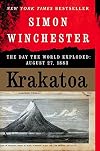
As a whole the book is compelling. There's a lot in here. As if the massive eruption of a volcano in relatively recent history weren't enough, he manages to digress into numerous fascinating tangents. I had only one major complaint. The author was adept at elucidating the physical science underlying what happened at Krakatoa, but when he was handling history as regards human matters he was--I think--less successful. He showed a marked ambivalence toward the Dutch colonial endeavor in Indonesia, always very careful to avoid passing judgement , referring to Dutch colonial government as "allegedly" tyrannical. Now, that's all well and good considering the book isn't about the author stating and supporting a thesis as regards European imperialism (though I'd have thought we'd all more or less come around to the conclusion that it was by and large an ugly business), but it was his discussion of Islam that left me baffled. As careful as he was to leave open the possibility that maybe the Indonesians were better off under their Dutch masters, he's equally straightforward in condemning the influence of Islam, a religion he says "it should not be forgotten, is an imperial religion, and Arabism is perhaps the greatest of all contemporary imperial movements". He goes on to more or less wonder why the Dutch didn't act more forcibly to curtail the freedoms of the Javanese; he says "the Dutch authorities were understandably wary of the practice" known as the hajj, the pilgrimage to show more Mecca, but that "all they [the Dutch] could do was try to make sure the pilgrims were persuaded to keep their potentially corrosive sojourn in Arabia as short as possible, and to monitor the behavior of them all just as soon as they came home". These are just a couple of instances in this one aberrant chapter where I felt Winchester's prose lacked the distanced perspective a historian. True, he was putting forward a thesis here that Krakatoa indirectly gave rise to a subsequent upsurge in militant religious extremism, but he failed to hide what seems to be his prejudice that the phrase "Muslim Extremism" is redundant. By failing to distinguish a faith as whole from the actions of its zealots he winds up coming off as a crank. He briefly attempts to soften the strength of his words by adding two full paragraphs beginning with a statement that the subject he's discussing is complicated and "beyond the scope" of the present work, but he puts those whole two paragraphs in parentheses for no apparent reason, as though simply to visibly express that he's acknowledging a bigger picture only under duress.
Again, the vast majority of the books is clear and interesting. It's just the one chapter that seemed strange. Still worth the read. show less
Again, the vast majority of the books is clear and interesting. It's just the one chapter that seemed strange. Still worth the read. show less
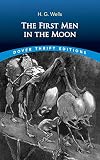
The Science Fiction elements of this story are somewhat dated. The notion of a virtually hollow Moon and a substance that is opaque to gravity's "rays" both ring, today, less like science fiction and more like fantasy. The truly wonderful thing about these older SF works (Verne, Wells, even Capek), however, is that as they age they attain this additional status as artifacts of an era and its expectations. The fact that the mechanism by which Cavor and Bedford travel to the Moon is, today, patently absurd is fascinating rather than detracting from the work. To see what seemed possible at that time and turns out not to be is as interesting as the instances in which these visionaries got it right.
Then again, Wells was never quite so concerned with making his stories plausible as Verne generally was. The essence of Wells's stories is, rather, thinly veiled social commentary (for instance on social stratification in The Time Machine). Here, Cavor's transmissions toward the end are a priceless example and the weird eyes of the Grand Lunar a terrific lens through which to see ourselves. Also of note in this story is the extent of detail he put toward the physiology of his alien race and how it relates to social structure. Finally, I can't say enough for the character work. The trope of the unreliable narrator is exquisitely employed. Bedford's annotation on Cavor's transmissions and the ways in which they contradict the version he put forward when he thought no one could show more question it is the sort of thing Nabokov might have written. show less
Then again, Wells was never quite so concerned with making his stories plausible as Verne generally was. The essence of Wells's stories is, rather, thinly veiled social commentary (for instance on social stratification in The Time Machine). Here, Cavor's transmissions toward the end are a priceless example and the weird eyes of the Grand Lunar a terrific lens through which to see ourselves. Also of note in this story is the extent of detail he put toward the physiology of his alien race and how it relates to social structure. Finally, I can't say enough for the character work. The trope of the unreliable narrator is exquisitely employed. Bedford's annotation on Cavor's transmissions and the ways in which they contradict the version he put forward when he thought no one could show more question it is the sort of thing Nabokov might have written. show less

What I like most about Verne's books is the way in which they may be read simultaneously as pure adventure fiction and as curious historical artifacts. The most famous examples of the second type are his science fictions works for both their astounding clairvoyance and fascinating misjudgments (like cities powered by compressed air), but in Michael Strogoff there is a perfect example of a different sort. Here we see a story whose setting is a giant stereotype. With the benefit of retrospect it's interesting to see Verne glorifying the Czarist state as one worthy of the protagonist's single-minded devotion, rather than as the brutal, regressive autocracy it is now well-known to have been. Verne's version of Imperial Russia is as a bulwark against a faceless horde of murderous, half-savage "Tartars". Again, with historical perspective a present-day reader almost can't help but envision this same story flipped to the alternate point of view, with the villains recast as a subjugated indigenous people struggling to regain self-determination from a distant overlord.
Worth a read for its typically compelling Jules Vernian episodes as well as for its portrait of--not simply one man's, but an entire era's--ethnic prejudices.
Worth a read for its typically compelling Jules Vernian episodes as well as for its portrait of--not simply one man's, but an entire era's--ethnic prejudices.
When I read this book the most prominent tags associated with it were ( and maybe still are) "Central Asia" and "Turkey" or "Turkish". Isn't that odd just at face value? How can it be from Turkey (a country with territory in continental Europe) and from the MIDDLE of Asia?
Well, it can because The Book of Dede Korkut is essentially the transcription of an oral tradition developed by the Orghuz people as they migrated out of Central Asia (roughly modern day Uzbekistan, Turkmenistan and Tajikistan) ultimately ending up in Anatolia (modern day Turkey). Now, the Orghuz Turks did go on to conquer all of Anatolia and even toppled the Byzantine Empire replacing it with the Ottoman Empire, but that conquest takes place after the scope of these stories. Toward the end of the stories the city of Trebizond (Modern Trabzon on the Black Sea coast of Turkey) is still "infidel" and lies at the edge of Orghuz territory. This just goes to show that at the time these stories originated their authors had barely begun to establish a foothold in the territory we now call Turkey.
Just because these stories predate a Turkish "Turkey" does not mean the stories don't deserve a "Turkey" designation in the most common tags. The Book of Dede Korkut is essentially the origin story for many of the modern nations primarily speaking Turkic languages, Turkey among them.
So I have no issue with this book being associated with Turkey and Central Asia, but rather with its NOT being associated with Azerbaijan show more or the Caucasus region in general, most likely the epicenter of most of action. This region represents the halfway point between their starting point in Central Asia and their end point in Anatolia. Indeed, of all the countries that do so, Azerbaijan seems to reverence Dede Korkut most of all today and there seems to be reason to believe that the text itself is most closely related to Azeri Turkish, perhaps suggesting that it was in Azerbaijan that it was first set down in writing.
The fault for the misattribution is probably due to the misleading subtitle "A Turkish Epic". "Turkish" is the demonym for a person from Turkey, but it could also mean any group speaking a Turkic language from a huge swathe of Asia running diagonally from northeastern Russia (the Yakuts) through China (the Uyghurs) and ending in Turkey. Again, these stories form a backdrop for the later conquest of the Byzantine Empire and the rise of the Ottoman Dynasty and its successor modern Turkey, and Turkey IS the most visible representative of that language family on the global stage. However, to say that Turkey's ubiquity earns it the strongest right to claim these stories would be like calling Shakespeare American.
The stories themselves are interesting. They contain the kind of repetitive language common in epic poetry that began in the oral tradition (think of the Odyssey and how often you have to read the words "wine-dark sea") and it's clear that the stories developed over time in that they lack an overarching development. These aren't inherently flaws any more than "there were lots of robots" would be a flaw in a Science Fiction novel; if robots bother you, maybe Science Fiction isn't your thing. Compared to other ancient or medieval literature I've read, I'd call it about average. I'd compare it to The Mabinogion in a lot of ways but a little more fast-paced and a lot less fantastical in content. The titular Dede Korkut is actually interesting as an extremely peripheral character, a kind of bard, who makes very brief appearances in each of the stories. show less
Well, it can because The Book of Dede Korkut is essentially the transcription of an oral tradition developed by the Orghuz people as they migrated out of Central Asia (roughly modern day Uzbekistan, Turkmenistan and Tajikistan) ultimately ending up in Anatolia (modern day Turkey). Now, the Orghuz Turks did go on to conquer all of Anatolia and even toppled the Byzantine Empire replacing it with the Ottoman Empire, but that conquest takes place after the scope of these stories. Toward the end of the stories the city of Trebizond (Modern Trabzon on the Black Sea coast of Turkey) is still "infidel" and lies at the edge of Orghuz territory. This just goes to show that at the time these stories originated their authors had barely begun to establish a foothold in the territory we now call Turkey.
Just because these stories predate a Turkish "Turkey" does not mean the stories don't deserve a "Turkey" designation in the most common tags. The Book of Dede Korkut is essentially the origin story for many of the modern nations primarily speaking Turkic languages, Turkey among them.
So I have no issue with this book being associated with Turkey and Central Asia, but rather with its NOT being associated with Azerbaijan show more or the Caucasus region in general, most likely the epicenter of most of action. This region represents the halfway point between their starting point in Central Asia and their end point in Anatolia. Indeed, of all the countries that do so, Azerbaijan seems to reverence Dede Korkut most of all today and there seems to be reason to believe that the text itself is most closely related to Azeri Turkish, perhaps suggesting that it was in Azerbaijan that it was first set down in writing.
The fault for the misattribution is probably due to the misleading subtitle "A Turkish Epic". "Turkish" is the demonym for a person from Turkey, but it could also mean any group speaking a Turkic language from a huge swathe of Asia running diagonally from northeastern Russia (the Yakuts) through China (the Uyghurs) and ending in Turkey. Again, these stories form a backdrop for the later conquest of the Byzantine Empire and the rise of the Ottoman Dynasty and its successor modern Turkey, and Turkey IS the most visible representative of that language family on the global stage. However, to say that Turkey's ubiquity earns it the strongest right to claim these stories would be like calling Shakespeare American.
The stories themselves are interesting. They contain the kind of repetitive language common in epic poetry that began in the oral tradition (think of the Odyssey and how often you have to read the words "wine-dark sea") and it's clear that the stories developed over time in that they lack an overarching development. These aren't inherently flaws any more than "there were lots of robots" would be a flaw in a Science Fiction novel; if robots bother you, maybe Science Fiction isn't your thing. Compared to other ancient or medieval literature I've read, I'd call it about average. I'd compare it to The Mabinogion in a lot of ways but a little more fast-paced and a lot less fantastical in content. The titular Dede Korkut is actually interesting as an extremely peripheral character, a kind of bard, who makes very brief appearances in each of the stories. show less
Empires of the Silk Road: A History of Central Eurasia from the Bronze Age to the Present by Christopher I. Beckwith
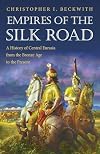
Beckwith's premise is compelling: The so-called "Silk Road" has been misunderstood as a line connecting the Mediterranean, South Asian and East Asian societies of Antiquity and the Middle Ages. Instead the Silk Road was the entire economic system of a region that was--on and off--a well-spring of culture in its own right. Throughout the book he makes the important distiction of referring to civilizations like the Romans, Persians and Chinese as "peripheral". Rather than casting these societies as the protagonists of history being bothered by pestiferous nomads from the Eurasian interior, he shows they existed in a symbiotic relationship with the steppe zone. Over and over you see the pattern wherein peripheral states seek to limit free trade on their frontiers, which causes the nomadic peoples to attempt to re-institute free trade (often through warfare), sometimes resulting in the peripheral state attempting a whole-sale subjugation of the steppe zone, usually having the effect of either instigating their own demise through conquest or else succeeding and causing the complete collapse of the Silk Road economy and a recession beck home.
Beckwith makes a very interesting comparison between steppe nomads (Scythians, Huns, Turks, Mongols, etc.) and Europeans during the Age of Exploration. He posits that trade was--in both instances--the driving motive. Europeans sought to trade in Asian ports and only used force and subjugation when the trading partner was unwilling. show more Beckwith's premise is interesting but not entirely persuasive. He seeks to frame this behavior as fundamentally benevolent and make European conquest look like an unfortunate but necessary result of "Oriental" intransigence.
Indeed, the further I read the more troubled I became with Beckwith's authorial presence in the text, which is odd considering his vitriolic tirade against post-modernism in historical scholarship. After lambasting the tendency of contemporary scholars to deconstruct perspective and seek out implicit meanings in texts, he ironically peppers his work with intrusions that need hardly be looked for. As examples, he never refers to a government as democratic without including passive-aggressive quotation marks, he considers fascism, communism, rock n' roll music and free verse poetry as together constituting a subversive conspiracy he monolithically term Modernism intended to undermine benevolent monarcho-aristocratic classicism. He frequently blames populism and demagoguery for societies ills and for destroying civilized norms that were built by an aristocratic society that, he says, always exercised a sense of personal responsibility in exercising the levers of power.
His treatment of the pre-modern world is exemplary, but as soon as he steps into talking about the Modern Era his writing literally begins to sound psychotic. He commits dozens of pages to discussions of how much he dislikes Modern Art's destruction of beauty. He hopes that someday there might be Art once more, but he's not optimistic. The connection between this diatribe and anything thematically relevant to the preceding 300 pages is tangential at best, but closer to non-existent. He explicitly says that the term "World War I" is a misnomer since the vast majority of fighting occurred in Western Europe, but he chooses to describe its causes, vicissitudes and consequences in a remedial level of detail that actually insults the reader.
Back to the positive angle, the book was immensely valuable in filling in a portion of themap that used to present a giant question mark. The migrations of peoples and their enthnolinguistic relationships are far clearer to me now. From this book I now see how this formerly mysterious region has actually periodically reseeded the "peripheral" world. The Greco-Roman period was dominated by Indo-European language speakers originating from Iran; the Middle Ages was the result of their displacement by groups emerging from Central Asia and the concomitant synthesis of their Germanic and Romantic cultures; Arab, Indian and Chinese scholarship mixed and fomented in the prosperous Central Asian steppe empires of the medieval period.
The story is ultimately tragic. First, the advent of long-distance open-sea trade routes and, second, the 18th Century partition of Central Eurasia between Russia and China put an end to self-sufficiency, self-determination and entrepreneurial spirit for what had until then always been a dynamic and important region of the world. That subjugation continues today with the Uighers and Tibetans of western China and countless, virtually nameless distinct peoples shrouded from global consciousness by the national designation "Russia". show less
Beckwith makes a very interesting comparison between steppe nomads (Scythians, Huns, Turks, Mongols, etc.) and Europeans during the Age of Exploration. He posits that trade was--in both instances--the driving motive. Europeans sought to trade in Asian ports and only used force and subjugation when the trading partner was unwilling. show more Beckwith's premise is interesting but not entirely persuasive. He seeks to frame this behavior as fundamentally benevolent and make European conquest look like an unfortunate but necessary result of "Oriental" intransigence.
Indeed, the further I read the more troubled I became with Beckwith's authorial presence in the text, which is odd considering his vitriolic tirade against post-modernism in historical scholarship. After lambasting the tendency of contemporary scholars to deconstruct perspective and seek out implicit meanings in texts, he ironically peppers his work with intrusions that need hardly be looked for. As examples, he never refers to a government as democratic without including passive-aggressive quotation marks, he considers fascism, communism, rock n' roll music and free verse poetry as together constituting a subversive conspiracy he monolithically term Modernism intended to undermine benevolent monarcho-aristocratic classicism. He frequently blames populism and demagoguery for societies ills and for destroying civilized norms that were built by an aristocratic society that, he says, always exercised a sense of personal responsibility in exercising the levers of power.
His treatment of the pre-modern world is exemplary, but as soon as he steps into talking about the Modern Era his writing literally begins to sound psychotic. He commits dozens of pages to discussions of how much he dislikes Modern Art's destruction of beauty. He hopes that someday there might be Art once more, but he's not optimistic. The connection between this diatribe and anything thematically relevant to the preceding 300 pages is tangential at best, but closer to non-existent. He explicitly says that the term "World War I" is a misnomer since the vast majority of fighting occurred in Western Europe, but he chooses to describe its causes, vicissitudes and consequences in a remedial level of detail that actually insults the reader.
Back to the positive angle, the book was immensely valuable in filling in a portion of themap that used to present a giant question mark. The migrations of peoples and their enthnolinguistic relationships are far clearer to me now. From this book I now see how this formerly mysterious region has actually periodically reseeded the "peripheral" world. The Greco-Roman period was dominated by Indo-European language speakers originating from Iran; the Middle Ages was the result of their displacement by groups emerging from Central Asia and the concomitant synthesis of their Germanic and Romantic cultures; Arab, Indian and Chinese scholarship mixed and fomented in the prosperous Central Asian steppe empires of the medieval period.
The story is ultimately tragic. First, the advent of long-distance open-sea trade routes and, second, the 18th Century partition of Central Eurasia between Russia and China put an end to self-sufficiency, self-determination and entrepreneurial spirit for what had until then always been a dynamic and important region of the world. That subjugation continues today with the Uighers and Tibetans of western China and countless, virtually nameless distinct peoples shrouded from global consciousness by the national designation "Russia". show less
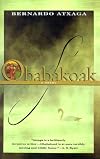
The edition I read labels the book as a novel right on the cover below the title. I think I have a pretty open-minded threshold for what constitutes a novel, but in the first half I couldn't see any reason to see the book in that light. Rather, here were a collection of short vignettes grouped into broad categories and of varying degrees of appeal. Ostensibly the unifying element was the titular village of Obaba, but it rarely seemed really important that the setting was this fictitious village--as though the author might just as well have collected together some unrelated stories and added in a reference to the place name "Obaba" after the fact in order to justify the collection. (There was also, inexplicably, one section--about 60 pages, almost a fifth of the total book--which was set in a different village called Villamediana). The second half finds a way to interestingly frame its stories and weave them together in an overarching narrative, to bring the past stories back in reference to later ones, but I should say that the stories of the first half weren't BAD for lacking this quality. I only mean to say that the book walks a confusing line by calling itself a novel and yet resembling far more an anthology of short works.
I read this book while also reading Mark Kurlansky's "A Basque History of the World", which served as a very interesting companion. Atxaga's book largely avoids the political issues surrounding his Basque heritage (except toward the very end) and show more indeed many of his stories have an international quality, some taking place in South America, another in China, others in Germany, but the existence of his book is inherently related to the Basque struggle for self-determination. It was somewhat sad to me to see that what I was reading was a translation from a translation. The book could apparently not be translated directly from Euskera (Basque) to English but from the Spanish translation. Fortunately, it is a translation from the author's own Spanish translation, so we can feel confident that not too much has been lost in fidelity to the original, and as Atxaga himself asserts in his sign-off at the end, the advent of a distinctly Basque literature appears to be waxing rather than sputtering out, with the market for such works expanding. Perhaps as this trends continues there will come to be translators capable of transmitting the works of Basque authors directly to readers from other parts of the world.
The Prologue--a poem in which the author discusses his language--was perhaps my favorite part, in particular where he gives the words for the sun in winter and the sun in spring. show less
I read this book while also reading Mark Kurlansky's "A Basque History of the World", which served as a very interesting companion. Atxaga's book largely avoids the political issues surrounding his Basque heritage (except toward the very end) and show more indeed many of his stories have an international quality, some taking place in South America, another in China, others in Germany, but the existence of his book is inherently related to the Basque struggle for self-determination. It was somewhat sad to me to see that what I was reading was a translation from a translation. The book could apparently not be translated directly from Euskera (Basque) to English but from the Spanish translation. Fortunately, it is a translation from the author's own Spanish translation, so we can feel confident that not too much has been lost in fidelity to the original, and as Atxaga himself asserts in his sign-off at the end, the advent of a distinctly Basque literature appears to be waxing rather than sputtering out, with the market for such works expanding. Perhaps as this trends continues there will come to be translators capable of transmitting the works of Basque authors directly to readers from other parts of the world.
The Prologue--a poem in which the author discusses his language--was perhaps my favorite part, in particular where he gives the words for the sun in winter and the sun in spring. show less
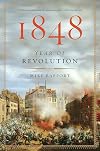
I sought out this book after the events now being called the "Arab Spring" really got rolling. I was looking to see if the intuition that the events unfolding in North Africa and the Middle East were really comparable across time and space. The term sui generis comes to mind whenever such comparisons are attempted, and while it's fair to acknowledge that the popular uprisings happening in our time arise from conditions and motivations native to the context of Arab/Islamic culture and history, those distinctions that make the two phenomena different are themselves enlightening. As Mark Twain said, "History does not repeat itself, but is does rhyme."
Complaints can certainly be marshaled against the structure and character of this treatment of history. Any reading of a book is accompanied by comparisons to other books that it might have been had the author placed different emphasis. The content is intimidatingly broad and requires an effort to keep straight the various threads across the several concurrent revolutions. So saying, I think that Rapport's treatment is honest and shows integrity in dealing with the material. To have placed particular emphasis in any one theater of events while glossing over some aspects would have done an injustice to the very things that make this year of history fascinating. All of this happened at once, and no piece of it was for any reason more valid or important unless from a myopic perspective that generally eschews regions we think of as show more backwaters of European civilization. I see complaints of a lack of background explanation, but a moment's reflection on what that would entail and how much weight and density it would add to the total work should cause a retraction of that desire. This book deals with a certain set of events. Any information not contained therein is available elsewhere. If the reader is spurred to learn more, that's great. If it requires concerted effort to comprehend the complexity it is possible that it may be because the events themselves are complex and any movement to reduce complexity would be dishonest.
Back to the comparison with the Arab Spring, I certainly don't appreciate the news media's sound-bite-style journalism that virtually ignores events in any countries other than Egypt and Syria. No doubt they do so because they have a low opinion of our ability to process complexity and therefore serve-up a condensed version. I can't help thinking that there are just some times when an endeavor to actually grapple with complexity is actually the only way to get a visceral sense of that complexity. Who ever said the reading of a history book should be a passive experience? I agree it's not a beach read, and you may have to pay attention to it and occasionally come to grips with the fact that there are important historical figures you've never heard of whose context in a larger historical picture may have to be sought out elsewhere. So be it.
Finally, the comparisons to the revolutions from Algeria to Bahrain are--I think--elucidating. To see how the retrenchment of those empowered can stubbornly resist the conflicting idealisms of fracturing progressive movements mirrors in many respects the events we've seen over the last couple years. Two steps forward, one step back is perhaps the rhyme running through a world history of progressiveness. show less
Complaints can certainly be marshaled against the structure and character of this treatment of history. Any reading of a book is accompanied by comparisons to other books that it might have been had the author placed different emphasis. The content is intimidatingly broad and requires an effort to keep straight the various threads across the several concurrent revolutions. So saying, I think that Rapport's treatment is honest and shows integrity in dealing with the material. To have placed particular emphasis in any one theater of events while glossing over some aspects would have done an injustice to the very things that make this year of history fascinating. All of this happened at once, and no piece of it was for any reason more valid or important unless from a myopic perspective that generally eschews regions we think of as show more backwaters of European civilization. I see complaints of a lack of background explanation, but a moment's reflection on what that would entail and how much weight and density it would add to the total work should cause a retraction of that desire. This book deals with a certain set of events. Any information not contained therein is available elsewhere. If the reader is spurred to learn more, that's great. If it requires concerted effort to comprehend the complexity it is possible that it may be because the events themselves are complex and any movement to reduce complexity would be dishonest.
Back to the comparison with the Arab Spring, I certainly don't appreciate the news media's sound-bite-style journalism that virtually ignores events in any countries other than Egypt and Syria. No doubt they do so because they have a low opinion of our ability to process complexity and therefore serve-up a condensed version. I can't help thinking that there are just some times when an endeavor to actually grapple with complexity is actually the only way to get a visceral sense of that complexity. Who ever said the reading of a history book should be a passive experience? I agree it's not a beach read, and you may have to pay attention to it and occasionally come to grips with the fact that there are important historical figures you've never heard of whose context in a larger historical picture may have to be sought out elsewhere. So be it.
Finally, the comparisons to the revolutions from Algeria to Bahrain are--I think--elucidating. To see how the retrenchment of those empowered can stubbornly resist the conflicting idealisms of fracturing progressive movements mirrors in many respects the events we've seen over the last couple years. Two steps forward, one step back is perhaps the rhyme running through a world history of progressiveness. show less

Glanced through other reviews: bored by philosophical shpeel? It rings of elitism? There's no real plot? Obviously, everyone is entitled to their opinion. If saying so sounds dismissive, it may be because one person's entitlement to have them is different from an obligation in the rest of us to heed them.
It isn't The Great Gatsby. That is true, as so many reviewers below point out, but then again all books but one aren't The Great Gatsby. This is a great example of the Bildungsroman. The journey of reading this sort of story is to see a character take shape in interaction with an environment. The interesting thing with Amory--the "Egotist"--is how conscious he seems to be of his own Self taking shape, even from a very young age. He is hyper-aware of how his poses redound upon his reputation in society. You are, I think, absolutely meant to recoil at the self-indulgence and shallowness of his patrician lifestyle. His philosophical musings are, I think, meant to sound amateurish. Many of his romantic woes are meant to seem maudlin. If he seems to be drifting through life, I think it's in the nature of his generation, it's representative of a time and place. Note the conspicuous absence of the World War; there's an elephant in the room. To those who felt there was no plot, that Amory doesn't undergo a change, that the story seems to promote class-ist sentiments, you perhaps gave up before the culminating dialogue between a thoroughly broken-down Amory and the father of one show more of his dead Princeton acquaintances. His love life has been repeatedly sabotaged by economic interests, his family fortune is entirely dried-up, his mentor has died beloved for his service to mankind, and Amory has no idea what to do with himself. Facing real poverty, he goes on to articulate a case for Socialism that rings true even today: a society that refuses to make concessions to its working class cannot be surprised when they resort to organization and agitation on their own behalf. He calls for a meritocracy where every child (or every male child) is begun on an equal footing with equal access to education and opportunity and called upon to achieve for the sake of honor and self-respect rather than mere financial gain. Amory plans to commit his pen to the cause of social justice. Surely this is not an argument for elitism, and surely this is a change from the Amory who cared only for his social status. Best of all, his transformation--admittedly sudden--organically arises from his experience, from thwarted love most of all. Amory himself concedes that his zeal is a sublimation of his feelings for Rosalind, and a poor substitute.
There is that Ancient Greek axiomatic exhortation to "know thyself." In This Side of Paradise Fitzgerald has posited a case in rebuttal. Amory's excessive self-consciousness is his stumbling block. Even in the end he cannot escape his own scrutiny. Even he knows that his self-knowledge is an impediment. "I know myself... but that is all."
So, this book:
*Makes a philosophical statement about a well-lived life
*Has a political message about the world
*Captures the tone of a period in history
*Sketches a complicated and evolving personality (personage?)
*Is written in an innovative structure
*Is written with powerful language
*Provides insights into the early life of one of America's greatest writers
and
*Is capable of inspiring strongly differing opinions and perspectives.
If only he'd never written The Great Gatsby. Maybe then we could read the rest of his work in peace with a clear head. show less
It isn't The Great Gatsby. That is true, as so many reviewers below point out, but then again all books but one aren't The Great Gatsby. This is a great example of the Bildungsroman. The journey of reading this sort of story is to see a character take shape in interaction with an environment. The interesting thing with Amory--the "Egotist"--is how conscious he seems to be of his own Self taking shape, even from a very young age. He is hyper-aware of how his poses redound upon his reputation in society. You are, I think, absolutely meant to recoil at the self-indulgence and shallowness of his patrician lifestyle. His philosophical musings are, I think, meant to sound amateurish. Many of his romantic woes are meant to seem maudlin. If he seems to be drifting through life, I think it's in the nature of his generation, it's representative of a time and place. Note the conspicuous absence of the World War; there's an elephant in the room. To those who felt there was no plot, that Amory doesn't undergo a change, that the story seems to promote class-ist sentiments, you perhaps gave up before the culminating dialogue between a thoroughly broken-down Amory and the father of one show more of his dead Princeton acquaintances. His love life has been repeatedly sabotaged by economic interests, his family fortune is entirely dried-up, his mentor has died beloved for his service to mankind, and Amory has no idea what to do with himself. Facing real poverty, he goes on to articulate a case for Socialism that rings true even today: a society that refuses to make concessions to its working class cannot be surprised when they resort to organization and agitation on their own behalf. He calls for a meritocracy where every child (or every male child) is begun on an equal footing with equal access to education and opportunity and called upon to achieve for the sake of honor and self-respect rather than mere financial gain. Amory plans to commit his pen to the cause of social justice. Surely this is not an argument for elitism, and surely this is a change from the Amory who cared only for his social status. Best of all, his transformation--admittedly sudden--organically arises from his experience, from thwarted love most of all. Amory himself concedes that his zeal is a sublimation of his feelings for Rosalind, and a poor substitute.
There is that Ancient Greek axiomatic exhortation to "know thyself." In This Side of Paradise Fitzgerald has posited a case in rebuttal. Amory's excessive self-consciousness is his stumbling block. Even in the end he cannot escape his own scrutiny. Even he knows that his self-knowledge is an impediment. "I know myself... but that is all."
So, this book:
*Makes a philosophical statement about a well-lived life
*Has a political message about the world
*Captures the tone of a period in history
*Sketches a complicated and evolving personality (personage?)
*Is written in an innovative structure
*Is written with powerful language
*Provides insights into the early life of one of America's greatest writers
and
*Is capable of inspiring strongly differing opinions and perspectives.
If only he'd never written The Great Gatsby. Maybe then we could read the rest of his work in peace with a clear head. show less

Do not be too quick to dismiss Morris's speculation as woefully inaccurate. Yes, his "future" more resembles a mythical past than anything else, but to fault him too strongly for that misses the point. His object was less to prognosticate than to urge. Jules Verne's "Paris in the 20th Century" is an example of a 19th Century premonition of how 19th Century trends WOULD be extrapolated into the future; "News from Nowhere" deals in how those trends COULD be contravened. The shape this imagined utopia takes on in its superficial qualities (manners of dress, for instance) is entirely the result of Morris's evident aesthetic prejudices.
Morris was a driving force in the Pre-Raphaelite movement of English painters. Their cause was to reject what they saw as the stultifying forms and conventions common in art since the latter half of the Renaissance. As subject-matter, Morris and his fellows generally borrowed subject matter from Medieval history and legend. It's not surprising then that his utopia also dresses itself in those motifs.
Ultimately the substance of Morris's story lies elsewhere. Unlike Verne, he isn't trying to amaze with projected technological advancement. In fact Morris saw the proliferation of machinery as ugly and tending more to increase than lessen the burden of labor on the common man. So the scientific trappings of his future society are mostly hidden. At one point his protagonist sees a water craft propelled down the river by no discernible force, without show more a sail or a column of smoke to denote a steam engine; briefly wondering at the sight, the observer shrugs it off and continues instead to admire the natural beauty around him.
Morris's goal was to elucidate his vision for the future of our social institutions. He was an active Socialist who wished to establish a convincing alternative to versions of socialism that relied on an authoritarian state. He foresees a world where government occurs locally and democratically. He reasons that most criminal activity arises from class divisions and property disputes and that without these order and security will succeed naturally. With life's necessities shared equally, the requirement for compulsive, unpleasant work will be diminished and labor--imbued with artistic pride--will become a pleasure. show less
Morris was a driving force in the Pre-Raphaelite movement of English painters. Their cause was to reject what they saw as the stultifying forms and conventions common in art since the latter half of the Renaissance. As subject-matter, Morris and his fellows generally borrowed subject matter from Medieval history and legend. It's not surprising then that his utopia also dresses itself in those motifs.
Ultimately the substance of Morris's story lies elsewhere. Unlike Verne, he isn't trying to amaze with projected technological advancement. In fact Morris saw the proliferation of machinery as ugly and tending more to increase than lessen the burden of labor on the common man. So the scientific trappings of his future society are mostly hidden. At one point his protagonist sees a water craft propelled down the river by no discernible force, without show more a sail or a column of smoke to denote a steam engine; briefly wondering at the sight, the observer shrugs it off and continues instead to admire the natural beauty around him.
Morris's goal was to elucidate his vision for the future of our social institutions. He was an active Socialist who wished to establish a convincing alternative to versions of socialism that relied on an authoritarian state. He foresees a world where government occurs locally and democratically. He reasons that most criminal activity arises from class divisions and property disputes and that without these order and security will succeed naturally. With life's necessities shared equally, the requirement for compulsive, unpleasant work will be diminished and labor--imbued with artistic pride--will become a pleasure. show less
The World That Never Was: A True Story of Dreamers, Schemers, Anarchists, and Secret Agents by Alex Butterworth
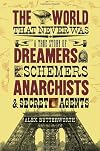
Haven't you started to hate how often authors of history connect 9/11 and its aftermath to their own subject, no matter what that subject matter is? Well, here's an instance in which the comparison may actually be merited. The book tells two parallel stories through a half-dozen or so interweaving threads: the aspirations of anarchist revolutionaries and the machinations of the secret police. There certainly were violent anarchists. That's plainly evident. In Buttewrworth's book, however, it is revealed how the agents of the secret police throughout Europe actually sought to incite that violence, how they actually came to depend upon it as their raison d'etre. Seeking expanded powers to pursue the terrorists it was necessary to make them worse, hence the implementation of agent provocateurs. An actual threat was utilized as a tool to consolidate power through fear.
It is undoubtedly a fascinating story. As to how successful was Butterworth in telling it, that is harder to say. I think he perhaps took on too much. He tried to encapsulate too large a span of time and told through the experiences of too many protagonists. The comment of another reviewer ("I kept getting my Russians confused") encapsulates the problem quite well. He tried to tell the story in an almost novelistic form, and it doesn't quite work. The personalities of the main players aren't well-enough fleshed-out to make them relatable or even memorable. Pared down to a more intimate scale, focusing on a show more smaller number of people and over a shorter length of time, it might have been much more readable. As a novel, with surprisingly little artistic license, it could have been a truly great historical-fiction political-thriller. show less
It is undoubtedly a fascinating story. As to how successful was Butterworth in telling it, that is harder to say. I think he perhaps took on too much. He tried to encapsulate too large a span of time and told through the experiences of too many protagonists. The comment of another reviewer ("I kept getting my Russians confused") encapsulates the problem quite well. He tried to tell the story in an almost novelistic form, and it doesn't quite work. The personalities of the main players aren't well-enough fleshed-out to make them relatable or even memorable. Pared down to a more intimate scale, focusing on a show more smaller number of people and over a shorter length of time, it might have been much more readable. As a novel, with surprisingly little artistic license, it could have been a truly great historical-fiction political-thriller. show less
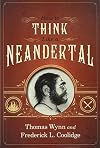
This could've been a much more interesting book if the authors hadn't insisted on leaving out claims they couldn't solidly bolster with evidence. If only they'd been willing to throw caution to the wind and toss out their pesky espousal of moderation. Always taking the conservative view and painting the likeliest picture rather than the most astounding possibility, this book offers a sound-minded idea of what the prospects of a transplanted Neandertal would be in the modern world. They touch on such topics as empathy, problem-solving, innovation and even sense of humor and dreaming. As evidence they take the archaeological record and comparative studies of ourselves and our nearest primate relatives, attempting to synthesize this information into a best guess with healthy reservation. As it turns out, a Neandertal would make a great modern-day doctor. Find out why.

Read at your own risk. You'll almost definitely find the story fascinating and the author's reasoning compelling. Unfortunately, I found out later that there is very little support for Di Robilant's stance in the academic community. While he addresses the controversy in his book, he dismisses it with deceptive ease. I WANT so much to believe in his version of events that it makes me feel like maybe I shouldn't. Not so easily. After reading the book I looked up the subject on (where else) the Wikipedia. The whole issue was dismissed as a fantasy. I attempted to edit the site with the information from the book as a possible alternate perspective and checked back a day or two later to find the information and citation removed. Clealry there are strong convictions at work here. Ultimately, the book makes an unassailable case--in my mind--for the plausibility of the voyages if not the probability.
To be read as an installment in an ongoing debate rather than as a final word (perhaps good advice in all cases).
To be read as an installment in an ongoing debate rather than as a final word (perhaps good advice in all cases).

My experience of Nabokov is merely nascent, but I absolutely loved "Invitation to a Beheading" and "Bend Sinister". Innovative, rich, gripping, beautifully written. I can only say that I'm thrilled to have read those two books despite having read "Glory" first. There is a massive divide in how I think of this work compared to the others. To my mind, there was very little to recommend it. The characters were pale and largely static. The events were practically non-existent. I kept waiting for the story to really begin and, to my taste, it never really did. I'm surprised such remarkably different books could have emerged from the same pen. It lacks the literary acrobatics in either language or content that I would, now, expect from this author. It is straightforward storytelling, but I just never felt the story merited telling in the first place.

Lately I've been contemplating the meaning of "Magic Realism." I've seen it put that magic realism is "a polite way of saying you write fantasy." That's not quite so. All fiction requires invention of people, places and events that do not strictly exist. So all fiction requires a bit of fantasy. It's a matter of degree, and I believe "Magic Realism" is a necessary term for a middle ground. I'd say it's when the setting is meant to look very much like the world in which we all live and in which people act very much the way we all would, except that truly bizarre things take place and while the characters don't quite think it's normal their reaction falls far short of that which we would expect. It's when strangeness and absurdity is treated as though it were merely curious, inconvenient, or even mundane. Thus far I think "Rhinoceros" fits the mold.
Another critical definition of the genre that carries a bit more weight is that Magic Realism is "fantasy written in Spanish". I do associate the genre very strongly with Latin America, it's true, but I think it's time that that association became more like my association of tragedy with Greece. Having been developed and defined by that place it has clearly burst those bonds and spread throughout the world (see Murakami, Rushdie, Grass, Saramago) and we should embrace that.
Finally, however, perhaps I'm missing something very important: "Rhinoceros" is a play. A lack of knowledge of theater history may mean I fail to see the show more lineage of the play within a uniquely dramatic context. I could buy that: that the play does not require description according to novelistic terminology because it already has it's own more accurate and meaningful terminology. So let me just say that for the uninitiated reader of dramatic texts who, like me, enjoys a story incorporating the strange and surreal into an otherwise banal environment, this play offers precisely that. Funny, original, vaguely disturbing, evocative of potentially meaningful associations, Ionesco's play is worth a detour away from the novel form. show less
Another critical definition of the genre that carries a bit more weight is that Magic Realism is "fantasy written in Spanish". I do associate the genre very strongly with Latin America, it's true, but I think it's time that that association became more like my association of tragedy with Greece. Having been developed and defined by that place it has clearly burst those bonds and spread throughout the world (see Murakami, Rushdie, Grass, Saramago) and we should embrace that.
Finally, however, perhaps I'm missing something very important: "Rhinoceros" is a play. A lack of knowledge of theater history may mean I fail to see the show more lineage of the play within a uniquely dramatic context. I could buy that: that the play does not require description according to novelistic terminology because it already has it's own more accurate and meaningful terminology. So let me just say that for the uninitiated reader of dramatic texts who, like me, enjoys a story incorporating the strange and surreal into an otherwise banal environment, this play offers precisely that. Funny, original, vaguely disturbing, evocative of potentially meaningful associations, Ionesco's play is worth a detour away from the novel form. show less
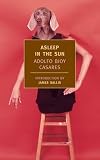
Do not read the back of the book. It is on account of this book that I have begun to read the descriptions on the flaps and backs of books very cautiously and prepared to stop immediately in the event that things start to seem spoiler-y. It actually bothers me that I will never know what it's like to read this book fresh and without expectations. I sometimes wonder how different my opinion of it would be if it weren't for the massive disappointment of finding out that the synopsis on the back was actually a straight-up description of the twist at the end. As it is, I still liked the book, but not nearly as much as "The Invention of Morel" by the same author (which i think was probably the book VeronicaH, another reviewer, was looking for) which I read unspoiled and ranks in my top 50. That's right, I'm a huge nerd; I have system for ranking what I read. FYI, "Asleep in the Sun" came in at #162, just ahead of "My Life and Hard Times" and just behind "The Book of Imaginary Beings".
Be warned, read, and enjoy as I never could.
Be warned, read, and enjoy as I never could.
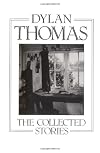
A short time ago I made myself thoroughly depressed by accidentally reading around the same time three unfinished works: Peake's "Gormenghast" novels, Hasek's "The Good Soldier Svejk", and "Adventures in the Skin Trade" by Dylan Thomas. Now, Peake got so much down that I shouldn't really complain, and Svejk's misadventures at the front were beginning to get tiresome, so it was really the third that truly broke my heart. It's important to realize how impoverished we are by the early death of Dylan Thomas. His story of a young man with his finger stuck in a bottle shows every sign of having been about to be perfect. It's rare for me to laugh out loud at the printed page, but here it was practically unavoidable. I've always thought that if anything happens to us after we're dead there ought to be a library stocked with all the books my favorite authors never got around to writing; the first thing I'll do is pull "Adventures in the Skin Trade" off the shelf and settle down on a bit of cloud to read the whole thing.
But enough of that. There's more to the collection than that one unfinished work. The first several pieces aren't what I think of when I think of Dylan Thomas, which is not to say they aren't good. They're just creepy. Just a taste: in one it seems a little boy is preparing to nail the village idiot to a tree. Yikes. "Portrait of the Artist as a Young Dog" contains semi-autobiographical pieces that are poignantly moving and quite funny. A favorite line from one: show more "Although I knew I loved her, I didn't like anything she said or did." I've said enough about "Adventures in the Skin Trade", but following it--what there is of it (single tear)--are a few short pieces which I have seen published together under the title of the first, "Quite Early One Morning." To me, these read like prose poems. They were the first Thomas I ever read and they were deeply resonant, touching something universal. I'm not from a seaside Welsh town, but boy did I feel like I was, or as though all growing-up had something of a seaside Welsh town built into it no matter who you are or where you're from. I recommend you read them out loud to yourself or to someone else and really feel how the words flow together (just remember to breath now and then). A last recommendation: if you celebrate, make a reading of "A Child's Christmas in Wales" a part of your family Christmas tradition. show less
But enough of that. There's more to the collection than that one unfinished work. The first several pieces aren't what I think of when I think of Dylan Thomas, which is not to say they aren't good. They're just creepy. Just a taste: in one it seems a little boy is preparing to nail the village idiot to a tree. Yikes. "Portrait of the Artist as a Young Dog" contains semi-autobiographical pieces that are poignantly moving and quite funny. A favorite line from one: show more "Although I knew I loved her, I didn't like anything she said or did." I've said enough about "Adventures in the Skin Trade", but following it--what there is of it (single tear)--are a few short pieces which I have seen published together under the title of the first, "Quite Early One Morning." To me, these read like prose poems. They were the first Thomas I ever read and they were deeply resonant, touching something universal. I'm not from a seaside Welsh town, but boy did I feel like I was, or as though all growing-up had something of a seaside Welsh town built into it no matter who you are or where you're from. I recommend you read them out loud to yourself or to someone else and really feel how the words flow together (just remember to breath now and then). A last recommendation: if you celebrate, make a reading of "A Child's Christmas in Wales" a part of your family Christmas tradition. show less
It is a good book. That's the first thing you want to know when you glance at a review. Once you know that, however, you realize you need some more information. Every book has someone who says it's good, and every reader's taste is matched by another reader with an opposite taste. So you would want to know my criteria for thinking a book good or bad. The problem is, this book didn't meet my usual criteria. I tend to dislike realism in literature; I prefer that the author incorporate some pure invention, something fantastic or weird either in style or content. I like Murakami, Rusdhie, Bioy Casares, Flann O'Brien, etc. Hwang's book is not of that kind. Here is a straight-forward story of realistic people grappling with an actual historical reality. Nothing magical about this realism.
Maybe I tend not to read a lot of realistic fiction because so few authors do it well. If you aren't infusing the narrative with stylistic flourishes, experimenting with point-of-view or the order of exposition, or introducing supernatural elements to create a unique effect, you're left with just the stuff of everyday life: scenic description, events, human thoughts and emotions. The author is forced to create something compelling out of only these components. As I say, so few can do it well. It's hard to make a fictional character complex yet comprehensible, believable but not mundane, sympathetic yet flawed. I found myself fascinated by Hwang's characters and actually caring about their show more fates almost as though they were real. That is unusual for me.
If you choose to read this book, maybe think of it as ANIMAL FARM with people, though that's not quite it. Hwang depicts the encroaching influence of Korea's northern "liberators" with a complicated concern. Through the eyes of the central character--Pak Hun, an educated landowner--you are made to feel ambivalence toward the entire scenario. There's an injustice being perpetrated, but it's a new injustice displacing an old injustice. The passive Pak watches the events without much political resentment. He doesn't feel a sense of entitlement to the material things being taken away. If anything really seems to occupy him it's the personal element, the disruption of lifelong bonds of community in the face of political reorganization, disappointment when he is spied on by a former friend, the unwillingness of those around him (like the doctor) to be associated with him. People he thought he knew are not quite the same, and that just seems to make him sad. Indeed, Pak's main preoccupation is his relationship with Ojaknyo, a young woman in his employ, and while their relationship is fraught with issues of class, it is their personal feelings as human being's toward one another that concern them. Simple emotions of attraction, sense of duty and friendship eclipse the monumental goings-on around them. Even the cruel, stupid Tosop--rabid tool of the new order--is humanized through glimpses of who he was before his whole being was reduced to class identification. Ultimately, the novel doesn't lament the advent of communism in N. Korea because it dispossessed "innocent" landowners but rather the tragedy of any ideology that disallows the existence of individual feeling and agency for the sake of a mass-movement. The power of the novel is how important the human bonds of love, family, friendship and loyalty still appear to be (and actually are) even in the face of events of massive, national significance. The real story of living still occurs on the level of people, not states. In THE DESCENDANTS OF CAIN, the rise of communism matters only as it disrupts and destroys LIVES, not wealth, not power, not ideologies, not class.
Read this book for the experience of encountering characters that you haven't met before. show less
Maybe I tend not to read a lot of realistic fiction because so few authors do it well. If you aren't infusing the narrative with stylistic flourishes, experimenting with point-of-view or the order of exposition, or introducing supernatural elements to create a unique effect, you're left with just the stuff of everyday life: scenic description, events, human thoughts and emotions. The author is forced to create something compelling out of only these components. As I say, so few can do it well. It's hard to make a fictional character complex yet comprehensible, believable but not mundane, sympathetic yet flawed. I found myself fascinated by Hwang's characters and actually caring about their show more fates almost as though they were real. That is unusual for me.
If you choose to read this book, maybe think of it as ANIMAL FARM with people, though that's not quite it. Hwang depicts the encroaching influence of Korea's northern "liberators" with a complicated concern. Through the eyes of the central character--Pak Hun, an educated landowner--you are made to feel ambivalence toward the entire scenario. There's an injustice being perpetrated, but it's a new injustice displacing an old injustice. The passive Pak watches the events without much political resentment. He doesn't feel a sense of entitlement to the material things being taken away. If anything really seems to occupy him it's the personal element, the disruption of lifelong bonds of community in the face of political reorganization, disappointment when he is spied on by a former friend, the unwillingness of those around him (like the doctor) to be associated with him. People he thought he knew are not quite the same, and that just seems to make him sad. Indeed, Pak's main preoccupation is his relationship with Ojaknyo, a young woman in his employ, and while their relationship is fraught with issues of class, it is their personal feelings as human being's toward one another that concern them. Simple emotions of attraction, sense of duty and friendship eclipse the monumental goings-on around them. Even the cruel, stupid Tosop--rabid tool of the new order--is humanized through glimpses of who he was before his whole being was reduced to class identification. Ultimately, the novel doesn't lament the advent of communism in N. Korea because it dispossessed "innocent" landowners but rather the tragedy of any ideology that disallows the existence of individual feeling and agency for the sake of a mass-movement. The power of the novel is how important the human bonds of love, family, friendship and loyalty still appear to be (and actually are) even in the face of events of massive, national significance. The real story of living still occurs on the level of people, not states. In THE DESCENDANTS OF CAIN, the rise of communism matters only as it disrupts and destroys LIVES, not wealth, not power, not ideologies, not class.
Read this book for the experience of encountering characters that you haven't met before. show less