

Publishers Weekly (September 5, 2005)
Self-effacing Ginny, 17, heads off to Europe with a giant purple-and-green backpack and an intriguing itinerary: she must follow the instructions set forth in a series of 13 sealed envelopes provided to her by her recently deceased Aunt Peg, an artist and free spirit. Ginny's journey starts in London, where she falls in with Keith, a scruffy but appealing performer who, as the designated love interest, is destined to pop up throughout the novel. Zig-zagging from Edinburgh to Rome (task: "Ask a Roman boy out for cake") to Paris (find the tiny café Peg spent a month decorating and painting) to Amsterdam and beyond, Ginny follows her aunt's footsteps while learning to rely on her own pluck and imagination. Readers will find Ginny an excellent traveling companion: her wry observations reveal a keen eye for the defining details of the backpacking experience. Letter by letter, country by country, Ginny comes into her own as she begins to accept the loss of her beloved mentor. Her realization that she is indeed an adventurer, even without Peg's presence, is the emotional ballast that provides gravity to the novel's delicious fairytale ending. Equal parts poignant, funny and inspiring, this tale is sure to spark wanderlust. Ages 12-up. (Sept.) Copyright 2005 Reed Business Information.
Booklist (September 15, 2005 (Vol. 102, No. 2))
Gr. 8-11. Seventeen-year-old Ginny had always admired her aunt Peg, a free-spirited artist who often disappeared show more for months, most recently to Europe. Now Aunt Peg has died of brain cancer, and in a characteristically cryptic gesture made before her death, she arranged for her niece to receive a plane ticket to London, where Ginny will begin a series of adventures. Guided by Peg's friends and the instructions in each of 13 letters her aunt wrote, Ginny sets off across Europe. Staying with Peg's contacts or in hostels, Ginny begins to peel away some of the mythic layers surrounding her aunt, even as she falls into thrilling escapades and a blossoming romance. Johnson's plot stretches plausibility. Would Ginny's practical mother really have agreed to such a solo, undefined journey? But readers will probably overlook any improbabilities and willingly accompany Ginny through her sensitive, authentically portrayed experiences--uncomfortable, lonely, giddy, and life changing--as she pieces together family mysteries and discovers herself. show less
Self-effacing Ginny, 17, heads off to Europe with a giant purple-and-green backpack and an intriguing itinerary: she must follow the instructions set forth in a series of 13 sealed envelopes provided to her by her recently deceased Aunt Peg, an artist and free spirit. Ginny's journey starts in London, where she falls in with Keith, a scruffy but appealing performer who, as the designated love interest, is destined to pop up throughout the novel. Zig-zagging from Edinburgh to Rome (task: "Ask a Roman boy out for cake") to Paris (find the tiny café Peg spent a month decorating and painting) to Amsterdam and beyond, Ginny follows her aunt's footsteps while learning to rely on her own pluck and imagination. Readers will find Ginny an excellent traveling companion: her wry observations reveal a keen eye for the defining details of the backpacking experience. Letter by letter, country by country, Ginny comes into her own as she begins to accept the loss of her beloved mentor. Her realization that she is indeed an adventurer, even without Peg's presence, is the emotional ballast that provides gravity to the novel's delicious fairytale ending. Equal parts poignant, funny and inspiring, this tale is sure to spark wanderlust. Ages 12-up. (Sept.) Copyright 2005 Reed Business Information.
Booklist (September 15, 2005 (Vol. 102, No. 2))
Gr. 8-11. Seventeen-year-old Ginny had always admired her aunt Peg, a free-spirited artist who often disappeared show more for months, most recently to Europe. Now Aunt Peg has died of brain cancer, and in a characteristically cryptic gesture made before her death, she arranged for her niece to receive a plane ticket to London, where Ginny will begin a series of adventures. Guided by Peg's friends and the instructions in each of 13 letters her aunt wrote, Ginny sets off across Europe. Staying with Peg's contacts or in hostels, Ginny begins to peel away some of the mythic layers surrounding her aunt, even as she falls into thrilling escapades and a blossoming romance. Johnson's plot stretches plausibility. Would Ginny's practical mother really have agreed to such a solo, undefined journey? But readers will probably overlook any improbabilities and willingly accompany Ginny through her sensitive, authentically portrayed experiences--uncomfortable, lonely, giddy, and life changing--as she pieces together family mysteries and discovers herself. show less

School Library Journal (September 1, 2006)
Gr 7 Up-Graphic novels that focus on nonwhite characters are exceedingly rare in American comics. Enter American Born Chinese, a well-crafted work that aptly explores issues of self-image, cultural identity, transformation, and self-acceptance. In a series of three linked tales, the central characters are introduced: Jin Wang, a teen who meets with ridicule and social isolation when his family moves from San Francisco's Chinatown to an exclusively white suburb; Danny, a popular blond, blue-eyed high school jock whose social status is jeopardized when his goofy, embarrassing Chinese cousin, Chin-Kee, enrolls at his high school; and the Monkey King who, unsatisfied with his current sovereign, desperately longs to be elevated to the status of a god. Their stories converge into a satisfying coming-of-age novel that aptly blends traditional Chinese fables and legends with bathroom humor, action figures, and playground politics. Yang's crisp line drawings, linear panel arrangement, and muted colors provide a strong visual complement to the textual narrative. Like Toni Morrison's The Bluest Eye and Laurence Yep's Dragonwings, this novel explores the impact of the American dream on those outside the dominant culture in a finely wrought story that is an effective combination of humor and drama.-Philip Charles Crawford, Essex High School, Essex Junction, VT Copyright 2006 Reed Business Information.
Publishers Weekly (June 12, 2006)
As show more alienated kids go, Jin Wang is fairly run-of-the-mill: he eats lunch by himself in a corner of the schoolyard, gets picked on by bullies and jocks and develops a sweat-inducing crush on a pretty classmate. And, oh, yes, his parents are from Taiwan. This much-anticipated, affecting story about growing up different is more than just the story of a Chinese-American childhood; it's a fable for every kid born into a body and a life they wished they could escape. The fable is filtered through some very specific cultural icons: the much-beloved Monkey King, a figure familiar to Chinese kids the world over, and a buck-toothed amalgamation of racist stereotypes named Chin-Kee. Jin's hopes and humiliations might be mirrored in Chin-Kee's destructive glee or the Monkey King's struggle to come to terms with himself, but each character's expressions and actions are always perfectly familiar. True to its origin as a Web comic, this story's clear, concise lines and expert coloring are deceptively simple yet expressive. Even when Yang slips in an occasional Chinese ideogram or myth, the sentiments he's depicting need no translation. Yang accomplishes the remarkable feat of practicing what he preaches with this book: accept who you are and you'll already have reached out to others. (Sept.) Copyright 2006 Reed Business Information. show less
Gr 7 Up-Graphic novels that focus on nonwhite characters are exceedingly rare in American comics. Enter American Born Chinese, a well-crafted work that aptly explores issues of self-image, cultural identity, transformation, and self-acceptance. In a series of three linked tales, the central characters are introduced: Jin Wang, a teen who meets with ridicule and social isolation when his family moves from San Francisco's Chinatown to an exclusively white suburb; Danny, a popular blond, blue-eyed high school jock whose social status is jeopardized when his goofy, embarrassing Chinese cousin, Chin-Kee, enrolls at his high school; and the Monkey King who, unsatisfied with his current sovereign, desperately longs to be elevated to the status of a god. Their stories converge into a satisfying coming-of-age novel that aptly blends traditional Chinese fables and legends with bathroom humor, action figures, and playground politics. Yang's crisp line drawings, linear panel arrangement, and muted colors provide a strong visual complement to the textual narrative. Like Toni Morrison's The Bluest Eye and Laurence Yep's Dragonwings, this novel explores the impact of the American dream on those outside the dominant culture in a finely wrought story that is an effective combination of humor and drama.-Philip Charles Crawford, Essex High School, Essex Junction, VT Copyright 2006 Reed Business Information.
Publishers Weekly (June 12, 2006)
As show more alienated kids go, Jin Wang is fairly run-of-the-mill: he eats lunch by himself in a corner of the schoolyard, gets picked on by bullies and jocks and develops a sweat-inducing crush on a pretty classmate. And, oh, yes, his parents are from Taiwan. This much-anticipated, affecting story about growing up different is more than just the story of a Chinese-American childhood; it's a fable for every kid born into a body and a life they wished they could escape. The fable is filtered through some very specific cultural icons: the much-beloved Monkey King, a figure familiar to Chinese kids the world over, and a buck-toothed amalgamation of racist stereotypes named Chin-Kee. Jin's hopes and humiliations might be mirrored in Chin-Kee's destructive glee or the Monkey King's struggle to come to terms with himself, but each character's expressions and actions are always perfectly familiar. True to its origin as a Web comic, this story's clear, concise lines and expert coloring are deceptively simple yet expressive. Even when Yang slips in an occasional Chinese ideogram or myth, the sentiments he's depicting need no translation. Yang accomplishes the remarkable feat of practicing what he preaches with this book: accept who you are and you'll already have reached out to others. (Sept.) Copyright 2006 Reed Business Information. show less
Amazon.com
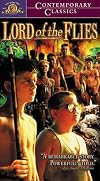
Harry Hook's adaptation is not as faithful to the William
Golding novel as you'd wish (they excised the Lord of the Flies dialogue with Simon!) and because of it, the movie is less allegorical and less resonant. A group of young men from a military academy are stranded on an island. The group quickly becomes fractious with a passive section led by Ralph, trying to get rescued, and a hunter faction, led by Jack, trying to procure meat and "have fun." Peter Brook's 1963 filming seemed to get closer to the Darwinist sense of this cultural disintegration. Here, the hunter faction seems more like Peter Pan's Lost Boys than the bloodthirsty murderers they are. The performances, particularly young Getty, don't quite carry the weight of the situation. It's still, however, sobering to slowly watch the school uniforms traded for war paint, and the little boys turn into little savages. --Keith Simanton
Harry Hook's adaptation is not as faithful to the William
Golding novel as you'd wish (they excised the Lord of the Flies dialogue with Simon!) and because of it, the movie is less allegorical and less resonant. A group of young men from a military academy are stranded on an island. The group quickly becomes fractious with a passive section led by Ralph, trying to get rescued, and a hunter faction, led by Jack, trying to procure meat and "have fun." Peter Brook's 1963 filming seemed to get closer to the Darwinist sense of this cultural disintegration. Here, the hunter faction seems more like Peter Pan's Lost Boys than the bloodthirsty murderers they are. The performances, particularly young Getty, don't quite carry the weight of the situation. It's still, however, sobering to slowly watch the school uniforms traded for war paint, and the little boys turn into little savages. --Keith Simanton
School Library Journal - starred (from amazon.com)
"Departs from the fact-packed preachiness of the problem novel to become instead a compelling story of two real and intriguing women. There have been many books for teenagers, fiction and nonfiction, that give lots of
useful and accurate information about homosexuality; here's one that tells what it feels like, one that has, finally, romance."
"Departs from the fact-packed preachiness of the problem novel to become instead a compelling story of two real and intriguing women. There have been many books for teenagers, fiction and nonfiction, that give lots of
useful and accurate information about homosexuality; here's one that tells what it feels like, one that has, finally, romance."

Amazon.com
"Going all the way" is still a taboo subject in young
adult literature. Judy Blume was the first author to write candidly about a sexually active teen, and she's been defending teenagers' rights to read about such subjects ever since. Here, Blume tells a convincing tale of first love--a love that seems strong and true enough to last forever. Katherine loves Michael so much, in fact, that she's willing to lose her virginity to him, and, as the months go by, it gets harder and harder for her to imagine living without him. However, something happens when they are separated for the summer: Katherine begins to have feelings for another guy. What does this mean about her love for Michael? What does this mean about love in general? What does "forever" mean, anyway? As always, Blume writes as if she's never forgotten a moment of what it's like to be a teenager.
"Going all the way" is still a taboo subject in young
adult literature. Judy Blume was the first author to write candidly about a sexually active teen, and she's been defending teenagers' rights to read about such subjects ever since. Here, Blume tells a convincing tale of first love--a love that seems strong and true enough to last forever. Katherine loves Michael so much, in fact, that she's willing to lose her virginity to him, and, as the months go by, it gets harder and harder for her to imagine living without him. However, something happens when they are separated for the summer: Katherine begins to have feelings for another guy. What does this mean about her love for Michael? What does this mean about love in general? What does "forever" mean, anyway? As always, Blume writes as if she's never forgotten a moment of what it's like to be a teenager.
AudioFile
Esperanza Ortega adores her family's beautiful El Rancho de las Rosas. Like her father, she loves the land, the grapes, the bird songs, even the servants, all part of her privileged life. But her contentment dissolves with her father's brutal murder. Forced to flee, 14-year-old Esperanza and her mother escape Mexico to a migrant camp in California with nothing more than the goodwill of their former servants. Trini Alvarado gives the lyrical text a sensitive reading, faithfully portraying Esperanza's transformation from a pampered, self-important rich girl to a generous and self-aware young woman. The richness of Alvarado's Spanish infuses the reading, and the text affords her an opportunity to display her beautiful singing voice, as well. Rich in history and culture, this novel is all the more successful in the audio format. T.B. © AudioFile 2001, Portland, Maine-- Copyright © AudioFile, Portland, Maine --This text refers to the Audio Cassette edition.
Esperanza Ortega adores her family's beautiful El Rancho de las Rosas. Like her father, she loves the land, the grapes, the bird songs, even the servants, all part of her privileged life. But her contentment dissolves with her father's brutal murder. Forced to flee, 14-year-old Esperanza and her mother escape Mexico to a migrant camp in California with nothing more than the goodwill of their former servants. Trini Alvarado gives the lyrical text a sensitive reading, faithfully portraying Esperanza's transformation from a pampered, self-important rich girl to a generous and self-aware young woman. The richness of Alvarado's Spanish infuses the reading, and the text affords her an opportunity to display her beautiful singing voice, as well. Rich in history and culture, this novel is all the more successful in the audio format. T.B. © AudioFile 2001, Portland, Maine-- Copyright © AudioFile, Portland, Maine --This text refers to the Audio Cassette edition.
A Sally Lockhart Mystery: The Ruby In the Smoke: Book One (Sally Lockhard Mysteries) (AUDIO) by Philip Pullman
AudioFile
Philip Pullman is in top form with this riveting YA mystery full of all the underworld villainy and Victorian intrigue that 1870s London can muster. Narrator Anton Lesser is a marvel delivering the voices of a vengeful hag with oversized dentures, street-tough children, dazed opium smokers, and 16-year-old Sally Lockhart and her array of intriguing, steadfast friends. Lesser deftly navigates London's many accents as Pullman's quick plot turns from terror to humor. THE RUBY IN THE SMOKE is the first in the Sally Lockhart Trilogy, and Anton Lesser is cast to play all of the trilogy's characters and perils. K.C. Winner of AudioFile Earphones Award, 2005 ALA Notable Recording © AudioFile 2005, Portland, Maine-- Copyright © AudioFile, Portland, Maine --This text refers to the Audio Cassette edition.
Philip Pullman is in top form with this riveting YA mystery full of all the underworld villainy and Victorian intrigue that 1870s London can muster. Narrator Anton Lesser is a marvel delivering the voices of a vengeful hag with oversized dentures, street-tough children, dazed opium smokers, and 16-year-old Sally Lockhart and her array of intriguing, steadfast friends. Lesser deftly navigates London's many accents as Pullman's quick plot turns from terror to humor. THE RUBY IN THE SMOKE is the first in the Sally Lockhart Trilogy, and Anton Lesser is cast to play all of the trilogy's characters and perils. K.C. Winner of AudioFile Earphones Award, 2005 ALA Notable Recording © AudioFile 2005, Portland, Maine-- Copyright © AudioFile, Portland, Maine --This text refers to the Audio Cassette edition.
The New Yorker
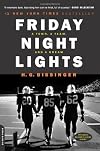
Buzz Bissinger's remarkable book about a high-school football team in Texas oil country gets a worthy, slightly rock-video adaptation in the hands of the director Peter Berg. Sure, there are plenty of shots of the players staring intently at the field and swooping bird's-eye views of the stadium, but Berg pays attention to the story's harsher details, too-the "For Sale" signs planted in front of the coach's house when he loses a big game, a wrenching scene in which an African-American player breaks down after a devastating knee injury. By shooting the film in closeup, with a jittery frame and a documentary feel, Berg conveys the future-blinding intensity of small-town high-school sports, at a time when a seventeen-year-old can really believe that his life is peaking on the fifty-yard line. The cast of players includes Derek Luke, Lucas Black, and Garrett Hedlund. With Billy Bob Thornton as the coach. -Michael Agger
Copyright © 2006 The New Yorker
Buzz Bissinger's remarkable book about a high-school football team in Texas oil country gets a worthy, slightly rock-video adaptation in the hands of the director Peter Berg. Sure, there are plenty of shots of the players staring intently at the field and swooping bird's-eye views of the stadium, but Berg pays attention to the story's harsher details, too-the "For Sale" signs planted in front of the coach's house when he loses a big game, a wrenching scene in which an African-American player breaks down after a devastating knee injury. By shooting the film in closeup, with a jittery frame and a documentary feel, Berg conveys the future-blinding intensity of small-town high-school sports, at a time when a seventeen-year-old can really believe that his life is peaking on the fifty-yard line. The cast of players includes Derek Luke, Lucas Black, and Garrett Hedlund. With Billy Bob Thornton as the coach. -Michael Agger
Copyright © 2006 The New Yorker
Library Media Connection (March 2006)
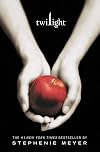
When her mother remarries, Bella moves herself to her father's home for her senior year. Bella is resigned to a bored and overprotected existence with her police chief father, but to her surprise, finds herself noticed in the small school where everyone has known each other since childhood. The person she notices though is the mysterious and mercurial Edward Cullen. Topaz eyes, ivory skin, and the grace of a large cat all give off dangerous signals, but Bella is drawn in and even Edward's warning that he is dangerous will not keep her away. Bella knows it is crazy, but could Edward be a vampire? Meyer has written a story that will appeal to teens from the lush romanticism to the action-packed finale. As a heroine, the klutzy Bella embodies the girl who has been "average" for so long that she no longer sees anything remarkable about herself. Without considering the supernatural aspects, it is a classic story of the star-crossed lovers who can only be separated by great tragedy. While there is nothing more explicit in the story than a couple passionate clinches, Meyer is painfully accurate in the emotional and physical responses to being in proximity of the object of your desire. First in a trilogy, readers will be anxiously awaiting the release date of the second volume. Recommended. Melissa Bergin, Library Media Specialist/NBCT, Niskayuna (New York) High School
When her mother remarries, Bella moves herself to her father's home for her senior year. Bella is resigned to a bored and overprotected existence with her police chief father, but to her surprise, finds herself noticed in the small school where everyone has known each other since childhood. The person she notices though is the mysterious and mercurial Edward Cullen. Topaz eyes, ivory skin, and the grace of a large cat all give off dangerous signals, but Bella is drawn in and even Edward's warning that he is dangerous will not keep her away. Bella knows it is crazy, but could Edward be a vampire? Meyer has written a story that will appeal to teens from the lush romanticism to the action-packed finale. As a heroine, the klutzy Bella embodies the girl who has been "average" for so long that she no longer sees anything remarkable about herself. Without considering the supernatural aspects, it is a classic story of the star-crossed lovers who can only be separated by great tragedy. While there is nothing more explicit in the story than a couple passionate clinches, Meyer is painfully accurate in the emotional and physical responses to being in proximity of the object of your desire. First in a trilogy, readers will be anxiously awaiting the release date of the second volume. Recommended. Melissa Bergin, Library Media Specialist/NBCT, Niskayuna (New York) High School
Publishers Weekly (June 24, 2002)
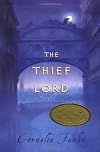
Wacky characters bring energy to this translation of an entertaining German novel about thieving children, a disguise-obsessed detective and a magical merry-go-round. After their mother dies, 12-year-old Prosper and his brother, Bo, five, flee from Hamburg to Venice (an awful aunt plans to adopt only Bo). They live in an abandoned movie theater with several other street children under the care of the Thief Lord, a cocky youth who claims to rob "the city's most elegant houses." A mysterious man hires the Thief Lord to steal a wooden wing, which the kids later learn has broken off a long-lost merry-go-round said to make "adults out of children and children out of adults," but the plan alters when Victor, the detective Aunt Esther hired to track the brothers, discovers their camp and reveals that the Thief Lord is actually from a wealthy family. There are a lot of story lines to follow, and the pacing is sometimes off (readers may feel that Funke spends too little time on what happens when the children find the carousel, and too much on the ruse they pull on Prosper's aunt). But between kindhearted Victor and his collection of fake beards, the Thief Lord in his mask and high-heeled boots, and a rascally street kid who loves to steal, Prosper's new world abounds with colorful characters. The Venetian setting is ripe for mystery and the city's alleys and canals ratchet up the suspense in the chase scenes. Ages 9-12. (Sept.) Copyright 2002 show more Cahners Business Information. show less
Wacky characters bring energy to this translation of an entertaining German novel about thieving children, a disguise-obsessed detective and a magical merry-go-round. After their mother dies, 12-year-old Prosper and his brother, Bo, five, flee from Hamburg to Venice (an awful aunt plans to adopt only Bo). They live in an abandoned movie theater with several other street children under the care of the Thief Lord, a cocky youth who claims to rob "the city's most elegant houses." A mysterious man hires the Thief Lord to steal a wooden wing, which the kids later learn has broken off a long-lost merry-go-round said to make "adults out of children and children out of adults," but the plan alters when Victor, the detective Aunt Esther hired to track the brothers, discovers their camp and reveals that the Thief Lord is actually from a wealthy family. There are a lot of story lines to follow, and the pacing is sometimes off (readers may feel that Funke spends too little time on what happens when the children find the carousel, and too much on the ruse they pull on Prosper's aunt). But between kindhearted Victor and his collection of fake beards, the Thief Lord in his mask and high-heeled boots, and a rascally street kid who loves to steal, Prosper's new world abounds with colorful characters. The Venetian setting is ripe for mystery and the city's alleys and canals ratchet up the suspense in the chase scenes. Ages 9-12. (Sept.) Copyright 2002 show more Cahners Business Information. show less
Library Journal (March 15, 2004)
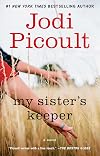
Imagine that you were conceived to be the donor of bone marrow and platelets for your older sister, who has a rare form of cancer. Imagine what it would be like to grow up in a family where everyone is constantly aware of one child's deadly illness, so that all decisions must be filtered through what will work for her treatment or her most recent medical emergency. How can a 12-year-old decide against donating a kidney to her older sister? By having this story narrated by each character in turn, Picoult (Second Glance) shows readers the dilemmas facing everyone involved: from Anna, the child who sues her parents for medical emancipation; to Sara, the mother who loves all three of her children but must devote continual attention to the daughter with cancer; and to Jesse, the son who has abandoned hope of ever being noticed by his parents. Picoult's timely and compelling novel will appeal to anyone who has thought about the morality of medical decision making and any parent who must balance the needs of different children. Highly recommended.-Kim Uden Rutter, Lake Villa Dist. Lib., IL Copyright 2004 Reed Business Information.
Imagine that you were conceived to be the donor of bone marrow and platelets for your older sister, who has a rare form of cancer. Imagine what it would be like to grow up in a family where everyone is constantly aware of one child's deadly illness, so that all decisions must be filtered through what will work for her treatment or her most recent medical emergency. How can a 12-year-old decide against donating a kidney to her older sister? By having this story narrated by each character in turn, Picoult (Second Glance) shows readers the dilemmas facing everyone involved: from Anna, the child who sues her parents for medical emancipation; to Sara, the mother who loves all three of her children but must devote continual attention to the daughter with cancer; and to Jesse, the son who has abandoned hope of ever being noticed by his parents. Picoult's timely and compelling novel will appeal to anyone who has thought about the morality of medical decision making and any parent who must balance the needs of different children. Highly recommended.-Kim Uden Rutter, Lake Villa Dist. Lib., IL Copyright 2004 Reed Business Information.
Kirkus starred (August 15, 2001)
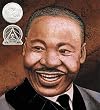
Beginning with the startling cover, which contains only the face of Martin Luther King Jr., with his smile broad, and his eyes crinkled in laughter, this title intrigues. It's an homage in words and pictures, in which the author weaves King's words with her own to present a brief but stately portrait of the American hero. Rappaport explains that as a child King was determined to use "big words," no doubt the result of listening to his father preach. On many subsequent spreads, King is pictured as an adult, and a direct quote is reproduced in bold type. In fact, King's words were huge in idealism, delivering a message that was big in simple yet profound ways that can be understood by young readers. In smaller print, Rappaport gives historical context. Her sentences have a directness and symmetry that sets off King's more transcendent, poetic quotes. Collier's watercolor and cut-paper-collage illustrations express deep feeling. On the cover and final two portraits, King is depicted with a subtle monochromatic technique, which alludes strongly to a stained-glass metaphor, represented in portraits of King's church. In other spreads featuring King himself, his face is lit, giving it a powerful visual weight and compelling readers to pay attention. While the cover portrait shows his eyes glancing to the side, in the final portrait he looks directly at the reader, his eyes offering an unmistakable challenge. Author and Illustrator Notes are moving show more as well as informative, and quotes are attributed. Readers will hear his voice echo in this presentation. (timeline, bibliography) "(Nonfiction. 5-9)" show less
Beginning with the startling cover, which contains only the face of Martin Luther King Jr., with his smile broad, and his eyes crinkled in laughter, this title intrigues. It's an homage in words and pictures, in which the author weaves King's words with her own to present a brief but stately portrait of the American hero. Rappaport explains that as a child King was determined to use "big words," no doubt the result of listening to his father preach. On many subsequent spreads, King is pictured as an adult, and a direct quote is reproduced in bold type. In fact, King's words were huge in idealism, delivering a message that was big in simple yet profound ways that can be understood by young readers. In smaller print, Rappaport gives historical context. Her sentences have a directness and symmetry that sets off King's more transcendent, poetic quotes. Collier's watercolor and cut-paper-collage illustrations express deep feeling. On the cover and final two portraits, King is depicted with a subtle monochromatic technique, which alludes strongly to a stained-glass metaphor, represented in portraits of King's church. In other spreads featuring King himself, his face is lit, giving it a powerful visual weight and compelling readers to pay attention. While the cover portrait shows his eyes glancing to the side, in the final portrait he looks directly at the reader, his eyes offering an unmistakable challenge. Author and Illustrator Notes are moving show more as well as informative, and quotes are attributed. Readers will hear his voice echo in this presentation. (timeline, bibliography) "(Nonfiction. 5-9)" show less

Kirkus Review (June 1, 2003)
"The rules: If she hollers, she is mine. If she needs to be changed, she is always mine. In the dictionary next to 'sitter,' there is not a picture of Grandma. It's time to grow up. Too late, you're out of time. Be a grown-up." Sixteen-year-old Bobby has met the love of his life: his daughter. Told in alternating chapters that take place "then" and "now," Bobby relates the hour-by-hour tribulations and joys of caring for a newborn, and the circumstances that got him there. Managing to cope with support, but little help, from his single mother (who wants to make sure he does this on his own), Bobby struggles to maintain friendships and a school career while giving his daughter the love and care she craves from him at every moment. By narrating from a realistic first-person voice, Johnson manages to convey a story that is always complex, never preachy. The somewhat pat ending doesn't diminish the impact of this short, involving story. It's the tale of one young man and his choices, which many young readers will appreciate and enjoy. (Fiction. YA)
"The rules: If she hollers, she is mine. If she needs to be changed, she is always mine. In the dictionary next to 'sitter,' there is not a picture of Grandma. It's time to grow up. Too late, you're out of time. Be a grown-up." Sixteen-year-old Bobby has met the love of his life: his daughter. Told in alternating chapters that take place "then" and "now," Bobby relates the hour-by-hour tribulations and joys of caring for a newborn, and the circumstances that got him there. Managing to cope with support, but little help, from his single mother (who wants to make sure he does this on his own), Bobby struggles to maintain friendships and a school career while giving his daughter the love and care she craves from him at every moment. By narrating from a realistic first-person voice, Johnson manages to convey a story that is always complex, never preachy. The somewhat pat ending doesn't diminish the impact of this short, involving story. It's the tale of one young man and his choices, which many young readers will appreciate and enjoy. (Fiction. YA)
School Library Journal (October 1999)
Gr 8 Up-This powerful novel deals with a difficult yet important topic-rape. Melinda is just starting high school. It should be one of the greatest times in her life, but instead of enjoying herself, she is an outcast. She has been marked as the girl who called the police to break up the big end-of-the-summer party, and all the kids are angry at her. Even her closest friends have pulled away. No one knows why she made the call, and even Melinda can't really articulate what happened. As the school year goes on, her grades plummet and she withdraws into herself to the point that she's barely speaking. Her only refuge is her art class, where she learns to find ways to express some of her feelings. As her freshman year comes to an end, Melinda finally comes to terms with what happened to her-she was raped at that party by an upperclassman who is still taunting her at school. When he tries again, she finds her voice, and her classmates realize the truth. The healing process will take time, but Melinda no longer has to deal with it alone. Anderson expresses the emotions and the struggles of teenagers perfectly. Melinda's pain is palpable, and readers will totally empathize with her. This is a compelling book, with sharp, crisp writing that draws readers in, engulfing them in the story.-Dina Sherman, Brooklyn Children's Museum, NY
Copyright 1999 Cahners Business Information.
Gr 8 Up-This powerful novel deals with a difficult yet important topic-rape. Melinda is just starting high school. It should be one of the greatest times in her life, but instead of enjoying herself, she is an outcast. She has been marked as the girl who called the police to break up the big end-of-the-summer party, and all the kids are angry at her. Even her closest friends have pulled away. No one knows why she made the call, and even Melinda can't really articulate what happened. As the school year goes on, her grades plummet and she withdraws into herself to the point that she's barely speaking. Her only refuge is her art class, where she learns to find ways to express some of her feelings. As her freshman year comes to an end, Melinda finally comes to terms with what happened to her-she was raped at that party by an upperclassman who is still taunting her at school. When he tries again, she finds her voice, and her classmates realize the truth. The healing process will take time, but Melinda no longer has to deal with it alone. Anderson expresses the emotions and the struggles of teenagers perfectly. Melinda's pain is palpable, and readers will totally empathize with her. This is a compelling book, with sharp, crisp writing that draws readers in, engulfing them in the story.-Dina Sherman, Brooklyn Children's Museum, NY
Copyright 1999 Cahners Business Information.