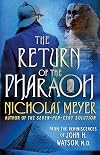
Did something today I've always sworn I'd never do, which is to say I read a piece of fiction longer than just a couple pages on my computer screen. However, I have no regrets (my lower back may develop other ideas), as it meant I got to spend the day in the company of Nicholas Meyer's always entertaining iterations of Holmes and Watson on a straight-up adventure tale - THE RETURN OF THE PHARAOH - set in 1911 Egypt.
When Watson takes his ailing wife to Cairo in an effort to combat her consumption, and heads to the legendary Shepheard's Hotel for a drink, he encounters, of all people, a disguised Sherlock Holmes on the trail of a missing duke who may, or may not, have a lead on the location of an undisturbed tomb in the Valley of the Kings. So he falls-in alongside his old companion on a quest that will involve Howard Carter, a belly dancer of dubious distinction, the Duke's Brazilian wife and curious brother, and, of course, the mummy of a pharaoh.
While probably the least complicated of Nick's Holmes tales to date, it's one hell of a fun romp and a fast-paced page turner, and with his distinctive take on Holmes (he reminds me of Wilmer's Holmes more than any other) and Watson coupled with his uncluttered cinematic writing style, it's a joy from start to finish. Easily one of the top Sherlock Holmes books to be released this year.
When Watson takes his ailing wife to Cairo in an effort to combat her consumption, and heads to the legendary Shepheard's Hotel for a drink, he encounters, of all people, a disguised Sherlock Holmes on the trail of a missing duke who may, or may not, have a lead on the location of an undisturbed tomb in the Valley of the Kings. So he falls-in alongside his old companion on a quest that will involve Howard Carter, a belly dancer of dubious distinction, the Duke's Brazilian wife and curious brother, and, of course, the mummy of a pharaoh.
While probably the least complicated of Nick's Holmes tales to date, it's one hell of a fun romp and a fast-paced page turner, and with his distinctive take on Holmes (he reminds me of Wilmer's Holmes more than any other) and Watson coupled with his uncluttered cinematic writing style, it's a joy from start to finish. Easily one of the top Sherlock Holmes books to be released this year.
The Double-A Western Detective Agency: A Holmes on the Range Mystery (Holmes on the Range Mysteries) by Steve Hockensmith
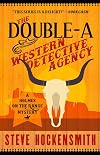
Finished Steve Hockensmith's The Double-A Western Detective Agency: A Holmes on the Range Mystery last night. While it's been a stretch since the last book, I'm delighted to find that Gustav (Old Red) and Otto (Big Red) Amlingmeyer have lost none of their charm during the interim. The Boys are back in town! Literally! Well, 'a' town, and they aren't really 'back', since this is their first visit, but you get the idea. Semantics aside, I'm really happy to have them back.
If you aren't familiar with the Amlingmeyer boys, the basic series premise is that you've got a couple of youngish, red-haired cowboy brothers trying to make their way in the world of 1890s America, when they come across these stories about a certain consulting detective in The Strand Magazine, and Old Red, an illiterate, gets his brother to read them to him, and realizes he's got some pretty good observational and deducifyin' skills himself. Brother Otto turns out to have a flair for writing stories. Any of this sounding familiar? Adventures ensue that eventually lead up to them joining a detective agency and the new book is their first big case for the Double-A Detective Agency. They, and the boss's daughter, head off to a small town, ostensibly hired by a cattle baron to work against rustler's, to find a town literally divided along racial lines. From there I won't say more about the plot, except that it becomes the literary equivalent of a Howard Hawks western - I'm looking at you, Rio Bravo - and it's show more just a rollicking good time right through to a satisfying end. It's all told in Hockensmith's deceptively breezy and chatty style, masking some biting observations about heavy social issues, and it's never anything less than a fun read. Looking forward to the next one! show less
If you aren't familiar with the Amlingmeyer boys, the basic series premise is that you've got a couple of youngish, red-haired cowboy brothers trying to make their way in the world of 1890s America, when they come across these stories about a certain consulting detective in The Strand Magazine, and Old Red, an illiterate, gets his brother to read them to him, and realizes he's got some pretty good observational and deducifyin' skills himself. Brother Otto turns out to have a flair for writing stories. Any of this sounding familiar? Adventures ensue that eventually lead up to them joining a detective agency and the new book is their first big case for the Double-A Detective Agency. They, and the boss's daughter, head off to a small town, ostensibly hired by a cattle baron to work against rustler's, to find a town literally divided along racial lines. From there I won't say more about the plot, except that it becomes the literary equivalent of a Howard Hawks western - I'm looking at you, Rio Bravo - and it's show more just a rollicking good time right through to a satisfying end. It's all told in Hockensmith's deceptively breezy and chatty style, masking some biting observations about heavy social issues, and it's never anything less than a fun read. Looking forward to the next one! show less
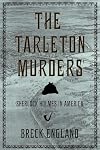
Finally got around to finishing THE TARLETON MURDERS today. Kept setting it aside to do other things, which was unfair, as it's really an excellent read and might just be my new fave 'Holmes in America' story; and winner of the most uninspired and just boring cover I've seen in ages. ;-)
I'm too lazy to get into it (you can find all the details on the Amazon listing), but trust me, the numerous cameos, even the really goofy sounding ones, aren't really intrusive, with the possible exception of the plumber, McCartney. The non-Watsonian narration from Father Grosjean works throughout, I like him, and the bits with the Klan in Georgia strike me as really rather well done. The history, the writing, the story all worked for me, even as a sort of prequel to FIVE. The characterization of an 1878 Holmes works too. Traditional, but from a non-traditional perspective. I recommend it.
I'm too lazy to get into it (you can find all the details on the Amazon listing), but trust me, the numerous cameos, even the really goofy sounding ones, aren't really intrusive, with the possible exception of the plumber, McCartney. The non-Watsonian narration from Father Grosjean works throughout, I like him, and the bits with the Klan in Georgia strike me as really rather well done. The history, the writing, the story all worked for me, even as a sort of prequel to FIVE. The characterization of an 1878 Holmes works too. Traditional, but from a non-traditional perspective. I recommend it.
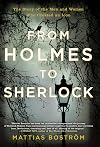
So you’ve read all the Sherlock Holmes stories by Arthur Conan Doyle. You’ve enjoyed the vintage art of Sidney Paget and Frederic Dorr Steele that helped shape the image of Sherlock Holmes. You’ve watched Basil Rathbone in 14 films and maybe heard some of the radio plays written and produced by Edith Meiser. You’ve watched all the television episodes featuring Ronald Howard, Douglas Wilmer, Peter Cushing, Jeremy Brett, Benedict Cumberbatch or Jonny Lee Miller. You were astounded when the long thought lost 1916 film ‘Sherlock Holmes’ with William Gillette was rediscovered and released to DVD a couple years ago. You may have read biographies of Arthur Conan Doyle, touching on his inspiration for Holmes via Joseph Bell, or his investigation of real life crimes, or guides to the actors who have played Holmes, or perhaps some of the beautifully illustrated surveys detailing art and artifacts associated with Sherlock Holmes. You may have heard about the Baker Street Irregulars and the role of Vincent Starrett, Christopher Morley and others in their establishment, read their publication The Baker Street Journal, the involvement of Presidents Franklin Delano Roosevelt and Harry S. Truman, or know something about the squabbles between Doyle’s heirs and the BSI, or that the BSI didn’t allow women members until 1991. You may be a member of a local Sherlock Holmes scion society or book club. You’ve probably read any number of published pastiches including Ellery show more Queen’s The Misadventures of Sherlock Holmes or Nick Meyer’s game changing The Seven-Per-Cent Solution, Mitch Cullin’s A Slight Trick of the Mind, or more recent anthologies by Laurie King and Les Klinger, the last of which resulted in a huge public court case firmly putting the character (if not all the stories) of Sherlock Holmes in the public domain. You may have listened to podcasts by the Baker Street Babes celebrating the remarkable international success of the BBC’s Sherlock, or attended one of the conventions, all of which have contributed to a global popularity, shift and resurgence in one of the oldest fandoms ever encountered. Hell, you are probably even familiar with the ubiquitous tent joke. Or maybe you’ve not read or seen any of it and just have some vague curiosity about Sherlock Holmes? In any event, what you’re probably wondering is how can I see the ‘big picture’? How does it all fit together? How does a simple detective character, created in 1887, manage to stay in the public eye and be a pop culture sensation, taking the world by storm, some 130 years later?
Mattias Boström’s unique, incredibly ambitious and wide ranging volume ‘From Holmes to Sherlock: The Story of the Men and Women Who Created an Icon’ aims to answer that question. This isn’t a straight-up history, nor is it a biography of any one individual, instead it is an examination of the entire Sherlock Holmes phenomenon; tracing the steps from inception in the mind of Arthur Conan Doyle right through to the people and events that shaped the latest film and television extravaganzas, all presented in a chronological narrative form. The book is exactly what it claims to be in the subtitle, it is literally ‘The Story of the Men and Women Who Created an Icon.’ By utilizing the narrative story form, rather than a dry historical format, Boström makes the reader part of the events as they unfold and gives us a better sense of the key players as what they are, or were; real live human beings with all the foibles, quirks and flaws that implies. While it reads like a work of fiction, almost a literary mystery, it is a rich tapestry, filled with real-world heroes and villains, and Boström, using a wealth of facts as foundation (Boström and Matt Laffey have been exhaustively researching newspaper archives for mentions of Holmes and Conan Doyle for a series of books, currently up to three volumes, called ‘Sherlock Holmes and Conan Doyle in the Newspapers’, published by Wessex Press), extrapolates and provides us with scenes that make us privy to the thoughts and motivations behind their actions. The chatty, almost gossipy style, is engaging, almost deceptively masking the wealth of information the reader is being handed, but never loses the thread of the story at its heart. While you will meet an almost bewildering array of people and cover 130 years worth of events, vignettes, tales of greed and heartbreak, Boström puts it all together in a cohesive form that is never less than compelling and will have you turning pages at the pace of a Dan Brown thriller. Whether you’re familiar with the elements of the history of Sherlock Holmes in print and media, or a complete newcomer, I guarantee you’ll learn something new in this monumental work that explores the ‘big picture’ of the Sherlock Holmes phenomenon and how it came to be.
Bottom line: I cannot recommend this highly enough, as ‘From Holmes to Sherlock: The Story of the Men and Women Who Created an Icon’ is likely the most important work connected to Sherlock Holmes to be published in 2017 and a must-read for anyone with an interest in the character, the history or the fandom surrounding him.
Note: Review based on an uncorrected proof provided on January 7, 2017. As such no remarks regarding typos (there aren't many) or irregularities in style (this work has been translated from Swedish) have been noted in this review as they may be corrected before publication. show less
Mattias Boström’s unique, incredibly ambitious and wide ranging volume ‘From Holmes to Sherlock: The Story of the Men and Women Who Created an Icon’ aims to answer that question. This isn’t a straight-up history, nor is it a biography of any one individual, instead it is an examination of the entire Sherlock Holmes phenomenon; tracing the steps from inception in the mind of Arthur Conan Doyle right through to the people and events that shaped the latest film and television extravaganzas, all presented in a chronological narrative form. The book is exactly what it claims to be in the subtitle, it is literally ‘The Story of the Men and Women Who Created an Icon.’ By utilizing the narrative story form, rather than a dry historical format, Boström makes the reader part of the events as they unfold and gives us a better sense of the key players as what they are, or were; real live human beings with all the foibles, quirks and flaws that implies. While it reads like a work of fiction, almost a literary mystery, it is a rich tapestry, filled with real-world heroes and villains, and Boström, using a wealth of facts as foundation (Boström and Matt Laffey have been exhaustively researching newspaper archives for mentions of Holmes and Conan Doyle for a series of books, currently up to three volumes, called ‘Sherlock Holmes and Conan Doyle in the Newspapers’, published by Wessex Press), extrapolates and provides us with scenes that make us privy to the thoughts and motivations behind their actions. The chatty, almost gossipy style, is engaging, almost deceptively masking the wealth of information the reader is being handed, but never loses the thread of the story at its heart. While you will meet an almost bewildering array of people and cover 130 years worth of events, vignettes, tales of greed and heartbreak, Boström puts it all together in a cohesive form that is never less than compelling and will have you turning pages at the pace of a Dan Brown thriller. Whether you’re familiar with the elements of the history of Sherlock Holmes in print and media, or a complete newcomer, I guarantee you’ll learn something new in this monumental work that explores the ‘big picture’ of the Sherlock Holmes phenomenon and how it came to be.
Bottom line: I cannot recommend this highly enough, as ‘From Holmes to Sherlock: The Story of the Men and Women Who Created an Icon’ is likely the most important work connected to Sherlock Holmes to be published in 2017 and a must-read for anyone with an interest in the character, the history or the fandom surrounding him.
Note: Review based on an uncorrected proof provided on January 7, 2017. As such no remarks regarding typos (there aren't many) or irregularities in style (this work has been translated from Swedish) have been noted in this review as they may be corrected before publication. show less
What a real pleasure to return to Wellman, GA for another fast-paced, action-packed supernatural adventure with Sheriff Carl Price and private investigator Wade Griffin! To say nothing of Charon, Carter Decamp and the ever interesting, dimension-hopping Blackbournes. This time out our heroes must find and stop a hapless would-be demon summoner and joyrider, with an ever increasing taste for power, from wreaking havoc in Brennert County. When six young kids go missing, after the murder of their minders, it becomes a race against the clock to keep the duke of hell, Asmodeus, from manifesting on Earth. At the same time, just to complicate matters, a criminal power struggle erupts as a Texas mafia boss starts to move into the Blackbourne's territory.
As with the previous two Griffin & Price books - Blind Shadows and Congregations of the Dead - Jim Moore and Charles Rutledge weave a great tale that combines tropes from the traditional 'occult investigator/psychic detective' sub-genre (think Manly Wade Wellman's John Thunstone and Silver John stories in particular) with a modern hard-boiled crime thriller sensibility and lean narrative style (think Robert B. Parker's Spenser and Hawk) to great effect. While theoretically it sounds like a bit of an odd combination, the writing is tight, clean, breathlessly fast-paced and highly effective in evoking both supernatural dread and conveying kick-ass action scenes. The only complaint I have is not knowing when the next one will be show more along!
If you enjoy occult investigator stories, with a heavy dose of action, do yourself a favour and check out this excellent series today. Great stuff that I can't recommend highly enough! show less
As with the previous two Griffin & Price books - Blind Shadows and Congregations of the Dead - Jim Moore and Charles Rutledge weave a great tale that combines tropes from the traditional 'occult investigator/psychic detective' sub-genre (think Manly Wade Wellman's John Thunstone and Silver John stories in particular) with a modern hard-boiled crime thriller sensibility and lean narrative style (think Robert B. Parker's Spenser and Hawk) to great effect. While theoretically it sounds like a bit of an odd combination, the writing is tight, clean, breathlessly fast-paced and highly effective in evoking both supernatural dread and conveying kick-ass action scenes. The only complaint I have is not knowing when the next one will be show more along!
If you enjoy occult investigator stories, with a heavy dose of action, do yourself a favour and check out this excellent series today. Great stuff that I can't recommend highly enough! show less

Sometimes you just want to read a straight up, balls out, unpretentious, no bullshit 80s-style horror novel...and that's pretty much what Chris Golden delivers with ARARAT. Added bonus: If, like me, you grew up in the 70s and were fascinated by the TV series In Search of...or the 1977 film In Search of Noah's Ark, you're really going to love this book. Add a solid bit of The Keep, a scoop of both Alien and The Thing's paranoia, with a dash of Fallen thrown in for good measure and you've pretty much got the gist of ARARAT.
An earthquake/avalanche uncovers a hidden cavern on Mount Ararat, a site long considered to be the legendary resting place of Noah's Ark, which brings a group of disparate souls up the mountain to investigate. What they find seems to confirm the existence of the Ark, but judging by the ancient corpses and scratch marks on a door that cannot be opened, Noah brought more than just samples of animals and plants on his vessel. The discovery of a strange sarcophagus, containing the desiccated corpse of a nasty horned thing doused in bitumen brings up more questions than the discovery of the ark itself. Who, or what, was it, is the all-consuming question for the researchers. And, as they try to learn about it, that, of course, is when the researchers start disappearing...
While there's not a lot I'd consider fresh here, there's a great deal of pleasure to be had, as Mark Twain put it, in "a good story well told" and Golden is definitely a good storyteller. His show more lean, but purposeful, no-frills prose, drives the story and will keep you flipping pages at a manic pace. Don't get attached to any of the characters, as Golden doesn't play favourites and you never quite know if your fave will make it through. It's been a good stretch since I've read an old school horror/thriller like this one, but I'm glad I did, as it was a real joy for me from start to finish. show less
An earthquake/avalanche uncovers a hidden cavern on Mount Ararat, a site long considered to be the legendary resting place of Noah's Ark, which brings a group of disparate souls up the mountain to investigate. What they find seems to confirm the existence of the Ark, but judging by the ancient corpses and scratch marks on a door that cannot be opened, Noah brought more than just samples of animals and plants on his vessel. The discovery of a strange sarcophagus, containing the desiccated corpse of a nasty horned thing doused in bitumen brings up more questions than the discovery of the ark itself. Who, or what, was it, is the all-consuming question for the researchers. And, as they try to learn about it, that, of course, is when the researchers start disappearing...
While there's not a lot I'd consider fresh here, there's a great deal of pleasure to be had, as Mark Twain put it, in "a good story well told" and Golden is definitely a good storyteller. His show more lean, but purposeful, no-frills prose, drives the story and will keep you flipping pages at a manic pace. Don't get attached to any of the characters, as Golden doesn't play favourites and you never quite know if your fave will make it through. It's been a good stretch since I've read an old school horror/thriller like this one, but I'm glad I did, as it was a real joy for me from start to finish. show less
It might have all begun with Kim's 1994 book The Original Dr. Shade and Other Stories. Or perhaps in the short story 'Clubland Heroes' that appeared in Joe Lansdale's anthology Retro Pulp Tales in 2006 (reprinted in The Secret Files of the Diogenes Club 2007). Or even a vague element of his most recent novel An English Ghost Story. But while all are obviously contributing factors, the heart of the story, as noted in the acknowledgements, is an expansion, or extension, of the 2010 novella 'Kentish Glory: The Secret of Drearcliffe Grange School' as published in Mysteries of the Diogenes Club. For longtime Newman fans, this sort of cross pollination is exactly as it should be, and for this reader, the result is an utter delight. For readers not so well grounded in Newman's sort of linked worlds, or an utter newbie to Newman's writing, or even someone coming directly from An English Ghost Story, it may be a slightly baffling read, at least so far as to why he's writing 'Girl's Own' style fantasy adventure in 2015.
This is nothing like the sort of scholastic bait and switch SF philosophizing in a Kazuo Ishiguro-esque Never Let Me Go, vein, nor is it the beautifully horrifying apocalyptic little-girl-done wrong ala Mike Carey's The Girl with All the Gifts (although if you blended those two books with a Ronald Searles 'St. Trinian's' cartoon, or the associated cinematic stylings, you'd be on the right track), instead it is unabashedly pure Grade-A Kim Newman Brit-pulp, with all show more the usual nods to external influences (Sally Nikola is clearly the spawn of Guy Boothby's Dr. Nikola) and his own previous work (Janice Marsh of 'The Big Fish' makes an appearance, as does Catriona Kaye of numerous Diogenes Club stories). In short, this is a glorious return to Kim Newman's 'Diogenes Club' stories form.
In a spoiler-free nutshell, the plot (it's a superhero origin story of sorts, if you've read the two Diogenes Club stories I mentioned above)revolves around young Amy Thomsett, a girl with an 'Unusual' ability, who is sent off to the Drearcliffe Grange boarding school for girls, shortly after WWI, where she gets caught up in some almost Lovecraftian extra-dimensional hijinx while trying to fit in with her classmates. Sounds simple? Almost YA-like? Well, don't be fooled, it's creepy, funny, and with some downright nasty moments, and it all comes together to be greater than the sum of its parts with Newman nailing the period language and character types perfectly.
As I said, perhaps not the best book to begin with to enter the delights of Kim Newman's vaguely connected worlds, although not the worst either, given that Titan will be reprinting Kim's 'Diogenes Club' stories shortly, it's not the worst place to get on board. Me, I loved it and look forward to more. show less
This is nothing like the sort of scholastic bait and switch SF philosophizing in a Kazuo Ishiguro-esque Never Let Me Go, vein, nor is it the beautifully horrifying apocalyptic little-girl-done wrong ala Mike Carey's The Girl with All the Gifts (although if you blended those two books with a Ronald Searles 'St. Trinian's' cartoon, or the associated cinematic stylings, you'd be on the right track), instead it is unabashedly pure Grade-A Kim Newman Brit-pulp, with all show more the usual nods to external influences (Sally Nikola is clearly the spawn of Guy Boothby's Dr. Nikola) and his own previous work (Janice Marsh of 'The Big Fish' makes an appearance, as does Catriona Kaye of numerous Diogenes Club stories). In short, this is a glorious return to Kim Newman's 'Diogenes Club' stories form.
In a spoiler-free nutshell, the plot (it's a superhero origin story of sorts, if you've read the two Diogenes Club stories I mentioned above)revolves around young Amy Thomsett, a girl with an 'Unusual' ability, who is sent off to the Drearcliffe Grange boarding school for girls, shortly after WWI, where she gets caught up in some almost Lovecraftian extra-dimensional hijinx while trying to fit in with her classmates. Sounds simple? Almost YA-like? Well, don't be fooled, it's creepy, funny, and with some downright nasty moments, and it all comes together to be greater than the sum of its parts with Newman nailing the period language and character types perfectly.
As I said, perhaps not the best book to begin with to enter the delights of Kim Newman's vaguely connected worlds, although not the worst either, given that Titan will be reprinting Kim's 'Diogenes Club' stories shortly, it's not the worst place to get on board. Me, I loved it and look forward to more. show less
The mid-Victorian Gothic novel, Byronic Romanticism and the 'Female Gothic' appear to be alive and well in the carefully crafted pages of Alison Littlewood's THE HIDDEN PEOPLE. It's an elegantly crafted novel that plays wonderfully with 21st century psychological horror themes, while simultaneously conjuring up the literary spectres of both Arthur Machen and Emily Bronte, and then wrapping them within the superficial framework of The Wicker Man. It's one hell of a juggling act, yet Littlewood never drops even a single ball.
The use of language is simply brilliant, whether in terms of grounding time and place (1862 Yorkshire) or in building a deceptively effective sense of dread, the usage is 'pastiche perfect' across the board. The plot is relatively simple: Young Albie Millais met his lovely and intriguing cousin, Lizzie, at the Crystal Palace, some ten years previously and is now disturbed to find she has suddenly died a grisly death at the hands of her husband, who believed she had been taken by the Fair Folk and replaced with a changeling, so newly married Albie heads to the rural village of Halfoak to handle funeral arrangements and look into the circumstances surrounding her death. What this rational, if all too socially proper, young man finds is a village utterly in thrall to ancient superstitions. While this easily could have devolved into a basic rational vs. supernatural story, there is considerably more depth at work, in that Littlewood also manages to engage show more in questions surrounding gender roles and the inherent restrictions in a patriarchal society and the seemingly transgressive approach taken by women looking to make their way within it. Add to that the dichotomy of thought and behaviour between rural and city folk, plus the same again with class distinctions, as well as the war between rational and irrational thought processes, to say little of the power of belief, and that simplicity of plot expands into a richly layered and surprisingly deep, and largely satisfying, read.
My only niggles with the book are in respect to the climax and denouement, both of which seemed less adroitly handled than the lead up. In this instance that translates to the difference between a 4 and 5 star rating, so not even close to a deal breaker. Still, a truly fine read, particularly for those who enjoy the twisted intricacies of a Victorian Gothic. Quite frankly, this is an impressive work.
If you enjoyed this novel, hunt up a copy of Littlewood's recent novella COTTINGLEY. It's a very tight and atmospheric work and mines a similar, if more traditional, vein. show less
The use of language is simply brilliant, whether in terms of grounding time and place (1862 Yorkshire) or in building a deceptively effective sense of dread, the usage is 'pastiche perfect' across the board. The plot is relatively simple: Young Albie Millais met his lovely and intriguing cousin, Lizzie, at the Crystal Palace, some ten years previously and is now disturbed to find she has suddenly died a grisly death at the hands of her husband, who believed she had been taken by the Fair Folk and replaced with a changeling, so newly married Albie heads to the rural village of Halfoak to handle funeral arrangements and look into the circumstances surrounding her death. What this rational, if all too socially proper, young man finds is a village utterly in thrall to ancient superstitions. While this easily could have devolved into a basic rational vs. supernatural story, there is considerably more depth at work, in that Littlewood also manages to engage show more in questions surrounding gender roles and the inherent restrictions in a patriarchal society and the seemingly transgressive approach taken by women looking to make their way within it. Add to that the dichotomy of thought and behaviour between rural and city folk, plus the same again with class distinctions, as well as the war between rational and irrational thought processes, to say little of the power of belief, and that simplicity of plot expands into a richly layered and surprisingly deep, and largely satisfying, read.
My only niggles with the book are in respect to the climax and denouement, both of which seemed less adroitly handled than the lead up. In this instance that translates to the difference between a 4 and 5 star rating, so not even close to a deal breaker. Still, a truly fine read, particularly for those who enjoy the twisted intricacies of a Victorian Gothic. Quite frankly, this is an impressive work.
If you enjoyed this novel, hunt up a copy of Littlewood's recent novella COTTINGLEY. It's a very tight and atmospheric work and mines a similar, if more traditional, vein. show less
Once upon a time, there were three little girls who went to the Paris Opera. And they were each assigned very hazardous duties....now they work for me. My name is Erik...
Kim Newman's latest collection stitches together some previously published novellas, with some entirely new material, and the result forms a very entertaining serial novel. The premise, typically fun and off the wall Newman, is essentially a blending of The Phantom of the Opera and Charlie's Angels. I know, it sounds corny as can be, but it isn't and works extremely well. The Phantom is Charlie, with the Persian as Bosley, and the Angels, who change throughout the years (roughly 1870-1910), are taken from a range of period novels and include the likes of Christine Daae, Irene Adler, Trilby O'Ferrall, Alraune, Eliza Doolittle, and so on. As with Newman's seminal ANNO DRACULA, spotting all the literary and pop culture references is half the fun, while the clever stories themselves provide the balance. Thrilling adventure, fantasy, and horror all come together in this excellent volume. If you've enjoyed Newman's ANNO DRACULA or DIOGENES CLUB stories, you'll love this. If you haven't read Newman before, it's as good a place as any to get started.
Kim Newman's latest collection stitches together some previously published novellas, with some entirely new material, and the result forms a very entertaining serial novel. The premise, typically fun and off the wall Newman, is essentially a blending of The Phantom of the Opera and Charlie's Angels. I know, it sounds corny as can be, but it isn't and works extremely well. The Phantom is Charlie, with the Persian as Bosley, and the Angels, who change throughout the years (roughly 1870-1910), are taken from a range of period novels and include the likes of Christine Daae, Irene Adler, Trilby O'Ferrall, Alraune, Eliza Doolittle, and so on. As with Newman's seminal ANNO DRACULA, spotting all the literary and pop culture references is half the fun, while the clever stories themselves provide the balance. Thrilling adventure, fantasy, and horror all come together in this excellent volume. If you've enjoyed Newman's ANNO DRACULA or DIOGENES CLUB stories, you'll love this. If you haven't read Newman before, it's as good a place as any to get started.
Full Metal Jacket meets 28 Days Later in a lightning paced military thrill ride as the members of Charlie Company must fight for survival through the 'zombie' infected streets of New York City. Sounds terribly predictable and cliched doesn't it? Well, it would be if it had been written by anyone other than Craig DiLouie. This is a well crafted piece of work that will have you tensing with unease and cringing in nervous expectation at every turn. DiLouie elevates a basic plot through strong characterization and exceptional use of language. I'm not generally one for military fiction, and even less of a fan of zombie fiction, but this combination of the two had me wanting more. A first rate read from start to finish and far more literate than most in the genre. Bravo!
Interesting read, with a very strong central concept, but ultimately not quite as engaging as I'd hoped, and that's unfortunate as the period and SF/F tropes are entirely within my wheelhouse.
1890: A long-suffering soldier, Captain John Hardwick, is released from torturous captivity in Burma and returns home to an England ravaged by seemingly terrorist activity and is immediately recruited into a shadowy government sanctioned agency called the Apollonian Lycea (very much along the lines of Kim Newman's take on The Diogenes Club) and tasked with tracking down those responsible for the outrages ravaging London. Unfortunately for Hardwick, when a body disappears in a flash of light at Marble Arch, the so-called terrorists are quickly shown not to be bomb-happy Fenians, or like any other group of known radicals, but prove to be members of an expeditionary force from...dun dun dun...a parallel universe! Hardwick must come to terms with the notion and find a way to stave off the approaching incursion while dealing with his own personal ghosts and demons.
As I said, interesting read with a great SF/F multiverse concept at it's heart, very clearly going for a a portion of Mark Hodder's market share, but...it fell a bit short for me in terms of execution. The main problem, I think, stems from the characterization of the protagonist Captain Hardwick. Well, to be fair, none of the characters are particularly well-developed, but surely Hardwick, as protagonist, needed something more. show more He's a bit of a whiny prig with daddy issues who has his ass handed to him more times than not in physical conflicts, and repeatedly makes blindingly obvious poor choices, which makes him something of a hard character to root for throughout the length of the novel.
Other issues are the pacing and perfunctory 'style' to the writing. We spend an inordinate amount of time getting to know the largely uninteresting Capt. Hardwick, and his sketched in supporting players (Stalwart soldier Jim Denny and flamboyant fellow Apollonian Ambrose Hanlocke, the latter meant to be a sort of dashing Rudolf Rassendyll type) and the rest of the Apollonian setup, before really getting into the meat of the matter. It wouldn't have been a problem, really, had the characters been half as vibrant as their respective inspirations (Mark Hodder, for instance, occasionally goes off on all sorts of info regarding Richard Francis Burton and the poet Swinburne, without ever losing my interest) but Latham doesn't quite run with the characters and the potential isn't fully realized. It isn't until the introduction of the gypsies, specifically love interest Rosanna, where things start to move. But even then Hardwick's lacklustre character and ultimately whiny personality, kind of kill the action. Quite honestly, the guy is a douchebag and just never gets past that, so it's hard to engage as a reader. While mediocre characters can be forgiven, when presented with style in terms of writing, Latham, while highly competent, falls a bit short in prose styling.
Now, I've been fairly critical here, but don't get me wrong, it's a fun premise and not bad at all, just a bit flat around the edges. There's serious potential for the series, so I'll definitely pick up the second book - The Iscariot Sanction - when it is released in September 2016. show less
1890: A long-suffering soldier, Captain John Hardwick, is released from torturous captivity in Burma and returns home to an England ravaged by seemingly terrorist activity and is immediately recruited into a shadowy government sanctioned agency called the Apollonian Lycea (very much along the lines of Kim Newman's take on The Diogenes Club) and tasked with tracking down those responsible for the outrages ravaging London. Unfortunately for Hardwick, when a body disappears in a flash of light at Marble Arch, the so-called terrorists are quickly shown not to be bomb-happy Fenians, or like any other group of known radicals, but prove to be members of an expeditionary force from...dun dun dun...a parallel universe! Hardwick must come to terms with the notion and find a way to stave off the approaching incursion while dealing with his own personal ghosts and demons.
As I said, interesting read with a great SF/F multiverse concept at it's heart, very clearly going for a a portion of Mark Hodder's market share, but...it fell a bit short for me in terms of execution. The main problem, I think, stems from the characterization of the protagonist Captain Hardwick. Well, to be fair, none of the characters are particularly well-developed, but surely Hardwick, as protagonist, needed something more. show more He's a bit of a whiny prig with daddy issues who has his ass handed to him more times than not in physical conflicts, and repeatedly makes blindingly obvious poor choices, which makes him something of a hard character to root for throughout the length of the novel.
Other issues are the pacing and perfunctory 'style' to the writing. We spend an inordinate amount of time getting to know the largely uninteresting Capt. Hardwick, and his sketched in supporting players (Stalwart soldier Jim Denny and flamboyant fellow Apollonian Ambrose Hanlocke, the latter meant to be a sort of dashing Rudolf Rassendyll type) and the rest of the Apollonian setup, before really getting into the meat of the matter. It wouldn't have been a problem, really, had the characters been half as vibrant as their respective inspirations (Mark Hodder, for instance, occasionally goes off on all sorts of info regarding Richard Francis Burton and the poet Swinburne, without ever losing my interest) but Latham doesn't quite run with the characters and the potential isn't fully realized. It isn't until the introduction of the gypsies, specifically love interest Rosanna, where things start to move. But even then Hardwick's lacklustre character and ultimately whiny personality, kind of kill the action. Quite honestly, the guy is a douchebag and just never gets past that, so it's hard to engage as a reader. While mediocre characters can be forgiven, when presented with style in terms of writing, Latham, while highly competent, falls a bit short in prose styling.
Now, I've been fairly critical here, but don't get me wrong, it's a fun premise and not bad at all, just a bit flat around the edges. There's serious potential for the series, so I'll definitely pick up the second book - The Iscariot Sanction - when it is released in September 2016. show less
Discounting last year’s ANNO DRACULA: JOHNNY ALUCARD (I do so hesitantly, but it was largely an assemblage of previously published novella pieces with new connective tissue pulling the storyline together) it has been roughly 15 long years (LIFE’S LOTTERY 1999) since we’ve had a new novel from Kim Newman. Sure, we’ve had plenty of incredibly fun novellas and short story collections in the ANNO DRACULA and DIOGENES CLUB and MORIARTY vein to keep us occupied, and every one of them a pop-culture laden fanboy joy, but no full-length standalone explorations of theme. Happily, AN ENGLISH GHOST STORY has made the wait more than worthwhile. What we have in this new novel is a skilfully crafted piece of work from a writer who is clearly at the top of his game. Kim gives the traditional ghost story, specifically the haunted house theme - a fragmented family moves into what turns out to be a haunted house and weird stuff happens - his own spin. Familiar tropes? You bet. Kim hasn’t entirely eschewed the Victorian/Edwardian or 60s/70s pop-lit culture influences that characterize so much of his work. We are in a world where Catriona Kaye and Drearcliffe Grange (of the ANNO DRACULA and DIOGENES CLUB stories) are referenced in rewarding fashion, and there’s no escaping Henry James’ THE TURN OF THE SCREW, or the film influences of THE HAUNTING or LEGEND OF HELL HOUSE, but it’s all explored and delivered with a surprising sensitivity, emotional depth, understanding of human show more foibles in relationships and a maturity of voice I’ve not seen in Kim’s previous work. There’s a hint of commonality with Neil Gaiman’s deft working of light in darkness and the late Graham Joyce’s nostalgic warmth that permeates and elevates this book. It’s the voice telling the story, as much as the story itself, that makes a read worthwhile. Sure, there are scares galore, a measured ratcheting up of tension and a creepy atmosphere that work beautifully throughout, but the underlying driving force is in exploring the human relationships, the love that binds us in our family relationships, about recognizing who we are, who we need, how we fit together to flourish as human beings. This is everything I hoped it would be, and was surprised to get what I wanted and more, which is to say this is Kim Newman at his best and it’s exactly what it says on the wrapper…it’s AN ENGLISH GHOST STORY. show less
It's Sherlock Holmes...Hammer-Style! A fun little read that takes Holmes firmly into occult territory and pits the Master Detective against a coven of satanists determined to raise the Devil himself. Davies, a dab hand at the Watsonian voice, tells a cracking good tale that owes as much to Hammer films of the 50s and 60s, specifically The Devil Rides Out and The Witches, as it does to Conan Doyle. Enjoyable from the start through to the slightly wobbly finish. 3.5 stars.
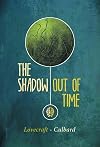
Something of an ambitious Lovecraft story for adaptation to the graphic novel medium, but Culbard delivers the goods in a vivid, lively and striking manner that tightens the structure while maintaining all the cosmic angst. Highly recommended.
Two Hundred and Twenty-One Baker Streets: An Anthology of Holmesian Tales Across Time and Space by David Thomas Moore
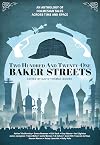
As I made my way through David Thomas Moore's anthology "Two Hundred and Twenty-One Baker Streets: An Anthology of Holmesian Tales Across Time and Space" I couldn't help but think 'I wish I had edited this book'. Not because I think it's poorly edited, needed work, or anything like that, but because I'm bloody envious of how good it is while being so far off the beaten track of a typical Sherlock Holmes anthology. Of the 14 stories presented, all of which are more or less 'alternate universe' takes on Holmes and Watson, there is only one clunker, which is mighty impressive given the ease with which most stories could have gone wildly off the rails. Be aware, in some stories you will not find anyone named Sherlock Holmes. This antho isn't about mimicry of ACD's writing style, or structure of stories; it's about characters, iconic characters whose bundle of traits are 'universal' in a literary, not literal, sense, and work in any place or time. I like this book. Its smart. It's challenging. It's an exploration. The concept behind it and the various ideas that drive it, work for me. Easily the best book of Sherlock Holmes related fiction I've read this year.
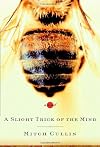
I've had this sitting on the shelf since its release in 2005, but decided I'd best read it before the film opens. It's a beautifully written, ultimately sad and reflective piece of work that attempts to breathe a certain degree of depth into the character of a rather elderly Sherlock Holmes dealing with age and memory loss. It's certainly a very 'original' take on Holmes, fairly engaging, which is down to the lovely writing style more than the story, but on completion I found myself wondering about the point of it all. As a study of aging, loneliness, isolation and and memory loss, it's fascinating, but as a Holmes tale, well, I don't think I really 'get' why Holmes was needed as the protagonist. If the goal was to show the hidden side of Holmes, the human side, laced with all the attached foibles and intricacies of human relationships, I guess it achieves that, but I was still left wondering 'To what end?' In any event, it was a fine read, just to my mind, a vaguely pointless one. Can't begin to imagine how this work will translate to the screen. Guess I'll find out soon...
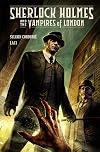
Holmes, still believed dead by the masses after Reichenbach, is enlisted by vampires to track down one of their own who has gone rogue. In short, it's largely the plot of Blade 2 with Sherlock Holmes in the lead role. As dismissive and derivative as that might sound, it's actually an excellent and thoroughly enjoyable read. Some awkward sentences here and there, likely a result of translation, but characterization is solid. The art is stunningly detailed, realistically rendered and beautiful throughout the book. I would rate this as one of the very best Sherlock Holmes comic books of recent years, sitting alongside the wonderful Victorian Undead: Sherlock Holmes Vs Zombies, but of course, if you don't care for stories that mix Holmes with the supernatural, your opinion will differ. Happily I love this sort of thing, especially when as well done as it was in this book.
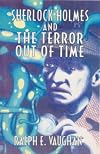
I confess to having a fondness for Sherlock Holmes cross-universe pastiches when handled with a bit of flair, so when I’d discovered that Gary Lovisi’s Gryphon Books was releasing a third Holmes/H.P. Lovecraft pastiche by Ralph E. Vaughan, I lost no time in ordering it. On arrival it went directly to the top of my ever-increasing pile of pastiches, such is my regard for Vaughan’s previous work Sherlock Holmes in the Adventure of the Ancient Gods (first published in Holmesian Federation #4) and to a lesser extent Sherlock Holmes in the Dreaming Detective (sorry, but I’ve never been terribly fond of HPL’s Dreamland based stories). After devouring the book in one sitting, I’m happy to say that my regard is still intact and my fondness for Vaughan’s approach to Holmes and HPL has increased once again.
Sherlock Holmes and the Terror Out of Time is far less of a blatant HPL inspired story than the overly dramatic title would lead one to believe. Although the plot is still pure undiluted Weird Tales-style pulp fiction, Vaughan has developed considerably from a stylistic viewpoint, not even once invoking the well worn name of Cthulhu! His use of locations and descriptive phrasing is solid throughout. The dialogue is strong and faithful to the spirit of Conan Doyle and by putting Watson out of the way, Vaughan has managed to side step the usual pastiche pitfall of providing Watsonian-style narration and has opted instead to use a third person omniscient narrative. show more Holmes well-known disregard of the supernatural is effectively explained away, not damaging his credibility or rationality in the least. My only serious annoyance is in the handling of Professor Challenger, who is strangely relegated to the role of Watson substitute and never quite lives up to the brash and impetuous character of The Lost World.
Beginning with an establishing prologue set in British pre-history, we jump quickly to Baker Street where the dying seaman, India Jack Neville, has dropped a package of unspeakable horror literally at the feet of Sherlock Holmes, Professor Challenger and Inspector Wilkins, interrupting their fascinating discourse on Darwinism. With the Macguffin safely in their hands and Watson away, Holmes and Challenger set out to unravel its secrets. What does this ugly idol have to do with the Ki’M’tollo sect of the Maldives? Could it be tied into attacks in the docklands by three giant serpent-like beasts? Holmes and Challenger, the detective and the scientist, are determined to find out! Their quest for knowledge takes them to the British Museum and puts them at odds with a mysterious dark magician named Laslo Bronislav, who is deemed so evil that even Aleister Crowley refers to him as “That Devil!” Aided by the late Professor Moriarty’s chief information man McBane, Bronislav is determined to retrieve the idol from Holmes at all costs. How do the dark magician’s plans tie-in to the Elder Gods? Can Holmes and Challenger defeat Bronislav and the voracious elder gods terrorizing London? What do you think? Of course they can, but the fun of the tale is in the telling!
Sherlock Holmes and the Terror Out of Time is an oversized paperback with illustrated colour covers (don’t be put off by the poor choice of cover art). The book is $15 USD and available directly from Gryphon Books. While you are at it, be sure to order a copy of Ralph Vaughan’s first Holmes/HPL pastiche Sherlock Holmes in the Adventure of the Ancient Gods, if you like the idea of Holmes and Lovecraft combating the threat of Cthulu, you won’t regret it, as it beats P. H. Cannon’s similarly themed Pulptime hands down!
Highly recommended for those who enjoy a fun pulp-fiction style adventure story! Not recommended for the Canonical purist, but if you’ve been considering trying something a little more on the outré side of Holmesian storytelling, this is a good choice! show less
Sherlock Holmes and the Terror Out of Time is far less of a blatant HPL inspired story than the overly dramatic title would lead one to believe. Although the plot is still pure undiluted Weird Tales-style pulp fiction, Vaughan has developed considerably from a stylistic viewpoint, not even once invoking the well worn name of Cthulhu! His use of locations and descriptive phrasing is solid throughout. The dialogue is strong and faithful to the spirit of Conan Doyle and by putting Watson out of the way, Vaughan has managed to side step the usual pastiche pitfall of providing Watsonian-style narration and has opted instead to use a third person omniscient narrative. show more Holmes well-known disregard of the supernatural is effectively explained away, not damaging his credibility or rationality in the least. My only serious annoyance is in the handling of Professor Challenger, who is strangely relegated to the role of Watson substitute and never quite lives up to the brash and impetuous character of The Lost World.
Beginning with an establishing prologue set in British pre-history, we jump quickly to Baker Street where the dying seaman, India Jack Neville, has dropped a package of unspeakable horror literally at the feet of Sherlock Holmes, Professor Challenger and Inspector Wilkins, interrupting their fascinating discourse on Darwinism. With the Macguffin safely in their hands and Watson away, Holmes and Challenger set out to unravel its secrets. What does this ugly idol have to do with the Ki’M’tollo sect of the Maldives? Could it be tied into attacks in the docklands by three giant serpent-like beasts? Holmes and Challenger, the detective and the scientist, are determined to find out! Their quest for knowledge takes them to the British Museum and puts them at odds with a mysterious dark magician named Laslo Bronislav, who is deemed so evil that even Aleister Crowley refers to him as “That Devil!” Aided by the late Professor Moriarty’s chief information man McBane, Bronislav is determined to retrieve the idol from Holmes at all costs. How do the dark magician’s plans tie-in to the Elder Gods? Can Holmes and Challenger defeat Bronislav and the voracious elder gods terrorizing London? What do you think? Of course they can, but the fun of the tale is in the telling!
Sherlock Holmes and the Terror Out of Time is an oversized paperback with illustrated colour covers (don’t be put off by the poor choice of cover art). The book is $15 USD and available directly from Gryphon Books. While you are at it, be sure to order a copy of Ralph Vaughan’s first Holmes/HPL pastiche Sherlock Holmes in the Adventure of the Ancient Gods, if you like the idea of Holmes and Lovecraft combating the threat of Cthulu, you won’t regret it, as it beats P. H. Cannon’s similarly themed Pulptime hands down!
Highly recommended for those who enjoy a fun pulp-fiction style adventure story! Not recommended for the Canonical purist, but if you’ve been considering trying something a little more on the outré side of Holmesian storytelling, this is a good choice! show less
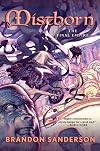
It has been a very long time since I've read any 'epic' fantasy, but gave this a shot since the author is a guest at When Words Collide this coming August in Calgary and I wanted a taste of his work. Plus I'd also heard nothing but praise for Sanderson from all quarters, so wanted to know what all the fuss was about. ;-)
Mistborn, the first in a trilogy, while not exactly riveting from the off, was compelling enough to keep me interested and turning pages. The writing is relatively clean and straightforward, if somewhat lacking in elegance, and carries the narrative along at a reasonable pace, which is a bonus when plowing through 500 pages. The magic system - Allomancy - is intriguingly clever and gives the users (those who are born with the latent ability to tap into it) a selection of powers based around the consumption of various metals. By 'burning' certain metals within the body the user (Mistborns - those who can utilize all the metals and Mistings - those who can utilize a single metal) are able to push and pull against external metals, increase strength, constitution, sharpen senses, and influence mood and feeling in those around them. It's an elaborate and clearly defined system that has a sort of logical alchemical feel to it with a great deal of appeal. Unfortunately the world building as a whole isn't quite as clear as the magic system. While the political, religious and social structures are handled well, Sanderson fails to deliver a sense of time and place. show more Descriptions of clothing, buildings, the landscape are all rather weak. I had a hard time determining a historical period analogue. There are times when it reads like a sort of antebellum setup with plantations, slavery, etc...and at others it's more like a late medieval feudal feel. That to me was the largest weakness in the writing/world-building.
In terms of plot and characterization it's all fairly simple. We've got a group of largely low-class, vaguely criminal types, gathering together in an attempt to overthrow a god-like tyrant. In the early stages it reads like a caper/heist affair, but soon develops into a more noble plan. And when I say 'types', I do mean types, as there isn't a fully fleshed out character in the lot. Our POV is a scruffy young female thief with Mistborn powers who finds herself caught up in schemes largely over her head. She is mentored by another noble sort of thief, a warrior, a scam artist, etc...and learns from each of them until she awakens to the realization that there's more to life than simply getting by as a thief. That being said, it all still sort of works. Readers know these types, we like these types, we understand these types because we've read/seen them a 100 times before and Sanderson gives them just enough character to grow on you. The plot, as I mentioned, is about rebellion, freedom from tyranny, and the like, but I couldn't shake the sense that it was all just sort of an inversion of God Emperor of Dune.
While my comments sound harsh, even to myself, I did come away from the book thinking I might actually want to see where it goes from here, which is to say overall I liked it, and that's from a guy who really doesn't care much for 'epic' fantasy, so give it a shot. I'd give it a solid 3.5 out of 5. It's an early book from the author, so I expect more from the follow-ups in the trilogy. show less
Mistborn, the first in a trilogy, while not exactly riveting from the off, was compelling enough to keep me interested and turning pages. The writing is relatively clean and straightforward, if somewhat lacking in elegance, and carries the narrative along at a reasonable pace, which is a bonus when plowing through 500 pages. The magic system - Allomancy - is intriguingly clever and gives the users (those who are born with the latent ability to tap into it) a selection of powers based around the consumption of various metals. By 'burning' certain metals within the body the user (Mistborns - those who can utilize all the metals and Mistings - those who can utilize a single metal) are able to push and pull against external metals, increase strength, constitution, sharpen senses, and influence mood and feeling in those around them. It's an elaborate and clearly defined system that has a sort of logical alchemical feel to it with a great deal of appeal. Unfortunately the world building as a whole isn't quite as clear as the magic system. While the political, religious and social structures are handled well, Sanderson fails to deliver a sense of time and place. show more Descriptions of clothing, buildings, the landscape are all rather weak. I had a hard time determining a historical period analogue. There are times when it reads like a sort of antebellum setup with plantations, slavery, etc...and at others it's more like a late medieval feudal feel. That to me was the largest weakness in the writing/world-building.
In terms of plot and characterization it's all fairly simple. We've got a group of largely low-class, vaguely criminal types, gathering together in an attempt to overthrow a god-like tyrant. In the early stages it reads like a caper/heist affair, but soon develops into a more noble plan. And when I say 'types', I do mean types, as there isn't a fully fleshed out character in the lot. Our POV is a scruffy young female thief with Mistborn powers who finds herself caught up in schemes largely over her head. She is mentored by another noble sort of thief, a warrior, a scam artist, etc...and learns from each of them until she awakens to the realization that there's more to life than simply getting by as a thief. That being said, it all still sort of works. Readers know these types, we like these types, we understand these types because we've read/seen them a 100 times before and Sanderson gives them just enough character to grow on you. The plot, as I mentioned, is about rebellion, freedom from tyranny, and the like, but I couldn't shake the sense that it was all just sort of an inversion of God Emperor of Dune.
While my comments sound harsh, even to myself, I did come away from the book thinking I might actually want to see where it goes from here, which is to say overall I liked it, and that's from a guy who really doesn't care much for 'epic' fantasy, so give it a shot. I'd give it a solid 3.5 out of 5. It's an early book from the author, so I expect more from the follow-ups in the trilogy. show less
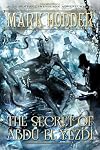
Had no idea how Hodder could bring the characters back after the initial trilogy, but he managed it beautifully with The Secret of Abdu El-Yezdi. Fun read and a joy to be back with the series characters...in whatever incarnation. ;-)
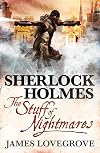
Characterization of Holmes, Watson and Mycroft was rather wobbly, but it was a fun, fast moving, comicbook-like, steampunk sort of romp. An enjoyable breezy read.
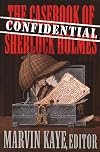
This is Marvin Kaye’s third Holmes anthology. Like all anthologies, the quality of the stories vary widely. The overall product is very good and this one is much better than his last outing, “The Resurrected Holmes” in that these are straight pastiches, not authors pretending to write in the style of a great author writing in the Doyle vein. (I know this sounds convoluted but it makes sense i.e.:Marvin Kaye writing a Holmes story in the way he imagines Rex Stout would.) Fortunately the umbrella premise for this book is more straightforward, here the linking theme is stories that were suppressed by Watson to avoid scandal. There are some interesting stories here that come very close to the Doyle style while others are stylistically different yet effective all the same. An example of the former is “The Darlington Substitution Scandal” by Henry Slesar. This little tale bears certain similarities to The Man with the Twisted Lip but has far more sinister implications. A frightfully powerful example of the latter is provided by P.C. Hodgel in his remarkable memoir of Holmes childhood entitled “A Ballad of the White Plague”. While no collection is perfect this one (as well as “The Mammoth Book of New Sherlock Holmes Adventures” edited by Mike Ashley. Carroll & Graf 1997) ranks very highly.
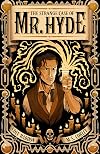
A surprisingly good and well-written comic book sequel to the classic story with Jekyll/Hyde a sort of Hannibal Lecter figure to a promising young detective on the trail of a murderer. Simple, but effective art whose only failing is that half the characters look like David Tennant. Well worth a read.
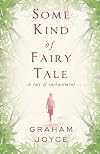
Superficially, you'd be correct in thinking Some Kind of Fairy Tale is a straightforward urban fantasy, but you'd be missing the real heart of the book. While the basic premise centres on the return, after a 20 year absence, of a young woman who had been carried off to the fairy realm, it is a heartfelt, insightful and touching exploration of belief, loss, grief, family, friendship, growth and change. There's something deceptively simple and effortless about Graham's crisp, clear, precise, but highly evocative prose style - reminiscent of Robert B. Parker at his best, but with a decidedly 'British' sensibility - that just pulls me straight into the story from the first page and, as with The Silent Land, compelled me to read the book in one sitting. Masterful storytelling and easily the best novel I've read in 2012.

Jeremy Brett: The Definitive Sherlock Holmes is an interesting, although slightly misleading, title for Linda Pritchard’s (Brett's sometime companion in his last years) second book on the subject of Jeremy Brett. For starters it gives the impression that the book is very much about Brett as Holmes, which is not exactly the case. Secondly it is liable to ruffle a few feathers amongst Sherlockians as the word “definitive” will, no doubt, be hotly debated for its application to Brett. Perhaps the phrase A Pictorial Tribute to, which appears only on the front cover, preceding the main title of Jeremy Brett: The Definitive Sherlock Holmes, might have been a more apt choice in naming this particular book, for that is precisely what this is. A pictorial tribute to Jeremy Brett the man; the actor; and possibly even the definitive Sherlock Holmes.
The slender large format trade paperback is really a very lovely photo-album consisting of about 100 pictures, mostly black and white, of Brett throughout his career. It is an eye-opening experience to discover the range of looks that Brett had captured in his wide variety of roles on stage, television and the occasional film. The section about stage performances is possibly the most interesting as we can see a very youthful and frightened looking Mark Antony in 1954 give way to a sophisticated and haunted Hamlet in 1961. We have a bewhiskered Che Guevera in 1969 rubbing shoulders with a smiling George Tesman in a 1970 production of show more Hedda Gabler, followed by the flamboyant Dracula of 1978 and culminating in the world-weary Holmes in the The Secret of Sherlock Holmes.
The Films section is painfully short, a reminder that Brett’s youthful good looks never really impacted on the big screen. It consists mainly of a few stills from War and Peace and, of course, My Fair Lady.
The television section (excluding Holmes) offers a fascinating glimpse into some long unseen roles. We have Brett as the smugly sinister Dorian Gray in 1963 contrasting nicely with the dashingly handsome D’Artagnan of 1966, both roles which likely suited him very well. His roles in the 1980s – 1990’s are also nicely represented, with stills from The Good Soldier, Macbeth for HBO, and Deceptions for NBC featured amongst them. The book, now at the halfway mark then switches over to Sherlock Holmes.
The Holmes section of the book is pretty standard fare actually, consisting mainly of oft-seen Granada publicity stills. 8 pages of colour photos are also included in this section adding very little to the impact of the book as a whole.
The text elements of the book are relatively short and, quite frankly, outside of the acting credits, mainly of the “Jeremy was a kind, wonderful man who touched my life and is greatly missed” variety, saying more about the contributors (a somewhat gushy fan letters section in particular) than they do about Brett. The final 20 pages consist entirely of text, the bulk of which is simply an obligatory appendix, listing cast and broadcast dates for each episode of the Granada series, followed by adverts for Brett websites and other books on Brett available from Rupert Books.
So is it a good book? Well, if you adore Jeremy Brett and would enjoy perusing a photo-album of his career, then by all means, it is a good book. If however you are interested in a book about what it is that, for many, makes Jeremy Brett the “definitive” Holmes, I say look elsewhere, as you’d be better served by either David Stuart Davies Bending the Willow or Michael Cox’s A Study in Celluloid. show less
The slender large format trade paperback is really a very lovely photo-album consisting of about 100 pictures, mostly black and white, of Brett throughout his career. It is an eye-opening experience to discover the range of looks that Brett had captured in his wide variety of roles on stage, television and the occasional film. The section about stage performances is possibly the most interesting as we can see a very youthful and frightened looking Mark Antony in 1954 give way to a sophisticated and haunted Hamlet in 1961. We have a bewhiskered Che Guevera in 1969 rubbing shoulders with a smiling George Tesman in a 1970 production of show more Hedda Gabler, followed by the flamboyant Dracula of 1978 and culminating in the world-weary Holmes in the The Secret of Sherlock Holmes.
The Films section is painfully short, a reminder that Brett’s youthful good looks never really impacted on the big screen. It consists mainly of a few stills from War and Peace and, of course, My Fair Lady.
The television section (excluding Holmes) offers a fascinating glimpse into some long unseen roles. We have Brett as the smugly sinister Dorian Gray in 1963 contrasting nicely with the dashingly handsome D’Artagnan of 1966, both roles which likely suited him very well. His roles in the 1980s – 1990’s are also nicely represented, with stills from The Good Soldier, Macbeth for HBO, and Deceptions for NBC featured amongst them. The book, now at the halfway mark then switches over to Sherlock Holmes.
The Holmes section of the book is pretty standard fare actually, consisting mainly of oft-seen Granada publicity stills. 8 pages of colour photos are also included in this section adding very little to the impact of the book as a whole.
The text elements of the book are relatively short and, quite frankly, outside of the acting credits, mainly of the “Jeremy was a kind, wonderful man who touched my life and is greatly missed” variety, saying more about the contributors (a somewhat gushy fan letters section in particular) than they do about Brett. The final 20 pages consist entirely of text, the bulk of which is simply an obligatory appendix, listing cast and broadcast dates for each episode of the Granada series, followed by adverts for Brett websites and other books on Brett available from Rupert Books.
So is it a good book? Well, if you adore Jeremy Brett and would enjoy perusing a photo-album of his career, then by all means, it is a good book. If however you are interested in a book about what it is that, for many, makes Jeremy Brett the “definitive” Holmes, I say look elsewhere, as you’d be better served by either David Stuart Davies Bending the Willow or Michael Cox’s A Study in Celluloid. show less
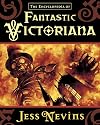
Jess Nevins’ mammoth survey of Victorian popular fiction is a hugely entertaining and handy tome for anyone with more than a passing interest in the era and its bewildering array of literary heroes and villains. As the title suggests this is in fact a straightforward encyclopedia, featuring listings and write-ups summarizing background, explaining character traits, etc…for hundreds of characters, ranging from the obvious to the obscure. Perhaps a bit less objective than I’d like, with Nevins’ injecting a strongly personal bias to some listings, it still proves to be highly useful and vastly entertaining. Sherlock Holmes is, of course, given a fair bit of coverage, roughly three plus pages, with further separate entries for other Arthur Conan Doyle characters including Irene Adler, Edward Bellingham, Jack Brocket, Micah Clarke, Brigadier Gerard, Sir Nigel Loring, Professor Moriarty, Professor Van Baumgarten and Duncan Warner. Well worth the expense and perfect for either extended reading or to dip into here and there as time and interest require. Highly recommended to Sherlockians and students of the Victorian pop literature scene alike!
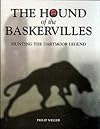
A book with all the information which you have here is a must for all of us who love this adventure.”
- Edward Hardwicke
The above quotation, from Edward Hardwicke’s foreword to Philip Weller’s The Hound of the Baskervilles: Hunting the Dartmoor Legend sums up my feelings quite nicely. Just in time for the 100th anniversary of the first serial publication of The Hound of the Baskervilles in The Strand magazine, we are presented with an invaluable research tool and highly fitting celebration of Doyle’s classic story.
Based on publicity, I half expected the book to be a travelogue of Dartmoor, I was happily surprised to discover that the book is no such thing. As a matter of fact, the location-spotting game takes up only a fraction of the information presented here. This book is an overall look at The Hound and many of the factors that went into its creation!
The Hound of the Baskervilles: Hunting the Dartmoor Legend is divided into two nearly equal segments. The first, entitled The Men on the Tor is Philip Weller’s investigation into the history and genesis of The Hound; the second segment contains the full text of The Strand version of Doyle’s story annotated by Weller.
Weller approaches his subject as more or less a historical or textbook investigation. Now don’t be frightened by either of those terms, as the writing is personal, readable and highly engaging from start to finish, it is simply structured like a textbook. Weller never falls into a lecturing tone show more and manages the occasional sly wink to the reader as well. His firsthand research of Dartmoor’s history, geography, literature and locations is remarkable; his appreciation of the region and the story itself is apparent throughout the work.
The first chapter serves as something of an introduction to the Sherlockian game and creates a context from which the reader can better appreciate the approach to the material that follows. From there Weller dives directly into the genesis of the story, explaining how and why Doyle found himself on Dartmoor in the company of Bertram Fletcher Robinson and the coachman Harry Baskerville. More importantly he breaks down the specific order of events that lead to Doyle’s ‘collaboration’ with Robinson and just how far Robinson’s involvement goes (if you want specifics, read the book!).
The next few chapters focus on detecting the possible sources that may have inspired Conan Doyle in creating The Hound. These sources are helpfully broken down into historical, literary and legendary. The latter being the most interesting, to this reader, as Weller discusses the various legends associated with spectral hounds and to my mind successfully presents a rational argument for his conclusions.
The next two chapters deal with Dartmoor locations, both real and Imaginary, to be found in The Hound. Weller’s love and knowledge of the region is very clear in these chapters, and once again he provides reasonable evidence for his assignment of story locations to actual locations. He also supplies alternatives and the reasoning for their rejection.
By this point, the reader will have an excellent grasp of Dartmoor and its relation to the heart of The Hound, so Weller leaves the Moor and discusses the effect of the book in a wider framework. In what is to me the most interesting chapter – The Authorship Controversy - in this already fascinating study, he sums up the many accusations that arose surrounding the actual authorship of The Hound. Starting with The Bookman article in October of 1901 we are carried through the whole gamut, right up to the present day, concluding with the ravings of Rodger Garrick Steele.
The final two chapters in the first half of the book briefly explore the numerous film adaptations of the story and the ongoing Hound phenomenon respectively. In his conclusion, Weller rightly points out that while this volume does gather together much of the available data, the hunt for the Hound continues.
The second half, as mentioned earlier, is a reprinting of The Strand Magazine text of The Hound, Paget illustrations included, with notations by Weller. Strangely, it is here that my one main criticism arises. The annotations are not indicated in the text itself, but presented as an appendix with page and line numbers directing the reader back to the appropriate page in the story. While I enjoyed reading the notes on their own, there is something to be said for having them handy, or at the very least indicated, while reading through the story.
A sturdy binding, high-quality paper and wonderful photo reproduction are all brought together under an evocative dust-jacket, making the book a high quality production and well worth the £24.95 price. If you should buy only one book on The Hound of the Baskervilles, make it this one as you won’t regret it! show less
- Edward Hardwicke
The above quotation, from Edward Hardwicke’s foreword to Philip Weller’s The Hound of the Baskervilles: Hunting the Dartmoor Legend sums up my feelings quite nicely. Just in time for the 100th anniversary of the first serial publication of The Hound of the Baskervilles in The Strand magazine, we are presented with an invaluable research tool and highly fitting celebration of Doyle’s classic story.
Based on publicity, I half expected the book to be a travelogue of Dartmoor, I was happily surprised to discover that the book is no such thing. As a matter of fact, the location-spotting game takes up only a fraction of the information presented here. This book is an overall look at The Hound and many of the factors that went into its creation!
The Hound of the Baskervilles: Hunting the Dartmoor Legend is divided into two nearly equal segments. The first, entitled The Men on the Tor is Philip Weller’s investigation into the history and genesis of The Hound; the second segment contains the full text of The Strand version of Doyle’s story annotated by Weller.
Weller approaches his subject as more or less a historical or textbook investigation. Now don’t be frightened by either of those terms, as the writing is personal, readable and highly engaging from start to finish, it is simply structured like a textbook. Weller never falls into a lecturing tone show more and manages the occasional sly wink to the reader as well. His firsthand research of Dartmoor’s history, geography, literature and locations is remarkable; his appreciation of the region and the story itself is apparent throughout the work.
The first chapter serves as something of an introduction to the Sherlockian game and creates a context from which the reader can better appreciate the approach to the material that follows. From there Weller dives directly into the genesis of the story, explaining how and why Doyle found himself on Dartmoor in the company of Bertram Fletcher Robinson and the coachman Harry Baskerville. More importantly he breaks down the specific order of events that lead to Doyle’s ‘collaboration’ with Robinson and just how far Robinson’s involvement goes (if you want specifics, read the book!).
The next few chapters focus on detecting the possible sources that may have inspired Conan Doyle in creating The Hound. These sources are helpfully broken down into historical, literary and legendary. The latter being the most interesting, to this reader, as Weller discusses the various legends associated with spectral hounds and to my mind successfully presents a rational argument for his conclusions.
The next two chapters deal with Dartmoor locations, both real and Imaginary, to be found in The Hound. Weller’s love and knowledge of the region is very clear in these chapters, and once again he provides reasonable evidence for his assignment of story locations to actual locations. He also supplies alternatives and the reasoning for their rejection.
By this point, the reader will have an excellent grasp of Dartmoor and its relation to the heart of The Hound, so Weller leaves the Moor and discusses the effect of the book in a wider framework. In what is to me the most interesting chapter – The Authorship Controversy - in this already fascinating study, he sums up the many accusations that arose surrounding the actual authorship of The Hound. Starting with The Bookman article in October of 1901 we are carried through the whole gamut, right up to the present day, concluding with the ravings of Rodger Garrick Steele.
The final two chapters in the first half of the book briefly explore the numerous film adaptations of the story and the ongoing Hound phenomenon respectively. In his conclusion, Weller rightly points out that while this volume does gather together much of the available data, the hunt for the Hound continues.
The second half, as mentioned earlier, is a reprinting of The Strand Magazine text of The Hound, Paget illustrations included, with notations by Weller. Strangely, it is here that my one main criticism arises. The annotations are not indicated in the text itself, but presented as an appendix with page and line numbers directing the reader back to the appropriate page in the story. While I enjoyed reading the notes on their own, there is something to be said for having them handy, or at the very least indicated, while reading through the story.
A sturdy binding, high-quality paper and wonderful photo reproduction are all brought together under an evocative dust-jacket, making the book a high quality production and well worth the £24.95 price. If you should buy only one book on The Hound of the Baskervilles, make it this one as you won’t regret it! show less

In recent weeks I have found myself reading some of the gothic-style work of Basil Copper and renewing my interest in macabre fiction. So when I came across The Irregular Casebook of Sherlock Holmes at the Calabash Press site, I was in the right frame of mind to tackle another Holmes versus the supernatural type book. Expecting to regret my spur of the moment decision, I went ahead and ordered it anyway. The result, well, lets just say that I’ve made worse decisions.
The book consists of five short stories of rather varied levels of success. Each is tied to some element of the supernatural. Not what I would generally consider to be a clever blending of genres, but happily the author manages to maintain the Holmes of old with only a minimum of strain.
The first story, The Case of the Fiery Messengers is likely the strongest in the book. The case is brought to Holmes attention by no less of a literary figure than M. R. James, himself a master of the macabre tale. A missing manuscript page stolen from an occult tome in the hand of John Dee, leads our erstwhile heroes to Cambridge where a clever little riddle is the key to nabbing the culprit. Was there a vengeful spectre that delivered retribution? You can decide for yourself.
The second story takes us to the cold and foreboding Yorkshire moors to investigate The Shadow of the Wolf. As the title implies, this is a fairly traditional werewolf story, but somehow manages to drag in yet another episode of Holmes travels in Tibet show more (told in flashback) at Mycroft’s bequest. As with much of this type of fiction the main point for the reader is playing a quick game of guess which cursed family member is actually the hairy horror. A far superior story to the similarly themed Sherlock Holmes & The Silver Vengence by W. Lane, put out by Magico a few years back.
The next two stories are the weakest in this collection. The Curse of Nectanebo is a silly sort of mummy story that starts, of course, at the British Museum and swiftly takes our heroes to Egypt. I have a feeling that the author overly enjoyed the recent Universal Studios Mummy film or possibly The Wind and the Lion, as this one treats us to the spectacle of Holmes at the head of a troop of Arab horseman. The penultimate case relies a little too much on a dubious fictional episode from Holmes past to be of any interest (remember the fencing bits in Young Sherlock Holmes?), but does take us to the canals of Venice in The Sect of the Salamander.
The final story The Black Heaven, does present the odd bit of interest as author, Arthur Machen, keeps encountering passers by on the street who casually refer to his literary works as real events and people. Troubled by this, and having read enough Machen, who wouldn’t be? He turns to Holmes for help, but is soon caught up in a web of intrigue involving Welsh Satanists, standing stones and the unlikely spectacle of Mycroft Holmes on horseback. Look you, there’ll be the Devil to pay for this one!
As silly as much of this book was, I found myself enjoying it. Oddly enough, the dialogue is quite good and Holmes manages to stay mostly in character. In answer to those that will throw out the "no ghosts need apply” bit, the author just sort of forgets about it and carries on as though werewolves and Satanists are a perfectly normal part of the Holmesian world. Surprisingly, that seems to be the best way to proceed in pastiches of this sort. Once again, I still affirm that the best blending of Holmes mythos and the supernatural are the two books by Mark Frost, The List of Seven and The Six Messiahs featuring Conan Doyle battling the forces of evil. show less
The book consists of five short stories of rather varied levels of success. Each is tied to some element of the supernatural. Not what I would generally consider to be a clever blending of genres, but happily the author manages to maintain the Holmes of old with only a minimum of strain.
The first story, The Case of the Fiery Messengers is likely the strongest in the book. The case is brought to Holmes attention by no less of a literary figure than M. R. James, himself a master of the macabre tale. A missing manuscript page stolen from an occult tome in the hand of John Dee, leads our erstwhile heroes to Cambridge where a clever little riddle is the key to nabbing the culprit. Was there a vengeful spectre that delivered retribution? You can decide for yourself.
The second story takes us to the cold and foreboding Yorkshire moors to investigate The Shadow of the Wolf. As the title implies, this is a fairly traditional werewolf story, but somehow manages to drag in yet another episode of Holmes travels in Tibet show more (told in flashback) at Mycroft’s bequest. As with much of this type of fiction the main point for the reader is playing a quick game of guess which cursed family member is actually the hairy horror. A far superior story to the similarly themed Sherlock Holmes & The Silver Vengence by W. Lane, put out by Magico a few years back.
The next two stories are the weakest in this collection. The Curse of Nectanebo is a silly sort of mummy story that starts, of course, at the British Museum and swiftly takes our heroes to Egypt. I have a feeling that the author overly enjoyed the recent Universal Studios Mummy film or possibly The Wind and the Lion, as this one treats us to the spectacle of Holmes at the head of a troop of Arab horseman. The penultimate case relies a little too much on a dubious fictional episode from Holmes past to be of any interest (remember the fencing bits in Young Sherlock Holmes?), but does take us to the canals of Venice in The Sect of the Salamander.
The final story The Black Heaven, does present the odd bit of interest as author, Arthur Machen, keeps encountering passers by on the street who casually refer to his literary works as real events and people. Troubled by this, and having read enough Machen, who wouldn’t be? He turns to Holmes for help, but is soon caught up in a web of intrigue involving Welsh Satanists, standing stones and the unlikely spectacle of Mycroft Holmes on horseback. Look you, there’ll be the Devil to pay for this one!
As silly as much of this book was, I found myself enjoying it. Oddly enough, the dialogue is quite good and Holmes manages to stay mostly in character. In answer to those that will throw out the "no ghosts need apply” bit, the author just sort of forgets about it and carries on as though werewolves and Satanists are a perfectly normal part of the Holmesian world. Surprisingly, that seems to be the best way to proceed in pastiches of this sort. Once again, I still affirm that the best blending of Holmes mythos and the supernatural are the two books by Mark Frost, The List of Seven and The Six Messiahs featuring Conan Doyle battling the forces of evil. show less
Originally published in 2002 by now defunct Reynolds & Hearn publishing this new updated edition includes coverage of Sherlock Holmes film and television programs released up to and including early 2011. The second Downey film SHERLOCK HOLMES: A GAME OF SHADOWS and the second series of the BBC series SHERLOCK are mentioned, but do not have specific individual listings. Alan Barnes (with occasional assists from writers Jonathan Rigby and Andy Lane) manages to provide succinct synopses, cast lists, production notes and insightful commentary to well over 300 individual programs from around the globe that feature the Great Detective. While the book certainly notes areas of fidelity and deviation from Conan Doyle's stories in the various adaptations, this is more about judging the films on their own merits and levels of success in terms of entertainment value, in short, this is accessible to film buffs, not just Sherlock Holmes enthusiasts.
Barnes has a witty, slightly amused tone that makes the book an engaging read even when covering some of the least inspiring entries. It's hard to just dip in to read a specific entry without carrying on to whatever follows. While an index is lacking, it's a minor complaint as this is easily the best written, most wide reaching, informative and entertaining book of its kind. I firmly agree with the comment emblazoned across the top of the cover by writer/producer of the BBC's SHERLOCK - "I love this book." If you only buy one book on the show more film and television representations of Sherlock Holmes, it should be this one. Highly recommended. show less
Barnes has a witty, slightly amused tone that makes the book an engaging read even when covering some of the least inspiring entries. It's hard to just dip in to read a specific entry without carrying on to whatever follows. While an index is lacking, it's a minor complaint as this is easily the best written, most wide reaching, informative and entertaining book of its kind. I firmly agree with the comment emblazoned across the top of the cover by writer/producer of the BBC's SHERLOCK - "I love this book." If you only buy one book on the show more film and television representations of Sherlock Holmes, it should be this one. Highly recommended. show less
Ah, the delightful world of ‘what if’. What if everything we thought we knew about Dr. John H. Watson was a lie? What if Watson wasn’t really Watson? What if the events surrounding the momentous meeting between Holmes and Watson in A Study in Scarlet was all a set-up orchestrated by that criminal mastermind Moriarty? What if David Stuart Davies took the above as a starting point for a new pastiche?
Well, to answer the last ‘what if’, the result is David Stuart Davies first pastiche to be published by a non-Sherlockian press - The Veiled Detective. While Davies is no stranger to Sherlockian pastiche, having thrown Holmes up against the likes of Dracula and into the midst of the Prisoner of Zenda, The Veiled Detective takes Holmes, to say nothing of Watson, along a very different path. Rather than taking the traditional approach of throwing Holmes and Watson into non-traditional stories, Davies instead reimagines the very core of what we know about our heroes. In essence he has taken the traditional Holmes story, in this case mostly using A Study in Scarlet and later The Final Problem, and changed the basic characters populating it. Not in an altogether unpleasing manner either.
Davies begins on a strong note, we find ourselves privy to events in Afghanistan on a fateful night in 1880 that lead to the court martial and disgraced dismissal of Dr. John H. Walker. While heading back to England aboard the Orontes, the despondent Doctor, facing a future with no show more employment or prospects for income, finds himself being recruited for some enigmatic business concern by a suave fellow who keeps mistakenly calling him Watson. Upon arriving in England, Walker soon finds himself face to face with that great over-used Sherlockian plot-device Professor James Moriarty and here is where the plot begins to thicken. You see, the Professor is concerned about some young upstart named Sherlock Holmes, while he admires Holmes intellect, he also wisely sees the young detective as a potentially serious threat to the well being of his vast criminal organization so wishes to keep an eye on the fellow. Rather than simply have Holmes killed, he enjoys the challenge of playing a game against a comparable intellect too much, so he invests in a plan to put a spy in Holmes’ camp who can report back on any potentially threatening investigations. Walker is of course just the fellow for the job according to Moriarity’s recruiter, but he is an honorable man and wants no part in the plan… until his life is threatened and a handsome monthly payment is dangled before his eyes. Reluctantly Walker is given a new name (Watson) and his background is effectively covered up so that he can begin a new life. He rationalizes his acceptance of the spying job by thinking that he will never have to raise a hand in violence and that all he need do is send written reports to Moriarty if Holmes comes too close to any of the Professor’s machinations. So in short, John H. Walker becomes a half-pay medico called Watson newly returned from Afghanistan looking for lodgings in London. If that isn’t twisted enough for the reader, Davies then really lays on the tough to swallow stuff by having the house in Baker Street set-up by Moriarty, even including a dodgy actress as housekeeper, has pressure applied to Holmes landlord in Montague Street to evict the young lodger, and uses Stamford’s gambling debts to manipulate an introduction between Watson and Holmes that leads to their sharing of rooms. Once the introduction occurs, things settle into mostly familiar territory and a slightly skewed version of the main plot of A Study in Scarlet unfolds. Walker/Watson develops an admiration of the arrogant young detective and a protective friendship develops. Walker/Watson goes so far as to keep very damaging information, the sort that could put Holmes on the gallows, from both Moriarty and the Law. Things move along so well for Walker/Watson through The Sign of Four that Moriarty even allows him to marry and move from Baker Street. Needless to say, sooner or later things start to unravel leading, rather predictably, to a climax that is a variation of events in The Final Problem.
Davies, as usual, demonstrates an engaging style and useful knowledge of the form that is never totally at odds with the Canon. The exception being, of course, that Watson has lied to us. He deftly weaves a world that is both instantly familiar yet radically at odds with our expectations. Unfortunately, the radical start, labyrinthine plotting aside, soon gives way to a sense that Davies is playing it safe after-all. Sure he throws a few curveballs in presenting a warts and all view of Holmes, and an even odder view of brother Mycroft, but one gets the sense that he could have pushed the intriguing premise considerably further. I’m not suggesting the sort of re-imagining that we were given in the television production Sherlock: A Case of Evil but I did feel that having everything settle into the Canonical view post-Reichenbach was something of a let-down. Is it as radical a re-imagining of events as in say Nick Meyer’s Seven Percent Solution? Possibly. Does it transcend the medium of pastiche and will it crossover to a mainstream readership in the same way? Not a chance. Is it as good or will it have the same sort of impact on the Sherlockian reader? Doubtful at best, but perhaps that is the result of 30 years of pastichery that has taken Sherlock Holmes to almost every extreme, dulling our senses to what should be a radical interpretation, that in the end makes this seem like just another well-written and researched ‘what if’ that didn’t quite push the envelope as far as it might have. Whatever the case, it is an entertaining enough variation to make it a worthwhile read and addition to the Sherlockian pastiche bookshelf!
The Bottom Line: Recommended for pastiche enthusiasts who enjoy something off the beaten path, but not recommended for those who prefer the traditional pastiche approach. show less
Well, to answer the last ‘what if’, the result is David Stuart Davies first pastiche to be published by a non-Sherlockian press - The Veiled Detective. While Davies is no stranger to Sherlockian pastiche, having thrown Holmes up against the likes of Dracula and into the midst of the Prisoner of Zenda, The Veiled Detective takes Holmes, to say nothing of Watson, along a very different path. Rather than taking the traditional approach of throwing Holmes and Watson into non-traditional stories, Davies instead reimagines the very core of what we know about our heroes. In essence he has taken the traditional Holmes story, in this case mostly using A Study in Scarlet and later The Final Problem, and changed the basic characters populating it. Not in an altogether unpleasing manner either.
Davies begins on a strong note, we find ourselves privy to events in Afghanistan on a fateful night in 1880 that lead to the court martial and disgraced dismissal of Dr. John H. Walker. While heading back to England aboard the Orontes, the despondent Doctor, facing a future with no show more employment or prospects for income, finds himself being recruited for some enigmatic business concern by a suave fellow who keeps mistakenly calling him Watson. Upon arriving in England, Walker soon finds himself face to face with that great over-used Sherlockian plot-device Professor James Moriarty and here is where the plot begins to thicken. You see, the Professor is concerned about some young upstart named Sherlock Holmes, while he admires Holmes intellect, he also wisely sees the young detective as a potentially serious threat to the well being of his vast criminal organization so wishes to keep an eye on the fellow. Rather than simply have Holmes killed, he enjoys the challenge of playing a game against a comparable intellect too much, so he invests in a plan to put a spy in Holmes’ camp who can report back on any potentially threatening investigations. Walker is of course just the fellow for the job according to Moriarity’s recruiter, but he is an honorable man and wants no part in the plan… until his life is threatened and a handsome monthly payment is dangled before his eyes. Reluctantly Walker is given a new name (Watson) and his background is effectively covered up so that he can begin a new life. He rationalizes his acceptance of the spying job by thinking that he will never have to raise a hand in violence and that all he need do is send written reports to Moriarty if Holmes comes too close to any of the Professor’s machinations. So in short, John H. Walker becomes a half-pay medico called Watson newly returned from Afghanistan looking for lodgings in London. If that isn’t twisted enough for the reader, Davies then really lays on the tough to swallow stuff by having the house in Baker Street set-up by Moriarty, even including a dodgy actress as housekeeper, has pressure applied to Holmes landlord in Montague Street to evict the young lodger, and uses Stamford’s gambling debts to manipulate an introduction between Watson and Holmes that leads to their sharing of rooms. Once the introduction occurs, things settle into mostly familiar territory and a slightly skewed version of the main plot of A Study in Scarlet unfolds. Walker/Watson develops an admiration of the arrogant young detective and a protective friendship develops. Walker/Watson goes so far as to keep very damaging information, the sort that could put Holmes on the gallows, from both Moriarty and the Law. Things move along so well for Walker/Watson through The Sign of Four that Moriarty even allows him to marry and move from Baker Street. Needless to say, sooner or later things start to unravel leading, rather predictably, to a climax that is a variation of events in The Final Problem.
Davies, as usual, demonstrates an engaging style and useful knowledge of the form that is never totally at odds with the Canon. The exception being, of course, that Watson has lied to us. He deftly weaves a world that is both instantly familiar yet radically at odds with our expectations. Unfortunately, the radical start, labyrinthine plotting aside, soon gives way to a sense that Davies is playing it safe after-all. Sure he throws a few curveballs in presenting a warts and all view of Holmes, and an even odder view of brother Mycroft, but one gets the sense that he could have pushed the intriguing premise considerably further. I’m not suggesting the sort of re-imagining that we were given in the television production Sherlock: A Case of Evil but I did feel that having everything settle into the Canonical view post-Reichenbach was something of a let-down. Is it as radical a re-imagining of events as in say Nick Meyer’s Seven Percent Solution? Possibly. Does it transcend the medium of pastiche and will it crossover to a mainstream readership in the same way? Not a chance. Is it as good or will it have the same sort of impact on the Sherlockian reader? Doubtful at best, but perhaps that is the result of 30 years of pastichery that has taken Sherlock Holmes to almost every extreme, dulling our senses to what should be a radical interpretation, that in the end makes this seem like just another well-written and researched ‘what if’ that didn’t quite push the envelope as far as it might have. Whatever the case, it is an entertaining enough variation to make it a worthwhile read and addition to the Sherlockian pastiche bookshelf!
The Bottom Line: Recommended for pastiche enthusiasts who enjoy something off the beaten path, but not recommended for those who prefer the traditional pastiche approach. show less