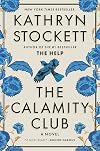
The Calamity Club is a big, unruly historical novel with enough drama for about three separate books and somehow that is part of the fun. Meg completely stole the story for me. She is stubborn, funny, painfully observant, and far too clever for the adults who have already decided what sort of future she deserves. Birdie and Charlie took a little longer to win me over, but once their lives collided, the book became much harder to put down 📚
At over 600 pages, it definitely wanders. The middle takes a rather wild turn, and a few developments felt too convenient for such a harsh time and place. Still, Kathryn Stockett is great at mixing heartbreak with sharp, slightly wicked humour, so even the heavier sections never become completely miserable. I especially enjoyed watching these women expose the hypocrisy of respectable society while quietly creating their own rules. 😄
It is emotional, chaotic, occasionally unbelievable, and packed with memorable characters. The ending ties everything together a bit too neatly, but I was invested enough to forgive it. A lively story about survival, found family, and underestimated women finally deciding they have had enough.
At over 600 pages, it definitely wanders. The middle takes a rather wild turn, and a few developments felt too convenient for such a harsh time and place. Still, Kathryn Stockett is great at mixing heartbreak with sharp, slightly wicked humour, so even the heavier sections never become completely miserable. I especially enjoyed watching these women expose the hypocrisy of respectable society while quietly creating their own rules. 😄
It is emotional, chaotic, occasionally unbelievable, and packed with memorable characters. The ending ties everything together a bit too neatly, but I was invested enough to forgive it. A lively story about survival, found family, and underestimated women finally deciding they have had enough.
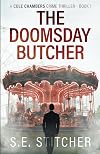
Who is the mysterious caller claiming, "The Four Horsemen ride at Dreamland"? That question pulled me into The Doomsday Butcher by S. E. Stitcher right from the opening chapter.
I enjoyed following Officer Amy Fields as a chilling phone call leads to a disturbing investigation. The eerie setting of Dreamland Amusement Park and the biblical references create a creepy atmosphere that kept me curious about what was really going on.
S. E. Stitcher does a great job of building suspense without giving too much away. If you enjoy crime thrillers with dark mysteries, unsettling villains, and plenty of twists, The Doomsday Butcher is a gripping read.
I enjoyed following Officer Amy Fields as a chilling phone call leads to a disturbing investigation. The eerie setting of Dreamland Amusement Park and the biblical references create a creepy atmosphere that kept me curious about what was really going on.
S. E. Stitcher does a great job of building suspense without giving too much away. If you enjoy crime thrillers with dark mysteries, unsettling villains, and plenty of twists, The Doomsday Butcher is a gripping read.
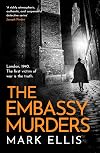
Can a single murder uncover secrets that reach far beyond the crime itself? That’s exactly what kept me turning the pages of The Embassy Murders by Mark Ellis.
I really enjoyed following DCI Frank Merlin as he investigates a case that becomes more complicated with every new clue. Set in wartime London, the story combines a gripping murder mystery with the tension and uncertainty of World War II, creating an atmosphere that feels authentic and engaging.
Mark Ellis does a great job of balancing suspense with historical detail, and Frank Merlin is a detective who is easy to root for. If you enjoy crime fiction with memorable characters, clever twists, and a rich historical setting, The Embassy Murders is well worth reading.
I really enjoyed following DCI Frank Merlin as he investigates a case that becomes more complicated with every new clue. Set in wartime London, the story combines a gripping murder mystery with the tension and uncertainty of World War II, creating an atmosphere that feels authentic and engaging.
Mark Ellis does a great job of balancing suspense with historical detail, and Frank Merlin is a detective who is easy to root for. If you enjoy crime fiction with memorable characters, clever twists, and a rich historical setting, The Embassy Murders is well worth reading.
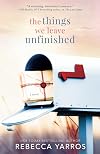
This book really got me… I loved the way Georgia and Noah’s guarded present-day story slowly uncovers Scarlett and Jameson’s wartime romance, and honestly, the older timeline is the one that broke me. It’s romantic, sad, a little dramatic in that Rebecca Yarros way, but it earns the emotion. The start took me a bit to settle into, and the timeline switches may not work for everyone, but the payoff is beautiful.
The Subtle Art of Not Giving a F*ck: A Counterintuitive Approach to Living a Good Life by Mark Manson
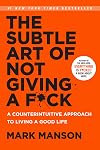
This is a blunt, useful, occasionally obnoxious book about choosing your problems instead of pretending you can escape them. Mark Manson is not reinventing wisdom here, but he packages it with enough force and comic vulgarity that the familiar truths land harder than expected.
The premise is simple. Stop trying to care about everything. Stop confusing constant positivity with emotional health. Decide what actually deserves your attention, your discomfort, and your life.
What works best is the book’s refusal to flatter the reader. Manson’s whole argument depends on the idea that we are not special, not owed happiness, not exempt from failure, and not improved by pretending pain is a glitch in the system. That sounds harsh, but the book is warmer than its title suggests because its real subject is responsibility. Not blame. Responsibility. The difference matters.
Manson is strongest when he talks about values. He pushes the reader away from shallow measurements like popularity, comfort, being right, or looking successful, and toward things that can actually be practiced, like honesty, discipline, curiosity, and the ability to admit when you are wrong. That is the substance beneath the profanity. A good life is not a life without suffering. It is a life where the suffering is attached to something worth choosing.
The voice is also the problem. The swagger is part of the appeal, but sometimes the jokes feel like a man elbowing you to make sure you noticed how irreverent he is show more being. The book can simplify big emotional and cultural problems into a clean personal responsibility framework, and that will not work for every reader or every life. Still, Manson’s best points are not cruel. They are clarifying.
This is a self help book for people who hate the soft lighting and fake serenity of self help. It is messy, profane, repetitive in places, and genuinely useful. When it hits, it hits because it tells the truth most comfort culture avoids. Choose better things to care about. Then live with the cost. show less
The premise is simple. Stop trying to care about everything. Stop confusing constant positivity with emotional health. Decide what actually deserves your attention, your discomfort, and your life.
What works best is the book’s refusal to flatter the reader. Manson’s whole argument depends on the idea that we are not special, not owed happiness, not exempt from failure, and not improved by pretending pain is a glitch in the system. That sounds harsh, but the book is warmer than its title suggests because its real subject is responsibility. Not blame. Responsibility. The difference matters.
Manson is strongest when he talks about values. He pushes the reader away from shallow measurements like popularity, comfort, being right, or looking successful, and toward things that can actually be practiced, like honesty, discipline, curiosity, and the ability to admit when you are wrong. That is the substance beneath the profanity. A good life is not a life without suffering. It is a life where the suffering is attached to something worth choosing.
The voice is also the problem. The swagger is part of the appeal, but sometimes the jokes feel like a man elbowing you to make sure you noticed how irreverent he is show more being. The book can simplify big emotional and cultural problems into a clean personal responsibility framework, and that will not work for every reader or every life. Still, Manson’s best points are not cruel. They are clarifying.
This is a self help book for people who hate the soft lighting and fake serenity of self help. It is messy, profane, repetitive in places, and genuinely useful. When it hits, it hits because it tells the truth most comfort culture avoids. Choose better things to care about. Then live with the cost. show less

Okay so I am slightly embarrassed by how much I enjoyed this, because on paper it is exactly the kind of book I would roast while pretending I am above it. Spoiler, I am not above anything. Especially not a space cruise ship called Space Adventurer where our guy Jim Brown is trying to get home after crushing a rebellion on Pirrus, only to learn he is part alien and Earth has basically been quietly hijacked by aliens wearing human faces. Casual.
What hooked me is the constant pressure. Jim cannot even sit down with a drink and enjoy the view without somebody trying to abduct him, the EPA slapping a minder on him, and multiple factions treating him like a pawn in their secret power game. Marika is that minder, competent, watchful, and yes the book keeps reminding you she is beautiful, because of course it does. Leela is the industrialist daughter with her own agenda, and honestly the moment the story leans into the body horror slash sexy weirdness of Jim’s alien side, I was cackling and also weirdly invested. Pheromones, shifting bodies, webbed hands, light green skin. Romance readers, you know what I mean. Do not look at me.
Feminist gripe time. There is some eye roll framing of women as prizes and the Levita beauty eugenics talk is grim in a way the book does not always interrogate. Still, the pacing is punchy, the conspiracy plotting is fun, and Jim’s identity panic feels genuinely human for a bloke who keeps turning into something else. Anyway, I need a lie down.
What hooked me is the constant pressure. Jim cannot even sit down with a drink and enjoy the view without somebody trying to abduct him, the EPA slapping a minder on him, and multiple factions treating him like a pawn in their secret power game. Marika is that minder, competent, watchful, and yes the book keeps reminding you she is beautiful, because of course it does. Leela is the industrialist daughter with her own agenda, and honestly the moment the story leans into the body horror slash sexy weirdness of Jim’s alien side, I was cackling and also weirdly invested. Pheromones, shifting bodies, webbed hands, light green skin. Romance readers, you know what I mean. Do not look at me.
Feminist gripe time. There is some eye roll framing of women as prizes and the Levita beauty eugenics talk is grim in a way the book does not always interrogate. Still, the pacing is punchy, the conspiracy plotting is fun, and Jim’s identity panic feels genuinely human for a bloke who keeps turning into something else. Anyway, I need a lie down.
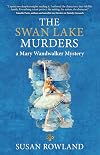
Some books arrive dressed as one thing and quietly become something else entirely. This one presents as a crime mystery, and it is that, but it is also a meditation on what it means to be a woman who has been told she cannot fly.
Mary Wandwalker is in her early sixties, running a small detective agency out of Surrey with her colleague Caroline and a young woman who, honestly, could carry her own novel. When a fifteen year old dancer disappears against the backdrop of a coming storm, the three of them follow the trail to Holywell, a witchcraft and healing centre that becomes by turns refuge and trap. The atmosphere Rowland builds there is genuinely unsettling in the best way, the kind where you are reading at speed but also do not want it to end.
What stayed with me most was Irina. (I read those chapters on a Friday evening and immediately messaged a friend who dances, because the way Rowland writes about ballet as both beauty and harm felt so honest it was almost uncomfortable.) She is young and endangered and fiercely herself, and watching her arc reach its conclusion in a Greenwich park as the storm finally lifts was the kind of ending that made me set the book down and sit with it.
Are you someone who believes fairy tales carry real weight? Then this was written for you.
Mary Wandwalker is in her early sixties, running a small detective agency out of Surrey with her colleague Caroline and a young woman who, honestly, could carry her own novel. When a fifteen year old dancer disappears against the backdrop of a coming storm, the three of them follow the trail to Holywell, a witchcraft and healing centre that becomes by turns refuge and trap. The atmosphere Rowland builds there is genuinely unsettling in the best way, the kind where you are reading at speed but also do not want it to end.
What stayed with me most was Irina. (I read those chapters on a Friday evening and immediately messaged a friend who dances, because the way Rowland writes about ballet as both beauty and harm felt so honest it was almost uncomfortable.) She is young and endangered and fiercely herself, and watching her arc reach its conclusion in a Greenwich park as the storm finally lifts was the kind of ending that made me set the book down and sit with it.
Are you someone who believes fairy tales carry real weight? Then this was written for you.
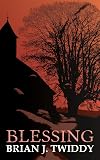
"Blessing" by Brian J. Twiddy is a unique and well-written book. The tone is integral to the story as you follow Dev and Adey, two very different illegal immigrants who find themselves in London. Despite having dissimilar aspirations and vastly different personalities, you genuinely come to care about them. Additionally, there’s Pastor Ben, whose own life intertwines with theirs in highly interesting ways. This is an intriguing read about ambition and the fulfillment of dreams, and whether destiny or fate plays a real role or not. Highly recommended.
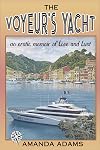
This lingered with me as a very particular kind of ache: the ache of wanting pleasure, romance, reinvention, and mistaking their shimmer for certainty.
Mandy arrives in Europe determined to learn about life and love, and the book follows her from Paris and Verona to Portofino, Cannes, and beyond, through a series of erotic encounters that grow increasingly lavish and emotionally complicated once she and Michael are drawn onto Vitorrio’s yacht. What surprised me was the softness tucked inside all that excess. Beneath the champagne, sex, and fantasy, there is a young woman reaching for something steadier than desire, even when she cannot quite name it. Michael brings the book its first tenderness. Vitorrio adds an unexpected sadness. And Derek, for all his glamour, carries the faint unease of a wish granted too quickly.
The writing is most convincing when it leans into atmosphere and longing. The ports, hotels, and yacht life have a dreamy unreality that suits the story well. I did feel the repetition in some of the intimate scenes, and the emotional shift from Michael to Derek happens so fast that it loses a little weight. Even so, the ending stayed with me because it understands that fantasy can feel luminous and fragile at the same time.
Mandy arrives in Europe determined to learn about life and love, and the book follows her from Paris and Verona to Portofino, Cannes, and beyond, through a series of erotic encounters that grow increasingly lavish and emotionally complicated once she and Michael are drawn onto Vitorrio’s yacht. What surprised me was the softness tucked inside all that excess. Beneath the champagne, sex, and fantasy, there is a young woman reaching for something steadier than desire, even when she cannot quite name it. Michael brings the book its first tenderness. Vitorrio adds an unexpected sadness. And Derek, for all his glamour, carries the faint unease of a wish granted too quickly.
The writing is most convincing when it leans into atmosphere and longing. The ports, hotels, and yacht life have a dreamy unreality that suits the story well. I did feel the repetition in some of the intimate scenes, and the emotional shift from Michael to Derek happens so fast that it loses a little weight. Even so, the ending stayed with me because it understands that fantasy can feel luminous and fragile at the same time.
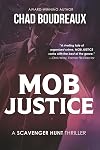
Mob Justice is the second installment in Chad Boudreaux’s Scavenger Hunt Series. Justice Department lawyer Blake Hudson is reassigned from interrogations to address escalating gang rivalries. As the Chicago Outfit plans a critical meeting, a hidden agenda threatens to destabilize its leadership. Enzo Renzi, an undercover consigliere, is positioned to influence the outcome, but his exposure is having serious consequences. Blake must protect Enzo and find out who and why the family is willing to kill him. The story explores the limits of loyalty, love, and justice.
Chad Boudreaux created a masterpiece that unfolds layers of deceit and devotion simultaneously. Mob Justice has the cringe-inducing feel of a dark underworld unseen by everyday citizens. Once Blake is on the case, it quickly becomes a race between shadows. Mobsters are known for meting out their own form of justice and buying off those who can grease the wheels, and Blake becomes the stick that brings the wheel to a sudden stop. This is the thriller that keeps you sitting at the edge of your seat as you race to the end. I thoroughly enjoyed this novel and look forward to the next Scavenger Hunt.
Chad Boudreaux created a masterpiece that unfolds layers of deceit and devotion simultaneously. Mob Justice has the cringe-inducing feel of a dark underworld unseen by everyday citizens. Once Blake is on the case, it quickly becomes a race between shadows. Mobsters are known for meting out their own form of justice and buying off those who can grease the wheels, and Blake becomes the stick that brings the wheel to a sudden stop. This is the thriller that keeps you sitting at the edge of your seat as you race to the end. I thoroughly enjoyed this novel and look forward to the next Scavenger Hunt.