More assured than Sandman Slim, with Stark starting to become more than a one-note character. Just the right amount of occult details to keep us interested, and a very interesting resolution that leaves me counting the days to the next volume. Nicely done.
Nicely done Celtic-themed apocalypse. Chadbourn mixes in Arthurian and Christian symbolism, highlighting the whole 'every mythology is but a series of regional symbols' concept, and binds it all together into a suspenseful read. While the characters will occasionally do very stupid things in order to move the plot along, at the end I was very ready to dive right into the next book.
On his latest outing, Swierczynski plays in the same universe as The Blonde, but with less effective results. The plot is as thin as a Hollywood elevator pitch, and the execution is so fast that there isn't much time to get to know the characters (not to mention that the main male character is a one-note wallflower who is superfluous to the action, and the three female leads are nearly interchangeable in their background and motivation). And there's a couple of ludicrous situations that strain credibility. It feels like Swierzynski reached a little too far on this one, and there just isn't enough to hold it up.
Lightning fast on the pacing, Swierczynski's The Blonde, starts at a dead-run and doesn't let up. As such, it's full of intricate plotting and whizz-bang pseudo near-future tech, and the some of the characters actually stretch beyond their two-note definitions. But, like cotton candy, it vanishes as soon as you swallow it.
Frank Elder, retired detective, is drawn out of retirement by old ghosts. Harvey tracks the devastation of the lives of those who have lost people and who've not had closure on these losses, and while Elder's impact on their lives is ostensibly regarding an old case, a new mystery unfolds. Flesh & Blood is more about the characters than the crime, and while ending comes on a bit abruptly, he writes living characters who are more interesting than the banal thuggishness of the crime. Excellent, and heartbreaking.
A cosy murder mystery set against the backdrop of Venice, Death At La Fenice introduces us to Leon's erudite detective, Commissario Guido Brunetti. The dead body is Maestro Helmut Wellauer, a highly respected conductor who is loved by his audiences and, apparently, hated by many musicians. It's an entertaining read, filled with lots of nice flourishes about opera and Venice itself. In the end, though, I started caring less about the mystery and more about the supporting characters (who are delightful, through and through), and fortunately, Leon wraps the story up at just about that time. This is the first in a series, and like most mystery series, I'd be coming back for the atmosphere and the reoccurring characters.
Interesting debate between Mr. Hitchens and Mr. Wilson that appears to have risen out of publication of Hitchens' recent Atheism book. The course of the debate originally appeared in Christianity Today, and my guess is that it stemmed from a request to provide a counterpoint. I'm a fan of Hitchens' work and personal philosophy, and I wasn't expecting to be swayed by Wilson's arguments, but found them to be fascinating to read. And, in light of the impassioned logic (more passion than logic, in my mind, but that's also part of my own blindness), I found some perspective on the Hitchensian (and my own) side of the discussion.
It's a short read, done in a few hours, but provides an awful lot of opportunity for debate. Certainly something that could be shared with someone who know ardently believes the opposite of your view (like a dear old friend of mine), and it would provide a nice, impersonal avenue for discussion by having a textual reference for the discussion topics.
Hitchens appears to run rampant over Wilson, but I have to admit that this is a personal interpretation because I see Wilson's argumentative foundation of citing the Bible as rationale as a weak explanation for his points. However, he in turn implies that much of Hitchens' foundation is based on that same sort of ideology: "this is true, because I believe it to be true." Which, when you get past your own biases, makes their discussion much more open-ended. In the end, this book gave me a lot to chew on, but show more mainly because I found their internal logic and argumentative structuring more fascinating than the idea that one or the other would answer the question posed by the book's title. show less
It's a short read, done in a few hours, but provides an awful lot of opportunity for debate. Certainly something that could be shared with someone who know ardently believes the opposite of your view (like a dear old friend of mine), and it would provide a nice, impersonal avenue for discussion by having a textual reference for the discussion topics.
Hitchens appears to run rampant over Wilson, but I have to admit that this is a personal interpretation because I see Wilson's argumentative foundation of citing the Bible as rationale as a weak explanation for his points. However, he in turn implies that much of Hitchens' foundation is based on that same sort of ideology: "this is true, because I believe it to be true." Which, when you get past your own biases, makes their discussion much more open-ended. In the end, this book gave me a lot to chew on, but show more mainly because I found their internal logic and argumentative structuring more fascinating than the idea that one or the other would answer the question posed by the book's title. show less
 This review was written for LibraryThing Early Reviewers.
First book in the series, and deals with PI Harper Blaine's introduction to the world of the Grey--the space between life and death. Richardson's imagery is nice, and her evocation of Seattle is very delightful, but she can't quite seem to decide what sort of book this is going to be. Blaine spends the first half fighting and disbelieving the Grey, and then when the vampires show up, she (and every other normal) seem to not find them counter to their world view. It's a bit of a hiccup, and I wish she hadn't spent so much time fighting the acceptance of the weird, because, after all, that's what the audience came for. Still, issues with world-building setup aside, the series looks interesting. Maybe book 2 is a better starting place.
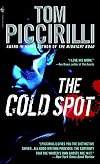
Noir thriller about young getaway driver Chase and the world that he can never quite escape. It's a solid read, certainly workmanlike in its presentation, but for me, it came right after reading James Sallis' Drive, which is, in some ways, the same story; and Sallis' book is much better. Still, Piccirilli entertains, falling somewhere between James Crumley and Sallis, which is certainly a reasonable place to land.
I Could Tell You But Then You Would Have to be Destroyed by Me: Emblems from the Pentagon's Black World by Trevor Paglen
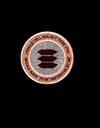
ICTYBTYWHTBDYM is nearly shorter than its title. A collection of Air Force patches as "seen" by the author near Area 51. Paglen details some of the symbolism and meaning behind the myriad of patches that--somewhat inexplicably--are worn by individuals working for black ops projects. A nice little insight into an otherwise obscured sub-culture.
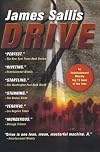
An absolutely stunning piece of neo-noir. Brutal and beautiful in nearly every sentence. Sallis pares the story of Driver and a heist gone bad down to its very skeleton, and yet, every character is rich with enigmas and mysteries. It's an afternoon read, but it lingers on much longer.
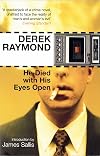
Bleak crime drama with the sort of tough guys that only a generation of encroaching nihilism can create. Through the legacy of a brutalized corpse's confessional audio tapes, the nameless Factory detective discovers what purpose a man can make for himself when despair and hopelessness have devoured everything. Hard noir with a hidden empathy that is almost indiscernible, but by God! it is there, nonetheless. Very good, but not for those who are looking for sunlight.