In this wide-ranging work, Watson gets to grips with why HEIs should have strategic plans, and what they should look like. He touches on many of the key debates about institutional identities in doing so, probing the relationship between the HEI and its students and funders. Watson acknowledges the reticence with which HEIs will approach the idea of a vision or mission document (now enthusiastically embraced by many of our foremost) but makes a solid defence of its importance: indeed, he argues that being the architect of a mission and vision statements of the HEI is a very large part of what a VC or Principal is there to do.
This book has, therefore, in Watson's own words, the "character of a survival guide for the senior manager" and he does an excellent job of ranging across the occupational territory of a British Vice-Chancellor at the turn of the Millennium.
It is, though, a book of its time.
Government-sponsored and market-driven change has changed the HE landscape since this book was written: it feels as though Watson is describing a very different UK HE sector than today's. Many of the important public and sectoral bodies feel less vital now, and some important ones have come into being since publication.
A worthwhile text - surely a second edition is needed now.
This book has, therefore, in Watson's own words, the "character of a survival guide for the senior manager" and he does an excellent job of ranging across the occupational territory of a British Vice-Chancellor at the turn of the Millennium.
It is, though, a book of its time.
Government-sponsored and market-driven change has changed the HE landscape since this book was written: it feels as though Watson is describing a very different UK HE sector than today's. Many of the important public and sectoral bodies feel less vital now, and some important ones have come into being since publication.
A worthwhile text - surely a second edition is needed now.
A must-buy for curious residents of Bristol. Gives you the lowdown on hidden parts and strangely named locations in the city.

A journey through the hidden subterranean world below London. Missing tube lines and entire closed station frozen in the 50's; sewers and other feats of Victorian engineering.

Smallholding is hard; you won't like it; you won't like it. But it will give you a grudging sense of achievement in the face of adversity.
How to read a church : a guide to images, symbols and meanings in churches and cathedrals by Richard Taylor
This is the monochrome paperback version. The full colour version (which I don't have) is much better.
Describes the process of designing a new academic library. Dated, but a worthwhile read if you are interested in practically constructing learning environments from an administrative perspective.
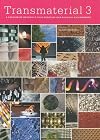
There are some amazing materials out there. Not many of them are terribly environmentally-friendly, though!
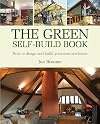
Interesting as the story of one architect's journey to build his own place. By modern standards, it would not qualify as an eco-home, and seems to be quite wasteful of energy. Rather than be overly critical of this, I think it is best to say that it is very much a book of its time, and reminded me that 10 years ago the term eco-home meant practically nothing, the practice of domestic energy conservation was in its infancy, and what would be considered eco-bling today was a desirable but not essential addition to a lower-than-standard-destructive-impact architect-deigned home. Broome's house wouldn't meet modern building regs!
Broome does introduce the work of Walter Seagal, though, and it acted as a good jumping-off point into finding out more about his ideas on low-impact building.
Broome does introduce the work of Walter Seagal, though, and it acted as a good jumping-off point into finding out more about his ideas on low-impact building.
Good practical guide to environmental engineering in buildings.
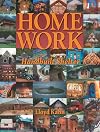
Inspirational pictures and tales of folks who have built their own idiosyncratic homes with their own hands.
Beautful, timeless buildings.
Read "US Educational Environments". Lots of glossy pictures and swanky buildings, but mainly in the US modern traditional mode.
Technical tour-de-force on the mechanics of building with straw. Also covers issues of construction in seismic zones. Very little on moisture - this is a book written for a dry-ish climate.
Using natural finishes : lime- & clay based plasters, renders & paints : a step-by-step guide by Adam Weismann
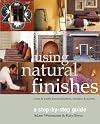
Full of detailed information on using lime and clay in the UK climate. In fact, the best book I have found dealing with this. Contains some inspirational pictures. The style can be a little repetitive at times, and more pictures would be a boon, but overall, this has to be the best book of its type.
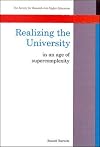
Barnett shows how the University has been in the vanguard of an attack on its own foundations, and proclaims: "The Western university is at an end."
Universities are in part to blame for bringing about our current postmodern condition, where no knowledge is secure, no frame of reference and inquiry unchallengeable. Barnett uses the term "supercomplexity" to refer to this fragile state of affairs.
However, there is plenty of cause for hope and not despair, as two new challenges have arisen. Firstly, a mode of research that continues to generate supercomplexity, but which also acknowledges the demands of the world for knowledges to be "useful". Secondly, a mode of education that focuses on the whole of the student's being, preparing the student to survive and thrive in a supercomplex world.
My good friend says that he owes quite a debt to Heidegger's conception of being. I have thus far not found opportunity to research this for myself.
Universities are in part to blame for bringing about our current postmodern condition, where no knowledge is secure, no frame of reference and inquiry unchallengeable. Barnett uses the term "supercomplexity" to refer to this fragile state of affairs.
However, there is plenty of cause for hope and not despair, as two new challenges have arisen. Firstly, a mode of research that continues to generate supercomplexity, but which also acknowledges the demands of the world for knowledges to be "useful". Secondly, a mode of education that focuses on the whole of the student's being, preparing the student to survive and thrive in a supercomplex world.
My good friend says that he owes quite a debt to Heidegger's conception of being. I have thus far not found opportunity to research this for myself.

Unconvincing fiction doth not an utopia make.
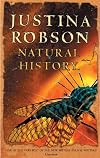
Really interesting, clever ideas in a great story from a talented writer. More please!
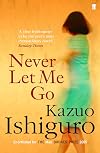

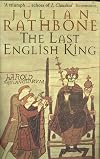
Diverting romp, not particularly well written, sometimes jarringly so.
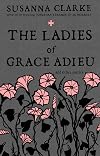

Marvellous Drabble - students of literature, this is your degree!
A judicious, sensitive and non-triumphal telling of the whole history of the world, as much a delight to adults as children.