This is the second time I have listened to Sir Richard Branson’s book, but the first time I have reviewed it. Richard Branson is a fascinating entrepreneur. Struggling in school, he started a newspaper for students. It quickly grew in popularity to the point he received an offer to sell it. He immediately turned that money into the music business, reselling vinyl albums by mail cheaper than the corner shops. The next logical step was to create a recording studio and begin promoting bands. From there, things continued to grow and grow. The result of his willingness to strike out into areas he knew nothing about became known as the Virgin group of brands.
Business Stripped Bare is a look at Branson’s business philosophy and brand genius. He shares the story of how he built the brand and why he feels it is successful. He is brash, challenging, energetic and doesn’t subscribe to stuffiness on any scale. He believes in keeping businesses as small as possible (100 employees where possible), empowering employees to make decisions and energizing them around the brand.
The Virgin Group is one of the largest privately held companies in the world and this inside look at how they approach business is fascinating to me. Branson’s easy-going, chatty-style of writing is engaging. He provides story after story demonstrating his core beliefs on building a business. More than most business books, I found the advice useful and entertaining. While not a step-by-step manual, he covers show more the more intangible aspects of success, such as keeping employees engaged, dreaming big, where to never compromise, how to recognize and capitalize on opportunity and how to learn from mistakes.
There are few global business leaders I would like to meet. Branson is one whom I would. Judging from his writing style, I think I would l even be comfortable talking with him. Perhaps this book is ghost written, but the style matches what I have read about him in the news. He seems like a normal guy who made it big. He isn’t afraid to let it all hang out on the line in promotion of the company, even if it means bungee jumping from a helicopter or showing up naked to a product release. He does things on his terms and no one else’s. He believes in his people and is relentless in the pursuit of of perfection for the customer service and safety.
One thing I took away from his book is the importance of constant observation. He carries a notebook with him everywhere he goes and writes down every observation. Everything from worn carpet on a plane, salt shakers on trains to ideas for improving cell phone offerings go into the book for review and implementation. He prides on Virgin’s ability to rapidly adapt and execute change quickly to meet customer needs and expectations. I believe they are richly rewarded for this attention to detail. There is a lot to be learned from his approach.
Business Stripped Bare: Adventures of a Global Entrepreneur is a book every entrepreneur should read and reread. I believe his advice to be sound and immediately adaptable to any size business. I am attempting to implement as much as possible within my own company, even though it is far from entrepreneurial. Of course, I also try to apply it to the virgin brand of my own. If I have even a half a grain as much success as he has, I’ll be satisfied. show less
Business Stripped Bare is a look at Branson’s business philosophy and brand genius. He shares the story of how he built the brand and why he feels it is successful. He is brash, challenging, energetic and doesn’t subscribe to stuffiness on any scale. He believes in keeping businesses as small as possible (100 employees where possible), empowering employees to make decisions and energizing them around the brand.
The Virgin Group is one of the largest privately held companies in the world and this inside look at how they approach business is fascinating to me. Branson’s easy-going, chatty-style of writing is engaging. He provides story after story demonstrating his core beliefs on building a business. More than most business books, I found the advice useful and entertaining. While not a step-by-step manual, he covers show more the more intangible aspects of success, such as keeping employees engaged, dreaming big, where to never compromise, how to recognize and capitalize on opportunity and how to learn from mistakes.
There are few global business leaders I would like to meet. Branson is one whom I would. Judging from his writing style, I think I would l even be comfortable talking with him. Perhaps this book is ghost written, but the style matches what I have read about him in the news. He seems like a normal guy who made it big. He isn’t afraid to let it all hang out on the line in promotion of the company, even if it means bungee jumping from a helicopter or showing up naked to a product release. He does things on his terms and no one else’s. He believes in his people and is relentless in the pursuit of of perfection for the customer service and safety.
One thing I took away from his book is the importance of constant observation. He carries a notebook with him everywhere he goes and writes down every observation. Everything from worn carpet on a plane, salt shakers on trains to ideas for improving cell phone offerings go into the book for review and implementation. He prides on Virgin’s ability to rapidly adapt and execute change quickly to meet customer needs and expectations. I believe they are richly rewarded for this attention to detail. There is a lot to be learned from his approach.
Business Stripped Bare: Adventures of a Global Entrepreneur is a book every entrepreneur should read and reread. I believe his advice to be sound and immediately adaptable to any size business. I am attempting to implement as much as possible within my own company, even though it is far from entrepreneurial. Of course, I also try to apply it to the virgin brand of my own. If I have even a half a grain as much success as he has, I’ll be satisfied. show less
The Innovator's Dilemma: The Revolutionary Book That Will Change the Way You Do Business by Clayton M. Christensen
Clayton M. Christensen is a professor at the Harvard Business School. In the Innovator's Dilemma, he presents his research into business life cycles and how larger companies find it difficult to innovate. He shows how these larger companies eventually are replaced by innovators who make inroads by taking the bottom markets willing ceded to them by the bigger companies. Little by little, the smaller companies eat away until they have market dominance themselves, leaving the once market leader without a place to go.
The concept of how small companies can thrive in a world dominated by large companies is an interesting one, especially for the entrepreneurs facing Goliath. Christensen lays out several test cases where the larger company couldn't innovate, allowing smaller companies to enter at the bottom of the market. He even shows how and why it made sense for the management of these dominant companies to allow this to happen - at the time. Innovation is not an easy prospect for large companies because their large existing customer base often will not allow the innovations to move forward because it doesn't fit their needs. Innovations often bring a different customer and large companies are not always able to choose to service both.
Christensen provides a few examples of this phenomena in excruciating detail, studying the rapidly changing industries of disk drives and steel production. He rounds out the book with a discussion of the steam shovel and how it lost out to show more hydraulics. In a final case study, he examines how the principles could be applied to a potential disruptive technology - the electric car. He lays out a complete game plan for a company to take the innovations available and capture a new market. Sadly, in the years since publication in 1997, it doesn't appear anyone has taken up the challenge, although perhaps Tesla Motors has come the closest.
The problem I have with Christensen's book is his writing style. He is definitely a Harvard Business School professor. He delves deeply into his research, explaining every nuance of the industry in such detail as to leave no doubt he has done an extensive study. I grew up in IT, living just miles away from one of the great innovators of the disk drive industry, yet I learned many things about disk drives. I hadn't imagined I could get a technical education from a book on business management.
Christensen's writing style was the biggest barrier to the material. His explanations were too deeply steeped with details that didn't move the story forward. While the datum was valid and important, it didn't necessarily have to be presented in long, exhaustive detail. Today's readers do not have a lot of time or desire to spend long stretches of deep explanation. I found it necessary to spend at least 45 minutes reading before getting "into" the book. I couldn't help comparing the style to that of Jim Collins in Great By Choice. Yes, Collins is also a researcher who loves detail. The difference is that Collins moves all his detailed explanations to the appendix where those who desire it can find it. The book itself is organized into fast moving, short chapters laying out the salient points distilled from the exhaustive research. I would really have appreciated this approach in this book by Christensen. Collins is a storyteller where Christensen is a Harvard professor.
Christensen's insight is worth the slog through the knee deep data. Just be ready with a canteen for dry stretches of endless detail as far as the eye can see. show less
The concept of how small companies can thrive in a world dominated by large companies is an interesting one, especially for the entrepreneurs facing Goliath. Christensen lays out several test cases where the larger company couldn't innovate, allowing smaller companies to enter at the bottom of the market. He even shows how and why it made sense for the management of these dominant companies to allow this to happen - at the time. Innovation is not an easy prospect for large companies because their large existing customer base often will not allow the innovations to move forward because it doesn't fit their needs. Innovations often bring a different customer and large companies are not always able to choose to service both.
Christensen provides a few examples of this phenomena in excruciating detail, studying the rapidly changing industries of disk drives and steel production. He rounds out the book with a discussion of the steam shovel and how it lost out to show more hydraulics. In a final case study, he examines how the principles could be applied to a potential disruptive technology - the electric car. He lays out a complete game plan for a company to take the innovations available and capture a new market. Sadly, in the years since publication in 1997, it doesn't appear anyone has taken up the challenge, although perhaps Tesla Motors has come the closest.
The problem I have with Christensen's book is his writing style. He is definitely a Harvard Business School professor. He delves deeply into his research, explaining every nuance of the industry in such detail as to leave no doubt he has done an extensive study. I grew up in IT, living just miles away from one of the great innovators of the disk drive industry, yet I learned many things about disk drives. I hadn't imagined I could get a technical education from a book on business management.
Christensen's writing style was the biggest barrier to the material. His explanations were too deeply steeped with details that didn't move the story forward. While the datum was valid and important, it didn't necessarily have to be presented in long, exhaustive detail. Today's readers do not have a lot of time or desire to spend long stretches of deep explanation. I found it necessary to spend at least 45 minutes reading before getting "into" the book. I couldn't help comparing the style to that of Jim Collins in Great By Choice. Yes, Collins is also a researcher who loves detail. The difference is that Collins moves all his detailed explanations to the appendix where those who desire it can find it. The book itself is organized into fast moving, short chapters laying out the salient points distilled from the exhaustive research. I would really have appreciated this approach in this book by Christensen. Collins is a storyteller where Christensen is a Harvard professor.
Christensen's insight is worth the slog through the knee deep data. Just be ready with a canteen for dry stretches of endless detail as far as the eye can see. show less
One of my least favorite genres is slasher horror. I don't particularly like blood, graphic violence and terrible things people do to one another laid out in front of me. So why in the world would I spend my Spring Break reading one? Because the writer is too good at his craft, darn it. I couldn't force myself to not pick it up nor put it down.
The second book in the John Wayne Cleaver series picks up right after the first, I Am Not A Serial Killer, leaves off. John is a teenage sociopath, convinced he has all the makings of becoming a serial killer, but managing to keep all the tendencies bottled up behind walls. He actively works to keep what he calls Mr. Monster, the killer inside, hidden, appeased and locked away from a situation where he might get out and lead John to actually injure someone. But Mr. Monster has his uses, as he helps John face down and overcome a real serial killer at the end of the first book. The problem is, Mr. Monster is not satisfied and now wants to kill again. Can John get the beast within back under control?
Adding to the pressure is a nosy FBI agent who is still in the small town of Clayton, trying to solve the last serial killer case. The agent keeps asking a lot of questions of John, who is desperate to keep all his secrets, but driven by a curiosity to know more about a new series of murders in town. The agent keeps feeding him tidbits to keep him coming back, while laying traps to find out the truth of what happened. Can John keep the show more agent from learning all the secrets without having him believe he is somehow involved with the killings? And how to handle the cutest girl in school who suddenly likes him and considers him a hero and knight protector. There are a lot of twists and turns for this teen who is trying to protect his small town from evil without becoming evil himself.
The story, while pulling no punches in the horror department, is so engaging, it is all I could do to not read it in one sitting. Dan Wells is a fantastic writer and does an excellent job of pulling the reader in and spinning a good story. I enjoy his characterizations and how he dives inside the human mind. While more light hearted than the Alex Cross novels by James Patterson (Yes, I have read a couple. Couldn't sleep for a week, thank you.), the series is targeted at teens. Just gross enough to get the attention, but interesting in how he presents John as a character with which to identify. It is easy to see real teens thinking like him. I keep expecting John to snap out of his belief he is serial killer potential. I have high hopes for the next book. Yes, it is downloading to my Kindle right now. I just can't stop myself. show less
The second book in the John Wayne Cleaver series picks up right after the first, I Am Not A Serial Killer, leaves off. John is a teenage sociopath, convinced he has all the makings of becoming a serial killer, but managing to keep all the tendencies bottled up behind walls. He actively works to keep what he calls Mr. Monster, the killer inside, hidden, appeased and locked away from a situation where he might get out and lead John to actually injure someone. But Mr. Monster has his uses, as he helps John face down and overcome a real serial killer at the end of the first book. The problem is, Mr. Monster is not satisfied and now wants to kill again. Can John get the beast within back under control?
Adding to the pressure is a nosy FBI agent who is still in the small town of Clayton, trying to solve the last serial killer case. The agent keeps asking a lot of questions of John, who is desperate to keep all his secrets, but driven by a curiosity to know more about a new series of murders in town. The agent keeps feeding him tidbits to keep him coming back, while laying traps to find out the truth of what happened. Can John keep the show more agent from learning all the secrets without having him believe he is somehow involved with the killings? And how to handle the cutest girl in school who suddenly likes him and considers him a hero and knight protector. There are a lot of twists and turns for this teen who is trying to protect his small town from evil without becoming evil himself.
The story, while pulling no punches in the horror department, is so engaging, it is all I could do to not read it in one sitting. Dan Wells is a fantastic writer and does an excellent job of pulling the reader in and spinning a good story. I enjoy his characterizations and how he dives inside the human mind. While more light hearted than the Alex Cross novels by James Patterson (Yes, I have read a couple. Couldn't sleep for a week, thank you.), the series is targeted at teens. Just gross enough to get the attention, but interesting in how he presents John as a character with which to identify. It is easy to see real teens thinking like him. I keep expecting John to snap out of his belief he is serial killer potential. I have high hopes for the next book. Yes, it is downloading to my Kindle right now. I just can't stop myself. show less
Every now and then, I come across a book that is so engaging, I simply cannot put it down. Into Thin Air is one of those books that pulled me in and I found myself listening to it every free second of every day until it, too soon, came to an end. I even brushed my teeth extra long, trying to fit in a few extra moments before I had to move on with the rest of my day.
Introduced to this book in Great By Choice by Jim Collins and Morten Hansen during their discussion on leading above the Death Line, I decided I had to read it. I had heard about the tragic Everest expeditions of 1996 in which eight people died when a storm caught them exposed near the summit. I wanted to learn more of the incident that inspired that chapter of Great By Choice.
Jon Krakauer, a journalist and mountain climber, was asked by Outside magazine to accompany an expedition and report on the commercialization of Mount Everest. Once reserved for the mountaineering elite, access to the world's highest peak has recently been made available to anyone in reasonable condition and enough money to hire a guide. However, Krakauer, and the dozens of others who attempted to climb Everest in May, 1996, came face to face with the reality of how dangerous the mountain remains.
The book spend considerable time examining the guides, especially Rob Hall, the New Zealander who had pioneered the concept of helping get people to the top. Were the guides at fault for the disaster? Were there signs that could have prevented show more the disaster? Krakauer lays out the facts as he remembered them, realizing he, like the others, were in a fog of oxygen deprivation. He pieced the story together from interviews with many of the other climbers.
Being a professional writer, Krakauer's narrative is engaging and descriptive. This is what pulled me in to the book and helped me get closer to understanding why anyone endures the physical torture and risks their life to climb the world's highest peaks.
What of the controversy surrounding the cause of the disaster? Krakauer did not gloss over the actions or inactions of several who resulted in the disaster. He holds himself responsible for mistakes made that caused pain and loss of life for his teammates and their families. He explains in detail many of the questions that will never be answered, including why Rob Hall and Scott Fischer, experienced guides, ignored their own abort time by over three hours that would have saw everyone safely back to camp before the storm broke. Krakauer's account created enough pain and anger among the survivors and families he felt it necessary to add an epilogue attempting reconciliation.
As I listened to this book, I couldn't help draw comparisons to the decision making processes followed in business leadership. Disasters are rarely a result of a single poor choice, but instead are the compounding of many, tiny missteps. Such was the conclusion to which Krakauer came. The guides had rules predetermined to keep everyone safe while under the effect of hypoxia brought on by the low oxygen levels at high altitude. However, the bending of several placed everyone in unnecessary risk. Individually, none of the small infractions would have made a difference. Adding them all up, however, spelled disaster when the storm hit. How many times do I allow myself a small bending of the rules I have placed to keep me out of danger? Can I afford to let myself place myself and others in danger? The lessons of Into Thin Air will stay with me for a long time. show less
Introduced to this book in Great By Choice by Jim Collins and Morten Hansen during their discussion on leading above the Death Line, I decided I had to read it. I had heard about the tragic Everest expeditions of 1996 in which eight people died when a storm caught them exposed near the summit. I wanted to learn more of the incident that inspired that chapter of Great By Choice.
Jon Krakauer, a journalist and mountain climber, was asked by Outside magazine to accompany an expedition and report on the commercialization of Mount Everest. Once reserved for the mountaineering elite, access to the world's highest peak has recently been made available to anyone in reasonable condition and enough money to hire a guide. However, Krakauer, and the dozens of others who attempted to climb Everest in May, 1996, came face to face with the reality of how dangerous the mountain remains.
The book spend considerable time examining the guides, especially Rob Hall, the New Zealander who had pioneered the concept of helping get people to the top. Were the guides at fault for the disaster? Were there signs that could have prevented show more the disaster? Krakauer lays out the facts as he remembered them, realizing he, like the others, were in a fog of oxygen deprivation. He pieced the story together from interviews with many of the other climbers.
Being a professional writer, Krakauer's narrative is engaging and descriptive. This is what pulled me in to the book and helped me get closer to understanding why anyone endures the physical torture and risks their life to climb the world's highest peaks.
What of the controversy surrounding the cause of the disaster? Krakauer did not gloss over the actions or inactions of several who resulted in the disaster. He holds himself responsible for mistakes made that caused pain and loss of life for his teammates and their families. He explains in detail many of the questions that will never be answered, including why Rob Hall and Scott Fischer, experienced guides, ignored their own abort time by over three hours that would have saw everyone safely back to camp before the storm broke. Krakauer's account created enough pain and anger among the survivors and families he felt it necessary to add an epilogue attempting reconciliation.
As I listened to this book, I couldn't help draw comparisons to the decision making processes followed in business leadership. Disasters are rarely a result of a single poor choice, but instead are the compounding of many, tiny missteps. Such was the conclusion to which Krakauer came. The guides had rules predetermined to keep everyone safe while under the effect of hypoxia brought on by the low oxygen levels at high altitude. However, the bending of several placed everyone in unnecessary risk. Individually, none of the small infractions would have made a difference. Adding them all up, however, spelled disaster when the storm hit. How many times do I allow myself a small bending of the rules I have placed to keep me out of danger? Can I afford to let myself place myself and others in danger? The lessons of Into Thin Air will stay with me for a long time. show less
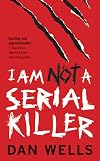
My son recommended this book. I believe he heard about it while listening to the Writing Excuses podcast done by Dan Wells and other popular authors. I knew Dan Wells wrote horror novels, which I don't like, but this was a teen book. How bad could it be?
What a ride! What a horror ride. I should have been better prepared. The premise immediately caught me with a death grip. The main character, John Wayne Cleaver, is convinced he is destined to become serial killer. Believing he was named for the serial killer John Wayne Gacy and not the actor as his mother tells him, even his research topics for school reports show his fascination with serial killers. He isn't shy about it, either. He tells his therapist everything. He feels he completely understands the mind of a serial killer. I know teens like this, completely convinced they are something they are not once the smallest suggestion is placed. As an adult, it is hard not to scoff at them. Dan Wells captures this from the adult point of view very well through the eyes of the therapist and John's divorced mother, who happens to be a mortician. It's all beginning to add up for this kid.
The book begins by showing the inner struggle of John, trying to figure out who he is in the world, frustrated that no one believing he is who he thinks he is. He is completely convinced he is a killer. He builds a set of rules for himself to keep the monster locked within. Of course, everyone, especially adults, think he is just a teenager. show more And then the killings begin.
It seems there is a serial killer on the loose in their small town. John is the first to recognize it, given his fascination with the serial killer mentality. Of course, he wants to investigate and the rest of the book is off to the races. How can John expose the killer without releasing his inner drive to become a serial killer himself?
Very well written and extremely engaging, this book grabbed me by the throat and wouldn't let go until the very line on the last page. Dan Wells knows how to write horror and he knows teens. I originally thought my wife would enjoy this book for the psychology of a teenager, but as the descriptions of the murdered bodies started piling up, I knew she would not enjoy the graphic nature. I'm torn between recommending it and being repulsed. I guess that makes it a really good horror novel. I won't suggest any teen read it because I wouldn't want those thoughts and descriptions running around in their impressionable minds. But they will. It is just the kind of book they are looking for in their search to identify themselves. I just hope they manage to keep reality and fiction in their proper places.
My son asked we get the next book in the series, Mr. Monster . I may be nuts for this, but it arrives tomorrow. show less
What a ride! What a horror ride. I should have been better prepared. The premise immediately caught me with a death grip. The main character, John Wayne Cleaver, is convinced he is destined to become serial killer. Believing he was named for the serial killer John Wayne Gacy and not the actor as his mother tells him, even his research topics for school reports show his fascination with serial killers. He isn't shy about it, either. He tells his therapist everything. He feels he completely understands the mind of a serial killer. I know teens like this, completely convinced they are something they are not once the smallest suggestion is placed. As an adult, it is hard not to scoff at them. Dan Wells captures this from the adult point of view very well through the eyes of the therapist and John's divorced mother, who happens to be a mortician. It's all beginning to add up for this kid.
The book begins by showing the inner struggle of John, trying to figure out who he is in the world, frustrated that no one believing he is who he thinks he is. He is completely convinced he is a killer. He builds a set of rules for himself to keep the monster locked within. Of course, everyone, especially adults, think he is just a teenager. show more And then the killings begin.
It seems there is a serial killer on the loose in their small town. John is the first to recognize it, given his fascination with the serial killer mentality. Of course, he wants to investigate and the rest of the book is off to the races. How can John expose the killer without releasing his inner drive to become a serial killer himself?
Very well written and extremely engaging, this book grabbed me by the throat and wouldn't let go until the very line on the last page. Dan Wells knows how to write horror and he knows teens. I originally thought my wife would enjoy this book for the psychology of a teenager, but as the descriptions of the murdered bodies started piling up, I knew she would not enjoy the graphic nature. I'm torn between recommending it and being repulsed. I guess that makes it a really good horror novel. I won't suggest any teen read it because I wouldn't want those thoughts and descriptions running around in their impressionable minds. But they will. It is just the kind of book they are looking for in their search to identify themselves. I just hope they manage to keep reality and fiction in their proper places.
My son asked we get the next book in the series, Mr. Monster . I may be nuts for this, but it arrives tomorrow. show less
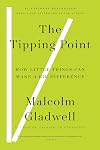
What makes a shoe that has languished in the market for years, suddenly popular and the latest fashion trend? At what point did fax machines go from being odd toys to ubiquitous business necessities? How did the Divine Secrets of the Ya-Ya Sisterhood go from completely dismissed to a national bestseller? These are the questions, among many others, Gladwell tackles in his book, The Tipping Point: How Little Things Can Make a Big Difference.
Gladwell, like Jim Collins, spends his life asking questions and then researching the answers, looking for the catalysts for change. In Gladwell's assessment, large events hinge on small, almost imperceptible events. He calls these Tipping Points, a moment of critical mass, the threshold, or a boiling point where drastic changes the outcomes occur. He likens it to a shift of a couple degrees of temperature and what was once rain becomes fluffy snow, the unexpected becomes expected and radical changes is more than a possibility.
Gladwell lays out three rules for a Tipping Point: the Law of the Few, The Stickiness Factor and the Power of Context. Each rules is accompanied by a lengthy and detailed argument for his theory. For example, the Law of the Few examines why Paul Revere of Revolutionary War fame was successful in his ride to muster and army to stop the British where others were merely late night riders annoying the slumbering towns. He examines the "stickiness" of Sesame Street and how Blues Clues took it one step farther. He then show more shows how the New York City the Power of Context to clean up a serious crime problem.
One section I really enjoyed was his discussion on Connectors. These are people who spend their time putting people together. They know all the right people and enjoy helping put these people in touch with each other when the need is perceived. These are the people, who after eating at a good restaurant, will be on the phone immediately afterward, cluing in their friends who will also like it. Paul Revere was one such gregarious person, which was the key to his successful ride.
Gladwell has some very interesting theories, but I couldn't help wonder through the entire book if social psychology could be summed up so simply. He does present a case study in which the rules were applied by a marketing company to take an obscure sneaker and clothing company from a tiny niche market to a huge international success... and back. It is very interesting to contemplate and Gladwell makes a good case. However, in the end, the theory resonated with me as good ideas worth some investigation, but certainly not the complete answers to the questions.
I read Blink: The Power of Thinking Without Thinking a few years ago and I intend to read his latest book, Outliers: The Story of Success. I enjoy Gladwell's ideas and theories. His stories are interesting and support his points. He makes me think differently and look at other options. I just don't buy into his theories 100%.
Perhaps it was the constant barrage of story after story and constant referencing back to previous stories that wore me down. Collins did much the same in Great By Choice, but his book was one-third the length and felt more believable to me. I struggled to get to the end of Gladwell's tome. I found that I couldn't toe dip - pick it up and read for a few minutes and come back later. It took at least twenty minutes for me to get under the surface of his writing style to enjoy the material involved. Once I got in the groove, though, I did enjoy it. I just didn't have large blocks of time to devote to it until I finally became committed to finishing it. Unfortunately, that commitment was just a desire to get to the end. show less
Gladwell, like Jim Collins, spends his life asking questions and then researching the answers, looking for the catalysts for change. In Gladwell's assessment, large events hinge on small, almost imperceptible events. He calls these Tipping Points, a moment of critical mass, the threshold, or a boiling point where drastic changes the outcomes occur. He likens it to a shift of a couple degrees of temperature and what was once rain becomes fluffy snow, the unexpected becomes expected and radical changes is more than a possibility.
Gladwell lays out three rules for a Tipping Point: the Law of the Few, The Stickiness Factor and the Power of Context. Each rules is accompanied by a lengthy and detailed argument for his theory. For example, the Law of the Few examines why Paul Revere of Revolutionary War fame was successful in his ride to muster and army to stop the British where others were merely late night riders annoying the slumbering towns. He examines the "stickiness" of Sesame Street and how Blues Clues took it one step farther. He then show more shows how the New York City the Power of Context to clean up a serious crime problem.
One section I really enjoyed was his discussion on Connectors. These are people who spend their time putting people together. They know all the right people and enjoy helping put these people in touch with each other when the need is perceived. These are the people, who after eating at a good restaurant, will be on the phone immediately afterward, cluing in their friends who will also like it. Paul Revere was one such gregarious person, which was the key to his successful ride.
Gladwell has some very interesting theories, but I couldn't help wonder through the entire book if social psychology could be summed up so simply. He does present a case study in which the rules were applied by a marketing company to take an obscure sneaker and clothing company from a tiny niche market to a huge international success... and back. It is very interesting to contemplate and Gladwell makes a good case. However, in the end, the theory resonated with me as good ideas worth some investigation, but certainly not the complete answers to the questions.
I read Blink: The Power of Thinking Without Thinking a few years ago and I intend to read his latest book, Outliers: The Story of Success. I enjoy Gladwell's ideas and theories. His stories are interesting and support his points. He makes me think differently and look at other options. I just don't buy into his theories 100%.
Perhaps it was the constant barrage of story after story and constant referencing back to previous stories that wore me down. Collins did much the same in Great By Choice, but his book was one-third the length and felt more believable to me. I struggled to get to the end of Gladwell's tome. I found that I couldn't toe dip - pick it up and read for a few minutes and come back later. It took at least twenty minutes for me to get under the surface of his writing style to enjoy the material involved. Once I got in the groove, though, I did enjoy it. I just didn't have large blocks of time to devote to it until I finally became committed to finishing it. Unfortunately, that commitment was just a desire to get to the end. show less
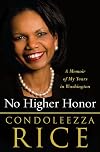
Picking up immediately where Ms. Rice's first book, Extraordinary, Ordinary People: A Memoir of Family, left off, No Higher Honor details her tenure as National Security Advisor and Secretary of State during some of the most pivotal moments in the history of the United States. Listening to the audiobook, read by Ms. Rice, I was eager to hear her views on the events of 9/11, the Afghanistan and Iraq wars, and the dealings of US foreign policy during the Bush years.
There are many controversial memoirs covering this historic period of time. While I will get to them in the future, I thoroughly enjoyed Ms. Rice's rendition. Since first hearing of her, I have always respected and admired her. Her first book left me in awe of her parents. No Higher Honor left me appreciative of her experience, poise and ability to make things happen in the rough world of international politics. The juxtaposition of the two accounts helped me understand better her attitudes and actions, coming so far from the segregated Alabama South to the first female African-American Secretary of State. Now matter the political affiliation, this is an impressive journey.
What I appreciate most from the reading of this book were her explanations behind the events. I found myself marveling several times at the situations I thought I knew and realizing there was so much more at stake I had not heard. In a very approachable and understandable way, she helped me understand the complex and high stakes the world of show more international diplomacy. Her management style shone through. As a manager, I appreciated the different ways she worked with the different leaders, each with their own style and abilities. I could tell just how much George Bush depended on her and was able to leverage her talents in the best ways possible. She fielded some of the most complex and difficult situations in recent history.
Much has been made in the press of the conflicting relationships and interactions of the Bush cabinet and advisors. Ms. Rice politely goes into her views and interactions with the various players. She refuses to get down in the mud and wrestle, though, a trait I truly appreciate. I remember commenting to a colleague when I heard this book was forthcoming that I hoped she would not use it as a "tell-all, throw people under the bus" forum. She did not disappoint me. Where she disagreed with the strong forces of Donald Rumsfeld, Dick Cheney and others, she was very cordial, explaining as best she could where she thought they were coming from and why she acted as she did. She remains, in my opinion, one of the classiest acts in Washington.
Another aspect of the book I enjoyed was her letting us peek into her personal life. I was enjoyed the stories of playing with Yo Yo Ma, her continued love of football and juggling the demands of her career with family relationships. How patient they were her constant phone calls and interruptions to holiday festivities and such. The demands of office interfered, but I could tell she worked hard to maintain as much of herself through it all. Eight years is a long time to work at that level of energy and stress. I commend and thank her for her ability to shoulder it all.
Naturally much more politically charged than her previous novel, it is no less enjoyable. Whether or not one agrees with the politics of the Bush presidency, the opportunity to understand more of Condoleezza Rice's influence on historical events is a treat. I thank her for her service in two of the toughest jobs in Washington. show less
There are many controversial memoirs covering this historic period of time. While I will get to them in the future, I thoroughly enjoyed Ms. Rice's rendition. Since first hearing of her, I have always respected and admired her. Her first book left me in awe of her parents. No Higher Honor left me appreciative of her experience, poise and ability to make things happen in the rough world of international politics. The juxtaposition of the two accounts helped me understand better her attitudes and actions, coming so far from the segregated Alabama South to the first female African-American Secretary of State. Now matter the political affiliation, this is an impressive journey.
What I appreciate most from the reading of this book were her explanations behind the events. I found myself marveling several times at the situations I thought I knew and realizing there was so much more at stake I had not heard. In a very approachable and understandable way, she helped me understand the complex and high stakes the world of show more international diplomacy. Her management style shone through. As a manager, I appreciated the different ways she worked with the different leaders, each with their own style and abilities. I could tell just how much George Bush depended on her and was able to leverage her talents in the best ways possible. She fielded some of the most complex and difficult situations in recent history.
Much has been made in the press of the conflicting relationships and interactions of the Bush cabinet and advisors. Ms. Rice politely goes into her views and interactions with the various players. She refuses to get down in the mud and wrestle, though, a trait I truly appreciate. I remember commenting to a colleague when I heard this book was forthcoming that I hoped she would not use it as a "tell-all, throw people under the bus" forum. She did not disappoint me. Where she disagreed with the strong forces of Donald Rumsfeld, Dick Cheney and others, she was very cordial, explaining as best she could where she thought they were coming from and why she acted as she did. She remains, in my opinion, one of the classiest acts in Washington.
Another aspect of the book I enjoyed was her letting us peek into her personal life. I was enjoyed the stories of playing with Yo Yo Ma, her continued love of football and juggling the demands of her career with family relationships. How patient they were her constant phone calls and interruptions to holiday festivities and such. The demands of office interfered, but I could tell she worked hard to maintain as much of herself through it all. Eight years is a long time to work at that level of energy and stress. I commend and thank her for her ability to shoulder it all.
Naturally much more politically charged than her previous novel, it is no less enjoyable. Whether or not one agrees with the politics of the Bush presidency, the opportunity to understand more of Condoleezza Rice's influence on historical events is a treat. I thank her for her service in two of the toughest jobs in Washington. show less
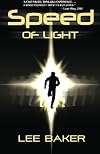
A couple weeks ago I was wandering through Costco. I and not usually allowed to be by myself with the debit card. As I was wandering through the books, I came upon a table manned by an author. Since I was alone without a family to embarrass, I took the opportunity to stop and talk. He was eager to talk and I am always interested in talking with people who like to write. I ended up buying his book, of course.
Speed of Light is the first full-length book by Lee Baker. He has written a couple children's books and screenplays prior. I sat down to start reading Speed of Light on Sunday afternoon. I finished it five hours later. I couldn't put it down. The concept intrigued me. The plot was tight. The action was well paced. There were surprises and twists that kept the pages turning.
Pierce Black is a test pilot, scheduled to make the first attempt in a craft that travels at the speed of light. Okay, I admit, that part almost lost me right there in Costco. I've had too much physics to believe an airplane can travel at the speed of light. But, I decided to suspend my belief for a moment and go with it. Glad I did. Baker doesn't attempt a complex explanation of how it is possible, but concerns himself with the result. Black survives (barely) only to discover he has an ability to see things in the past, almost like a dream, except that he is able to move around and consciously interact. Interesting side effect.
Problems compound when he discovers more about the death of his wife show more (killed in a car crash) through this new power. It wasn't an accident after all, but a targeted hit by the very corporations that employs him. Instantly, he is off on the chase for the truth and to bring justice to her killers. The twists and turns are interesting and logical. And entrancing.
There are a few things Baker will improve on in future books, I'm sure. There are a couple things I had a real hard time swallowing, such as why the company would go ahead with a future test flight after Black's physical troubles become evident. In fact, why go forward with human flight when the test with a monkey didn't go so well? What was the burning need for a human pilot at all, when the plane was able to be flown remotely? The benefit of moving cargo at the speed of light alone would be enough for any enterprise. Why risk human tests until after they understood it more? That baffled me.
Baker's corporation behind the tests didn't act like a real corporation would and that confused me. Still the drama that unfolded was interesting and engaging. The interaction with his son and sister-in-law was mind twisting and I loved it. I can't give it away, but this is the part that I enjoyed most of all. Baker leveraged an concept with the mentally handicapped I have often thought of myself. Brilliant. I loved it.
Speed of Light is worth reading. Baker is a good author who knows how to write a page-turner. I look forward to new works from him in the future. I'll have to hang out at Costco more often. show less
Speed of Light is the first full-length book by Lee Baker. He has written a couple children's books and screenplays prior. I sat down to start reading Speed of Light on Sunday afternoon. I finished it five hours later. I couldn't put it down. The concept intrigued me. The plot was tight. The action was well paced. There were surprises and twists that kept the pages turning.
Pierce Black is a test pilot, scheduled to make the first attempt in a craft that travels at the speed of light. Okay, I admit, that part almost lost me right there in Costco. I've had too much physics to believe an airplane can travel at the speed of light. But, I decided to suspend my belief for a moment and go with it. Glad I did. Baker doesn't attempt a complex explanation of how it is possible, but concerns himself with the result. Black survives (barely) only to discover he has an ability to see things in the past, almost like a dream, except that he is able to move around and consciously interact. Interesting side effect.
Problems compound when he discovers more about the death of his wife show more (killed in a car crash) through this new power. It wasn't an accident after all, but a targeted hit by the very corporations that employs him. Instantly, he is off on the chase for the truth and to bring justice to her killers. The twists and turns are interesting and logical. And entrancing.
There are a few things Baker will improve on in future books, I'm sure. There are a couple things I had a real hard time swallowing, such as why the company would go ahead with a future test flight after Black's physical troubles become evident. In fact, why go forward with human flight when the test with a monkey didn't go so well? What was the burning need for a human pilot at all, when the plane was able to be flown remotely? The benefit of moving cargo at the speed of light alone would be enough for any enterprise. Why risk human tests until after they understood it more? That baffled me.
Baker's corporation behind the tests didn't act like a real corporation would and that confused me. Still the drama that unfolded was interesting and engaging. The interaction with his son and sister-in-law was mind twisting and I loved it. I can't give it away, but this is the part that I enjoyed most of all. Baker leveraged an concept with the mentally handicapped I have often thought of myself. Brilliant. I loved it.
Speed of Light is worth reading. Baker is a good author who knows how to write a page-turner. I look forward to new works from him in the future. I'll have to hang out at Costco more often. show less
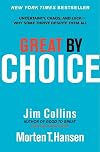
Since bursting on the business book scene with Built to Last: Successful Habits of Visionary Companies, Jim Collins has been a fixture at the top of the business best seller list. His research-based approach to explaining success has struck a chord in the management corridors. I first became aware of Collins after being assigned to read Good to Great: Why Some Companies Make the Leap... and Others Don't by my boss. We were attempting to turn a corner with our small company and he hoped this would give us the insight we needed to be successful.
I remember watching a presentation by Collins explain the methodology of sorting through the data to find the companies to study. He explained they first looked for a question that really interested him. I can understand the theory. Without a really good question to sustain him and his team of researchers, they wouldn't have the interest to spend several years seeking the answer. And he found a really good puzzle this time. I think this is perhaps his best work.
The latest research undertaking was centered around the question: Why do some companies thrive in uncertainty , even chaos, and others do not? He and his team began by looking for enterprises who outperformed their industry averages by at least 10 times. Dubbed the "10Xers", they looked into what caused them to be successful when other, very similar organizations in the same environment, did not. From there, they dug into the lessons they can learn and found similar stories to show more describe the behavior.
He begins be relating the story of the race to the South Pole by Amundsen and Scott. If you are unfamiliar with this story, the analogy alone is worth the read. Amundsen trained for the mission to the South Pole by living with eskimos, experimenting in eating sources of meat available in the Antarctic, learning to travel in snow with dog sleds and other similar preparations. Scott, on the other hand, decided to use ponies without checking see how they would hold up in the harsh conditions (they don't), investing in new, untested technology - motor sledges (the engines cracked within days) and packing lightly on the supplies (1 ton / 17 men compared to Amundsen's 3 tons / 5 men). Amundsen reach the pole first and returned safely with his men before winter set back in. Scott's team, reduced to pulling their sleds by hand, reached the pole over a month later. The entire team died, starving to death two miles from their supply cache.
Powerful stories like this are employed throughout the book, each graphically emphasizing the traits of the 10Xer companies. Those traits include:
The 20 Mile March
Fire Bullets, Then Cannonballs
Leading above the Death Line
SMaC (Specific, Methodical, and Consistent), and
Return on Luck
Each lesson is something that a company leadership has control over. They can replicate the results of these hyper-successful companies, if they choose. That is the key point: Companies can choose to be great. Yes, there is some luck involved, but Collins proves it isn't a matter of getting a lucky break, but what one DOES with any luck, good or bad.
I can't possibly do this book justice in the few words of this review. I recommend reading this book more highly than any other book to date. The lessons he teaches are profound and simple. Every step is in reach. I believe this book to be one of the most useful of all the business books I have read. It is applicable to many cases beyond business as well. He discusses other applications to nonbusiness organizations as well. This book should be on a list to be reviewed annually by every leader of an organization. It should be discussed in staff meetings and the concepts implemented everywhere. If you only buy one book on changing an organization, make it this one. show less
I remember watching a presentation by Collins explain the methodology of sorting through the data to find the companies to study. He explained they first looked for a question that really interested him. I can understand the theory. Without a really good question to sustain him and his team of researchers, they wouldn't have the interest to spend several years seeking the answer. And he found a really good puzzle this time. I think this is perhaps his best work.
The latest research undertaking was centered around the question: Why do some companies thrive in uncertainty , even chaos, and others do not? He and his team began by looking for enterprises who outperformed their industry averages by at least 10 times. Dubbed the "10Xers", they looked into what caused them to be successful when other, very similar organizations in the same environment, did not. From there, they dug into the lessons they can learn and found similar stories to show more describe the behavior.
He begins be relating the story of the race to the South Pole by Amundsen and Scott. If you are unfamiliar with this story, the analogy alone is worth the read. Amundsen trained for the mission to the South Pole by living with eskimos, experimenting in eating sources of meat available in the Antarctic, learning to travel in snow with dog sleds and other similar preparations. Scott, on the other hand, decided to use ponies without checking see how they would hold up in the harsh conditions (they don't), investing in new, untested technology - motor sledges (the engines cracked within days) and packing lightly on the supplies (1 ton / 17 men compared to Amundsen's 3 tons / 5 men). Amundsen reach the pole first and returned safely with his men before winter set back in. Scott's team, reduced to pulling their sleds by hand, reached the pole over a month later. The entire team died, starving to death two miles from their supply cache.
Powerful stories like this are employed throughout the book, each graphically emphasizing the traits of the 10Xer companies. Those traits include:
The 20 Mile March
Fire Bullets, Then Cannonballs
Leading above the Death Line
SMaC (Specific, Methodical, and Consistent), and
Return on Luck
Each lesson is something that a company leadership has control over. They can replicate the results of these hyper-successful companies, if they choose. That is the key point: Companies can choose to be great. Yes, there is some luck involved, but Collins proves it isn't a matter of getting a lucky break, but what one DOES with any luck, good or bad.
I can't possibly do this book justice in the few words of this review. I recommend reading this book more highly than any other book to date. The lessons he teaches are profound and simple. Every step is in reach. I believe this book to be one of the most useful of all the business books I have read. It is applicable to many cases beyond business as well. He discusses other applications to nonbusiness organizations as well. This book should be on a list to be reviewed annually by every leader of an organization. It should be discussed in staff meetings and the concepts implemented everywhere. If you only buy one book on changing an organization, make it this one. show less
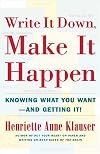
Several yard ago, I saw this book recommended in Making a Living Without a Job: Winning Ways for Creating Work That You Love by Barbara Winter. It sat on my list of books to buy for over five years. This Christmas, I was reviewing my list, trying to decide which book would be my "Christmas book". Every year, we have a tradition where everyone gets a book to read. I finally moved it off the list of Someday to Today. The ironic thing is, once I started reading, I realized I must have checked it out from the library years ago, because I had already read it.
Still, it was a good refresher course. Some books need more than one reading and this is one of them. Klauser has made a study on how people get what they want. She postulates that the easiest way to accomplish something is to write it down somewhere, anywhere. The subconscious then takes over and works out a way to make it happen.
The book is filled with many examples of people receiving exactly what they desired. She isn't suggesting that it doesn't take work along with writing it down, but the chances of success are increased dramatically. There is something about the act of writing that helps clarify and bring the desire into focus. Then, once focus is achieved, things begin lining up to deliver the goal.
The skeptical side of me doesn't want to believe it actually is that easy. The dreamer side of me says try it. I took one of my extra moleskine notebooks and started writing. I put down all sorts of wild desires. show more Some are concrete, like "I want to play French horn in a symphony." Others are vague, such as "I want to do things and not second guess myself." I decided to record the date I wrote the desire, just in case I want to go back and see when I wrote it down. I only have four pages filled so far, but it is enjoyable to go back and read them already, just a month later.
In a second section of the book, I decided to write down when one of those dreams are fulfilled. One dream I wrote down in early January was that I wanted to be a people manager again, leading a team to be the best they can be. That dream was fulfilled February 11, 2012, when I was promoted to Core Services Application Manager at work. That position didn't exist when I wrote down the goal. About a week after I wrote it down, my director asked me how I would set up support of the application we are installing. A month later he created the position and I was hired. One dream down...
I have become a big fan of writing dreams and desires. I believe there is something about the act of taking a pen and paper, organizing thoughts and committing them in written words. It helps refine the focus and allow the subconscious to begging working on the way to make it happen.
This book inspired me to start writing down what I want. It also spurred me to changing the way I choose and write goals. I have already seen the effects of making goals that are geared toward achieving the desires I have recorded in my little book. I truly believe I can make some of those dreams come true through the employment of targeted goals. Others may happen by small miracles. I look forward o recording the fruition in the second half of the book. I eagerly await those entries. show less
Still, it was a good refresher course. Some books need more than one reading and this is one of them. Klauser has made a study on how people get what they want. She postulates that the easiest way to accomplish something is to write it down somewhere, anywhere. The subconscious then takes over and works out a way to make it happen.
The book is filled with many examples of people receiving exactly what they desired. She isn't suggesting that it doesn't take work along with writing it down, but the chances of success are increased dramatically. There is something about the act of writing that helps clarify and bring the desire into focus. Then, once focus is achieved, things begin lining up to deliver the goal.
The skeptical side of me doesn't want to believe it actually is that easy. The dreamer side of me says try it. I took one of my extra moleskine notebooks and started writing. I put down all sorts of wild desires. show more Some are concrete, like "I want to play French horn in a symphony." Others are vague, such as "I want to do things and not second guess myself." I decided to record the date I wrote the desire, just in case I want to go back and see when I wrote it down. I only have four pages filled so far, but it is enjoyable to go back and read them already, just a month later.
In a second section of the book, I decided to write down when one of those dreams are fulfilled. One dream I wrote down in early January was that I wanted to be a people manager again, leading a team to be the best they can be. That dream was fulfilled February 11, 2012, when I was promoted to Core Services Application Manager at work. That position didn't exist when I wrote down the goal. About a week after I wrote it down, my director asked me how I would set up support of the application we are installing. A month later he created the position and I was hired. One dream down...
I have become a big fan of writing dreams and desires. I believe there is something about the act of taking a pen and paper, organizing thoughts and committing them in written words. It helps refine the focus and allow the subconscious to begging working on the way to make it happen.
This book inspired me to start writing down what I want. It also spurred me to changing the way I choose and write goals. I have already seen the effects of making goals that are geared toward achieving the desires I have recorded in my little book. I truly believe I can make some of those dreams come true through the employment of targeted goals. Others may happen by small miracles. I look forward o recording the fruition in the second half of the book. I eagerly await those entries. show less
I think I killed Steve Jobs. I’m sorry everyone. I didn’t mean to, but I think it was me.
You see, I have been a Windows kind of guy for my whole career in computers. I bought an IBM XT clone for my first computer back in 1987. I knew about Apple computers, but I was a Microsoft guy, through and through. I left a mainframe computer programmer job to work on PCs. I wrote code on a beta version of Windows 95.
I listened to my artistic friends go on and on about how wonderful their Macs were and basically ignored them. When my son and daughter got into video editing, I broke down and bought them an iMac. I tried to use it, but I couldn’t figure it out. I guess I was too engrained in the Windows way of the world. I did have an iPod. In fact, I have had three over the years. I even bought an iPhone early last year because I was tired of trying to find a smartphone that was a good phone.
But back to my confession. I really think I killed Steve Jobs. I bought a MacBook Air on October 4, 2011. He died the next day, unable to withstand the shock of my conversion.
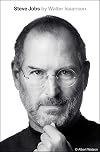
You would think after my conversion, I would have lined up first to read Isaacson’s biography of the man who sucked me in. I didn’t. I resisted for a long time, just like I did with my computer. I knew I would eventually give in. I listened to my friends comment about the book. Much of what they said, confirmed what I thought of Steve Jobs. A couple of weeks ago, though, I finally decided it was time to find out the show more story behind the man everyone has been heralding as a modern prophet of innovation.
A few years ago, Steve Jobs requested Walter Isaacson, a report he knew, to write his biography. Isaacson resisted for a long time. He didn’t know about Jobs’ cancer and thought it was a project for “some day”. Every time Jobs saw him at press events for the next few years, he would insist he do it. When Isaacson learned of Jobs’ cancer, he realized he needed to get started. I am glad he did, too. The result was a uncensored view one of the most influential men of the century.
Jobs promised to not try to influence who he spoke with or what he wrote and he held to that promise. The more I read about Jobs’ career, I can see that must have been the most restraint he had ever exercised. Jobs was a controlling pursuant of perfection in every aspect of his life. He domineered everyone he came in contact with. He would inject his standards on every aspect of everyone around him.
The stories Isaacson tells confirmed all the rumors I had heard over the years about Steve Jobs. A tyrant to work for, he would scream and yell at anyone who didn’t measure up, regardless of their position or abilities. His employees knew that if they ever produced anything with a flaw, or sometimes even when it was perfect, there was always a chance Jobs would go off like a rocket, swearing, belittling and heaping on the the verbally abuse. He would even do it to other CEOs without regard. Even casual acquaintances or US presidents were not exempt: both Rupert Murdoch and Barrack Obama received unsolicited advice on their shortcomings.
He wasn’t any better with his family, either. His daughters were largely ignored. The family always took second seat to his first love: Apple. He did spend time with his son and even prayed that he would survive his cancer long enough to see his son graduate, but his three daughters did not enjoy that level of interest.
Isaacson offers a uninhibited view of why we forgive this poor excuse of a human being. In short, his brilliance in designing user friendly products is unparalleled. His drive for perfection created some of the most widely accepted products the world has known. His string of successes in quite amazing. The Apple II, Macintosh, iMac, MacBook, MacBook Air, iPod, iPhone and the iPad. Don’t forget Pixar. Toy Story, A Bug’s Life, The Incredibles and many others form an unbroken string of blockbusters. On the way, he built a dominant company, was kicked out, came back, rescued it and built it into the most valuable company on planet Earth, all in 56 years.
While I don’t admire the man for how he lived his life, I do admire the success he had in spite of all his personal weaknesses. I don’t hold him up as the titan others may do, but my hat is off to what he accomplished in his short life. I am glad he left extensive notes for Apple’s future and built a group of achievers just as committed to his dreams as he. I believe he did exactly what he wanted: build a long-lasting company and give the world amazing tools to express themselves. He made a convert out of me. show less
You see, I have been a Windows kind of guy for my whole career in computers. I bought an IBM XT clone for my first computer back in 1987. I knew about Apple computers, but I was a Microsoft guy, through and through. I left a mainframe computer programmer job to work on PCs. I wrote code on a beta version of Windows 95.
I listened to my artistic friends go on and on about how wonderful their Macs were and basically ignored them. When my son and daughter got into video editing, I broke down and bought them an iMac. I tried to use it, but I couldn’t figure it out. I guess I was too engrained in the Windows way of the world. I did have an iPod. In fact, I have had three over the years. I even bought an iPhone early last year because I was tired of trying to find a smartphone that was a good phone.
But back to my confession. I really think I killed Steve Jobs. I bought a MacBook Air on October 4, 2011. He died the next day, unable to withstand the shock of my conversion.
You would think after my conversion, I would have lined up first to read Isaacson’s biography of the man who sucked me in. I didn’t. I resisted for a long time, just like I did with my computer. I knew I would eventually give in. I listened to my friends comment about the book. Much of what they said, confirmed what I thought of Steve Jobs. A couple of weeks ago, though, I finally decided it was time to find out the show more story behind the man everyone has been heralding as a modern prophet of innovation.
A few years ago, Steve Jobs requested Walter Isaacson, a report he knew, to write his biography. Isaacson resisted for a long time. He didn’t know about Jobs’ cancer and thought it was a project for “some day”. Every time Jobs saw him at press events for the next few years, he would insist he do it. When Isaacson learned of Jobs’ cancer, he realized he needed to get started. I am glad he did, too. The result was a uncensored view one of the most influential men of the century.
Jobs promised to not try to influence who he spoke with or what he wrote and he held to that promise. The more I read about Jobs’ career, I can see that must have been the most restraint he had ever exercised. Jobs was a controlling pursuant of perfection in every aspect of his life. He domineered everyone he came in contact with. He would inject his standards on every aspect of everyone around him.
The stories Isaacson tells confirmed all the rumors I had heard over the years about Steve Jobs. A tyrant to work for, he would scream and yell at anyone who didn’t measure up, regardless of their position or abilities. His employees knew that if they ever produced anything with a flaw, or sometimes even when it was perfect, there was always a chance Jobs would go off like a rocket, swearing, belittling and heaping on the the verbally abuse. He would even do it to other CEOs without regard. Even casual acquaintances or US presidents were not exempt: both Rupert Murdoch and Barrack Obama received unsolicited advice on their shortcomings.
He wasn’t any better with his family, either. His daughters were largely ignored. The family always took second seat to his first love: Apple. He did spend time with his son and even prayed that he would survive his cancer long enough to see his son graduate, but his three daughters did not enjoy that level of interest.
Isaacson offers a uninhibited view of why we forgive this poor excuse of a human being. In short, his brilliance in designing user friendly products is unparalleled. His drive for perfection created some of the most widely accepted products the world has known. His string of successes in quite amazing. The Apple II, Macintosh, iMac, MacBook, MacBook Air, iPod, iPhone and the iPad. Don’t forget Pixar. Toy Story, A Bug’s Life, The Incredibles and many others form an unbroken string of blockbusters. On the way, he built a dominant company, was kicked out, came back, rescued it and built it into the most valuable company on planet Earth, all in 56 years.
While I don’t admire the man for how he lived his life, I do admire the success he had in spite of all his personal weaknesses. I don’t hold him up as the titan others may do, but my hat is off to what he accomplished in his short life. I am glad he left extensive notes for Apple’s future and built a group of achievers just as committed to his dreams as he. I believe he did exactly what he wanted: build a long-lasting company and give the world amazing tools to express themselves. He made a convert out of me. show less
Ah, business training parables. I have read too many of them. I guess I am more than a little cynical when I pick one up anymore. Most are contrived stories, about 100 pages of large font type, teaching some simple concept with the care and tenderness of a treasured faberge egg. While they teach the principle in an format that is easily digested, they don't delve into the topic enough to provide much knowledge, background or depth. They tend to be like a quick sugar hit, the Krispy Kreme of the self improvement world.
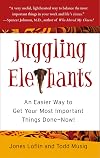
Juggling Elephants follows this same format. We are told the story of a man who takes his daughter to the circus even though he is overwhelmed with everything in his life pressing down on him. He has so much to do, he feels guilt for taking time to take his daughter out for the evening, but knows he should be spending more time with her. As "luck" would have it, he ends up sitting next to a ringmaster from another circus, there to check out how a friend's troupe is doing. The ringmaster instantly reads him and suggests that he needs to stop "juggling elephants" and get his "circus" in order. Naturally, the ringmaster invites the man back the next day to teach him the secret of being a ringmaster.
The rest of the story lays out how a ringmaster controls the show and how it applies to managing personal lives. The man quickly adopts the practices and becomes a master of controlling everything around him, becoming hyper-productive and accomplishing all his wildest show more dreams. He even loses all the weight he has always wanted and improves his marriage. Amazing.
The book is filled with little "pearls" of wisdom, each on its own page with a nice picture of an elephant. Some of these include:
The result of juggling elephants is that no one, including you, is thrilled with the performance.
The ringmaster cannot be in all three rings at once.
The key to the success of the circus is having quality acts in all three rings.
Every act must have a purpose.
Intermission is an essential part of creating a better circus performance.
So why did I give this short book four stars? I usually won't give this type of parable more than two at best. Well, to my surprise, I learned a concept I find useful. I can only concentrate on one thing at a time. In order to have good performance, I should have a prioritized list of acts (multiple meanings to this word... get it?) for each ring of my life and be able to move between them with speed and ease. A ring represents an area of focus, such as career, relationships and self. GTD teaches this as well, using the weekly review as a mechanism to plan and prioritize the task lists. I like the concept of grouping the many areas of focus into three rings, though. That is a number I can keep in my head easier. Lining things up by priority puts the most important things on stage first. That is good thing to remember.
Juggling Elephants is a short read, a couple hours or so long. I think this one may be worth it. show less
Juggling Elephants follows this same format. We are told the story of a man who takes his daughter to the circus even though he is overwhelmed with everything in his life pressing down on him. He has so much to do, he feels guilt for taking time to take his daughter out for the evening, but knows he should be spending more time with her. As "luck" would have it, he ends up sitting next to a ringmaster from another circus, there to check out how a friend's troupe is doing. The ringmaster instantly reads him and suggests that he needs to stop "juggling elephants" and get his "circus" in order. Naturally, the ringmaster invites the man back the next day to teach him the secret of being a ringmaster.
The rest of the story lays out how a ringmaster controls the show and how it applies to managing personal lives. The man quickly adopts the practices and becomes a master of controlling everything around him, becoming hyper-productive and accomplishing all his wildest show more dreams. He even loses all the weight he has always wanted and improves his marriage. Amazing.
The book is filled with little "pearls" of wisdom, each on its own page with a nice picture of an elephant. Some of these include:
The result of juggling elephants is that no one, including you, is thrilled with the performance.
The ringmaster cannot be in all three rings at once.
The key to the success of the circus is having quality acts in all three rings.
Every act must have a purpose.
Intermission is an essential part of creating a better circus performance.
So why did I give this short book four stars? I usually won't give this type of parable more than two at best. Well, to my surprise, I learned a concept I find useful. I can only concentrate on one thing at a time. In order to have good performance, I should have a prioritized list of acts (multiple meanings to this word... get it?) for each ring of my life and be able to move between them with speed and ease. A ring represents an area of focus, such as career, relationships and self. GTD teaches this as well, using the weekly review as a mechanism to plan and prioritize the task lists. I like the concept of grouping the many areas of focus into three rings, though. That is a number I can keep in my head easier. Lining things up by priority puts the most important things on stage first. That is good thing to remember.
Juggling Elephants is a short read, a couple hours or so long. I think this one may be worth it. show less

I haven't been formally trained in the ways of Six Sigma, but I have been around it enough to know some of the basics. We used it at SuperValu/Albertsons. I saw it accomplish some amazing savings through several projects. Simple, small process changes that were shown to save millions of dollars because of the scale of the operation. I worked closely with a few black belts on projects and their grasp of analysis was admirable. I always wanted to be one, but never got the chance.
One project I knew began with an idle comment from a vendor that the company purchased more small item shipping bins than anyone they knew. This was a huge expense each year. Why were the bins disappearing? That was the answer the Six Sigma team was tasked to find. Using several analysis tools, they quickly discovered the root cause was no process or procedure for returning the bins from the stores to the distribution centers. The bins were stacking up at the stores until the manager got tired of having them in the way and tossing them in the trash. A simple process change later and the bins were flowing back to the distribution centers on the empty trucks to be reused hundreds of times.
The Six Sigma Memory Jogger was recommended to me by my manager. It contains an alphabetical listing of all the tools and tricks the Six Sigma black belts use to do their work. Each tool and method is laid out in a concise discussion of what it is, why it is useful and how to employ it. It even includes a few show more examples of each. It is short, just 266 pages, but it has one of the most complete listings of analysis tools I have seen. Now that I have read through it, I can draw upon the multitude of tools, except for a few intense statistical functions that were beyond my brain. The rest, however, are useful in all sorts of settings. Having this handy reference close at hand means I don't have to remember everything, but can do a quick review and get the results I need quickly. I have used several over the years in different situations and have found them invaluable. I
If you have to do any kind of analysis of business process in your job, this book is a great one to have in your toolbox. Recommended. show less
One project I knew began with an idle comment from a vendor that the company purchased more small item shipping bins than anyone they knew. This was a huge expense each year. Why were the bins disappearing? That was the answer the Six Sigma team was tasked to find. Using several analysis tools, they quickly discovered the root cause was no process or procedure for returning the bins from the stores to the distribution centers. The bins were stacking up at the stores until the manager got tired of having them in the way and tossing them in the trash. A simple process change later and the bins were flowing back to the distribution centers on the empty trucks to be reused hundreds of times.
The Six Sigma Memory Jogger was recommended to me by my manager. It contains an alphabetical listing of all the tools and tricks the Six Sigma black belts use to do their work. Each tool and method is laid out in a concise discussion of what it is, why it is useful and how to employ it. It even includes a few show more examples of each. It is short, just 266 pages, but it has one of the most complete listings of analysis tools I have seen. Now that I have read through it, I can draw upon the multitude of tools, except for a few intense statistical functions that were beyond my brain. The rest, however, are useful in all sorts of settings. Having this handy reference close at hand means I don't have to remember everything, but can do a quick review and get the results I need quickly. I have used several over the years in different situations and have found them invaluable. I
If you have to do any kind of analysis of business process in your job, this book is a great one to have in your toolbox. Recommended. show less
The Intelligent Entrepreneur: How Three Harvard Business School Graduates Learned the 10 Rules of Successful Entrepreneurship by Bill Murphy
For the college entrepreneur, being accepted to the the Harvard or Stanford Business Schools is the Holy Grail of Opportunity. Each year, thousands apply and only a few are accepted into these elite programs. The graduates are assured lucrative job offers and contacts for which others would kill. This book follows three HBS graduates who chose another popular route, entrepreneurship. These three turned down the six figure salaries for the opportunity of making something big on their own.
I picked up this book in the hopes of gleaning some information to feed my desire of someday having my own company. What I came away with was unexpected discouragement. I am sure this wasn’t what the author went for, but after tracing the route of these three Harvard graduates, I got the distinct impression a) I could only make it if I attended the Harvard Business School and b) if I didn’t create a multimillion dollar company in three years, I wouldn’t be a successful entrepreneur. The stories were interesting, the advice pertinent, but the loftiness unattainable.
The three chosen subjects each started Internet companies: The Ladders, Military.com and Bluemercury (an online cosmetics retailer). Each were successful through the tenacity and strength of their founders. Each survived through their contacts made at HBS. In fact, one of the lessons I learned from the book, intentional or not, is the value of high-powered contacts, both for advice and cash. It is discouraging to anyone who show more hasn’t gone to the elite schools to ever hope of meeting these kinds of players.
The chronicle of their respective business startups was very educational and interesting. The book is very engaging, the stories very well written. It is obvious Murphy is a reporter. His style and experience shows through – I cared about their problems and successes. I cheered inwardly as Marla made the shift from sinking online retailer to successful brick-and-mortar boutique. I applaud the success they achieved and grumbled at the poor people management decisions and bad behaviors.
I came away from the book with a fresh look at the hyper-charged life of the successful big entrepreneur, with multimillion dollar investments and even larger payoffs. What I didn’t find was much value for the small entrepreneur. It felt that the message was “if you want to be successful, you better go to Harvard or Stanford”. That just isn’t an option for me, so I was left wondering if I had any business even considering starting my own business. That wasn’t what I was hoping to find. show less
I picked up this book in the hopes of gleaning some information to feed my desire of someday having my own company. What I came away with was unexpected discouragement. I am sure this wasn’t what the author went for, but after tracing the route of these three Harvard graduates, I got the distinct impression a) I could only make it if I attended the Harvard Business School and b) if I didn’t create a multimillion dollar company in three years, I wouldn’t be a successful entrepreneur. The stories were interesting, the advice pertinent, but the loftiness unattainable.
The three chosen subjects each started Internet companies: The Ladders, Military.com and Bluemercury (an online cosmetics retailer). Each were successful through the tenacity and strength of their founders. Each survived through their contacts made at HBS. In fact, one of the lessons I learned from the book, intentional or not, is the value of high-powered contacts, both for advice and cash. It is discouraging to anyone who show more hasn’t gone to the elite schools to ever hope of meeting these kinds of players.
The chronicle of their respective business startups was very educational and interesting. The book is very engaging, the stories very well written. It is obvious Murphy is a reporter. His style and experience shows through – I cared about their problems and successes. I cheered inwardly as Marla made the shift from sinking online retailer to successful brick-and-mortar boutique. I applaud the success they achieved and grumbled at the poor people management decisions and bad behaviors.
I came away from the book with a fresh look at the hyper-charged life of the successful big entrepreneur, with multimillion dollar investments and even larger payoffs. What I didn’t find was much value for the small entrepreneur. It felt that the message was “if you want to be successful, you better go to Harvard or Stanford”. That just isn’t an option for me, so I was left wondering if I had any business even considering starting my own business. That wasn’t what I was hoping to find. show less
After years of listening to the kids talk about the Mistborn series by Brandon Sanderson, I finally got them from Audible and listened to them. I was amazed by the richness and depth of the world Sanderson created. In a medieval world where people gain special powers by "burning" metals inside them, he tells the story of overthrowing a centuries-old ruler with god-like powers. He doesn't just leave the characters victorious, but tells the often overlooked story of what happens after the revolution. In fact, that part is the more interesting story.
In The Alloy of Law, Sanderson returns to the world of the Mistborn, but several hundred years later, at the beginning of the industrial revolution. Taking the special powers of the Mistborn and colliding them with the modern world of machines, guns and electricity is nothing short of brave for a writer. Fantasy and magic rarely hold up in a more modern world. However, Sanderson pulls it off and the two mesh believably.
The Alloy of Law, while set in the world of Mistborn, doesn't deal with the large, sweeping issues of the previous books. In fact, those characters are hardly mentioned at all. Instead, this book is a mystery, complete with murder, kidnappings and unexplainable disappearances. The story is well put together, the clues well hidden and the characters engaging. The action scenes are well written and exhilarating. The investigation is thought provoking and moves the story along quickly.
My son, who is a budding writer show more himself, told me about a podcast, Writing Excuses, that is co-hosted by Sanderson. I listened to a few this week out of curiosity. Sanderson is definitely a teacher (obviously, as he teaches at Brigham Young University). One of the discussions they had was on how to write a successful mystery. I thoroughly enjoyed listening to his advice while seeing how he incorporated it into his novel. It made the book more interesting on more levels as I paid attention to how he revealed the story. He is a master. All of his books are highly recommended. show less
In The Alloy of Law, Sanderson returns to the world of the Mistborn, but several hundred years later, at the beginning of the industrial revolution. Taking the special powers of the Mistborn and colliding them with the modern world of machines, guns and electricity is nothing short of brave for a writer. Fantasy and magic rarely hold up in a more modern world. However, Sanderson pulls it off and the two mesh believably.
The Alloy of Law, while set in the world of Mistborn, doesn't deal with the large, sweeping issues of the previous books. In fact, those characters are hardly mentioned at all. Instead, this book is a mystery, complete with murder, kidnappings and unexplainable disappearances. The story is well put together, the clues well hidden and the characters engaging. The action scenes are well written and exhilarating. The investigation is thought provoking and moves the story along quickly.
My son, who is a budding writer show more himself, told me about a podcast, Writing Excuses, that is co-hosted by Sanderson. I listened to a few this week out of curiosity. Sanderson is definitely a teacher (obviously, as he teaches at Brigham Young University). One of the discussions they had was on how to write a successful mystery. I thoroughly enjoyed listening to his advice while seeing how he incorporated it into his novel. It made the book more interesting on more levels as I paid attention to how he revealed the story. He is a master. All of his books are highly recommended. show less
I discovered Jasper Fforde years ago while looking for a book for the family to listen to on a car trip. We all fell in love with The Eyre Affair: A Thursday Next Novel and soon listened to all of them. We immediately took to Jasper Fforde's imaginative wit and storytelling.
Shades of Grey is a whole new universe, set in a far distant future, where the ideals of an Orwellian 1984 have come to pass in a bizarre twist. Everyone can only see one color. The social pecking order is based around what color a person can see. People who see purple are at the top of the heap with the Greys at the very bottom. Society is tightly control and anyone stepping out of line is handed demerits and, if the balance goes too far into the negative, "reboot". Eddie Russett, a Red and son of a Swatchman - who heals by showing the injured swatches of different colors, comes to the town of East Carmine and discovers things are a little different out on on the Fringe. It doesn't help that on his first meeting of Jane Grey, she threatens to kill him.
The story is a little slow off the line, but gathers speed to the end. True to form, Fforde has created a bizarre world complete with flesh-eating trees, perpetuate pavement that clears itself of debris and a society that prizes spoons above everything. By presenting this skewed use of our universe, Fforde lays out a masterful story that is well thought out and rich in texture. It is the quirkiness of the mundane detail that keeps me coming back novel show more after novel. The premise of this book took me a little more time to warm up to and I quite enjoyed the last half of the book. There is a big setup for future books to investigate. I will be back to East Carmine. And I'll bring my spoon. show less
Shades of Grey is a whole new universe, set in a far distant future, where the ideals of an Orwellian 1984 have come to pass in a bizarre twist. Everyone can only see one color. The social pecking order is based around what color a person can see. People who see purple are at the top of the heap with the Greys at the very bottom. Society is tightly control and anyone stepping out of line is handed demerits and, if the balance goes too far into the negative, "reboot". Eddie Russett, a Red and son of a Swatchman - who heals by showing the injured swatches of different colors, comes to the town of East Carmine and discovers things are a little different out on on the Fringe. It doesn't help that on his first meeting of Jane Grey, she threatens to kill him.
The story is a little slow off the line, but gathers speed to the end. True to form, Fforde has created a bizarre world complete with flesh-eating trees, perpetuate pavement that clears itself of debris and a society that prizes spoons above everything. By presenting this skewed use of our universe, Fforde lays out a masterful story that is well thought out and rich in texture. It is the quirkiness of the mundane detail that keeps me coming back novel show more after novel. The premise of this book took me a little more time to warm up to and I quite enjoyed the last half of the book. There is a big setup for future books to investigate. I will be back to East Carmine. And I'll bring my spoon. show less
Sherry Turkle is a psychologist at Massachusetts Institute of Technology, studying the effects of technology on people and has written several books on her findings of the past thirty. In her latest book, she tackles how technology has effected the way we interact with each other. Ranging from robots to texting, she demonstrates that recent innovations have changed how we look to technology as an extension, or even a replacement, for the ways we communicate and care for each other. She discusses the impact she sees beginning to take place. It isn't pretty.
Turkle has studied technology for over thirty years and has had a fascination with robots and robotic toys. She has taken them into situations ranging from schools to retirement homes and watched the way we interact. As the technology improved, from Furby to My Little Baby, she has watched as people identified more with the robot and formed bonds. Naturally, children formed very strong bonds, believing the toys to be real and placing themselves as the teacher/protector. The robots are programmed to learn from the environment and it responds to the children's input and develop some semblance of a personality. However, when the robot breaks or has to be reset, it never quite acts the way it did before, and the children recognize the differences to the point they say the robot has "died."
The elderly also accepted the robots quickly, losing themselves in the illusion of life. Turkle found robots readily accepted as show more companions, especially to the lonely. They would talk to the robots, confide in them and treat them as if they were real babies, tucking them in and shushing loud talkers. When she began asking the children what they thought of robots becoming caregivers to the elderly, the dichotomy of technology began to be evident. The children at first thought it a great idea for their grandparents to have a robot to help them keep from getting lonely. However, the very next thought was the worry that the grandparents would like the robot more than them and no longer love them. They firmly believed, after their own experience with the robot, it was capable of replacing real people in the lives of their grandparents.
This theme of replacement continued throughout the book. She thoroughly investigated texting as a medium of communication. I found this section most helpful in learning why my own children are more comfortable in texting their friends instead of calling them. I would become frustrated at their reluctance to just pick up the phone and take 30 seconds for a conversation instead of 30 minutes of thumb tapping. Turkle explained their reluctance for direct interaction as result of the discomfort and uncertainty direction communication can cause. They like the opportunity to edit and think about the response before hitting the Send button. In a verbal conversation, that opportunity doesn't exist and that terrifies the inexperienced. Of course, the more texting is used, the less experience is realized and it becomes a self perpetuating problem. Having this knowledge has helped me interact with my children more and continue to draw them out beyond the texting. I have also become more comfortable with the various forms of electronic communication as a result.
Turkle's concern for the future is very evident. She fears the direction of healthy human interaction, the lack thereof. The more we separate ourselves through the barrier of technology and electronic communication, the more we become alone. She sees the signs of it all over. When plugged into our devices, we become completely oblivious to those around us. As children see parents reading and writing email at dinner instead of talking to them, they feel isolated and retreat into their own electronic worlds of Facebook and Second Life. Her concern, I believe, is well founded and cause for action. I know I have made a conscious effort to change my level of interaction. I haven't been very successful yet, but the predictions she makes are quite disturbing.
I highly recommend this book for everyone who owns a smart phone, computer or spends a regular amount of time plugged in. It has helped me understand my dependency and failings in an electronic world. As a society, we have to learn how to unplug and connect with each other. The stakes are too high. Turkle does an engaging job of warning of the problem. Will we listen? show less
Turkle has studied technology for over thirty years and has had a fascination with robots and robotic toys. She has taken them into situations ranging from schools to retirement homes and watched the way we interact. As the technology improved, from Furby to My Little Baby, she has watched as people identified more with the robot and formed bonds. Naturally, children formed very strong bonds, believing the toys to be real and placing themselves as the teacher/protector. The robots are programmed to learn from the environment and it responds to the children's input and develop some semblance of a personality. However, when the robot breaks or has to be reset, it never quite acts the way it did before, and the children recognize the differences to the point they say the robot has "died."
The elderly also accepted the robots quickly, losing themselves in the illusion of life. Turkle found robots readily accepted as show more companions, especially to the lonely. They would talk to the robots, confide in them and treat them as if they were real babies, tucking them in and shushing loud talkers. When she began asking the children what they thought of robots becoming caregivers to the elderly, the dichotomy of technology began to be evident. The children at first thought it a great idea for their grandparents to have a robot to help them keep from getting lonely. However, the very next thought was the worry that the grandparents would like the robot more than them and no longer love them. They firmly believed, after their own experience with the robot, it was capable of replacing real people in the lives of their grandparents.
This theme of replacement continued throughout the book. She thoroughly investigated texting as a medium of communication. I found this section most helpful in learning why my own children are more comfortable in texting their friends instead of calling them. I would become frustrated at their reluctance to just pick up the phone and take 30 seconds for a conversation instead of 30 minutes of thumb tapping. Turkle explained their reluctance for direct interaction as result of the discomfort and uncertainty direction communication can cause. They like the opportunity to edit and think about the response before hitting the Send button. In a verbal conversation, that opportunity doesn't exist and that terrifies the inexperienced. Of course, the more texting is used, the less experience is realized and it becomes a self perpetuating problem. Having this knowledge has helped me interact with my children more and continue to draw them out beyond the texting. I have also become more comfortable with the various forms of electronic communication as a result.
Turkle's concern for the future is very evident. She fears the direction of healthy human interaction, the lack thereof. The more we separate ourselves through the barrier of technology and electronic communication, the more we become alone. She sees the signs of it all over. When plugged into our devices, we become completely oblivious to those around us. As children see parents reading and writing email at dinner instead of talking to them, they feel isolated and retreat into their own electronic worlds of Facebook and Second Life. Her concern, I believe, is well founded and cause for action. I know I have made a conscious effort to change my level of interaction. I haven't been very successful yet, but the predictions she makes are quite disturbing.
I highly recommend this book for everyone who owns a smart phone, computer or spends a regular amount of time plugged in. It has helped me understand my dependency and failings in an electronic world. As a society, we have to learn how to unplug and connect with each other. The stakes are too high. Turkle does an engaging job of warning of the problem. Will we listen? show less
I first heard of David Gold on the Getting Things Done Virtual Study Group. He spent one our sessions giving his insight into the many uses of Evernote for implementing David Allen's Getting Things Done methodology. His enthusiasm for the topic was contagious and I bought his ebook on the spot.
The basis, of course, is Evernote, a collection application that stores all kinds of information and provides powerful ways to retrieve it across any platform instantly. I am a new-comer to Evernote, just really starting to investigate it a month or two ago. The concept intrigued me, so when I heard Gold's descriptions of how he pushes it to do everything in his task management system, I was hooked. I have used many tools over the past thirty years. Could this finally be "the tool?" I hoped this book would be the key to understanding how to use it better.
However, I was to be disappointed. Gold's book did not provide what I was hoping to see - detailed explanation of how to do some of the basics of task management in this rich and well featured tool. In fact, I think I got more specific ideas on how to set things up from the podcast than I did the book.
It is a short ebook, barely 40 pages. The writing is energetic, bright and in need of an editor. Gold knows his stuff, but needs to spend a little more time on explaining how things are set up. The explanations that are there could use a little spicing up, a little more organization and step-by-step instructions. Unless one is already show more familiar with how to do some of the tasks referred to, it is easy to get lost and confused.
I don't doubt that Gold is going to clean the book up over time and make it into what he intends. He states the book is going to continue to evolve - something that ebooks hold as an advantage over their print cousins. I hope the feedback he receives is incorporated. He has a great start. More "how to" descriptions would help me have the courage to make the leap to Evernote. The ideas that are presented there are helpful. However, the ideas he discussed in the podcast resonated more with me. I am going to go back and listen to the recording again very soon. For me, it was better than the ebook. show less
The basis, of course, is Evernote, a collection application that stores all kinds of information and provides powerful ways to retrieve it across any platform instantly. I am a new-comer to Evernote, just really starting to investigate it a month or two ago. The concept intrigued me, so when I heard Gold's descriptions of how he pushes it to do everything in his task management system, I was hooked. I have used many tools over the past thirty years. Could this finally be "the tool?" I hoped this book would be the key to understanding how to use it better.
However, I was to be disappointed. Gold's book did not provide what I was hoping to see - detailed explanation of how to do some of the basics of task management in this rich and well featured tool. In fact, I think I got more specific ideas on how to set things up from the podcast than I did the book.
It is a short ebook, barely 40 pages. The writing is energetic, bright and in need of an editor. Gold knows his stuff, but needs to spend a little more time on explaining how things are set up. The explanations that are there could use a little spicing up, a little more organization and step-by-step instructions. Unless one is already show more familiar with how to do some of the tasks referred to, it is easy to get lost and confused.
I don't doubt that Gold is going to clean the book up over time and make it into what he intends. He states the book is going to continue to evolve - something that ebooks hold as an advantage over their print cousins. I hope the feedback he receives is incorporated. He has a great start. More "how to" descriptions would help me have the courage to make the leap to Evernote. The ideas that are presented there are helpful. However, the ideas he discussed in the podcast resonated more with me. I am going to go back and listen to the recording again very soon. For me, it was better than the ebook. show less
I have heard good things about The War of Art for many years. Several of my friends sing its praises. It had been on my list for a long time. Finally, after nearly a decade, the time was right. I needed to read it this week. Had I read it when I first heard of it, it may not have had the same impact on my life.
Steven Pressfield is the author of bestseller novels, including The Legend of Bagger Vance. He departs from his normal fiction to write this small book on winning the inner creative war. He discusses how he came to break from his "normal" career and embark on his journey to create novels. However, the book is much more than that story. It is how to break free and have the courage to create.
Pressfield begins by naing the force that keeps us from starting something creative - Resistance. It is the force that causes us to doubt and put off what we long to do. It feeds on fear and magnifies it to crippling heights. Resistance, in literary circles, can be known as writer's block. In others, it is procrastination. It is most happy when we do things that are not creative. In short, often one page mini-essays, he defines Resistance in detail so we can recognize it out our life.
In the second section of the book, Pressfield describes way to combat Resistance. He calls this "turning professional." He talks about the discipline of creating art. He details his habits in how he lives each day, structured and rigid so as to provide space for his muse to direct his writing. He show more discusses how the amateur will write when the feeling strikes. The professional treats it as a regular habit, beginning at the same time each day, much as the rest of us start our jobs. He describes the attributes of the professional, such as seeking order, demystifying process, acting in the face of fear and not taking failure and success personally. Again, the format is in short essays.
The final section is about going beyond Resistance, examining where art comes from. Pressfield admits he is a spiritual man, firmly believing in angels and muses. He believes God puts us on Earth to be creative, not drones. Therefore, to fulfill our destiny, we must learn to create, take off the blinders on our souls and invoke angels and muses to aid us.
I understand the concept of Resistance. It keeps me from writing here as often as I desire. I have many creative ideas circling inside my head, eager for space to land and take root. Resistance keeps me from letting these ideas out to the light. Doubts, fears, poor choices and other excuses have bottled me up for years. As I read this book, I found the naming and descriptions helped me relax and gain confidence in myself. I haven't fully overcome Resistance yet, but I have been breaking down the walls I have built over the decades. It isn't easy to overcome the habits I have built.
I highly recommend this book, especially if you have feelings of creativity that are being suppressed for whatever the reason. Pressfield kindly doesn't condemn, but shows the way - the way to win the War of Art. show less
Steven Pressfield is the author of bestseller novels, including The Legend of Bagger Vance. He departs from his normal fiction to write this small book on winning the inner creative war. He discusses how he came to break from his "normal" career and embark on his journey to create novels. However, the book is much more than that story. It is how to break free and have the courage to create.
Pressfield begins by naing the force that keeps us from starting something creative - Resistance. It is the force that causes us to doubt and put off what we long to do. It feeds on fear and magnifies it to crippling heights. Resistance, in literary circles, can be known as writer's block. In others, it is procrastination. It is most happy when we do things that are not creative. In short, often one page mini-essays, he defines Resistance in detail so we can recognize it out our life.
In the second section of the book, Pressfield describes way to combat Resistance. He calls this "turning professional." He talks about the discipline of creating art. He details his habits in how he lives each day, structured and rigid so as to provide space for his muse to direct his writing. He show more discusses how the amateur will write when the feeling strikes. The professional treats it as a regular habit, beginning at the same time each day, much as the rest of us start our jobs. He describes the attributes of the professional, such as seeking order, demystifying process, acting in the face of fear and not taking failure and success personally. Again, the format is in short essays.
The final section is about going beyond Resistance, examining where art comes from. Pressfield admits he is a spiritual man, firmly believing in angels and muses. He believes God puts us on Earth to be creative, not drones. Therefore, to fulfill our destiny, we must learn to create, take off the blinders on our souls and invoke angels and muses to aid us.
I understand the concept of Resistance. It keeps me from writing here as often as I desire. I have many creative ideas circling inside my head, eager for space to land and take root. Resistance keeps me from letting these ideas out to the light. Doubts, fears, poor choices and other excuses have bottled me up for years. As I read this book, I found the naming and descriptions helped me relax and gain confidence in myself. I haven't fully overcome Resistance yet, but I have been breaking down the walls I have built over the decades. It isn't easy to overcome the habits I have built.
I highly recommend this book, especially if you have feelings of creativity that are being suppressed for whatever the reason. Pressfield kindly doesn't condemn, but shows the way - the way to win the War of Art. show less
I haven’t enjoyed a Tom Clancy book since Executive Orders. It seems over the later few years, Clancy has paid more attention to form than substance. Wordy descriptions, throw-away characters and slow-moving plots have become the new standard. It is almost as if there is a word length requirement, but a miserly hoarding of story telling, as if he is always saving something for the next book. He doesn’t lay it all on the line like he used to.
A few years ago, Clancy tried to move on from Jack Ryan, leaving him in the Oval Office and putting the next generation of characters in the limelight. For me, it never worked. The new characters lacked depth and realism. And they swear all the time, a downer for me. I never came to like any of them, much less love, like I did Jack Ryan. The descriptions I once enjoyed became tedious. The plots moved so slowly, I had no trouble putting the book down and going to sleep. No more all night sessions. I will still pull all nighters with the old books.
In Dead or Alive, Clancy tries to draw the old readers back in by having the old standbys, Jack Ryan, John Clark and Ding Chavez, come back for cameo appearances. He gives them things to do, but most of the time they are standing back, watching the young kids run the show. It all seems contrived, right down to Clark and Chavez being pulled off their flight home just to retirement to watch another Rainbow Six raid. They left their wives on the plane in London to go watch a bunch of guys take show more down a bunch of bad guys in Libya. Just watch, mind you. They weren’t needed for the planning or set up. It was as if the raid couldn’t be included in the storyline unless they were there to watch it, like the new commanders needed permission or a good luck charm. Their wives should have left them in disgust.
Not much else is better in this book. I enjoyed the little bits of Jack Ryan trying to decide whether to run for the presidency again. I think one of the hardest jobs to retire from must be President of the United States. One day you are the inner circle and the next you only get to read about it in the papers. It must be very hard to quietly leave the stage to someone you feel is incompetent. The writing of the Jack Ryan subplot displays this clearly. The rest? Cheesy as Wisconsin in the fall.
I hadn’t planned on even reading this Clancy book. I only did because my son bought it and it was sitting on my Kindle. Turns out he didn’t even finish it. I should have followed his lead. Seems he knows something Clancy and I don’t – when to stop. show less
A few years ago, Clancy tried to move on from Jack Ryan, leaving him in the Oval Office and putting the next generation of characters in the limelight. For me, it never worked. The new characters lacked depth and realism. And they swear all the time, a downer for me. I never came to like any of them, much less love, like I did Jack Ryan. The descriptions I once enjoyed became tedious. The plots moved so slowly, I had no trouble putting the book down and going to sleep. No more all night sessions. I will still pull all nighters with the old books.
In Dead or Alive, Clancy tries to draw the old readers back in by having the old standbys, Jack Ryan, John Clark and Ding Chavez, come back for cameo appearances. He gives them things to do, but most of the time they are standing back, watching the young kids run the show. It all seems contrived, right down to Clark and Chavez being pulled off their flight home just to retirement to watch another Rainbow Six raid. They left their wives on the plane in London to go watch a bunch of guys take show more down a bunch of bad guys in Libya. Just watch, mind you. They weren’t needed for the planning or set up. It was as if the raid couldn’t be included in the storyline unless they were there to watch it, like the new commanders needed permission or a good luck charm. Their wives should have left them in disgust.
Not much else is better in this book. I enjoyed the little bits of Jack Ryan trying to decide whether to run for the presidency again. I think one of the hardest jobs to retire from must be President of the United States. One day you are the inner circle and the next you only get to read about it in the papers. It must be very hard to quietly leave the stage to someone you feel is incompetent. The writing of the Jack Ryan subplot displays this clearly. The rest? Cheesy as Wisconsin in the fall.
I hadn’t planned on even reading this Clancy book. I only did because my son bought it and it was sitting on my Kindle. Turns out he didn’t even finish it. I should have followed his lead. Seems he knows something Clancy and I don’t – when to stop. show less
I have admired Condolezza Rice for many years. I was always impressed by her grace and intelligence in one of the toughest jobs in government – the National Security Advisor. When I heard she had written a memoir, I have to admit I dismissed it at first. Everyone in politics seems to be writing a “tell all” book that guarantees the inside dirt on Washington. Fame for the cost of trashing friends, coworkers and allies. I was had always hoped she would not stoop to that depth. I finally took up the courage to listen to this book when I saw that she read it herself. I think this is the best book I have enjoyed this year. Perhaps it should be required reading.
Ms. Rice grew up in Birmingham, Alabama at the height of the Civil Rights era. She experienced the hate and prejudice first hand. This memoir of her parents showed how she was able to rise and become the woman she is today. I started thinking this was a book about Ms. Rice. I was mistaken. This is a tribute to her parents, Angelena and John Rice. This is the story of raising a family in the racially divided South prior to and during desegregation.
I won’t go into the stories she presents. You need to experience them for yourself. They are engaging, gripping and ordinary. These were plain folk, raising their daughter the best way they knew. It is a story of sacrifice for children not often heard today. Yet, I believe it is a tribute to all the parents who do an extraordinary job of raising their children without show more fanfare, while the dysfunctional families get their own reality TV show. The Rice’s were the kind of family next door who are there for a cup of sugar or a listening ear. Their greatest tribute is the phenomenal success of their daughter.
I grew up just after desegregation and in nearly all-white Idaho. I didn’t experience racial discrimination. My parents taught me not to judge anyone by their skin color. I had no concept of what it was like for blacks in the South. I found myself crying in shame and pain while reading her descriptions of life in Birmingham. I appreciate the education she gave me without instilling hate or anger herself.
I understand she is writing an additional memoir of her time in politics. This book ends with the death of her parents, just as she is accepting the NSA job for the Bush White House. I wanted to know more of her thoughts on this time and can hardly wait. I hope she stays true to her style and provides another great read. Truly a wonderful lady, thanks to her extraordinary, ordinary parents. This is how every family should be. show less
Ms. Rice grew up in Birmingham, Alabama at the height of the Civil Rights era. She experienced the hate and prejudice first hand. This memoir of her parents showed how she was able to rise and become the woman she is today. I started thinking this was a book about Ms. Rice. I was mistaken. This is a tribute to her parents, Angelena and John Rice. This is the story of raising a family in the racially divided South prior to and during desegregation.
I won’t go into the stories she presents. You need to experience them for yourself. They are engaging, gripping and ordinary. These were plain folk, raising their daughter the best way they knew. It is a story of sacrifice for children not often heard today. Yet, I believe it is a tribute to all the parents who do an extraordinary job of raising their children without show more fanfare, while the dysfunctional families get their own reality TV show. The Rice’s were the kind of family next door who are there for a cup of sugar or a listening ear. Their greatest tribute is the phenomenal success of their daughter.
I grew up just after desegregation and in nearly all-white Idaho. I didn’t experience racial discrimination. My parents taught me not to judge anyone by their skin color. I had no concept of what it was like for blacks in the South. I found myself crying in shame and pain while reading her descriptions of life in Birmingham. I appreciate the education she gave me without instilling hate or anger herself.
I understand she is writing an additional memoir of her time in politics. This book ends with the death of her parents, just as she is accepting the NSA job for the Bush White House. I wanted to know more of her thoughts on this time and can hardly wait. I hope she stays true to her style and provides another great read. Truly a wonderful lady, thanks to her extraordinary, ordinary parents. This is how every family should be. show less

I will admit up front, I work with the author Carol Stucki. She kindly gave me a copy of Sara's Gift to give to my teen daughter. She read it, said it was good and left for college. I was wandering the house one day, bored and not feeling well an saw it on the shelf. I figured I owed it to Carol to read her book, so I picked it up.
I don't normally read a lot of teen fiction, especially teen girl / horses fiction, but I was quickly pulled into the story. It isn't a page turner like Tom Clancy, but it is engaging. Sara has a gift she discovered as a preteen. She can heal animals by touching them. She even can communicate on a basic level - not like Dr. Doolittle, but can tell where they hurt and sometimes know their thoughts. She learns more about her gift from a Cherokee man, Uncle Buck. He tells her she will find more about her gift when she turns 15. The book, the first in a series, talks about that summer she turns 15 and discovers more of her gift, love and all the other messy relationship stuff of growing up.
The book is set in West Texas in a small town where everyone knows everybody's business. Her family has a ranch and lives to rodeo. The events are set around the small town rodeos and horse shows common to the small town West. There is one just about every weekend somewhere. The excitement for Sara starts when a new boy from Houston shows up to stay the summer with a friend's family while he rides the bulls.
Carol has a gift for dialogue not often found in first show more novels. Her descriptions of life in West Texas are fun and engaging. Carol obviously knows this life, having grown up there herself. What is missing is more description of those things common to the rodeo crowd, of which I am not. Sara rides barrels and poles. I don't have a clue what those are and what goes into that sport. More explanation would be welcome.
Also missing is some conflict. The cover alludes to choices Sara has to make as she discovers her powers. Well, I frankly didn't see any choices. She was happy to help the animals and there didn't seem to be a downside to it. There wasn't ever a need to choose between helping the animals and being a normal teen. Everything progresses along without concern. There is a brief moment when she has two boys vying for attention, but that is resolved so quickly, I wondered why it was even there. She has her clear favorite and the other boy is left on the sideline. He stays there obediently, too. Sara's brothers are protective of her, but are the most perfect brothers any family could hope for. In fact, I have never seen such a perfect family. No conflict there. Life is filled with rodeos, racing to see who can get up earlier to go do chores (these aren't MY kids!), polite helping each other and open conversation about all the topics normal families would never discuss - like dating.
It is a fun read. I ended up staying up until 2:00am finishing it. I anticipate the next book and fully expect something in Sara's life to go just slightly not according to plan, just to throw a little angst into her perfect life. show less
I don't normally read a lot of teen fiction, especially teen girl / horses fiction, but I was quickly pulled into the story. It isn't a page turner like Tom Clancy, but it is engaging. Sara has a gift she discovered as a preteen. She can heal animals by touching them. She even can communicate on a basic level - not like Dr. Doolittle, but can tell where they hurt and sometimes know their thoughts. She learns more about her gift from a Cherokee man, Uncle Buck. He tells her she will find more about her gift when she turns 15. The book, the first in a series, talks about that summer she turns 15 and discovers more of her gift, love and all the other messy relationship stuff of growing up.
The book is set in West Texas in a small town where everyone knows everybody's business. Her family has a ranch and lives to rodeo. The events are set around the small town rodeos and horse shows common to the small town West. There is one just about every weekend somewhere. The excitement for Sara starts when a new boy from Houston shows up to stay the summer with a friend's family while he rides the bulls.
Carol has a gift for dialogue not often found in first show more novels. Her descriptions of life in West Texas are fun and engaging. Carol obviously knows this life, having grown up there herself. What is missing is more description of those things common to the rodeo crowd, of which I am not. Sara rides barrels and poles. I don't have a clue what those are and what goes into that sport. More explanation would be welcome.
Also missing is some conflict. The cover alludes to choices Sara has to make as she discovers her powers. Well, I frankly didn't see any choices. She was happy to help the animals and there didn't seem to be a downside to it. There wasn't ever a need to choose between helping the animals and being a normal teen. Everything progresses along without concern. There is a brief moment when she has two boys vying for attention, but that is resolved so quickly, I wondered why it was even there. She has her clear favorite and the other boy is left on the sideline. He stays there obediently, too. Sara's brothers are protective of her, but are the most perfect brothers any family could hope for. In fact, I have never seen such a perfect family. No conflict there. Life is filled with rodeos, racing to see who can get up earlier to go do chores (these aren't MY kids!), polite helping each other and open conversation about all the topics normal families would never discuss - like dating.
It is a fun read. I ended up staying up until 2:00am finishing it. I anticipate the next book and fully expect something in Sara's life to go just slightly not according to plan, just to throw a little angst into her perfect life. show less
13 Things that Don't Make Sense: The Most Baffling Scientific Mysteries of Our Time (Vintage) by Michael Brooks
In this book, Michael Brooks covers thirteen science cannot figure out... yet. These thirteen things are completely baffling to our current understanding: dark matter, dark energy, cold fusion, homeopathy, placebos, evidence of life on Mars and many others. When things get weird in science, science either digs in or denies everything. Brooks not only discusses the problems and possible solutions, but he shines the light on science and their tendency to dismiss anything outside the tight circle of understanding. The book stimulates one to think about these anomalies and to question some things we have been taught to believe.
A good example is cold fusion. In the early 1980s, Pons and Fleischman announced discovery of cold fusion and were subsequently professionally destroyed when others couldn't reproduce their experiments. Brooks reveals the continued research in this area and how it has been completely ignored by the press and scientific journals. Yet, several experiments have confirmed their research. Most of the research has been conducted by the military under code names so no one would realize the topic of study and point the finger of derision. There appears to be something to cold fusion, but science is a little to conservative to take a second look.
The book is interesting, but can get a little long winded and dry in spots. Brooks does a good job of explaining deep science to the lay reader, but some of the descriptions can get a little long. The material is show more interesting, but unapproachable for most of us. I understand the problem with dark matter in the universe, but have no context of what can be done about it. It is just a novelty for me. Most of the mysteries explained cannot be brought home as to why these problems should concern us beyond the trivial. show less
A good example is cold fusion. In the early 1980s, Pons and Fleischman announced discovery of cold fusion and were subsequently professionally destroyed when others couldn't reproduce their experiments. Brooks reveals the continued research in this area and how it has been completely ignored by the press and scientific journals. Yet, several experiments have confirmed their research. Most of the research has been conducted by the military under code names so no one would realize the topic of study and point the finger of derision. There appears to be something to cold fusion, but science is a little to conservative to take a second look.
The book is interesting, but can get a little long winded and dry in spots. Brooks does a good job of explaining deep science to the lay reader, but some of the descriptions can get a little long. The material is show more interesting, but unapproachable for most of us. I understand the problem with dark matter in the universe, but have no context of what can be done about it. It is just a novelty for me. Most of the mysteries explained cannot be brought home as to why these problems should concern us beyond the trivial. show less
I like to read books on business management and leadership. I fancy myself as a good manager and leader of people, but know there is much for me to learn and improve. Every now and then a book comes along that causes me to stop and evaluate where I truly fall on the continuum of good leadership. Multipliers is one of those books.
This book operates from the premise that within an organization, there are Diminishers and Multipliers. A Diminisher is ""a person who led an organization or management team that operated in silos, found it hard to get things done, and despite having smart people, seemed to not be able to do what is needed to to reach its goals." A Multiplier is "a person who led an organization or management team that was able to understand and solve hard problems rapidly, achieve its goals and adapt and increase its capacity over time." In short, a Multiplier can get more out of their people than a Dimisher.
Liz Wiseman and Greg McKeown researched the question, "What are the vital few differences between intelligence Diminishers and intelligence Multipliers and what impact do they have on organizations?" Through interviews they identified people in both categories and then identified the characteristics and measured the productivity gains, or lack thereof. They found Diminishers tend to tap only 50% of the team's potential, while Multipliers often get more than a 2X increase of productivity from their people.
They identify five key attributes and discuss them, show more including key activities one can employ to develop these multiplying effects. They include:
The Talent Magnet
The Liberator
The Challenger
The Debate Maker
The Investor
Each chapter is illustrated with many examples of each side of the equation. The examples ring true, as I have worked with many people who exemplify both of these good and bad traits. I could easily see the evidence of the attribute and began immediately identifying them in those I work with now. Then I started seeing them in my own behavior.
One thing I usually find lacking in leadership books are concrete, 'next action' tasks provided by the author to move the reader to the desired goal. Wiseman and McKeown don't fall into this trap. The entire last chapter of the book is devoted development of the characteristics they espouse. The exercises are valid, pertinent, and I look forward to doing them.
For me, the best chapter of the book was one found deep in the appendix: Frequently Asked Questions. The authors answer many questions they have encountered while presenting the material. Not surprisingly, they were the same questions I had. The answers spurred me to take on my own experiment of their work.
I don't have direct reports in my current position. In fact, my organization has purposefully limited the ability of the project manager to influence their destiny by removing any responsibility for the people who work on our projects. This makes it easy to walk away from attempting anything Wiseman and McKeown recommend. washing the hands of responsibility. However, after reading this book, I am determined to hone my strengths and improve my weakness and see if I can multiply my project team. I may not have direct responsibility of the people, but I can attempt to capture their best effort on my project. I am looking forward to the challenge of attempting something they don't even cover: multiplying the efforts of contractors. And that, ladies and gentlemen, is what any author would hope to achieve: the reader breaking from their comfort zone to implement the material of their book. This is one of those books. Get it. Read it. And read it again. show less
This book operates from the premise that within an organization, there are Diminishers and Multipliers. A Diminisher is ""a person who led an organization or management team that operated in silos, found it hard to get things done, and despite having smart people, seemed to not be able to do what is needed to to reach its goals." A Multiplier is "a person who led an organization or management team that was able to understand and solve hard problems rapidly, achieve its goals and adapt and increase its capacity over time." In short, a Multiplier can get more out of their people than a Dimisher.
Liz Wiseman and Greg McKeown researched the question, "What are the vital few differences between intelligence Diminishers and intelligence Multipliers and what impact do they have on organizations?" Through interviews they identified people in both categories and then identified the characteristics and measured the productivity gains, or lack thereof. They found Diminishers tend to tap only 50% of the team's potential, while Multipliers often get more than a 2X increase of productivity from their people.
They identify five key attributes and discuss them, show more including key activities one can employ to develop these multiplying effects. They include:
The Talent Magnet
The Liberator
The Challenger
The Debate Maker
The Investor
Each chapter is illustrated with many examples of each side of the equation. The examples ring true, as I have worked with many people who exemplify both of these good and bad traits. I could easily see the evidence of the attribute and began immediately identifying them in those I work with now. Then I started seeing them in my own behavior.
One thing I usually find lacking in leadership books are concrete, 'next action' tasks provided by the author to move the reader to the desired goal. Wiseman and McKeown don't fall into this trap. The entire last chapter of the book is devoted development of the characteristics they espouse. The exercises are valid, pertinent, and I look forward to doing them.
For me, the best chapter of the book was one found deep in the appendix: Frequently Asked Questions. The authors answer many questions they have encountered while presenting the material. Not surprisingly, they were the same questions I had. The answers spurred me to take on my own experiment of their work.
I don't have direct reports in my current position. In fact, my organization has purposefully limited the ability of the project manager to influence their destiny by removing any responsibility for the people who work on our projects. This makes it easy to walk away from attempting anything Wiseman and McKeown recommend. washing the hands of responsibility. However, after reading this book, I am determined to hone my strengths and improve my weakness and see if I can multiply my project team. I may not have direct responsibility of the people, but I can attempt to capture their best effort on my project. I am looking forward to the challenge of attempting something they don't even cover: multiplying the efforts of contractors. And that, ladies and gentlemen, is what any author would hope to achieve: the reader breaking from their comfort zone to implement the material of their book. This is one of those books. Get it. Read it. And read it again. show less

I started reading Daniel Silva's Gabriel Allon novels several years ago. I love a good spy story and Daniel Silva never disappoints. This is another high energy installment in the Gabriel Allon saga trying to save his country from the evils of another international thug. Set in the present day, Silva weaves the story into the fabric of current events, offering commentary on our present situations, while telling a very entertaining story.
What intrigues me most about the Allon series is he isn't CIA. Allon is an Israeli spy, working for The Office. I am fascinated by the difference in the way the Jewish mind reacts to threats, even the view of history. Silva's Israelis take threats very seriously and meet them head on, taking action before others have the chance to even act themselves. They don't wait around for the bully to throw the first punch. He makes it clear the lessons of the Holocaust have sunk deep into the fabric of the country. When they say, "Never Again," they mean it.
The Defector picks up right after Moscow Rules and continues the story. As with real life, the act of helping the wife and children of a Russian oligarch escape will have strong repercussions that last well beyond the actual incident. This book is the mop up of the previous events, round two of the title bout. The oligarch strikes back, kidnapping not only one of the defectors Allon brought out, but Allon's own wife, in a bold attempt to get his children back. Allon must dig deep and once again show more become the hunter to get his wife back alive. The game of digging for information and creating plans is swift and rapid paced. As evidenced by my reading the entire book in three days, this story is on a frenetic pace.
This is not a book for the weak of stomach. If waterboarding Al-Qiada terrorists bothers you, you won't last long in this book. The tortures used are brutal, fast and effective. There is more blood flow in this book than most of Silva's stories. There were parts I wanted to skip over, as it was too graphic for me. Sometimes less description can be just as powerful as a full rendition.
I believe Silva is making a statement of the pointlessness of trying to negotiate with thugs. He shows how when time is of the highest priority, it doesn't make sense to 'ask nicely' and expect an answer. Silva's operatives know their enemies hate them and no amount of talking is going to change that hatred. The enemy has their own deep seeded beliefs and no amount of trying to explain why their belief is mistaken will result in an instant conversion. When people have been taught to hate their entire life, drastic measures may be the only course of action. Silva helps me understand the real life responses Israel makes to terrorists lobbing rockets into their cities on a daily basis. Bringing peace to the Middle East is not going to happen over a few weeks, months or years.
Allon wins the day, of course, but Silva shows how no one really escapes these experiences unscathed. Sometimes I wish he would let Allon retire to his first love - restoring old paintings and leave him be. Of course, that can't happen. Israel can't rest either, in today's world. They have enemies constantly trying to destroy them. Constant vigilance and action is the only way they will survive. Allon, like the entire nation, will have to keep fighting for their right to live. show less
What intrigues me most about the Allon series is he isn't CIA. Allon is an Israeli spy, working for The Office. I am fascinated by the difference in the way the Jewish mind reacts to threats, even the view of history. Silva's Israelis take threats very seriously and meet them head on, taking action before others have the chance to even act themselves. They don't wait around for the bully to throw the first punch. He makes it clear the lessons of the Holocaust have sunk deep into the fabric of the country. When they say, "Never Again," they mean it.
The Defector picks up right after Moscow Rules and continues the story. As with real life, the act of helping the wife and children of a Russian oligarch escape will have strong repercussions that last well beyond the actual incident. This book is the mop up of the previous events, round two of the title bout. The oligarch strikes back, kidnapping not only one of the defectors Allon brought out, but Allon's own wife, in a bold attempt to get his children back. Allon must dig deep and once again show more become the hunter to get his wife back alive. The game of digging for information and creating plans is swift and rapid paced. As evidenced by my reading the entire book in three days, this story is on a frenetic pace.
This is not a book for the weak of stomach. If waterboarding Al-Qiada terrorists bothers you, you won't last long in this book. The tortures used are brutal, fast and effective. There is more blood flow in this book than most of Silva's stories. There were parts I wanted to skip over, as it was too graphic for me. Sometimes less description can be just as powerful as a full rendition.
I believe Silva is making a statement of the pointlessness of trying to negotiate with thugs. He shows how when time is of the highest priority, it doesn't make sense to 'ask nicely' and expect an answer. Silva's operatives know their enemies hate them and no amount of talking is going to change that hatred. The enemy has their own deep seeded beliefs and no amount of trying to explain why their belief is mistaken will result in an instant conversion. When people have been taught to hate their entire life, drastic measures may be the only course of action. Silva helps me understand the real life responses Israel makes to terrorists lobbing rockets into their cities on a daily basis. Bringing peace to the Middle East is not going to happen over a few weeks, months or years.
Allon wins the day, of course, but Silva shows how no one really escapes these experiences unscathed. Sometimes I wish he would let Allon retire to his first love - restoring old paintings and leave him be. Of course, that can't happen. Israel can't rest either, in today's world. They have enemies constantly trying to destroy them. Constant vigilance and action is the only way they will survive. Allon, like the entire nation, will have to keep fighting for their right to live. show less
If you have ever wanted a cheerleader for making a business on the Internet, Gary Vaynerchuk is your guy. in Crush It!, Gary states, no, evangelizes his case for following a dream and making the jump to Internet business. The force of his personality leaps from the page, energizing the reader to absolutely believe they, too, can "crush it".
Gary immigrated to America with his parents from Belarus when he was three. From an early age, he began selling. He sold baseball cards, building a small empire at his school before branching out to trade shows and the mall. His success was cut short when he turned fifteen and started working in the family wine shop. Even though he couldn't drink the wares, he studied the wine guides and magazines to learn the lingo and be able to convince shoppers who came in for a bottle to take home a case. Then, during college, Gary discover YouTube.
Embracing the videos and convincing his father to let him, he started an Internet TV show dedicated to wine. Gary, who wasn't happy being stuffy and pretentious like other wine critics. He used his personality and "earthy" ways to describe wine (including a NY Jets spit bucket) in a video blog. In a few short months, sales increased over 500%.
Vaynerchuk is convinced everyone can accomplish the same exciting feat of building and online brand and attracting a large following. From there, dreams come true (his dream is to buy the Jets and I believe he will somehow pull it off someday). Through out the book, show more as he discusses his beliefs on building an online business with the devotion most reserve for sports teams. His energy is infectious.
While light on detail, Gary lays out some of the methods for creating an audience. He discusses the importance of building a brand, creating great content and being available on every platform. What's is most valuable, I believe, is his energy on the subject. He literally jumps off the page to motivate and make a believer out of the reader. The first time I read Crush It!, I was put off by the enthusiasm. This time through, however, it infected me and motivated me to start thinking about where my passion lies and how to leverage it.
My only complaint is the lack of detail on how to get started. I was hoping for a little more concrete detail. This book doesn't have it, instead containing general concepts and discussions about some venues to be aware of while building an online empire. I had to go searching in other places to find the detail and mentorship I wanted. Still, Vaynerchuk is a pretty good cheerleader. show less
Gary immigrated to America with his parents from Belarus when he was three. From an early age, he began selling. He sold baseball cards, building a small empire at his school before branching out to trade shows and the mall. His success was cut short when he turned fifteen and started working in the family wine shop. Even though he couldn't drink the wares, he studied the wine guides and magazines to learn the lingo and be able to convince shoppers who came in for a bottle to take home a case. Then, during college, Gary discover YouTube.
Embracing the videos and convincing his father to let him, he started an Internet TV show dedicated to wine. Gary, who wasn't happy being stuffy and pretentious like other wine critics. He used his personality and "earthy" ways to describe wine (including a NY Jets spit bucket) in a video blog. In a few short months, sales increased over 500%.
Vaynerchuk is convinced everyone can accomplish the same exciting feat of building and online brand and attracting a large following. From there, dreams come true (his dream is to buy the Jets and I believe he will somehow pull it off someday). Through out the book, show more as he discusses his beliefs on building an online business with the devotion most reserve for sports teams. His energy is infectious.
While light on detail, Gary lays out some of the methods for creating an audience. He discusses the importance of building a brand, creating great content and being available on every platform. What's is most valuable, I believe, is his energy on the subject. He literally jumps off the page to motivate and make a believer out of the reader. The first time I read Crush It!, I was put off by the enthusiasm. This time through, however, it infected me and motivated me to start thinking about where my passion lies and how to leverage it.
My only complaint is the lack of detail on how to get started. I was hoping for a little more concrete detail. This book doesn't have it, instead containing general concepts and discussions about some venues to be aware of while building an online empire. I had to go searching in other places to find the detail and mentorship I wanted. Still, Vaynerchuk is a pretty good cheerleader. show less
In this latest book, Bill Bryson takes a close look at the history of something we all take for granted: our homes. When Bryson bought an old rectory for his home upon returning to England, he began to wonder why it was laid out the way it was. For example, why is the kitchen was at one end of the house and the dining room at the other. Characteristically of Bill Bryson, a question like that leads to a research project. Like his other books, he provides a brilliant insight into questions I’ve always contemplated, but hadn’t put into words.
Bryson takes his home apart, room by room, and discovers the origin. He begins, naturally, at the very first houses and investigates what each room was used for, how they evolved over the years and the history of the world along the same time. He talks about building materials, lay outs, why certain rooms were put next to each other and why others were put at opposite ends.
He studies the people that lived in the houses, too. Explanations of the people who owned the houses are told right along side the servants, those who really ran the house. I found this explanation most enlightening. It was horrid work to run a house in the era before electricity. Servants worked 18 to 20 hours days to keep everything perfect for their wealthier masters. The worst task had to have been the endless hauling of water to all points of the house, several times each day. I can’t imagine the effort involved for the servants should the lady of the house show more decide to take a bath. First the water had to be drawn from the well to the fire to be heated. Then it had to be hauled up the steep back stairs to the mistresses bath. It had to be kept the correct temperature. Once the bath was complete, the water had to be hauled back down again. The request for a bath could easily create several hours of work for someone else.
From the vantage point of where we are in history, it is hard to remember most labor saving devices at home have come along in just the last 50 to 100 years. I can remember growing up in a house without a dishwasher. Most people wouldn’t consider it a luxury appliance anymore. Plumbing, electricity, vacuums, stoves, refrigerators and even closets are such wonderful improvements that didn’t exist until recently. The notion of living without them is now a hobby called camping.
Bryson, with his usual quick wit, tells story after story of the evolution of the way we live. It is a lively and fascinating narrative that only bogs down in a few places. The breadth of Western civilization history he covers in commendable. Tying it all back to his house, room by room, is very novel. I thoroughly enjoyed my education. I will no doubt revisit this book again, as I found it fascinating and engaging. After enjoying A Short History of Nearly Everything, I can hardly wait to see the next topic Bryson decides to take on. Few people can get away taking on such a large subject, covering it completely and keeping the reader from falling asleep. Well done, Mr. Bryson! show less
Bryson takes his home apart, room by room, and discovers the origin. He begins, naturally, at the very first houses and investigates what each room was used for, how they evolved over the years and the history of the world along the same time. He talks about building materials, lay outs, why certain rooms were put next to each other and why others were put at opposite ends.
He studies the people that lived in the houses, too. Explanations of the people who owned the houses are told right along side the servants, those who really ran the house. I found this explanation most enlightening. It was horrid work to run a house in the era before electricity. Servants worked 18 to 20 hours days to keep everything perfect for their wealthier masters. The worst task had to have been the endless hauling of water to all points of the house, several times each day. I can’t imagine the effort involved for the servants should the lady of the house show more decide to take a bath. First the water had to be drawn from the well to the fire to be heated. Then it had to be hauled up the steep back stairs to the mistresses bath. It had to be kept the correct temperature. Once the bath was complete, the water had to be hauled back down again. The request for a bath could easily create several hours of work for someone else.
From the vantage point of where we are in history, it is hard to remember most labor saving devices at home have come along in just the last 50 to 100 years. I can remember growing up in a house without a dishwasher. Most people wouldn’t consider it a luxury appliance anymore. Plumbing, electricity, vacuums, stoves, refrigerators and even closets are such wonderful improvements that didn’t exist until recently. The notion of living without them is now a hobby called camping.
Bryson, with his usual quick wit, tells story after story of the evolution of the way we live. It is a lively and fascinating narrative that only bogs down in a few places. The breadth of Western civilization history he covers in commendable. Tying it all back to his house, room by room, is very novel. I thoroughly enjoyed my education. I will no doubt revisit this book again, as I found it fascinating and engaging. After enjoying A Short History of Nearly Everything, I can hardly wait to see the next topic Bryson decides to take on. Few people can get away taking on such a large subject, covering it completely and keeping the reader from falling asleep. Well done, Mr. Bryson! show less

There are few things one can have recognized just about anywhere on the planet. Coca Cola is one. Google is another. This book traces the history of the Internet search Goliath, from its beginnings as a college research project through its exit from China and leadership change earlier this year. Levy offers insight few have had before, nor been allowed to share publicly.
Steven Levy is a senior writer for Wired and past technology writer for Newsweek. Over his years of covering the tech industry, he has gained the trust of some of the most tight-lipped CEOs, including Steve Jobs and, in this case, Larry Page and Sergey Brin, the whiz-kid founders of Google. Levy provides a view inside the walls of Google and explains who they are, why they do what the do and how they think.
He begins by explaining the Google business model, revealing the revenue engine that allows the company to do incredible things. I was entranced by this explanation. For the first time, I understand how Google Adwords works, the heuristics behind the search engine and what makes them unique in the market. Levy beautifully explains some of the most complex Internet concepts that have eluded me for years. I can see how Google can afford to appear to give everything away. Services like Gmail, Google Docs, Blogger, Voice and Picasa, while free, all drive the same model of providing advertisers the unique ability to know a very specific audience and target the “more likely to buy” than ever before.
Levy show more goes on to explain the many paths Google has trod, including their legendary hiring practice (always hire above the median intelligence), how engineers rule the company (salesmen struggle to survive) and how Page and Brin built a culture that thrives on innovation and special projects. While many companies may try to copy their techniques, without the unique personalities of Page and Brin, I would venture to say it won’t work outside of the Googleplex.
Much has been made of the “Don’t be evil” mission statement of Google. Levy explains how it came to be (it wasn’t intended to ever be known outside the company) and how, now that is out in public, it is used as a bludgeon anytime Google does something someone doesn’t like. Who decides what is evil? That would be Sergei and Larry. After reading he book, I am more unsettled on this than before. Their lens of morality is very different than mine. They believe in a much more liberal sense of public good than I do. They don’t have a problem with sacrificing personal privacy for the “greater good.” They are perplexed when someone disagrees with them on issues such as Google scanning mail in order to provide more relevant ads. Resistance to scanning and indexing all the books in the world caught them completely off guard. They couldn’t understands why authors didn’t like the idea. Even while the lawsuits are pending, they continue to scan books at an ever increasing rate.
The stories about Page and Brin have left me more than a little concerned about them at the helm of one of the world’s largest and most powerful companies. They do not like oversight or people telling them what they can or cannot do. They act like spoiled children, warping morality to their own way of seeing the world. Opposing views are not to be investigated, but dismissed as naive. They keep their investors in the dark, sometimes refusing to answer questions stockholder meetings. “If they only understood…” is a phrase to commonly used.
Levy offers a fair and unbiased opinion of Google’s actions. He details Google’s most controversial exploits, including their compliance with censorship in China, laying out the story and the facts that drove their decisions. He leaves it to the reader to decide if Google is the victim or the evil on in these cases. This unbiassed approach is very appreciated by me in today’s world of tabloid exposés.
Have I cancelled my gmail account? Not yet. I still use Google products because they are simple and easy to use. Will I change at some point down the road? Perhaps. I am still pondering that decision. I trust Google less after reading this fascinating book. I just don’t know who else I could trust to not be evil. show less
Steven Levy is a senior writer for Wired and past technology writer for Newsweek. Over his years of covering the tech industry, he has gained the trust of some of the most tight-lipped CEOs, including Steve Jobs and, in this case, Larry Page and Sergey Brin, the whiz-kid founders of Google. Levy provides a view inside the walls of Google and explains who they are, why they do what the do and how they think.
He begins by explaining the Google business model, revealing the revenue engine that allows the company to do incredible things. I was entranced by this explanation. For the first time, I understand how Google Adwords works, the heuristics behind the search engine and what makes them unique in the market. Levy beautifully explains some of the most complex Internet concepts that have eluded me for years. I can see how Google can afford to appear to give everything away. Services like Gmail, Google Docs, Blogger, Voice and Picasa, while free, all drive the same model of providing advertisers the unique ability to know a very specific audience and target the “more likely to buy” than ever before.
Levy show more goes on to explain the many paths Google has trod, including their legendary hiring practice (always hire above the median intelligence), how engineers rule the company (salesmen struggle to survive) and how Page and Brin built a culture that thrives on innovation and special projects. While many companies may try to copy their techniques, without the unique personalities of Page and Brin, I would venture to say it won’t work outside of the Googleplex.
Much has been made of the “Don’t be evil” mission statement of Google. Levy explains how it came to be (it wasn’t intended to ever be known outside the company) and how, now that is out in public, it is used as a bludgeon anytime Google does something someone doesn’t like. Who decides what is evil? That would be Sergei and Larry. After reading he book, I am more unsettled on this than before. Their lens of morality is very different than mine. They believe in a much more liberal sense of public good than I do. They don’t have a problem with sacrificing personal privacy for the “greater good.” They are perplexed when someone disagrees with them on issues such as Google scanning mail in order to provide more relevant ads. Resistance to scanning and indexing all the books in the world caught them completely off guard. They couldn’t understands why authors didn’t like the idea. Even while the lawsuits are pending, they continue to scan books at an ever increasing rate.
The stories about Page and Brin have left me more than a little concerned about them at the helm of one of the world’s largest and most powerful companies. They do not like oversight or people telling them what they can or cannot do. They act like spoiled children, warping morality to their own way of seeing the world. Opposing views are not to be investigated, but dismissed as naive. They keep their investors in the dark, sometimes refusing to answer questions stockholder meetings. “If they only understood…” is a phrase to commonly used.
Levy offers a fair and unbiased opinion of Google’s actions. He details Google’s most controversial exploits, including their compliance with censorship in China, laying out the story and the facts that drove their decisions. He leaves it to the reader to decide if Google is the victim or the evil on in these cases. This unbiassed approach is very appreciated by me in today’s world of tabloid exposés.
Have I cancelled my gmail account? Not yet. I still use Google products because they are simple and easy to use. Will I change at some point down the road? Perhaps. I am still pondering that decision. I trust Google less after reading this fascinating book. I just don’t know who else I could trust to not be evil. show less
Chocolate Wars: The 150-Year Rivalry Between the World's Greatest Chocolate Makers by Deborah Cadbury

Straight up, this is a wonderful book and you will learn more than you can possibly anticipate. If you miss this book, you will be missing a feast of history, culture, business acumen, ethics and, of course, chocolate. This book riveted me I picked it up on Audible.com and for two weeks, I couldn't commute far enough to work. Read by Deborah Cadbury herself, I savored her storytelling abilities and her lovely English accent. I felt wrapped in rich milk chocolate the whole time.
A niece of of the Cadbury Chocolate family, she grew up outside the family company. As an adult, she decided to learn more of the history. She gained access to the company archives and managers and pieced together this wonderful chronicle of chocolate. Not only does she tell Cadbury's history, but she includes all the other major chocolatiers: Fry, Nestle', Hershey and Mars. I learned so much about chocolate, I feel like an expert whenever I walk into the store. I know the origin of the Mars bar (nougat wrapped in chocolate because Mars couldn't afford enough chocolate for a solid bar) and how the company who later became part of Nestle' was the first to figure out how to incorporate milk into chocolate without it spoiling. Did you know Snickers was named after the family horse? The trivia about the emergence of chocolate as one of the world's favorite snacks is reason enough to read the book.
However, the real value to Ms. Cadbury's work is the business story. The Cadbury and Fry families were show more Quakers. Hershey was a Mennonite. Their religious background firmly guided their companies. The Cadbury's firmly believed business was not for personal profit, but the betterment of all. The Cadbury brothers worked tirelessly for their employees, teaching reading on Sundays and providing novel ideas as outings, ice skating in the winter and morning prayers. The girls in the packing room were treated especially well, including escorts home from the factory each evening for safety.
As the business grew successful, the Cadburys built their dream - Bournville. Located just South of Birmingham, England, Bournville was more than just a revolutionary factory (windows, fresh air, modern conveniences). It was a city built on the idea that employees will be more productive if they are given the chance. The Cadburys built houses on small plots large enough for a garden and sold them to the employees at cost. They built parks, recreational halls and everything necessary. In turn, the employees made the Cadbury name the largest in chocolate. Hershey did much the same in Hershey, Pennsylvania.
As Ms. Cadbury was finishing the book, the Kraft corporation initiated their hostile takeover of the Cadbury company. The Cadburys and most of England were horrified to think their chocolate company would become part of the large food conglomerate, just so Kraft could gain access to international markets. It flew in the face of the Quaker values. Ironically, the reason Cadbury became a publicly traded company was so the Fry family members could gain access to the value of their stock after Cadbury acquired the rival company. They had bought Fry's to keep Nestle' from buying it, to keep the company English. Cadbury certainly didn't need nor want to become a publicly held company. They knew it would lead to their downfall.
Shortly after the purchase, the Kraft CEO publicly stated she hoped that Kraft could learn from the rich tradition and ethics of Cadbury. It is obvious this rang as hollow platitudes to Ms. Cadbury (and many others). She dedicated the book to the education of Kraft and added the last chapter as a lecture on ethics, Cadbury-style. This chapter should be required reading for all business leaders and students. It is a marvelous dissertation on how companies ought to comport themselves. It speaks of the responsibility the company has to not only the stockholders, but the employees, vendors, communities and customers they serve. She takes the hedge funds, short term investors and other quick profit minded stockholders to task for selling the future for a buck today. She closes with her hope that Kraft will actually read and understand the lesson, but her voice betrays her credulity. I agree with her. In following the press on this merger today, it is obvious Kraft hasn't learned anything, if they read it at all.
I have to issue a warning about this book, however. You WILL begin to crave chocolate as you read it. I began to seek out Cadbury Dairy Milk bars. I craved hot chocolate all the time. I ate so much chocolate in the two weeks of listening to this book, I gained five pounds. And it was worth it! It has taken me another month to break the cravings. Truly, chocolate is the food of the gods, as the Aztecs called it. I thank Ms. Cadbury for helping me understand it so much better.
(originally published on my blog: www.daninfocus.com) show less
A niece of of the Cadbury Chocolate family, she grew up outside the family company. As an adult, she decided to learn more of the history. She gained access to the company archives and managers and pieced together this wonderful chronicle of chocolate. Not only does she tell Cadbury's history, but she includes all the other major chocolatiers: Fry, Nestle', Hershey and Mars. I learned so much about chocolate, I feel like an expert whenever I walk into the store. I know the origin of the Mars bar (nougat wrapped in chocolate because Mars couldn't afford enough chocolate for a solid bar) and how the company who later became part of Nestle' was the first to figure out how to incorporate milk into chocolate without it spoiling. Did you know Snickers was named after the family horse? The trivia about the emergence of chocolate as one of the world's favorite snacks is reason enough to read the book.
However, the real value to Ms. Cadbury's work is the business story. The Cadbury and Fry families were show more Quakers. Hershey was a Mennonite. Their religious background firmly guided their companies. The Cadbury's firmly believed business was not for personal profit, but the betterment of all. The Cadbury brothers worked tirelessly for their employees, teaching reading on Sundays and providing novel ideas as outings, ice skating in the winter and morning prayers. The girls in the packing room were treated especially well, including escorts home from the factory each evening for safety.
As the business grew successful, the Cadburys built their dream - Bournville. Located just South of Birmingham, England, Bournville was more than just a revolutionary factory (windows, fresh air, modern conveniences). It was a city built on the idea that employees will be more productive if they are given the chance. The Cadburys built houses on small plots large enough for a garden and sold them to the employees at cost. They built parks, recreational halls and everything necessary. In turn, the employees made the Cadbury name the largest in chocolate. Hershey did much the same in Hershey, Pennsylvania.
As Ms. Cadbury was finishing the book, the Kraft corporation initiated their hostile takeover of the Cadbury company. The Cadburys and most of England were horrified to think their chocolate company would become part of the large food conglomerate, just so Kraft could gain access to international markets. It flew in the face of the Quaker values. Ironically, the reason Cadbury became a publicly traded company was so the Fry family members could gain access to the value of their stock after Cadbury acquired the rival company. They had bought Fry's to keep Nestle' from buying it, to keep the company English. Cadbury certainly didn't need nor want to become a publicly held company. They knew it would lead to their downfall.
Shortly after the purchase, the Kraft CEO publicly stated she hoped that Kraft could learn from the rich tradition and ethics of Cadbury. It is obvious this rang as hollow platitudes to Ms. Cadbury (and many others). She dedicated the book to the education of Kraft and added the last chapter as a lecture on ethics, Cadbury-style. This chapter should be required reading for all business leaders and students. It is a marvelous dissertation on how companies ought to comport themselves. It speaks of the responsibility the company has to not only the stockholders, but the employees, vendors, communities and customers they serve. She takes the hedge funds, short term investors and other quick profit minded stockholders to task for selling the future for a buck today. She closes with her hope that Kraft will actually read and understand the lesson, but her voice betrays her credulity. I agree with her. In following the press on this merger today, it is obvious Kraft hasn't learned anything, if they read it at all.
I have to issue a warning about this book, however. You WILL begin to crave chocolate as you read it. I began to seek out Cadbury Dairy Milk bars. I craved hot chocolate all the time. I ate so much chocolate in the two weeks of listening to this book, I gained five pounds. And it was worth it! It has taken me another month to break the cravings. Truly, chocolate is the food of the gods, as the Aztecs called it. I thank Ms. Cadbury for helping me understand it so much better.
(originally published on my blog: www.daninfocus.com) show less
My wife read about this book in a Readers Digest while waiting for a doctor's appointment. She then bought the book and, after reading it, suggested it to me. I'll admit I did so very reluctantly. I don't like diet books. They are depressing.
I have been battling my weight for many years. I have even tried a few diets. I have never been good at sticking to them long enough to get to my goal. I get discouraged and quit when I hit a plateau. I had the most success with The South Beach Diet many years ago, but could never break through the 200 lbs. barrier. This January, I decided, at 235, it was time to do something about it. I made a goal for this year to lose the weight.
I didn't have a method other than my doctor telling me I needed to cut back on how much I ate. I had read a few things and was intrigued by the diet espoused by Tim Ferriss in The 4-Hour Workweek. The general idea is to be strict on the diet, but take a day off every week. I chose Saturday and lived it up. Mentally, it was great. I had some success, too. I dropped ten pounds between January and July. Not a lot, but I didn't get very discouraged like most diets.
Then I read Why We Get Fat. This book was different from the other diet books I have read. Taubes goes into the science. He leads the reader all the way down to the cellular level to explain nutrition and how our bodies work. This is pretty complex stuff, but he does a magnificent job keeping the explanations simple and engaging. What I found show more especially interesting is he backs everything up with research.
He then explains why all the research of today conflicts. You know what I am talking about. Some say it is too much fat in our diet, while others say it is too much sugar. Then there are those who say it is not enough exercise. Taubes traces all the research and shows how people started becoming obese as we began eating more and more carbohydrates. Up until the 50's and 60's, the research even pointed at carbohydrates as the problem. But then a few, flawed studies started everyone off on different tangents and now we are where we are today. It seems everyone has a study to prove their theory correct.
So, Taubes goes back to the science of the human body. I won't go into the specifics; the book does this very well. Suffice it to say, a diet high in protein will help the body burn fat, while a diet of carbohydrates creates fat. Starving oneself even creates fat as the body goes into famine mode. He shows how a steady diet, high in protein and fresh green vegetables burns fat.
So, armed with this information, I started on the new diet in early July. The weight came off amazingly fast. I lost twenty pounds in six weeks. I have been bouncing off that 200 pound plateau again since. However, I feel like I am going to make it through there very soon. It is funny how I can actually tell when my body is burning fat and when it isn't. In the past couple weeks, I have not been quite as strict as the previous weeks and it has made a difference. Different things effect different people, well, differently. For example, I have learned having a diet soda will stop my weight loss dead in its tracks. So will caffeine. One kind of low carb ice cream is fine, but another isn't. It takes trial and error. I drive my wife nuts with the ups and downs and I appreciate her support and patience.
I still have my goal of weighing 180 pounds by January 1, 2012. I believe I can make it. And now that I am armed with the information in this book, I believe I can keep it off, too. Definitely a worthwhile investment. show less
I have been battling my weight for many years. I have even tried a few diets. I have never been good at sticking to them long enough to get to my goal. I get discouraged and quit when I hit a plateau. I had the most success with The South Beach Diet many years ago, but could never break through the 200 lbs. barrier. This January, I decided, at 235, it was time to do something about it. I made a goal for this year to lose the weight.
I didn't have a method other than my doctor telling me I needed to cut back on how much I ate. I had read a few things and was intrigued by the diet espoused by Tim Ferriss in The 4-Hour Workweek. The general idea is to be strict on the diet, but take a day off every week. I chose Saturday and lived it up. Mentally, it was great. I had some success, too. I dropped ten pounds between January and July. Not a lot, but I didn't get very discouraged like most diets.
Then I read Why We Get Fat. This book was different from the other diet books I have read. Taubes goes into the science. He leads the reader all the way down to the cellular level to explain nutrition and how our bodies work. This is pretty complex stuff, but he does a magnificent job keeping the explanations simple and engaging. What I found show more especially interesting is he backs everything up with research.
He then explains why all the research of today conflicts. You know what I am talking about. Some say it is too much fat in our diet, while others say it is too much sugar. Then there are those who say it is not enough exercise. Taubes traces all the research and shows how people started becoming obese as we began eating more and more carbohydrates. Up until the 50's and 60's, the research even pointed at carbohydrates as the problem. But then a few, flawed studies started everyone off on different tangents and now we are where we are today. It seems everyone has a study to prove their theory correct.
So, Taubes goes back to the science of the human body. I won't go into the specifics; the book does this very well. Suffice it to say, a diet high in protein will help the body burn fat, while a diet of carbohydrates creates fat. Starving oneself even creates fat as the body goes into famine mode. He shows how a steady diet, high in protein and fresh green vegetables burns fat.
So, armed with this information, I started on the new diet in early July. The weight came off amazingly fast. I lost twenty pounds in six weeks. I have been bouncing off that 200 pound plateau again since. However, I feel like I am going to make it through there very soon. It is funny how I can actually tell when my body is burning fat and when it isn't. In the past couple weeks, I have not been quite as strict as the previous weeks and it has made a difference. Different things effect different people, well, differently. For example, I have learned having a diet soda will stop my weight loss dead in its tracks. So will caffeine. One kind of low carb ice cream is fine, but another isn't. It takes trial and error. I drive my wife nuts with the ups and downs and I appreciate her support and patience.
I still have my goal of weighing 180 pounds by January 1, 2012. I believe I can make it. And now that I am armed with the information in this book, I believe I can keep it off, too. Definitely a worthwhile investment. show less