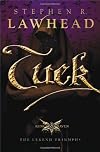
I thoroughly enjoyed this book. It was a satisfying conclusion to the "Hood" series. If you read it, don't stop at the conclusion, but take time to read the afterward. It lends credence to the historical background to the original Robin Hood story.
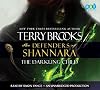
3.5/5 stars (Please, Goodreads, give us half stars to work with!)
This was an enjoyable story with compelling characters. The concept of the "wish song" was intriguing and I would have liked to see it developed further. Since this book is part of the Shannara universe, perhaps that development is being saved for a later book.
In general, an enjoyable story but not ground-breaking or very memorable.
This was an enjoyable story with compelling characters. The concept of the "wish song" was intriguing and I would have liked to see it developed further. Since this book is part of the Shannara universe, perhaps that development is being saved for a later book.
In general, an enjoyable story but not ground-breaking or very memorable.
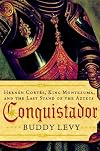
Well researched and balanced. I love how the author quotes primary sources as part of a well-written narrative. This book is a great blend between historical research and story telling. Although the events in this book are not easy to read (human sacrifice, cannibalism, civilian massacre, torture, etc.), they are necessary elements to the narrative, and show that both the conquistadors and the Aztecs were barbaric (the Conquistadors less so).
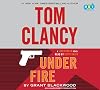
I generally enjoy Tom Clancy novels.
I enjoy plots with twists.
But this novel had so many twists and such convoluted plot logic, that I found myself rereading to figure out what was happening instead of enjoying the story. Unfortunately, the plot twists was the strongest element in the story.
I enjoy plots with twists.
But this novel had so many twists and such convoluted plot logic, that I found myself rereading to figure out what was happening instead of enjoying the story. Unfortunately, the plot twists was the strongest element in the story.
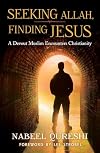
I thoroughly enjoyed this book, and would recommend it to anyone interested in a Christian-Muslim debate. The arguments the author presents are (as far as I can tell) balanced and very respectful. The story describes the heart-felt journey of a young man as he wrestles with finding a path to the Creator.
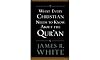
This book is a scholarly work about the Qur'an that does not pull punches. It may be too technical for some, but for others looking for more than an elementary study of comparative religions, this book is for them. I found it fascinating, accurate, and eye-opening.
There is a general and popular misconception that the Christian Bible and the Muslim Qur'an are essentially the same book with a different cover. This could not be further from the truth, and to be intellectually honest, one must study the differences to make such a claim. "What Every Christian Needs to Know about the Qur'an" is not only for Christians, but for anyone wanting to know about what the Qur'an says and how it was written.
There is a general and popular misconception that the Christian Bible and the Muslim Qur'an are essentially the same book with a different cover. This could not be further from the truth, and to be intellectually honest, one must study the differences to make such a claim. "What Every Christian Needs to Know about the Qur'an" is not only for Christians, but for anyone wanting to know about what the Qur'an says and how it was written.
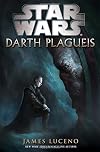
Enjoyable, but I would agree with another reader William(https://www.goodreads.com/user/show/4931001-william) "some of the intricately detailed plans of Plagueis and his apprentice Sidious are so complex that they become silly and completely unbelievable." (I hope it's OK to quote another review. It was a good one.)
Annihilation: Star Wars (The Old Republic) (Star Wars: The Old Republic - Legends) by Drew Karpyshyn
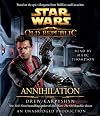
An entertaining story on the level of a season finale, not made for the big-screen. I would give it a 3.5 star rating, but, alas, there are no half-stars in the known universe.
Pros - Good action scenes and military strategy. Nice to see a novel in the Star Wars universe not based on a force wielding protagonist. It was clean (no language, sex, etc.). It was character driven with a flawed protagonist who comes to grips at the end. Good story arc.
Cons - A little sappy, and predictable. (Just a touch.)The bent blaster seemed to be a contrivance ... yeah, I was waiting for Theron to use it like a grenade. Good idea, but saw it coming. I had a hard time understanding Theron's brotherly love for Teff’ith. He had a lot more patience for her than I would have -- almost to the point of being a stalker. I had a hard time understanding his motivation for sticking with her to the point where it lost credibility.
Pros - Good action scenes and military strategy. Nice to see a novel in the Star Wars universe not based on a force wielding protagonist. It was clean (no language, sex, etc.). It was character driven with a flawed protagonist who comes to grips at the end. Good story arc.
Cons - A little sappy, and predictable. (Just a touch.)
I found this second book in the series compelling but insulting.
The historical elements are rich enough to taste and give the story a texture that places the reader back over a thousand years ago in a world that would be alien to us. I loved the historical notes at the end of the book, and the attention to historical authenticity in the Battle of Ethandun. I disagree with some other reviewers in that I believe Uhtread was a good choice for a main character. As a Saxon adopted by Danes, he was privy to both worlds; as a warrior, he had firsthand accounts of events that changed 9th Century England. It is a stretch to believe that one person would be witness to all these events, but I’ll give the author leeway in order to get a compelling story. In addition, most of the characters have depth, are compelling, and have unique voices.
However, I find the anti-Christian bias more than distasteful. I can understand that Uhtred, having been raised by Danes, clings to the Norse gods, especially since their warrior code justifies and compels Uhtred’s barbaric actions. I can also understand that since the story is told from his point of view, that the story will have this bias, but please: it’s been taken to an extreme. Every Christian portrayed in the story is either an idiot, a jerk, or a hypocrite.It almost seems like the priest Father Pyrlig will put Christianity in a good light, but alas, he gets it all wrong and insults the religion as well. Iseult is a British shadow show more queen from Cornwall, and his latest lover. She is a noble character who, despite the rejection of others, heals the king’s son at great personal loss. I was surprised at this miracle. The author had taken an strictly historical/scientific approach to this point, pooh-poohing miraculous claims by Christians (i.e. the storm sinking of the Danish fleet) while embracing the veracity of her metaphysical healing ritual.
The plot also seems to meander, literally bogging down in the swamp, during long stretches of the story. I am fascinated that the story follows the history of Alfred the Great between 876 – 878, but certain parts of the story seem like fillers between historical milestones, and these sections do not move the story along.
As for character development, I’m still waiting for Uhtread to grow up. The man is a wonton murderer and worse even by 9th Century Saxon standards, moreover, other than his military strategy, he is an idiot. Even when presented with the obvious “right” thing to do, he spurns it like an adolescent and does the opposite. It is very difficult to have character empathy for him. I agree with Beth Cato who almost wished “for his manbits to be ravaged by syphilis."
Still, like a junkie looking for his next fix, I will read the next book in the series, [b:Lords of the North The Saxon Stories 3|68526|Lords of the North (The Saxon Stories, #3)|Bernard Cornwell|https://d.gr-assets.com/books/1399623827s/68526.jpg|891853]. show less
The historical elements are rich enough to taste and give the story a texture that places the reader back over a thousand years ago in a world that would be alien to us. I loved the historical notes at the end of the book, and the attention to historical authenticity in the Battle of Ethandun. I disagree with some other reviewers in that I believe Uhtread was a good choice for a main character. As a Saxon adopted by Danes, he was privy to both worlds; as a warrior, he had firsthand accounts of events that changed 9th Century England. It is a stretch to believe that one person would be witness to all these events, but I’ll give the author leeway in order to get a compelling story. In addition, most of the characters have depth, are compelling, and have unique voices.
However, I find the anti-Christian bias more than distasteful. I can understand that Uhtred, having been raised by Danes, clings to the Norse gods, especially since their warrior code justifies and compels Uhtred’s barbaric actions. I can also understand that since the story is told from his point of view, that the story will have this bias, but please: it’s been taken to an extreme. Every Christian portrayed in the story is either an idiot, a jerk, or a hypocrite.
The plot also seems to meander, literally bogging down in the swamp, during long stretches of the story. I am fascinated that the story follows the history of Alfred the Great between 876 – 878, but certain parts of the story seem like fillers between historical milestones, and these sections do not move the story along.
As for character development, I’m still waiting for Uhtread to grow up. The man is a wonton murderer and worse even by 9th Century Saxon standards, moreover, other than his military strategy, he is an idiot. Even when presented with the obvious “right” thing to do, he spurns it like an adolescent and does the opposite. It is very difficult to have character empathy for him. I agree with Beth Cato who almost wished “for his manbits to be ravaged by syphilis."
Still, like a junkie looking for his next fix, I will read the next book in the series, [b:Lords of the North The Saxon Stories 3|68526|Lords of the North (The Saxon Stories, #3)|Bernard Cornwell|https://d.gr-assets.com/books/1399623827s/68526.jpg|891853]. show less
Nano by Robin Cook
Disappointed. Suffered through to the end, only to have my hopes for a conclusion dashed upon the rocks of obscurity.
I am loathe to give book a two-star rating, but I am unashamed to proclaim this as a meager one-star.
This book would never have been published if it had not been penned by a best-selling author. It is an incomplete first draft, rushed to market, which has the potential of a good story and glimmers of good writing sprinkled throughout, but the potential and glimmers are lost in the mire of:
1. A protagonist with no empathetic value,
2. A protagonist with no true motivation and so she becomes a plot device,
3. An antagonist who is flatter than 3-day-old road kill,
4. Persistent "head-hopping" (point-of-view shifts) that most readers don't mind, but drives me as an author crazy, since I've been required to weed them out of my own narrative, and
5. A contrived plot that ends in a fog.
To all authors and publishers: Don't be a slave to the deadline. If the story doesn't work or is underCOOKed, don't print it.
I am loathe to give book a two-star rating, but I am unashamed to proclaim this as a meager one-star.
This book would never have been published if it had not been penned by a best-selling author. It is an incomplete first draft, rushed to market, which has the potential of a good story and glimmers of good writing sprinkled throughout, but the potential and glimmers are lost in the mire of:
1. A protagonist with no empathetic value,
2. A protagonist with no true motivation and so she becomes a plot device,
3. An antagonist who is flatter than 3-day-old road kill,
4. Persistent "head-hopping" (point-of-view shifts) that most readers don't mind, but drives me as an author crazy, since I've been required to weed them out of my own narrative, and
5. A contrived plot that ends in a fog.
To all authors and publishers: Don't be a slave to the deadline. If the story doesn't work or is underCOOKed, don't print it.
I was very disappointed in this book and almost didn't finish it. I was disappointed, because the author Michael Crichton has written some of the best speculative fiction, and I was hoping for something on the order of Jurassic Park or Prey. It was a mess of two incoherent story lines that were based on the ethics of genetic manipulation, but they stretched science and good story telling as to lose credibility.
If you want to remember Michael Crichton as a good author, don't read this book.
If you want to remember Michael Crichton as a good author, don't read this book.
Of all the books in the Chronicles of Narnia series, The Magician's Nephew is my favorite. The concepts of (1) a woods between the worlds (an early wormhole trope) and (2) original sin entering a world by a means other than our own history are what I found the most intriguing.
I Dared to Call Him Father: The Miraculous Story of a Muslim Woman's Encounter with God by Bilquis Sheikh
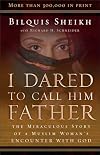
I had a hard time connecting to Bilquis at the beginning because of her condescending attitude towards her servants, but her condescension came from her position as an aristocrat. I also started to question if the story was real because she used "Christianese" terms that a Pakistani wouldn't, but then I realized (1) that this book was written after she had for years recounted her story before churches and (2) that she had written this book to Christians. The best thing about this story was how she learned to listen to God's voice.
I got more out of a similar book: Nabeel Qureshi's [b:Seeking Allah, Finding Jesus: A Devout Muslim Encounters Christianity|18289396|Seeking Allah, Finding Jesus A Devout Muslim Encounters Christianity|Nabeel Qureshi|https://d.gr-assets.com/books/1386802223s/18289396.jpg|25818274]
[bc:Seeking Allah, Finding Jesus: A Devout Muslim Encounters Christianity|18289396|Seeking Allah, Finding Jesus A Devout Muslim Encounters Christianity|Nabeel Qureshi|https://d.gr-assets.com/books/1386802223s/18289396.jpg|25818274]
I got more out of a similar book: Nabeel Qureshi's [b:Seeking Allah, Finding Jesus: A Devout Muslim Encounters Christianity|18289396|Seeking Allah, Finding Jesus A Devout Muslim Encounters Christianity|Nabeel Qureshi|https://d.gr-assets.com/books/1386802223s/18289396.jpg|25818274]
[bc:Seeking Allah, Finding Jesus: A Devout Muslim Encounters Christianity|18289396|Seeking Allah, Finding Jesus A Devout Muslim Encounters Christianity|Nabeel Qureshi|https://d.gr-assets.com/books/1386802223s/18289396.jpg|25818274]
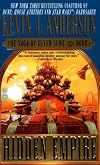
I enjoyed this story. It stands out as a good example of "space opera": an epic tale in the future, with an interplanetary setting, wide in scope as told by a web of personal relationships. Anytime I put the book down for a while and picked it back up, I found the opera part a bit of a drag and often asked the question, "Now wait, who's that?" But the world building is primo. Yes, it is soft sci-fi because of Theroc's "green priests" who are able to commune with the trees and communicate telepathically across space when touching a treeling. Yes this solves the FTL (faster than light) communication problem, but via tree hugging, really? Points for originality on that but minus points for credibility. Give me an ansible. :)
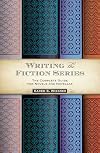
This book is intended as a resource for authors developing a series. Although much of it maybe common sense and overloaded with examples, an author could use this as a checklist for series development. It also includes worksheets that an author could tweak for his or her own style.
Black Holes and Time Warps: Einstein's Outrageous Legacy (Commonwealth Fund Book Program) by Kip S. Thorne
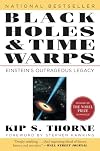
This book explains, among other thing, a very cool theory about using stable wormholes to create a time machine. Now if we could only make wormholes stable, manipulate them, and pass through them safely without radiation feedback ... then I could go back and create a time paradox.
The Modern Scholar: From Here to Infinity ~An Exploration of Science Fiction Literature~ (14 Lectures on 7 Audiocassettes) by Michael D. C. Drout

The lecturer Professor Michael D.C. Drout is as passionate about science fiction as a pre-teen boy is about sneaking into a theater to see a forbidden sci-fi flick. And that’s what you want in a professor. He is articulate and well-versed in the genre. He divides the material into decades and themes in a way that allows the listener to both digest the voluminous material and see the genre’s progression though history.
You might hope that, as he walks through the decades, Prof. Drout would note one of your favorite authors. Sadly, he may not. He skipped some of mine. But to be fair there are so many science fiction authors that he had to be selective, and he seems to have chosen those that typified subgenres such as cyberpunk and slipstream.
I would have given this lecture series a 5 star rating had it not been his bias and praise for everything progressive. When it came to the Surrealists such as J. G. Ballard, the praise for progressiveness turned my stomach. (J. G. Ballard 's 1973 novel “Crash” is about a group of people who take sexual pleasure from car accidents.) This is twisted an sick.
You might hope that, as he walks through the decades, Prof. Drout would note one of your favorite authors. Sadly, he may not. He skipped some of mine. But to be fair there are so many science fiction authors that he had to be selective, and he seems to have chosen those that typified subgenres such as cyberpunk and slipstream.
I would have given this lecture series a 5 star rating had it not been his bias and praise for everything progressive. When it came to the Surrealists such as J. G. Ballard, the praise for progressiveness turned my stomach. (J. G. Ballard 's 1973 novel “Crash” is about a group of people who take sexual pleasure from car accidents.) This is twisted an sick.
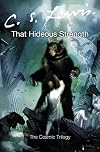
Although written for an earlier generation, this book still speaks to us today -- something nearly impossible to do with a near-future science fiction novel. Most tend to be outdated within thirty years.
Lewis does a great job blending both science and fantasy in this last book of his Space Trilogy. He draws upon medieval characters and mythic gods to evoke deep questions that cause the reader to pause and think.
The narrator Ralph Cosham breathed even more life into the story with his the adaptation of character accents. I especially enjoyed his performance of Mr. MacPhee.
Favorite Scene: After Jane Studdock joins Mother Dimble and Mr. MacPhee in the kitchen for the first time, she inquires about a term they used.
Lewis does a great job blending both science and fantasy in this last book of his Space Trilogy. He draws upon medieval characters and mythic gods to evoke deep questions that cause the reader to pause and think.
The narrator Ralph Cosham breathed even more life into the story with his the adaptation of character accents. I especially enjoyed his performance of Mr. MacPhee.
Favorite Scene: After Jane Studdock joins Mother Dimble and Mr. MacPhee in the kitchen for the first time, she inquires about a term they used.
"What is 'women's day' in the kitchen?" asked Jane of Mother Dimble.show more
"There are no servants here," said Mother Dimble, "and we all do the work. The women do it one day and the men the next. What? No, it's a very sensible arrangement. The Director's idea is that men and women can't do housework together without quarreling. There's something in it. Of course, it doesn't do to look at the cups too closely on the men's day, but on the whole we get along pretty well."
"But why should they quarrel?" asked Jane.
"Different methods, my dear. Men can't help in a job, you know. They can be induced to do it: not to help while you're doing it. At least, it makes them grumpy."
"The cardinal difficulty," said MacPhee, "in collaboration between the sexes is that women speak a
language without nouns. If two men are doing a bit of work, one will say to the other, 'Put this bowl inside the bigger bowl which you'll find on the top shelf of the green cupboard.' The female for this is, 'Put that in the other one there.' And then if you ask them, 'in where?' they say, 'in there, of course.' There is consequently a phatic hiatus." He pronounced this so as to rhyme with "get at us."show less
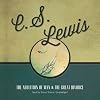
I would recommend the Great Divorce to anyone. It's sort of a Pilgram's Progress in the afterlife. 5 stars
The Abolition of Man is a little hard getting through and it argues against a philosophy that is no longer popular, but the debate is still valid. 3 stars
The Abolition of Man is a little hard getting through and it argues against a philosophy that is no longer popular, but the debate is still valid. 3 stars
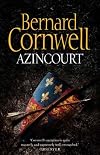
Having read the other reviews, I have very little to add. I enjoyed the book except for two aspects: the extreme violence and church bashing. Yes, both were true. War is hell, but I don't find hell entertaining. It is a personal failure on my part, I suppose. As for the church bashing, one does not need to look far to see failure within the church -- failure at the criminal level -- but one does need to look between the trees to see it. In this analogy, the trees are the good things that the church as done.
Had those two aspects been in balance, then I would have rated this book a five. Bernard Cornwell did his homework (as far as I can tell) and crafted a great story that put flesh on an historic event that would otherwise have been left to dry military history. I appreciated his historical notes at the end, in that they showed what in the story was according to record and what wasn't. I especially liked that even the protagonist's name was drawn from historical documents. Well done, Mr. Cornwell.
Had those two aspects been in balance, then I would have rated this book a five. Bernard Cornwell did his homework (as far as I can tell) and crafted a great story that put flesh on an historic event that would otherwise have been left to dry military history. I appreciated his historical notes at the end, in that they showed what in the story was according to record and what wasn't. I especially liked that even the protagonist's name was drawn from historical documents. Well done, Mr. Cornwell.
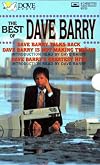
Dave Barry offers a pretty hilarious reflection on his visit to Japan. If you want a good laugh (a little off color in places) and a personal reflection on the difference between Japanese and American (US) culture, this book is for you. If you want a serious, scholarly contrast and comparison between the cultures, then look elsewhere. Mr. Barry admits as much in this book.
As for accuracy, I cannot judge if this book highlights the most important differences between the cultures or not. Also, Mr. Barry wrote this in the mid-1990’s, so some material might be a little dated. But if you’ve waited until the last minute to prepare for Japanese-American cultural exchange, and are preparing to fly to Tokyo, then listen to it. Warning: it won’t put you to sleep, and your sudden bursts of laughter might disturb the person in the next seat.
As for accuracy, I cannot judge if this book highlights the most important differences between the cultures or not. Also, Mr. Barry wrote this in the mid-1990’s, so some material might be a little dated. But if you’ve waited until the last minute to prepare for Japanese-American cultural exchange, and are preparing to fly to Tokyo, then listen to it. Warning: it won’t put you to sleep, and your sudden bursts of laughter might disturb the person in the next seat.
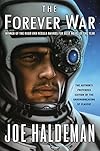
The most intriguing aspect of this story is not in the fighting at the beginning but towards the end when Private William Mandella returns home to a world that has changed over a millennia. It really is no longer his home since the culture has transformed so much as to almost be as alien as the aliens he’s been fighting. It is the is “Rip Van Winkle” trope that I believe the story has its greatest value.
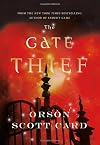
Having enjoyed the previous book in the series, “The Lost Gate,” I was looking forward to reading what happened next to Danny North. I was disappointed, not in the writing style, the character development, or even the broadening plot scope – I loved those – but I was disappointed in the spiritual direction of the book.
** SPOILER ALERT ** The following contains information that could spoil the story. Read at your own peril.
On a positive side, this second story is no longer only about an individual’s freedom and self-actualization, but about defeating the Earth from a global threat. Personally, I like that. And the protagonist Danny North is not fighting the threat alone. Again: kudos. Moreover, the apparent-antagonist Loki, has a plausible motivation, one that I could cheer for. There is more intrigue and a deepening description of the Mither Mage world – all things that a reader might expect from a sequel.
It is the true antagonist Bal and the history and spiritual world-view behind him that turns me off. Personally, I don’t care for reinterpreting religion and history. They are what it are. OK, yes, I am an historical science fiction author who writes fiction about historical events, and in so doing, I fill in the gaps of what history doesn’t tell us. But I try to keep true to our current best records of history. It is this perfectionism in me that cringes when I see obvious rewriting of history and established religions. And so IMHO this ruined the story show more for me. show less
** SPOILER ALERT ** The following contains information that could spoil the story. Read at your own peril.
It is the true antagonist Bal and the history and spiritual world-view behind him that turns me off. Personally, I don’t care for reinterpreting religion and history. They are what it are. OK, yes, I am an historical science fiction author who writes fiction about historical events, and in so doing, I fill in the gaps of what history doesn’t tell us. But I try to keep true to our current best records of history. It is this perfectionism in me that cringes when I see obvious rewriting of history and established religions. And so IMHO this ruined the story
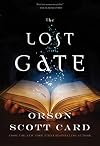
I enjoyed the Lost Gate primarily because of Danny North’s self-discovery and initial struggles. What would a teenage boy do with an ability to transport himself anywhere? How does he find his place with his own people, who want to control him? How does he find his place in a normal society that would either fear him … or also want to use him? He lives with the constant threat of pursuit while trying to discover the purpose and limits of his own abilities. Add to this Danny’s natural mischievous “Loki-like” prankster nature, and this has all the ingredients of a great story. Orson Scott Card does a great job of dramatizing this concept and getting into the mind of the protagonist. I look forward to reading more in the series.
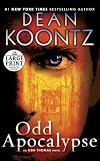
I was looking forward to another book in the Odd series, and I wasn't disappointed. This book captures all the wonder of the Mystery Train and the lovable, unflappable Odd Thomas himself, a stalwart character of self-sacrificing "rightness" in the face of some pretty nasty protagonists. He's just a fry cook with enough magnetism to draw the strangest of stories that make me want more.
Note: This ain't a book for kids. There's a dark side of humanity shown here that their tender minds should be exposed to until they're jaded adults.
Note: This ain't a book for kids. There's a dark side of humanity shown here that their tender minds should be exposed to until they're jaded adults.
There are hundreds if not thousands of "how to" books available for writers. I would put this book as one of the top 5. It is clear, full of examples, and not condescending (as some are). John Truby's YouTube videos are a great supplement to his book.
I found this book very helpful in reshaping my novel. Thank you, John.
I found this book very helpful in reshaping my novel. Thank you, John.
The First 50 Pages: Engage Agents, Editors and Readers, and Set Up Your Novel for Success by Jeff Gerke
An easy read with great material for novelists whom have either looking to revise a completed draft, or for those whom are starting. I wish I would have read this before I finished my first draft. It would have saved time rewriting. On the other hand, I wouldn't have had as much appreciation for the Jeff Gerke's insights.
A few of the things that set this book apart from other author self-help books is that it:
1. Focuses on crafting your novel for the market, both the reader and the editor/agent.
2. Helps streamline the plot and character introductions early according to most reader's expectations.
3. It is NOT a formula book, although it does give broad suggestions on when readers and editors expect certain things to happen in a novel.
THE FIRST 50 PAGES is an easy read, and it's one of my top 10 books to recommend to authors no matter what their genre.
A few of the things that set this book apart from other author self-help books is that it:
1. Focuses on crafting your novel for the market, both the reader and the editor/agent.
2. Helps streamline the plot and character introductions early according to most reader's expectations.
3. It is NOT a formula book, although it does give broad suggestions on when readers and editors expect certain things to happen in a novel.
THE FIRST 50 PAGES is an easy read, and it's one of my top 10 books to recommend to authors no matter what their genre.
I found “Embracing Grace” to be an honest and insightful treatment on Biblical grace. The siren-call of religiosity is that if we can just do the right thing to please God, then he’ll shrug off our mistakes. In reality we’ll never quite get there. True grace as described in the Bible tells us of a better path. A couple of quotes from the book might shed some light on it:
“God is completely for us, but completely against our sin.”
“Disobedience increases the level of disbelief.”
“God certainly does censure people for their sin, but if you keep reading in your Bible, you will discover that every sentence He declares against His people is always accompanied with promises for their future. For God, judgment and promise go hand in hand.”
“God is completely for us, but completely against our sin.”
“Disobedience increases the level of disbelief.”
“God certainly does censure people for their sin, but if you keep reading in your Bible, you will discover that every sentence He declares against His people is always accompanied with promises for their future. For God, judgment and promise go hand in hand.”

I really enjoyed this lecture series. Dr. Barhart is both knowledgeable and enthusiastic about Mesoamerican cultures. He's gotten his hands dirty in archeological sites like Copan in Honduras (been there, yeah!).
The only reason I would not rate this series a 5 is because it really needs pictures and maps. About half-way through the lectures, I started looking up images of the locations and artifacts online. This really helped add to the lecture. I would suggest that other listeners do this.
This lecture series has been an important part of the research in my third novel: "Avenue of the Dead." Was that a plug? Maybe, but I wanted to give credit to where credit was due. Thank Dr. Barnhart. Keep digging.
The only reason I would not rate this series a 5 is because it really needs pictures and maps. About half-way through the lectures, I started looking up images of the locations and artifacts online. This really helped add to the lecture. I would suggest that other listeners do this.
This lecture series has been an important part of the research in my third novel: "Avenue of the Dead." Was that a plug? Maybe, but I wanted to give credit to where credit was due. Thank Dr. Barnhart. Keep digging.