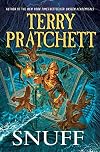
Sam Vines, a prestigious big city cop, is at long last forced by his wife, Lady Sybil, to take a vacation in the country well away from the center of power in Ankh-Morpork and the grit of the big city streets. While Sam grew up on the mean streets, Lady Sybil grew up as landed gentry and owned, well technically Sam now owned, a massive estate with about a hundred servants and workers.
A true copper, as Sam would say, can sniff out a crime anywhere and sure enough, a young goblin girl is butchered on the Vine’s estate the very day Lady Sybil, with Sam in tow, arrives. But killing a goblin isn’t a crime, at least not until the story ends, but Sam is asked by the local goblin community to find the killer and bring justice to the poor girl’s death. And that is what Sam sets out to do, to find the crime that led to the goblin’s death.
As Sam investigates the murder he begins to understand who does what and why in this part of the country and, with a wry British sensibility, envelopes the reader in a world where goblins and trolls and other unusual creatures are plentiful. Some are quite intelligent while others are anything but.
This whimsical tale drew me in from the start and Pratchett’s easy style made the entire adventure quite adventuresome. What amused me most was the practical way Sam’s society overcomes issues of a mechanical nature. Truly masterful. Sam’s world is rich with both colorful and mundane characters and the attention to detail without undue show more elaboration is sheer pleasure.
I picked up this novel as I assumed it was science fiction, but it is quite clearly fantasy. And fantastical to boot. I am glad I did. show less
A true copper, as Sam would say, can sniff out a crime anywhere and sure enough, a young goblin girl is butchered on the Vine’s estate the very day Lady Sybil, with Sam in tow, arrives. But killing a goblin isn’t a crime, at least not until the story ends, but Sam is asked by the local goblin community to find the killer and bring justice to the poor girl’s death. And that is what Sam sets out to do, to find the crime that led to the goblin’s death.
As Sam investigates the murder he begins to understand who does what and why in this part of the country and, with a wry British sensibility, envelopes the reader in a world where goblins and trolls and other unusual creatures are plentiful. Some are quite intelligent while others are anything but.
This whimsical tale drew me in from the start and Pratchett’s easy style made the entire adventure quite adventuresome. What amused me most was the practical way Sam’s society overcomes issues of a mechanical nature. Truly masterful. Sam’s world is rich with both colorful and mundane characters and the attention to detail without undue show more elaboration is sheer pleasure.
I picked up this novel as I assumed it was science fiction, but it is quite clearly fantasy. And fantastical to boot. I am glad I did. show less
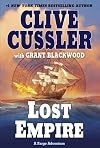
I was first introduced to the characters, Sam and Remi Fargo, in Spartan Gold. It was an awesome read, and using a married couple as the protagonists worked very well. Perhaps what I liked even more was that they came across as down-to-earth capable people and Cussler had them resolve edge-of-the-seat scenes without becoming TV ridiculous.
In Lost Empire, Sam and Remi are on vacation doing what they love to do – diving. Naturally they discover something – in this case a ship’s bell from a Confederate warship that had no business being where it was – that sends up a red flare for the bad guys who do not want certain historical matters to come to light.
From discoveries on the east coast of Africa to a pitched battle at the Fargo’s estate on the California coast, this tale is well paced and exciting. Unlike many of Cusslers other novels, the reader doesn’t have to stretch their imagination beyond believable. That alone makes it an excellent read.
What’s also nice is the editing was better than I see with most Cussler novels.
For Cussler fans, this is an excellent read. For adventure readers who like a little science fiction and innovative use of technology, also very good. For mystery readers, the unraveling of the mystery is innovative.
In Lost Empire, Sam and Remi are on vacation doing what they love to do – diving. Naturally they discover something – in this case a ship’s bell from a Confederate warship that had no business being where it was – that sends up a red flare for the bad guys who do not want certain historical matters to come to light.
From discoveries on the east coast of Africa to a pitched battle at the Fargo’s estate on the California coast, this tale is well paced and exciting. Unlike many of Cusslers other novels, the reader doesn’t have to stretch their imagination beyond believable. That alone makes it an excellent read.
What’s also nice is the editing was better than I see with most Cussler novels.
For Cussler fans, this is an excellent read. For adventure readers who like a little science fiction and innovative use of technology, also very good. For mystery readers, the unraveling of the mystery is innovative.

The tale opens in 1893 when a mule skinner, leading a 15 mule pack train, enters a once thriving mining town in the high country of Colorado on December 28th shortly after Christmas to find it abandoned. No smoke issued from the chimneys of the town buildings, nor the snow-bound shacks or cribs dotting the mountainside. Not a person or critter about. After stepping into the local saloon and finding it as if everyone had just walked away, he leads his team down main street toward the stable to feed and quarter them for the night. It’s 27 miles back to Silverton and though the eerie quiet disturbs him, his mules are trail worn.
Before he reaches the stables a six-year-old girl steps out before him. He gets down and as he approaches her, she brings out a six shooter from her cloak and shoots him. As he lies there bleeding from a grievous chest wound, she shoots him in the head.
Leap forward to 2009 where 30 year old Abigail, a successful journalist is invited by her father, who had walked out on her and her mother when she was four and hadn’t been or heard from since, invites her to Colorado to explore the mystery of a ghost town called Abandon, with him and a ghost hunter couple.
Thus begins this dark tale of desperation and misery, of deception and betrayal, madness and greed, heavily laced with fear and heart-stopping scenes. For Abandon holds two secrets, both drenched in blood.
Chapter by chapter the tale shifts from the last days of Abandon to 2009 where Abigail’s show more father leads a small team attempting to decipher the mystery of why the 123 townspeople appeared to have vanished on Christmas day, leaving all their possessions and cooked meals on the tables. Underlying this is another search. The kind of search that brings out the evil in men’s souls.
Crouch draws scenes so graphic that you cringe at the despair bleeding from people desperately living impoverished lives in a dying town that once glittered with gold, that met the needs, depraved or otherwise, of thousands of miners, desperadoes and conmen. Scenes of biting cold, deep snow and the constant terror of avalanches.
This adventure novel is, above all else, a horror story. A very well written tale at that, but with an ending as despairing as the lives of the characters and as refreshing as a lump of coal in your Christmas stocking.
I was waiting for just one small glimmer of hope to be wrung from this sordid story, but I was ruefully denied even this. To be honest, it pissed me off. I’d read another novel many years ago that offered just such an ending. I don’t hold grudges, but that one still rankles and I had hoped never to experience that again. Yet, for another reader the ending may be as incredible as the high country vistas of Colorado. show less
Before he reaches the stables a six-year-old girl steps out before him. He gets down and as he approaches her, she brings out a six shooter from her cloak and shoots him. As he lies there bleeding from a grievous chest wound, she shoots him in the head.
Leap forward to 2009 where 30 year old Abigail, a successful journalist is invited by her father, who had walked out on her and her mother when she was four and hadn’t been or heard from since, invites her to Colorado to explore the mystery of a ghost town called Abandon, with him and a ghost hunter couple.
Thus begins this dark tale of desperation and misery, of deception and betrayal, madness and greed, heavily laced with fear and heart-stopping scenes. For Abandon holds two secrets, both drenched in blood.
Chapter by chapter the tale shifts from the last days of Abandon to 2009 where Abigail’s show more father leads a small team attempting to decipher the mystery of why the 123 townspeople appeared to have vanished on Christmas day, leaving all their possessions and cooked meals on the tables. Underlying this is another search. The kind of search that brings out the evil in men’s souls.
Crouch draws scenes so graphic that you cringe at the despair bleeding from people desperately living impoverished lives in a dying town that once glittered with gold, that met the needs, depraved or otherwise, of thousands of miners, desperadoes and conmen. Scenes of biting cold, deep snow and the constant terror of avalanches.
This adventure novel is, above all else, a horror story. A very well written tale at that, but with an ending as despairing as the lives of the characters and as refreshing as a lump of coal in your Christmas stocking.
I was waiting for just one small glimmer of hope to be wrung from this sordid story, but I was ruefully denied even this. To be honest, it pissed me off. I’d read another novel many years ago that offered just such an ending. I don’t hold grudges, but that one still rankles and I had hoped never to experience that again. Yet, for another reader the ending may be as incredible as the high country vistas of Colorado. show less
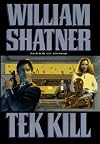
Tek Kill is the seventh in the Tek series penned by none other than Captain Kirk himself, albeit under a name we know just as well, William Shatner.
It is a fast-paced adventure tale that takes place in 2122 and reintroduces the indomitable PI of the Cosmos Detective Agency, Jake Cardigan. Handsome in a rugged way, Jake has a checkered past that continues to haunt him, and ex-wife you never see and a strapping young man of 16 with which he has a conflicting relationship.
The tale opens with a frightening vision of the murder of her father, seen through the mind of a former Tek junkie. The police see her vision as just the mental ramblings of a disturbed woman in the throes of withdrawal because they already know who the murderer was, Walt Bascomb, the head of the Cosmos Detective Agency.
In a world as high tech as only a science fiction writer can envision, Jake ferrets out the truth behind the murder and discovers a monstrous secret hatched by a man wealthy and powerful beyond dreams. And Jake, along with his partner of 5 years, Sal Gomez, Jake’s son and a unique supporting cast, unravels the truth and brings this well-written tale to a climatic conclusion.
This is not a high-minded story, but a fun, fast-paced novel.
For readers who like Clive Cussler, but require more science fiction, this is a book for you. If you’re looking for angst and desperate people with desperate lives in which much of the read digs deep into their sordid and disheveled motivations, move along. show more There is nothing more to see. show less
It is a fast-paced adventure tale that takes place in 2122 and reintroduces the indomitable PI of the Cosmos Detective Agency, Jake Cardigan. Handsome in a rugged way, Jake has a checkered past that continues to haunt him, and ex-wife you never see and a strapping young man of 16 with which he has a conflicting relationship.
The tale opens with a frightening vision of the murder of her father, seen through the mind of a former Tek junkie. The police see her vision as just the mental ramblings of a disturbed woman in the throes of withdrawal because they already know who the murderer was, Walt Bascomb, the head of the Cosmos Detective Agency.
In a world as high tech as only a science fiction writer can envision, Jake ferrets out the truth behind the murder and discovers a monstrous secret hatched by a man wealthy and powerful beyond dreams. And Jake, along with his partner of 5 years, Sal Gomez, Jake’s son and a unique supporting cast, unravels the truth and brings this well-written tale to a climatic conclusion.
This is not a high-minded story, but a fun, fast-paced novel.
For readers who like Clive Cussler, but require more science fiction, this is a book for you. If you’re looking for angst and desperate people with desperate lives in which much of the read digs deep into their sordid and disheveled motivations, move along. show more There is nothing more to see. show less
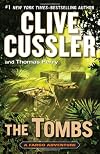
Of all the Clive Cussler characters, I like the archeological adventure team of Sam and Remi Fargo the best. Something about two brave and intelligent people who love each other enormously, who have a sense of humor and are committed to doing good works, is hard to not like.
In this latest installment the prize is Attila the Hun’s treasure, the bad guy an evil villain who thinks the treasure belongs to him through lineage and his cohorts in a vast criminal empire.
The search for the treasure crosses European borders and is a puzzle to be solved using clues uncovered with each new discovery.
Unlike most of the Cussler novels that include several vastly unbelievable scenes, there was only one that made me laugh at its absurdity. When Sam Fargo steals one of the treasure troves off the bad guy’s yacht right under his very nose.
Other than that, the cast of characters is well developed, the story line marginally believable, and the story arc well modulated and complete.
While technical details were forthcoming, they were just sufficient, not the overwhelming drag on the story as I’ve seen in other Cussler novels.
This latest creation was also quite free of grammar issues and typos, to my immense relief. It’s as if a professional editor was employed this time.
Solid, enjoyable read. One of Cussler’s best.
In this latest installment the prize is Attila the Hun’s treasure, the bad guy an evil villain who thinks the treasure belongs to him through lineage and his cohorts in a vast criminal empire.
The search for the treasure crosses European borders and is a puzzle to be solved using clues uncovered with each new discovery.
Unlike most of the Cussler novels that include several vastly unbelievable scenes, there was only one that made me laugh at its absurdity. When Sam Fargo steals one of the treasure troves off the bad guy’s yacht right under his very nose.
Other than that, the cast of characters is well developed, the story line marginally believable, and the story arc well modulated and complete.
While technical details were forthcoming, they were just sufficient, not the overwhelming drag on the story as I’ve seen in other Cussler novels.
This latest creation was also quite free of grammar issues and typos, to my immense relief. It’s as if a professional editor was employed this time.
Solid, enjoyable read. One of Cussler’s best.
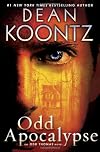
This is the fifth in the Odd Thomas series. Koontz hadn’t intended on continuing the series, but readers demanded more. The result was well worth it.
Odd arrives at a reclusive estate, Roseland, with a character from the last novel: a very pregnant and prescient Annamaria, who was drawn there by undisclosed forces to confront an unholy terror. But Annamaria is absent through much of the novel, having served as the impetus for their arrival at Roseland and plays a small part in the dramatic, time shattering conclusion.
The owner of the estate and his erstwhile staff, hide a dark secret built around a creation of Nikola Tesla, whom the owner of the estate, Noah Wolflaw, knew personally when he was a Hollywood movie star in the 30s. It is a tale of how immense wealth and the power that comes with it, coupled with an advanced technology unknown to the world, descends into depravity and fear of discovery.
This is a tight, well written and wholly engaging tale of horror and psychic intervention and a fitting sequel to the other four novels in the series.
I felt the only drawback was in the opening pages where Koontz explains a bit about Odd instead of weaving these particulars into the novel, allowing the reader to discover this rather than having it handed to him.
Koontz has a manner of writing that mirrors many of the greats while still retaining an air of uniqueness that makes his writing sheer pleasure. I think the quality of his products easily surpasses that of the extremely show more popular James Patterson.
If you are a fan of psychic horror, than the Odd Thomas series is just right for you. show less
Odd arrives at a reclusive estate, Roseland, with a character from the last novel: a very pregnant and prescient Annamaria, who was drawn there by undisclosed forces to confront an unholy terror. But Annamaria is absent through much of the novel, having served as the impetus for their arrival at Roseland and plays a small part in the dramatic, time shattering conclusion.
The owner of the estate and his erstwhile staff, hide a dark secret built around a creation of Nikola Tesla, whom the owner of the estate, Noah Wolflaw, knew personally when he was a Hollywood movie star in the 30s. It is a tale of how immense wealth and the power that comes with it, coupled with an advanced technology unknown to the world, descends into depravity and fear of discovery.
This is a tight, well written and wholly engaging tale of horror and psychic intervention and a fitting sequel to the other four novels in the series.
I felt the only drawback was in the opening pages where Koontz explains a bit about Odd instead of weaving these particulars into the novel, allowing the reader to discover this rather than having it handed to him.
Koontz has a manner of writing that mirrors many of the greats while still retaining an air of uniqueness that makes his writing sheer pleasure. I think the quality of his products easily surpasses that of the extremely show more popular James Patterson.
If you are a fan of psychic horror, than the Odd Thomas series is just right for you. show less
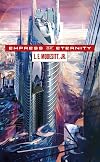
In a far distant future scientists from three time periods separated by hundreds of thousands of years, are confounded by an indestructible canal that spans the American continent. In the most distant of these periods a religious war is brewing. A vast army of zealots have discovered a weapon so powerful that not only could it lead to the extinction of humanity, but could very well unravel the fabric of the universe itself.
In each period, science teams are attempting to uncover the secrets of the canal and its apparently empty structure at its west end. They believe that by learning the secrets of this structure they can confront the evils of political and religious zealotry and save humankind from self-immolation.
As with all Modesitt novels, it is a complicated, deep tale, populated by people so real they could be your next door neighbor. And Modesitt spares no words in the telling of it.
Its perspective is panoramic, yet the scenes are so distinctly personal: flawless in their presentation.
This is not a light read, but it was hard for me to tear myself away nonetheless.
In each period, science teams are attempting to uncover the secrets of the canal and its apparently empty structure at its west end. They believe that by learning the secrets of this structure they can confront the evils of political and religious zealotry and save humankind from self-immolation.
As with all Modesitt novels, it is a complicated, deep tale, populated by people so real they could be your next door neighbor. And Modesitt spares no words in the telling of it.
Its perspective is panoramic, yet the scenes are so distinctly personal: flawless in their presentation.
This is not a light read, but it was hard for me to tear myself away nonetheless.

In a far distant future where the Federation (not of Star Trek fame) controls the galaxy with an iron fist a planet is discovered shrouded in a hazy shield that prevents the Federation from learning, what, if any, human habitation exists. Agent major Kier Roget, along with four other agents in individual ships, are dropped into the turbulent atmosphere to penetrate the haze and learn the truth.
Intertwined with this is another story line that takes place sometime earlier in which Agent Roget is sent in undercover to a remote Earth colony to learn why another undercover agent lost his life. The memories of that encounter are troubling and have a tenuous bearing on Rogent’s current mission.
Agent Rogent and one other succeed in penetrating the shields, but the other man is driven crazy by what he sees. What Rogent discovers is an all too human culture that is quite alien to the Chinese dominated Federation, and technologically advanced in ways quite foreign to the Federation.
Rogent is paired with a woman guide to help him understand this alien culture and provide enough evidence to prove that they are no threat to the Federation, but if the Federation did attack it would face unimaginable consequences. What unfolds is a highly detailed description of this alien culture with hints at an advanced technology that goes back four thousand years, two thousand before the Federation was even created.
This is by no means an action/adventure novel, but enough intrigue is sewn in to show more make it a compelling, yet troubling read.
I feel anyone who truly enjoys the social complexity and technological innovations of science fiction will find this a solid and enjoyable read. There is some military action, but it is far from the highpoint or the purpose of the novel. I did enjoy this more than all the other L E Modesitt novels I’ve read as the details were well woven into the fabric of the story such that it doesn’t bury the reader. show less
Intertwined with this is another story line that takes place sometime earlier in which Agent Roget is sent in undercover to a remote Earth colony to learn why another undercover agent lost his life. The memories of that encounter are troubling and have a tenuous bearing on Rogent’s current mission.
Agent Rogent and one other succeed in penetrating the shields, but the other man is driven crazy by what he sees. What Rogent discovers is an all too human culture that is quite alien to the Chinese dominated Federation, and technologically advanced in ways quite foreign to the Federation.
Rogent is paired with a woman guide to help him understand this alien culture and provide enough evidence to prove that they are no threat to the Federation, but if the Federation did attack it would face unimaginable consequences. What unfolds is a highly detailed description of this alien culture with hints at an advanced technology that goes back four thousand years, two thousand before the Federation was even created.
This is by no means an action/adventure novel, but enough intrigue is sewn in to show more make it a compelling, yet troubling read.
I feel anyone who truly enjoys the social complexity and technological innovations of science fiction will find this a solid and enjoyable read. There is some military action, but it is far from the highpoint or the purpose of the novel. I did enjoy this more than all the other L E Modesitt novels I’ve read as the details were well woven into the fabric of the story such that it doesn’t bury the reader. show less

The novel opens with Astronaut Nigel Walmsley landing on a comet headed for a collision with Earth is a huge derelict spaceship. His decision to delay detonating a device to divert the ship’s course as he investigates does not sit well with the public.
Years later as the New Sons religious organization spreads across the globe a new object arrives in the solar system: a robotic scout ship sent out by robotic societies fearful of biologicals. Because of his past encounter, Walmsley and his NASA team follow the path of the giant ship, keeping its appearance secret until it can no longer be contained.
While the ship begins communicating with the NASA team, Walmsley’s girlfriend dies from disease, but is temporarily resurrected by the alien intelligence and becomes an icon for the New Sons. Eventually Walmsley is sent out to make contact, but the motivations of this aren’t clear until it is too late.
What follows is a troubling story of political, social and military power as a surprising, ancient discovery is made on the Moon.
It is a compelling story, rich with all the trappings of modern science fiction and personal development, while displaying human intrigue, duplicity and cross purposes.
The tale is rich with detail, both internal and external, as Walmsley struggles with new found knowledge and the revelation that Mankind has a far more fragile existence than anyone had ever conceived and only a few would ever know.
I was troubled as I read this narrative, disturbed by show more the implications of how the political and social powers that run the world would respond should we ever be faced with the existence of intelligent life elsewhere in the universe.
This is well written and a somewhat slow read. There is no blinding action, though there is adventure. While I enjoyed reading it, it isn’t high on my list of awesome novels show less
Years later as the New Sons religious organization spreads across the globe a new object arrives in the solar system: a robotic scout ship sent out by robotic societies fearful of biologicals. Because of his past encounter, Walmsley and his NASA team follow the path of the giant ship, keeping its appearance secret until it can no longer be contained.
While the ship begins communicating with the NASA team, Walmsley’s girlfriend dies from disease, but is temporarily resurrected by the alien intelligence and becomes an icon for the New Sons. Eventually Walmsley is sent out to make contact, but the motivations of this aren’t clear until it is too late.
What follows is a troubling story of political, social and military power as a surprising, ancient discovery is made on the Moon.
It is a compelling story, rich with all the trappings of modern science fiction and personal development, while displaying human intrigue, duplicity and cross purposes.
The tale is rich with detail, both internal and external, as Walmsley struggles with new found knowledge and the revelation that Mankind has a far more fragile existence than anyone had ever conceived and only a few would ever know.
I was troubled as I read this narrative, disturbed by show more the implications of how the political and social powers that run the world would respond should we ever be faced with the existence of intelligent life elsewhere in the universe.
This is well written and a somewhat slow read. There is no blinding action, though there is adventure. While I enjoyed reading it, it isn’t high on my list of awesome novels show less
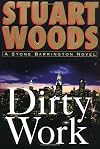
Handling the less than savory cases for the law firm of Woodman and Weld, Stone Barrington is assigned to look into the philandering of a rich woman’s husband, but the photographer Stone hires literally drops in on the subject of the surveillance, and it looks like the fall killed him. But a simple peep and click turns into a search for an international killer and an intimate assignation with an alluring British spy.
This is Stuart Woods doing what Stuart Woods does – writing entertaining stories, but about two thirds of the way through I was stopped cold and found it difficult to continue, though I did.
As the case unfolds, Stone discovers that the death of the object of the surveillance wasn’t an accident and involved spies and assassins. Stone gleans from Carpenter and her colleagues that it was an injustice that started young Marie-Therese on her murderous rampage. Now it’s clear that British intelligence wronged her by killing her parents (the justification being somewhat unclear) and Stone sees it as his moral obligation to rescue her, which is laudable but for one truly horrendous aspect that gets shoved under the rug. Not only does this woman hire out as an assassin for Middle Eastern terrorists, but she routinely murders gay women so she can assume their identity, often for only a few hours.
The whole tale turns on Stone doing the morally upright thing for a morally impoverished and cold-blooded demon. While it mattered what transformed this young lady, show more Stone’s riding to her rescue like the Eagle Scout he was is laudable for someone who routinely steps outside the law, but ignoring the innocent lives lost at the hands of this troubled young woman was far too jarring.
Excellent writing, believable characters, great attention to detail and a solid story arc made this an entertaining read, but the premise drew down on that so much that I would suggest Wood’s fans let this one slip on by, untouched. show less
This is Stuart Woods doing what Stuart Woods does – writing entertaining stories, but about two thirds of the way through I was stopped cold and found it difficult to continue, though I did.
As the case unfolds, Stone discovers that the death of the object of the surveillance wasn’t an accident and involved spies and assassins. Stone gleans from Carpenter and her colleagues that it was an injustice that started young Marie-Therese on her murderous rampage. Now it’s clear that British intelligence wronged her by killing her parents (the justification being somewhat unclear) and Stone sees it as his moral obligation to rescue her, which is laudable but for one truly horrendous aspect that gets shoved under the rug. Not only does this woman hire out as an assassin for Middle Eastern terrorists, but she routinely murders gay women so she can assume their identity, often for only a few hours.
The whole tale turns on Stone doing the morally upright thing for a morally impoverished and cold-blooded demon. While it mattered what transformed this young lady, show more Stone’s riding to her rescue like the Eagle Scout he was is laudable for someone who routinely steps outside the law, but ignoring the innocent lives lost at the hands of this troubled young woman was far too jarring.
Excellent writing, believable characters, great attention to detail and a solid story arc made this an entertaining read, but the premise drew down on that so much that I would suggest Wood’s fans let this one slip on by, untouched. show less

During the closing days of the Civil War a Confederate ironclad runs the Union gauntlet, the enemy guns silenced as a highly recognizable figure steps out on the ironclad’s deck. In the mid 90’s a Saharan tourist group disappears. 5 days later, Dirk Pitt comes across a beautiful woman alone on a North African beach and saves her from would be assassins.
Couple that with a red tide spreading across the globe that will, in a matter of months, extinguish all life on Earth by depriving the atmosphere of oxygen.
So begins an adventure that will send Dirk Pit and Al Giordino on a life-threatening romp across the desolation of the Sahara that rivals the best that Clive Cussler has to offer. It is an intriguing tale employing a cast of characters Cussler readers have come to know well.
The only aspect of this novel I wasn’t pleased with is the same issue I’ve had with Cussler’s other novels: The plot prop of waiting until the last possible second before they cut the right wire… In this case, Dirk and Al are taking their last step across a barren wasteland, having consumed no water or food for at least two days while enduring torturous temperature swings from the ice cold of night to the frying pan heat of the day. Here they are, both on death’s door, not an ounce of energy remaining when they stumble across a downed aircraft. Somehow they are able to build a land yacht from the wreckage and sail another day across the desert sands to where a truck driver miraculously show more appears, just when they have, once again, reached death’s door.
All I can say is, please Clive, give us readers a break. You write great tales and they don’t need a constant feed of TVesque ‘a moment beyond the last possible second’ scenarios to make the read great. I know this is fiction and meant to simply entertain, but I’d much rather see these tales a tad more realistic. Sure, bring things to a boil, edge of your seat, but not every transcendental moment requires this kind of prop.
Overall this was an entertaining read, perhaps one of the best, and I do appreciate Clive sharing his creative talents with us. However formulaic they are. show less
Couple that with a red tide spreading across the globe that will, in a matter of months, extinguish all life on Earth by depriving the atmosphere of oxygen.
So begins an adventure that will send Dirk Pit and Al Giordino on a life-threatening romp across the desolation of the Sahara that rivals the best that Clive Cussler has to offer. It is an intriguing tale employing a cast of characters Cussler readers have come to know well.
The only aspect of this novel I wasn’t pleased with is the same issue I’ve had with Cussler’s other novels: The plot prop of waiting until the last possible second before they cut the right wire… In this case, Dirk and Al are taking their last step across a barren wasteland, having consumed no water or food for at least two days while enduring torturous temperature swings from the ice cold of night to the frying pan heat of the day. Here they are, both on death’s door, not an ounce of energy remaining when they stumble across a downed aircraft. Somehow they are able to build a land yacht from the wreckage and sail another day across the desert sands to where a truck driver miraculously show more appears, just when they have, once again, reached death’s door.
All I can say is, please Clive, give us readers a break. You write great tales and they don’t need a constant feed of TVesque ‘a moment beyond the last possible second’ scenarios to make the read great. I know this is fiction and meant to simply entertain, but I’d much rather see these tales a tad more realistic. Sure, bring things to a boil, edge of your seat, but not every transcendental moment requires this kind of prop.
Overall this was an entertaining read, perhaps one of the best, and I do appreciate Clive sharing his creative talents with us. However formulaic they are. show less

Near the beginning of WWII, the last remnants of the American forces in the Philippines are improperly ordered to surrender to the Japanese invaders, but many refuse and either escape or go into hiding. On the island of Mindanao one of these men, a self-proclaimed brigadier general, Colonel Fertig, cobbles together a band of American and Pilipino irregulars to commence an organized resistance against the Japanese occupying force.
This a story of how an intrepid group, authorized by President Roosevelt, attempts to make contact with and determine the efficacy of this General Fertig, and whether his force should be recognized as the United States Forces in the Philippines and thus should be supported.
There is no question that Griffin is a masterful storyteller who chooses historical events that can be fictionalized into a great read, who researches his topic in great depth.
While this is one of his Marine Corp series, I have to admit that I have not read them in sequence, as is the case with his other series. Most of his novels I’ve picked up at thrift stores and used book sales, and I’ve made no concerted effort to complete or read these novels in sequence.
When I purchased ‘Behind Enemy Lines’ I also picked up ‘In Danger’s Path’ published 3 years later in 1998. I began to read that novel first, but after 40 pages I set it aside and will not deign to read it. It was so larded with supporting detail and character background that I felt like I was wading through a show more history textbook with little in the form of a story to draw me into it.
Thankfully ‘Behind Enemy Lines’ turned out to be a novel in the literary style of the Griffin I’d become accustomed to. It opened right into the story using characters I’d grown to know from previous novels and for whom I’d acquired a taste.
Great story based on historical settings using real life people presented with reasonably accuracy, coupled with a host of believable, yet fictional characters.
However, there were two patterns that were quite annoying and marred the read for me. First, all of the characters were repeatedly referred to by their complete name, service, rank, and position. Second, in just about every scene where a new or repeat character was introduced, the type of weapons he was carrying were described in exacting detail, such as a 1911A1 .45 ACP Caliber Colt pistol, when a .45 would be more than sufficient. I have no doubt a few thousand words could’ve been shaved off by deleting these woefully unnecessary redundancies. Naturally I began to skim past these repetitions, as well as the character’s supporting background.
That said, and being as how I was recuperating from the reinjury of my back, I finished the book in 3 days. Perhaps a record for me. For those who enjoy a great military read, this is worth the annoyances. show less
This a story of how an intrepid group, authorized by President Roosevelt, attempts to make contact with and determine the efficacy of this General Fertig, and whether his force should be recognized as the United States Forces in the Philippines and thus should be supported.
There is no question that Griffin is a masterful storyteller who chooses historical events that can be fictionalized into a great read, who researches his topic in great depth.
While this is one of his Marine Corp series, I have to admit that I have not read them in sequence, as is the case with his other series. Most of his novels I’ve picked up at thrift stores and used book sales, and I’ve made no concerted effort to complete or read these novels in sequence.
When I purchased ‘Behind Enemy Lines’ I also picked up ‘In Danger’s Path’ published 3 years later in 1998. I began to read that novel first, but after 40 pages I set it aside and will not deign to read it. It was so larded with supporting detail and character background that I felt like I was wading through a show more history textbook with little in the form of a story to draw me into it.
Thankfully ‘Behind Enemy Lines’ turned out to be a novel in the literary style of the Griffin I’d become accustomed to. It opened right into the story using characters I’d grown to know from previous novels and for whom I’d acquired a taste.
Great story based on historical settings using real life people presented with reasonably accuracy, coupled with a host of believable, yet fictional characters.
However, there were two patterns that were quite annoying and marred the read for me. First, all of the characters were repeatedly referred to by their complete name, service, rank, and position. Second, in just about every scene where a new or repeat character was introduced, the type of weapons he was carrying were described in exacting detail, such as a 1911A1 .45 ACP Caliber Colt pistol, when a .45 would be more than sufficient. I have no doubt a few thousand words could’ve been shaved off by deleting these woefully unnecessary redundancies. Naturally I began to skim past these repetitions, as well as the character’s supporting background.
That said, and being as how I was recuperating from the reinjury of my back, I finished the book in 3 days. Perhaps a record for me. For those who enjoy a great military read, this is worth the annoyances. show less
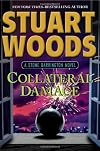
In London, Jasmine Shazazz, an international terrorist, sets off a bomb that kills the British foreign secretary in revenge for the killing of her two brothers in a plot (foiled by Stone Barrington) to assassinate the Presidents of the U.S. and Mexico. Her murderous spree is just beginning.
Holly Barker, assistant director of the CIA and Stone’s lover, is charged with finding and eliminating Jasmine before she can cause any more mayhem. Knowing of Stone’s previous involvement, the director of the CIA asks him to join Holly as a special consultant in the hunt for Shazazz.
In the true fashion of the Stone Barrington novels, Stuart Woods reintroduces the reader to Stone’s world of power and wealth, where the stakes are always high and evil is there to be discovered and conquered.
This is arguably one of the best of the Barrington series: a mass market novel true to the ideals of the detective mystery genre. This is a comfortable read with short chapters and a bare bones method of storytelling that says much with as little as possible. While the characters underlying sexual tension leads inevitably to bedroom scenes, it’s done with taste, again providing just sufficient detail to draw the scene without devolving into explicit details.
Stuart is truly a master of the written word.
Holly Barker, assistant director of the CIA and Stone’s lover, is charged with finding and eliminating Jasmine before she can cause any more mayhem. Knowing of Stone’s previous involvement, the director of the CIA asks him to join Holly as a special consultant in the hunt for Shazazz.
In the true fashion of the Stone Barrington novels, Stuart Woods reintroduces the reader to Stone’s world of power and wealth, where the stakes are always high and evil is there to be discovered and conquered.
This is arguably one of the best of the Barrington series: a mass market novel true to the ideals of the detective mystery genre. This is a comfortable read with short chapters and a bare bones method of storytelling that says much with as little as possible. While the characters underlying sexual tension leads inevitably to bedroom scenes, it’s done with taste, again providing just sufficient detail to draw the scene without devolving into explicit details.
Stuart is truly a master of the written word.
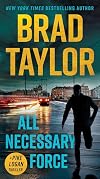
In April 1970 deep inside Cambodia, Staff Sergeant Chris Hale snaps a photo of an American meeting with a Chinese contact. Discovered, his team escapes, but Hale is left behind and what happens to him, unknown. In 2012 Pike Logan and his partner, Jennifer Cahill, operatives for the Taskforce, a secret intelligence unit running in the basement of the White House, threads together enough facts to conclude there is terrorist organization bent on crippling the U.S. economy with weapons developed by and for American forces.
What follows is an edge-of-your-seat tale of deception and terror as the pair set out to discover who is behind the plot and how to prevent it from happening. Only one huge problem. They are not allowed to carry out their activities on American soil.
Taylor did a first rate job, creating believable and all too human characters (each struggling with their own personal demons) tracking and engaging men of monstrous evil. Without slowing the reading, Taylor supplied enough background and scene details to produce a credible and intriguing scenario.
I quite enjoyed Taylor’s writing style and pleased with how comfortably the story unfolded. Not one wasted word.
I would recommend this to anyone who enjoys a good whodunit, spy novel or adventure
What follows is an edge-of-your-seat tale of deception and terror as the pair set out to discover who is behind the plot and how to prevent it from happening. Only one huge problem. They are not allowed to carry out their activities on American soil.
Taylor did a first rate job, creating believable and all too human characters (each struggling with their own personal demons) tracking and engaging men of monstrous evil. Without slowing the reading, Taylor supplied enough background and scene details to produce a credible and intriguing scenario.
I quite enjoyed Taylor’s writing style and pleased with how comfortably the story unfolded. Not one wasted word.
I would recommend this to anyone who enjoys a good whodunit, spy novel or adventure
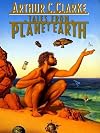
Sometimes it can be pretty surprising what you pick up at a used book sale. Such is the case here. The book was printed in 1990 by Bantam Books.
This collection of Arthur C Clarke short stories come with a forward by Isaac Asimov (a dear and close friend of Clarke) and each story comes with Clarke’s personal comments.
Overall I was quite pleased, but as is the case with all such collections I very much enjoyed some stories and not so much others.
The Road to the Sea was quite different than anything I’ve read before, Hate was truly disturbing and The Lion of Comarre looked to a future in which Mankind had reached its comfort level and was by far the best.
I could’ve done without The Man Who Ploughed the Sea, as it was hardly a science fiction tale, and the Wall of Darkness seemed pointless. Yet each story made me consider the wider implications.
Clarke’s writing style is easy to read and not only entertaining, but insightful. For Clarke (and science fiction fans) this is a must read.
This collection of Arthur C Clarke short stories come with a forward by Isaac Asimov (a dear and close friend of Clarke) and each story comes with Clarke’s personal comments.
Overall I was quite pleased, but as is the case with all such collections I very much enjoyed some stories and not so much others.
The Road to the Sea was quite different than anything I’ve read before, Hate was truly disturbing and The Lion of Comarre looked to a future in which Mankind had reached its comfort level and was by far the best.
I could’ve done without The Man Who Ploughed the Sea, as it was hardly a science fiction tale, and the Wall of Darkness seemed pointless. Yet each story made me consider the wider implications.
Clarke’s writing style is easy to read and not only entertaining, but insightful. For Clarke (and science fiction fans) this is a must read.
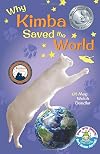
This isn't my usual reading fare, but I met Meg at the Ozarks Writer's League and this seemed to be a tale my wife would enjoy. Kathi enjoyed it and felt I may too.
The story follows Kimba through her first year, introducing her housemates and the limits of her freedom as a house pet, before the cat in the mirror makes her question her carefree life as she yearns for the freedom of the outside.
I was impressed with Meg's characterizations of both the other cats and dog in the house, and their relationship with her human masters. Meg drew this tale from observing the actions of her pets and while we can't know what's going on in their minds, Meg did a great job filling in the blanks. The morsels of historical facts were spot on.
The only drawback, I believe, is there was no indication of exactly what an alien cat invasion would entail and how that would impact the human species, nor how cats were able to alter the behavior of humans without being to communicate by any physical means. I think this should've been a tad longer with perhaps some answers as to the how and why.
I felt the writing was clean and flowed well. Any cat lover would enjoy this light fare.
The story follows Kimba through her first year, introducing her housemates and the limits of her freedom as a house pet, before the cat in the mirror makes her question her carefree life as she yearns for the freedom of the outside.
I was impressed with Meg's characterizations of both the other cats and dog in the house, and their relationship with her human masters. Meg drew this tale from observing the actions of her pets and while we can't know what's going on in their minds, Meg did a great job filling in the blanks. The morsels of historical facts were spot on.
The only drawback, I believe, is there was no indication of exactly what an alien cat invasion would entail and how that would impact the human species, nor how cats were able to alter the behavior of humans without being to communicate by any physical means. I think this should've been a tad longer with perhaps some answers as to the how and why.
I felt the writing was clean and flowed well. Any cat lover would enjoy this light fare.

While making love in the predawn darkness, Hollywood homicide detective Mike Gallagher hears several people running past and shortly, frightened cries from the house across the street. His gut reaction is to investigate, but his lover assures him she hears strange sounds coming from that house all the time. His second reaction is that, with only two years left before he can retire, the last thing he needs is for his bureaucratic bosses to discover he’s been sleeping with a married woman. Mike chooses discretion over duty, but the sudden and curious, arrival of a police helicopter forces him to sneak away. In short order he learns five people had died in that home on Rainbow Drive.
At first glance the murders appear to be retribution for a theft by a group of drug dealers/abusers, but the reactions of his higher ups and that the Hollywood homicide division has been pointedly excluded from the investigation, leads Mike to think there may be powerful players involved, perhaps even the Feds.
What follows is perhaps the best detective mystery I’ve ever read.
The writing is tight and the characterizations detailed. While some of the characters fit stereotype, Mike and other key players display a panorama of raw emotion, a surprising depth of critical thinking and all too human reactions as the depth and breadth of the case unfold.
It is a convoluted story that takes off in unexpected directions, where everyone has secrets and Mike has no one he can trust, let alone those show more closest to him.
Thorp provides just enough supporting details to give the reader a strong assurance he knows what he’s writing about without getting buried in the inconsequential. The editing is professional and clean, and the story flows smoothly from one page to the next, making it not only one of the best who-done-its, but a truly enjoyable read.
I’m an avid reader and as soon as a finish a book I turn to the next, but that didn’t happen here. It has taken me a few days to digest this novel, allowing me to savor this story as no other. Once the true horrific nature of this tale unfolded I found it impossible to just dive into another. show less
At first glance the murders appear to be retribution for a theft by a group of drug dealers/abusers, but the reactions of his higher ups and that the Hollywood homicide division has been pointedly excluded from the investigation, leads Mike to think there may be powerful players involved, perhaps even the Feds.
What follows is perhaps the best detective mystery I’ve ever read.
The writing is tight and the characterizations detailed. While some of the characters fit stereotype, Mike and other key players display a panorama of raw emotion, a surprising depth of critical thinking and all too human reactions as the depth and breadth of the case unfold.
It is a convoluted story that takes off in unexpected directions, where everyone has secrets and Mike has no one he can trust, let alone those show more closest to him.
Thorp provides just enough supporting details to give the reader a strong assurance he knows what he’s writing about without getting buried in the inconsequential. The editing is professional and clean, and the story flows smoothly from one page to the next, making it not only one of the best who-done-its, but a truly enjoyable read.
I’m an avid reader and as soon as a finish a book I turn to the next, but that didn’t happen here. It has taken me a few days to digest this novel, allowing me to savor this story as no other. Once the true horrific nature of this tale unfolded I found it impossible to just dive into another. show less
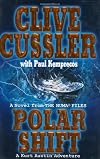
Polar Shift was written in 2005 and, for me at least, works much better than Cussler’s newer works. Instead of the rock ‘em, sock ‘em, constant edge of your seat, made for TV tales he and his co-authors are now churning out, this turned out to be a well-paced, well written, comfortable read.
In essence, a madman attempts to cause major global mayhem to consolidate his power of world communications by instigating a polar shift. He does this by attempting to manipulate the earth’s molten core using theorems created by a scientist who was forced into this by the Nazis in their search for a super weapon.
The story revolves around a NUMA troubleshooter, Kurt Austin, who is a cookie cutter version of both Dirk Pitts and my favorite, Isaac Bell, protagonists in other Cussler novels. Add to that a pretty girl being hunted for the knowledge she doesn’t know she has by the evil perp’s henchmen. The perp, of course, is supported by the evil doer’s scientific brainiac who knows what’s going on, but isn’t comfortable with the loss of life as they race against Kurt and NUMA as they derail his evil plans.
I honestly can’t say I found a single typo, but, as is common, the novel is larded with add-on words. Thankfully the text isn’t fattened up with endless technical descriptions, as is common in Cussler’s newer novels.
This was a pleasant, entertaining read and, I think, one of his best.
In essence, a madman attempts to cause major global mayhem to consolidate his power of world communications by instigating a polar shift. He does this by attempting to manipulate the earth’s molten core using theorems created by a scientist who was forced into this by the Nazis in their search for a super weapon.
The story revolves around a NUMA troubleshooter, Kurt Austin, who is a cookie cutter version of both Dirk Pitts and my favorite, Isaac Bell, protagonists in other Cussler novels. Add to that a pretty girl being hunted for the knowledge she doesn’t know she has by the evil perp’s henchmen. The perp, of course, is supported by the evil doer’s scientific brainiac who knows what’s going on, but isn’t comfortable with the loss of life as they race against Kurt and NUMA as they derail his evil plans.
I honestly can’t say I found a single typo, but, as is common, the novel is larded with add-on words. Thankfully the text isn’t fattened up with endless technical descriptions, as is common in Cussler’s newer novels.
This was a pleasant, entertaining read and, I think, one of his best.

Thirty years after publishing ‘The Humanoids’, Williamson finally produced this sequel. In the original novel humans create an advanced race of machines to save mankind from itself, but the robots go too far. They create worlds where humans can do nothing for themselves, where every possible threat to life and limb is extinguished, limiting humans to nothing more than animals in a gilded cage, free to pursue any dream they choose, as long as the risk is nonexistent.
In ‘The Humanoid Touch’, the remnants of free humans have fled to a small planet in a binary system, but as centuries pass and mankind fights war after war with themselves, the threat of the humanoids takes on the aura of children’s tales. Only a few humans, called the Crewmen, stand vigilant, always seeking a means by which they can detect the approach of the humanoid robots and develop a weapon to stop the before the enslave the remaining humans.
In the first chapter, Keth Kyrone, is a child who matures to a young man as the tale progresses. His father, step mother and a friend of his dead mother are all who remain in the Crew when the humanoids arrive.
The story takes a sharp turn into fantasy as Keth and Bosun Brong take the fight to a neighboring planet once the humanoids enslave Kai’s inhabitants, where the local human-like species, called the Leleyo, provide Keth with the answer to humanity’s survival. The ending is as surprising as the tale that unfolds, to the reader’s delight.
This is a show more well-crafted novel, free of those pesky typos and oops that plague mass market reads, with characters that are all too real, replete with all the foibles and limitations one can imagine. This is a thrilling adventure tale that we can only hope we’ll never allow to come to pass.
To be honest, this novel was nothing like what I expected, but turned out to be well worth my time. That said, I wasn’t all that pleased with the ending, but in Williamson’s defense he provided an acceptable evolutionary escape from the not so benevolent humanoid servants. show less
In ‘The Humanoid Touch’, the remnants of free humans have fled to a small planet in a binary system, but as centuries pass and mankind fights war after war with themselves, the threat of the humanoids takes on the aura of children’s tales. Only a few humans, called the Crewmen, stand vigilant, always seeking a means by which they can detect the approach of the humanoid robots and develop a weapon to stop the before the enslave the remaining humans.
In the first chapter, Keth Kyrone, is a child who matures to a young man as the tale progresses. His father, step mother and a friend of his dead mother are all who remain in the Crew when the humanoids arrive.
The story takes a sharp turn into fantasy as Keth and Bosun Brong take the fight to a neighboring planet once the humanoids enslave Kai’s inhabitants, where the local human-like species, called the Leleyo, provide Keth with the answer to humanity’s survival. The ending is as surprising as the tale that unfolds, to the reader’s delight.
This is a show more well-crafted novel, free of those pesky typos and oops that plague mass market reads, with characters that are all too real, replete with all the foibles and limitations one can imagine. This is a thrilling adventure tale that we can only hope we’ll never allow to come to pass.
To be honest, this novel was nothing like what I expected, but turned out to be well worth my time. That said, I wasn’t all that pleased with the ending, but in Williamson’s defense he provided an acceptable evolutionary escape from the not so benevolent humanoid servants. show less
This is the fifth novel in the Isaac Bell turn-of-the-century series and better edited than some of the later Dirk Pitt novels. That was refreshing.
Isaac is on the Mauretania bound for America when the bad guy, General Christian Semmler, disguised as a coal stoker, attempts to kidnap a pair of scientists, creators of an amazing invention that would revolutionize the fledgling movie industry. Isaac thwarts his plans, befriends the scientists and the tale shifts into high gear.
Spanning both coasts, Isaac Bell and the Van Doren Detective Agency attempt to protect the surviving scientist, Clyde Lind, and prevent Semmler from stealing their device and using it for German propaganda.
Fights and shootings, train wrecks, disguises, master plans, henchmen, beautiful women and powerful men – it’s all there, creating a thrill ride for the avid Cussler reader.
Of all the Cussler novels, I’ve enjoyed the Isaac Bell series the most. Cussler’s attention to the catch words of the era and period scene details, dropped like gems along the way, sets an extraordinary panorama and, despite my best efforts, I couldn’t help but learn more about that period in America history. I can only imagine the research that required.
The conclusion of this novel jumps several years and it would appear the now married Isaac Bell went the way of the wealthy businessman and passed the baton to younger Van Dorens, but I wouldn’t count Isaac out just yet. Hopefully Cussler will add yet another tale to show more this series. show less
Isaac is on the Mauretania bound for America when the bad guy, General Christian Semmler, disguised as a coal stoker, attempts to kidnap a pair of scientists, creators of an amazing invention that would revolutionize the fledgling movie industry. Isaac thwarts his plans, befriends the scientists and the tale shifts into high gear.
Spanning both coasts, Isaac Bell and the Van Doren Detective Agency attempt to protect the surviving scientist, Clyde Lind, and prevent Semmler from stealing their device and using it for German propaganda.
Fights and shootings, train wrecks, disguises, master plans, henchmen, beautiful women and powerful men – it’s all there, creating a thrill ride for the avid Cussler reader.
Of all the Cussler novels, I’ve enjoyed the Isaac Bell series the most. Cussler’s attention to the catch words of the era and period scene details, dropped like gems along the way, sets an extraordinary panorama and, despite my best efforts, I couldn’t help but learn more about that period in America history. I can only imagine the research that required.
The conclusion of this novel jumps several years and it would appear the now married Isaac Bell went the way of the wealthy businessman and passed the baton to younger Van Dorens, but I wouldn’t count Isaac out just yet. Hopefully Cussler will add yet another tale to show more this series. show less

Judgment at Proteus is the last in the Quadrail series, tales that span the width and breadth of galaxy.
Frank Compton, a human troubleshooter, is hired by the Chahwyn to escort a young and pregnant earth girl to another world where the inhabitants are masters at genetic manipulation. But this small task is itself fraught with danger and Frank has been secretly assigned to uncover the mystery of the Shonkla-raa, an insidious parasitic species bent on galactic domination. The Shonkla-raa had been destroyed 1600 years prior, but there were increasing signs they hadn’t been completely eliminated.
It took me several pages to get into the flow of this novel because of the plethora of alien names and also because I hadn’t read the 4 novels that preceded it.
It is a convoluted story heavily laden with plot twists, hidden agendas and edge-of-the-seat moments that never end. You have no idea from one moment to the next just who is on Frank’s side and who isn’t, as such players as the Shonkla-raa and Modhri are able to take control of anyone, even Frank’s friends and allies.
This isn’t a light read pumped out in the vein of mass-market writers like James Patterson. Once you get into it, it is a deep, thrilling ride, a real page turner. I had difficulty pulling myself away for such mundane tasks as eating and sleeping.
I felt like I needed a mind vacation once I read the last page, which is why I intersperse such reads with light action adventures, like Cussler’s show more novels.
This is a science fiction novel, but if you like unraveling mysteries and deducing hidden agendas, peppered with mind-boggling technology, this is an awesome read. show less
Frank Compton, a human troubleshooter, is hired by the Chahwyn to escort a young and pregnant earth girl to another world where the inhabitants are masters at genetic manipulation. But this small task is itself fraught with danger and Frank has been secretly assigned to uncover the mystery of the Shonkla-raa, an insidious parasitic species bent on galactic domination. The Shonkla-raa had been destroyed 1600 years prior, but there were increasing signs they hadn’t been completely eliminated.
It took me several pages to get into the flow of this novel because of the plethora of alien names and also because I hadn’t read the 4 novels that preceded it.
It is a convoluted story heavily laden with plot twists, hidden agendas and edge-of-the-seat moments that never end. You have no idea from one moment to the next just who is on Frank’s side and who isn’t, as such players as the Shonkla-raa and Modhri are able to take control of anyone, even Frank’s friends and allies.
This isn’t a light read pumped out in the vein of mass-market writers like James Patterson. Once you get into it, it is a deep, thrilling ride, a real page turner. I had difficulty pulling myself away for such mundane tasks as eating and sleeping.
I felt like I needed a mind vacation once I read the last page, which is why I intersperse such reads with light action adventures, like Cussler’s show more novels.
This is a science fiction novel, but if you like unraveling mysteries and deducing hidden agendas, peppered with mind-boggling technology, this is an awesome read. show less
I was beginning to get tired of reading Jack Higgins novels as the last few were knock offs of previous novels, but Night of the Fox proved the exception. This is indeed one of Higgins best novels and I rank it right up there with Cold Harbor.
In a nutshell: in WWII, SOE agents set out to rescue an American who knows the date and time of D-Day before the Nazis discover him.
Every character was well crafted, the story line credible and the writing enthralling. In this world of tough guys comes a young beauty who steals the protagonist’s heart, supported by a cast you’d love to call your friends and a host of Nazi evil doers.
In fact, I’d rate this as on par with Alistair Maclean’s ‘Where Eagles Dare’ which turned into an excellent movie. Why some script writer hasn’t turned this into a movie yet is beyond me. Hollywood is missing out on this one.
What else needs to be said? If you enjoy WWII stories of espionage and believable characters caught up in an elaborate charade, this is it.
In a nutshell: in WWII, SOE agents set out to rescue an American who knows the date and time of D-Day before the Nazis discover him.
Every character was well crafted, the story line credible and the writing enthralling. In this world of tough guys comes a young beauty who steals the protagonist’s heart, supported by a cast you’d love to call your friends and a host of Nazi evil doers.
In fact, I’d rate this as on par with Alistair Maclean’s ‘Where Eagles Dare’ which turned into an excellent movie. Why some script writer hasn’t turned this into a movie yet is beyond me. Hollywood is missing out on this one.
What else needs to be said? If you enjoy WWII stories of espionage and believable characters caught up in an elaborate charade, this is it.

While this novel is written quite like Asimov it was written by two authors under Asimov’s guidance, with a forward and a mid-novel commentary by Asimov.
This is quite a story. It begins with a young man, Derec, waking in a survival pod on a frozen asteroid, not knowing who he is or where he is. His personal history is a blank slate, yet he retains his technical knowledge. It ends with Derec saving Robot City from an out-of-control defense system. What happens in between, of course, is the real story.
Robot City is one of the best novels I’ve ever read. Not that I couldn’t set it aside when other demands required my attention or fatigue blurred my vision, but I didn’t want to. The situations were fraught with danger, Derec and Katherine (the protagonists) all too real and the story line compelling and all to believable.
Along the way Michael and Michael explain the laws of robotics and create human/robot interactions that display the complexity of such relationships and the misunderstandings and miscommunications that entails. The truth is robots are logical and humans are a collection of competing emotions and misguided logic.
I was impressed with the technology displayed throughout and have no doubt whatsoever that the robot/human collaboration will someday make it all real.
Despite the high caliber of the writing, there were a number of issues that I was less than comfortable with. Such as the twenty plus typos any proof reader should’ve easily spotted and show more corrected and the consistent, misplaced and inexplicable underlying anger that was so much a part of both protagonists. Another was the significant number of loose threads that never got tidied up. Michael 2 wrapped it up by writing that Derec still didn’t know who he was and where he came from by the end, and there were certain things that would be beyond the protagonists’ pov. But then there was the issue of the body and the unknown behind-the-scenes hand, both of which were glazed over, perhaps as not relevant to the story. Still, this lack of closure bothered me.
Would I recommend this to sci-fi and Asimov fans? Absolutely. show less
This is quite a story. It begins with a young man, Derec, waking in a survival pod on a frozen asteroid, not knowing who he is or where he is. His personal history is a blank slate, yet he retains his technical knowledge. It ends with Derec saving Robot City from an out-of-control defense system. What happens in between, of course, is the real story.
Robot City is one of the best novels I’ve ever read. Not that I couldn’t set it aside when other demands required my attention or fatigue blurred my vision, but I didn’t want to. The situations were fraught with danger, Derec and Katherine (the protagonists) all too real and the story line compelling and all to believable.
Along the way Michael and Michael explain the laws of robotics and create human/robot interactions that display the complexity of such relationships and the misunderstandings and miscommunications that entails. The truth is robots are logical and humans are a collection of competing emotions and misguided logic.
I was impressed with the technology displayed throughout and have no doubt whatsoever that the robot/human collaboration will someday make it all real.
Despite the high caliber of the writing, there were a number of issues that I was less than comfortable with. Such as the twenty plus typos any proof reader should’ve easily spotted and show more corrected and the consistent, misplaced and inexplicable underlying anger that was so much a part of both protagonists. Another was the significant number of loose threads that never got tidied up. Michael 2 wrapped it up by writing that Derec still didn’t know who he was and where he came from by the end, and there were certain things that would be beyond the protagonists’ pov. But then there was the issue of the body and the unknown behind-the-scenes hand, both of which were glazed over, perhaps as not relevant to the story. Still, this lack of closure bothered me.
Would I recommend this to sci-fi and Asimov fans? Absolutely. show less
tuesdays with Morrie, an old man, a young man, and life’s greatest lesson
Let me be honest. I wouldn’t have read this book if my wife hadn’t suggested it. The cover alone was a put off, but that’s just me. It wasn’t my cup of tea, you see.
The book chronicles parts of Mitch Albom’s weekly visits with Morrie, his dying college professor who he hadn’t seen in 16 years. He shares Morrie’s insights on several subjects.
Albom’s writing style is comfortable and neighborly. With some exceptions, it flowed well, marching on to the inevitable death of Morrie.
Let me note that both Morrie and Albom are well known public figures in their own fields.
As to the value of the Morrie’s insights: While there were a couple small morsels in the first half, Albom didn’t get into anything of substance until later. I was surprised and pleased when Morrie’s comments became noteworthy. It was as if the first half was filler.
I think, for its content, many will enjoy this, but I was put off and skimmed through some of the details of Morrie’s daily procedures and the descriptions of his symptoms. While it may be intriguing for many readers, for me it detracted from what I thought Albom was trying to impart.
I think Albom could have made this a far better read. With so many hours of conversation I’d think Albom would’ve had a great deal more good and better stuff to draw from.
Overall I wasn’t impressed with any aspect of this book. I had hoped for more and was disappointed.
Let me be honest. I wouldn’t have read this book if my wife hadn’t suggested it. The cover alone was a put off, but that’s just me. It wasn’t my cup of tea, you see.
The book chronicles parts of Mitch Albom’s weekly visits with Morrie, his dying college professor who he hadn’t seen in 16 years. He shares Morrie’s insights on several subjects.
Albom’s writing style is comfortable and neighborly. With some exceptions, it flowed well, marching on to the inevitable death of Morrie.
Let me note that both Morrie and Albom are well known public figures in their own fields.
As to the value of the Morrie’s insights: While there were a couple small morsels in the first half, Albom didn’t get into anything of substance until later. I was surprised and pleased when Morrie’s comments became noteworthy. It was as if the first half was filler.
I think, for its content, many will enjoy this, but I was put off and skimmed through some of the details of Morrie’s daily procedures and the descriptions of his symptoms. While it may be intriguing for many readers, for me it detracted from what I thought Albom was trying to impart.
I think Albom could have made this a far better read. With so many hours of conversation I’d think Albom would’ve had a great deal more good and better stuff to draw from.
Overall I wasn’t impressed with any aspect of this book. I had hoped for more and was disappointed.
This is another of the NUMA series with Kurt Austin as the primary character. Like all the NUMA novels this one starts in the distant past, in this case 1943, with a freighter carrying a new and deadly weapon on the run from the Japanese Navy.
Arriving in 2012, three NUMA researchers disappear in the middle of the Indian Ocean, but their catamaran survives badly burned leaving behind a curious residue. Kurt is sent in to discover the mystery of the missing crew. Add a beautiful Russian researcher, a dedicated NUMA crew and a stereotypical uber-bad guy, complete with a private army and an insane goal to harness the weather, and you the starting gun has been fired.
In most ways this mass market novel is formulaic, but it does have two advantages over several of the Cussler novels I’ve read. That being much shorter with far less detailed descriptions of equipment and motivations, which made it a quicker and more entertaining novel. My preference is for novels that move along, telling a story rather than spending exhaustive pages inside the character’s heads.
While this is a work of fiction, many aspects seemed far more plausible than what’s populated so many of his other novels.
Entertaining, fast paced, beautiful people, awesome technology and just the right bad guy for the occasion. An enjoyable read.
Arriving in 2012, three NUMA researchers disappear in the middle of the Indian Ocean, but their catamaran survives badly burned leaving behind a curious residue. Kurt is sent in to discover the mystery of the missing crew. Add a beautiful Russian researcher, a dedicated NUMA crew and a stereotypical uber-bad guy, complete with a private army and an insane goal to harness the weather, and you the starting gun has been fired.
In most ways this mass market novel is formulaic, but it does have two advantages over several of the Cussler novels I’ve read. That being much shorter with far less detailed descriptions of equipment and motivations, which made it a quicker and more entertaining novel. My preference is for novels that move along, telling a story rather than spending exhaustive pages inside the character’s heads.
While this is a work of fiction, many aspects seemed far more plausible than what’s populated so many of his other novels.
Entertaining, fast paced, beautiful people, awesome technology and just the right bad guy for the occasion. An enjoyable read.
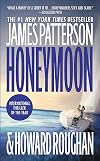
I just completed reading Patterson’s 2005 International Thriller of the Year ‘Honeymoon’. Straight up the first chapter was such a put-off that I set the novel aside for several weeks.
Undercover FBI agent O’Hara is on two cases, one of which is a suspected ‘black widow’ killer and the other, well it seems to be more filler than anything and hardly germane to the main story. John gets too close to the black widow and falls under her spell long enough to get himself in a dicey fix. What I found so disappointing was that he (smart, street savy cop) almost dies by her hand in a manner consistent with her other victims, but for the sake of a story Patterson makes him dumb enough not to pick up on the attempted poisoning.
I have to admit that despite the disgusting opening, stereotypical characters and overly used plot devices I did find the novel an entertaining read, so I can see why this mass market, formulaic piece was successfully.
If you enjoy Patterson, you’ll enjoy ‘Honeymoon’.
Undercover FBI agent O’Hara is on two cases, one of which is a suspected ‘black widow’ killer and the other, well it seems to be more filler than anything and hardly germane to the main story. John gets too close to the black widow and falls under her spell long enough to get himself in a dicey fix. What I found so disappointing was that he (smart, street savy cop) almost dies by her hand in a manner consistent with her other victims, but for the sake of a story Patterson makes him dumb enough not to pick up on the attempted poisoning.
I have to admit that despite the disgusting opening, stereotypical characters and overly used plot devices I did find the novel an entertaining read, so I can see why this mass market, formulaic piece was successfully.
If you enjoy Patterson, you’ll enjoy ‘Honeymoon’.
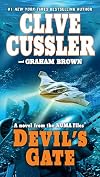
Anyone who read’s Cussler knows his action/adventure novels are for mass market, not as literary masterpieces. So, if you are reading for entertainment and not put off by less-than-stellar writing, you’ll enjoy his novels. He writes fun tales with loads of edge-of-your seat moments, even if many of them follow the Hollywood style of recovery-from-just-beyond-the-last-possible-second.
I enjoy Cussler because he writes unique and entertaining characters caught up in multiple story lines with cataclysmic climaxes. The main characters are mostly larger than life, capable of extraordinary achievements, connected to high places and beautiful. The perfect escape from a mundane life.
In Devil’s Gate, an enormously wealthy African dictator creates an awesome weapon to blackmail the industrialized world, but a happenstance with NUMA divers befuddles his plans as ever more clues lead to a startling conclusion so diabolical as to be beyond comprehension. But yet again the intrepid boys of NUMA ride to the rescue and save the world, as well as a beautiful Russian scientist/spy, from a catastrophe of monumental devastation.
This may all sound tongue-in-cheek, but it’s because I truly enjoy Cussler’s novels. I mix them with more literary works on my to-read list and thus have the opportunity to not only have fun, but to do my homework as a writer too.
Who would I recommend this to? People who love action, surprises, loads of technology and a little bit of somewhat modified show more history. Readers where the occasional misused word, grammar issues and add-on words are not speed bumps to an enjoyable read. show less
I enjoy Cussler because he writes unique and entertaining characters caught up in multiple story lines with cataclysmic climaxes. The main characters are mostly larger than life, capable of extraordinary achievements, connected to high places and beautiful. The perfect escape from a mundane life.
In Devil’s Gate, an enormously wealthy African dictator creates an awesome weapon to blackmail the industrialized world, but a happenstance with NUMA divers befuddles his plans as ever more clues lead to a startling conclusion so diabolical as to be beyond comprehension. But yet again the intrepid boys of NUMA ride to the rescue and save the world, as well as a beautiful Russian scientist/spy, from a catastrophe of monumental devastation.
This may all sound tongue-in-cheek, but it’s because I truly enjoy Cussler’s novels. I mix them with more literary works on my to-read list and thus have the opportunity to not only have fun, but to do my homework as a writer too.
Who would I recommend this to? People who love action, surprises, loads of technology and a little bit of somewhat modified show more history. Readers where the occasional misused word, grammar issues and add-on words are not speed bumps to an enjoyable read. show less
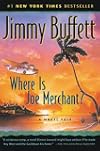
Frank Bama, a seaplane pilot working out of the Florida Keys, gets embroiled with an extreme journalist, Rudy Breno, in the hunt for a rock star who purportedly killed himself five years before. It takes him to the seamier parts of the Caribbean where he runs into his old flame, the rock star’s sister, Trevor Crane and everything comes apart.
Crazy bad guys keep trying to kill Frank while they’re busy killing other bad guys, while a panoply of whacky and unusual characters drift in and out of the tale. Some are just in it for revenge, but the king of the evil doers, Colonel Cairo, is after a crystal scepter to use it to restore his severed arm.
This is the second Jimmy Buffet novel I’ve read and easily matches the first novel’s fun and craziness. The characters are odd, but believable with realistic foibles, limitations and desires.
The story line flowed with all the comfort intrinsic to Buffet’s style, and rolls to a grand finale that is somewhat understated, but very satisfying.
Without a doubt I’d recommend this novel to anyone who just wants to have a fun read, likes airplanes, crazy people, unusual, out-of-the-way places and just looking for a satisfying adventure.
Crazy bad guys keep trying to kill Frank while they’re busy killing other bad guys, while a panoply of whacky and unusual characters drift in and out of the tale. Some are just in it for revenge, but the king of the evil doers, Colonel Cairo, is after a crystal scepter to use it to restore his severed arm.
This is the second Jimmy Buffet novel I’ve read and easily matches the first novel’s fun and craziness. The characters are odd, but believable with realistic foibles, limitations and desires.
The story line flowed with all the comfort intrinsic to Buffet’s style, and rolls to a grand finale that is somewhat understated, but very satisfying.
Without a doubt I’d recommend this novel to anyone who just wants to have a fun read, likes airplanes, crazy people, unusual, out-of-the-way places and just looking for a satisfying adventure.
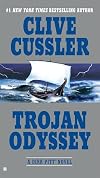
NUMA stumbles across an evil plot to change the world’s climate and then does something about it.
I’m a committed fan of Clive Cussler. I’ve read at least a dozen of his books and all have proven to be entertaining. But though I’ve thoroughly enjoyed all Cussler’s novels (naturally some better than others), this one was disappointing.
As a writer I’m now stuck in edit mode, whether I’m watching a movie or reading a book, which means I’m incapable of just enjoying them without noting the problems with them. In this case, while the story is fairly generic (with edge-of-your-seat action), as Cussler novels go, this one just didn’t pull me in the way the others have.
One of the issues I have is that so much of what is included, as to the character’s backgrounds, etc., I’ve already been introduced to, so I skimmed most of the descriptions. Setting that aside, there was so much supporting detail that it detracted from the read. While it’s wonderful that Cussler knows all about the weapons spies use, what dive gear the characters prefer and what the rich eat, I’d have enjoyed the read more if he’d left a lot of that description out, or at least slimmed it down. In addition to too much detail, some of it is actually repeated, in detail, in at least 3 places.
I think Cussler could’ve shorted this novel by several thousand words just by deleting the add-on words, of which there is plenty.
Sorry to give some of the plot away, but any savvy reader will pick show more up on this in a heartbeat: I knew from the moment the baddest of the bad guys was introduced that Specter was a woman in a fat suit.
There was one glaring omission that really put me off. While rescuing Specter’s grand floating hotel for the uber-rich, Dirk and Al and the crew of the NUMA research vessel accomplish it when the eye of the hurricane calmed the seas, but then the worst of it – the backside of the storm, just vanished. Literary license, of course.
If I were to grade Cussler’s novels, I’d give ‘The Chase’ an A+ and ‘Trojan Odyssey’ a D. But that’s just my take on it. I have recently purchased 5 additional Cussler novels, so you can see this one didn’t put me off his stories altogether. I’m just disappointed with this one. show less
I’m a committed fan of Clive Cussler. I’ve read at least a dozen of his books and all have proven to be entertaining. But though I’ve thoroughly enjoyed all Cussler’s novels (naturally some better than others), this one was disappointing.
As a writer I’m now stuck in edit mode, whether I’m watching a movie or reading a book, which means I’m incapable of just enjoying them without noting the problems with them. In this case, while the story is fairly generic (with edge-of-your-seat action), as Cussler novels go, this one just didn’t pull me in the way the others have.
One of the issues I have is that so much of what is included, as to the character’s backgrounds, etc., I’ve already been introduced to, so I skimmed most of the descriptions. Setting that aside, there was so much supporting detail that it detracted from the read. While it’s wonderful that Cussler knows all about the weapons spies use, what dive gear the characters prefer and what the rich eat, I’d have enjoyed the read more if he’d left a lot of that description out, or at least slimmed it down. In addition to too much detail, some of it is actually repeated, in detail, in at least 3 places.
I think Cussler could’ve shorted this novel by several thousand words just by deleting the add-on words, of which there is plenty.
Sorry to give some of the plot away, but any savvy reader will pick show more up on this in a heartbeat: I knew from the moment the baddest of the bad guys was introduced that Specter was a woman in a fat suit.
There was one glaring omission that really put me off. While rescuing Specter’s grand floating hotel for the uber-rich, Dirk and Al and the crew of the NUMA research vessel accomplish it when the eye of the hurricane calmed the seas, but then the worst of it – the backside of the storm, just vanished. Literary license, of course.
If I were to grade Cussler’s novels, I’d give ‘The Chase’ an A+ and ‘Trojan Odyssey’ a D. But that’s just my take on it. I have recently purchased 5 additional Cussler novels, so you can see this one didn’t put me off his stories altogether. I’m just disappointed with this one. show less
A self-retired Homeland Security operative, Scott Harvath, is walking by a cafe in Paris with his girlfriend, Tracy Hastings, when his training reveals a pending car bombing being set up. He saves the intended target who then disappears, setting this tale of intrigue in motion.
Uncovering the mystery becomes an obsession as powerful Islamic forces are determined to stop him and anyone else who could bring to light a final revelation by prophet Mohammad that could destroy the underpinnings of militant Islam.
I was drawn into the story with the first page and found it impossible to set this novel aside. Thor's writing is solid and his ability to compose a masterful piece is beyond question. His characters are realistic and well tuned to their roles.
No question that this novel is among the best I've ever read.
Uncovering the mystery becomes an obsession as powerful Islamic forces are determined to stop him and anyone else who could bring to light a final revelation by prophet Mohammad that could destroy the underpinnings of militant Islam.
I was drawn into the story with the first page and found it impossible to set this novel aside. Thor's writing is solid and his ability to compose a masterful piece is beyond question. His characters are realistic and well tuned to their roles.
No question that this novel is among the best I've ever read.