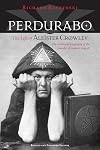
This book is a compendium of Aleister Crowley’s life, from birth to death, and an overview of his following up till today. As far as I know, it is very detailed and thorough. It does not go very deeply into any one part of his life; it covers the breadth of it. I would have liked more depth in some places, but it is great for what it is.
It gives short biographies of almost everyone that comes into Crowley’s life; while their religious histories may be relevant, a lot of it seems unnecessary.
I would have like to see descriptions of the books he read and wrote, especially those on ‘magick’. It never really explained his religious beliefs, either. Aside from magick, he seems to have believed in Christianity, Buddhism, Hinduism, Kabbalah, along with many other religions. This book never explains how exactly that works. It does explain a few aspects of it, but not enough, in my opinion.
It is well researched, and it thoroughly lists its sources, so one could read more into it if one was so inclined. It remains pretty unbiased throughout, and seems to rely solely on facts with minimal speculating. That is exactly what I look for in a nonfiction book.
It gives short biographies of almost everyone that comes into Crowley’s life; while their religious histories may be relevant, a lot of it seems unnecessary.
I would have like to see descriptions of the books he read and wrote, especially those on ‘magick’. It never really explained his religious beliefs, either. Aside from magick, he seems to have believed in Christianity, Buddhism, Hinduism, Kabbalah, along with many other religions. This book never explains how exactly that works. It does explain a few aspects of it, but not enough, in my opinion.
It is well researched, and it thoroughly lists its sources, so one could read more into it if one was so inclined. It remains pretty unbiased throughout, and seems to rely solely on facts with minimal speculating. That is exactly what I look for in a nonfiction book.
I won this through First Reads.
This is a strange book, though I think I like it for the most part. It has a lot of interesting ideas, which make it worth reading in and of themselves.
It starts at the end, jumps back twenty years, forward ten, then forward to right before the end. I didn't mind that much at all, I thought it was pretty well done, but as soon as you figure everything out, it ends.
It often wanders off on tangents, unrelated to the story. I think that adds a lot to the book, but it gets annoying sometimes.
This is a strange book, though I think I like it for the most part. It has a lot of interesting ideas, which make it worth reading in and of themselves.
It starts at the end, jumps back twenty years, forward ten, then forward to right before the end. I didn't mind that much at all, I thought it was pretty well done, but as soon as you figure everything out, it ends.
It often wanders off on tangents, unrelated to the story. I think that adds a lot to the book, but it gets annoying sometimes.
The Private Memoirs and Confessions of a Justified Sinner (New York Review Books Classics) by James Hogg
Hilarious and appalling at the same time.
The stories don't have endings, and only a few of the not-endings were done well. The rest just seem unfinished.
The title story is fantastic, but I don't care for many of the rest.
The title story is fantastic, but I don't care for many of the rest.
Not only does the cover read 'O liver sacks', but it's also rather interesting. Especially the last chapter.

This kind of inspired me to become more politically aware, but I am not convinced of the hundredth monkey theory. Collective consciousness makes perfect sense, but the claim that it has magical brainwashing powers sounds like nonsense.
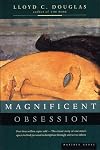
I really liked the first half and I was willing to follow along with his beliefs and overlook the bad aspects of this novel, but when he started trying to pass his beliefs off as science I gave up.
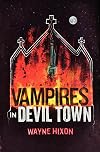
It's not well written (but, really, what did I expect?) and that really got in the way of my enjoying it. It is so full of little inconsistencies and fallacies, which greatly annoyed me.
I was never frightened in the least by anything in this book, despite the fact that it contains several elements that are almost guaranteed to creep me out. The writing is entirely emotionless, he was simply conveying the events. The characters hardly seemed frightened themselves; bantering while escaping, or just having escaped, these atrocities. The author may have said they were scared a few times, but it never felt like the were.
Something would happen, with no explanation, and I would have NO idea what that was about. Until, a few pages later, it spelled everything out. It never really alludes to these things, it never lets you figure out anything for yourself, it just tells you. I don't like that.
At the very end it does leave you with something to think on, and that is good. The last sentence I like, but not a lot more. There were a few points where I started to kind of like it, but they ended quickly.
I was never frightened in the least by anything in this book, despite the fact that it contains several elements that are almost guaranteed to creep me out. The writing is entirely emotionless, he was simply conveying the events. The characters hardly seemed frightened themselves; bantering while escaping, or just having escaped, these atrocities. The author may have said they were scared a few times, but it never felt like the were.
Something would happen, with no explanation, and I would have NO idea what that was about. Until, a few pages later, it spelled everything out. It never really alludes to these things, it never lets you figure out anything for yourself, it just tells you. I don't like that.
At the very end it does leave you with something to think on, and that is good. The last sentence I like, but not a lot more. There were a few points where I started to kind of like it, but they ended quickly.
I won this through First Reads, here on Goodreads.
This could have been a wonderful book. It should have been a wonderful book. It would have been if someone had read over it once or twice. Some of it was a joy to read, but quite a lot of it was absolutely terrible. The sheer amount of typos, spelling errors, misused words, and the overuse of italics almost makes it not worth reading. It could have been a convoluted escapade of lovely grotesqueries. Yes, parts of it were, but most of it fell short.
I would definitely read the next in the series, if it's better edited.
This could have been a wonderful book. It should have been a wonderful book. It would have been if someone had read over it once or twice. Some of it was a joy to read, but quite a lot of it was absolutely terrible. The sheer amount of typos, spelling errors, misused words, and the overuse of italics almost makes it not worth reading. It could have been a convoluted escapade of lovely grotesqueries. Yes, parts of it were, but most of it fell short.
I would definitely read the next in the series, if it's better edited.
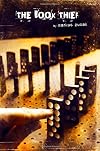
I suppose if you're going to personify death you might as well make it human. But I'm not sure I like it.
I think that Liesel wrote it, actually, under the character of death, but I don't care enough to go back and see if there's anything she had no way of knowing. The narrator seemed to me to be entirely human; you would think that death would have a different perspective than the person whose life it is narrating, but I didn't see that. If it was truly meant to be death narrating, I think it was rather poorly done. And if it wasn't, I still don't much care for this book.
I think that Liesel wrote it, actually, under the character of death, but I don't care enough to go back and see if there's anything she had no way of knowing. The narrator seemed to me to be entirely human; you would think that death would have a different perspective than the person whose life it is narrating, but I didn't see that. If it was truly meant to be death narrating, I think it was rather poorly done. And if it wasn't, I still don't much care for this book.
La Parure: Suivi De La Legende Du Mont-saint-michel Et De Sur L'eau (Le Livre De Poche) (French Edition) by Guy de Maupassant
This book had the most superfluous footnotes I've ever seen. I didn't even read most of them.
It is written pretty well, but it is written rather like fiction and I can't overlook that. I find it hard to believe that the author could have known some of the (meaningless) details in this book. On top of that, there are no sources. For all I know this could be entirely made up.
It focuses solely on the crimes, and hardly mentions Mr. Fish's past at all. That is not why I read true crime. I want to know everything about the person, which means a complete biography, not just the bits and pieces that pertain to their crimes.
It focuses solely on the crimes, and hardly mentions Mr. Fish's past at all. That is not why I read true crime. I want to know everything about the person, which means a complete biography, not just the bits and pieces that pertain to their crimes.
I did not like this book much at all. I'm having a hard time thinking of a single redeemable aspect of it. I could not relate to Addison Schacht at all. This isn't usually a problem, but in this case the dissociation was so huge I sometimes had no idea what he was talking about.
I found the writing annoying: Things that should have been one sentence were broken up into two or three; far too many italics; every few sentences was ended with something along the lines of "or something." That may be a realistic representation of how people my age write, I don't know, but it's annoying. It wasn't necessarily badly written, just not to my taste.
He occasionally had some interesting things to say, but not often enough to keep me interested in the book.
I'm sure someone who likes this genre could enjoy this book. But I generally don't, and I didn't.
I found the writing annoying: Things that should have been one sentence were broken up into two or three; far too many italics; every few sentences was ended with something along the lines of "or something." That may be a realistic representation of how people my age write, I don't know, but it's annoying. It wasn't necessarily badly written, just not to my taste.
He occasionally had some interesting things to say, but not often enough to keep me interested in the book.
I'm sure someone who likes this genre could enjoy this book. But I generally don't, and I didn't.
When writing without a few letters of the alphabet, creative linguistic acrobatics become necessary. This book started out with so much unnecessarily odd phrasing, that the change was hardly noticeable.
But when you remove enough letter, it degrades into virtual nonsense. I think that may be why the author started in the style he did; to show the degradation, and none of the elaboration.
The degradation was about the only thing I found interesting in this book. I would have liked it better if it had ended with the "No mo Nollop poo poo" bit. I found their normal writing style annoying.
Overall, I think this book lacked all subtlety, as well as an interesting story. Perec is so much better.
But when you remove enough letter, it degrades into virtual nonsense. I think that may be why the author started in the style he did; to show the degradation, and none of the elaboration.
The degradation was about the only thing I found interesting in this book. I would have liked it better if it had ended with the "No mo Nollop poo poo" bit. I found their normal writing style annoying.
Overall, I think this book lacked all subtlety, as well as an interesting story. Perec is so much better.
ALL HUMAN INTERACTION AND UNDERSTANDING IS BASED ON A LOGICAL FALLACY!
This is supposed to be a book about perceptions, so I guess I can’t fault him on factual flippancy. He seems to be saying, though, that these perceptions are at least somewhat universal. Which is ridiculous, least of all because I can’t relate to most of them.
He brings up some interesting ideas, but only in passing, before he goes off again on pseudo-psychological babbles, passing them off as universal Truths.
I’m only half way through, hopefully it will get better?
Edit: it didn't. It did, however, make me doubt a few things I took for granted. Not because of any convincing evidence or arguments, but because he seems to take for granted the opposite.
He brings up some interesting ideas, but only in passing, before he goes off again on pseudo-psychological babbles, passing them off as universal Truths.
I’m only half way through, hopefully it will get better?
Edit: it didn't. It did, however, make me doubt a few things I took for granted. Not because of any convincing evidence or arguments, but because he seems to take for granted the opposite.
Though it was sometimes infuriating, it was highly amusing in small doses. I am disappointed that it ended.
I won this on first reads, but it never arrived.

This book is unnecessarily big for the amount of riddles it contains.
This is a very biased book, and I want to believe it, so I'm dubious. But, given that I can't find any well researched argument supporting the idea that animals are adequate models for human disease, I am inclined to agree with it for now.
The chapter on organ donation (can an animal "donate" an organ?) seemed like a bunch of alarmist speculation, but that may just be my unhealthy lack of concern for viruses. And the focus on education, prevention and policy change mostly made up for it anyway.
This book also changed my mind about carcinogenics in food and personal care products.
The chapter on organ donation (can an animal "donate" an organ?) seemed like a bunch of alarmist speculation, but that may just be my unhealthy lack of concern for viruses. And the focus on education, prevention and policy change mostly made up for it anyway.
This book also changed my mind about carcinogenics in food and personal care products.
French Short Stories 1 / Nouvelles Francaises 1: Parallel Text (Penguin Parallel Text) (French and English Edition) by Pamela Lyon
I used to think I could understand the nuances and style of an English translation better than the original French. If these translations are anything to go by, that is not the case at all. Some are better than others, but overall the translations lack an absurd amount of specificity. Even if they don't leave out specific descriptions, they still use less specific words than were in the original, even when there's a good equivalent. I don't really understand why. Maybe it would sound clunky in English, but a foreign sounding translation would still be more interesting. But I guess that's why I read in languages I don't understand.
There's also the sound of the language, which is even harder to capture if you're translating literally. You don't even need to know the cadence of the language, or even the words used to notice repetition.
Other than an interesting look at translation, these books are essentially useless as learning tools. The translations are almost never word-for-word, and, as I said, they are consistently less specific. « Guêpe » is translated as "zip", when the author clearly means the bullets sounded like wasps, not that they went zip. This does not help you learn words, and if you can't understand the gist of a phrase, you should be reading something less advanced.
An index, and notes on the harder words and grammatical structures is considerably more helpful.
There's also the sound of the language, which is even harder to capture if you're translating literally. You don't even need to know the cadence of the language, or even the words used to notice repetition.
Other than an interesting look at translation, these books are essentially useless as learning tools. The translations are almost never word-for-word, and, as I said, they are consistently less specific. « Guêpe » is translated as "zip", when the author clearly means the bullets sounded like wasps, not that they went zip. This does not help you learn words, and if you can't understand the gist of a phrase, you should be reading something less advanced.
An index, and notes on the harder words and grammatical structures is considerably more helpful.

I am a fan of the illustrator's work, which is really the only reason I bought this. I wasn't actually expecting to like the stories, but they turned out to be very clever and cackle-inducing.