Building Successful Partnerships: Community Connections for Science Education by Robertson C. Robertson

Teacher Resource: Primary School, Elementary School, Middle School, and High School
Distributor/Publisher Synopsis: This book is a practical guide to help teachers work with science educators in the community to avoid common field trip pitfalls that interfere with the many science-learning opportunities in museums, parks, and science centers. It includes tips and strategies on selecting community resources for field trips, developing and evaluating educational materials and even arranging transportation.
Distributor/Publisher Synopsis: This book is a practical guide to help teachers work with science educators in the community to avoid common field trip pitfalls that interfere with the many science-learning opportunities in museums, parks, and science centers. It includes tips and strategies on selecting community resources for field trips, developing and evaluating educational materials and even arranging transportation.
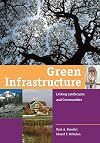
Publisher Synopsis: Highlighting successful projects from around the country, this book provides a template for effective natural and human community planning. Integrates local land use planning techniques with large scale thinking to develop plans that protect existing and restore degraded ecosystems… this book helps everyone look at the landscape in relation to multiple values - highest and best use may be more than simply return on investment value. Leading experts in the field provide a detailed how-to for citizen activists, planners, designers, landscape architects, and community leaders.
Student Resource: Elementary School, Middle School, High School, Adult
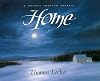
Review “A simple poem, written nearly three decades ago about the Plain people of the Pennsylvania Dutch region, was the impetus and is now the centerpiece of a book by celebrated illustrator Thomas Locker. Merle Good's "Song of a People" was chosen to represent the Amish spirit, paired with an illustration of the Lancaster countryside, in Locker's book, Home: A Journey Through America. ..Good's poem shares pages with writing by Willa Cather, Robert Frost and Carl Sandburg. Henry David Thoreau and Eloise Greenfield also are included, as well as writing by Washington Irving and Abraham Lincoln.” –Ramble’s Cultural Art Magazine.
Review “A simple poem, written nearly three decades ago about the Plain people of the Pennsylvania Dutch region, was the impetus and is now the centerpiece of a book by celebrated illustrator Thomas Locker. Merle Good's "Song of a People" was chosen to represent the Amish spirit, paired with an illustration of the Lancaster countryside, in Locker's book, Home: A Journey Through America. ..Good's poem shares pages with writing by Willa Cather, Robert Frost and Carl Sandburg. Henry David Thoreau and Eloise Greenfield also are included, as well as writing by Washington Irving and Abraham Lincoln.” –Ramble’s Cultural Art Magazine.
Distributor/Publisher Synopsis: Provides real-world examples of how cultural differences affect both the implementation and success of environmental education programs. Each case is a candid, dramatic, and highly readable first-person account that makes concrete the challenges of fairness, expectations, respect, and communication when people who share goals but not cultures, interact…Includes helpful facilitator notes and commentary about each case - all designed to promote rich discussion and thoughtful reflection that ultimately result in principles of practice that users can apply to their own settings.
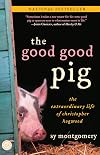
Review: “Like Montgomery's earlier books, this title blends facts about animal behavior, natural history, geography, and culture with myths, legends, and a large helping of adventure. The color photographs of Christopher from runt to virtual behemoth are an added attraction. More importantly, the author's engaging writing style will captivate even the most uninspired teen readers.”-Claudia C. Holland, Chantilly Regional Library, Fairfax County, VA, 2006.
Student Resource: High School
Author Synopsis: It's a look at how color and light inform human behavior, and in particular, the color turquoise, which ties together cultures from the American Southwest to ancient Persia and Afghanistan.
Reviews: “Exquisitely rendered. . . . Meloy’s gem-studded collection calls us to be mindful of the physical world, to see it—really see it—with fresh eyes.” —Los Angeles Times.
Author Synopsis: It's a look at how color and light inform human behavior, and in particular, the color turquoise, which ties together cultures from the American Southwest to ancient Persia and Afghanistan.
Reviews: “Exquisitely rendered. . . . Meloy’s gem-studded collection calls us to be mindful of the physical world, to see it—really see it—with fresh eyes.” —Los Angeles Times.
Student Resource: Middle School, High School, Informal Education
Distributor/Publisher Synopsis: Your students need to understand that stuff doesn’t just happen—it has a life cycle. Using common products like the telephone, this lively book helps students learn about the flow of energy and matter through Earth’s system. Seven illustrated sections (useful as stand-alone units or as a cumulative program) give you hands-on activities to teach.
Distributor/Publisher Synopsis: Your students need to understand that stuff doesn’t just happen—it has a life cycle. Using common products like the telephone, this lively book helps students learn about the flow of energy and matter through Earth’s system. Seven illustrated sections (useful as stand-alone units or as a cumulative program) give you hands-on activities to teach.
Science for All: Celebrating Cultural Diversity (NSTA Press Journals Collection) by NSTA Press Journals Collection
Distributor/Publisher Synopsis: This book covers three areas of multicultural science education: inclusive curriculum design, multicultural teaching strategies, and language diversity in science teaching and learning. ..practical insights on giving students an appreciation of the contributions that all cultures make to our scientific heritage..
Review: “For those science teachers who know they need to change their teaching methods but may not know were to start, this book is a good place.” --Donald Logson, Jr., Core Adjunct Professor. NSTA Catalog. 2007.
Review: “For those science teachers who know they need to change their teaching methods but may not know were to start, this book is a good place.” --Donald Logson, Jr., Core Adjunct Professor. NSTA Catalog. 2007.
Teacher Resource: High School, General Adult
Distributor/Synopsis: …this book will show you and your students how to communicate the intricacies of places, using maps to create tapestries and stories about issues of importance, such as water and air quality, community growth issues, distribution of species, or local historical spots
Distributor/Synopsis: …this book will show you and your students how to communicate the intricacies of places, using maps to create tapestries and stories about issues of importance, such as water and air quality, community growth issues, distribution of species, or local historical spots
Distributor/Synopsis: Students acquire a sense of their bioregion by constructing a map that shows the natural features of their area. Students then explore, both verbally and on foot, ways of making the community in which they live a more pleasant and sustainable place, including but not limited to development of community gardens, reconstruction of buildings, creating transportation alternatives, restoring wildlife habitat, recycling, and revitalizing neighborhoods - in other words, “re-inhabiting” the bioregion in which they live.
"The one hour news exclusive, shows how water pollution in North Carolina affects all of us. It discusses responsibility, and some of the ways to clean up and prevent future problems."

Distributor/Publisher Synopsis: Creative activity book introduces children to the world at their doorsteps - urban ecology…Learn how animals have adapted to city life, the resources available to animals in our cities and how animals survive among the people, buildings, traffic and other city hazards. Children also learn to take field notes on the plants and animals discovered, along with methods of identification.
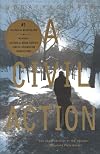
Distributor/Publisher Synopsis: Based on a real story, “[t]he lawyer had not wanted the case at first -- it was too big, too complicated, too risky. It concerned a cluster of childhood leukemia victims in a small town north of Boston where the city wells had been poisoned by industrial chemicals. Two of the nation's largest corporations, stood accused... In this book, you'll meet the Harvard Law professor who told the lawyer that this case was worth a billion dollars, that it was the sort of lawsuit that would ring the alarm in corporate boardrooms across America. And you'll meet his adversaries, foremost among them a crafty old trial lawyer, chairman of the litigation department at one of the biggest and most feared law firms in Boston. The case turned into an epic struggle that took nine years of the lawyer's life. At the heart of the legal system, he was confronted by powerful and well-connected interests who would do anything to win. In the end, the struggle nearly cost the lawyer his sanity. He sacrificed everything -- home, friends, and reputation -- not for money, but for what he believed to be the truth.”
“A page-turner. Rich and vivid. . . eventful and gripping." --The New York Times
“A page-turner. Rich and vivid. . . eventful and gripping." --The New York Times
reviewed in "The Science Teacher"
reviewed in "Science Activivites"
Reviewed in "The Book Report"
Distributor/Synopsis: In 1847, Westminster Abbey enjoyed a growth in visitors, attracted by the first marine aquarium in England - a collection of madrepores and sea sponges kept in glass cases at Ashburnham House. This is the story of Anna Thynne, whose creation coincided with a philosophical turning point in history.
Reviewed in Library Journal
Positive REview in:
Voice of Youth Advocates
( August 01, 2008 ; 1-4169-6122-4 )
Voice of Youth Advocates
( August 01, 2008 ; 1-4169-6122-4 )
Horn Book (Spring 2008)
Twelve articles from a variety of news sources (all erroneously presented as equal authorities) provide readers with information about issues surrounding water use and world population. The book is a better resource for debate teams than it is a coherent treatise. Lack of supporting illustrations makes the visual presentation dense and unappealing. Bib., ind.
Twelve articles from a variety of news sources (all erroneously presented as equal authorities) provide readers with information about issues surrounding water use and world population. The book is a better resource for debate teams than it is a coherent treatise. Lack of supporting illustrations makes the visual presentation dense and unappealing. Bib., ind.
Reading more like a novel than non-fiction this descriptive book on what can be lumped into one word, sewage, will pull the reader to its last page.
Booklist (Vol. 94, No. 22 (August 1998))
Acute observation and a fluid writing style characterize this detailed, but not overly technical description of the hydrological cycle. An attractive aspect of Pielou's presentation is her encouragement to the reader to copy her observational techniques, for example, wading into a stream to measure its flow and carefully watching the water in order to understand a landscape's shape. Her chapters correspond to where fresh water accumulates: underground, in streams and rivers, in wetlands, in lakes natural and artificial, and in clouds. She explains particularly well water's unusual chemical properties--its surface tension as a liquid, its expansion as a solid--that influence the depth of the water table, or how a lake freezes. Numerous line drawings help readers understand particular hydraulic situations; the text's calmness elicits concern for how civilization uses this limited resource, whether drilling for it or damming it up. A rare resource itself, Pielou's soft-sell presentation will probably sensitize more people to the cause of water conservation than hectoring tracts from environmental advocacy groups..
Acute observation and a fluid writing style characterize this detailed, but not overly technical description of the hydrological cycle. An attractive aspect of Pielou's presentation is her encouragement to the reader to copy her observational techniques, for example, wading into a stream to measure its flow and carefully watching the water in order to understand a landscape's shape. Her chapters correspond to where fresh water accumulates: underground, in streams and rivers, in wetlands, in lakes natural and artificial, and in clouds. She explains particularly well water's unusual chemical properties--its surface tension as a liquid, its expansion as a solid--that influence the depth of the water table, or how a lake freezes. Numerous line drawings help readers understand particular hydraulic situations; the text's calmness elicits concern for how civilization uses this limited resource, whether drilling for it or damming it up. A rare resource itself, Pielou's soft-sell presentation will probably sensitize more people to the cause of water conservation than hectoring tracts from environmental advocacy groups..
If the reader can over-look the use of the word s**t, this book will entertain and fascinate reader with the world of plumbing and its contribution to the health of civilization.
Out of Print: quick find it used. It is worth it!
Distributor's Commentary: "The Water Atlas brings together the latest findings to show water distribution worldwide, the real cost of use in water-rich countries, and the dangers of a future where privatization and profit dictate availability. The atlas covers a wide range of topics, from consumption and scarcity to areas of political tension and looming catastrophes. Including detailed profiles of vulnerable regions—such as California, the Middle East, and India—as well as bold summaries of the global picture, The Water Atlas will be a unique resource for general readers as well as health professionals, advocates, and students."
Waterbucket: Sustainable Approaches to Water Respources. May 4, 2009. http://www.waterbucket.ca/aw/sites/wbcaw/documents/media/43.pdf.)
Distributor's Commentary: "The Water Atlas brings together the latest findings to show water distribution worldwide, the real cost of use in water-rich countries, and the dangers of a future where privatization and profit dictate availability. The atlas covers a wide range of topics, from consumption and scarcity to areas of political tension and looming catastrophes. Including detailed profiles of vulnerable regions—such as California, the Middle East, and India—as well as bold summaries of the global picture, The Water Atlas will be a unique resource for general readers as well as health professionals, advocates, and students."
Waterbucket: Sustainable Approaches to Water Respources. May 4, 2009. http://www.waterbucket.ca/aw/sites/wbcaw/documents/media/43.pdf.)
Seemingly written for a younger audience, this fictional piece will keep the attention for even the teacher.
After explaining how water ownership is becoming privatized,
"Blue Gold ... illuminates the dilemma we find ourselves in, ... [and].. arms us with the information and strategies we need to make a difference in our own country and globally. There is only one action to take, the authors argue in this cogent and impassioned manifesto: we must become fresh water's responsible custodians."
(Blue Plaent Project. May 4, 2009. http://www.blueplanetproject.net/resources/articles/Blue_Gold.html)
"Blue Gold ... illuminates the dilemma we find ourselves in, ... [and].. arms us with the information and strategies we need to make a difference in our own country and globally. There is only one action to take, the authors argue in this cogent and impassioned manifesto: we must become fresh water's responsible custodians."
(Blue Plaent Project. May 4, 2009. http://www.blueplanetproject.net/resources/articles/Blue_Gold.html)
Vandana Shiva is a world-renowned environmental leader and recipient of the 1993 Alternative Nobel Peace Prize (the Right Livelihood Award). Shiva is a leader in the International Forum on Globalization and the author of several books including Biopiracy (BTL, 1997).
Shiva warns that water privatization threatens cultures and livelihoods worldwide. She calls for a movement to preserve water access for all, and offers a blueprint for global resistance.
May 4, 2009 : http://www.btlbooks.com/New_Titles/waterwars.htm
Shiva warns that water privatization threatens cultures and livelihoods worldwide. She calls for a movement to preserve water access for all, and offers a blueprint for global resistance.
May 4, 2009 : http://www.btlbooks.com/New_Titles/waterwars.htm
Using high-speed photography, Dr. Masaru Emoto discovered that crystals formed in frozen water reveal changes when specific, concentrated thoughts are directed toward them