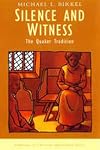
The Quaker spiritual tradition integrates mystical insight with prophetic witness. Michael Burkle tells the story of the movement's origins, describes how the distinctive Quaker practice of group worship in silence developed, and explains how "collective discernment" is used in decision – making. He explores the historical development of the "testimonies", the ethical stance taken by Quakers for peace, justice, equality, integrity and simplicity, and he reflects on the contemporary relevance and meaning of a Christian tradition with a strong contemplative and activist dimension. (Pendle Hill Library)
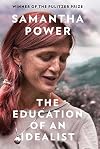
Samantha Power is a leading global voice on human rights and international affairs. She served for four years as President Barack Obama’s human rights adviser and then, from 2013 to 2017, in his Cabinet and as US Ambassador to the United Nations.
Blessings for life events based on the Celtic tradition, by the author of Anam Cara.

Discusses how we should respond to mental health issues at Meeting, based on conversations with Friends who have lived experience of mental health problems. conducted during 2018.
2nd edition of Volume 2 of The Eldership and Oversight Series
Forgiveness: Why Forgive?: Papers from the Quaker Universalist Group Annual Conference, 2019 by Quaker Universalist Group
Examines the concept of Forgiveness in Judeo Christian and indigenous African traditions.
Grant explains that Quakers might sound vague but are actually making clear and creative theological claims.
Tim Gee explains why he is a pacifist and answers all the difficult questions about pacifism and the theory of non violent resistance, including examples of when it was successful in the second world war.
Quakers have made the cultivation of the guided life the focus of their spirituality for over three centuries. Generations of Quakers have developed practices for nurturing their connection to an inward source of guidance, meaning and purpose. This Inward Guide is present in all people, cultures and traditions. It goes by many names and is understood in many ways, but it is equally available to everyone who is willing to listen and respond.
The Guided Life shares some of the spiritual practices that the Quaker tradition has developed to discover purpose and direction in daily life. These practices may be of use to anyone who is wrestling with the complex challenges and dilemmas of the modern world.
The Guided Life shares some of the spiritual practices that the Quaker tradition has developed to discover purpose and direction in daily life. These practices may be of use to anyone who is wrestling with the complex challenges and dilemmas of the modern world.
Jennifer Kavanagh has written a lovely book which I found to be compelling reading. In a very practical way she explains the meaning of mysticism for Quakers and how an experience, which some might regard as being esoteric, can be truly meaningful for many today.' Terry Waite
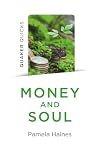
The economy, as we usually encounter it, has nothing to do with values or faith. After all, the “invisible hand” caters to no religious belief. It is all a matter of science, we are assured: economists have mastered the mathematical formulas for growth and prosperity. Our role as individuals is simply to work, consume and save, each adding our bit to the sum totals of economic activity that will keep the system humming along; the experts will take care of everything else.
This breezy values-free story, however, is unlikely to be a comfortable fit for anyone who takes seriously the challenge of bringing our faith into the world. Knotty issues around economics crop up at every turn, especially if we are willing to ask the big questions: What is the economy for? How much is enough? What needs to be equal? How is well-being best measured? Who should decide?
In Money and Soul this search for answers, through a Quaker lens, gives a taste of the power of applying faith values to our economic story.
This breezy values-free story, however, is unlikely to be a comfortable fit for anyone who takes seriously the challenge of bringing our faith into the world. Knotty issues around economics crop up at every turn, especially if we are willing to ask the big questions: What is the economy for? How much is enough? What needs to be equal? How is well-being best measured? Who should decide?
In Money and Soul this search for answers, through a Quaker lens, gives a taste of the power of applying faith values to our economic story.

Goes beyond the caricature to balance Penn's personal tribulations and financial difficulties with his brilliance as a defender of the Society of Friends, a spokesman for political and religious freedom, and a promoter of pacifism, inter-group comity and representative government.
This book is a very informative discussion about the development of the Quaker Testimonies which doesn’t hesitate to discuss how some more unattractive (to modern sensibilities) aspects of Quakerism such as the condemnation of music, art and novels arose. Lampen discusses the contribution of less widely known Quakers such as the doctors Thomas Hodgken and John Lettsom.
I thoroughly recommend this a quick but comprehensive introduction to the development of the Quaker faith and what it has achieved in wider society. It is the best introduction to Quakerism I have had the pleasure to read!
Catherine
I thoroughly recommend this a quick but comprehensive introduction to the development of the Quaker faith and what it has achieved in wider society. It is the best introduction to Quakerism I have had the pleasure to read!
Catherine
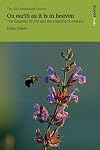
Eden states that "As we face the terrifying challenge of climate change today, the spiritual power we require will only come when we surrender every particle of our will and life into the hands of the living God - when we die to ourselves in order to participate in the transformational inbreaking of the Kingdom of God on earth". In this deep and challenging lecture, Eden Grace explores the biblical, historical and spiritual roots of Quakers’ contemporary witness to God’s creation. The chapters are interspersed with several profiles of faithfulness from Friends around the world, and a comprehensive study guide provides an opportunity to gather and reflect on how God might be calling Friends to prophetic and transformative witness in our time. Eden Grace is a member of New England Yearly Meeting and serves as the Director of Global Ministries for Friends United Meeting (FUM). Prior to this, she spent nine years as FUM’s Field Officer at the Africa Ministries Office in Kisumu, Kenya, where she helped African and North American Quakers move away from donor-centric relationships to develop more reciprocal partnerships. Eden describes her ministry as “decolonising Quakerism”.
Greenpeace UK's Head of Oceans shows how just a few simple, easily acheivable changes to your lifestyle can make big changes to your and everyone else's future well being.
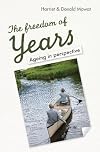
A Christian perspective on how to age well and the purpose of old age.
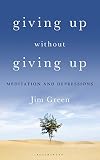
Explores the possibility that we have much to learn from the desert times in our lives, when it feels as though we are losing everything. most of all any sense of who we are. Discusses the nature of and treatments for depression and offers a practical approach to our times of personal desolation, centred on the practice of meditation, showing how we can learn to treat ourselves and each other with care and compassion.
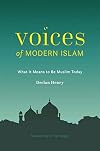
Explores the facets of modern Isam through first hand interviews with over a hundred Muslims.
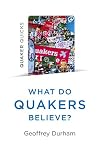
"So what do you believe?" It's the question Quakers are always asked first and the one they find hardest to answer, because they don't have an official list of beliefs. And Quakerism is a religion of doing, not thinking. They base their lives on equality and truth; they work for peace, justice and reconciliation; they live adventurously. And underpinning their unique way of life is a spiritual practice they have sometimes been wary of talking about. Until now. In What Do Quakers Believe? Geoffrey Durham answers the crucial question clearly, straightforwardly and without jargon. In the process he introduces a unique religious group whose impact and influence in the world is far greater than their numbers suggest. What Do Quakers Believe? is a friendly, direct and accessible toe-in-the-water book for readers who have often wondered who these Quakers are, but have never quite found out.
Before Christianity: The Didache "The Teaching of the Lord by the Twelve Apostles to the Gentiles" What Has This to Say to Quakers? by Michael Langford
Michael Langford discusses parallels between the Didache and Quaker understandings of Christ. The Didache which is an early document about Christ and his teachings aimed at Gentile converts and written before the schism between Jews and Christians.

Reprint of the 2001 edition except for an updated resources section.
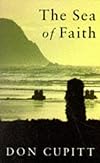
On Dover beach in the 1860s the English poet Matthew Arnold saw in the receding tide at dusk an image of the "melancholy, long, withdrawing roar" of the Sea of Faith. Twenty years later Nietzsche was proclaiming the death of God as an event that had taken place long before, but was still unrealized. The modern crisis of belief has deep roots. Don Cupitt shows how the rise in our science-based, democractic industrial society, of historical criticism and of knowledge of other religions has over the centuries slowly eroded the traditional framework of doctrinal belief--leaving us, as it seems to many, free, alone, and disoriented. But there is another story, for Cupitt also shows a line of creative thinkers, from Pascal to Wittgenstein, responding to each new challenge as it has arisen. A new understanding of religion is emerging which Cupitt calls non-realist, for it is without dogma. Instead, Christianity is seen as a way, a spiritual path, and an ethic. Religion becomes more like an art, for it is a function of our primal capacity to generate stories, symbols, and meanings to live by.
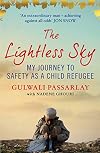
In 2006, after his father was killed, Gulwali Passarlay was caught between the Taliban who wanted to recruit him, and the Americans who wanted to use him. To protect her son, Gulwali's mother sent him away. The search for safety would lead the twelve-year-old across eight countries, from the mountains of eastern Afghanistan through Iran and Europe to Britain. Over the course of twelve harrowing months, Gulwali endured imprisonment, hunger, cruelty, brutality, loneliness, and terror and nearly drowned crossing the Mediterranean Sea before being granted asylum in England. In The Lightless Sky, Gulwali recalls his experience and offers a firsthand look at pressing issues of the modern refugee crisis.

Second edition of the guide to the roles of Eldership and Oversight.
A guide to Buddhist doctrine and practice.

Discusses American examples, not CND etc.
Story of the development of Experiment with Light movement, acknowledged as a Quaker Recognised Body in 2017. Written by founder member and Bradford on Avon Friend, Klaus Huber
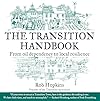
Guide to the 'Transition Towns' movement.
The Last Fighting Tommy: The Life of Harry Patch, the Oldest Surviving Veteran of the Trenches by Richard Van Emden
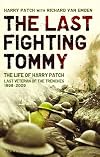
Moving account of fighting in WW1 and the society he returned to by an ordinary Tommy.