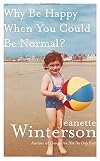
Interesting to compare this with Alison Bechdel's 'Are You My Mother?', published recently. Both are memoirs about mothers by established lesbian authors, but with questions in the title, and both referring in turn to earlier autobiographical works, ie 'Oranges Are Not The Only Fruit' and 'Fun Home'.
Just as we got to read Ms Bechdel's mother's response to 'Fun Home', here's the terrifying Mrs Winterson revealing that she had to order 'Oranges' from the library... using a fake name.
Winterson writes so clearly and honestly here, and despite the grimness of her childhood she manages to involve moments of laugh-aloud humour and even suspense (will she finally track down her birth mother? What will happen if she does? You find out!).
There's absolutely nothing in this book that feels unnecessary. Winterson is a lover of poetry, and it shows in her prose: words cut down to give the most power.
Just as we got to read Ms Bechdel's mother's response to 'Fun Home', here's the terrifying Mrs Winterson revealing that she had to order 'Oranges' from the library... using a fake name.
Winterson writes so clearly and honestly here, and despite the grimness of her childhood she manages to involve moments of laugh-aloud humour and even suspense (will she finally track down her birth mother? What will happen if she does? You find out!).
There's absolutely nothing in this book that feels unnecessary. Winterson is a lover of poetry, and it shows in her prose: words cut down to give the most power.

"Stephen Tennant was just a flamboyant gay who didn't really do anything," says one of the many supporting players in Mr Hoare's exhaustive doorstopper of a biography. True, this is the life of a man who essentially is best known for being a striking-looking girlish boy at London parties in the 1920s (as one of the Bright Young Things), then spending the rest of his life loafing about in his mansion. He was born into wealth and could do whatever he liked. There was no need to prove himself, no ambition, no drive. He did manage to have some modest success as a painter, but never really advanced past the status of cult figure, at best.
But Mr Hoare saw a life that needed to be properly chronicled and celebrated, and his enthusiasm rubs off on the reader. There's just something about Stephen. The ultimate lonely gay aristocrat, so free yet so trapped. This book redeems him, in a way, proving that just being a beautiful boy turned reclusive eccentric is an achievement of sorts.
But Mr Hoare saw a life that needed to be properly chronicled and celebrated, and his enthusiasm rubs off on the reader. There's just something about Stephen. The ultimate lonely gay aristocrat, so free yet so trapped. This book redeems him, in a way, proving that just being a beautiful boy turned reclusive eccentric is an achievement of sorts.
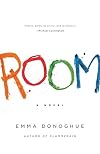
Setting: present day USA. A woman has been imprisoned for over 7 years in a purpose-built square cell, where she is repeatedly raped by her captor. She shares this space with her 5-year-old son Jack, who was born into 'Room' (as he calls it) and knows no other existence. All the items in Room take on personalities in Jack's world: Table, Chair, Rug, Wardrobe and so forth.
It's a life that's obviously upsetting and deplorable to most readers, but posits many interesting questions. Not least what if Jack is actually quite happy with this life, and might miss it if things were to change...?
From the first page I realised this was quite a tour-de-force of writing, though the content means it's not for everyone. It begins as a well-written modern horror story, then shifts into a heartstopping thriller. After that, the book changes dramatically. Effectively, it becomes The Curious Incident Of The Dog In The Night-time: the real world as we know it, but seen through the eyes of a naive child.
I'd love to call this novel flawless, but towards the end I got the sense the author wasn't sure how long to keep telling the story. Various accidents and conflicts (an overdose, a bee sting) felt thrown at the characters by the author, rather than happening naturally. The ending in particular felt a bit forced and too convenient, and just wasn't worthy of the first half. Trouble is, if you put the most exciting part of a book in the middle, where else can you go?
It's a life that's obviously upsetting and deplorable to most readers, but posits many interesting questions. Not least what if Jack is actually quite happy with this life, and might miss it if things were to change...?
From the first page I realised this was quite a tour-de-force of writing, though the content means it's not for everyone. It begins as a well-written modern horror story, then shifts into a heartstopping thriller. After that, the book changes dramatically. Effectively, it becomes The Curious Incident Of The Dog In The Night-time: the real world as we know it, but seen through the eyes of a naive child.
I'd love to call this novel flawless, but towards the end I got the sense the author wasn't sure how long to keep telling the story. Various accidents and conflicts (an overdose, a bee sting) felt thrown at the characters by the author, rather than happening naturally. The ending in particular felt a bit forced and too convenient, and just wasn't worthy of the first half. Trouble is, if you put the most exciting part of a book in the middle, where else can you go?
The Book of Lists: Horror: An All-new Collection of Spine-tingling, Hair-raising Blood-curdling Fun and Facts by Amy Wallace
Got this because of the varied contributors (are Edgar 'Shaun of the Dead' Wright and Scott 'Mysterious Skin' Heim brought together anywhere else?) plus inspired little features. The Twilight Zone chap's list of hackneyed plots is a hoot, particularly 'Hey! I'm Really Dead!'
A book-length essay by an English professor about the importance of continuing to read books in the age of Twitter and Facebook. He argues for the ditching of all canonical reading lists, including those '1001 Books To Read Before You Die' guides, and urges people to instead focus on their own tastes as signposts and filters. Far from narrowing choices, this approach means noticing which books speak to us the most, then tracing which books influenced those, and following connections to similar books, but in a serendipitous way. He also reminds the reader that tastes change as we get older, but that this should be nurtured rather than approached as if we got it 'wrong' when younger. Ultimately, Jacobs calls for an anxiety-free life of reading, where we're the ones in charge, and that making our own individual way in reading is as important as making our own way in life - not trying to please or impress others for the sake of it. It doesn't mean shunning the classics or the award winners, but knowing exactly what we're ready to read, and when.
Although I don't agree with him entirely about the shunning of recommendation lists (lists have their uses) - I really liked his laid back, calming attitude.
Although I don't agree with him entirely about the shunning of recommendation lists (lists have their uses) - I really liked his laid back, calming attitude.
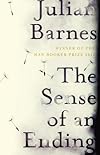
Wasn't keen on the device of a narrator wondering what people in novels would do (this is hard to pull off in what is ultimately an old-fashioned novel - Barnes is not Borges or Calvino). I also find it tiresome when literary novelists get pop music wrong, and invent fictional hit songs to mention alongside real ones - here there's a one-hit wonder punk band who have a track called 'Every Day Is Sunday' - in which the sole lyrics are the title, repeated. Made me think that Barnes had clearly not heard of the 80s Morrissey hit, 'Everyday is Like Sunday'. But this is another theory of mine - that established novelists who are getting on a bit should try to avoid inventing pop culture beloved of younger ones - it's so easy to get wrong. Just as well he didn't include a rap number.
Not quite the Gatsby-like masterpiece that some of its plaudits made it out to be, but it's still a clever little page-turner. I particularly liked the opening list of images, which works as a kind of teaser.
Not quite the Gatsby-like masterpiece that some of its plaudits made it out to be, but it's still a clever little page-turner. I particularly liked the opening list of images, which works as a kind of teaser.
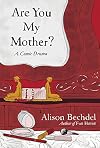
In which the reader gets on the couch with Alison Bechdel.
I was dazzled by Ms B's 'Fun Home' when it came out in (gosh) 2006. The graphic novel as confessional-style memoir is no new thing, of course: one thinks of 'Maus', 'American Splendor', Joe Matt et al. What Bechdel brought to the genre was, I thought, a unique style of rhetorical detective work, blending time-jumping shards of memory with entertaining anecdotes, intimate questions, a sense of expiation and detached commentary. If anything, it had more in common with JR Ackerley's 1960s prose memoir 'My Father And Myself' than with those aforementioned comic books. Ackerley used his book as a writing out of his feelings about both his father's double life (he kept a hidden second family going alongside his legitimate one), and his own double life as a gay man, at a time when homosexual acts were criminalized. Similarly, in 'Fun Home' Bechdel compares and contrasts her father's secret bisexuality with her own coming out as a lesbian.
It wasn't just me who loved the book: the Wikipedia page for 'Fun Home' lists its umpteen awards, its bestseller status, and its place in 2012 as a bona fide modern classic, worthy of serious academic study - it's also a set text for the English Literature degree I'm taking right now (at Birkbeck, University Of London).
So 'Are You My Mother' is, on one level, 'Fun Home 2: This Time It's Even More Personal'. It covers the most obvious subject to write about next: Bechdel's mother. This show more time, though, the project is far more complicated, because Ma Bechdel is still around, still a part of Alison's life, and still uneasy about being written about at all. In this new book, she is shown disapproving of 'Fun Home', just as she disapproved of 'Dykes To Watch Out For', though she ultimately (if mutely) respects her daughter's success, being a writer-manque herself. The goal of the book, therefore, is compromised. So instead, Ms B tells the story of FAILING to properly write her mother's story, making it more of a kind of 'Tristam Shandy' meta-book. We even see her discussing how 'marketable' the book might be, during the copy-editing process. It's also about her own self-knowledge progress as an adult - the most recent event chronologically shows her feelings about reaching the menopause.
So it's a book about Bechdel writing, or failing to write, as much as it is about her connecting with her mother, or failing to connect. There's lots of depictions of her dreams, references to Virginia Woolf's To The Lighthouse and A Room Of One's Own, and wonderful scenes of her mother singing in the Sondheim musical A Little Night Music. I like how Ma Bechdel has 'claimed' Sylvia Plath, while Alison has custody of Woolf - this rather reminded me of how my own brother and I divided up favourite bands while growing up. Funny how territorial some relatives can get about culture.
I also found it particularly interesting that instead of drawing the book page by page, Bechdel scripts the whole thing first, seeing if it works as a long form text, before she starts on the artwork.
Warning: 'Are You My Mother' contains a LOT of psychoanalysis - perhaps too much. Bechdel's search for a satisfying mother-daughter connection leads to her reading the works of Freud, Alice Miller and (especially) Donald Winnicott. This is my sole criticism of the book - Bechdel inflicts on the reader panel after panel of highlighted words from rather dry books by other people (Woolf excepted). When she actually illustrates the ideas, however, eg drawing Winnicott himself, depicting him playing with troubled children or passing Virginia Woolf in Tavistock Square, the ideas feel much more justified.
Seeing Virginia Woolf (plus dog) drawn in a Bechdel style was my personal highlight. I'd just been reading the Alexandra Harris biography of VW, and some of the quotes that Harris selects are also repeated by Bechdel - which was a very unexpected yet very Bechdel coincidence. show less
I was dazzled by Ms B's 'Fun Home' when it came out in (gosh) 2006. The graphic novel as confessional-style memoir is no new thing, of course: one thinks of 'Maus', 'American Splendor', Joe Matt et al. What Bechdel brought to the genre was, I thought, a unique style of rhetorical detective work, blending time-jumping shards of memory with entertaining anecdotes, intimate questions, a sense of expiation and detached commentary. If anything, it had more in common with JR Ackerley's 1960s prose memoir 'My Father And Myself' than with those aforementioned comic books. Ackerley used his book as a writing out of his feelings about both his father's double life (he kept a hidden second family going alongside his legitimate one), and his own double life as a gay man, at a time when homosexual acts were criminalized. Similarly, in 'Fun Home' Bechdel compares and contrasts her father's secret bisexuality with her own coming out as a lesbian.
It wasn't just me who loved the book: the Wikipedia page for 'Fun Home' lists its umpteen awards, its bestseller status, and its place in 2012 as a bona fide modern classic, worthy of serious academic study - it's also a set text for the English Literature degree I'm taking right now (at Birkbeck, University Of London).
So 'Are You My Mother' is, on one level, 'Fun Home 2: This Time It's Even More Personal'. It covers the most obvious subject to write about next: Bechdel's mother. This show more time, though, the project is far more complicated, because Ma Bechdel is still around, still a part of Alison's life, and still uneasy about being written about at all. In this new book, she is shown disapproving of 'Fun Home', just as she disapproved of 'Dykes To Watch Out For', though she ultimately (if mutely) respects her daughter's success, being a writer-manque herself. The goal of the book, therefore, is compromised. So instead, Ms B tells the story of FAILING to properly write her mother's story, making it more of a kind of 'Tristam Shandy' meta-book. We even see her discussing how 'marketable' the book might be, during the copy-editing process. It's also about her own self-knowledge progress as an adult - the most recent event chronologically shows her feelings about reaching the menopause.
So it's a book about Bechdel writing, or failing to write, as much as it is about her connecting with her mother, or failing to connect. There's lots of depictions of her dreams, references to Virginia Woolf's To The Lighthouse and A Room Of One's Own, and wonderful scenes of her mother singing in the Sondheim musical A Little Night Music. I like how Ma Bechdel has 'claimed' Sylvia Plath, while Alison has custody of Woolf - this rather reminded me of how my own brother and I divided up favourite bands while growing up. Funny how territorial some relatives can get about culture.
I also found it particularly interesting that instead of drawing the book page by page, Bechdel scripts the whole thing first, seeing if it works as a long form text, before she starts on the artwork.
Warning: 'Are You My Mother' contains a LOT of psychoanalysis - perhaps too much. Bechdel's search for a satisfying mother-daughter connection leads to her reading the works of Freud, Alice Miller and (especially) Donald Winnicott. This is my sole criticism of the book - Bechdel inflicts on the reader panel after panel of highlighted words from rather dry books by other people (Woolf excepted). When she actually illustrates the ideas, however, eg drawing Winnicott himself, depicting him playing with troubled children or passing Virginia Woolf in Tavistock Square, the ideas feel much more justified.
Seeing Virginia Woolf (plus dog) drawn in a Bechdel style was my personal highlight. I'd just been reading the Alexandra Harris biography of VW, and some of the quotes that Harris selects are also repeated by Bechdel - which was a very unexpected yet very Bechdel coincidence. show less
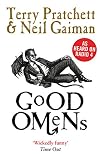
A fun romp about angels and antichrists, mixing about two thirds of Mr Pratchett's satirical japery and pastiche to a third of Mr Gaiman's wistfulness and his love of Cool Spooky Women. The plot felt a bit formulaic towards the end - all the characters suddenly getting into cars and onto bikes so that they can assemble for the big final stand-off. But I enjoyed the ride.
I think it's also interesting that double-authored novels are rare, and that when they do happen, it's often to make the reader laugh. eg Diary Of A Nobody, 1066 And All That.
I think it's also interesting that double-authored novels are rare, and that when they do happen, it's often to make the reader laugh. eg Diary Of A Nobody, 1066 And All That.

Long novella / short novel about a loner writer witnessing a dreamlike zombie conspiracy. Excellent sense of place, particularly as it's set around places very familiar to me: Archway Road, Highgate Hill, and the dreaded Suicide Bridge...
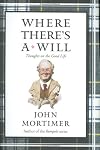
Re-read in light of Mr M's passing. Brilliant collection of aphorisms and genuine sense of passing on a lifetime's experience and wisdom. Particularly like the bit about finding complete happiness while peeing into a bucket in Basingstoke.
Loved this. Very much in the style of Camus's Outsider: existential loneliness, South African-style. Beautifully sparse sentences, the kind that made me want to take them apart and hold them up to the light. My favourite of the Booker list for 2010.
By the way, I would say this definitely works as a novel in three parts, rather than the three short stories collection some people have said it more closely resembles. It definitely felt like a novel to me.
By the way, I would say this definitely works as a novel in three parts, rather than the three short stories collection some people have said it more closely resembles. It definitely felt like a novel to me.
I don't watch enough TV fiction - save Doctor Who - but sometimes a comic book series fills that gap. In storytelling terms, this is the comic equivalent of 'Lost' or '24' or any other programme where you just have to tune in - or in this case, get the box set, ie the collected volumes.
Joe Hill, like Brian K Vaughan (who actually did go from comics to writing 'Lost'), is an absolute master of keeping the reader wanting to turn the page, then come back for the next instalment. He has this trick of scattering unexplained bits of information that do two things at once: they reward a second read and intrigue without alienating first time around, to grip the reader.
I read somewhere that Roald Dahl once listed what kids want most in a story, and it applies to adults too:
SECRETS. The creation of them, and the promise that they will be discovered before the story is over. People talk about what 'drives' a story, eg someone wants something, and does something about it. But what drives the READER is the uncovering of secrets. A striptease on the page!
Dahl also said that kids want to see the villain meet a sticky end. Well, Locke & Key's villain is wonderful: a beautiful but utterly evil gender-changing entity called Dodge, who may or may not be human. The series is still ongoing, and Dodge has yet to be bested (the hero tracks down his secret identity in book 4!), but I don't think Joe Hill's readers will let him finish Locke & Key without a proper comeuppance for Dodge, and show more again, that's what keeps the reader coming back.
Can't recommend this series enough. show less
Joe Hill, like Brian K Vaughan (who actually did go from comics to writing 'Lost'), is an absolute master of keeping the reader wanting to turn the page, then come back for the next instalment. He has this trick of scattering unexplained bits of information that do two things at once: they reward a second read and intrigue without alienating first time around, to grip the reader.
I read somewhere that Roald Dahl once listed what kids want most in a story, and it applies to adults too:
SECRETS. The creation of them, and the promise that they will be discovered before the story is over. People talk about what 'drives' a story, eg someone wants something, and does something about it. But what drives the READER is the uncovering of secrets. A striptease on the page!
Dahl also said that kids want to see the villain meet a sticky end. Well, Locke & Key's villain is wonderful: a beautiful but utterly evil gender-changing entity called Dodge, who may or may not be human. The series is still ongoing, and Dodge has yet to be bested (the hero tracks down his secret identity in book 4!), but I don't think Joe Hill's readers will let him finish Locke & Key without a proper comeuppance for Dodge, and show more again, that's what keeps the reader coming back.
Can't recommend this series enough. show less
Two wry yet poignant novellas, one of which was published in the LRB, one brand new. Weird to see Alan Bennett characters using the internet and mobile phones, when AB himself famously has no computer - he uses a manual typewriter bought from a Bradford charity shop...
Enjoyed both, though they are more of the same sort of thing: an older lady discovers an unlikely new lease of life from a sexual 'arrangement' with her tenants to pay the rent, while another older lady is kept from knowing the truth about her gay son and her husband's affair with his daughter-in-law. The latter story is a bit more exciting, because there's a villain to defeat, one who wants to reveal all and tear the family apart.
If you're new to AB's fiction - which he himself started late in life, in the 1990s - I'd start with The Uncommon Reader, where these themes are applied to HM The Queen discovering a late love of reading. But these latest two are still vastly enjoyable.
Enjoyed both, though they are more of the same sort of thing: an older lady discovers an unlikely new lease of life from a sexual 'arrangement' with her tenants to pay the rent, while another older lady is kept from knowing the truth about her gay son and her husband's affair with his daughter-in-law. The latter story is a bit more exciting, because there's a villain to defeat, one who wants to reveal all and tear the family apart.
If you're new to AB's fiction - which he himself started late in life, in the 1990s - I'd start with The Uncommon Reader, where these themes are applied to HM The Queen discovering a late love of reading. But these latest two are still vastly enjoyable.
Newly republished by Penguin Modern Classics, this is held up by some critics as a 'lost gay classic'. It's a short novel from the early 50s about a British schoolboy's love for an older boy. I found this hard going, despite its short length (150 pages), because the style felt overcooked, lifeless and inert and lacked the wit of, say, Waugh or Firbank. However, there are still some scenes of dreamlike sensuality which remain in the mind, such as the one where the younger boy commands the older into biting into an apple at a Halloween ball.
Read this because it's a set text on my English Lit course.
Not as enjoyable as Enduring Love or as deviant and weird as his earlier books (eg The Cement Garden). Very conservative and trying perhaps a bit too hard to apply the Woolf/Proust/Joyce style of literary modernism to 2003. I got the impression that this was a novel by someone who knows full well it will automatically by published and scrutinised by literary journals.
I could have done without all the details of the squash match & brain surgery, and what story there is felt a bit unlikely: violent gangsters being defeated first by a diagnosis of a brain condition, then later by the reciting of 19th century poetry. I think pepper spray might be better in real life.
I can only really recommend it for squash-loving brain surgeons.
Not as enjoyable as Enduring Love or as deviant and weird as his earlier books (eg The Cement Garden). Very conservative and trying perhaps a bit too hard to apply the Woolf/Proust/Joyce style of literary modernism to 2003. I got the impression that this was a novel by someone who knows full well it will automatically by published and scrutinised by literary journals.
I could have done without all the details of the squash match & brain surgery, and what story there is felt a bit unlikely: violent gangsters being defeated first by a diagnosis of a brain condition, then later by the reciting of 19th century poetry. I think pepper spray might be better in real life.
I can only really recommend it for squash-loving brain surgeons.
In which Adrian Mole hits 40, having lost his wife and daughter and job, his only gain being... prostate cancer. Doesn't sound like the funniest novel in the world, but Ms Townsend pulls it off. She balances the tragicomedy with poignancy, spot-on satire about real world events (the smoking ban, the financial crash) and a real love of her characters. I'm still reeling in admiration as to how she managed to get the tone so pitch-perfect. She's up there with Alan Bennett and John Mortimer in the British comic writer stakes, and is better than ever. The original teenage Mole diaries were the biggest selling novels of the 80s, but this is actually superior in every sense - laughs, tears, suspense, satire, & up-to-date research on the dreaded process of cancer treatment. Deserves more sales. Can't recommend it enough.
Set text for my English degree. Very much in the spirit of Orwell's 1984, though with rather more emphasis on gender, sexuality, colour, and clothes. Considering it was published in the mid 80s, it's scarily prescient about religion being at the heart of future major conflicts and regime changes. Also made me wonder if there is always going to be narrative limitations to writing a novel set in a fictional oppressive society; once you've created such a world, what other kind of story can take place but one of rebellion? Or is that what ALL stories are about, ultimately - rebellion? I feel an essay coming on...
Soho clothes shop manager turned author Clayton Littlewood's second volume of 21st century diaries, after 'Dirty White Boy' a few years ago. This book is a lot more poignant, covering the illness and death of one of his Old Compton Street friends, as well as the passing of unique dandy artist Sebastian Horsley and the closing down of the shop itself. Larger-than-life characters come and go: eccentric customers, lovelorn elderly gay men, priests with a thing for thongs, and not least of all the street's formidable brothel madams.
This is a valuable book for social historians of the future, I feel, as it chronicles a rapidly changing era for both gay men and London. Mainstream Western acceptance of homosexuality has reached the point where straight people (including US presidents) happily campaign for the recognition of gay marriage - less than 50 years since being gay was a jailable offence. Gay men no longer need to find each other in dedicated bars and clubs - the Internet has changed all that. So Mr Littlewood is from one of the last generations of gay men who can remember how hard it was just to BE gay, and how London (and particularly Soho) used to represent British gay life per se.
Soho is changing, too, with the Crossrail development and the late Noughties recession forcing out its quirkier shops, while the more fashionable gay bars tend now to be found in Shoreditch, Vauxhall, Stoke Newington and Hoxton. 'Goodbye To Soho', therefore, says goodbye not just to a show more district, but to a whole era of old-school gay London life.
Still, some things haven't quite changed. I read somewhere that this book was having trouble getting reviewed because some magazine editors found it "too gay". This is an unhelpful phrase that says more about the person using it than the thing they're describing. Far more useful to say that anyone - however they spend their evenings - who likes reading contemporary diaries will enjoy this entertaining and honest book. show less
This is a valuable book for social historians of the future, I feel, as it chronicles a rapidly changing era for both gay men and London. Mainstream Western acceptance of homosexuality has reached the point where straight people (including US presidents) happily campaign for the recognition of gay marriage - less than 50 years since being gay was a jailable offence. Gay men no longer need to find each other in dedicated bars and clubs - the Internet has changed all that. So Mr Littlewood is from one of the last generations of gay men who can remember how hard it was just to BE gay, and how London (and particularly Soho) used to represent British gay life per se.
Soho is changing, too, with the Crossrail development and the late Noughties recession forcing out its quirkier shops, while the more fashionable gay bars tend now to be found in Shoreditch, Vauxhall, Stoke Newington and Hoxton. 'Goodbye To Soho', therefore, says goodbye not just to a show more district, but to a whole era of old-school gay London life.
Still, some things haven't quite changed. I read somewhere that this book was having trouble getting reviewed because some magazine editors found it "too gay". This is an unhelpful phrase that says more about the person using it than the thing they're describing. Far more useful to say that anyone - however they spend their evenings - who likes reading contemporary diaries will enjoy this entertaining and honest book. show less
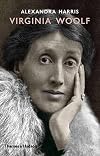
Short, sharp introduction to Woolf's life and work, with lots of photos. Despite this, Ms Harris writes with a sophisticated enough style to suit both academics and general readers. She also does what the more expansive 90s biog by Hermione Lee can't - updates the legacy of Woolf to suggest that the Hollywood film The Hours unfairly simplifies Woolf as mentally ill, self-absorbed and intense. All of which was true from time to time, but is rather unfair to her other, less filmic characteristics: she was also witty, hard working, innovative, sociable and progressive. Harris also manages to squeeze in a thesis of her own: that Woolf ultimately eludes any attempt to pin her down one way or another, and that this quality is the key to her continuing popularity today.
Slight spoilers!
Not quite as stuffed with jokes and dazzling flights of the imagination as the Hitchhiker's Guide novels, but there's still plenty to enjoy here. There's the brilliant idea of the Electric Monk, the simple comedy of a bored horse found in unlikely places (an idea later used by Steven Moffat in one of his Doctor Who episodes - he confirms this somewhere), a very clever idea to do with Coleridge and time-travelling, a sad human ghost trying to work out what he's meant to do with himself, an ambiguously motivated ghost of an alien engineer, a dodo, a stuck sofa, and best of all the rumpled super-detective that is Dirk Gently himself.
It's worth remarking that, when Dirk G as a character was dramatised by the BBC for radio and then TV, the plot of this novel was, respectively, first heavily simplified then mostly ignored. It IS a bit of a crossword puzzle of a story, and a reader looking to be properly satisfied after finishing the book might want to either re-read it at once or go online and find a fan's FAQ.
Not quite as stuffed with jokes and dazzling flights of the imagination as the Hitchhiker's Guide novels, but there's still plenty to enjoy here. There's the brilliant idea of the Electric Monk, the simple comedy of a bored horse found in unlikely places (an idea later used by Steven Moffat in one of his Doctor Who episodes - he confirms this somewhere), a very clever idea to do with Coleridge and time-travelling, a sad human ghost trying to work out what he's meant to do with himself, an ambiguously motivated ghost of an alien engineer, a dodo, a stuck sofa, and best of all the rumpled super-detective that is Dirk Gently himself.
It's worth remarking that, when Dirk G as a character was dramatised by the BBC for radio and then TV, the plot of this novel was, respectively, first heavily simplified then mostly ignored. It IS a bit of a crossword puzzle of a story, and a reader looking to be properly satisfied after finishing the book might want to either re-read it at once or go online and find a fan's FAQ.
Mixed feelings about this one, my first encounter with Pynchon. A passage early on about the poignancy of used cars affected me so much that I had to read it aloud to myself, twice, to properly savour it.
But as the story went on, and it turned into a paranoid detective tale about the Tristero organisation, I found myself a lot less interested.
Pynchon does this trick of densely compressing some events into mere clauses within sentences, while expanding others to fill pages (the detailed breakdown of the play). And he does like his silly names. Calling someone Genghis Cohen is so divisive: you'll either find that hilariously witty or tiresome, or dated. It IS very much a mid 1960s novel, reacting to everything from Beatlemania to the beginning of LSD culture.
So I'm not sure if I like it. But then, I'm not sure if you're meant to like it. But I admire it.
But as the story went on, and it turned into a paranoid detective tale about the Tristero organisation, I found myself a lot less interested.
Pynchon does this trick of densely compressing some events into mere clauses within sentences, while expanding others to fill pages (the detailed breakdown of the play). And he does like his silly names. Calling someone Genghis Cohen is so divisive: you'll either find that hilariously witty or tiresome, or dated. It IS very much a mid 1960s novel, reacting to everything from Beatlemania to the beginning of LSD culture.
So I'm not sure if I like it. But then, I'm not sure if you're meant to like it. But I admire it.
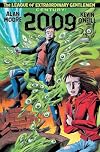
Here, Moore & O'Neill manage to not just have their cake and eat it, but throw a colourful cake-eating and cake-having party for everyone.
By this opening of this latest chapter, set once again in a patchwork world made up of other people's published fictions (including TV characters), the now-immortal Mina Murray (from 'Dracula') and Alan Quartermain (from 'King Solomon's Mines') have gone AWOL. It is left to Orlando (from Virginia Woolf's novel) to try to reassemble the team in time to prevent an Antichrist from bringing on Armageddon - or at least, one form of Armageddon...
One of the pleasures of the LOEG books is spotting the various characters and references, most of which have to be alluded to namelessly, to avoid breaching copyright law. Hence the cheeky fun of making the Antichrist into what is clearly a highly traumatised Harry Potter, and God into Mary Poppins, and have them face each other off.
On top of that, there's plenty of faces tucked away in the panels, which readers can argue about: O'Neill's likenesses aren't exactly photographic. I highly recommend leafing through Jess Nevins's annotations at http://jessnevins.com/annotations/2009annotations.html, which include theories and conflicting arguments from other readers.
But on top of his love of cramming in references and roasting sacred cows, Moore is ultimately a great storyteller who knows how to grip the reader, excite them, move them, provoke them, and indeed appall them - he still knows how to pull show more off a Gone Too Far moment, even after decades of comic writing. Real life events are now breaking into the fiction, according to one character, and to prove it there's a Kings Cross station sequence which features Matt Smith's Doctor Who and John Barrowman's Captain Jack at one point, then the casualties of the 7/7/2005 terrorist attack at another.
I was particularly impressed by the use of topical talking points, eg high school massacres blamed on Point Of View shoot-em-up computer games. Moore transposes this issue on top of his Harry Potter Goes Evil story, and somehow it all comes together perfectly.
Finally, away from all the cheekiness and mayhem, Moore is making a serious point about the state of popular fiction in the early 21st century; that ideas are getting worn out and imagination is becoming eclipsed by nostalgia. He seems to be making digs at JK Rowling recycling a 1940s-style cosiness in her Harry Potter books, while elsewhere a homeless Martin Clunes (!) is seen wearing a filthy 'Sunshine Desserts' t-shirt, being a reference to his role in a recent, utterly pointless TV remake of 'Reginald Perrin'.
Is culture being remade to death? Is innovation dead? Are there no new ideas? Will we see a world where the most popular novels are, say, Twilight fan fiction rewritten as kinky S&M sex fantasies?
Yes, obviously. But at least this LOEG story is trying to comment on culture, both celebrating and criticising, while having one hell of a ball in the process. AND you get kinky sex scenes here too, so everyone's happy. show less
By this opening of this latest chapter, set once again in a patchwork world made up of other people's published fictions (including TV characters), the now-immortal Mina Murray (from 'Dracula') and Alan Quartermain (from 'King Solomon's Mines') have gone AWOL. It is left to Orlando (from Virginia Woolf's novel) to try to reassemble the team in time to prevent an Antichrist from bringing on Armageddon - or at least, one form of Armageddon...
One of the pleasures of the LOEG books is spotting the various characters and references, most of which have to be alluded to namelessly, to avoid breaching copyright law. Hence the cheeky fun of making the Antichrist into what is clearly a highly traumatised Harry Potter, and God into Mary Poppins, and have them face each other off.
On top of that, there's plenty of faces tucked away in the panels, which readers can argue about: O'Neill's likenesses aren't exactly photographic. I highly recommend leafing through Jess Nevins's annotations at http://jessnevins.com/annotations/2009annotations.html, which include theories and conflicting arguments from other readers.
But on top of his love of cramming in references and roasting sacred cows, Moore is ultimately a great storyteller who knows how to grip the reader, excite them, move them, provoke them, and indeed appall them - he still knows how to pull show more off a Gone Too Far moment, even after decades of comic writing. Real life events are now breaking into the fiction, according to one character, and to prove it there's a Kings Cross station sequence which features Matt Smith's Doctor Who and John Barrowman's Captain Jack at one point, then the casualties of the 7/7/2005 terrorist attack at another.
I was particularly impressed by the use of topical talking points, eg high school massacres blamed on Point Of View shoot-em-up computer games. Moore transposes this issue on top of his Harry Potter Goes Evil story, and somehow it all comes together perfectly.
Finally, away from all the cheekiness and mayhem, Moore is making a serious point about the state of popular fiction in the early 21st century; that ideas are getting worn out and imagination is becoming eclipsed by nostalgia. He seems to be making digs at JK Rowling recycling a 1940s-style cosiness in her Harry Potter books, while elsewhere a homeless Martin Clunes (!) is seen wearing a filthy 'Sunshine Desserts' t-shirt, being a reference to his role in a recent, utterly pointless TV remake of 'Reginald Perrin'.
Is culture being remade to death? Is innovation dead? Are there no new ideas? Will we see a world where the most popular novels are, say, Twilight fan fiction rewritten as kinky S&M sex fantasies?
Yes, obviously. But at least this LOEG story is trying to comment on culture, both celebrating and criticising, while having one hell of a ball in the process. AND you get kinky sex scenes here too, so everyone's happy. show less
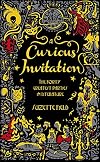
Eclectic look at the depiction of parties, soirees, banquets and balls across the whole history of literature, examining every dress code, menu, guest list and conversation. Possibly the first book to compare Joyce's Finnegan's Wake with Jackie Collins's Hollywood Wives (!)Has persuaded me to finally get around to certain books...
Here's a list of all 40 of the novels:
http://www.goodreads.com/list/show/25215.The_Greatest_Parties_In_Literature_acco...
Here's a list of all 40 of the novels:
http://www.goodreads.com/list/show/25215.The_Greatest_Parties_In_Literature_acco...
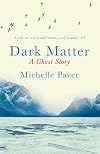
Atmospheric ghost story set in the Arctic - with a (slight) gay theme. Has its spooky moments - fairly enjoyable.
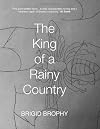
1956 British novel about a drifting young couple of sexually ambiguous London bohemians, by the genre-defying Brigid Brophy. Last seen as a Virago Modern Classic in 1990, now republished by youthful indie fanzine types Coelacanth Press. This edition also comes with a couple of new introductions, helping to argue why this dusty old novel - and Brophy herself - are worthy of wider attention today.
I'd compare it to the later films of Lindsay Anderson, in that it feels both incredibly British, but also very European, trying to kick back at its Britishness at the same time as commenting upon it. There's doses of dazed Camus-style existentialism, plus a hint of Muriel Spark and Beryl Bainbridge's autobiographical works about bright young women in the post war era. It also echoes the genre of gay coming of age novels, and even a touch of the Beats when the location moves to Italy.
Although it's not as experimental as her later works (eg In Transit), I was particularly impressed by Brophy's device of carefully omitting the narrator's own name throughout the whole book, except at one crucial moment (as far as I can make out).
I'd compare it to the later films of Lindsay Anderson, in that it feels both incredibly British, but also very European, trying to kick back at its Britishness at the same time as commenting upon it. There's doses of dazed Camus-style existentialism, plus a hint of Muriel Spark and Beryl Bainbridge's autobiographical works about bright young women in the post war era. It also echoes the genre of gay coming of age novels, and even a touch of the Beats when the location moves to Italy.
Although it's not as experimental as her later works (eg In Transit), I was particularly impressed by Brophy's device of carefully omitting the narrator's own name throughout the whole book, except at one crucial moment (as far as I can make out).
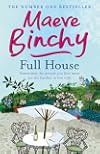
My first encounter with the massive-selling Maeve Binchy. Am not really a fan of her straightforward commercial style, but have to admit it's hard to dislike Ms Binchy's compassionate and big hearted approach to her characters.
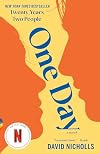
I read this because of its massive popularity and seemingly permanent place in the charts. It's a romcom based on a concept, ie the reader checks in with the same will-they-won't-they couple once a year across two decades. Well-written and unpretentious, somewhere (cunningly!) between romance fiction and literary fiction, with lots of detail and a nice use of changing tenses to vary the pace. Very nearly cried at the end... but only nearly. Mr Nicholls has his own tasteful style of unabashed sweetness, combined with a gentle fondness for his characters that's hard to begrudge, but I found it all a little too sweet and unchallenging for my taste at times. Still, it was pleasant and likeable enough and I did want to finish it. Nothing wrong with a bit of well-written sweetness.