
When a knight won his spurs, in the stories of old,
He was gentle and brave, he was gallant and bold
(When a Knight Won His Spurs, Jan Struther)
As I hum a hymn from school, a long time ago, I reflect that it has also been a long time since I read a convincing historically-based novel. This story brought me back to the dreams and quests of youth, in some part, while capturing the harsh reality of life in medieval times—especially for women and third born sons. As an eldest daughter, I can appreciate the pressures placed on the first born son of a knight. Of course I’m imagining here. This story however was not the story of a first, or even second born, but a third born son forced into the ministry. Yet, let me point out that a first born daughter has it worse, as to my modern sensibilities a nunnery seems preferable to an arranged marriage. Personal feelings about birth rites aside this is a story of a knight’s son, accompanied by our third born monk on a fool’s quest. A series of quests actually for the son to prove his worth.
Lang’s tale captures the realities of day-to-day living, us common folk. Our companion and guide through this story is such an honest monk about all his shortcomings that whatever follows is bound to be believable. Without giving too much away this book has history, humour, realistic characters and quirks which left me guessing where the narrative was going.
No charger have I, and no sword by my side,
Yet still to adventure and battle I ride…
He was gentle and brave, he was gallant and bold
(When a Knight Won His Spurs, Jan Struther)
As I hum a hymn from school, a long time ago, I reflect that it has also been a long time since I read a convincing historically-based novel. This story brought me back to the dreams and quests of youth, in some part, while capturing the harsh reality of life in medieval times—especially for women and third born sons. As an eldest daughter, I can appreciate the pressures placed on the first born son of a knight. Of course I’m imagining here. This story however was not the story of a first, or even second born, but a third born son forced into the ministry. Yet, let me point out that a first born daughter has it worse, as to my modern sensibilities a nunnery seems preferable to an arranged marriage. Personal feelings about birth rites aside this is a story of a knight’s son, accompanied by our third born monk on a fool’s quest. A series of quests actually for the son to prove his worth.
Lang’s tale captures the realities of day-to-day living, us common folk. Our companion and guide through this story is such an honest monk about all his shortcomings that whatever follows is bound to be believable. Without giving too much away this book has history, humour, realistic characters and quirks which left me guessing where the narrative was going.
No charger have I, and no sword by my side,
Yet still to adventure and battle I ride…
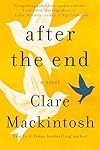
Enjoyable read for a difficult subject area. Delightful second half.
Miss Price's Decision: A Mansfield Park, Northanger Abbey and Pride and Prejudice variation (Austeniana Book 2) by Eliza Shearer
It's interesting how different this genre can be.
I just finished Miss Bronte a book full of difficult characters and complex prose when I picked up this Jane Austen inspired storyline. This is definitely for readers looking for an easy read. It's easy to pick up wherever you stop, getting interrupted by the family for example. It has all the elements you would expect: romance, misunderstandings, familiar characters seen from different angles.
I just finished Miss Bronte a book full of difficult characters and complex prose when I picked up this Jane Austen inspired storyline. This is definitely for readers looking for an easy read. It's easy to pick up wherever you stop, getting interrupted by the family for example. It has all the elements you would expect: romance, misunderstandings, familiar characters seen from different angles.
YA adventure for boys who like satire
Honestly, we are in deep shit.
In a mismanaged kingdom on an isle called Hope. Prince Tristan is expected to marry a princess he 's never met. Shame might as well be a lemon. Two problems: people are trying to kill him and the princess is missing. Third problem: his rival Harry.
I liked the Queen of Sudenia's character, but f me there was too much exposition in the dialogue which might be overlooked by younger readers. More teenager s due to swearing.
Also beneficiaries with single line spacing and 1.5 in other parts. And typos, for instance 'I apologies' instead of 'I apologise'. Indicating for me a rush to publish when the book has promise with more work, if you get the humour which is very individual to different readers.
Can see a lot of world building has gone into this book. Including nice illustrations. So when pitched to the right reader it might be popular. And some effort could go into satire for all genders or non-genders given when this is being published. Making it suitable for a wider audience.
Honestly, we are in deep shit.
In a mismanaged kingdom on an isle called Hope. Prince Tristan is expected to marry a princess he 's never met. Shame might as well be a lemon. Two problems: people are trying to kill him and the princess is missing. Third problem: his rival Harry.
I liked the Queen of Sudenia's character, but f me there was too much exposition in the dialogue which might be overlooked by younger readers. More teenager s due to swearing.
Also beneficiaries with single line spacing and 1.5 in other parts. And typos, for instance 'I apologies' instead of 'I apologise'. Indicating for me a rush to publish when the book has promise with more work, if you get the humour which is very individual to different readers.
Can see a lot of world building has gone into this book. Including nice illustrations. So when pitched to the right reader it might be popular. And some effort could go into satire for all genders or non-genders given when this is being published. Making it suitable for a wider audience.
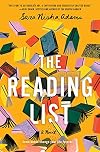
Wonderful warm characters
A wonderful warm book, that draws you into the characters ' lives. Set in London, Wembley, it tells the story of a widower, a widow, a librarian and a little girl. And more! Who all become readers at the same library. Delightful.
Content warning: mention of suicide.
A wonderful warm book, that draws you into the characters ' lives. Set in London, Wembley, it tells the story of a widower, a widow, a librarian and a little girl. And more! Who all become readers at the same library. Delightful.
Content warning: mention of suicide.
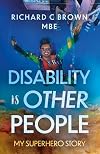
Entertaining and inspiring book, that will hopefully inspire others to take action in their community. Definately made me make a move, after considering our village hall sitting there empty for a while.
It's a book on activism as much as it is about Richard's experiences. Working with others to put ideas into practice.
It's a book on activism as much as it is about Richard's experiences. Working with others to put ideas into practice.
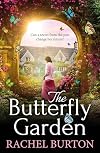
Entertaining
Didn't expect so many layers to this book, whilst also being easy to read and entertaining. I may have laughed out loud a few times.
Didn't expect so many layers to this book, whilst also being easy to read and entertaining. I may have laughed out loud a few times.
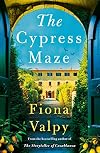
At the heart of the maze
Not only a contemporary and historical war novel, but a moving portrayal of people healing from grief. That's something I always appreciate from the author, the message at the heart of th e maze of her stories.
Not only a contemporary and historical war novel, but a moving portrayal of people healing from grief. That's something I always appreciate from the author, the message at the heart of th e maze of her stories.
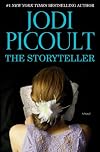
After reading The Tattooist of Auschwitz, the next book on my pile was The Storyteller. And I am glad it was because it gave me a chance to compare the two books, both set (for some of the narrative) at Auschwitz. I thought I had enjoyed the first one, but Jodi Picoult was my favourite because 1) it was well researched, 2) had a well thought out plot and 3) it captured the realism better (for me) than the "real life" tale. There's been some controversy over the first book as it has been sold as a true story but parts have been fictionalised. So I felt safer reading Picoult's book because I know to expect from her the research, the emotions, the painting of a unique picture, the social commentary. And I wasn't dissapointed. Perhaps you have also read both books and disagree?
This book was also written before the other and I saw some crossovers in terms of information. Yet preferred the framing of the second through the eyes of a contemporary character and reflecting on the horrors of people's actions, in general, with a commentary on modern killings occuring today. So, for me, the book did not confine itself to the past, and therein lies its superior storytelling.
This book was also written before the other and I saw some crossovers in terms of information. Yet preferred the framing of the second through the eyes of a contemporary character and reflecting on the horrors of people's actions, in general, with a commentary on modern killings occuring today. So, for me, the book did not confine itself to the past, and therein lies its superior storytelling.
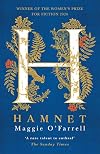
Hamnet, loved the new book by Maggie O'Farrell. The small accumulative details O’Farrell uses for her character’s day to day lives in a household, their feelings, the journey of a plague across an ocean, are well thought out. For example in this extract:
"...this fit. It is altogether unlike anything she has felt before. It makes her think of a hand drawing on a glove, of a lamb slithering wet from a ewe..."
I was drawn in by Angus. The story of a maturing woman, a sister, a mother, a healer, a caregiver, a griever, an observer.
I won’t say anymore, as you must be the judge. But this is a highly recommended read, like all of Maggie O’Farrell’s books.
"...this fit. It is altogether unlike anything she has felt before. It makes her think of a hand drawing on a glove, of a lamb slithering wet from a ewe..."
I was drawn in by Angus. The story of a maturing woman, a sister, a mother, a healer, a caregiver, a griever, an observer.
I won’t say anymore, as you must be the judge. But this is a highly recommended read, like all of Maggie O’Farrell’s books.
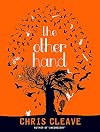
Written with emotion about real-life topics. You'll have to read it if you want to know more ;-)
Words Fail Me: What Everyone Who Writes Should Know about Writing – The Funny and Painless Grammar Companion by Patricia T. O'Conner
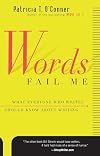
A little book of inspiration for the all important polishing. Though I still prefer King's On Writing.
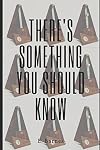
This book asks one fundamental question: have you ever thought about whether you exist or not?
It was Vincent Van Gogh that supposedly said,
“I know nothing with any certainty. But the sight of the stars makes me dream”
I found that this book made me dream, of galaxies far away (although to clarify, not set in space or with time travel); it made me dream in a Matrix-like way of who we really were and what consciousness is. It captured things I have thought about in the past, including the dilemma about whether any of it matters.
This is also a novel that reads well in the current political context. Yes, sorry I am mentioning Brexit and Trump again. The author essentially asks us, from my perspective that is, if someone is not truly conscious of their sheep-like actions how should we treat them? With ethics and compassion, or with exploitation? There is at the core of the book a question about how we should treat people that are different from ourselves, people that we cannot understand. As such it is a moral commentary, such as 1984 and Animal Farm.
The book is in three parts: part one follows Ethan’s story, part two shared by others, and in part three the threads are drawn together. I found I enjoyed the first part the most which describes a world where other people, the people near you right now, might not be as they appear to be. What if they didn’t really exist? How would you feel and how would you treat them?
A beautifully written novel that left me smiling, and show more more importantly made me think. show less
It was Vincent Van Gogh that supposedly said,
“I know nothing with any certainty. But the sight of the stars makes me dream”
I found that this book made me dream, of galaxies far away (although to clarify, not set in space or with time travel); it made me dream in a Matrix-like way of who we really were and what consciousness is. It captured things I have thought about in the past, including the dilemma about whether any of it matters.
This is also a novel that reads well in the current political context. Yes, sorry I am mentioning Brexit and Trump again. The author essentially asks us, from my perspective that is, if someone is not truly conscious of their sheep-like actions how should we treat them? With ethics and compassion, or with exploitation? There is at the core of the book a question about how we should treat people that are different from ourselves, people that we cannot understand. As such it is a moral commentary, such as 1984 and Animal Farm.
The book is in three parts: part one follows Ethan’s story, part two shared by others, and in part three the threads are drawn together. I found I enjoyed the first part the most which describes a world where other people, the people near you right now, might not be as they appear to be. What if they didn’t really exist? How would you feel and how would you treat them?
A beautifully written novel that left me smiling, and show more more importantly made me think. show less