Sundays with Sullivan: How the Ed Sullivan Show Brought Elvis, the Beatles, and Culture to America by Bernie Ilson
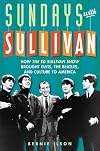
If you haven't read an "inside the Sullivan show" book before, this probably wouldn't be the one I'd recommend, although it's a decent enough supplement written by a man who was connected with the Sullivan organization. As the other reviewers mention, Ilson does a good job at summing up Sullivan's pre-TV years, and his personal recollections of the man are very interesting, but then the book kind of goes pear-shaped when the author starts in at length about Sullivan's popularization of high culture, and when that becomes an overarching agenda the book gets to be a bit too much. I wouldn't mind seeing a more straightforward memoir about the Sullivan years from the author, since I was sorry to see that element go once things swung around to a more general overview.
 This review was written for LibraryThing Early Reviewers.
A nice little overview of a legacy strip which I think is taken for granted these days. Nevertheless, the book is docked a half a star for not including more than two strips from pretty much any of the DeBeck continuing stories. A couple of complete adventures would've made this so much better. The DeBeck/Barney Google years are well overdue for a more "deluxe" treatment. Snuffy Smith, obviously, can fend for himself.

Simple jokes and anecdotes in the Esperanto language for the beginning to intermediate learner. It's not much stylistically, but a very good learning tool.

If you're a fan of uniquely American convenience foods like Twinkies or Swanson's TV Dinners, this is a pretty good book to have on your shelf. Wyman gives us mini-histories of more than 100 varieties of grocery staples and the men and women behind them. Biggest surprise: she puts the old joke to rest by telling us why they're called Grape Nuts...yes, there's a REASON! And it makes SENSE! You will never look at that box the same way again.
Found this one in a Salvation Army last year. This is obviously one of those get-rich books advertised in the tabloids, full of blatantly bad (and in some cases fraudulent) "advice" in how to make a mint. But you can tell these tips work because look! There's a line drawing of a guy in a three-piece suit pushing a wheelbarrow full of money!
If I had paid the asking price in the National Enquirer, I would've been salty, but it's hilarious if you can find a 25c copy at the thrift store.
If I had paid the asking price in the National Enquirer, I would've been salty, but it's hilarious if you can find a 25c copy at the thrift store.

This is the standard on which I judge other overviews of bad TV, for while "The Worst TV Shows Ever" isn't encyclopedic by any means, Andrews and Dunning give excellent coverage to the misbegotten shows that DID make the cut. We need a new revision of this book; awful drifts in and out of the zeitgeist, but never really goes away.

Reading Like a Writer: A Guide for People Who Love Books and for Those Who Want to Write Them (P.S.) by Francine Prose
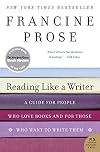
As someone who's trying to work up the nerve to start writing again, the title struck me in a good place, and the book didn't disappoint. Prose builds the book around the sensible idea that with the great writers, every word and every sentence is there for a reason, and if you want to figure out how to they do it, you should start with a close reading of what they put on the page. She then walks us through (sometimes lengthy) excerpts ranging from Tolstoy to Cheever to show us what you can get out of paying attention, both as a reader and a writer. It's a very engaging read, with a style that shows where all those books will get you. She also includes a list of "books to be read immediately", which is more or less a handy bibliography of books covered in the main text. Considering one of the selections is Tales of Anton Chekhov Vols. 1-13, to which she dedicates a whole chapter, Prose must have an odd concept of "immediately".
At least one online critic doesn't see advice to writers in anything but the first and the last chapters. He obviously read a different book than I did, or more likely has the maddening idea that writers are too busy writing to read somebody else. If you're just looking for exercises, Writing Down The Bones is still in stores.
At least one online critic doesn't see advice to writers in anything but the first and the last chapters. He obviously read a different book than I did, or more likely has the maddening idea that writers are too busy writing to read somebody else. If you're just looking for exercises, Writing Down The Bones is still in stores.

One of my all-time favorite books to thumb through. Really not much else I can say, except to register my disappointment that the new edition (from Skyhorse Publishing) doesn't include the wonderfully droll S.J. Perelman introduction from the Chelsea House version.
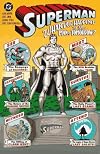
Anyone with any affection for the pre-Crisis (that is, pre-John Byrne) Superman will get a lot out of this story, which was intended as the "final issue" under the old continuity. For others, I'd recommend tackling the trade paperbacks that cover the decades first, because in it's proper context, "Whatever Happened..." is a four star tale in the old style.
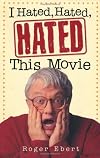
Two truisms about Roger Ebert: when he loves a film, he explains why very well, and when he hates a film, the resulting review can be more entertaining than the movie he's trashing. For that reason, I reread portions of this book quite a bit.

Comics Curmudgeon readers take note: this book is proof that B.C. used to be funny. :)
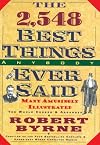
A huge compilation of clever quotes and epigrams. It's a fun book to flip through when you're not in the mood to take on an actual story.
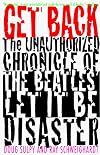
An invaluable reference for people hip deep in the Beatles mythos and the Get Back/Let It Be sessions. For general readers, not so much.

Selected daily and Sunday Peanuts strips from 1969 and 1970. This collection includes several of my favorite sequences ("It was a dark and stormy night," Charlie Brown's idolatry of Joe Shlabotnik, and Snoopy's tenure as the Head Beagle), so until Fantagraphics catches up, this will have a special place on my shelf.

Peanuts highlights from 1960-62. Superseded by the recent Complete Peanuts releases, but these are easier to take with you on the go, and of course, they're very funny.

Selected Peanuts comic strips from 1957-9. These are great cartoons, but the paperbacks have been superseded by The Complete Peanuts series. Still, if you have them, these are easier to carry with you on the go...

Maybe if I had read this in school, with its message that "ideas have consequences," it would've counteracted all that Kurt Vonnegut, where the message seemingly was that "no matter what life you lead, eventually the universe will slap a 'kick me' sign on your a** anyway." Sure, both are valid, but one gives you a bit of hope. Not that the other isn't entertaining, of course...
(Full review (with some spoilers) at http://stuffnonsense.blogspot.com/2006/03/just-finished-farenheit-451-by-ray.htm... )
(Full review (with some spoilers) at http://stuffnonsense.blogspot.com/2006/03/just-finished-farenheit-451-by-ray.htm... )

http://stuffnonsense.blogspot.com/2006/02/just-finished-wuthering-heights-by.htm... (possibly some minor spoilers, but much less than your standard scholarly introduction)

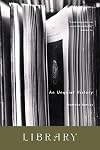
When you're a book person, even a flaky one like me, you usually end up with a library fixation. Matthew Battles, who works at Harvard's Houghton Library, ended up doing something useful with his by tracing the history of the library through the centuries. In the process, we find some interesting things about the guardians of knowledge and the ways they try to steer the course of things. The chapter on Nazi librarians is especially fascinating.

My review, along with a few other novels taken by the batallion:
http://stuffnonsense.blogspot.com/2005/08/its-me-again-benign-neglect-never.html
http://stuffnonsense.blogspot.com/2005/08/its-me-again-benign-neglect-never.html


The follow-up to Parnassus On Wheels finds Roger Mifflin, travelling bookseller, holding down a storefront in post-WW1 Brooklyn, holding forth on his favorite topic (his passion for reading) to anyone who will listen. Apparently a few people actually agree with him, as a friend sends his daughter to do a bit of apprenticeship to "get some of the 'finishing school' nonsense out of her head". While she gets accustomed to the way things are done in her new trade, a book of Oliver Cromwell's speeches keeps popping in and out of its assigned place on the shelf, and after somebody almost pitches ad man Aubrey Gilbert off the Brooklyn Bridge in a burlap sack for being too nosy, he starts to suspect something sinister going on at the bookshop.
I do have to give you fair warning on a few points, especially if you go into this book without reading Parnassus first (which isn't completely necessary). Morley has the good grace to apologize up front the romantic subplot running away with the book at certain points when his original goal was to give us more Mifflin. If you can't get into the literary lifestyle, you might take issue with the chapters dedicated to the importance of books, complete with reading lists, then-current publishing trends, and the philosophies of various book sellers. However, if you're the type who gets into kicking around musty covers in secondhand stores, these may be the most interesting parts. Morely has a wonderfully descriptive style, which gives you a real show more sense of the place and the times. As was mentioned above, he throws in a decent dollop of adventure and (naturally) some digs at the ad game.
(First posted: http://stuffnonsense.blogspot.com/2004/10/adventures-in-googling-from-time-to.ht... show less
I do have to give you fair warning on a few points, especially if you go into this book without reading Parnassus first (which isn't completely necessary). Morley has the good grace to apologize up front the romantic subplot running away with the book at certain points when his original goal was to give us more Mifflin. If you can't get into the literary lifestyle, you might take issue with the chapters dedicated to the importance of books, complete with reading lists, then-current publishing trends, and the philosophies of various book sellers. However, if you're the type who gets into kicking around musty covers in secondhand stores, these may be the most interesting parts. Morely has a wonderfully descriptive style, which gives you a real show more sense of the place and the times. As was mentioned above, he throws in a decent dollop of adventure and (naturally) some digs at the ad game.
(First posted: http://stuffnonsense.blogspot.com/2004/10/adventures-in-googling-from-time-to.ht... show less