Irvings Works - the Sketch-book of Geoffrey Crayon Complete in One Volume (Artist's Edition) by Washington Irving

Book given to Miss Mary Watts Graduation from Stuart Institute, June 9, 1875 Springfield Ill
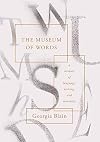
Having completely forgotten about signing up in hopes of getting an advance copy to review, I was shocked to find this book in my mailbox. As I read the blurb on the cover, I was stunned. How was it possible that I was sent this book and not one of the others I had checked off? Was it a coincidence or rather something spiritual afoot? The author, Georgia Blain, had passed away from Glioblastoma, an insidious brain cancer that took the lives of Ted Kennedy, Senator McCain of Arizona, Pittsburgh mayor Bob O'Connor and my daughter-in-law, Candace. Candace died of Gliobastoma at the age of 50 in January of 2018. Her death was 12 months from her diagnosis. She had been married 22 years. Our author, Georgia Blain, had been with her partner 20 years and died at the age of 51, 13 months from her diagnosis. Both women left children behind. The physicality of the book itself is superb. Quality paper, thicker than most editions today, that feels velvety to the touch. The design and coloration of the book binding and cover were selected with such taste. No Ebook can deliver that kind of enrichment to a reader! In the Museum of Words, there are many insights into the function and meaning of language and her thoughts about mortality that I need to read again to fully understand. What an elegant, unique and incredible book this is!
 This review was written for LibraryThing Early Reviewers.
Van Gogh, Monet, Degas the Mellon Collection of French Art from the Virginia Museum of Fine Arts by Colleen Yarger

The exhibition itself was tremendously rewarding. I visited twice and could have gone a third time. I bought the catalog, only to be severely disappointed by the colors. An "acid yellow" in the right forefront of Pierre Bonnard's The Pont de Grenelle and the Eiffel Tower is noted by the authors. However, the photo in the catalog (and on the COVER of the catalog) presents us with a dull, lackluster yellow. Vuillard's The Gilded Chair presents the viewer with a intense, definitive gold. Again the catalog presents a diminished color. This diminution of color is repeated in cards sold at the gift shop. I would like to share the beauty and impact of the original with friends. Someone at the exhibition said "That's why we come here in person!" However I can't believe that modern photography is incapable of presenting colors better than this. I found a second disappointment in the catalog in that several photos are presented cropped. Once as a square fitting the shape of the catalog, while the painting itself is oblong. etc.

.This book is a collection of 45 essays selected from Mr. Spiegelman's writings that appeared in The Wall Street Journal for the past three decades/
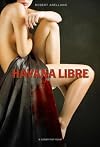
I was interested in reading this book because I had found the t.v. series "Four Seasons in Havana" on Netflix engrossing. It is obvious that Havana Libre is an intriguing novel. The author, Robert Arellano, immerses the reader in the culture and politics of Cuba in 1997 after the collapse of the Soviet Union. To accomplish this, he enriches the pages with Spanish words, phrases and idioms that, I am sure, create an authentic atmosphere. However, being totally illiterate in Spanish, I found this frustrating beyond belief. I was afraid of missing a significant connotation, insight or explication, I wanted to know the precise meaning and inflection of the Spanish. Yes, the meaning could sometimes be determined from the context, or the author would restate it in English immediately. But the majority of time I was totally adrift. I decided to read on, guessing at the meaning as much as I could. One example was "casas particulares." As the writer had just spoken of apartment houses, I translated this phrase as "individual houses." Later in the afternoon, I was reading an article about Cuba in the WSJ weekend issue of Jan 13/14. There, serendipitously, was "casas particulares" translated as B and B's. So I knew I could not trust my guesses. Now I was back to constantly looking up the translation on my IPhone. Having to do this destroyed the rhythm and flow of the novel. Who was the audience Arellano intended this book for? Billinguals? Or, was he perhaps saying if one couldn't show more understand the Spanish, one could never begin to understand Cuba? show less
This review was written for LibraryThing Early Reviewers.
Tony Hillerman spoiled me for anyone else writing about the West. But Johnson's books are pleasant and interesting. First met Longmire on Netflix!!
Lewis and Clark on the Trail of Discovery: An Interactive History with Removable Artifacts (Museum in a Book) by Rod Gragg
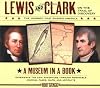
For children and adults alike. Wonderful, informative.
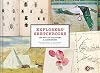
What a privilege it is to receive a book of this caliber to review. My thanks to Chronicle Books and LibraryThing. I was overwhelmed by the wide range of explorers who were included. It was delightful to recognize names I had learned in those childhood years of history classes, but perhaps not thought of in years. James Cook! Howard Carter! Heyerdahl! David Livingston! Shackleton! Hillary! The name Jan Morris jumped off the page. Jan Morris has long been one of my favorite writers. I knew she had been in the British Military, but somehow had missed the fact that she covered the first British expedition to Mt. Everest. Amazing! What a grand, ambitious concept this book is! If I were allowed one book on a desert island I would choose this one. Indeed, the book reprimands me for not doing what these men and women have done. We cannot go through life simply living out our daily routines. Same old! Same old! We must not lose our sense of curiosity. We should observe, reflect, evaluate, and most of all, record our observations. Something happens within us when we express our impressions with the written word, or sketches in pastels or pencil. Our active engagement in our own world grows and our lives are richer for that.
This review was written for LibraryThing Early Reviewers.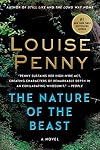
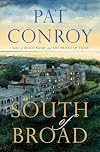
Absorbing. But a bit schmaltzy like a soap opera. But how Conroy could write!! Crystalline descriptions of Charleston's beauty, climate, flora and fauna, etc. Amazing to read of how good friends threw non pc epithets at each other constantly, even affectionately. Couldn't be today. I was somewhat dismayed that the characters who suffered the worst childhoods met the worst fates. Is it impossible to overcome tragedy at a young age unless you have an intact family unit while growing up and a wonderful father as Leo did? Now I have to read Prince of Tides again. I read it perhaps 30 or more years ago. At that time I thought Prince of Tides was the best book I had ever read. A second reading by an older mind may not agree.
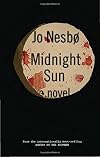
I think Nesbo wrote this one for himself. I could feel he enjoyed writing it. Didn't know he had a romantic streak in him.
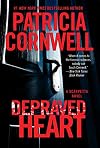
Summer airport reading. Not her best. Even a "haunted house"!!
Through Early Yellowstone: Adventuring by Bicycle, Covered Wagon, Foot, Horseback, and Skis by Janet Chapple
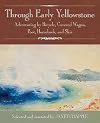
What a privilege it was to receive this book through LibraryThing Early Reviewers! I will treasure it. There is nothing negative that I could possibly say about it. It is wonderous to read actual explorer and visitor accounts from the late 1800's to the early 20thC. How our language has changed post-Hemingway!! In 1871 one sentence could comprise a whole paragraph. The usage of that era seems florid, over-the-top to us in the 21st C, yet if we give into its seemingly verbose rhythms we can truly access those early writers' awe and joy of Yellowstone. Janet Chapple has scored a coup de gras by introducing the reader to the magnificent watercolors of a Welshman of that era, Thomas H. Thomas. We've all seen iconic photos of Yellowstone Park that have shaped our perception of Yellowstone, but Mrs. Chapple has kept photographs of the park (even those of the early days) to a minimum--perhaps 2 or 3 in 266 pages. This was a great decision on her part, because the Thomas watercolors, a few maps and sketches included, unencumbered with the prosaic and predictable, enable our response to written accounts to be subjective and intensely personal. Thank you, Mrs. Chapple and LibraryThing.com!!
This review was written for LibraryThing Early Reviewers.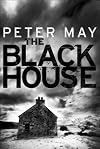
Detective facing in depth exploration of his own psyche. But two deaths by falling is a bit of a stretch.
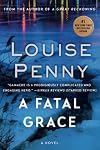
So glad I read "Bury Your Dead" first.. I probably would not have continued with this series. This particular book is schmaltzy to say the least. Cloyingly sweet. Drinks by the fireplace, butter dripping off of croissants. People seeing God in strangers across a café. The inspector who thinks more like a sentimental lady than a man. However, great delineation of WINTER. Hoping "The Cruelest Month" is better.
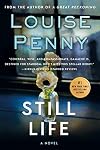
Well, I'm finally enjoying a "cozy". Three Pines reminds me of my childhood experiences in Milford, PA at my mother's cousins home.
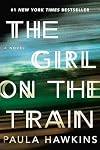
Rather good, but in the beginning I had trouble telling the difference between Megan and Rachel's voices. At one point I suspected they were two personas in one body. Interesting window into the irrationality and instability of a depressed mind.

Not up to the power and impact of his sermons. Reads like a motivational self-help book.
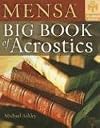
In a mere 9 years, I find that the cultural references are stale. Actually, I believe they were stale when the book was published. Examples: name of sheriff on Bonanza, latest Baseball Triple Crown winner. (There's been another Baseball Triple Crown winner since this book was published!) Bob Hope, Stalin, PM Attlee of The United Kingdom. Music of another generation. No references to the internet or smart phones or drones that one can buy at Staples. No hybrid cars. Solving these acrostics brought the technological and political pace of change in the last ten years into clear focus for me. No wonder I can't communicate that well with my grandchildren..
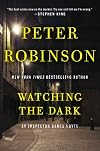
Excited to have discovered a writer with scads of books to read. Mr. Robinson was touted in the Wall Street Journal Weekend edition recently, so I rushed out and bought two of his Inspector Banks novels. In this one his depiction of the charm and delights of Estonia is so authentic and compelling --but is that to balance out the corruption and evils of modern society explored in the book or perhaps to protect Mr. Robinson from complaints from fellow authors, travel agents, or even officials in Estonia? I felt this book was at time tedious with repetition after repetition of what the inspector had already determined. Perhaps this series of books is an acquired taste. I am eagerly starting the other novel.
The Girl in the Spider's Web: A Lisbeth Salander novel, continuing Stieg Larsson's Millennium Series by David Lagercrantz
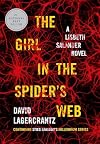
The writer is not Stieg Larsson. He did not enrapture this reader from the first page, but then, when I accepted his personal style, I did find I kept turning the pages. However, the good and bad twin routine was contrived and not worthy of Larsson's heroine.
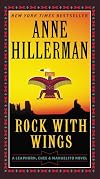
Anne Hillerman writes so much like her father that it makes you wonder if she wrote all the books attributed to Tony Hillerman. How wonderful, the calmness, quiet, stillness, the Southwest Indian culture permeating each page-- keep writing, Anne!!
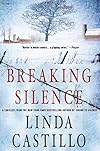
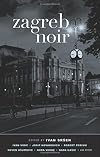
This collection is excellent. Other Akashic Noir books such as Pittsburgh Noir seem often to be puerile, unprofessional efforts of perhaps a Writers' Club. Not this one. How is it possible to have so many talented writers in such a limited area?!! Although these stories may not be designed to do so, each one teased me with tremors of deeper truths beyond the engrossing story line. I especially enjoyed Night Vision by Pero Kvesic, which seemed almost to be a fairy tale. The protagonist faces challenge after challenge on his quest. Living by his wits and sheer luck or coincidence, he survives. Is this then, life in the aftermath of years of devastating war? Isak Dinisen's tales would not reveal all their treasures to me either. I dream of seeing these Noir stories in FILM. Then I might be guided to a fuller understanding.
This review was written for LibraryThing Early Reviewers.In The Shadow Of a Badge: A Memoir about Flight 93, a Field of Angels, and My Spiritual Homecoming by Lillie Leonardi
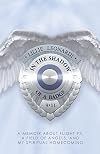
Interesting, reminded me of the image of "In the Electric Mist with Confederate Soldiers". Her suffering with PTSD, both emotionally and physically, was painful to read about. So often she would have an spiritual epiphany, then regress into anxiety, despair, etc.
On the one hand, I was impressed (considering the huge cultural and technological changes) by how similar the "patriotic" message is almost 100 years later. On the other hand, I was shocked that only one religion, Christianity, could be presented to the immigrant as "the highest and noblest kind of life", pg. 123. No separation of church and state in this author's mind! How could an immigrant of differing religion not feel discriminated against? A huge hurdle for our ancestors to becoming assimilated.

This well worn book is inscribed, in a childhood hand, Verna Williams 2724 Mallon. Verna, who lived in Spokane, WA, was a first cousin to my mother, Eleanor Harkless.
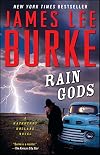
Violent and gritty enough for the gentlemen, with just enough philosophy and moral ruminations to make the reader believe, or is it realize, that even the vilest criminal has soul-stirrings. Illuminated, transcendent descriptions of our incredible West. Burke's a master!! His complex, distinctive creation, The Preacher, can't be forgotten.
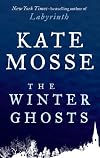
A little gem of a book. A delightful, intriguing fairytale. Beautiful physical presention--heft, size, cover design, quality of paper, etc. Perfect as a gift for a romantically inclined friend. As an digital book, it wouldn't have a certain quality.
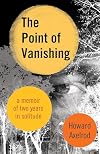
The Point of Vanishing is a compelling, beautifully written and structured book that unfolds with a rhythmic contrapuntal of past and present. Mr. Axelrod's observations of nature often catch one's breath with their beauty and uniqueness of perception. The author suffers a horrific trauma that obsesses him for more than five years before he chooses to live isolated in a mountain cabin. I found myself impatiently asking why he hadn't come to terms with it by then. I am four decades older than he and know that ALL OF US face a devastating loss at some point in our lives. Life goes on. But why was I so disturbed, even shocked, when he told of ducking behind trees when the snow plow came for the first time? Was it because on some level something resonated within myself? Perhaps I haven't truly dealt with my own trauma after all these years. Mr. Axelrod shows incredible courage to so honestly reveal his psyche to the reader. I, for one, could never do that.
Two choices the author has made puzzle me: Why doesn't he acknowledge that it was the incompetent doctor who severed his optic nerve? Secondly, why doesn't he articulate the significance of the census taker's visit? That visit seems so symbolic of the validation for him that he IS human, he DOES exist, he WILL be sought out and that existence WILL be recorded. In fact, the visit seems to echo the Biblical parable of the shepherd who goes out to find his lost sheep that has gone astray.
Two choices the author has made puzzle me: Why doesn't he acknowledge that it was the incompetent doctor who severed his optic nerve? Secondly, why doesn't he articulate the significance of the census taker's visit? That visit seems so symbolic of the validation for him that he IS human, he DOES exist, he WILL be sought out and that existence WILL be recorded. In fact, the visit seems to echo the Biblical parable of the shepherd who goes out to find his lost sheep that has gone astray.
This review was written for LibraryThing Early Reviewers.