This was such a deeply disturbing yet fascinating read. I picked this up because I loved convenience store woman, and did not expect where it was going. It's a great take on some of the tropes first explored in feminist science fiction - the ability for all to carry children, collective care pushed to its extremes - and the resistance of individuals and their desires. It's the story of a descent into what can only be described as madness. Where Convenience Woman closes on a form of individual assertion and redemption, this novel ends with the extremes a person has to go to if they are to survive in an environment stifling their feelings and bodies.
I really wanted to like this book, and it makes lots of good and important arguments. Of particular interest, the research on how biological specificity (such as brain areas developing at different times) of baby boys meets Western bias, leading to boys receiving less attention and affection from their parents. It also covers well different aspects of "modern masculinity" from the incels community, to the difficulty of changing the culture around sex after #metoo without ostracizing kids making mistakes.
I'm however struck by how negatively the book describes boys and the physicality of children, especially in the memoir part; and by the lack of discussion around ADHD, the increasing prescription of Ritalin and how this plays in a culture of performance that is detrimental to all children. There's no denying Ritalin helps some children. But there are tons of discussions around the over-diagnosis of boys, especially non-white boys, and how it affects them long term. When tying personal experience so tightly in the argument... these kind of questions need to be better addressed.
I was also (as the mother of a boy) disappointed by how being physically active is always seen through the lens of boyhood, and not discussed through:
- the lack of playground and outdoor spaces
- the lack of school designs enabling movement
- the lack of outdoor preschool options following best recommendations for that age (motor coordination is the substrate for socio-emotional regulation in early show more childhood!)
- that there are tons of concerns about children's lack of physical activity and their poor motor skills development, resulting from a lack of support for motor experiences in childhood
Good on boys for wanting more playful, active environments! What if instead of focusing on children fitting immediately and neatly in adults-like environments, we embraced play? I'm sad for the girls described in the book as better because they sit still, wondering if they were offered a chance to play.
The book is surprisingly essentialist despite itself, and illustrates issues I've run into again and again: any mistake my toddler makes is interpreted as due to boyhood, but the exact same behavior from his friends who are girls is interpreted as normal development. I was hoping the book would avoid this pitfall, but it doesn't.
(I might have more thoughts later) show less
I'm however struck by how negatively the book describes boys and the physicality of children, especially in the memoir part; and by the lack of discussion around ADHD, the increasing prescription of Ritalin and how this plays in a culture of performance that is detrimental to all children. There's no denying Ritalin helps some children. But there are tons of discussions around the over-diagnosis of boys, especially non-white boys, and how it affects them long term. When tying personal experience so tightly in the argument... these kind of questions need to be better addressed.
I was also (as the mother of a boy) disappointed by how being physically active is always seen through the lens of boyhood, and not discussed through:
- the lack of playground and outdoor spaces
- the lack of school designs enabling movement
- the lack of outdoor preschool options following best recommendations for that age (motor coordination is the substrate for socio-emotional regulation in early show more childhood!)
- that there are tons of concerns about children's lack of physical activity and their poor motor skills development, resulting from a lack of support for motor experiences in childhood
Good on boys for wanting more playful, active environments! What if instead of focusing on children fitting immediately and neatly in adults-like environments, we embraced play? I'm sad for the girls described in the book as better because they sit still, wondering if they were offered a chance to play.
The book is surprisingly essentialist despite itself, and illustrates issues I've run into again and again: any mistake my toddler makes is interpreted as due to boyhood, but the exact same behavior from his friends who are girls is interpreted as normal development. I was hoping the book would avoid this pitfall, but it doesn't.
(I might have more thoughts later) show less
Some thoughts in progress: Reflections and essays on fatherhood by fathers are rare, and this book stands out in that regard. It leaves me with a diffuse feeling. There were lots of insights and pearls, I really appreciated seeing how dads' online media is perceived, I loved that essay about Brad Pitt, and some of the playground anecdotes. But I can't tell that I retain a particular argument.

I almost stopped reading after the first 50 pages or so - thinking this was too bad-romance-novel for me. The minutiae of covid-era precautions felt over played, although I do remember them (and still practice them to an extent). It would have been a mistake. Because someone I trust recommended it I kept reading, eventually leaning in the discomfort, very much intended by the author, and quite well done. It reminds me in many ways of Maupassant's Bel-Ami. Still thinking about it - would recommend but advise you might need to persist for the rewards.
I read this book in one sitting with a 20 months old - definitely something every parent should read.
I'll get back to this review later, but this is the first book in my reading-about-parenthood streak that articulates its transcendent quality. Like the author, all that was ever told me about parenthood is that you love your kids but the actual work is dehumanizing, breaks your brain, is boring, and the list goes on. When I became a parent, I honestly couldn't understand why others spoke of it so negatively, lest they were tradwives. My experience of full-time parenthood has largely been fascinating. And I've never quite managed to articulate how awe-inspiring it is. This book did that, and I am grateful for it.
I'll get back to this review later, but this is the first book in my reading-about-parenthood streak that articulates its transcendent quality. Like the author, all that was ever told me about parenthood is that you love your kids but the actual work is dehumanizing, breaks your brain, is boring, and the list goes on. When I became a parent, I honestly couldn't understand why others spoke of it so negatively, lest they were tradwives. My experience of full-time parenthood has largely been fascinating. And I've never quite managed to articulate how awe-inspiring it is. This book did that, and I am grateful for it.

Il y a des livres qu'on ouvre et qu'on ne peut pas refermer avant de les avoir traversé. Celui-ci en fait partie.
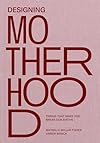
Our book club pick for February was Designing Motherhood: Things That Make and Break Our Births, edited by Amber Winick and Michelle Fisher (2021, MIT Press). The book functions like a catalog for the exhibitions organized by the editors and builds on a years-long project on Instagram, rooted in a collaboration with Maternity Care Coalition. Its rich visual iconography mixes personal and community archives, the technical, medical, social and private gaze. It stands out for its bright pink paper and for the stories mothers, their caregivers and designers need to hear.
Designing Motherhood brings to the foreground objects that are not obviously designed, would not usually be included in a design exhibition, but had to be conceived by someone. These objects shape our shared and individual experiences of birth. Belonging to the undervalued domain of care, they are invisibilized despite their impact.
The book is structured around four periods: before pregnancy, during pregnancy, at birth and in the early days. It’s at times a difficult read, because it speaks to a moment of vulnerability, of experiencing one’s own biological limitations. Pregnancy and childbirth are physically challenging and dangerous in the best of cases. Pregnancy is linked to the changes in auto-immune disorders; up to a third of women experience lasting health issues related to childbirth. In the TV series Battlestar Galactica, Dr Cottle comments synthetic humans should have upgraded the plumbing and show more many mothers would likely agree. Designing Motherhood strolls in that direction with a discussion of artificial wombs and how they may expand or lessen women’s rights if they became reality.
But the book highlights how we’ve missed the mark on what to design and how, only worsening the issue. It critically examines what objects say about the ideologies underpinning our conduct, from baby wearing to pushing strollers, in particular the impulse to believe we can optimise motherhood by buying the right things. It focuses on how these ideologies shape our relationships with ourselves, our children, our caregivers and our technologies. I found the case of technologies for listening to the fetus particularly fascinating (although the presentation of fetal monitoring during childbirth misses the nuances of current research). In places, the authors suggest how things could be different if we centered individual birthing people’s choices and well-being in design.
Choice is a central theme, not that it implies that choices happen in a vacuum or without constraints. The book discusses design-shaped choices in domains as varied as prenatal DNA testing, or visibilizing a pregnancy with clothing; choices as they are expanded by certain objects (the home pregnancy test); or the impossibility of choice (whether or not the labor will proceed without complications). And although the book focuses primarily on the United States, it does a great job at exposing how objects circulate around the world and may be adopted or not depending on local circumstances.
There’s a long way to go before each and every mother is supported in their transition to parenthood, including but not limited to their physical environment. There’s a long way to go until designers take into account the needs of mothers and parents. But this is a solid stepping stone to get there.
Originally published on Mothers in Art and Design show less
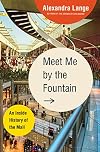
Lange highlights the many lessons the design history of malls offers when it comes to designing for a thriving public realm.
---
About once a year I ask friends to meet by the fountain - the one in front of the railway station near the city I grew up in, in the north of France. This is what the title first brought to mind, and I wasn’t too far off. Lange examines the mall as an American form of architecture that provided a form of privately-owned public space for a wide range of people to meet and congregate. She points that, all of us in their thirties or older probably “has” a mall, its shape and structure living in our brain rent free. A form of architecture developing in the 1940s and expanding after World War 2, it peaks in the 1980s in the US, and I’d say a little later (1990-2000s) in France. The mall was the public realm of the suburbs, however tightly and privately controlled. The book shows how it came to be, and its cultural significance.
The first chapter focuses on the origins of the mall, a form of shopping district emerging with the (white) suburbs. It focuses on the work of Victor Gruen and Elsie Krummeck, who gave the mall its initial vocabulary: an indoor street lined with stores, department stores as anchor tenants, an atrium, an "I" shape getting progressively more complex by adding corners and aisles, the presence of public art. All factors that enable malls to become safe, entertaining spaces for many different groups, opened at most hours of show more the day and protected from the weather. The second chapter focuses on the indoor design of malls, the use of natural elements like plants and water plans, and the maintenance that goes into this controlled environment. Chapter 3 discusses malls as debated public infrastructure and contested development projects. Chapter 4 dives in the mall as an entertainment complex. Chapter 5 is all about the social groups coming to the mall, with a strong attention to youth culture, from arcades to media starts. Chapter 6 thinks through the mall as a background and participant in cinema, in particular horror zombie movies. Chapter 7 is all about the malls' loss of cultural relevance. Chapter 8 outlines ways forward for malls needing to stay relevant, and the development of food courts. Chapter 9 concludes with the mall abroad, and cities like Seoul that were essentially built on them. Along the way, malls are situated within the architecture and Science and Technology studies scholarship, and sci-fi author Bradbury makes an appearance: he strongly influenced the design of Los Angeles’s Glendale Galleria.
This is a book to pick through for some, and a book that will speak malls nerd and architecture amateurs. As a foreigner, I’d of course have loved to read more about the design of malls abroad and their roots in European department stores (which were of great importance in allowing women to independently meet in public spaces). Zola’s Au Bonheur des Dames is mentioned, and I want to add Regarde les lumières mon amour, a diary of going to the mall by Nobel Prize winner Annie Ernaux . The book speaks to the seasonality of malls’ sensory pleasures, their role in sustaining holidays practices like Christmas. Searching for pictures of "my" childhood mall, I was struck by how many photographs of Christmas decorations uploaded by visitors. It also focuses on what is almost absent from the architectural account beyond particular brands that thrived in malls: what people actually buy at the mall, the everyday purchasing, and the interactions with mall workers other than security like till holders. But of course the financing and planning dynamics leading to different mall cultures are too varied to be addressed in one book.
The images spread are arresting, featuring the Commons in Columbus (IN), Quincy Market in Boston (MA) and Horton Plaza in San Diego (CA). They demonstrate how we can learn from the design of malls to build actual public spaces. Lange, true to self, argues we deserve urban and architecture design that sustain communities and a thriving public realm. Malls, despite their limitations, offer many lessons.
Original review with links and images show less
---
About once a year I ask friends to meet by the fountain - the one in front of the railway station near the city I grew up in, in the north of France. This is what the title first brought to mind, and I wasn’t too far off. Lange examines the mall as an American form of architecture that provided a form of privately-owned public space for a wide range of people to meet and congregate. She points that, all of us in their thirties or older probably “has” a mall, its shape and structure living in our brain rent free. A form of architecture developing in the 1940s and expanding after World War 2, it peaks in the 1980s in the US, and I’d say a little later (1990-2000s) in France. The mall was the public realm of the suburbs, however tightly and privately controlled. The book shows how it came to be, and its cultural significance.
The first chapter focuses on the origins of the mall, a form of shopping district emerging with the (white) suburbs. It focuses on the work of Victor Gruen and Elsie Krummeck, who gave the mall its initial vocabulary: an indoor street lined with stores, department stores as anchor tenants, an atrium, an "I" shape getting progressively more complex by adding corners and aisles, the presence of public art. All factors that enable malls to become safe, entertaining spaces for many different groups, opened at most hours of show more the day and protected from the weather. The second chapter focuses on the indoor design of malls, the use of natural elements like plants and water plans, and the maintenance that goes into this controlled environment. Chapter 3 discusses malls as debated public infrastructure and contested development projects. Chapter 4 dives in the mall as an entertainment complex. Chapter 5 is all about the social groups coming to the mall, with a strong attention to youth culture, from arcades to media starts. Chapter 6 thinks through the mall as a background and participant in cinema, in particular horror zombie movies. Chapter 7 is all about the malls' loss of cultural relevance. Chapter 8 outlines ways forward for malls needing to stay relevant, and the development of food courts. Chapter 9 concludes with the mall abroad, and cities like Seoul that were essentially built on them. Along the way, malls are situated within the architecture and Science and Technology studies scholarship, and sci-fi author Bradbury makes an appearance: he strongly influenced the design of Los Angeles’s Glendale Galleria.
This is a book to pick through for some, and a book that will speak malls nerd and architecture amateurs. As a foreigner, I’d of course have loved to read more about the design of malls abroad and their roots in European department stores (which were of great importance in allowing women to independently meet in public spaces). Zola’s Au Bonheur des Dames is mentioned, and I want to add Regarde les lumières mon amour, a diary of going to the mall by Nobel Prize winner Annie Ernaux . The book speaks to the seasonality of malls’ sensory pleasures, their role in sustaining holidays practices like Christmas. Searching for pictures of "my" childhood mall, I was struck by how many photographs of Christmas decorations uploaded by visitors. It also focuses on what is almost absent from the architectural account beyond particular brands that thrived in malls: what people actually buy at the mall, the everyday purchasing, and the interactions with mall workers other than security like till holders. But of course the financing and planning dynamics leading to different mall cultures are too varied to be addressed in one book.
The images spread are arresting, featuring the Commons in Columbus (IN), Quincy Market in Boston (MA) and Horton Plaza in San Diego (CA). They demonstrate how we can learn from the design of malls to build actual public spaces. Lange, true to self, argues we deserve urban and architecture design that sustain communities and a thriving public realm. Malls, despite their limitations, offer many lessons.
Original review with links and images show less
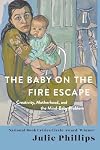
Julie Phillips’ The Baby on the Fire Escape (2022) is a collection of biographies and essays about 20th century artists and writers who are mothers. Alice Neel (the one accused of leaving the baby on the fire escape to paint, giving the book its title), Doris Lessing, Ursula K. Legion, Audre Lorde, Alice Walker and Angela Carter all have their own chapter, intersped with short essays. Biographies focus on artists’ path before and to motherhood, whenever possible the details of how they adapted to motherhood (we read about Leguin’s routine of chores and childcare, or Walker’s children commenting on not having elaborate lunch boxes), and what happened after those responsibilities eased.
The essays bring together threads across biographies: different ways of combining or separating creative work and parenthood (“All the time”: Art Monsters and Maintenance Work, Poems are Housework, The Baby on the Writing Desk), returning to creative work past the intensive years of motherhood (Ghosts, Late Success), the suffering and obstacles to being a full self and ways of coping with contradictions and circumstances (The Unavailable Muse, Not Being All There), the role of contraception (The Presiding Genius of Her Own Body), sexuality and love (Sex and love). Toni Morrison, Mierle Laderman Ukeles and her care performances, Louise Bourgeois, Susan Sontag, Elizabeth Smart, Shirley Jackson, make an appearance among others. The concluding chapter illuminates the author’s own show more relationship to motherhood and the writing craft. The project began when her children were of elementary school age. It is published as they have left for university. A red thread neatly tied: creative mothers need to play the long game.
Some biographies go into far more details than others about how mothers made it work. The chapter on Ursula K. Leguin stands out in that regard. Leguin has written about her experiences of motherhood and writing and Phillips is working on her biography and. The diversity of practices, and the historical span of the book renders direct comparison between the women depicted impossible, but highlights the changing material circumstances that 20th century’s fights for women’s rights help secure. If Phillips highlights the resolve each of these figures needed to continue their craft, the book avoids the pitfalls of a “Nevertheless, She Persisted” slogan. She shows the toll, the losses, the ones who lost themselves. And of course we will never know about those who haven’t been able to reconcile motherhood and creative practice.
We read Phillips’ book for the December book club of Mothers in Art and Design (aka MAD). It touched on many of our own concerns - finding space and time for our practice, making sense of motherhood for ourselves, and the kind of mothers we want to be, can be. The Baby on the Fire Escape is neither self-help nor a parenting book, but it does outline diverse ways of doing that can be learned from. We debated what the book does and what it doesn’t and that we’d love to see. The book contributes to discourses about art and parenthood that now well acknowledge the many barriers encountered by artists and the material and relational resources they need, whether they continue practicing or take a break. A partner supportive at home and in one’s career, friends and family involved in their children’s lives, financial security, flexibility in their travel arrangements. The earliest biographies were (unsurprisingly?) found harder to understand or relate to, again a testament to the progress of women’s rights. More acutely aware of the details of the writing craft, some wished for accounts of arts practices that discuss more closely the changes of medium and themes during early motherhood, due to access to studio space, materials or tools safety and the interruptions that some crafts can not accommodate. We wished also to hear more about their children’s views - while growing up, later as adults, and as they bring to the world their own children.
What I retain from this book is that, if few chapters show a happy combination of motherhood and practice, and if none are depicted as easy, the book felt hopeful. It’s not about making it work perfectly, it’s about making the best choices at a given time for our now many selves. It also anchors our January pick, “Everything She Touched”, a biography of Ruth Asawa by Marylin Chase, in a broader historical landscape.
Originally written for Mothers in Art and Design show less
The essays bring together threads across biographies: different ways of combining or separating creative work and parenthood (“All the time”: Art Monsters and Maintenance Work, Poems are Housework, The Baby on the Writing Desk), returning to creative work past the intensive years of motherhood (Ghosts, Late Success), the suffering and obstacles to being a full self and ways of coping with contradictions and circumstances (The Unavailable Muse, Not Being All There), the role of contraception (The Presiding Genius of Her Own Body), sexuality and love (Sex and love). Toni Morrison, Mierle Laderman Ukeles and her care performances, Louise Bourgeois, Susan Sontag, Elizabeth Smart, Shirley Jackson, make an appearance among others. The concluding chapter illuminates the author’s own show more relationship to motherhood and the writing craft. The project began when her children were of elementary school age. It is published as they have left for university. A red thread neatly tied: creative mothers need to play the long game.
Some biographies go into far more details than others about how mothers made it work. The chapter on Ursula K. Leguin stands out in that regard. Leguin has written about her experiences of motherhood and writing and Phillips is working on her biography and. The diversity of practices, and the historical span of the book renders direct comparison between the women depicted impossible, but highlights the changing material circumstances that 20th century’s fights for women’s rights help secure. If Phillips highlights the resolve each of these figures needed to continue their craft, the book avoids the pitfalls of a “Nevertheless, She Persisted” slogan. She shows the toll, the losses, the ones who lost themselves. And of course we will never know about those who haven’t been able to reconcile motherhood and creative practice.
We read Phillips’ book for the December book club of Mothers in Art and Design (aka MAD). It touched on many of our own concerns - finding space and time for our practice, making sense of motherhood for ourselves, and the kind of mothers we want to be, can be. The Baby on the Fire Escape is neither self-help nor a parenting book, but it does outline diverse ways of doing that can be learned from. We debated what the book does and what it doesn’t and that we’d love to see. The book contributes to discourses about art and parenthood that now well acknowledge the many barriers encountered by artists and the material and relational resources they need, whether they continue practicing or take a break. A partner supportive at home and in one’s career, friends and family involved in their children’s lives, financial security, flexibility in their travel arrangements. The earliest biographies were (unsurprisingly?) found harder to understand or relate to, again a testament to the progress of women’s rights. More acutely aware of the details of the writing craft, some wished for accounts of arts practices that discuss more closely the changes of medium and themes during early motherhood, due to access to studio space, materials or tools safety and the interruptions that some crafts can not accommodate. We wished also to hear more about their children’s views - while growing up, later as adults, and as they bring to the world their own children.
What I retain from this book is that, if few chapters show a happy combination of motherhood and practice, and if none are depicted as easy, the book felt hopeful. It’s not about making it work perfectly, it’s about making the best choices at a given time for our now many selves. It also anchors our January pick, “Everything She Touched”, a biography of Ruth Asawa by Marylin Chase, in a broader historical landscape.
Originally written for Mothers in Art and Design show less
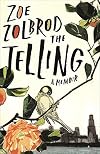
The telling explores the ramifications of sexual abuse in early childhood, for the victim and her family. It tells uncomfortable truths about how we overlook or minimize these acts to continue functioning, the time it takes to come to terms with this event. Heartwrenching.
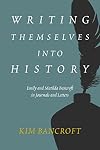
Based on the correspondence and diaries of H.H. Bancroft's wives, the book is a fantastic window into the lives of the upper middle class (and above) in the Bay Area and the American West circa 1860-1910. It almost incidentally tells the story of Bancroft's life, a rare (it seems to me) insight in how we shape and are shaped by our social environment. Mostly, I enjoyed sitting with these two women's stories about themselves, their days, their experiences as mothers as citizens.
Radical Play: Revolutionizing Children’s Toys in 1960s and 1970s America (Radical Perspectives) by Rob Goldberg
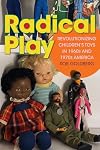
The book describes several case studies of the toy industry implementing changes in response to, and along with, radical movements of the 1960s and 1970s (peace activists, anti-racists, feminists). Across these cases, it outlines how play was remade into a "serious business" for children, something for parents to support well, and shines light on the changing conception of child development in this period (and beyond).
I would have loved to see more of a contemporary contextualisation, but this was a great and very informative read. I'd recommend it to designers, childhood researchers and those interested in social change movements.
I would have loved to see more of a contemporary contextualisation, but this was a great and very informative read. I'd recommend it to designers, childhood researchers and those interested in social change movements.
Avec Typothérapie, Nicolas Taffin nous offre de beaux aperçus de l'histoire de la typographie en France ces 30 dernières années. Des personnes et des publications qui l'ont fédérée, des Rencontres de Lure, de son parcours personnel (auto-didacte, organisateur, amateur, éditeur).
Le livre s'ouvre avec des essais sur le rôle de la typographie en vis à vis et avec la philosophie, avec de belles pages sur le rôle du blanc, la question de l'(il)lisibilité. On continue avec des textes sur les problématiques du numérique et de la typographie. De Flash à Google Fonts, qui la contrôle, qui l'utilise, et avec quels desseins? On y retrouve aussi d'utiles retours d'expériences sur le single-source publishing, une solution technique au problème complexe de la publication multi-formats, multi-médias. J'aurais voulu y voir ici discuté le format epub et ses standards de manière un peu plus développée, mais il s'agit dans tous les cas d'une documentation précieuse de ces années.
Et puis dans les dernières pages, des hommages aux personnes qui ont fait vivre la typographie, une jolie manière de fermer un recueil de textes personnels en invitant à en rencontrer d'autres.
Le livre s'ouvre avec des essais sur le rôle de la typographie en vis à vis et avec la philosophie, avec de belles pages sur le rôle du blanc, la question de l'(il)lisibilité. On continue avec des textes sur les problématiques du numérique et de la typographie. De Flash à Google Fonts, qui la contrôle, qui l'utilise, et avec quels desseins? On y retrouve aussi d'utiles retours d'expériences sur le single-source publishing, une solution technique au problème complexe de la publication multi-formats, multi-médias. J'aurais voulu y voir ici discuté le format epub et ses standards de manière un peu plus développée, mais il s'agit dans tous les cas d'une documentation précieuse de ces années.
Et puis dans les dernières pages, des hommages aux personnes qui ont fait vivre la typographie, une jolie manière de fermer un recueil de textes personnels en invitant à en rencontrer d'autres.
Optimal Motherhood and Other Lies Facebook Told Us: Assembling the Networked Ethos of Contemporary Maternity Advice by Jessica Clements
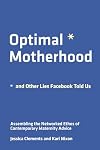
This book examines discourses and debates on online mothers groups. It shows how most are built on binary choices (eg safe sleep vs co-sleep) that entirely ignore mothers' well-being and agency and proposes a better way to think about motherhood.
This is a satire mashing together all headlines about tech to create a loosely bound together story. I was looking forward to reading it, but it too often falls flat. Satire too relies on us relating to a character, but here none of them elicit attachment, none of them acquire any depth. This might well be the intent. But it makes for a book with fun excerpts to share with silicon valley colleagues and friends, not a good read.
The book dives in the findings of longitudinal studies examining human development and the interplay of genes, environment and life events. The discussion of the scientific process is excellent, although it may rebuke people less curious about methodology. However, it's far better informed than other books about children, including those emphasising how well grounded in data they are such as Cribsheet.
Well written, but weirdly paced, and it does not tell us a very credible (or understandable) downfall of society. In the end, it feels like too many strands of the story were left untold.
It stands the test of time!
This book is a great entry point or resource to return to for all typographic designer out there. It focuses on the structure of writing letters and the interplay between writing tool and writing shapes. These are the sort of primary principles i wished I had learned as a student
How Artifacts Afford: The Power and Politics of Everyday Things (Design Thinking, Design Theory) by Jenny L. Davis
This is a great book for designers, researchers, and people interested in technologies. In 6 short chapters, Davis proposes:
- an overview of the concept of affordance, why it's useful, and how to address concerns leveraged against it to use it fully
- an overview of the history of the concept and how it spanned from psychology to fields as diverse as anthropology, media and communication studies, engineering, STS, education etc, as well as the two main critiques leveraged against it: that it is binary and universal.
- to address these critiques, she builds on the work of McLuhan, Actor Network Theory and Ernst Schraub to show that artifacts and people are co-constitutive (contrary to what McLuhan thought, technologies don't determine everything) and account for power effects (which was lacking in ANT)
- a framework to discuss affordances, with two components: mechanisms and affordances
- methods to understand and describe affordances (critical technocultural discourse analysis, walkthrough and feature analysis, values reflection and adversarial design)
The book is full of empirical examples for easy understanding. It's a great support for teaching.
- an overview of the concept of affordance, why it's useful, and how to address concerns leveraged against it to use it fully
- an overview of the history of the concept and how it spanned from psychology to fields as diverse as anthropology, media and communication studies, engineering, STS, education etc, as well as the two main critiques leveraged against it: that it is binary and universal.
- to address these critiques, she builds on the work of McLuhan, Actor Network Theory and Ernst Schraub to show that artifacts and people are co-constitutive (contrary to what McLuhan thought, technologies don't determine everything) and account for power effects (which was lacking in ANT)
- a framework to discuss affordances, with two components: mechanisms and affordances
- methods to understand and describe affordances (critical technocultural discourse analysis, walkthrough and feature analysis, values reflection and adversarial design)
The book is full of empirical examples for easy understanding. It's a great support for teaching.
This book, while primarily targeted at academic (or very curious, or people for whom smell is a part of work) audiences, has a lot to offer:
- a complete description of what we know about smell and how we came to learn about it, including a history of how smell has been theorized since Antiquity;
- a study of how research is made, how the incorporation of new tools from adjacent fields can introduce new framings, and even if these are not successful, discard unhelpful hypothesis;
- an explanation of how experts (sommelier etc) develop their abilities;
- and let's say a 'thought-experiment' to neuroscientists and philosophers.
It is easy to read, although it would have benefited from explanatory figures in the first chapters.
- a complete description of what we know about smell and how we came to learn about it, including a history of how smell has been theorized since Antiquity;
- a study of how research is made, how the incorporation of new tools from adjacent fields can introduce new framings, and even if these are not successful, discard unhelpful hypothesis;
- an explanation of how experts (sommelier etc) develop their abilities;
- and let's say a 'thought-experiment' to neuroscientists and philosophers.
It is easy to read, although it would have benefited from explanatory figures in the first chapters.

Very interesting experience to return to this book in 2021 - so many products that were innovative at the time, which didn't quite yet have a fixed shape, have since become ubiquitous... and far, far less interesting. The book offers a great contextualisation of graphic design and industrial design history and its relation to critique and to Europe in introduction, before moving to 'case studies' of studios or companies demonstrating, for the author, the vanguard of american design of that decade. The many of the formal explorations of personal computers are in themselves worth picking up this book. I'd love a follow up examining how we went from the graphic design experimentations of that decade, the first involving computers, to today's trends.
The foreword is by Ralph Caplan.
The foreword is by Ralph Caplan.
Swedish Design: An Ethnography (Expertise: Cultures and Technologies of Knowledge) by Keith M. Murphy
This book is a great foray into the politics and practices of design in Sweden. It sometimes feels like its theoretical apparatus could have been significantly lightened - for instance, I don't think Deleuzian distinctions about lines of enunciation and visibility was really needed. This confuses the book and makes the first half arduous to get through, but it's worth it!
It's a compelling history of the internet-as-experienced, but the last chapter can be jumped.
Useful case studies and materials for higher education workers wishing to incorporate visual methods in their teaching. I was expecting a bit more in depth analysis of the scholarship on visual methods, linking up teaching and research, but it does summarize what I'd consider major references in this field.
Environments in Science Fiction: Essays on Alternative Spaces (Critical Explorations in Science Fiction and Fantasy) by Susan M. Bernardo
Though some essays have both compelling arguments and a strong writing style, and the theme is crucial in a world under and post covid 19, they lack a general overview and sometimes take a tangential and jargon-ridden path that, ultimately, makes one close the book early.
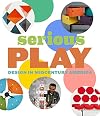
The title says it all: this is a series of essays on the playfulness in mid-century american design. What it doesn't say though is how it highlights lesser known designers and draws all the necessary parallels between their work.
User Friendly: How the Hidden Rules of Design Are Changing the Way We Live, Work, and Play by Cliff Kuang
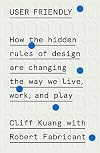
Largely ignores women in design, overplays the fears and reach of technology, quite biased but may be good as an introduction to the history of product design.
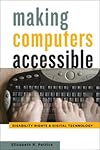
This is an excellent and detailed history of accessibility in computing since the mainframes. It convincingly argues that, although beyond deliberate attempts to make a given technology or tech jobs accessible, disability is an essential lens to understand what we see as the roles of technologies. It offers tons of examples as well as, I believe, one of the only early history of the accessibility SIG of the ACM.
Mesmerists, Monsters, and Machines: Science Fiction and the Cultures of Science in the Nineteenth Century by Martin Willis
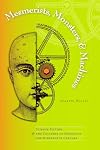
This book argues for considering science as a social phenomena is represented in works of science-fiction - hence to further examine how works of science-fiction reflect concerns of their days. This iis done through the examination of works by Mary Shelley, Jules Verne, Villiers de l'Isle-Adam, HG Wells, ETA Hoffmann and Edgar Allan Poe. Although more transition between chapters would help the author's argument, the resulting book is of great interest and chapters can be read individually or as a larger history of the scientific process and ethics in the XIXth century.