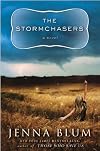
Can you imagine the strange incompleteness one must experience when carrying-on life in the absence of her twin sibling? Factor in that Karena’s twin, Charles, suffers unmedicated bipolar disorder and that she hasn’t seen him for twenty years. And, oh yeah, he left her after a catastrophic event tore them apart—a secret they keep sheltered from the rest of the world.One day, Karena receives a call from an unknown hospital three states away. Her brother is being treated there. Karena rushes to the hospital, feeling a rush of excitement, fear, and longing—only to find that Charles has been discharged. This close brush stirs up feelings that she had long attempted to suppress.Settling back into her normal routine would now be impossible. She has to find Charles. But where is he?Karena reasons that the best way to find Charles is to figure out where he will be going, not where he currently is. When manic, Charles chases storms; Karena joins up with a chasing tour, hoping that this dangerous path will reunite the long-separated twins.During this journey, Karena must confront her own fears associated with the adventure and her lingering guilt about the secret they share. She must also figure out what finding Charles will mean for her both practically and emotionally. Despite the risks to body and heart, Karena must find Charles; the gaping emptiness has been leading her life for far too long.“The Storm Chasers” by Jenna Blum is a fantastic read. At times, readers show more will be tempted to pause and reflect upon the poetically woven passages. At others, they will soar along with the rhythmic, breathing storyline. The most compelling aspect of the novel lies in the juxtaposition of character development and metaphor.As Charles so aptly points out, he likes the storms, because he can relate to them. The parallel between manic-depressiveness and tornadoes is marked. Both can crop up from seemingly nowhere and leave destruction in their wake. Both are at the same time deadly yet beautiful to behold. They are enigmatic, energetic, and exciting. And so is this novel.Besides having the opportunity to read this fabulous book, I also had the pleasure of twitterviewing its author, Ms. Jenna Blum (@jenna_blum). Read on to learn more about Jenna’s writing credits, process, and success.Link to the twitterview here: http://www.emlynchand.com/2011/04/author-interview-jenna-blum-the-stormchasers/ show less
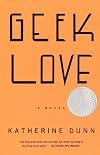
Preview... Have you ever been stuck in horrible traffic—the kind where your complete lack of momentum causes you to slam down on your horn and grind your teeth in frustration? Eventually after having spent too much time in the slowly moving line, you discover a multicar pile-up as the source of the impasse. Rather than speed away quickly, happy to be free of the encumbrance, you inch by, gawking at the wreckage. That, my friends, is what Katherine Dunn's novel "Geek Love" is like. You'll feel a bit guilty for staring at the suffering of others, but you just can't help yourself. It's too tragic, too beautiful in its own disgusting way ...We follow two story lines. The first recounts the childhood of the Binewski children. The family’s ringmaster Al develops an ingenious plan to breed performers for his freak show by encouraging his wife to ingest drugs and other toxic chemicals during pregnancy. The result is a daunting success. They give the world: Arturo the “Aqua Boy” who has marine-like flippers instead of arms and legs; Iphy and Ely, a sexy set of conjoined twins; Fortunato, who appears normal but possesses the powers of telekinesis; and Oly, our narrator, a hunchbacked albino dwarf.The eldest, Arturo, has an excessively manipulative and jealous personality. When the twins’ side show proves to be more popular than his, he begins a cult religion. Arturism seeks out the core principles of peace, isolation and purity. The surest way to achieve this ideal is show more through progressive amputation, beginning with the fingers and toes and working one’s way up to the full removal of the arms and legs.Our second storyline takes place further into the future, after the dissolution of the side show. Oly keeps watch over her daughter, the beautiful almost normal Miranda, whose only deformity is the presence of a small tail that she uses to her advantage as a part-time stripper. Miranda is unaware of her freakish parentage. Oly learns of the wealthy Ms. Lick’s plan to “help” her daughter by performing a disfiguring operation, which she claims will free Miranda (and those like her) from the limitations of their beauty so that they may live up to their full potential. Our narrator will stop at nothing to protect her family.Sound intriguing? Give “Geek Love” a try, I guarantee you’ve never read anything like it!You may like this book if… you are interested in the imagined outcomes of genetic manipulation; you’re looking for something different; you are intrigued by the mysticism surrounding cults and their founders; you want to meet characters that you will never forget—even if you try; you like to question what’s normal and what makes somebody an outsider; you’d like to read a story that is ultimately about family and what ties us together.You may not like this book if… you’re the type of person who pushes the accelerator down without feeling the least bit curious about the wreckage. show less
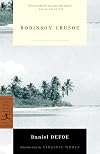
Preview… Daniel Defoe’s “Robinson Crusoe” has had an inarguably enormous effect on the literature of today. Widely considered the first English novel, it recounts the “life and strange surprising adventures” of its protagonist, who is marooned on an unidentified South American island for 28 years before he is able to return to EuropeCrusoe lives in utter solitude for 25 years. Not a skilled tradesman, he must teach himself various crafts to aid in his comfort and basic survival. The simplest things take great amounts of time—our hero spends 42 days making a single shelf! Crusoe also spends a substantial amount of time reflecting on his plight in a spiritual manner. He alternately cries out to God for deliverance and praises his maker for sparing him death at sea.One day, Crusoe sees a human footprint on the shore of his beach. He agonizes over its possible implications, restricting his activity for nearly seven years in order to remain safe. Later, he is able to rescue the intended victim of cannibalistic feasting, a young man he names Friday. Friday pledges himself to a life of servitude under Crusoe and is made “civilized” by learning the English language and religion and undergoing modest dietary changes. Friday quickly becomes indispensable to Crusoe as a companion and fellow survivor. He helps Crusoe defend the island and secure resources. He also offers valuable company.How does social isolation affect the human psyche? How is religion a valuable show more coping mechanism? How does “Robinson Crusoe” espouse the protestant work ethic? Most interestingly, how does Crusoe finally escape, and how does he react upon his return to England after so many years alone on the island?Although I find the novel a bit tedious at times, no one can deny its literary and cultural import or help but wonder how she might react if cast into a similar condition.You may like this book if…you wonder how extreme isolation might affect the human mind; you like reading a character’s spiritual musings; you want to read the original survival novel; you just have to see what happens to Crusoe; you find cannibals to be interesting; you want to read a political/ moral portrait of the time; you want some pointers on making the best of a hopeless situation—just in case.You may not like this book if…you expect the plot to follow the traditional story arc that is prominent in literature today; you are distracted by archaic grammar and spellings (viz., perswasion, prophetick); you can’t feel pity for a man who massacres cats; you can’t fathom reading about a society of cannibals—your brain is just too visual; you are too upset by ethnocentric, culturally imperialistic overtones; you desire a sense of immediacy to help heighten the conflict and sustain interest; religious back-and-forth annoys you. show less
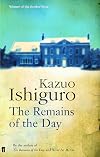
Preview… Kazuo Ishiguro’s “The Remains of the Day” is a beautifully written tale that asks its readers to contemplate the meanings of duty, dignity and love. The story follows Stevens, a British butler through his daily routine and his memories of former daily routines in the years leading up to WWII.Taking a short leave from his current American master, Stevens journeys to the countryside in order to reconnect with his former colleague, Ms. Kenton. She has sent him a letter, which implies that her marriage is failing. Stevens naively assumes that Ms. Kenton may wish to return to her former post as housekeeper of Darlington Hall. His string of memories surrounding their interactions makes it clear to the reader that Stevens has unacknowledged feelings of romantic love for Ms. Kenton.Most of Stevens’s memories are from Darlington Hall’s heyday, when it was still ruled by its original master. Lord Darlington, always the perfect gentleman, holds a series of lavish stately dinner parties, featuring prominent public officials as guests. Though Stevens never questions his master’s motives, the reader will discover that Lord Darlington is a Nazi sympathizer, who is trying to open negotiations between the British and the Germans in hopes of landing upon a peaceful resolution between the two countries.Stevens reflects on the importance of staying true to his duty, even in the face of such unseemly circumstances as his father’s death and a rogue tiger. One cannot show more help but admire the butler’s unwavering commitment to his life’s work nor to pity his small, one-dimensional existence. Though he is something of an anomaly, Stevens’s repression of emotion, ignorance of the true motives of others and comical attempts to learn banter through study make him someone with whom we can all relate.You may like this book if… you like the idea of a story where the butler is the hero and not just some side prop; you have an interest in the time period; you enjoy well-written, short prose; you want to laugh at some parts and feel awe at others; you often wonder “what if”, you enjoyed the 1993 film adaptation.You may not like this book if… you have a hard time connecting with characters who fail to acknowledge their emotions; you like more traditional romances and require an effusively happy ending. show less
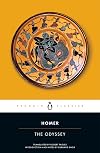
Preview…If you’re looking for a crash course in ancient Greek mythology, there is perhaps no better choice of reading material than the exciting epic poem “The Odyssey.” The details of Odysseus’ heroic journey home from the Trojan War were kept alive through oral tradition for hundreds of years before Homer ever set pen to parchment—which means every detail works together to weave a fascinating and rhythmic tale.Athena, goddess of wisdom, is on Odysseus’ side. Unfortunately, Poseidon, god of the sea, wants for his destruction. Every time Athena helps him gain some ground, Poseidon finds a way to introduce new difficulties to our hero. Odysseus faces angry gods, lustful goddesses and princesses, tempting sirens, the deadly Scylla and the Charybdis, the haunted underworld, the cursed cattle of the sun, a hungry Cyclops and oh-so much more.When he finally returns home, more than 10 years after the war’s end, he finds that a group of hostile suitors have taken over his palace in Ithaca. They are all vying for his wife Penelope’s hand; ultimately whoever she chooses will be made the new ruler. The suitors also have secret designs to murder Odysseus’ son, Telemachus, thus removing their last remaining obstacle.Penelope, the faithful wife, has through a variety of tricks and stalls been able to put off choosing a groom thus far. Will Odysseus make it home in time to save his family and the kingdom? Even if you already know how the tale ends, it’s so show more exciting getting there that you won’t want to pass up the opportunity to give “The Odyssey” another look or to read it for the very first time.You may like this book if…you like Greek mythology; you enjoy epic adventure tales, you like stories written in verse; the thought of gods meddling in the lives of mortals appeals to you; you’re intrigued by fantastic elements; you’re looking for something different than much of contemporary literature; you like reading books for free online.You may not like this book if…you don’t like stories that couldn’t really happen; poetry annoys or confuses you; it bothers you that the male gods can take on lovers whenever they want but when Calypso wants the very same thing she isn’t allowed to have it; you don’t like how Penelope remains faithful for so many years but Odysseus engages in a string of love affairs. show less
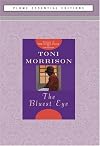
Preview…There are few novels so fraught with meaning as Toni Morrison’s “The Bluest Eye.” Although the book is short and the prose is beautiful, the story itself is a heartbreaking extreme of some very real issues that plague our society.Each chapter begins with a run-together version of the “Dick and Jane” narrative, before going beneath the blissful surface to reveal what really takes place in the idyllic house,"the pretty green and white house with the red door."Morrison doesn’t just toss characters into the plot and expect us to understand them intrinsically, she meticulously goes into the back story of many characters—showing how a little boy raised by his loving aunt can turn into an incestuous rapist.The novel is narrated primarily by a young girl named Claudia, as she recounts her own experiences and those of the unfortunate Pecola Lovebreed. Pecola is an 11-year-old girl with very dark skin. Like the rest of her family, she is wickedly ugly. They live together in an old store front beneath an apartment of prostitutes. Her mother would rather shower the golden-haired daughter of her employers with love than her own unfortunate little girl, making Pecola feel lonely and unworthy.Desperately in need of love and approval, Pecola clings to the white standard of beauty, mistakenly believing that if she were to acquire blue eyes that she would be seen differently by the world and that she, in turn, would develop a bright new outlook for herself.The story show more ends with Pecola pregnant with her father’s baby, and being blamed for it by onlookers who pray that the infant not survive. She has finally done the impossible by acquiring beautiful, blue eyes that are bluer than any other. Unfortunately, only she can see their beauty, paying the price for them with her sanity. But she can finally be happy and feel relevant in a world that wants nothing more than her tears.You may like this book if…you are interested in sociology, racial or gender inequality or the colonialism of beauty standards; you want to read a story rife with meaning, whose lessons will stick with you; you want to read about characters who are often not considered in the existing body of fiction; you like reading selections from the ALA Banned Book List; you are interested in the shades of racism and self-loathing that can exist within a race; you want to know how a character becomes who he or she is; you want to read beautiful, flowing prose; or you want to give love to the poor, neglected character of Pecola.You may not like this book if…the issues espoused in the novel are far too painful for you to explore in-depth; you want to read a story that is happy and uplifting, not one that beats you down emotionally; you have a child that insists on being read to from “Dick and Jane” several times per day, and you don’t want to become fixated on tragic Pecola Lovebreed during every subsequent reading. show less
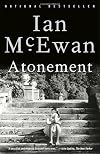
Preview... I am a book person through and through. I’m really not much one for films. It is rare indeed that a movie will capture my attention to such an extent that it entices me into reading the original version of the story. This was the case with Ian McEwan’s “Atonement." The 2007 film adaptation completely blew me away. I could see why it had achieved a plethora of Oscar nominations, including best picture.I assigned the novel to the Ann Arbor Classics Book Group, almost on a whim, to give the group an innovative and illustrious love story to contemplate for the month of February. What a great selection I had stumbled upon!At just 13 years of age, Briony Tallis has all of the makings of a budding novelist, including an intense desire to know more about her world, a large vocabulary and a vivid, often wild, imagination. It is the juxtaposition of these three traits that lands our lovers in trouble. Cecilia, Briony’s older sister, has grown up beside Robby Turner, the son of a domestic servant, and never thought much of him until the two have a peculiar tete a tete aided by a Ming vase and a Triton fountain. Briony’s muddled understanding of this event compounded by other incidents, like her reading of a secret, yet misplaced, note that twice made use of a vulgar term for the female anatomy and her walking in on Cecilia and Robbie as they had physically come together in passion along the shelves of the library, lead her to believe that Robbie is a sex-crazed show more maniac who is planning an attack on her innocent and unwitting sister.Later that evening, Briony witnesses the rape of her cousin. Though the events are obscured by the thick darkness of the night, she is sure that her cousin’s attacker is none other than the psychopathic Robbie. Convinced that she “saw him”—whether with her mind or her eyes is beside the point—she gives testimony to the authorities and lands Robbie behind bars. Knowing of Robbie’s innocence and upset by Briony’s impropriety, Cecilia estranges herself from the family.Some five years later, Briony, now 18 years old, is beginning to realize that she may have wrongly placed blame on Robbie. To make atonement, she first distances herself from her passion of studying writing at Cambridge and enrolls as a nurse to the wartime army. Robbie, given the choice of more jail time or conscription, joins the military and is deployed to France, becoming an active party in World War II.I won’t tell you what happens beyond this point. But know this — you’d be doing yourself a great service if you were to pick up a copy of this unique and inspiring story of love, redemption and imagination.You may like this book if… you have an active imagination, one that might have gotten you into trouble at some point, you are interested in the time period in which the story is set, you yourself are or once were an aspiring writer, a soldier or a healthcare worker, you have had love that has gotten away, you have made mistakes and desperately desire to somehow set things right, you enjoy the push and pull of vivid imagery, you like watching a character grow up over time, you are a big “what if” thinker, you believe in retribution and redemption.You may not like this book if… you have no desire to get stuck inside of the mind of a flawed character who is unable to distinguish the lines of reality and imagination, you don’t like drawn out descriptions of scenes and objects, you don’t believe that so much bad luck should befall relatively good and decent people, it troubles you to think how much damage a naïve thirteen year old girl can do to the lives of others, you have a hard time stomaching gory war or hospital scenes. show less
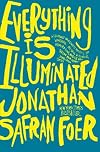
Preview… “Everything is Illuminated” doesn’t disappoint. Jonathan Safran Foer, the author and the book’s main character, explore multiple storylines within the text. The character travels to modern-day Ukraine to search for the woman he believes is responsible for helping his grandfather escape to America during the Holocaust. Our hero is accompanied by a young man, Alex, who acts as translator despite his lack of skill in this area, Alex’s blind grandfather in the role of driver and grandpa’s "officious seeing-eye bitch" dubbed Sammy Davis Junior Junior.In the midst of our present-day adventures, Jonathan also tells us his imagined family history, tracing back several generations of Foers. In old Trachimbrod, we encounter a baby who mysteriously appears from the bottom of a pond after a wagon crash and sets are whole story in motion, cosmic sex energy that, if done right, can be seen from space many years later and a man whose head is impaled by a disc-saw blade yet continues to live for years after the accident with the blade lodged vertically in his head. These plotlines are largely influenced by magical realism, a tactic perhaps best exercised by author Gabriel Garcia Marquez. If this turns you off, you can still enjoy the 2005 film adaptation, which only portrays the modern-day storyline.All-in-all, the characters are endearing and interesting, and although quite a bit quirky, they are relatable. Alex, the translator, added a great deal of show more humor, shifting the tone of the novel from a depressing holocaust-topical novel to a comedic one. There were a lot of high points in this story, as comedy was masterfully interwoven with what is perhaps modern man's greatest tragedy.You may like this book if… you like stories that weave several different threads into one tapestry, you are a speaker of ESL or close to someone who is (you will enjoy Alex’s ramblings very much), you are interested in how the Holocaust touched the lives of others and continues to do so even today, you want to laugh out loud when reading a story (the only other book I have ever done this for is Cervantes’s Don Quixote), you like coming of age novelsYou may not like this book if… You despise the writing style of Gabriel Garcia Marquez (formally referred to magical realism), you get confused by a plotline that jumps back and forth between different story- and time- lines, you have a hard time keeping track of multiple characters with similar names, you don’t want to read 50 pages before you are able to settle into the story and begin enjoying it, you like a traditional ending where the hero wins and everyone lives happily ever after show less
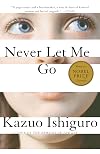
Preview...When I read “Never Let Me Go” by Kazuo Ishiguro nearly one year ago, it only took me a matter of hours. This uniquely-crafted dystopian novel is intensely addictive and gets high marks both for entertainment value and for depth of meaning.Its simplistic manner of storytelling and focus on three friends growing up in a boarding school mixed with strong dystopian and sociological elements makes this story as meaningful as “Brave New World” and as entertaining as (dare-I-say-it?) the “Harry Potter” series.We follow the lives of three friends, Kathy H, Tommy and Ruth. Our narrator, Kathy H, recounts their experiences as former students of Hailsham boarding school and her current career as a carer. The story starts out simple enough, classic to the young adult genre of fiction. Quickly the reader will notice that something is off just a bit with this school and these students. Little by little, we learn more of the shocking truth and the hopeless future of all at Hailsham.I could go on and on about the social implications of this story, but that would ruin the best part of this novel — the suspense, the urgent desire to know this world’s secret, to uncover how it can be so like our own yet so eerily different. Just trust me on this one, “Never Let Me Go” is fascinating and well worth reading, no matter what your literary inclinations.You may like this book if… you enjoy the young adult, science fiction or dystopian genres, you like a story that show more draws you in and forces you to finish it as quickly as possible, you like an unpredictable plotline, you enjoy mulling over sociological issues and the potential outcomes of technological advances, you like a story that is told directly and endearingly, you like to relate to your characters, no matter how different you are from them, you grew up in a boarding school or are a teacher or a nurse, you’ve ever been involved in a love triangleYou may not like this book if… it pains you to follow likable characters through such a painful existence, you cannot cope with social complacency, you prefer your books to use bigger words and more sophisticated writing techniques, you think that the future described by Kazuo Ishiguro is shockingly likely and that thought scares the living daylights out of you (but you’d have to read it to find that out, now wouldn’t you?) show less
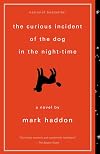
Preview…If you’re looking for a read that can be completed in a single sitting or can be put down and resumed at will, then, reader, meet Mark Haddon’s “The Curious Incident of the Dog in the Night-Time”. What makes this book fantastic is not intriguing plot twists or award-winning prose, but rather the character study of its narrator. Christopher Boone is a 15-year-old with autism. He views the world differently from you or me. Christopher derives comfort from logic, order and mathematics, while being touched, seeing too many yellow cars or meeting new people can be monumentally challenging.Our hero begins writing his own book (this book) at the urging of his school teacher. One evening, he finds his neighbor’s standard poodle lying in the street, pierced clean through with a garden pitchfork. Needing to know the circumstances surrounding the dog’s death, so that he himself may feel safe, he puts on his detective hat and works toward solving the mystery of who killed Wellington? Christopher must draw on unknown stores of bravery as he interviews his neighbors in regards to the crime.During his investigations, he unwittingly stumbles upon an even bigger mystery. His mother, who presumably died of a heart attack two years prior, may still be alive. He and his pet rat, Toby, embark on a journey to find her, one that takes him far away from the world he knows. He gets into trouble at a few points and must escape a persistent police escort, a train headed show more straight at him as he rescues his rat from the rails, and a mind-dizzying array of advertisements that just cannot be ignored.How will a boy who thrives on order and fears the unknown make his journey safely? What really happened with his mother, and why had his father lied to him all of this time? Even more interestingly, what are Christopher’s quirks that help get him through the day successfully? How would he view a situation differently than someone else might? What does our hero make of the shocking answers to these mysteries? The answers are worth finding out, if you have an afternoon, or a few snatches of time here and there, to spare.You may like this book if…you know someone with autism or a similar disorder; you enjoy mathematical puzzles; you enjoy a nontraditional hero; you are interested in the strain placed on caregivers; you like dissecting and contrasting logic from emotionality; you really like dogs and need to understand the “curious incident”; you want to read a book that is empowering for people with disabilities; you’d like a quick and easy readYou may not like this book if… you prefer an exciting plot to an unforgettable character; you have a hard time relating to a character who shows very little emotion; you don’t want to know how every signpost or advert Christopher saw looked; you don’t appreciate random digressions; you really like yellow or brown or drive a car that is yellow or brown. show less
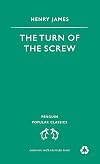
Tired of rereading Dracula” or “Frankenstein” (or “Harry Potter” or “Twilight”) each and every Halloween season? Looking for a new horror story to keep you company as you sip your steaming mug of spiced cider by the light of a menacing-looking jack-o-lantern? Have I got the perfect story for you: Henry James’s “Turn of the Screw.”Coming in at just under 100 pages, “Turn of the Screw” is a quick read, although it’s not the easiest. One thing is for sure, it’s a ghost story. Err—it might be a ghost story. Or, perhaps it chronicles the ravings of an off-her-rocker governess. But, still, it could be a ghost story … actually, that’s for you to decide.The story starts with friends telling each other scary stories one Christmas eve (yes, this story has dual holiday appeal). We are then thrust into the viewpoint of a young governess who accepts a job caring for a handsome bachelor’s orphaned niece and nephew—the nephew having just been expelled from his school for mysterious, unstated reasons.At the gothic estate, the governess encounters two ghost lovers on several occasions. Convinced that the children also sense and even interact with the ghosts, the governess begins to worry about their safety and puzzles over the ghosts’ intentions. The children unwaveringly declare that they have not seen any ghosts at all, but the governess does not believe them. She clings to them tightly for their own good.Much, much more transpires, but it’d be show more a shame to give away the shocking ending. This is a novella that you must read the full way through in order to fully appreciate.Read it with a friend or loved one. This story lends itself perfectly to discussion. Every reader will come up with a slightly different explanation as to who the ghosts are, what they want with the children, if the ghosts actually exist or are hallucinations of aforementioned governess, and even as to whether a dark sexual subtext explains it all.Try something different this Halloween season, you won’t regret it! show less
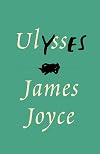
Preview…If ever there’s a book that refuses to fit cleanly inside the literary mode, it’s James Joyce’s “Ulysses.” Upon my first reading attempt several years back, I quickly gave up, assigning the title of “literary Everest” to the lengthy tome. Now that I’ve finally climbed my mountain, I couldn’t be more thrilled! This is, without a doubt, one of the most worthwhile books that I’ve ever read (and don’t forget: it was voted the best English language novel of the twentieth century).Having begun with a string of exorbitant praise, it’s time to get real. This is an extremely challenging read. Normally, I give a plot preview of my recommended novel, but today I’m going to share with you a few tips about wading through this novel’s stormy seas—tips that would have made my own journey simpler and perhaps more rewarding.Familiarize yourself with works referenced or emulated within the text and/or invest in a critical companion to the novel. Here are the references that I found most vital: Homer’s "Odyssey”, Shakespeare’s “Hamlet”, Defoe’s “Robinson Crusoe”, Joyce’s own “Portrait of an Artist as a Young Man” and “Dubliners”, and, of course, the Bible.Understand that “Ulysses” is a rhythmic, breathing work. Think of it like a song or a poem, not a novel in the traditional sense. Let the rhythm flow over your mind, or speak it aloud for added effect.Know that the draw of the novel is not its plot. Yes, there is some show more form of a narrative arc, but if you focus on what’s going to happen next, you’re going to miss all the greatness that is happening right now.Realize that “Ulysses” is made great because of its style. Joyce sought to write a novel for English professors, and he’s absolutely done that. Each chapter is written in a distinct, experimental style. A few of my favorites were told: via newspaper bylines, with a series of questions and answers and by highlighting the moving evolution of the English language.Read online summaries as you go. While I was reading, I would visit sparknotes.com after each chapter to make sure that I didn’t miss anything important before continuing on—this is a strategy that I oft employ for more difficult reads (such as Dickens or Dostoevsky). It’s also helpful to secure a heads-up as to upcoming style techniques and relations to the Odyssean theme.Give yourself time. Don’t expect to finish this book over your vacation. It took me one month to complete “Ulysses” satisfactorily—normally, I complete at least five books per month. Luckily, this novel’s focus on style over plot means it’s easy to set down and revisit at will, giving you no excuse to give up!I didn’t fully appreciate the import of this novel until about halfway through, but I didn’t quit. Although it may take a while to get into, this novel is well worth a thorough read. It may be particularly enjoyable for those who consider themselves writers or historians. show less
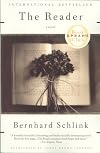
Preview…I chose to delve into Bernhard Schlink’s novel “The Reader,” because, at only 218 pages, it seemed like a short and sweet selection. Although the actual word count was small, the story within was huge on meaning and teeming with deeply resonating themes. I found myself setting it down, time and time again, so that I could reflect on a series of particularly poignant passages.“The Reader” is a novel told in three parts. We begin with our narrator at age 15, growing up in the precarious climate of post-war Germany. Coming home from school one day, Michael becomes overwhelmed by sickness. An unknown woman cleans him up and sees him safely home.Later on Michael seeks out this woman to offer his thanks. Although there is a 21-year age difference between the boy and his benefactor, Hanna, the sexual attraction is undeniable. The two give themselves to each other physically, while holding back on the emotional entanglements of love. For months they continue on with their routine affair, which includes Hanna bathing Michael, Michael reading aloud to Hanna from various works of classic literature, and the two consummating their amorphous relationship. Until, without any warning, Hanna completely disappears.Years later, their paths intersect once more. As a young law student, Michael is observing the war crime trials of a group of female SS guards pertaining to a specific atrocity that led to the deaths of more than 300 Jewish women. Hanna is among the show more accused.Michael is sent into frenzied introspection. How could he have ever cared for such a heartless criminal? Was it just Hanna, whom he loved undeservingly, or should he have held back love to all of his elders involved in this tumultuous time period, everyone including his own parents though they were not active participants?Michael is haunted by his memory of Hanna, unable to carry-on healthy adult relationships. He doesn’t know whether to be angry at her for spoiling his innocence, and he doesn’t know how he feels now upon reflection. Unable to escape her ubiquitous presence in his mind, he strikes up a clouded correspondence with her. He reads aloud to her, just as they had always done before. Recording his dictations, he mails the tapes to her in prison with no formal salutations or small talk — just the tapes.Upon Hanna’s approaching release from prison, Michael must determine what the nature of their relationship is and whether or not to allow her into his life once more. Now, as it has been throughout her entire life, Hanna must decide whether it is more important to speak the truth or to protect oneself from shame.A powerful journey, “The Reader” asks us to examine our own relations to our countries, our loved ones and ourselves, and it points out that sometimes life’s most important relationships elude definition.You may like this book if…you like introspective novels, you are interested in post-war Germany and the Holocaust, you enjoy novels that are written in simple, yet powerful, language, you like novels that ask the question: "what would you do in this situation?", you are interested in courtroom drama and the Nuremberg trials, you want to understand the meaning of the title (it’s been perfectly selected), you enjoyed the Oscar-winning film adaptation from 2008, you like being emotionally overcome by your reading selections, you like nontraditional “love” stories, you have a dark sentimentality when it comes to the arts.You may not like this book if…you prefer not to read about something so emotionally raw as the Holocaust, you need the questions to be answered if they are going to be asked, you can’t get past the love affair between the boy and the woman. show less
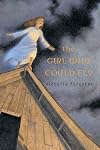
Looking for a fun book to read with your children? Try “The Girl Who Could Fly” by Victoria Forester. I was told by my best friend’s 13-year-old niece that Ihad to read this middle grade novel, that I would loveit, and that it was awesome.So when a space in my reading schedule opened up (and when a copy of the in-demand novel finally became available at my local library), I decided to give it a go.The strong-headed and inventive 11-year-old girl, Piper McCloud, is this story’s central character. She lives in a sleepy, agrarian town in the South, where life is typically nothing more than normal (and when it is, oh, how people will gossip)! Poor Piper’s just not ordinary enough to fit in — she was born with the ability to float in the air — prompting her parents to home school her with the hope of avoiding any embarrassing debacles regarding Piper’s special “talents.”Finally, Ma and Pa McCloud give their daughter the opportunity to play with the town children at a picnic festival. Piper tries her best to make the children like her. Unfortunately, her best includes using her special powers to catch a highflying runaway baseball — right in front of the whole town, might I add. It’s not long after this ordeal that strangers show up at the McCloud residence, and they want Piper. The family reluctantly agrees, and Piper is whisked away by Dr. Hellion and Agent Agent to a special institute called INSANE, which she is promised will help her to develop her show more skills and to help other children learn the joys of flying too.At this boarding school-come-scientific research lab, Piper is manipulated by the faculty, being asked not to use her powers since it could make the other children jealous. Eager to fit in for a change, she agrees. The new children all have unique gifts of their own including the ability to manipulate weather, telekinesis, X-ray vision and shrinkability. Conrad, a crotchety super genius and the unquestioned leader of the students, seems intent on making Piper’s new school experience as horrible as possible.Will the children figure out that the institute is not trying to help them develop their talents but rather trying to erase them altogether? Will Piper be able to save the day and make new friends along the way, or will she lose her powers and finally become normal like everyone else?“The Girl Who Could Fly” will teach children tolerance for those who are different at the same time that it espouses caricature-like stereotypes. I was so frustrated with the anachronistic and maudlin portrayal of Piper’s backwoods, Southern hometown that I almost gave up on the story after reading the first two chapters. I was also irritated by the cutesy naming conventions: Agent Agent, Professor Mumbley, INSANE. However, I believe these same features, which were hindrances to my enjoyment, might be of great delight to the child reader. It would be a near impossibility to read the story aloud without affecting Piper’s maple-syrupy accent — and don’t children love it when their parents use funny voices to read a story?I’m glad I didn’t give up on “The Girl Who Could Fly” despite my initial misgivings. Once Piper arrives at INSANE, the story really takes off. The authoress is a master of description, which makes up for her dialogue-writing difficulties.This post is dedicated to Connor. show less
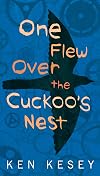
Do you feel it? The floor is slipping away and there are evil, little mechanical wheels turning, turning. It is controlled by them, the Combine. They are out to get you. Just like before, when they strapped you down and gave you your crown of wires and zap- you don’t remember anything after that. Why is it so foggy in here? They don’t let you think anything; it’s best just to hide.Eery, isn’t it? This represents the picture that author Ken Kesey.“One Flew over the Cuckoo’s Nest” recounts the events of a psychiatric inpatient ward in the early 1960’s. Chief Bromden, also known as "Chief Broom" our narrator, is a paranoid schizophrenic who pretends to be a deaf-mute in order to be left alone. He has been committed since the end of World War II, the longest-residing patient. R.P. McMurphy, our hero, shows up one day fresh off the work farm. It is suspected that he merely pretended to be insane, in order to escape the hard labor he was subjected to there. Chief Boom takes an immediate interest in McMurphy and begins to recount us a story of his exploits.This novel has so many layers that our group was able to have its longest-running discussion over what has been our shortest selection to date. There’s women’s lib, race relations, man versus the Man, man versus machine, what it means to be crazy, treatment of the mentally incompetent, and much, much more.The 1975 film adaptation pushes many of these issues under the rug. Like so many movies based on novels show more do, the story became merely that - a story. The Big Nurse, Nurse Ratched, was presented in a much more amicable light. In the movie she is almost sympathetic; whereas in the book, we all hate her relatively early on. Racial tensions were also suppressed. Each African-American aide was referred to by name and not just as “the black boys”. Racial epithets were removed, which had been used to refer to the aids, our Native-American narrator and a beneficent Japanese nurse.Kesey was one committed author, when it came down to it. His interest in the mind-altering abilities of LSD and its abilities to create a new form of consciousness led him to seek work at a mental hospital. He figured that LSD and insanity probably had a lot in common. Kesey even voluntarily submitted himself to electroshock therapy so that he could better describe the effects that this radical treatment had on the mind. Talk about traveling for work.There’s so much that can be taken away from this novel. Please share your thoughts about some of the themes I have mentioned above or about others that I neglected to mention. Was McMurphy crazy when he entered the ward? Was he when he left it? What makes someone crazy? What does Kesey’s representation of his two primary female characters (an antagonistic nurse and a prostitute) say about his attitude toward women’s rights? Was McMurphy Christ-like? Was he right to push the system to the benefit of the other patients or should he have left it alone? Did we like Broom as the narrator? Was he reliable? How do we feel about Broom’s mercy killing in the end? Where did he go once he committed the deed and escaped from the hospital? What will become of the released patients in the new world? Will Ratched continue to run her tight ship after the rebellion and attack or will she seek other employment? Could this story have happened in the real world? show less
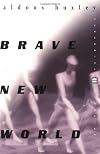
Preview… I’m not sure why Aldous Huxley’s “Brave New World” doesn’t stick out in my memory as the great dystopian work. It has all of the trappings required of this genre except perhaps the suspense that is signature to novels such as “1984” and “A Handmaid’s Tale”. Huxley’s dystopia seems the most likely of any, a world state controlled by science rather than big government. It all starts with a single embryo, which can be divided into as many as 96 identical cells. New humans are literally grown in bottles on a production line—even time is measured as AF (after Ford) rather than AD (anno domini). Each bottle is treated according to the caste its being will belong to. Once free of the bottle, these youngest members of society are classically conditioned both in waking and sleep to gravitate towards certain tendencies and be repelled by others. From an early age, sex is demystified and mindless orgies are a common practice among those of the world state.Our initial protagonist, Bernard Marx doesn’t exactly fit into this mechanical society. He is too short of stature and low in confidence for his alpha caste position. Along with Lenina, a sexual interest, he visits the savage reservation. There, people live much closer to how we live today. The pair meets John, a pale savage, who was born to a woman that was accidentally misplaced from the world state while visiting the reservation. Bernard gets clearance to bring John and his mother back to show more society. Once there, John is appalled by the regularly prescribed drug use and flash orgies that are characteristic of the state. The complete lack of art, scientific invention and religion in favor of social order and mild complacency are almost too much for him to stomach. Will John learn to fit into this brave new world, or are social and genetic conditioning required for one to endure such a mindless existence?You may like this book if… you find solace in Christ-like literary characters, you believe that science is the most likely route to dystopia, you think that overindulgence in drugs steals a person’s humanity, you are interested in politics, demography, psychology or the like, you are intrigued by caste systems, you like thinking “what if”, you like a book with cute little rhymes throughoutYou may not like this book if… you think dystopia needs suspense to work, you feel we are already much to close to the world state described in this text, you are sickened by the wide practice of ethics violations such as those regarding the “Little Albert” experiment, you would like to follow one main character throughout the entire story rather than two, you don’t see how orgies can be a bad thing show less
Preview … Drrracula! We have all heard about this book, seen countless film adaptations and been exposed to multiple pop-culture takes on Bram Stoker’s vision. We know all about the vampire and his Transylvanian lair. But let me ask, have you ever actually taken the time to read the unabridged novel? I just read “Dracula” for the first time this past week. I decided it would be fun to have a Halloween-themed book discussion for Ann Arbor Classics Book Group. I wasn’t expecting to like the book, especially since I find many of the modern vampire stories to be grotesquely lacking in entertainment value (yes, I mean you, Stephenie Meyer and Anne Rice). It is safe to say, however, that “Dracula” now resides in my top 10 reads among other such great books as “Jane Eyre”, “100 Years of Solitude”, “1984” and “Lolita”. It is that good!Rather than build up to the penetration of the vampire’s castle, we begin there. Terrified, as Jonathan Harker realizes what Dracula is, yet is unable to escape. At the same time, Mina, Jonathan’s intended, recounts life in jolly old London, telling of her great friendship with Lucy and wondering about Jonathan’s whereabouts. We are also joined in the story by Dr. Seward, Quincy Morris and Arthur Holmwood, the three of which are suitors to Lucy. Two more characters who help push the action of the story are the brilliant Dr. Van Helsing and irksome zoophagous mental patient, Renfield.We watch Lucy’s progression show more into vampirella, as the other characters have no idea what is going on. Eventually, they come to understand what has happened and that they must destroy “Lucy’s” undead corpse to set free the soul of the woman they all loved. Realizing that the Count has relocated to London in the house immediately adjacent to Dr. Seward, our heroes form a crew intended to bring an end to Dracula at any cost. The rest of the story follows the team as they attempt to destroy the inherent evil that is Count Dracula.There are so many layers to this novel, which makes for striking conversation. Some of the topics that can be broached are Dracula as the anti-Christ, the differing roles of men and women in the story, psychoanalytical theory, the sensuality of blood-sucking vampires, mythological folklore, the gothic novel, the variegated film adaptations and modern takes on the story. Heck, even the character of Renfield could spawn a long and interesting conversation. If you have no one to discuss it with, I recommend also reading Clive Leatherdale’s “Dracula: The Novel & the Legend” for even more in-depth coverage of these topics.You may like this book if… you enjoy a story with many, many layers to it, you appreciate an author who reflects different dialects and varying levels of English proficiency in his character dialogue, you like the idea of a story told entirely from diary entries, letters and news clippings, you are a fan of modern vampire stories and would like to expose yourself to the book that single-handedly made the vampire a media darling, you are feeling festive this Halloween.You may not like this book if… you want to know where Dracula came from, you don’t want to have to invent a back story, you get confused when a story has too many narrators, you are offended by the use of Catholic relics as talismans, you don’t think vampires could ever be sexy, you get bored by too much flowery dialogue as is characteristic of the era, you feel the story may have been ruined for you by too much exposure to film adaptations or other vampire-stories. show less
Preview… Although overall, Leo Tolstoy’s “Anna Karenina” did not match my sky-high expectations for it, this novel is still worth recommending. The Ann Arbor Classics Book Group’s discussion of itboasted the highest turn-out in the group’s history, many members claiming the title as one of the best books they had ever read.The beauty of this story is that it is a work of parallels. The author gives three competing views of love and marriage through the stories of the Oblonskys, the Levins and the Karenins. Stiva and Dolly Oblonsky have a stable loveless marriage — and seven children to go with it — despite Stiva’s constant infidelity and prodigality. Some might say they offer comic relief in an otherwise very serious novel.After their strange and fragmented courtship, Konstantin and Kitty Levin have a very real and normal marriage. They grow closer as they explore the intricacies of their new matrimonial arrangement and how it affects the previous freedoms and pastimes they once exercised. The moment when these two characters discover they have mutual love for one another is one of the absolute sweetest moments in literature — you’ll have to read the story to experience this scene for yourself!Finally, the situation of the Karenins is the most complicated. Anna is married to a high-ranking political figure, Alexey. She is happy enough, until she finds ineffaceable passion with military man Vronsky. Ultimatley, Vronsky and Anna run off together after show more she almost dies giving birth to their illegitimate love child; all the while the two hope that Alexey will brook the social disgrace of his wife’s betrayal and grant her a divorce. The treatment of Vronsky and Anna presents the double-standard that was present in Russian society at the time. Even after the public becomes cognizant of their arrangement, Vronsky can still move in and out of society as he pleases, while Anna’s denigrated reputation greatly limited what she could and could not do.Throughout the novel, many of the characters search for profound happiness and a deeper meaning in life. Anna hopes to find fulfillment through love and passion. Sergei thinks his higher calling is intellectual enlightenment. Stiva believes happiness lies in revelry and debauchery. Alexey lets superstition overrun his life post-Anna. Levin, initially believing that ‘simplicity is bliss’, eventually finds meaning through a spiritual awakening; all other characters fall short — and some fall under the train — in their pursuits of happiness.You may like this book if… you enjoy societal critiques or feminist literature, you are devoutly spiritual, you enjoy a study in contrasts, you like peasants and farming, you appreciate Tolstoy’s very accurate portrayal of the inner workings of his characters, you like love stories that show how just how challenging being in love can be, you don’t want cookie-cutter characters or scenarios, you are patient and have a good attention span.You may not like this book if… you expect Tolstoy’s writing style and themes to be similar to those of other Russian greats, you get easily bored by long harangues regarding elements that are not so important to the story, you — like me — expect your Russian literature to be much more dark and depressing than this story is, you need your characters to be likable if you are going to spend so much time with them, you find it frustrating when characters in novels make very obvious and annoying mistakes, gender inequality pisses you off, you would have hoped that Anna Karenina could be portrayed more kindly if she is to be a paragon of female independence. show less
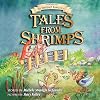
Mama, Papa, Molly, and Harper form a family just like any other. Papa goes to work while Mama stays home and entertains the little ones with baking, lunches out, and trips to the movie theater. Nobody forgets to wear their seat-belts, sports are played for fun, which means everybody’s a winner, and princes and princesses find each other, fall in love, and live happily ever after. Yes, they are a family like any other—well except for on one major point—they are shrimp!A throwback to the traditional family model and the safe, happy, loving home environment of the 1950s, the Shrimps invite us into their deep-sea world with four sets of loving, hospitable arms each.The picture book by Michele Strangis Stefanides revives certain childhood memories for me, that excitement I felt as a child while waiting for my family of sea monkeys to arrive via post. The images on the package showed a veritable underwater fantasy world with mighty kings, beautiful palaces, and kind, new friends. My imagination soared as I planned my rule of this new Atlantis that would sit proudly in a mini aquarium on my bed’s side table. Then the package arrived. I peppered the lifeless specs that were my monkeys into their tank. Nothing exciting happened. My heart sank like the disappointing brine shrimp to the bottom of their tank.Tales from Shrimp gives me closure for this early-life letdown. Although I had to wait some-twenty years, finally—finally—I have my underwater kingdom. Every page of show more this child’s book is beautifully and flawlessly illustrated, thanks to Stacy Kelley. As we watch the Shrimps’ enjoyment of their day-to-day lives, we also sneak glimpses of other sea creatures going about their days. An octopus with a strong work ethic uses four of his arms to serve the family snacks at the local cinema. A golden fish steals a lick of cake batter from Mama’s spatula. Even the crabs and starfish want to help with the family’s baking project.The Shrimp family shows children that people are people, no matter how different they may look. Heck, even shrimp are people. Children will learn to take pleasure in the simple things like feeding the ducks off the spillway or going out to dinner with Mama and Papa. The heartwarming stories are made all the better by the impossibility of escape from the hilarity of shrimp acting just like people. Your kids will love this one—guaranteed! show less
Preview… “The Cider House Rules” is one of my top three favorite books (along with “Jane Eyre” and “Love in the Time of Cholera”).Irving tells a fascinating story that spans three generations of characters. The eldest primary character is Dr. Wilbur Larch, the director of an orphanage, who both delivers and aborts unwanted children. For the bulk of the story, we follow Homer Wells, an orphan who was never adopted and ended up becoming Dr. Larch’s protégé in the obstetric business. Homer decides that it is morally wrong to perform abortions and eventually leaves the orphanage (and his apprenticeship) in the company of a young couple, who he meets when they come in for an abortion. Homer secretly falls in love with the girl, Candy, while her boyfriend, Wally, is off to war.The third primary character that we follow is Angel, Homer’s son. Angel grows up and falls in love with a migrant African-American orchard worker, who is pregnant with her father’s child. Homer must decide whether abortion can be correct and proper in some instances, all the while his heart keeps pulling him back towards the orphanage and Dr. Larch.You may like this book if… You like reading stories that are both entertaining and informative, you enjoy following multiple main characters, you are interested in learning more about abortion and back-alley abortion against the back drop of WW2, you like dramatic storytelling, you like to ponder several moral and social questions, you show more like reading about characters who are flawed and vulnerableYou may not like this book if… you do not want to read about issues that you think are wrong, you don’t want to get into your characters’ heads too much, you don’t like reading about uncomfortable circumstances, like accountings of back-alley abortion, rape, assault or racial discrimination, you prefer the film adaptation to closely follow the story in the book and don’t like things to be cut out of the plot line, you do not like characters who are flawed and sometimes make very obvious mistakes show less
Couldn't finish it. I thoroughly enjoy Gandalf and Gollum, but he dwarves are pointless and Bilbo is meh. I fear I'm losing my love for the classics and am now gravitating more to YA (which is the genre I write). Don't worry book club friends, I got about 2/3 through and will be ready to lead our discussion tomorrow!
I was very disappointed. I got 30 pages from the end and just couldn't bring myself to finish. How do you make a book about sex boring, Candace Bushnell, how? This is one of the rare works, which is actually improved my film - not slaughtered by it. Between this train wreck and the heavily sleep-inducing "Dangerous Liaisons," I don't think I'll try to read a novel written in epistolary style ever again. "Dracula" pulled off this unusual literary style, but it is a big and tasty exception. So, don't read "Sex and the City," ESPECIALLY if you love the television show. Just don't.
Few books have the ability to grab such a universal, non-discriminatory reader base as The Trust by Sean Keefer. I tend to read literary fiction and YA. I’m not a fan of action or of legal thrillers – in fact, I kind of hate the genre both on film and in literature. Starting in on The Trust, I expected a painfully obvious plot with paper thin characters. But this novel refused to be boxed in by my unfair expectations and now holds its own as one of my favorite reads of 2011.The first thing that got me was the narrative voice. Our protagonist is Noah Parks, a young attorney with whom it is easy to identify. He’s got a troubled past, which sometimes makes his personal life a struggle. He is successful and intelligent, but doesn’t have an annoying God complex to make the reader fall out of like with him. He’s just a guy, and that’s part of the allure.We have a few pages to get acquainted to Noah, and then – BAM – the mystery begins. A stodgy elderly gentleman journeys into Noah’s office and, although he doesn’t have an appointment, demands to be seen right away. He’s accusatory and vain and clearly believes Noah’s time isn’t worth nearly as much as his own. “Why are you in my deceased friend’s will?” he demands to know. “I was his attorney for years, and I’ve never even heard of you. Why would he secretly modify his last will and testament and put YOU in charge of the estate?”Before Noah can explain his ignorance of the issue and wonder show more at the deceased man’s reasoning for entangling him in these affairs, the gentleman continues.“He’s added in a clause about a safety deposit box at the Bank of Charleston, says you’re the only one who’s allowed to access it. Says if anyone else tries to get into it that the contents will be destroyed. You can imagine my upset at this whole situation. Now tell me, why YOU?”Indeed, why Noah. That’s the central question of the novel. It begins as a simple hmm and turns into an oh-my-God-I-need-to-know-now situation as people connected to the estate begin to drop off like flies at the hands of an unknown killer.The title of this novel has two pertinent meanings. The Trust represents a large sum of money left behind by the deceased, but it’s also something more, a concept central to the novel and its core mystery. Who can Noah trust? Just when you assume you’ve figured out who’s behind the rash of murders, your prime suspect will end up in a body bag. You’ll have no choice but to continue turning the pages, looking for an answer, praying that your favorite character isn’t next on the hit list. In that way, Keefer is a master of creating suspense. Despite having many other obligations, I finished The Trust in a day and a half. I couldn’t stop until I knew, and I didn’t figure it out until the author wanted me to.Sean Keefer’s debut novel has many great strengths – the ability to draw the reader in with a sense of urgency, the creation of characters both likable and detestable but always authentic, the way in which the setting permeates the story and makes the world that much more real – this is a novel you won’t want to pass up. Trust me, and give The Trust a good read-through. You won’t regret it! show less
Fascinating, if not a touch ethnocentric (it definitely needs an updated edition).
Wow, just wow. I read this one within the space of a single day. I just couldn't put it down :-)
An enormously helpful resource for those just starting out in business. This one will be sitting on my desk for quick reference far, far into the future.
Did you know that a routine medical procedure could one day end your life? Brenda Martinez didn’t. A vibrant, young dancer, she understood the common risks associated with her breast implant procedure before undergoing the knife. The minuscule percentile risks relative to anesthesia and medical malpractice didn’t seem like much to worry about, and by surgically enhancing her breasts, Brenda could make much more money in her career.Unfortunately, Brenda didn’t account for one risk—nobody did—and that is precisely what kills her.A splintering headache and sudden paralysis force Brenda to lose control of her car while driving on the freeway. She plummets helplessly into cross-traffic and is rushed to the hospital. Dr. Jordan Hamilton attends to the young woman but is unable to save her. Dr. Hamilton is troubled by the strange onset of symptoms and desperately seeks to understand the cause of death.Days later another young and seemingly healthy woman is rushed to the hospital, only to meet the same fate as Brenda. Jordan notices that both women had breast implants; her instinct tells her to keep digging for possible connections between the two deaths. Postmortem examination reveals that both women had toxic levels of the chemical platinum in their bodies. What doesn’t make sense is how the breast implants could have caused the toxicity-induced deaths.Jordan shares her preliminary findings at a morbidity and mortality conference and journalists are quick to pick show more up-on the story. Suddenly more cases of platinum toxicity in breast implant patients are being reported all across the country and even internationally. When a popular US senator is also stricken with the illness, the public demands answers and looks to Jordan to provide them.Consumed by her passion for healing and by the public’s need to know, Jordan throws herself into the research of this epidemic. It doesn’t take long for her to make some enemies. One night she is attacked within the hospital complex. Days later she is wrongly dismissed from the hospital on a trumped-up charge. Her pursuers will stop at nothing to get Jordan to discontinue her research on the breast implant illnesses. No one’s safe—not her friends, not her family, not her six-year-old daughter, not even the family dog.What is causing platinum toxicity in breast implant patients? How can Jordan save the millions of women who are already at risk? Who is behind the attacks on Jordan and her family, and what connection do they have to the epidemic? Will Jordan survive long enough to save the others?Silicone is a medical thriller for the new age. One part action to every part education, the reader will not only be intrigued by the events taking place but will also learn more about medical diagnosis and the health profession. The author’s own knowledge and expertise as a Board-certified internist specializing in Allergy and Immunology penetrates every layer of this novel.Dr. Meza crosses the boundaries of race and gender to bring us a diverse cast of viewpoint characters, each of whom contributes unique insights to the story line. Silicone introduces the reader to patients, doctors, activists, police officers, journalists, politicians, and hit men—a diverse cast indeed!Silicone takes the medical intrigue of House and combines it with the action-adventure of James Bond to deliver a satisfying and informative novel. The novel’s conclusion is so riveting that you’ll find yourself compelled to read the last 50 pages straight-through without stopping.Upon exiting the world of Silicone, the reader will be left to ponder deeper themes. What would happen if mafia-style crime interfered with health care? How well are our medical and economic systems regulated? Is it better to pursue the truth at all cost or to protect your loved ones?Pick-up Carlos Meza’s debut novel if you are looking for a fast, action-packed novel. Bonus points if you have an interest in the medical field. Read carefully for the chance to win a special prize from the author (more info here). You can also read the first chapter on the author’s website at www.carlosmezabooks.comA tip: be prepared to get hungry while reading Silicone. The author describes the restaurant meals of his characters so sensually, that the reader will feel the sudden need to rush out for tapas. show less
I honestly think this is one of Jodi Picoult's best (yes, above "My Sister's Keeper" and above "Second Glance"). I can't wait to publish my full review for annarbor.com to correspond with its March 1st release!
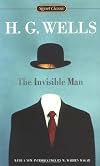
I love me some HG Wells! I'll be writing my review soon.
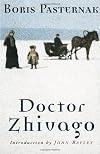
As much as I love Russian literature, I must say: Doctor Zhivago is one of the few stories that was better told on film than it was by book. Although omniscient POV was the standard at the time Pasternak was writing, it doesn't serve this novel well. If the whole story was told through the alternating third person perspective of Yuri and Lara (rather than jumping into anyone's head it pleases and at any time), then the novel would be stronger; the film version was forced to do this, and it's one reason that it's better. The other reason Zhivago didn't work as well as it could have (in the eyes of this writer) is the ratio of exposition to action. We get a four page explanation of why the characters need wood and an entire long section about a train ride, but important points are glazed over in a single sentence, like: We used to be rich, and then it was all gone. This man said this and then he was dead, etc. I do think that Pasternak wrote the story this way to emphasize a philosophical point, but from the 21st century reader's perspective, it was just too easy to miss important plot points.One of my site contributors will be writing up a full review soon. For now, you can read other reviews by visiting my literary/ writer's blog at www.emlynchand.com