Meh...read Madeline Miller's "Circe" for a far more engaging retrospective account of the journey of Odysseus as told by a woman in his life. You'll still meet Penelope there, as well, and Miller makes her lots more interesting than does Atwood.
I'm not sure why the author bothered to write Blue Angel. The protagonist isn't terribly interesting or sympathetic, there wasn't much of a plot, and I expected to enjoy the writing more. The book did have some laugh-out-loud moments, however. Meh...
Chalk up my dislike for Going Dutch to me being a boomer...this book, which apparently describes and observes the millennial lifestyle, simply wasn't intended for me to understand. I picked it up hoping for insight into what motivates and shapes people who recently have come of age in contemporary America. From what I inferred from Going Dutch, the answer is: not much, beyond fleeting whim and fancy predicated on a culture of entitlement and privilege.
Author James Gregor's story-telling craft wasn't bad or unengaging. The problem was his characters, nearly all of whom were unlikable and unsympathetic, and the seemingly purposeless lives they led. I hope Gregor's observations aren't accurate...because, if they are, American society is in for a world of hurt in the years to come.
Author James Gregor's story-telling craft wasn't bad or unengaging. The problem was his characters, nearly all of whom were unlikable and unsympathetic, and the seemingly purposeless lives they led. I hope Gregor's observations aren't accurate...because, if they are, American society is in for a world of hurt in the years to come.
In the Hurricane's Eye: The Genius of George Washington and the Victory at Yorktown (The American Revolution Series) by Nathaniel Philbrick
"In the Hurricane's Eye" (ITHE) is an engaging, well-paced, and very readable account of the final stages of the American War for Independence. While we all learned in history class (however many years ago) about the British surrender at Yorktown, the all-important Chesapeake naval battle which led up to and enabled it was new to me. Thanks, France, for that -- and Spain, too, for financing the effort!
In addition, I appreciated Philbrick's attention to the subject to the role played by enslaved African Americans serving in the British Army. They were screwed over most dreadfully, unsurprisingly, not only in their handling by the Brits but also afterwards by the Americans (to include Gen. Washington) in defining conditions of surrender which ensured that they would be returned as property to the plantations they left to join the British forces.
In all, I found ITHE to be a very enjoyable and worthwhile book. Highly recommended!
In addition, I appreciated Philbrick's attention to the subject to the role played by enslaved African Americans serving in the British Army. They were screwed over most dreadfully, unsurprisingly, not only in their handling by the Brits but also afterwards by the Americans (to include Gen. Washington) in defining conditions of surrender which ensured that they would be returned as property to the plantations they left to join the British forces.
In all, I found ITHE to be a very enjoyable and worthwhile book. Highly recommended!
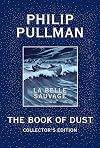
I really enjoyed La Belle Sauvage (LBS), even if (alas) I am many decades too old for the book's YA market. Pullman's story-telling and prose style are engaging and (yes) page-turning. I also liked the book's erudition and the well-drawn main characters, both good guys and rascals.
LBS is every bit as good as the best of the Harry Potter novels (Prisoner of Azkeban, I'm thinking), and arguably better (not that it's a competition). Having read Pullman's excellent His Dark Materials trilogy with my children 10 or so years ago, LBS draws me to read them again.
I highly recommend LBS to YAs, OAs, and all ages in-between!
LBS is every bit as good as the best of the Harry Potter novels (Prisoner of Azkeban, I'm thinking), and arguably better (not that it's a competition). Having read Pullman's excellent His Dark Materials trilogy with my children 10 or so years ago, LBS draws me to read them again.
I highly recommend LBS to YAs, OAs, and all ages in-between!
Thank You for Being Late: An Optimist's Guide to Thriving in the Age of Accelerations (Version 2.0, With a New Afterword) by Thomas L. Friedman
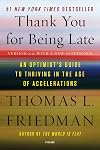
Overall, I enjoyed Thank You for Being Late (TYFBL) and appreciated the author's research and insights. However, given that the book was published prior to the inauguration of the current president, the narrative was significantly dated -- a bit of a time capsule -- because it didn't speak to the host of more recently-emerged social and public policy challenges faced by our nation and its allies.
I admired the author's ability to wrap his hands and head around some extremely gnarly technology issues and to elucidate them in comprehensible layman's terms. Overall, Friedman's prose was OK, if inelegant -- but you're not reading a book like this for well-turned sentences. Originally, I was afraid that boiling down the primary forces of the current acceleration of change to an alliterative trio (Mother Earth, Market, Moore's Law) was overly precious and wouldn't work...but I warmed to the framing as the book proceeded. At other times, however, Friedman seemed overly cutesy, e.g. labeling the cloud as "the supernova."
I enjoyed the final few sections of TYFBL most of all, because they described a set of conditions at the local level in which social progress was not just possible but also tangible. I felt inspired by Friedman's examples, and am motivated to figure out how I might plug into contributing to the kind of social change he describes. Especially at this moment in our nation's history, heaven knows we all need to help.
I admired the author's ability to wrap his hands and head around some extremely gnarly technology issues and to elucidate them in comprehensible layman's terms. Overall, Friedman's prose was OK, if inelegant -- but you're not reading a book like this for well-turned sentences. Originally, I was afraid that boiling down the primary forces of the current acceleration of change to an alliterative trio (Mother Earth, Market, Moore's Law) was overly precious and wouldn't work...but I warmed to the framing as the book proceeded. At other times, however, Friedman seemed overly cutesy, e.g. labeling the cloud as "the supernova."
I enjoyed the final few sections of TYFBL most of all, because they described a set of conditions at the local level in which social progress was not just possible but also tangible. I felt inspired by Friedman's examples, and am motivated to figure out how I might plug into contributing to the kind of social change he describes. Especially at this moment in our nation's history, heaven knows we all need to help.
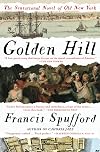
"Golden Hill" was one of the best novels I have read. Spufford's writing is exquisite and erudite. The story is engaging and unpredictable. Spufford drew the characters and the mid-18C New York City world they occupied in a way that made them come to life. Highly recommended!
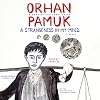
Having read and loved Pamuk's "Museum of Innocence" (MOI) several years ago, I greatly looked forward to "A Strangeness in My Mind" (ASIMM). Sadly, the story never grabbed me and I gave up on it after 200 pages. The prose (at least in English translation) was wooden and unexciting. Moreover, the development of protagonist Mevlut over the course of his adolescent and early adult years (which is all that I got to) failed to hold my attention and interest. Compared to ASIMM, I found MOI to be overall a far more memorable and noteworthy read, as well as a much more engaging sketch of Istanbul and its unique culture and history.
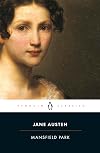
I adored Mansfield Park! Yes -- the story gets off to a slow start, but you will reap an abundance of rewards in return for your patience. The book is downright funny at times. Mrs. Norris amuses as a stuffy, obsequious, and presumptuous busy-body, and Austen does a great job painting lazy Lady Bertram. Whatever did Sir Thomas see in her? In her usual understated manner, the author allows us to witness how Edmond and Fanny grow and become more self-aware and complete people. Austen brings to life the day-to-day emotional hyper-emotional drama of a small, closed society of early 18C Britain. From a modern perspective, it's fascinating to bring the author's account of those times to the mind's eye and contemplate how people endured it without repeatedly slitting their throats.
My library classified American War as science fiction. It would be a mistake to thing of it that way. To me the book was, at base, the tale of a family and relationships in an apocalyptic (and pretty believable) future America, in which fossil fuels dry up and global warming dramatically reshapes North America. Overall the writing is good, but not great, and I correctly predicted the story's outcome from nearly its very beginning. Even so, the book is interesting and worthwhile reading as a cautionary tale of how America could well change in the coming decades if we continue in our arrogance to keep screwing Mother Nature.
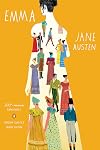
I dallied on purpose through Emma, taking nearly two on-again, off-again months to savor Jane Austen’s delicious prose, her sympathetic and perceptive portrayals of the protagonist and other main characters, and her exquisitely adept, lost-art use of semicolons. I hadn’t expected to discover and enjoy numerous laugh out loud moments, but Austen delivered the goods repeatedly...especially at the expense of pompous Mrs. Elton and hare-brained Miss Bates. Although the social mores of 18C Britain were obviously very different from those of today, Austen conveyed the motivations and behaviors of her characters in a way that modern readers can easily recognize and relate to. Brava!
Important story for Vietnamese and Americans. Well written.
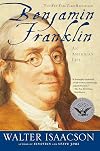
Isaacson’s biography of Benjamin Franklin is a welcome antidote for the madness and vulgarity of what passes for contemporary American political discourse. Isaacson takes the reader back to the formative years of American society and the many key moments and personalities associated with our nation’s founding and independence. He paints Franklin as an amazing contributor to civic and political life as well as a polymath with an inveterate curiosity about science.
At the same time, however, Isaacson is careful not to paint an overly rosy picture. He makes the case, for example, that Franklin’s personal relationships with members of his nuclear family (especially his brother, wife, son, and daughter) were rather wanting, cold, and shallow. Franklin seemed more interested in and energized by intellectual banter with friends and famous names, his grandchildrens’ adoration, and flirting with lady friends. That said, how many of us possess unblemished characters which the scrutiny of a biographer’s close analysis of our lives and letters would fail to find personal shortcomings and inadequacies?
Franklin was a great man, all things considered, who contributed with arguably unmatched impact to shaping our nation at a pivotal time. Isaacson’s biography was fun, carefully researched, well written, interest-filled, and balanced.
At the same time, however, Isaacson is careful not to paint an overly rosy picture. He makes the case, for example, that Franklin’s personal relationships with members of his nuclear family (especially his brother, wife, son, and daughter) were rather wanting, cold, and shallow. Franklin seemed more interested in and energized by intellectual banter with friends and famous names, his grandchildrens’ adoration, and flirting with lady friends. That said, how many of us possess unblemished characters which the scrutiny of a biographer’s close analysis of our lives and letters would fail to find personal shortcomings and inadequacies?
Franklin was a great man, all things considered, who contributed with arguably unmatched impact to shaping our nation at a pivotal time. Isaacson’s biography was fun, carefully researched, well written, interest-filled, and balanced.
I don't know or read a word of Russian. That said, I thoroughly enjoyed this translation of Dostoevsky's novel. It drew and held my interest for over 500 pages. Footnotes were judicious. When they occurred, the footnotes provided additional useful information about locations, historical events, or key linguistic shifts. If English is your native language, this translation is a wonderful way to absorb Dostoevsky[s important ideas and personalities.
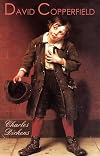
Coming to David Copperfield (DC) as an adult, I enjoyed DC for its big sloppy storyline, gobs of predictable but heart-rending melodrama, and vivid development of characters big and small. In particular, Dickens’s portrayals of Tommy Traddles, Uriah Heep, and Wilkins Micawber were masterful. Despite DC’s length and ponderous language, Dickens engaged me from the start and held my attention throughout. In the end, I knew he could be counted on to award each character his or her just desserts. The book was a relaxing and fun escape!
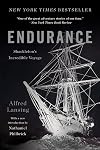
No doubt about it: the saga of Shackleton and his crew is an amazing against-all-odds story of ingenuity, gritty determination, and visceral will to live. I really enjoyed Lansing's account. The author's careful research and attention to detail were palpable on every page. He brought to vivid life the personalities of the crew members. The book is a testament to a level of all-out man-against-nature drive and determination which, thanks to the bounties of modern life and technology, humans are arguably unlikely ever to encounter or display again. Anyone with a curiosity or doubt about what people are truly capable of doing and achieving should read this book.
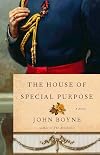
My favorite line: "I am a talisman for unhappiness...I have brought nothing but misery throughout my life for the people who loved me. Nothing but pain." - Zoya, p. 118
I enjoyed John Boyne's re-enactment and re-imagining of the final days of Nicholas and Alexandra as conveyed by Georgy Jachmenev, a Russian emigre in London telling his life's story. The story was engaging, well-constructed, rich in detail, and plausible. I particularly enjoyed the author's careful drawing of Tsar Nicholas and devilishly charismatic Father Gregory aka Rasputin.
For readers (like me!) who enjoy historical fiction and a good story, Boyne's book is fun and very approachable. While there is absolutely nothing junky about it, this book is engaging enough to make for a nice vacation read.
I enjoyed John Boyne's re-enactment and re-imagining of the final days of Nicholas and Alexandra as conveyed by Georgy Jachmenev, a Russian emigre in London telling his life's story. The story was engaging, well-constructed, rich in detail, and plausible. I particularly enjoyed the author's careful drawing of Tsar Nicholas and devilishly charismatic Father Gregory aka Rasputin.
For readers (like me!) who enjoy historical fiction and a good story, Boyne's book is fun and very approachable. While there is absolutely nothing junky about it, this book is engaging enough to make for a nice vacation read.
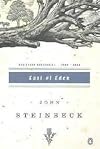
Huzzah! East of Eden ("EoE") is a wonderful, uplifting book. It focuses on the notion of our power and responsibility to choose (timshel) Steinbeck's writing and character development are first-rate and multi-dimensional, even if the narrative arc of the story is predictable. As long as America flourishes (forever, I hope!), the message of EoE will remain relevant and inspirational.
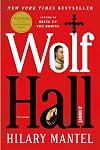
"Wolf Hall" was an enjoyable, engaging, and well-written historical novel. As an interested, and also disinterested, newbie to the period of the reign of Henry VIII, I had no preconceptions or axes to grind regarding the portrayal of the main characters or their motivations and intents. Mantel's portrayal of the actors and the intrigues surrounding them seemed plausible and overall sympathetic. I want to learn more. It will be fun to figure out whether and where Mantel got it right (or not).
By Haruki Murakami Colorless Tsukuru Tazaki and His Years of Pilgrimage: A novel (First Edition) by Haruki Murakami
Like its title, the book was sadly colorless and incomplete. The narrative arc started out in a promising fashion: why did the friends suddenly and completely disown Tsukuru, and what insights would Tsukuru's years-after-the-fact investigations -- especially his critical heart-to-heart with Eri, transplanted to far-away Finland -- reveal about them and himself? Not very much, it turns out, beyond the fact of Shiro's Outrageous Big Lie and the irrational ramifications which it had on the dynamics of the tightly-knit group of HS friends. In any case, what Tsukuru learned was not enough to allow him to win over his plain-talking GF-therapist Sara. And alas -- the author lazily ended the story before presenting the necessary final scene to us, even if the result seemed inevitable,
The book was a squandered opportunity. It was lame, listless, and unfocused. The color symbolism was over-played and sophomoric. There was no real pilgrimage, in the true sense of that word. The prose (which, admittedly, I read in English translation) held occasional moments of interest at best. I gained little insight from the random dream sequences and sidebar events which occupied much of the narrative. The book was not a waste, but it fell well short of meeting my expectations for top-notch exposition, story-telling, and character development.
The book was a squandered opportunity. It was lame, listless, and unfocused. The color symbolism was over-played and sophomoric. There was no real pilgrimage, in the true sense of that word. The prose (which, admittedly, I read in English translation) held occasional moments of interest at best. I gained little insight from the random dream sequences and sidebar events which occupied much of the narrative. The book was not a waste, but it fell well short of meeting my expectations for top-notch exposition, story-telling, and character development.
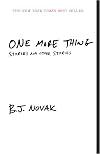
I wanted to like this collection of stories, because I greatly enjoyed "The Office" TV show and Novak's character. Sadly the book was so nauseatingly awful that I could and would not finish it.
The first story, a re-imagining of the turtle and hare story, was fresh and original. It drew me in. Unfortunately, the tales which followed it were mostly lame and boring - snippets of dropped-on-the-cutting-room-floor scenes which, for all I know, could well translate to comedic TV moments. As stories, however, they were inchoate, incomplete, and unsympathetic.
The author should stick to his strength at developing wise-guy TV screenplays and give up pretending he is an author. I felt angry at myself for wasting my precious time with this book. There are so many great books to read, but this wasn't one of them.
The first story, a re-imagining of the turtle and hare story, was fresh and original. It drew me in. Unfortunately, the tales which followed it were mostly lame and boring - snippets of dropped-on-the-cutting-room-floor scenes which, for all I know, could well translate to comedic TV moments. As stories, however, they were inchoate, incomplete, and unsympathetic.
The author should stick to his strength at developing wise-guy TV screenplays and give up pretending he is an author. I felt angry at myself for wasting my precious time with this book. There are so many great books to read, but this wasn't one of them.
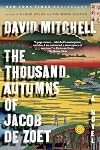
The Thousand Autumns of Jacob de Zoet (hereafter TAJZ) was a masterful work, probably my #2 favorite (just behind Black Swan Green) of David Mitchell’s four great books I have read so far. (Still to come: Ghostwritten and Number9Dream).
Mitchell amply demonstrates his wonderful writing skills and abilities in TAJZ. The story, and Mitchell’s telling of it, are so good. The author’s prose style is engaging and confident. The characters who inhabit TAJZ are complex, interesting, and plausible. Even the story’s numerous bad, highly imperfect, and sometimes evil eggs are difficult to dislike completely. I also loved the unpretentious way we got to meet some important characters and ideas from Bone Clocks and Cloud Atlas in these pages!
In addition, and as a temporary gaijin resident of Japan, I also enjoyed the book’s fascinating history lesson. TAJZ beautifully evinces an intensive, painstaking effort on Mitchell’s part to research and accurately portray the historical details and cultural texture of 18-19C Edo Japan’s closed society and the mercantilist aspirations of competing nations (European and American). The story’s accounts of carefullly-monitored Dutch life at Dejima really resonated with my impressions and experiences from a brief recent visit to Nagasaki.
Long and wonderful story short: Mitchell is at his awesome and masterful best in TAJZ.
Mitchell amply demonstrates his wonderful writing skills and abilities in TAJZ. The story, and Mitchell’s telling of it, are so good. The author’s prose style is engaging and confident. The characters who inhabit TAJZ are complex, interesting, and plausible. Even the story’s numerous bad, highly imperfect, and sometimes evil eggs are difficult to dislike completely. I also loved the unpretentious way we got to meet some important characters and ideas from Bone Clocks and Cloud Atlas in these pages!
In addition, and as a temporary gaijin resident of Japan, I also enjoyed the book’s fascinating history lesson. TAJZ beautifully evinces an intensive, painstaking effort on Mitchell’s part to research and accurately portray the historical details and cultural texture of 18-19C Edo Japan’s closed society and the mercantilist aspirations of competing nations (European and American). The story’s accounts of carefullly-monitored Dutch life at Dejima really resonated with my impressions and experiences from a brief recent visit to Nagasaki.
Long and wonderful story short: Mitchell is at his awesome and masterful best in TAJZ.
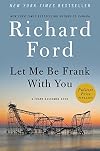
"Let Me Be Frank With You" (LMBF) is an entirely different book from Ford's "Canada" which, as my first exposure to the author, I greatly enjoyed about three years ago. Reading LMBF as a Frank Bascombe newbie, I arrived at this movie well after it was underway. LMBF paled in comparison to "Canada" (which I thought was masterful) but was good enough to pique my interest in reading one or more of the earlier LMBF books at some point in the future.
What I liked most about LMBF was the author's awesome powers of observing and depicting contemporary American society and mores. The awful hurricane destruction of the New Jersey seaside was a wonderful setting for that, and Ford's observations about it bound the stories together into a cohesive whole.
In addition, Ford demonstrated well-observed, acute empathy for any number of not-very-nice characters -- a knack that was also evident in "Canada". In the final story in particular, I enjoyed and appreciated the author's masterful pacing, language, and powers of description as evidenced in Bascombe's driveway meeting with evangelist Fike Birdsong. Brief though it was, this delicious episode was well worth the investment of time and energy to read the book.
What I liked most about LMBF was the author's awesome powers of observing and depicting contemporary American society and mores. The awful hurricane destruction of the New Jersey seaside was a wonderful setting for that, and Ford's observations about it bound the stories together into a cohesive whole.
In addition, Ford demonstrated well-observed, acute empathy for any number of not-very-nice characters -- a knack that was also evident in "Canada". In the final story in particular, I enjoyed and appreciated the author's masterful pacing, language, and powers of description as evidenced in Bascombe's driveway meeting with evangelist Fike Birdsong. Brief though it was, this delicious episode was well worth the investment of time and energy to read the book.
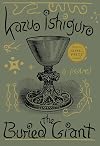
I really enjoyed this book. Getting into the story, the music and lyrics of Steven Sondheim (sung in a completely different context, admittedly) came to mind: "It started out like a song. We started quiet and slow, with no surprise. And then one morning I woke to realize: we had a good thing going..." ("Good Thing Going").
Not being a fancier of fantasy, I can't say if this book qualifies as such. Either way, however, it doesn't much matter. In the end, the story is mostly about love and relationships -- at least on one level.
The protagonists are Axl and Beatrice, a dear and aged Briton couple who have been through lots together. Beatrice is "princess" to Axl. (I have never seen the title used as often and with so much heartfelt meaning as in this story!) As the couple approaches the end of their lives in a land in which the past is largely fogged over or downright forgotten, they struggle over a huge nagging worry: if we can't remember and dwell upon our shared experiences and pleasures, how can we be sure that our love for another ever existed? Is it possible to feel love without conscious history and knowledge? Are the tender feelings of the present moment enough?
These nagging questions spur the couple, who are already well beyond their best-buy date, to embark upon a final quest to discover the substance and meaning that lie behind their loving, empathetic relationship. In doing so, they re-learn and re-absorb portions of their forgotten, mist-shrouded history, far show more more for better than for worse. In this context the story is lovingly told in a gentle manner. It is a humanist read -- hopeful, rather than dark or nihilistic.
Simultaneously, however, the story also explores the pros and cons of forgetting the sad and dreadful past at the societal level. Did Arthur and Merlin do the right thing to enchant the she-dragon to dampen the visceral memories of savage, cruel actions by warring Biritons and Saxons in order to retard retribution and keep the peace? Is it better to know or forget the dreadful historical truth? Modern sensibilities, of course, would argue for knowing and remembering. Yet, at practical level, and in the context of the period of this story, there is also a case to be made for not remembering.
The story is plenty thought-provoking. I feel somewhat at a loss for having finished reading it -- an unusual reaction for me, which perhaps speaks to its profundity. show less
Not being a fancier of fantasy, I can't say if this book qualifies as such. Either way, however, it doesn't much matter. In the end, the story is mostly about love and relationships -- at least on one level.
The protagonists are Axl and Beatrice, a dear and aged Briton couple who have been through lots together. Beatrice is "princess" to Axl. (I have never seen the title used as often and with so much heartfelt meaning as in this story!) As the couple approaches the end of their lives in a land in which the past is largely fogged over or downright forgotten, they struggle over a huge nagging worry: if we can't remember and dwell upon our shared experiences and pleasures, how can we be sure that our love for another ever existed? Is it possible to feel love without conscious history and knowledge? Are the tender feelings of the present moment enough?
These nagging questions spur the couple, who are already well beyond their best-buy date, to embark upon a final quest to discover the substance and meaning that lie behind their loving, empathetic relationship. In doing so, they re-learn and re-absorb portions of their forgotten, mist-shrouded history, far show more more for better than for worse. In this context the story is lovingly told in a gentle manner. It is a humanist read -- hopeful, rather than dark or nihilistic.
Simultaneously, however, the story also explores the pros and cons of forgetting the sad and dreadful past at the societal level. Did Arthur and Merlin do the right thing to enchant the she-dragon to dampen the visceral memories of savage, cruel actions by warring Biritons and Saxons in order to retard retribution and keep the peace? Is it better to know or forget the dreadful historical truth? Modern sensibilities, of course, would argue for knowing and remembering. Yet, at practical level, and in the context of the period of this story, there is also a case to be made for not remembering.
The story is plenty thought-provoking. I feel somewhat at a loss for having finished reading it -- an unusual reaction for me, which perhaps speaks to its profundity. show less
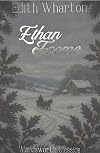
Bottom line: "Ethan Frome" (EF) is a kick-ass great book.
My son (a Wharton fan) suggested it as an introduction to Wharton's writing, but cautioned that it was a glum tale. Even reading the book while living alone in chilly northern Japan last winter, I felt mesmerized by the quality of Wharton's writing and her sympathetic tone.
The story was very compelling, the main characters all seemed plausible and worthy of sympathy, and the agony of unrequited passion between Ethan and Mattie felt palpable. Maybe I am naive...but, for me, the ending was a great surprise. It pleased and saddened me. Finally, the author's masterful and confident prose floored me as well. Not to sound like a pedantic twit, but Wharton's use of semicolon constructions struck me as unusually impactful and exemplary.
My son (a Wharton fan) suggested it as an introduction to Wharton's writing, but cautioned that it was a glum tale. Even reading the book while living alone in chilly northern Japan last winter, I felt mesmerized by the quality of Wharton's writing and her sympathetic tone.
The story was very compelling, the main characters all seemed plausible and worthy of sympathy, and the agony of unrequited passion between Ethan and Mattie felt palpable. Maybe I am naive...but, for me, the ending was a great surprise. It pleased and saddened me. Finally, the author's masterful and confident prose floored me as well. Not to sound like a pedantic twit, but Wharton's use of semicolon constructions struck me as unusually impactful and exemplary.
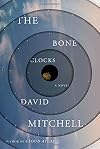
The Bone Clocks (TBC) is a fantastic, well-written, prophetic, engaging, and worthwhile book. Mitchell masterfully weaves together a rich tapestry of stories and characters, both flesh-and-bone and incorporeal, into a compelling story of the near-past, present, and scarily plausible in-our-childrens’-lifetime cataclysmic future.
The book was really good but imperfect. I was left with the feeling that Mitchell was after-the-fact pasting together separately-conceived set pieces. Two such examples:
1) Ed Brubeck’s accounts from post-Saddam Iraq seemed slow and prosaic. This section was a mash-up that didn’t propel the story forward and distracted from an otherwise-exciting main storyline.
2) Soleil Moore’s murder of Crispin Hershey on the heels of his weirdly indecisive confrontation with newly-freed Richard Cheeseman was strange and unexplained. Why didn’t Cheeseman kill Hershey? He had every reason to do so. And why did Moore regard her “Plan B” murder of Crispin as a gigantic wake-up call? What was the substance and significance of Hershey’s piece The Voorman Problem?
All that said, and in spite of any such real or perceived flaws with TBC, this 600+ page book excited and motivated me to come home from work and make time to read it in a way that few others have done in several years.
The book was really good but imperfect. I was left with the feeling that Mitchell was after-the-fact pasting together separately-conceived set pieces. Two such examples:
1) Ed Brubeck’s accounts from post-Saddam Iraq seemed slow and prosaic. This section was a mash-up that didn’t propel the story forward and distracted from an otherwise-exciting main storyline.
2) Soleil Moore’s murder of Crispin Hershey on the heels of his weirdly indecisive confrontation with newly-freed Richard Cheeseman was strange and unexplained. Why didn’t Cheeseman kill Hershey? He had every reason to do so. And why did Moore regard her “Plan B” murder of Crispin as a gigantic wake-up call? What was the substance and significance of Hershey’s piece The Voorman Problem?
All that said, and in spite of any such real or perceived flaws with TBC, this 600+ page book excited and motivated me to come home from work and make time to read it in a way that few others have done in several years.
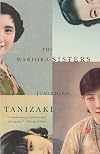
"The Makioka Sisters" (TMS) was a fine book. It had the same kind of satisfying depth and intimacy which I have enjoyed when listening to good chamber music. By way of comparison, "Remains of the Day" comes to mind.
The story includes multiple protagonists, all of whom are pretty interesting. I liked the way Tanizaki used a variety of techniques to bring them to life: sometimes in a direct fashion, as when he intensely relates every thought passing through their heads; and more sketchily at other times, reflecting the biases, opinions, and perspectives of the other characters.
TMS is largely a tale of the domestic dramas of a tradition-bound household experiencing the tremors wrought by significant changes to Japan's social fabric. Using a light hand, the author paints in occasional references to the historic events in the days leading up to WWII. He shows us the effect of those events on the status quo of out characters' everyday lives, and thereby conveys a thin but palpable sense of vague uneasiness.
Another recent reviewer asserted that TMS was a book obsessed with the mundane, in which nothing much happened. As I saw it, my reading led me to a very different conclusion. The story was an skillfully rendered portrait of significant and irreversible change.
The traditional culture of the sisters' world, as they and their forebears understood and lived it, had sustained so many pinprick leaks that it was on the verge of sinking entirely. In that regard,TMS was a show more fascinating exploration of those pinpricks and the effects they made on the status quo. It was fun to get into the characters' heads: did they understand what was happening to their society and customs? if so, how might they respond?
Given that the story ends in early 1941, it was also natural to wonder: assuming the characters survived WWII, what sort of people would they have become? What sense would they have made of post-war Japan?
I absolutely loved the way the book ended.
If one mark of a good story is to keep you thinking about it long after you've read the last page, then TMS is a gem. show less
The story includes multiple protagonists, all of whom are pretty interesting. I liked the way Tanizaki used a variety of techniques to bring them to life: sometimes in a direct fashion, as when he intensely relates every thought passing through their heads; and more sketchily at other times, reflecting the biases, opinions, and perspectives of the other characters.
TMS is largely a tale of the domestic dramas of a tradition-bound household experiencing the tremors wrought by significant changes to Japan's social fabric. Using a light hand, the author paints in occasional references to the historic events in the days leading up to WWII. He shows us the effect of those events on the status quo of out characters' everyday lives, and thereby conveys a thin but palpable sense of vague uneasiness.
Another recent reviewer asserted that TMS was a book obsessed with the mundane, in which nothing much happened. As I saw it, my reading led me to a very different conclusion. The story was an skillfully rendered portrait of significant and irreversible change.
The traditional culture of the sisters' world, as they and their forebears understood and lived it, had sustained so many pinprick leaks that it was on the verge of sinking entirely. In that regard,TMS was a show more fascinating exploration of those pinpricks and the effects they made on the status quo. It was fun to get into the characters' heads: did they understand what was happening to their society and customs? if so, how might they respond?
Given that the story ends in early 1941, it was also natural to wonder: assuming the characters survived WWII, what sort of people would they have become? What sense would they have made of post-war Japan?
I absolutely loved the way the book ended.
If one mark of a good story is to keep you thinking about it long after you've read the last page, then TMS is a gem. show less

This book took me about two months to read! I read it at my son's urging. Happily, in the end, I thought it was worthwhile. I enjoyed a number of good moments and, in comparison to other "epics" (e.g. "One Hundred Years of Solitude") which I have recently tackled, the gain was worth the pain. It was quite a story!
I really enjoyed the way in which James sketched the characters in terms of their motives and attitudes within the context of societal norms (both prevalent and evolving). It was too bad that the goodies were buried in tons of 19C bloated verbiage and, surely, hundreds of impossibly long (and yet so exquisitely constructed) paragraphs, And despite all of the palpable passion, the total absence of steamy sex scenes was a bitter pill to swallow. Throw us a bone, Henry James! In sum,however, the book was worth reading, and parts of the story are bound to stick with me.
As an aside: I am looking forward to renting the movie version (1996) of the novel, in which Nicole Kidman plays Isabel. (Sadly, the preview looks awful!) I hope the protagonists -- for their own sake and that of the novel's dramatic integrity as a 20C interpretation --- will share at least a few moments of lust. Because that's what most people are and do. But my expectations are low.
I really enjoyed the way in which James sketched the characters in terms of their motives and attitudes within the context of societal norms (both prevalent and evolving). It was too bad that the goodies were buried in tons of 19C bloated verbiage and, surely, hundreds of impossibly long (and yet so exquisitely constructed) paragraphs, And despite all of the palpable passion, the total absence of steamy sex scenes was a bitter pill to swallow. Throw us a bone, Henry James! In sum,however, the book was worth reading, and parts of the story are bound to stick with me.
As an aside: I am looking forward to renting the movie version (1996) of the novel, in which Nicole Kidman plays Isabel. (Sadly, the preview looks awful!) I hope the protagonists -- for their own sake and that of the novel's dramatic integrity as a 20C interpretation --- will share at least a few moments of lust. Because that's what most people are and do. But my expectations are low.

Do you enjoy surrealism and the paintings of Salvador Dali? Neither do I...and, if you're anything like me, Murakami's admittedly interesting short novel will likely leave you feeling plenty puzzled and unsatisfied. Overall, I thought that "After Dark" fell well short of fine literature.
All was not lost, however. On the positive side, I did enjoy the author's excursions on how such an orderly city as Tokyo can (at least conceivably) transform into a chaotic Wild West at night...and, then, turn back again into its civilized daytime guise. (Whether that's what really happens, however, I have no way of knowing and no desire to find out. The proof is left to the reader, as the saying goes.)
On the negative side, however, the lumbering and unevocative descriptions of sleeping beauty Eri, and the author's promptings that we regard her slumbering visage from a variety of different angles as if we were a camera crew filming the event, delivered the same level of literary sizzle as a user's manual for a toaster oven.
The author went on to pose a series of riddles which, I suppose, he reckoned would mightily challenge his readers. For example: Who was that diaphanously masked man in the picture? What should we make of Eri's puzzlement over finding a lead pencil stamped with the company name associated with a slimeball software engineer whom Eri never knew? Will sister Mari's warming thoughts translate into action and save the TV screen image of Eri's corporeal form from dissolving show more into radiowave static?
To all of this blather, my response was: whatever, Murakami! How tedious! You've given us no reason to care about the answers to your riddles, one way or the other. Was the author's intent simply lost in the English language translation? Perhaps a little, but I doubt that the root cause of the author's weak story-telling is as simple as just that. The narrative's many weak moments probably suck every bit as much in Japanese.
Nonetheless, and from the perspective of the story's overall arc, I was pleased that stalwart Mari's deep introspection ultimately transformed her aloofness into love, enabling her to offer a seemingly healing gift of intimate comfort and care to long-slumbering sister Eri. Hooray for humanity! Surely a good life depends on the existence of such strong and rich personal connections. I was gratified that the book ended on such a high note...enough, I guess, for me to rank "After Dark" ahead of trying to make sense of a typical Dali painting. show less
All was not lost, however. On the positive side, I did enjoy the author's excursions on how such an orderly city as Tokyo can (at least conceivably) transform into a chaotic Wild West at night...and, then, turn back again into its civilized daytime guise. (Whether that's what really happens, however, I have no way of knowing and no desire to find out. The proof is left to the reader, as the saying goes.)
On the negative side, however, the lumbering and unevocative descriptions of sleeping beauty Eri, and the author's promptings that we regard her slumbering visage from a variety of different angles as if we were a camera crew filming the event, delivered the same level of literary sizzle as a user's manual for a toaster oven.
The author went on to pose a series of riddles which, I suppose, he reckoned would mightily challenge his readers. For example: Who was that diaphanously masked man in the picture? What should we make of Eri's puzzlement over finding a lead pencil stamped with the company name associated with a slimeball software engineer whom Eri never knew? Will sister Mari's warming thoughts translate into action and save the TV screen image of Eri's corporeal form from dissolving show more into radiowave static?
To all of this blather, my response was: whatever, Murakami! How tedious! You've given us no reason to care about the answers to your riddles, one way or the other. Was the author's intent simply lost in the English language translation? Perhaps a little, but I doubt that the root cause of the author's weak story-telling is as simple as just that. The narrative's many weak moments probably suck every bit as much in Japanese.
Nonetheless, and from the perspective of the story's overall arc, I was pleased that stalwart Mari's deep introspection ultimately transformed her aloofness into love, enabling her to offer a seemingly healing gift of intimate comfort and care to long-slumbering sister Eri. Hooray for humanity! Surely a good life depends on the existence of such strong and rich personal connections. I was gratified that the book ended on such a high note...enough, I guess, for me to rank "After Dark" ahead of trying to make sense of a typical Dali painting. show less
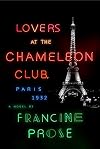
"Lovers at the Chameleon Club..." was first book by Francine Prose that I read. I liked it lots. As noted in Edmund White's review, it is indeed "a novel of great reach and power" and features a cast of "well-delineated characters".
As I have learned from various commentaries, the main characters (e.g. Lou Villars, Lionel Mane, and Gabor Tsenji) are loosely based on real people who, in some manner, exemplified the time. So the novel is by no means a free-form imagination of Parisian life prior to and during WWII. But I liked the book without knowing any of that real-world background, and even though the main character (Lou) proved to be a misguided, sadistic, and evil person.
Prose early on established the chameleon metaphor as a framework for her story. Having grasped that idea, I enjoyed following its explication as the ever-changing, adaptive personalities of the characters, and their lives and choices, unfolded as the story progressed.
More than any other character, Suzanne struck me as the one person who remained consistent and true to her roots. I believed in her from start to finish...and yet, at the very end, I couldn't agree that her book-ending account of the historical facts was completely credible.
No doubt it was the author's intended result to leave the reader hanging. All the more credit to Francine Prose for doing so, and for skillfully investing such inventiveness and ambiguity into the story.
As I have learned from various commentaries, the main characters (e.g. Lou Villars, Lionel Mane, and Gabor Tsenji) are loosely based on real people who, in some manner, exemplified the time. So the novel is by no means a free-form imagination of Parisian life prior to and during WWII. But I liked the book without knowing any of that real-world background, and even though the main character (Lou) proved to be a misguided, sadistic, and evil person.
Prose early on established the chameleon metaphor as a framework for her story. Having grasped that idea, I enjoyed following its explication as the ever-changing, adaptive personalities of the characters, and their lives and choices, unfolded as the story progressed.
More than any other character, Suzanne struck me as the one person who remained consistent and true to her roots. I believed in her from start to finish...and yet, at the very end, I couldn't agree that her book-ending account of the historical facts was completely credible.
No doubt it was the author's intended result to leave the reader hanging. All the more credit to Francine Prose for doing so, and for skillfully investing such inventiveness and ambiguity into the story.