Your Survival: Protect Yourself from Tornadoes, Earthquakes, Flu Pandemics, and other Disasters by Bob Arnot

As with many such books, this book is likely to reach mainly those who are already interested in the subject. Your average oaf-off-the-street is likely to pass it by in favor of the latest schlock (if s/he is even reading at all instead of watching Fox News). However, for anyone interested in planning and preparing themselves for possible disasters, this is a pretty comprehensive work. It's for the beginner--someone who is beginning to understand how fragile our interconnected world is and wants to do something about it--rather than for the serious survivalist. This is a book about sensible things that just about anyone should do to prepare for a major disaster.
Broken into three main sections (Before Disaster Strikes, During an Emergency, and After the Crisis, all conveniently tabbed) and including a DVD, this book covers determining what sorts of disasters are likely to strike your area, planning what to do about them, and executing those plans. It does not deal in scare stories--no zombies, or even barbarian gangs rampaging through a post-societal-collapse America--but in the kind of disasters that happen all the time: fires, floods, earthquakes, tornadoes, hurricanes, pandemics, etc.
You can't prepare for everything, but any preparedness is better than none. Dr. Arnot shows you where to start and how to proceed.
I do have two smallish quibbles: first, the author does seem to focus a bit much on one particular provider of preparedness supplies: I'm sure Captain Dave is show more a fine upstanding individual who sells quality products, but I'd have liked the good doctor to have given a few pointers on other resources in the included DVD.
Second, a lot of the resources listed take time and money, and some people are strapped for one or the other, or both. A bit more discussion of how to ramp up from nothing to being ready to hunker down for a couple of months or evacuate safely and effectively would have been good. I admit I read the book a couple of weeks ago, so I may be misremembering some of the details, and i still recommend it strongly.
Unfortunately, the associated site, yoursurvival.com has been saying "This website is temporarily unavailable. Please check back later. Unfortunately there were no suitable nodes available to serve this request." for weeks now. I hope it's not permanent, as the book promises some very useful features. show less
Broken into three main sections (Before Disaster Strikes, During an Emergency, and After the Crisis, all conveniently tabbed) and including a DVD, this book covers determining what sorts of disasters are likely to strike your area, planning what to do about them, and executing those plans. It does not deal in scare stories--no zombies, or even barbarian gangs rampaging through a post-societal-collapse America--but in the kind of disasters that happen all the time: fires, floods, earthquakes, tornadoes, hurricanes, pandemics, etc.
You can't prepare for everything, but any preparedness is better than none. Dr. Arnot shows you where to start and how to proceed.
I do have two smallish quibbles: first, the author does seem to focus a bit much on one particular provider of preparedness supplies: I'm sure Captain Dave is show more a fine upstanding individual who sells quality products, but I'd have liked the good doctor to have given a few pointers on other resources in the included DVD.
Second, a lot of the resources listed take time and money, and some people are strapped for one or the other, or both. A bit more discussion of how to ramp up from nothing to being ready to hunker down for a couple of months or evacuate safely and effectively would have been good. I admit I read the book a couple of weeks ago, so I may be misremembering some of the details, and i still recommend it strongly.
Unfortunately, the associated site, yoursurvival.com has been saying "This website is temporarily unavailable. Please check back later. Unfortunately there were no suitable nodes available to serve this request." for weeks now. I hope it's not permanent, as the book promises some very useful features. show less
Dr. Irwin Redlener, director of the National Center for Disaster Preparedness at Columbia University's Mailman School of Public Health, discusses the political, social, and economic bases for why we are so appallingly underprepared for disasters in the United States today.
"How is America Still Vulnerable?" looks at six disasters that could visit disaster on the US, sometimes far worse than Katrina:
>Pandemic influenza (or worse)
>Natural megadisasters, like a major earthquake in Seattle and Puget Sound
>Nuclear terrorism
>Tornado striking a chemical plant
>Attack on an elementary or secondary school
In each case, Dr. Redlener shows clearly how painfully vulnerable we are, how such a scenario could occur, and what some of the consequences would be. He also goes into what might be done to prevent or mitigate such incidents. Of course, these are just a few of the disasters we could experience, but they're representative and help to give context to our overall (lack of) readiness and resiliency.
Once Dr. Redlener has us good and scared, he delves into *why* we are so unprepared. The next section lists "four barriers to optimal readiness:"
:::Goals and Accountability--or Random Acts of Preparedness (for all our talk, work, and expenditure, we lack a comprehensive, coherent, goal-based approach to disaster preparedness: much of what we do nationally amounts to flailing around. Flailing your arms around will get you a lot of space on the street, and might even get rid of someone who's show more just being annoying, but a determined attacker will barely be slowed by flailing arms. That's our situation)
:::Failure of Imagination: It's Always in the Details
:::Missing and Misplaced Leadership: Who's in Charge?
:::The Strange Psychology of Preparedness and Why the Public Isn't Buying
Finally, Dr. Redlener--like anyone writing a book about The Problem Of ________ That Confronts Us should do--lays out his recommendations for how we can change the current state of affairs, including "Rational Preparedness for an Uncertain Future: A Nine-Point Plan" and "Beyond Batteries and Go-Packs: Redlener's Eight Principles of Disaster Preparedness and Survival."
This book is well-written and easily accessible to the public, and I wish more of the public would take time to access it. What's more, I wish more of our legislators would take the time to access it. Just as armed services are generally "preparing to fight the last war," so our nation is busily preparing to fight the last disaster. Actually, since Katrina was our last mega-disaster, we're doing worse than that: we're preparing for another 9/11. The problem is that the Bad Guys aren't going to try another 9/11, because they know they'd never succeed. On 9/12/2001, "skyjacker" became the world's most hazardous profession, with an expected mortality rate approaching 100% and a projected success rate asymptotically close to zero. We're busy looking in our rear-view mirrors, carefully preventing another 9/11, when the Bad Guys have moved on, and we need to start looking forward and around lest we be blindsided.
Of course, we also spend a disproportionate amount of our readiness funds on terrorism, even though ten times as many people die on our nation's highways every year as died in the 9/11 attacks (http://www-fars.nhtsa.dot.gov/Main/index.aspx), and major natural disasters cost the US over forty billion dollars in 2011 alone (http://www.infoplease.com/ipa/A0882823.html). Dr. Redlener discusses why and how our priorities are whacked (my word, not his) and puts together a powerful analysis of how we can make ourselves more ready and more resilient. The cost is surprisingly low: we lack the will and understanding to implement the fix. I'm sure Dr. Redlener will take no pleasure in being able to say "I told you so" if we don't get our acts together before the next disaster. show less
"How is America Still Vulnerable?" looks at six disasters that could visit disaster on the US, sometimes far worse than Katrina:
>Pandemic influenza (or worse)
>Natural megadisasters, like a major earthquake in Seattle and Puget Sound
>Nuclear terrorism
>Tornado striking a chemical plant
>Attack on an elementary or secondary school
In each case, Dr. Redlener shows clearly how painfully vulnerable we are, how such a scenario could occur, and what some of the consequences would be. He also goes into what might be done to prevent or mitigate such incidents. Of course, these are just a few of the disasters we could experience, but they're representative and help to give context to our overall (lack of) readiness and resiliency.
Once Dr. Redlener has us good and scared, he delves into *why* we are so unprepared. The next section lists "four barriers to optimal readiness:"
:::Goals and Accountability--or Random Acts of Preparedness (for all our talk, work, and expenditure, we lack a comprehensive, coherent, goal-based approach to disaster preparedness: much of what we do nationally amounts to flailing around. Flailing your arms around will get you a lot of space on the street, and might even get rid of someone who's show more just being annoying, but a determined attacker will barely be slowed by flailing arms. That's our situation)
:::Failure of Imagination: It's Always in the Details
:::Missing and Misplaced Leadership: Who's in Charge?
:::The Strange Psychology of Preparedness and Why the Public Isn't Buying
Finally, Dr. Redlener--like anyone writing a book about The Problem Of ________ That Confronts Us should do--lays out his recommendations for how we can change the current state of affairs, including "Rational Preparedness for an Uncertain Future: A Nine-Point Plan" and "Beyond Batteries and Go-Packs: Redlener's Eight Principles of Disaster Preparedness and Survival."
This book is well-written and easily accessible to the public, and I wish more of the public would take time to access it. What's more, I wish more of our legislators would take the time to access it. Just as armed services are generally "preparing to fight the last war," so our nation is busily preparing to fight the last disaster. Actually, since Katrina was our last mega-disaster, we're doing worse than that: we're preparing for another 9/11. The problem is that the Bad Guys aren't going to try another 9/11, because they know they'd never succeed. On 9/12/2001, "skyjacker" became the world's most hazardous profession, with an expected mortality rate approaching 100% and a projected success rate asymptotically close to zero. We're busy looking in our rear-view mirrors, carefully preventing another 9/11, when the Bad Guys have moved on, and we need to start looking forward and around lest we be blindsided.
Of course, we also spend a disproportionate amount of our readiness funds on terrorism, even though ten times as many people die on our nation's highways every year as died in the 9/11 attacks (http://www-fars.nhtsa.dot.gov/Main/index.aspx), and major natural disasters cost the US over forty billion dollars in 2011 alone (http://www.infoplease.com/ipa/A0882823.html). Dr. Redlener discusses why and how our priorities are whacked (my word, not his) and puts together a powerful analysis of how we can make ourselves more ready and more resilient. The cost is surprisingly low: we lack the will and understanding to implement the fix. I'm sure Dr. Redlener will take no pleasure in being able to say "I told you so" if we don't get our acts together before the next disaster. show less
This remarkable and enjoyable book comes to us from the author of the Sharpe series of Napoleonic War novels. I discovered it by happening to see one of the Sharpe films and enjoying it greatly. That led me to look at his books, and I found The Winter King among them. Since I'm far more fascinated by the Arthurian Cycle than I am by Napoleonic-era Europe, I snagged it from the library.
Reminiscent of Rosemary Sutcliff's "Sword at Sunset," there is precious little here that is not historically reasonable: no great enchanters making stones dance or mystic arms rising from lakes clothed in white samite and bearing swords of kingship with invulnerability-conferring sheaths. Nor is this a novel of high romance: instead, we have a gritty and at times unpleasantly realistic tale. Rape, brutality, and casual murder make their appearances--not as harshly as Harry Harrison's "Hammer and Cross" series, for example, but for which I'm glad: Harrison's series is well worth reading, but hard going at times because of the cruelty that suffuses it. Instead, we have a story that could be believed: if someone were to actually go back in time and observe the warlord who was the original inspiration for later legends of Arthur, I would not be remotely surprised to find the report looking something like this.
This book only covers the period between Uther Pendragon's death and Arthur's rising to a position of warlord, but it does great things with that period, giving the characters depth and show more weaving a new set of interactions and motivations.
I'm looking forward to reading the rest of the series. The Arthurian Cycle holds a powerful attraction for me, and I've honestly lost count of the number of Arthurian novels I've read, from great to ghastly: this one goes in the "Oh, yes!" column.
(sorry the review is so disjointed: I actually finished reading it a couple of weeks ago, so the details are a little fuzzy...) show less
Reminiscent of Rosemary Sutcliff's "Sword at Sunset," there is precious little here that is not historically reasonable: no great enchanters making stones dance or mystic arms rising from lakes clothed in white samite and bearing swords of kingship with invulnerability-conferring sheaths. Nor is this a novel of high romance: instead, we have a gritty and at times unpleasantly realistic tale. Rape, brutality, and casual murder make their appearances--not as harshly as Harry Harrison's "Hammer and Cross" series, for example, but for which I'm glad: Harrison's series is well worth reading, but hard going at times because of the cruelty that suffuses it. Instead, we have a story that could be believed: if someone were to actually go back in time and observe the warlord who was the original inspiration for later legends of Arthur, I would not be remotely surprised to find the report looking something like this.
This book only covers the period between Uther Pendragon's death and Arthur's rising to a position of warlord, but it does great things with that period, giving the characters depth and show more weaving a new set of interactions and motivations.
I'm looking forward to reading the rest of the series. The Arthurian Cycle holds a powerful attraction for me, and I've honestly lost count of the number of Arthurian novels I've read, from great to ghastly: this one goes in the "Oh, yes!" column.
(sorry the review is so disjointed: I actually finished reading it a couple of weeks ago, so the details are a little fuzzy...) show less
It's really hard to write a decent book on Wicca beyond "Wicca 101" unless one is writing from an anthropological or sociological perspective. Kirk White, however, has managed to do just that. It's not perfect, but what is?
The book starts with a review of basic material, but even there he goes into somewhat more depth than you might want if you were brand-new to Wicca. Later, the book covers much more advanced material, up to and including "Deity Work and Divine Possession." Definitely worth the read.
The book starts with a review of basic material, but even there he goes into somewhat more depth than you might want if you were brand-new to Wicca. Later, the book covers much more advanced material, up to and including "Deity Work and Divine Possession." Definitely worth the read.
As we progress through this book, it becomes clear that only some kind of deus ex machina is going to get our characters out of this mess. Unfortunately, when the deus ex machina actually shows up, it behaves a little too similarly to Classical dei ex machina. Novels nowadays try to conceal the deus ex machina's contrived nature by providing some kind of explanation that makes everything make sense. Haldeman seems to have forgotten this contemporary convention, which left me feeling somewhat let down at the end of the story.
I'm normally a fan of Haldeman's work, and certainly the notion that set this story in motion is a clever and intriguing one, but somehow I'm disappointed. I won't say don't read it, but I'm not going to buy it.
I'm normally a fan of Haldeman's work, and certainly the notion that set this story in motion is a clever and intriguing one, but somehow I'm disappointed. I won't say don't read it, but I'm not going to buy it.
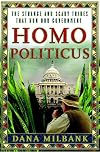
An enjoyable look, albeit a somewhat disturbing one at times, at the bunch of loons we entrust to run our nation. Somewhat skewed in its skewering, it looks at more Republican misdeeds and oddnesses, but then my admittedly-biased opinion is that there are more misdeeds and oddnesses on that side of the aisle. YMMV.
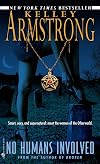
Not a bad book. The plot of the novel was interesting, the conceit behind it clever (and what if they're right? A disturbing notion...), the seduction scene was delightful, and the protagonist's response the final situation-of-mortal-danger was inspired, although the setup for it was perhaps a trifle contrived.
The characterization was fairly good: I did find myself sometimes losing track of who was whom, but I'll lay that down to not having read the rest of the series.
However...
If I'd wanted to read a Laurell K Hamilton book (female necromancer romantically involved with a werewolf in a contemporary urban setting, y'know), I'd have picked up a Laurell K Hamilton book. If the author had found a different set of characteristics for her character, so to speak, or had done it before Ms. Hamilton, I'd be more inclined to read more of this series.
The characterization was fairly good: I did find myself sometimes losing track of who was whom, but I'll lay that down to not having read the rest of the series.
However...
If I'd wanted to read a Laurell K Hamilton book (female necromancer romantically involved with a werewolf in a contemporary urban setting, y'know), I'd have picked up a Laurell K Hamilton book. If the author had found a different set of characteristics for her character, so to speak, or had done it before Ms. Hamilton, I'd be more inclined to read more of this series.
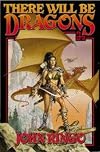
As with most of Ringo's work, I enjoy the story and the concept, as long as I don't let myself get annoyed by his preachiness. After centuries of ultra-high-tech peaceful society where everything is made possible through sophisticated nanotechnology (technology sufficiently advanced that it *is* indistinguishable from magic in many cases), a violent disagreement breaks out in the Council to (barely) runs the world. Each faction immediately begins to consume the power available to them, which is to say almost all of the world's power. Instantly, civilization falls.
The rest of the novel deals with a community of people who had been reenactors and actually had physical resources to survive--and later, thrive--in this not-so-brave, not-so-new world. Much emphasis on the nobility of the warrior, who places self between danger and community, as is not uncommon in Ringo's work. Once you get past some of the more aggressively right-wing rhetoric, an enjoyable escapist tale.
The rest of the novel deals with a community of people who had been reenactors and actually had physical resources to survive--and later, thrive--in this not-so-brave, not-so-new world. Much emphasis on the nobility of the warrior, who places self between danger and community, as is not uncommon in Ringo's work. Once you get past some of the more aggressively right-wing rhetoric, an enjoyable escapist tale.
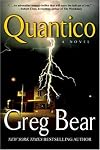
A detective novel of the near future, with interesting twists. Enjoyable, as much of Mr. Bear's books are, with some interesting ideas. Some moments are a bit unbelievable, but overall worth reading.
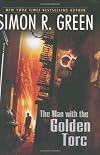
An outstanding contemporary fantasy thriller, complete with clever twists and literary in-jokes, from the protagonist's name onward. The jokes are not so common as to be annoying or jarring, but enjoyable when they show up. The title, of course, is a takeoff on the Bond novel, as is the title of the sequel due out in 2008.
The protagonist is a member of a secret family who protect The Rest Of Us from all manner of unnamed and unknown horrors that would freeze our minds did we but see them. The family has mighty equipment, both magickal and technological, that they wield in pursuit of this noble aim. But is there something else going on? When our narrator is set up, in the fashion of countless contemporary heroes, he must find allies and information that will bring out the final, horrifying truth.
The protagonist is a member of a secret family who protect The Rest Of Us from all manner of unnamed and unknown horrors that would freeze our minds did we but see them. The family has mighty equipment, both magickal and technological, that they wield in pursuit of this noble aim. But is there something else going on? When our narrator is set up, in the fashion of countless contemporary heroes, he must find allies and information that will bring out the final, horrifying truth.
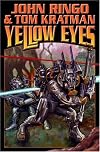
The most recent in the enjoyable, if sometimes horrific, Posleen War series about rapacious aliens who are here to eat *everything.* Complicating the situation are other galactic races who say they want to help, but most of whom have hidden agendas.
My enjoyment of this book was reduced considerably by the addition of thinly-disguised polemics against such things as the UN and laws of war, and by an entirely undisguised, somewhat incoherent, shrill polemic against "Tranzis" at the end. Now, I recognize an author's right to write whatever zie wants in zir own book, but that doesn't stop me from expressing my distaste for it...
My enjoyment of this book was reduced considerably by the addition of thinly-disguised polemics against such things as the UN and laws of war, and by an entirely undisguised, somewhat incoherent, shrill polemic against "Tranzis" at the end. Now, I recognize an author's right to write whatever zie wants in zir own book, but that doesn't stop me from expressing my distaste for it...
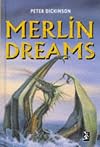
An excellent collection of fantasy tales, strung together loosely on the thread of being dreams (memories?) of Merlin's as he lies imprisoned in his oak.
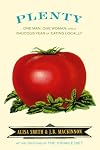
An enjoyable memoir of a fascinating experience, this book is yet another indicator of how precarious things have become. The authors describe how the original inhabitants of their part of Canada would not have found it difficult to live on food gathered from a far smaller radius than their experimental 100 miles, but nowadays they found it an enormous challenge. Not merely because they couldn't eat bananas, but because it was difficult to *find* food that had been grown and sold within that radius. I'm lucky, living in Minneapolis; I probably would not have to go the nine months they did without bread because they couldn't find locally-grown wheat, for example.
Makes me want to start gardening (which is easy to say when winter's about to be upon us; ask me again the the spring...)
Makes me want to start gardening (which is easy to say when winter's about to be upon us; ask me again the the spring...)
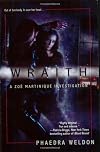
Somewhat disjointed style of writing, and too many things left unanswered. Why, for example, does the cop suspect the minister? That's never answered. Perhaps I was trying to read it too fast, but it seemed like there was too much exposition in some places, too many twists and turns, and too many terms introduced too quickly. An interesting premise, but overall disappointing, and the end was unsatisfying.
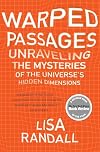
A fascinating look at where the world of outré physics is going. Moderately-hard slogging, but probably worth it, although I do find myself with a question or two. I didn't finish it because it had to go back to the library--I'll have to re-borrow it sometime.
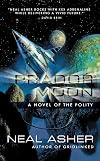
A moderately-enjoyable First Contact novel, with a cleverly-conceived set of hostile aliens. For a while it looks like things are going to go really badly for the humans, but by the end there's some hope.
I would probably have enjoyed this more if I'd read the preceding novels in the same universe; despite a clear attempt to make this book stand on its own, I think some of the concepts were probably addressed more fully in previous novels. Worth reading (some of the scenes of human/alien interaction are kinda gruesome, so if that's not your cuppa you might want to skip this), but I'm not sure if it's worth buying.
I would probably have enjoyed this more if I'd read the preceding novels in the same universe; despite a clear attempt to make this book stand on its own, I think some of the concepts were probably addressed more fully in previous novels. Worth reading (some of the scenes of human/alien interaction are kinda gruesome, so if that's not your cuppa you might want to skip this), but I'm not sure if it's worth buying.
The Next Attack: The Failure of the War on Terror And a Strategy for Getting It Right by Daniel Benjamin
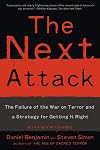
An outstanding analysis of what went wrong, how the current policies in Iraq are exacerbating our problems (and may do sufficient damage to the US in the long run to make our survival as a viable world power questionable, IMO), what we *should* have done, and what we must do promptly.
Now, I may like it because much of it agrees with what I've been saying all along, and it's nice to hear it from some experts, but I'll accept that and still recommend the book highly.
Now, I may like it because much of it agrees with what I've been saying all along, and it's nice to hear it from some experts, but I'll accept that and still recommend the book highly.
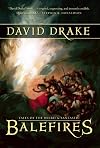
A very enjoyable collection of fantasy short stories by David Drake. I've enjoyed Mr. Drake's military/SF stories, and so it's good to see he can acquit himself well in this milieu as well. Recommended.
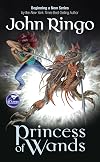
A really enjoyable new character by an unexpected author. I know John Ringo from his hard SF military stories, so this was quite a surprise. However, the different milieu does not diminish Ringo's talent (although I'd be interested to see a little more of the protagonist's home life: that's going to become a bigger issue as/if this series moves along).
Barb Everette, a good Christian homemaker, finds herself caught up in some very unpleasant interactions with some very unpleasant horrors. After acquitting herself well in a situation that would cause most people to freeze (and die, or worse), she is recruited by a worldwide organization dedicated to protecting the unwary (pretty much everyone else) from some very hungry and malevolent Things From Out There. It's interesting to see how Barb interacts with members of other faiths who are also deeply involved with the struggle and, Wiccan though I am, I find myself liking and respecting her. I hope this is the beginning of a long series of novels about this character.
Barb Everette, a good Christian homemaker, finds herself caught up in some very unpleasant interactions with some very unpleasant horrors. After acquitting herself well in a situation that would cause most people to freeze (and die, or worse), she is recruited by a worldwide organization dedicated to protecting the unwary (pretty much everyone else) from some very hungry and malevolent Things From Out There. It's interesting to see how Barb interacts with members of other faiths who are also deeply involved with the struggle and, Wiccan though I am, I find myself liking and respecting her. I hope this is the beginning of a long series of novels about this character.
Strange Candy - A Collection Of Stories with All-new Introductions by the Author by Laurell K. Hamilton
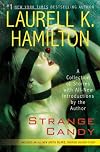
Another library book. Quite an enjoyable collection of fantasy stories, some more horror-tinged than others. If you like her other work, you'll probably like this one. If you don't, you probably won't. There is one Anita Blake short story at the end, but the others are generic fantasy.
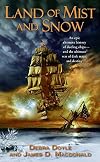
An enjoyable fantasy, set in the context of the States War (US Civil War, if you prefer) where magic is known and works. This is apparently a Manhattan-Project-type exercise in naval warfare, about which I will not say too much lest I spoil things. Worth the read, but I don't think I'll be buying it.
Somewhat disappointing, given the promise he's showed in things like "The Atrocity Archive." An interesting concept that could have been enormously fleshed out without becoming stale. Character development not great and too many questions left unanswered for my tastes. Reads almost like an outline for a much larger book.
A realistic approach to keeping yourself safer. I saw his video once, probably fifteen years ago, and some of it stuck with me ever since. It's perhaps a little more cautious than some people need to be, but you have to decide your own risk tolerance, and Bittenbinder's clearly working from a minimal-risk level. YMMV, but it's good to have the inforation.
This is quite possibly the best first novel I've ever read. Certainly, I was not expecting anything as consummately well-written as this, and I picked it up on a recommendation from someone else.Rothfuss builds believable characters in a consistent fantasy world. I can't recommend this too highly, and I'm the kind who usually cringes when he sees "Volume n of the Chronicles/Cycle/Legend etc." I know I'll be looking for more from Mr. Rothfuss.
A very enjoyable trip through New Jersey's underside. A somewhat stereotypical image of New Jersey, to be sure (albeit perfectly accurate, for all I know), but a lot of fun.
I'm not usually a fan of mysteries, but somehow these caught my attention. Perhaps it's the characters, perhaps it's the setting, perhaps it's the mysteries themselves. Whatever it was, I'm tempted to hunt down more of Ms. Evanovich's work.
I'm not usually a fan of mysteries, but somehow these caught my attention. Perhaps it's the characters, perhaps it's the setting, perhaps it's the mysteries themselves. Whatever it was, I'm tempted to hunt down more of Ms. Evanovich's work.
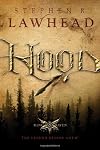
A very enjoyable Robin Hood tale. Moving this classic tale from Sherwood Forest to Wales is a novel approach, but one that works well for Lawhead.
I tried to read one of his books (I think it was his Arthurian cycle), but was put off by his introduction of Atlantis, so I'm a little surprised I even picked up this book. Add to that my general inclination not to start "series" novels until the series is finished (Wheel of Time and Gerrold's War Against the Chtorr are notable exceptions), and it's a wonder I ever picked this up.
Fortunately, I did. I thoroughly enjoyed this, and am really looking forward to the subsequent novels. Much time is spent on underlying characters and the social fabric of the times, which helps greatly in bringing the setting alive in the reader's mind. The characters are pretty fully fleshed out, and while there's a hint of mysticism in there, it's not even as significant as in Mary Stewart's Arthurian adaptation.
Overall, strongly recommended.
I tried to read one of his books (I think it was his Arthurian cycle), but was put off by his introduction of Atlantis, so I'm a little surprised I even picked up this book. Add to that my general inclination not to start "series" novels until the series is finished (Wheel of Time and Gerrold's War Against the Chtorr are notable exceptions), and it's a wonder I ever picked this up.
Fortunately, I did. I thoroughly enjoyed this, and am really looking forward to the subsequent novels. Much time is spent on underlying characters and the social fabric of the times, which helps greatly in bringing the setting alive in the reader's mind. The characters are pretty fully fleshed out, and while there's a hint of mysticism in there, it's not even as significant as in Mary Stewart's Arthurian adaptation.
Overall, strongly recommended.
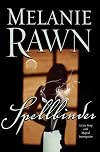
A delightful tale, particularly from the point of view of an experienced Wiccan. Ms. Rawn has clearly done her homework, but has equally clearly done a bit of writing of her own ideas into the story, which is exactly how such a thing should be done, if you ask me.
As the subtitle says, it's a love story with magical interruptions. The character development is a bit predictable, I think, or at least the *relationship* development is, but there's also a murder/horror element that keeps everything going along quite nicely.
Don't read it to learn about Wicca, but do read it for an enjoyable tale.
As the subtitle says, it's a love story with magical interruptions. The character development is a bit predictable, I think, or at least the *relationship* development is, but there's also a murder/horror element that keeps everything going along quite nicely.
Don't read it to learn about Wicca, but do read it for an enjoyable tale.
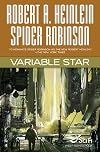
This is *it.* The last Heinlein novel there will ever be.
OK, that place probably goes to "For Us, The Living." This is actually a novel *outlined* by the late master and actually penned by the still-living genius Spider Robinson. He did not try to make it a pastiche, but rather took what Heinlein (I always want to call him "Dr." Heinlein, for some reason) outlined and turned it into a full-length novel.
I won't say only RAH could have conceived this, but only RAH and Robinson could have made this book. There are places where it's undeniably Spider (references to 9/11 and the sociopolitical fallout therefrom, for example), but it still *feels* like a Heinlein novel in so many ways.
If you enjoy Heinlein, read it.
If you enjoy Robinson, read it.
If you don't know one or the other of these authors (and pity you if you know neither), then read it and discover new worlds of delight. I have several other books "in the works," and I stopped reading all of them to read this one.
Oh, the plot? Well, it follows Joel Johnston as he discovers that his girlfriend Jinny is not an impoverished orphan and student like himself, but in fact heir to the largest fortune ever accumulated. He tries to make the most of this, until it is made clear to him by the patriarch of the clan (a thoroughly unlikeable fellow who reminds me of the owner of the space habitat in Robinson's "Stardance") that he is expected to drop all his plans and be groomed to take over the family's commercial empire.
Deciding show more he's not interested, Joel severs relations with Jinny (a tribute to Virginia Heinlein, perchance?) in the most drastic way possible: he signs onto an outbound interstellar colony ship.
It's from there that things start to get complex, and I won't spoil it for you save to say that the scope of disaster envisioned is one that few authors have dared touch on; even authors like Larry Niven who postulate an explosion at the core of our galaxy, or David Gerrold, whose "Cities in Flight" end with the end of the entire universe don't quite get the same feeling as Robinson does here.
There's one item that might seem a deus ex machina, but the story could have been crafted equally well without it, so I'm going to conclude that it was intentional and not a way to get himself out of a corner into which he'd written himself (I can't imagine either Robinson or RAH doing that).
The end of the book has a character addressing us, the reader, which is pleasantly reminiscent of both authors, and makes it uniquely theirs. show less
OK, that place probably goes to "For Us, The Living." This is actually a novel *outlined* by the late master and actually penned by the still-living genius Spider Robinson. He did not try to make it a pastiche, but rather took what Heinlein (I always want to call him "Dr." Heinlein, for some reason) outlined and turned it into a full-length novel.
I won't say only RAH could have conceived this, but only RAH and Robinson could have made this book. There are places where it's undeniably Spider (references to 9/11 and the sociopolitical fallout therefrom, for example), but it still *feels* like a Heinlein novel in so many ways.
If you enjoy Heinlein, read it.
If you enjoy Robinson, read it.
If you don't know one or the other of these authors (and pity you if you know neither), then read it and discover new worlds of delight. I have several other books "in the works," and I stopped reading all of them to read this one.
Oh, the plot? Well, it follows Joel Johnston as he discovers that his girlfriend Jinny is not an impoverished orphan and student like himself, but in fact heir to the largest fortune ever accumulated. He tries to make the most of this, until it is made clear to him by the patriarch of the clan (a thoroughly unlikeable fellow who reminds me of the owner of the space habitat in Robinson's "Stardance") that he is expected to drop all his plans and be groomed to take over the family's commercial empire.
Deciding show more he's not interested, Joel severs relations with Jinny (a tribute to Virginia Heinlein, perchance?) in the most drastic way possible: he signs onto an outbound interstellar colony ship.
It's from there that things start to get complex, and I won't spoil it for you save to say that the scope of disaster envisioned is one that few authors have dared touch on; even authors like Larry Niven who postulate an explosion at the core of our galaxy, or David Gerrold, whose "Cities in Flight" end with the end of the entire universe don't quite get the same feeling as Robinson does here.
There's one item that might seem a deus ex machina, but the story could have been crafted equally well without it, so I'm going to conclude that it was intentional and not a way to get himself out of a corner into which he'd written himself (I can't imagine either Robinson or RAH doing that).
The end of the book has a character addressing us, the reader, which is pleasantly reminiscent of both authors, and makes it uniquely theirs. show less
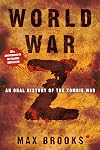
An enjoyable horror fantasy by the author of "The Zombie Survival Guide," this book describes how the world would be if zombie-ism (?) were some kind of communicable disease. The zombies are portrayed as barely-sentient, slow, hungry, and virtually indestructible. To kill a zombie, one must destroy or remove the head (specifically, the brain, I assume). People killed by infected zombies revive as zombies, which can be a problem if you are trying to defend against them in close combat.
Fortunately, the beasts are slow enough that an average person can outrun them fairly easily.
Unfortunately, they are relentless, do not feel pain, and attract others by their moans.
The author explores some interesting implications (sinking a ship full of zombies, for example, only means they'll walk out of the ocean who-knows-where), and I definitely got some good creepies from reading the book, without being overwhelmed by gore, as I might have been had he chosen a different tack. I seem to remember there were some disturbing scenes, but not nearly as many or as explicit as there might have been.
I borrowed this from the library and enjoyed it pretty well, but probably not well enough to buy it.
Fortunately, the beasts are slow enough that an average person can outrun them fairly easily.
Unfortunately, they are relentless, do not feel pain, and attract others by their moans.
The author explores some interesting implications (sinking a ship full of zombies, for example, only means they'll walk out of the ocean who-knows-where), and I definitely got some good creepies from reading the book, without being overwhelmed by gore, as I might have been had he chosen a different tack. I seem to remember there were some disturbing scenes, but not nearly as many or as explicit as there might have been.
I borrowed this from the library and enjoyed it pretty well, but probably not well enough to buy it.
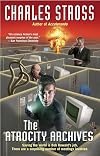
A marvelous conglomeration of computer geekery, horror, and occult geekery. The author makes jokes that I just barely catch, and I'm confident he has others that I missed, but I thoroughly enjoyed this book.
The premise is that there are indeed Lovecraftian things out there, and we are indeed protected by secret government organizations (in this case, a UK one called the "Laundry"), but the process is a very sophisticated combination of the old (a drop of blood) and the new (lasers define the pentagram capture space in which some interdimensional nasty may materialize). Often people are recruited by the Laundry because they accidentally stumble on some mathematical problem that could lead to Something Awful stopping by to eat a city or two (or worse--read the story), which should give you a hint of how things work in this book.
I was very sad when this ended, because I was enjoying it too much to want to stop. Fortunately, there is a sequel (or sequels) and I'm going to have to do some hunting at the library.
If you're a mathematician, a science fiction fan, an occultist (Gods, I hate that word!) or a fan of horror fiction, you should enjoy this.
The style is not unlike Neal Stephenson's in "Zodiac," if that's any help.
The premise is that there are indeed Lovecraftian things out there, and we are indeed protected by secret government organizations (in this case, a UK one called the "Laundry"), but the process is a very sophisticated combination of the old (a drop of blood) and the new (lasers define the pentagram capture space in which some interdimensional nasty may materialize). Often people are recruited by the Laundry because they accidentally stumble on some mathematical problem that could lead to Something Awful stopping by to eat a city or two (or worse--read the story), which should give you a hint of how things work in this book.
I was very sad when this ended, because I was enjoying it too much to want to stop. Fortunately, there is a sequel (or sequels) and I'm going to have to do some hunting at the library.
If you're a mathematician, a science fiction fan, an occultist (Gods, I hate that word!) or a fan of horror fiction, you should enjoy this.
The style is not unlike Neal Stephenson's in "Zodiac," if that's any help.