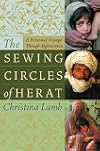
An adventuresome read and an amazing narrative on this ancient and fascinating land, based on the author's sojourns both in pre-Taliban Afghanistan and after the Taliban's fall post-9/11. Lamb does an excellent job of capturing the sights, sounds, smells and feelings of the places and people she encounters. Some of the incidents she relates are hair-raising (e.g., crouching in the trenches with the mujaheddin, drinking mud-puddle water and eating sand-crabs while awaiting a break in enemy fire); others are tragic, poignant, moving, or inspiring -- and not infrequently, all of the above.
Lamb puts a very human face on the country and introduces us to flesh-and-blood people from all walks of life, including mujaheddin, Taliban, government officials, teachers, refugees, museum curators, ordinary families, street people, the old, the young, and more. Afghanistan is a diverse country with an array of ethnic groups, religious sects, and attitudes, and Lamb's writing conveys that clearly. The book also contains a generous serving of the history of the country, which helps to illuminate current situations and events and put them into context.
The book was issued in 2002. It would be interesting to see a follow-up and have Lamb's insights into the current situation.
The book would likely be appreciated by those who have an interest in Afghanistan; by Americans who would like to learn more about a country that looms large in our foreign/military policy, and want to know some of the show more context behind the current events that fill our newspapers; or by anyone who simply enjoys reading a vivid travel narrative. show less
Lamb puts a very human face on the country and introduces us to flesh-and-blood people from all walks of life, including mujaheddin, Taliban, government officials, teachers, refugees, museum curators, ordinary families, street people, the old, the young, and more. Afghanistan is a diverse country with an array of ethnic groups, religious sects, and attitudes, and Lamb's writing conveys that clearly. The book also contains a generous serving of the history of the country, which helps to illuminate current situations and events and put them into context.
The book was issued in 2002. It would be interesting to see a follow-up and have Lamb's insights into the current situation.
The book would likely be appreciated by those who have an interest in Afghanistan; by Americans who would like to learn more about a country that looms large in our foreign/military policy, and want to know some of the show more context behind the current events that fill our newspapers; or by anyone who simply enjoys reading a vivid travel narrative. show less
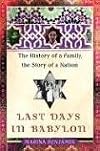
I quite enjoyed this book and found it to be quite relevant to current-day events, inasmuch as I feel a good understanding of a nation's history is useful in understanding its present situation. (Admittedly, I have both an interest in history generally and in the Middle East specifically, including Iraqi Jewry, so it may be easier for me to enjoy a book like this, than for a reader who does not share those interests.)
For me one of the draws of this book was its inclusion of general Iraqi history as well as the author's specific family history -- I was able to learn more about the nation while also learning about a particular family. Also interesting was her return to modern-day Iraq to visit the tiny and declining Jewish community there -- a poignant state of affairs given how large and bustling that ancient community once was.
Readers interested in Arab Jewish history, the Jewish Diaspora, and the history of Iraq and/or the Middle East, would probably enjoy this book and the wealth of information it contains.
For me one of the draws of this book was its inclusion of general Iraqi history as well as the author's specific family history -- I was able to learn more about the nation while also learning about a particular family. Also interesting was her return to modern-day Iraq to visit the tiny and declining Jewish community there -- a poignant state of affairs given how large and bustling that ancient community once was.
Readers interested in Arab Jewish history, the Jewish Diaspora, and the history of Iraq and/or the Middle East, would probably enjoy this book and the wealth of information it contains.
An interesting collection of writings from an intelligent and thoughtful author who, alas, doesn't seem to be very well known in the West (for one thing, other than this book, I'm not sure that many of his works are readily available in English translation or in other Western languages). This is a pity, as his (in my opinion) open-minded outlook and views on religion, "Islamic humanism," and civil rights are of great value to Muslim and non-Muslim alike.
This was my third memoir from one of the many Jewish emigrés of the formerly large and thriving ancient Jewish community in Iraq (once comprising a third of the population, they are now said to number less than a dozen). Unlike the other two books, Sasson Somekh's was less a chronological autobiography and more a series of vignettes. Imagine going to chat with the author over tea once per week, and each week, he narrated a different recollection of his life -- that is much the flavor of this book. The chapters are self-contained and not long, which makes for easy reading. (Although, not necessarily FAST reading -- I found myself inclined to go slowly, re-reading often, and reflecting on what the author had written.) At times he writes with gentle humor; other passages are subtly -- but deeply -- poignant.
One of the delights of the book is that Somekh not only includes photographs but also gives descriptions of them. For instance, rather than simply saying, "This is a photo of the whole family at a wedding," he goes through the photo, pointing out individual family members, describing them, their history, what eventually becomes of them, and so on.
As a language buff, I found great interest in Somekh's discussions of Iraqi Arabic and other languages; and literary buffs will no doubt be interested in Somkeh's run-ins with and descriptions of literary notables from Iraq and elsewhere in the Arab world.
This would likely be a good book for those interested in the (former) show more Iraqi Jewish community; Arab Jews in general; and the history of Iraq. A history which, it should be noted, goes far deeper and is much richer than the modern-day headlines of bombings and political unrest. show less
One of the delights of the book is that Somekh not only includes photographs but also gives descriptions of them. For instance, rather than simply saying, "This is a photo of the whole family at a wedding," he goes through the photo, pointing out individual family members, describing them, their history, what eventually becomes of them, and so on.
As a language buff, I found great interest in Somekh's discussions of Iraqi Arabic and other languages; and literary buffs will no doubt be interested in Somkeh's run-ins with and descriptions of literary notables from Iraq and elsewhere in the Arab world.
This would likely be a good book for those interested in the (former) show more Iraqi Jewish community; Arab Jews in general; and the history of Iraq. A history which, it should be noted, goes far deeper and is much richer than the modern-day headlines of bombings and political unrest. show less

A useful book that explains the ins and outs of computer networking (with a focus upon Linksys equipment) in fairly clear, easy-to-understand language. A very handy reference guide if you intend to set up a home or small-office network using Linksys hardware.

A deliciously unusual book. Captivating and magical, it is a fairy-tale for adults that blends bodily passions and culinary pleasures in one sumptuous serving.

This slim volume is a pleasant introduction to Byzantium, providing not only an overview of the politics, but discussing topics such as religion, art, literature, daily life, and the Empire's relations with its neighbors. Alas, no pictures, but a list of rulers and a map provide assistance, and a bibliography offers possibilities for further study.
A beautiful and very interesting survey of art throughout the Byzantine empire and era.

Fascinating collection of apocryphal and pseudepigraphical works that are no longer canon in most modern Bibles. It would be useful to have a bit more information and background provided about the works, as well as information about the English translations, but I think this book's goal is simply to provide the works, with minimal commentary (there is some comment at the beginning of each work), and let the readers experience it for themselves. Definitely of interest for those who enjoy religious studies, religious history, early Christianity, and so forth.
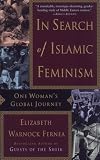
Interestingly, this book frequently reads less like feminist theory and more like an evocatively descriptive travel narrative, which will certainly be enjoyed by fans of that genre. Indeed, this book is at its best when describing the people and places; and when the Muslim women in the chapters speak for themselves.
Unfortunately, though, I sometimes found the pacing a bit clunky, and the author's own viewpoints and/or insertion of herself into the proceedings, to be irritating. Some of her attitudes seemed surprising, as she is supposed to be a longtime professor of Middle East studies.
The glimpse into the lives and viewpoints of women abroad, though, was very interesting, and I found the chapter on Iraq to be fascinating. The book was written in the 1990s, but I read it in 2006, after the second Gulf War, so it was like looking back in time to an Iraq that, to judge by media reports, no longer exists.
Unfortunately, though, I sometimes found the pacing a bit clunky, and the author's own viewpoints and/or insertion of herself into the proceedings, to be irritating. Some of her attitudes seemed surprising, as she is supposed to be a longtime professor of Middle East studies.
The glimpse into the lives and viewpoints of women abroad, though, was very interesting, and I found the chapter on Iraq to be fascinating. The book was written in the 1990s, but I read it in 2006, after the second Gulf War, so it was like looking back in time to an Iraq that, to judge by media reports, no longer exists.
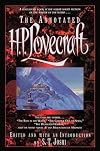
A small collection containing a handful of Lovecraft's stories, heavily annotated. If you dislike Lovecraft, or if you find footnotes distracting, this will obviously not be the book for you. ;-) But those who enjoy Lovecraft or want to read a great deal about him and his works, or prefer annotated works in general, will probably like this book. It's an interesting and useful addition to the library of a Lovecraft fan.
The Decline and Fall of Practically Everybody: Great Figures of History Hilariously Humbled by Will Cuppy

A delightful book that brought me (and my roommate, who later borrowed it) near-constant laughter while reading it. The author's wonderful wit makes history far more entertaining than it ever was in school.
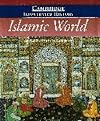
Interesting and accessible introduction to Islam, from pre-Islamic Arabia through to the modern day. Covers political histories and caliphates as well as theology, economies, the arts, social history and customs, and much more. The book features a wonderful array of art and photographs, as well as extensive bibliographies.

A marvelous collection of poetry spanning many cultures and time periods. One good feature of this collection is that it includes not only some "giants" but a large number of lesser-known poets, as well as lesser-known works by major poets. An excellent book for lovers of world poetry.
The heart of the Buddha's teaching : transforming suffering into peace, joy & liberation : the four noble truths, t by Thich Nhat Hanh
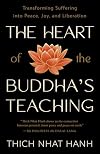
An excellent and very enjoyable introduction to basic Buddhist teachings by noted Zen master Thich Nhat Hahn. The book is as pleasurable to read as it is enlightening---the author's encouraging, joyful style reads easily and sometimes gives the impression that he is right there with you. The material in the book can, in my view, be understood and appreciated by people of any religion (or none).
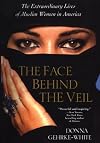
This book provides a large number of profiles of Muslim women in America, and all of the stories are very interesting. Some profiles, such as the stories of immigrants (e.g., from Afghanistan) are very moving and indeed inspiring, to Americans of any faith (or none).
That being said, though, I felt rather disappointed in some respects. For one thing, there is an emphasis on quantity rather than depth---most of the profiles are unfortunately very brief. So the book provides more of a snapshot of many lives, rather than an in-depth treatment of a few. I would have preferred a bit more depth.
I also thought there was a bit too much emphasis on the hijab and "veil" issue. To hijab or not to hijab, that is the question, and unfortunately it is one that some authors, especially Western ones, dwell on far too much.
Still, the book has merit, and might prove to be a good read especially for someone who is approaching the subject of Islam in American for the first time, and who wants to see a snapshot of a broad range of Muslim women in America.
That being said, though, I felt rather disappointed in some respects. For one thing, there is an emphasis on quantity rather than depth---most of the profiles are unfortunately very brief. So the book provides more of a snapshot of many lives, rather than an in-depth treatment of a few. I would have preferred a bit more depth.
I also thought there was a bit too much emphasis on the hijab and "veil" issue. To hijab or not to hijab, that is the question, and unfortunately it is one that some authors, especially Western ones, dwell on far too much.
Still, the book has merit, and might prove to be a good read especially for someone who is approaching the subject of Islam in American for the first time, and who wants to see a snapshot of a broad range of Muslim women in America.
The dancing girls of Lahore : selling love and hoarding dreams in Pakistan's ancient pleasure district by Louise Brown
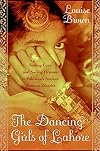
Rather than being simply a collection of statistics and essays about prostitution or women's disempowerment, this book takes the reader right into the heart of one family's experience. Louise Brown lives for several years in Heera Mandi, particularly with one woman, "Maha," and her family. Brown eats their food, attends their parties, participates in their religious festivals, and sees the children grow older---and, sadly, sees the generationl cycle of prostitution carrying itself on in the maturing children. There are also fascinating sojourns with other people in Heera Mandi, including other prostitutes, pimps, an artist, and a family of Christian street-sweepers.
The book does an excellent job of describing and evoking the sights, sounds and smells of Heera Mandi and elsewhere, and of bringing the people and places to vivid life. As well, Brown admirably portrays the people therein not as faceless caricatures or pitiable Third-World statistics, but as living humans with dignity and worth, humans who sometimes show great resilience in adapting to or resisting the often bleak circumstances into which they are born.
It is a book that is as moving as it is informative.
The book does an excellent job of describing and evoking the sights, sounds and smells of Heera Mandi and elsewhere, and of bringing the people and places to vivid life. As well, Brown admirably portrays the people therein not as faceless caricatures or pitiable Third-World statistics, but as living humans with dignity and worth, humans who sometimes show great resilience in adapting to or resisting the often bleak circumstances into which they are born.
It is a book that is as moving as it is informative.
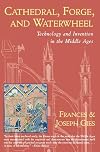
Fascinating exploration of science and technology in the Middle Ages, touching on---and shedding some light on---almost every aspect of medieval live imaginable: architecture, astronomy, agriculture, clothing, religion, shipbuilding, timekeeping, travel, and much more. It flows fairly smoothly and should be accessible to laypeople as well as to specialists. Notes and a bibliography provide options for further research.
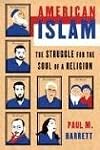
A fascinating and, in my opinion, quite balanced examination of several people's experience in the U.S. as Americans and as Muslims. It's an informative and very interesting book that provides a third-person perspective and informatin (from Barrett) while also allowing the Muslims ample space to speak for themselves. It's also refreshingly free of the sound of grinding axes.

This book wasn't quite what I was expecting -- rather than a dense tome packed with historical and theological facts, it's actually an oversize paperback book of photographs of Coptic Christians and their activities.
Which is not to say the work has no value. There is some explanatory text about Coptic history, customs, and their interactions in Egyptian society, and it was quite interesting to read. The photos themselves are beautiful, and do an exemplary job of showing Copts at church, at work, at moulids (religious festivals), and so on.
It made for a quick and enjoyable afternoon read at the library, and might be good for those with an interest in Copts, in Egypt, or in photography in general.
Which is not to say the work has no value. There is some explanatory text about Coptic history, customs, and their interactions in Egyptian society, and it was quite interesting to read. The photos themselves are beautiful, and do an exemplary job of showing Copts at church, at work, at moulids (religious festivals), and so on.
It made for a quick and enjoyable afternoon read at the library, and might be good for those with an interest in Copts, in Egypt, or in photography in general.