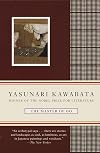
Though I didn't (and still, to be honest, don't) know much about the game, "The Master of Go" was a book I couldn't put down--it was beautifully written. The book at times seemed to be mourning a past age while faithfully detailing all of it's problems--the Master's quirks, his illnesses, his temperament--but the discussion of the game was never bogged down by any of this. As the narrator admits, the story is about the players, not about the game, and this enables this discussion to remains technical, slightly unapproachable, and yet enjoyable.
A great book that ultimately seemed a fitting requiem for an bygone era of nobility.
A great book that ultimately seemed a fitting requiem for an bygone era of nobility.
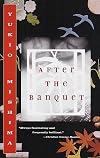
What a book--talk about writing relationships that feel realer than life itself! Mishima is a master--Kazu at once represents the modern of the Japanese woman, and the success all women can attain: she's independently wealthy, influential, and can use her feminine beauty and tact as a weapon in conversation and politics. On the other hand, her husband Noguchi--a man she's attracted to for his stubbornness and aloofness--wants her to conform to his ideal of a housewife--something she cannot, ultimately, do. Watching married life slowly destroy Kazu's self respect is insidiously realistic, and so the drama unfolds beautifully.

While I loved the image that Kikuji Mitani presented--someone completely unable to escape from the shadow his father had cast over his life--I wanted that image to be ingrained a bit more deeply. I didn't feel it enough to be duly shocked when he slept with Mrs. Ota, and, with that, I felt much of the impact of the story was lost on me. Perhaps this is a book I'll need to pick up again, in many years, but it just rolled off of me.
The writing was beautiful, though--Kawabata didn't win the Nobel Prize for nothing.
The writing was beautiful, though--Kawabata didn't win the Nobel Prize for nothing.